REVIEW · VATICAN CITY
Skip the Line: Vatican & Sistine Chapel Ticket with Audio Guide
Book on Viator →Operated by City Wonders Ltd · Bookable on Viator
One ticket can save your whole morning. This Vatican Museums and Sistine Chapel skip-the-line entry is built around time-slot access plus a self-guided audio app, so you can focus on the big masterpieces instead of standing still.
I particularly like the escorted priority entrance—it reduces the usual confusion right at the door. And I like that you can pick a morning or afternoon start, which helps you match the visit to your Rome day.
The tradeoff: you still go through Vatican security, and the audio app experience can be hit-or-miss depending on what you want from your narration.
In This Review
- Key things to know before you go
- Ticket pickup at Via Tunisi: don’t treat the voucher like a final ticket
- How the skip-the-line entrance really works (and what to expect at security)
- Vatican Museums highlights that hit hardest: Pinecone Courtyard and Pomodoro Sphere
- Cortile della Pigna (Pinecone Courtyard)
- Sphere within a Sphere (Sfera con sfera)
- Gallery of Maps and Raphael Rooms: the art stops you’ll remember
- Galleria delle Carte Geografiche (Gallery of Maps)
- Stanze di Raffaello (Raphael Rooms)
- Sistine Chapel: Michelangelo’s two heavy hitters
- One realistic caution
- Using the self-guided audio app: how to make it work for you
- The setup step that matters
- Planning your timing: making about 3 hours feel satisfying
- Price and value: what you’re really paying for at $46.86
- Who this works best for
- Should you book this Vatican & Sistine Chapel ticket?
- FAQ
- Where do I redeem my voucher for this ticket?
- How long is the experience?
- Does this include a guided tour?
- What language is the audio guide available in?
- Do I still go through security?
- Is my entry time fixed?
- Can I stay longer after I enter?
- What should I bring to use the audio app?
- Is a breakfast included?
- Can I cancel for a full refund?
Key things to know before you go
- Time-slot entry matters: your voucher is only valid for the entry time you selected.
- Skip-the-line is not skip-the-check: security still happens, and delays can affect arrival time.
- You’ll tour highlights, not everything: the Vatican Museums are enormous, so the set route is designed to be efficient.
- The map is your best friend: it helps you move through key stops without getting lost in the halls.
- Bring earphones and plan phone battery: the audio guide is on your device.
- Sistine Chapel access can be affected by Vatican events: closures can happen, so stay flexible.
Ticket pickup at Via Tunisi: don’t treat the voucher like a final ticket
The day starts at a specific redemption point near the Vatican Museums: Via Tunisi, 4, 00192 Roma RM. This is where you exchange your booking voucher for the actual entry ticket. The experience is meant to be straightforward, but here’s the practical lesson: treat this step like a “must-do,” not a “should be fine” task.
A couple of common frustrations show up when people arrive with a voucher expecting it to work directly at the gates. The fix is simple: plan to be on time, bring whatever proof you have, and follow the pickup instructions carefully at Via Tunisi. If you show up late, you may lose the time slot benefit that makes this ticket valuable in the first place.
Also note the tour duration is listed as about 3 hours. That’s not long enough for a slow wander through every gallery. Your “success” depends on moving efficiently once you’re inside.
You can also read our reviews of more tours and experiences in Vatican City.
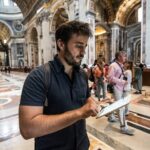
How the skip-the-line entrance really works (and what to expect at security)
This is not a coach-with-a-guide kind of tour. What you’re really buying is reserved skip-the-line access and an escorted entry process through the priority entrance.
That escort helps you avoid the usual bottlenecks right around ticket counters. But you still must pass through security, and the operator makes it clear they can’t control how long it takes. So, in practice, the time you save is real—but don’t expect zero waiting.
Once you’re in, the Vatican Museums complex is famously huge—about 9 miles (14 km) of rooms and galleries. You’re not walking all of that. Instead, you’ll follow a highlights flow supported by a specially designed map and an audio guide on your phone.
Good to know: your voucher is valid only for your scheduled entry time. Once you get in, you can stay longer at the Museums depending on opening hours. That flexibility is nice when you want to linger in the courtyards after the main highlights.
Vatican Museums highlights that hit hardest: Pinecone Courtyard and Pomodoro Sphere
The Vatican Museums can feel like a test of stamina. That’s why I like including “lighter” pauses in the middle of the art marathon.
Cortile della Pigna (Pinecone Courtyard)
One of the standout breaks is the Cortile della Pigna, known for its serene courtyard atmosphere even inside the busy museum circuit. Here, you’ll see Donato Bramante’s Pigna, a bronze centerpiece associated with the courtyard’s name. It’s the kind of stop where you can reset your brain—especially after you’ve been pushed along by crowds.
This is also a reminder that the Vatican Museums aren’t only paintings and statues. Architecture and sculpture-as-landmark matter, too.
Sphere within a Sphere (Sfera con sfera)
Right in that same courtyard area is Sfera con sfera (Sphere Within a Sphere) by Arnaldo Pomodoro. The sculpture features cracked or fractured spheres that resemble complex mechanisms—an idea about modern complexity and the fragility of the world. It’s not just something to look at. It’s the sort of piece that makes you slow down for a moment and actually notice how it’s built and framed by the space around it.
Time-wise, these stops are quick (minutes, not hours), but they’re high payoff. If you’re prone to museum fatigue, this pairing is a good rhythm.
Gallery of Maps and Raphael Rooms: the art stops you’ll remember
Once you’re through the early courtyard area, the route leans into “I get it now” moments—places where the art feels purposeful and big.
Galleria delle Carte Geografiche (Gallery of Maps)
The Gallery of Maps is a major highlight for anyone who likes history beyond battle dates. Expect detailed cartography and a visual timeline of geography represented through beautiful artwork. Even if you’re not a map person, this room is one of those experiences where you start to understand why people carried on for centuries making and collecting knowledge in visual form.
The value here is the mix: it’s art, it’s information, and it’s different from the usual cathedral-meets-museum routine.
Stanze di Raffaello (Raphael Rooms)
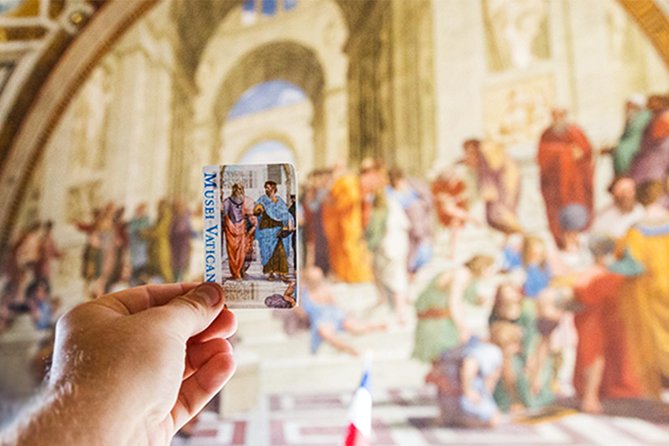
Then you hit the Raphael Rooms, where the payoff gets loud—in the best way. These frescoes include iconic works such as The School of Athens. The Raphael Rooms are where Renaissance painting turns into a total visual language: composition, faces, architecture, and storytelling all in one room.
If you only have a couple hours, this is the type of stop you don’t want to miss. It’s not just decorative. It’s the kind of art that makes you think for a second about how artists actually built scenes.
Sistine Chapel: Michelangelo’s two heavy hitters
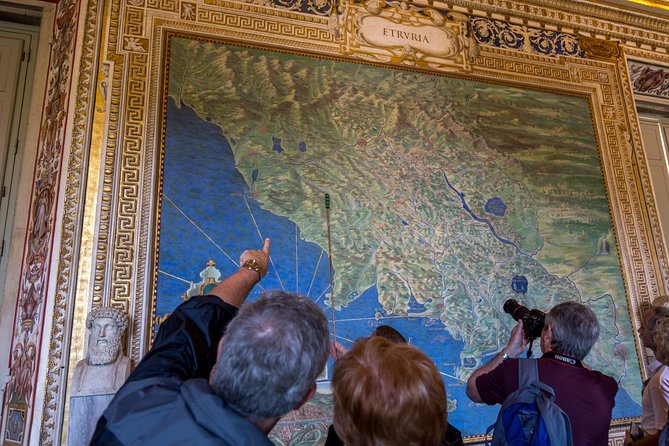
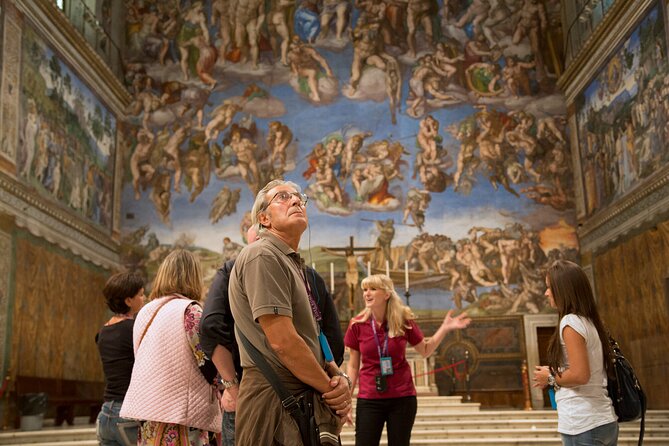
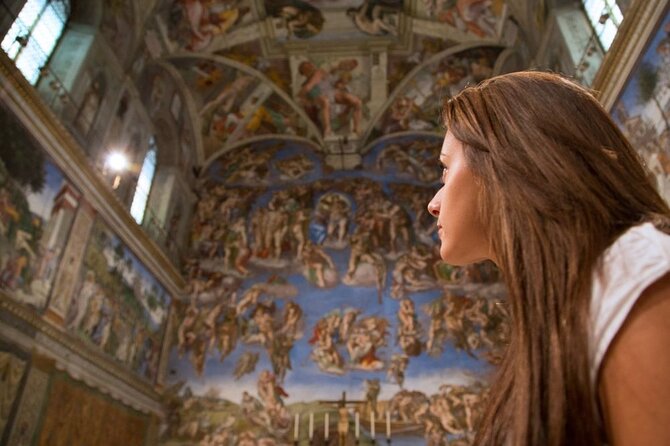
Most visitors end the museum experience at the Sistine Chapel, and for good reason. It’s significant both as a sacred space and as the place closely tied to papal conclaves. Here you see Michelangelo’s most famous ceiling and wall frescoes: The Creation of Adam and The Last Judgment.
The time you’re given for the chapel visit is listed at about 30 minutes. That’s enough to see the big moments, but not enough for a slow, line-by-line study. If you want to spend real time staring at details, you’ll need to either arrive prepared with a plan or accept that you’ll capture the major scenes and move on.
One realistic caution
Sistine access can be affected by special Vatican events. You should expect that closures can happen, so don’t build your entire trip around the assumption that you’ll definitely be able to enter the chapel at every visit. If closure happens, the best you can do is take the rest of the experience seriously and try again on a future trip to Rome.
Using the self-guided audio app: how to make it work for you
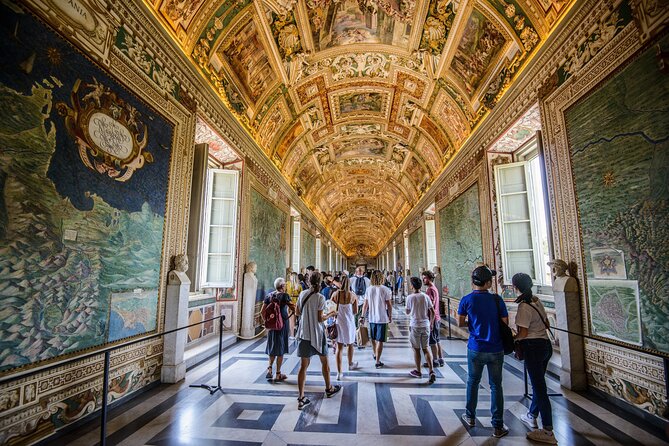
The audio component here is self-guided on your own device via an app (with content in multiple languages, including English). You also receive a map to help you navigate through the major stops.
That said, the audio experience is where expectations can clash. Some people find it useful and functional, especially if they like short explanations while moving between rooms. Others describe it as limited, sparse, or difficult to match with what’s physically in front of them.
So here’s my practical take: use the audio as a background layer, not as a tour manager. If you want a very structured “turn-by-turn” explanation that maps perfectly to exhibit numbers, you might be happier with a more guided approach or a different audio option available on-site. If you’re the type who likes to roam and use audio to add context, this format can work very well.
The setup step that matters
The tour info specifically asks you to bring earphones and make sure your phone has enough battery to use the app once inside. I’d treat this like a checklist item. Vatican Museums plus a dying phone equals wasted money and a lot of staring at walls with no story attached.
Planning your timing: making about 3 hours feel satisfying
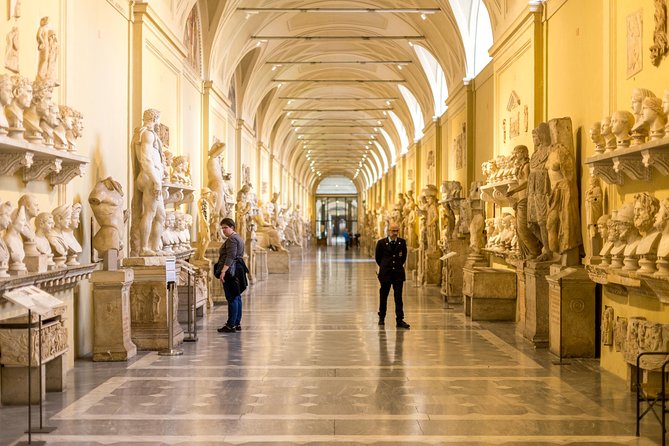
A “3-hour Vatican plan” sounds relaxing until you remember you’re entering a museum complex with 14 km of galleries. The key is to lean into the highlights flow rather than try to “see it all.”
Here’s how to avoid the usual time-crunch feeling:
- Use the map early so you aren’t deciding your route while the crowd pressure is building.
- Prioritize the strongest art areas on your path: the courtyard stops, then Gallery of Maps, then Raphael Rooms, then the Sistine Chapel.
- Expect the Vatican to be crowded. Even when the entry process is smooth, the interior can still feel intense.
If you’re sensitive to crowds, picking a less busy entry time can make your day easier. Since the ticket offers morning or afternoon entry times, use that flexibility to avoid the worst crush.
Price and value: what you’re really paying for at $46.86
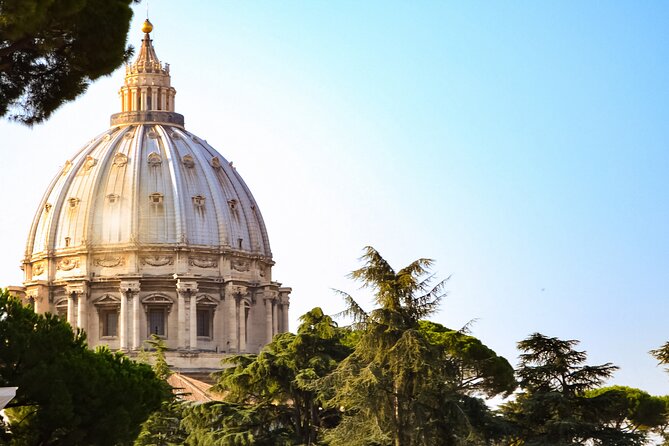
At $46.86 per person, the value comes from one main thing: buying back your time and energy. The Vatican Museums regularly swallow whole mornings and still leave you feeling like you missed the good parts.
With this ticket, you get:
- Reserved skip-the-line access
- Escorted entry through the priority lane
- A map and audio app to focus your route
That’s a strong deal if your goal is to see the big hits without turning the day into a survival test.
Two value notes to keep in mind:
- The audio app may not replace an in-person guided explanation. If you expect constant, in-depth storytelling, you might feel under-served.
- If your dream is only the Sistine Chapel, know that you generally can’t do a chapel-only visit here. You need the Museums entry ticket to reach it.
There’s also an optional add-on: buffet breakfast inside the Vatican’s courtyard if you choose that option. Some visitors felt the breakfast wasn’t worth the added cost, so I’d treat it as convenience, not a meal highlight.
Who this works best for
This ticket fits best if you:
- Want fast access and less time negotiating entry lines
- Prefer self-paced wandering after a simple start
- Like using audio context while you move (instead of needing a live guide every step)
- Have limited time in Rome and still want the Vatican’s top moments
It may be less ideal if you:
- Want a deeply guided, highly detailed narration with constant directions
- Need a super-structured route where you follow numbered exhibits closely
- Are very unhappy with crowds, because the Vatican Museums are crowded even when entry is efficient
Should you book this Vatican & Sistine Chapel ticket?
Yes—if your main goal is to protect your time and still get the famous highlights without turning your day into queue management. The combination of time-slot priority access, an assisted entry, and a map plus audio is the right recipe for a first visit.
I’d think twice if you strongly dislike self-guided experiences or you expect the audio to be as thorough as a top-tier live guide. In that case, your money might feel more justified with a fully guided option.
If you go, do two things: show up prepared for the Via Tunisi pickup, and treat your phone battery and earphones like museum essentials. That’s how you get the value you’re paying for.
FAQ
Where do I redeem my voucher for this ticket?
You redeem your booking voucher at Via Tunisi, 4, 00192 Roma RM, Italy.
How long is the experience?
The duration is approximately 3 hours.
Does this include a guided tour?
No. The experience includes reserved skip-the-line access and escorted entry, plus a self-guided audio guide/app. A guided tour is listed as not included.
What language is the audio guide available in?
The self-guided audio app is available in English and several other languages (including Chinese, German, French, Italian, Polish, and Spanish).
Do I still go through security?
Yes. There is a security check every passenger must go through, and delays can happen.
Is my entry time fixed?
Yes. Your voucher is valid only for the entry time specified during booking.
Can I stay longer after I enter?
Yes, you may enjoy an extended stay subject to the Vatican Museums’ opening hours.
What should I bring to use the audio app?
Bring earphones and make sure you have enough phone battery to use the app once inside.
Is a breakfast included?
A buffet breakfast inside the Vatican’s Courtyard is included only if you selected that option.
Can I cancel for a full refund?
Yes, free cancellation is available up to 24 hours before the experience start time for a full refund.