REVIEW · OSLO
Downtown Oslo: Self-Guided Highlights and History Audio Tour
Book on Viator →Operated by VoiceMap Audio Tours · Bookable on Viator
Oslo gets special when you walk it with a plan. This self-guided audio tour makes the city feel legible fast, with offline audio and maps that keep working on the move. I also like that it’s a tight 40-minute loop, so you can fit it into a busy day without losing half your morning.
Two things stand out for value: you get lifetime access to the audio tour in the VoiceMap app, and you’re guided through landmarks that each have a clear story behind them. The only real drawback to watch for is that one low rating flagged out-of-date information, so you should be ready to rely on what you see on the ground if something feels off.
In This Review
- Key Highlights You’ll Actually Notice
- Why This 40-Minute Oslo Audio Walk Works
- Start Smart at Rådhusplassen
- Aker Brygge: From Shipyard Remains to a Workday Meeting Spot
- Nobel Peace Center: A Former Railway Station With a Big Mission
- Royal Palace Park: The Calm Between Streets
- Karl Johan Avenue: Oslo’s Main Street With Deep Roots
- Østbanehallen: Old Central Station Energy, New City Hub
- Price and Value: What $9.99 Really Buys
- Language, Group Size, and How to Pace Yourself
- A Note About Out-of-Date Content (And How to Handle It)
- Should You Book This Downtown Oslo Audio Tour?
- FAQ
- How long is the Downtown Oslo self-guided audio tour?
- What language is the audio available in?
- Do I need a smartphone?
- Is the tour available offline?
- Where does the tour start and end?
- Are museums or entrance tickets included?
Key Highlights You’ll Actually Notice
- Offline audio, maps, and geodata help you stay oriented even if your phone struggles with signal
- Aker Brygge: a post-shipyard waterfront spot that’s easy to pause for coffee or a bite
- Nobel Peace Center in a former railway station: one building, two histories in plain view
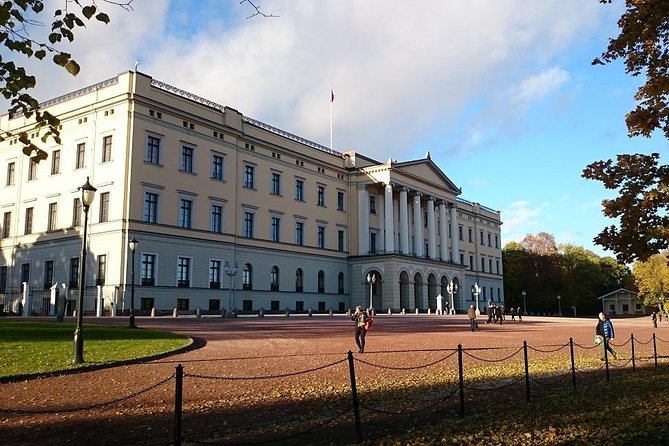
- Royal Palace park: 1840s grounds with ponds, fountains, and big-tree calm
- Karl Johan Avenue: a major street with roots reaching back to the 1500s
- Østbanehallen reopened in 2015: old station bones, now a modern hub with shops and the Oslo Visitor Center
Why This 40-Minute Oslo Audio Walk Works
This tour is built for people who want Oslo’s highlights without the slowdown of ticket lines and museum detours. At roughly 40 minutes, it’s short enough to do early for orientation, or later as a way to stitch together what you’ve already seen.
The biggest practical win is the VoiceMap setup. You’re given offline access to audio, maps, and geodata, so you’re not stuck hunting for reception while you’re trying to follow directions. And because it’s in English, you can focus on the city instead of translating every street sign on the fly.
One more value angle: the price is modest, but it’s tied to a tool you can reuse. You get lifetime access to the Exploring Downtown Oslo tour, which means you can come back for a second listen if your first pass felt rushed or if you want to do it again when the light changes.
You can also read our reviews of more tours and experiences in Oslo.



Start Smart at Rådhusplassen
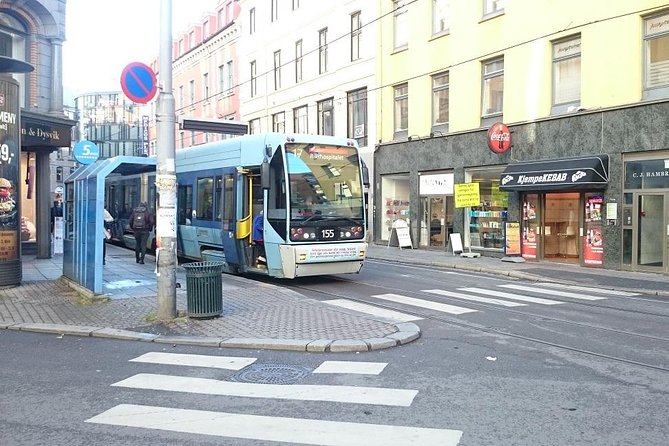
You begin at Rådhusplassen, Oslo, which is a natural place to get your bearings. It’s the kind of central square where you can quickly orient yourself to where downtown energy concentrates, and where it’s easy to rejoin the route if you pause for photos.
If you’re doing this as a first-day walk, I’d treat it like your Oslo warm-up. Use the audio to learn what each stop is before you get distracted by everything else happening outside your earbuds.
Practical tip: bring your phone battery game. Since smartphone isn’t included, you’ll need your own device to run the app, and you’ll want enough charge for audio + navigation.
Aker Brygge: From Shipyard Remains to a Workday Meeting Spot
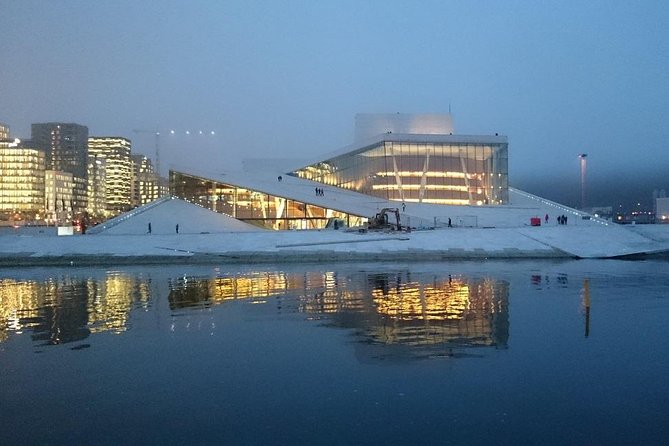
Next up is Aker Brygge, a shopping and dining area built on the remains of an old shipyard. That detail matters, because it explains why the area feels both modern and grounded in industry—Oslo didn’t build its waterfront from scratch.
What I like here is how easy it is to read the setting. You’re in a place designed for hanging out, so you’re not competing with “must-see” crowd pressure. If you time it right, you can treat this stop as a breather: listen to the audio, then step away for a quick bite or a drink after work vibes take over.
Potential drawback: because Aker Brygge is designed for people to eat and wander, it can be noisy and busy at peak times. If you’re sensitive to crowds, I’d plan for the audio to be your anchor—listen, look, then decide whether you want to linger or keep moving.
Nobel Peace Center: A Former Railway Station With a Big Mission
Then you reach the Nobel Peace Center building, which used to be an old railway station. Trains from western parts of Norway arrived here, and now the building functions as a museum about the Nobel Peace Prize and the story of Alfred Nobel plus past winners.
This stop is strong because you’re not just seeing a landmark—you’re seeing how one purpose can replace another without erasing the original structure. Railway stations are usually about arrival and departure. The Peace Center shifts that idea toward reflection, and the building’s past makes the new role feel more grounded.
I also appreciate that this isn’t a “wait in line forever” moment—this tour doesn’t include museum tickets. You can still get context from the audio while you’re outside or in the entry area, then decide later if you want to do a deeper museum visit on your own schedule.
Royal Palace Park: The Calm Between Streets
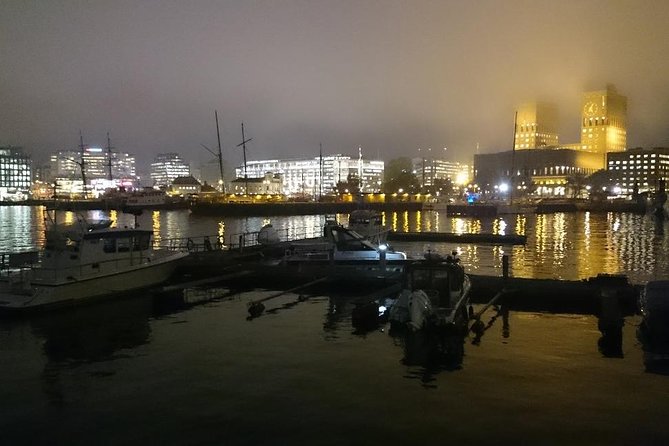
The tour moves into the park surrounding the Royal Palace. These grounds were built in the 1840s, with majestic trees, well-kept lawns, and ponds, some featuring fountains.
What makes this stop worth your time is the pace change. Downtown Oslo can feel fast. This park gives you a visual reset: open space, mature trees, and water features that help you slow down without feeling like you wandered off-route.
One extra note from the tour context: the park has even served as a base for hippies in the mid-1960s. You’re basically standing in a place where Oslo’s identity keeps layering on—royal formality in one era, counterculture in another.
If you’re traveling with kids or you just want a low-effort stretch break, this is a good spot to stand, listen, and let the park do the relaxing for you.



Karl Johan Avenue: Oslo’s Main Street With Deep Roots
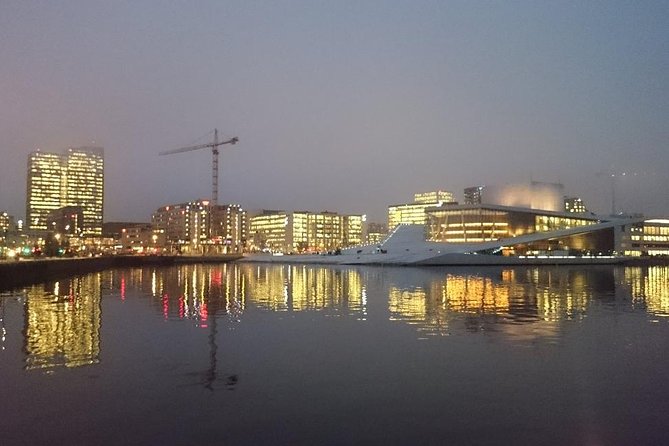
After the palace park, you’ll follow Karl Johan Avenue—often just called Karl Johan. The street’s early parts were already established in the 1500s, but since 1852 it’s been known as Karl Johan, named after the King.
This is one of those places where the audio turns a normal street walk into a time trip. Instead of thinking only about shops and movement, you start noticing how important streets become over centuries—trade routes evolve, authority shifts, and the street keeps pulling it all into one line.
I like this stop because it’s flexible. If you need to pause for a photo, it’s easy to do without missing your sense of direction. And if you’re hungry, Karl Johan Avenue is exactly the kind of corridor where you can find options quickly—without needing the tour to include food.
Østbanehallen: Old Central Station Energy, New City Hub
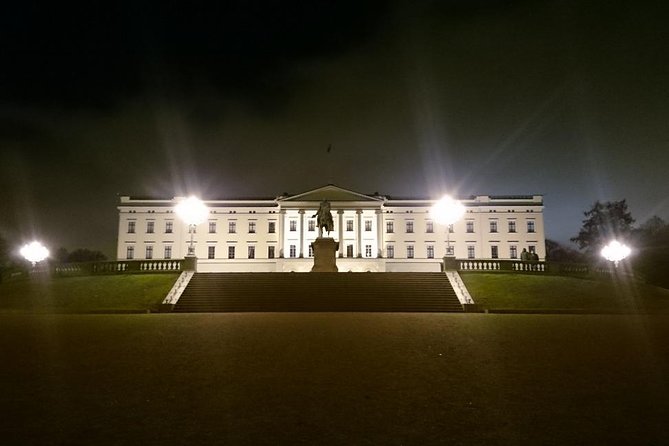
Your final landmark is Østbanehallen, once the central railway station for northern routes in Norway. After a full transformation, Østbanehallen reopened in 2015, and now it includes shops, restaurants, a hotel, and the Oslo Visitor Center.
This stop feels modern, but it still carries the weight of what it replaced. Stations are built for movement; Østbanehallen is now built for lingering, which is a clever kind of reuse. Even if you’re not planning a museum day, you’ll get a useful “what to do next” payoff from the visitor-focused nature of the space.
One practical reason I like ending here: it’s a natural place to reset your plans. If you’re wondering where to go next after your 40-minute walk, you’ve finished in an area designed to help with that kind of decision-making.
Price and Value: What $9.99 Really Buys
At $9.99 per person for an approx. 40-minute self-guided experience, you’re paying for two things: an audio narrative and the app tools to make it smooth. You’re not buying museum entry tickets, transport, or food—those are listed as not included—so the tour works best as a city orientation and storytelling layer.
The best part for value is the lifetime access angle. Many short walking tours feel like one-and-done. Here, you can repeat the route later, or re-listen while you’re studying the city with fresh eyes.
Who should consider it most? People who like self-guided pacing, travelers who don’t want to commit to a museum ticket early, and anyone who appreciates knowing the story behind the buildings rather than just taking photos.
Language, Group Size, and How to Pace Yourself
This experience is offered in English. That matters because audio tours work best when you can stay present. If you’re doing Oslo for the first time, English narration can help you grasp the big themes quickly without slowing you down.
Also, the group cap is maximum 10 travelers. Because this is self-guided, you’re not constantly stuck in a big group funnel. Still, the small limit suggests a tour model that’s meant to keep things manageable rather than chaotic.
My suggestion: don’t try to do this at a sprint pace. Treat it like a guided walk where you occasionally stop to read what you see. If something in the audio doesn’t match what’s in front of you, trust your eyes first—Oslo is real, and signage is usually the final judge.
A Note About Out-of-Date Content (And How to Handle It)
One low rating described the audio info as out of date, with the best part coming from walking and reading street signs instead. That’s a fair warning, even if it’s not the overall consensus.
Here’s how I’d handle it if you book:
- Listen for the main story beats, not every tiny detail.
- If you notice a mismatch, use the audio as background and let the location guide you.
- If you’re the type who hates inconsistency, keep your phone screen available so you can quickly check what you’re looking at.
This doesn’t make the tour worthless—it just means you should approach audio tours as storytelling tools, not a substitute for observation.
Should You Book This Downtown Oslo Audio Tour?
If you want a quick, low-cost way to understand central Oslo landmarks, this is a good fit. The offline VoiceMap setup and lifetime access are the strongest reasons to buy, especially when you’re trying to keep your day flexible.
I’d skip it or be cautious if you strongly prefer museum-style accuracy in every line of audio narration, or if you dislike self-guided experiences where you’re responsible for pacing yourself. Also, remember you need your own smartphone, and the tour doesn’t include tickets or transport.
If you’re building a first-time Oslo plan, I’d use this as a connector route—something you do so the rest of your day makes more sense.
FAQ
How long is the Downtown Oslo self-guided audio tour?
It’s listed as about 40 minutes.
What language is the audio available in?
The experience is offered in English.
Do I need a smartphone?
Yes. A smartphone is not included, but the tour uses the VoiceMap application, so you’ll need your own device to listen.
Is the tour available offline?
Yes. You get offline access to audio, maps, and geodata.
Where does the tour start and end?
It starts at Rådhusplassen, Oslo, Norway and ends at HavnelageretLangkaia 1, 0150 Oslo.
Are museums or entrance tickets included?
No. Tickets or entrance fees to museums or other attractions along the route are not included.