REVIEW · ROTTERDAM
Discover Breda with a self-guided Outside Escape city game tour!
Book on Viator →Operated by Outside Escape · Bookable on Viator
Breda becomes a puzzle when you play outside at walking pace. This self-guided city game turns history landmarks into clue stops with a story you actually follow. I like the smartphone-led format, because you can start when it fits your day and move at your team’s speed. And I also like that it guides you to lesser-known spots without making you feel lost.
What makes it especially good value is how many of the main sights along the route are free to visit, so your paid ticket is mainly for the game experience. The walk is short too—about 2.5 kilometers—so it doesn’t turn into a grind between clues.
One catch to plan around: you’re using your phone, so you’ll want a mobile data plan and decent battery. Also, one key church stop has seasonal opening days in summer, so check hours before you set off.
In This Review
- Key highlights to look forward to
- How the Outside Escape Breda game works (and what you need)
- Breda as your game board: Joshua’s ransom-note trail through town
- Stop-by-stop walking route: what each clue spot teaches you
- Nassau-Baroniemonument: the Nassau roots that start the story
- Stadspark Valkenberg: a royal-feeling park with real everyday life
- Begijnhof: single women’s community and practical work
- Waalse Kerk Breda: Gothic chapel layers and a Walloon connection
- Merkxtuin: the mayor’s farewell gift and a view through town
- De Grote Markt: the heart of Breda, from markets to darker past
- Grote of Onze Lieve Vrouwekerk: Nassau commissioned, reformed, and still royal-linked
- Havermarkt and nearby streets: nightlife history in a small square
- Kasteel van Breda: the end point with long-term continuity
- Pace and phone use: why this format works better than a long guided day
- Price and value: $29.65 per group is the real point
- Timing it right: summer church hours and the 11 a.m. carillon idea
- Who should book this Breda game walk (and who might not love it)
- Should you book Breda with Outside Escape?
- FAQ
- How much does the Breda Outside Escape game tour cost?
- How long does the tour take, and how far do you walk?
- Do I need a smartphone for this tour?
- Can we start at any time, or do we need a fixed schedule?
- What age is this tour best for?
- Are there entrance fees at the stops?
- Can I cancel and get a refund?
Key highlights to look forward to
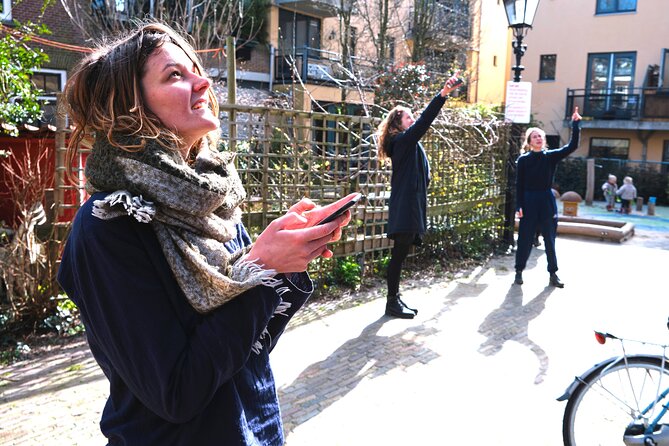
- Kidnapping mystery with Joshua’s ransom notes that pushes you to walk and think, not just look around
- Self-guided, start-anytime timing so you’re not stuck waiting for a tour group
- Free admission at multiple landmark stops, keeping the overall spend sensible
- A tight 1–2 hour route (~2.5 km) that works even on a packed travel day
- Breda’s royal-nassau connections woven into puzzles at monuments and churches
How the Outside Escape Breda game works (and what you need)
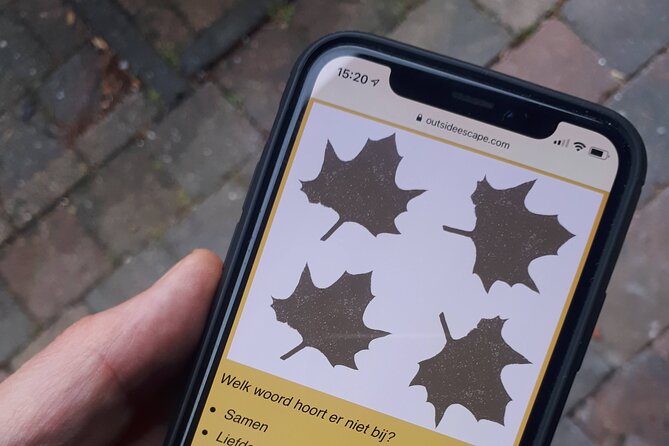
This is a self-guided city game in Breda built for a small team. You’ll follow a plot about an officer named Joshua from the Royal Military Academy, who’s been kidnapped. Your job is to track the kidnapper by solving puzzle steps and finding clue locations around town.
Practically, the tour runs on your smartphone. You’ll just need a mobile data plan and the ability to follow directions on-screen—no special equipment. It’s also set up as a private group activity, meaning only your team plays through.
Timing is flexible in a way most guided tours aren’t. You can start the adventure at any moment you choose, and you’re aiming for about 1 to 2 hours total. The route is roughly 2.5 kilometers, so you can do it comfortably on foot without needing a taxi or long transit.
Finally, it’s designed for a team of about 5–6 players aged 15+ (with supervision recommended for younger kids). If you’re traveling as a family with mixed ages, you’ll want to think about who can read clues and solve steps without frustration.
You can also read our reviews of more tours and experiences in Rotterdam.

Breda as your game board: Joshua’s ransom-note trail through town
I like story-driven tours when the plot doesn’t feel bolted on. Here, the kidnapping storyline turns Breda into a “follow the evidence” walk, where you repeatedly stop, read, solve, and move on. Instead of asking you to remember facts, it gets you to spot details that connect to the city.
That’s where the Breda angle gets interesting. You’re not just passing pretty buildings—you’re repeatedly running into the same names and themes: Engelbrecht van Nassau, Johanna van Polanen, and the roots of the House of Orange Nassau. The game keeps nudging you to connect those dots as you walk.
You’ll also get a different kind of city orientation. The stops move you from formal monuments and church landmarks into parks and quiet courtyard-like corners, then back to the places where Breda life happens—market squares and streets. By the time you reach the end, you’ll understand why locals linger where they do.
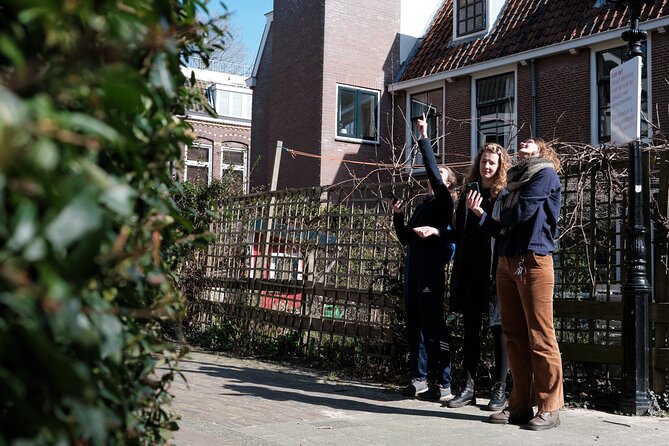
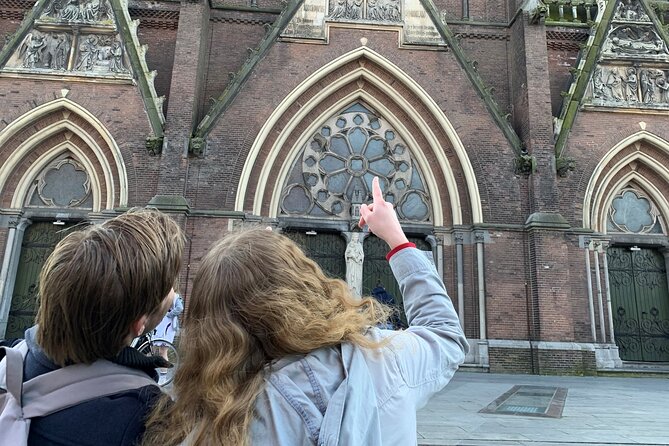
And yes, you’ll likely do a lot of looking up. When clues point at specific reliefs, inscriptions, or architecture, you end up noticing what you’d normally miss while speed-walking for photos.
Stop-by-stop walking route: what each clue spot teaches you
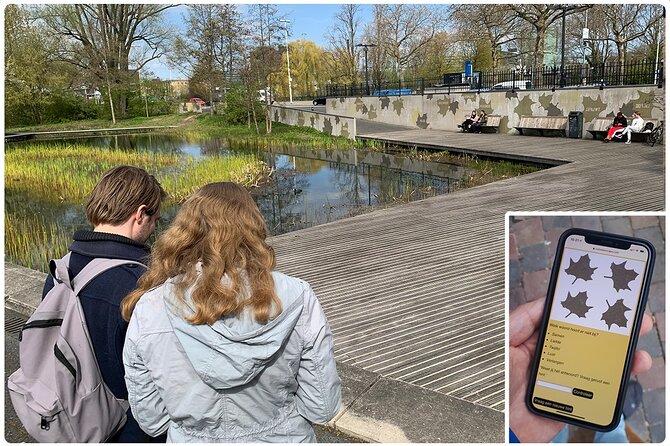
Below is the order you’ll follow, with what each location adds to the mystery and why it’s worth your attention. Most stops are quick—around 10 minutes each—which helps the whole thing move like a game, not a lecture.
Nassau-Baroniemonument: the Nassau roots that start the story
Your first clue stop is the Nassau-Baroniemonument, also known as the Nassau Monument or Barony Monument. It commemorates the arrival of German count Engelbrecht van Nassau to the Netherlands and highlights his wife, 11-year-old Johanna van Polanen, who was born in Breda.
Look closely at the reliefs: they connect the couple to the inauguration as Lord and Lady of Breda. It’s a strong opener because it frames why Breda matters to the royal story—this is the groundwork for what becomes the House of Orange Nassau.
Tip for gameplay: at the monument, slow down just enough to read what’s there. This is one of the best places to get your “what am I looking for?” instinct working early.
Stadspark Valkenberg: a royal-feeling park with real everyday life
Next you step into Stadspark Valkenberg, Breda’s downtown green oasis. Until the early 19th century, this was a park where only castle residents and their guests were welcome. Today it’s a meeting spot—students seek shade, parents watch kids play, and it’s even home to chickens and geese.
I like this stop because it breaks the pace without breaking the story. The kidnapping mystery can make you feel like you’re rushing; a park stop gives you a reset and helps the walk feel human-sized.
If you’re timing it well, you can use this area for a quick breather before the denser history stops.
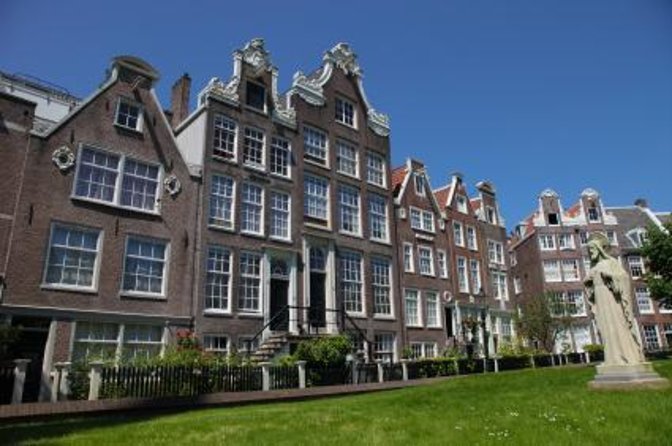
Begijnhof: single women’s community and practical work
The Begijnhof is the kind of place that feels calm, but it has real social history behind it. Beguines were single women living in a community within the church without taking perpetual vows. They could earn their own living, including work such as running custodial schools, caring for the sick, manual labor, and praying for the deceased for a fee.
This stop pairs well with a puzzle format because it reminds you that history isn’t only about royals. It’s also about daily systems—community, work, care—run by people who weren’t necessarily famous.
Practical note: Begijnhof stops can be quiet spots. Give yourself a moment to orient before you start solving.
Waalse Kerk Breda: Gothic chapel layers and a Walloon connection
The Waalse Kerk Breda is a medieval city chapel that’s described as the only preserved Gothic chapel from the early 15th century. It was built as the Wendelinus chapel by order of Johanna van Polanen. After the relocation of the Beguinage, the chapel became the church for the beguines, and later it passed to the Walloon congregation.
One detail I find especially vivid is the mention of who sat where: officers and cadets had their own pews here. Also, poet Jacques Perk’s father served as a Walloon minister from 1868 to 1872. That kind of human connection makes an architectural stop feel more alive.
Here’s your planning caution: in June, July, and August, the church is open to the public Thursday, Friday, and Saturday from 12:00 to 17:00, but it can be closed at other times due to circumstances. Check current opening hours before you rely on this stop.
Merkxtuin: the mayor’s farewell gift and a view through town
You then reach the Merkxtuin, a sculpture garden with a very specific backstory. In 1984, Ir. Willem Merkx retired as mayor of Breda and wished to turn wasteland behind the court houses on the Catharinastraat into a beautiful garden. The people of Breda offered him this sculpture garden as a farewell gift.
From Merkxtuin, you also get a nice view of the back of the patrician houses along Catharinastraat. It’s open between 9 a.m. and 5 p.m. and entry is free.
I like this stop in a game because it feels like you’re walking into a “secret-ish” pause—quiet, scenic, and not just another façade. It also helps you regain energy before the major town-square area.
Also, on market days, Merkxtuin is a great place to listen to the carillon of the Grote Kerk at 11 a.m. If you happen to play on a market day around then, you get a bonus atmosphere.
De Grote Markt: the heart of Breda, from markets to darker past
De Grote Markt is the city’s social center. This is where terraces fill up the moment the sun shows itself, under shady plane trees. You’ll also find plenty of restaurants for lunch or dinner, so it’s an easy place to regroup if your team splits for a quick snack or bathroom break.
What I appreciate here is the depth that’s still visible in everyday use. De Grote Markt is the city’s highest point and has been used as a marketplace for centuries. The general goods markets held on Tuesday and Friday mornings trace back to 1321. And the city carillonneur has been playing the carillon of the De Grote Toren during market days since the 17th century.
One darker note: De Grote Markt used to be the site for executions, and the clock in the turret of City Hall summoned people to watch. Today, it feels mostly cozy, but knowing the past helps you read the square with more awareness.
Grote of Onze Lieve Vrouwekerk: Nassau commissioned, reformed, and still royal-linked
The big centerpiece stop is the Grote of Onze Lieve Vrouwekerk. This 15th-century church is described as the pride of Breda. Originally Catholic, it later passed into reformed hands after the iconoclasm.
Count Engelbrecht van Nassau commissioned the church, including a crypt for his family. Nine Nassaus and the first Prince of Oranje are said to be buried here. That’s the kind of fact that turns a church stop from “pretty building” into “power center.”
Even though entry is free, I still recommend you treat this as a real pause. Let your team take a minute to look around, then jump back into the clue flow.
Havermarkt and nearby streets: nightlife history in a small square
Next is Havermarkt and the surrounding streets, traditionally Breda’s nightlife hub. It’s a small cozy square at the foot of the Grote Kerk, with venues spilling into streets like Vismarktstraat, Visserstraat, and the Haven area.
Even the name has a twist. It might sound like cereals were traded here, but cereals were mainly traded on De Grote Markt. Farmers from the surrounding area sold vegetables, eggs, and butter here instead. And in the 17th century, there was also a leather market. Old names—Groenmarkt, Botermarkt, and Korenmarkt—hint at what the square actually did over time.
If your game ends near evening, this stop gives you an easy transition from “puzzle mode” to “wander mode.” Just don’t expect quiet.
Kasteel van Breda: the end point with long-term continuity
Your final stop is Kasteel van Breda. Breda Castle was the ancestral home of the Nassaus, and because of their international role, it mattered across Europe from the 15th to 17th centuries.
There’s evidence of fortification on the site as early as 1198. The castle came into Nassau hands in the early 15th century through the marriage of Engelbrecht van Nassau to Johanna van Polanen. Like many European castles, it was demolished and rebuilt almost continuously over the centuries.
Finishing at the castle makes the whole game feel intentional. You start with royal roots, move through key communal places, then close at the seat that tied the story together.
Pace and phone use: why this format works better than a long guided day
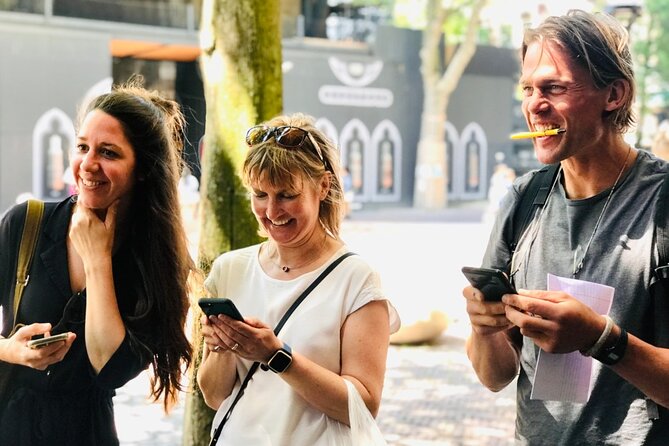
At around 1–2 hours, this tour fits the “one active thing per day” rule. It’s also only about 2.5 kilometers, which means you’re not locked into a huge walking loop. That’s ideal when you want to see Breda but you don’t want the day hijacked by logistics.
Because you can start at any moment, you can shape the experience around the rest of your plans. Want to do it before lunch? Fine. Prefer late afternoon when the light is nicer? Also fine. Breda’s market-area vibe can change a lot by time of day, so controlling your start time helps.
The main practical requirement is your phone. You’ll be reading prompts and following steps on a mobile map-like experience, so bring a phone power bank if you’re the type to take lots of photos. And make sure you can connect to the game content on your mobile data plan before you get far from the station start area.
Also keep in mind: this is designed for a team. If you’re solo, the game still works as a walk, but it’s built around shared problem-solving. A group of friends or siblings tends to move faster and have more fun with the puzzles.
Price and value: $29.65 per group is the real point
The price is listed as $29.65 per group, up to 6 people. That’s what makes it feel fair: the cost spreads across the team, not across individual tickets.
You’re also getting multiple major sights along the way, and the tour’s stops are described with free admission tickets for each of the landmark locations. That doesn’t make the experience “free,” but it does mean you’re paying mainly for the game mechanism, the story, and the organized route—not for a chain of paid-entry museums.
The biggest value sweet spot is when your group size is close to the max. If you’ve got five or six people, you’re getting a low per-person cost while still covering the core Breda highlights on foot.
There’s one situation where your value may feel lower: if your group is small and only a couple people will actually solve the puzzles. Still playable, just less cost-effective per person.
Timing it right: summer church hours and the 11 a.m. carillon idea
Your best strategy is to treat the schedule as flexible, but build in one check. One stop—the Waalse Kerk Breda—has specific summer opening windows: Thursday, Friday, and Saturday from 12:00 to 17:00 in June through August. It can also be closed due to circumstances at other times, so check hours when you plan your day.
The Merkxtuin is easier to time because it lists opening from 9:00 a.m. to 5:00 p.m. That window gives you a good mid-day buffer. And if you’re in Breda on a market day, you have a neat timing bonus: 11:00 a.m. is when the Grote Kerk carillon is audible from Merkxtuin.
Finally, the tour’s overall operating window is listed broadly 7:00 a.m. to 10:00 p.m. That’s useful for planning, especially if you’re traveling with people who prefer mornings or those who like exploring after dinner.
Who should book this Breda game walk (and who might not love it)
This is a great fit if you like:
- Puzzle-solving as you walk
- Learning city context through places tied to royal and local history
- A short, focused route that doesn’t take over your whole day
It’s also a good choice for friend groups and teens 15+ who want structure without a formal guide talking the whole time. The story about Joshua turns the walking route into an ongoing task, which keeps energy up.
You might want a different plan if:
- You dislike games or find puzzles stressful
- Your group doesn’t have reliable access to mobile data
- You’re traveling with younger kids who need constant supervision (the tour is meant for 15+, with younger kids requiring oversight)
Should you book Breda with Outside Escape?
Yes, if you want a smart way to see Breda that’s more than a checklist. The story-driven, self-guided format gives you freedom and keeps you moving through the city’s key landmarks in a short, walkable loop. With free-entry sights scattered through the route, the game ticket feels like good value, especially when you can fill out a team.
Book it if you like mixing light history with real place-walking. Skip it only if your group hates puzzles or you know your phone and data situation won’t cooperate.
FAQ
How much does the Breda Outside Escape game tour cost?
It costs $29.65 per group, for up to 6 people.
How long does the tour take, and how far do you walk?
Plan for about 1 to 2 hours, with an approximate walking distance of 2.5 kilometers.
Do I need a smartphone for this tour?
Yes. You’ll need a smartphone and a mobile data plan to play.
Can we start at any time, or do we need a fixed schedule?
You can start your adventure at any moment you choose.
What age is this tour best for?
It’s suitable for a team of up to 5–6 players aged 15 and older. Supervision is recommended for younger players.
Are there entrance fees at the stops?
The listed stops include locations with free admission tickets. One church stop (Waalse Kerk Breda) is also free when open, but it has specific summer public hours and can be closed at other times.
Can I cancel and get a refund?
Yes. You can cancel up to 24 hours in advance for a full refund. If you cancel less than 24 hours before the start time, you won’t receive a refund.