REVIEW · ROTTERDAM
Delfshaven Self-Guided Tour: A Guide to Rotterdam’s Old Town
Book on Viator →Operated by VoiceMap Audio Tours · Bookable on Viator
Delfshaven is Rotterdam with its sleeves rolled up. I love the easy audio pacing and how the route turns postcard sights into a real story, from Piet Heyn’s naval legend to the Pilgrim Fathers’ link to Delfshaven. I also like the practical flow: you’re walking from one meaningful spot to the next without needing tickets or planning. The one consideration: this is self-guided, so you’ll need your own smartphone and headphones to get the full audio experience.
What makes it feel smooth is the narration style. The voice is clear and soothing, and the timing fits an hour to an hour and a bit of wandering at your pace. If you’re the type who enjoys taking stops when the light is right and skipping what you’re not in the mood for, this works well—just don’t plan it like a checklist of indoor attractions.
In This Review
- Quick hits
- Why Delfshaven feels different from the rest of Rotterdam
- Start near Delfshaven and set off at your own tempo
- Piet Heynsbrug: the first bridge with a big name behind it
- Mouterbrug to the harbor: ships, architecture, and the slow-motion vibe
- The windmill stop: a Dutch symbol with a job to do
- A historic church linked to the Pilgrim Fathers
- Beer in the former Delfshaven Town Hall: history you can smell
- A tiny guild house: porters and the grain trade rhythm
- The restored 1825 grain warehouse with vintage pinball
- Piet Heyn monument to the Locks of Love seat: photo timing matters
- World War II scars: what to look for in the final stretch
- Price and value: how $9.99 buys you a focused story-walk
- What to know before you go (so it feels effortless)
- Who this self-guided tour suits best
- Should you book Delfshaven’s self-guided audio tour?
- FAQ
- How long is the Delfshaven self-guided tour?
- What language is the tour available in?
- Do I need a smartphone and headphones?
- Where does the tour start and end?
- Can I listen offline?
- Can I replay the tour after booking?
- Is the tour private?
Quick hits
- Soothing English narration with a good walking pace that keeps you moving without rushing
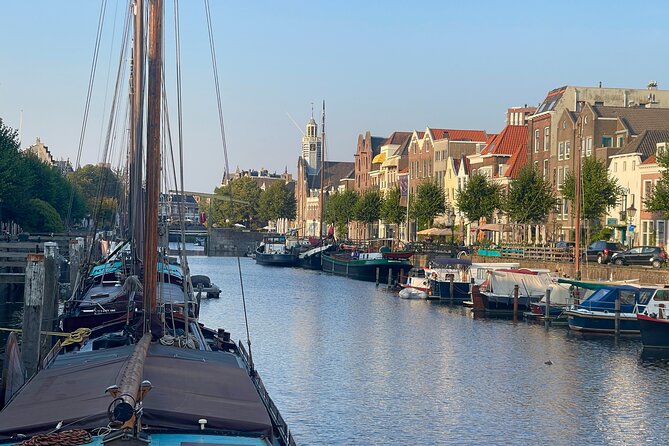
- Bridge-to-harbor views from Piet Heynsbrug and Mouterbrug that set the tone fast
- Industrial and maritime clues you can spot (windmill, ships, grain trade)
- Pilgrim Fathers connection tied to a historic church you’ll pass by
- Quirky break in a restored 1825 grain warehouse with vintage pinball machines
- Canal romance with the Locks of Love seat and the Euromast in the background
Why Delfshaven feels different from the rest of Rotterdam
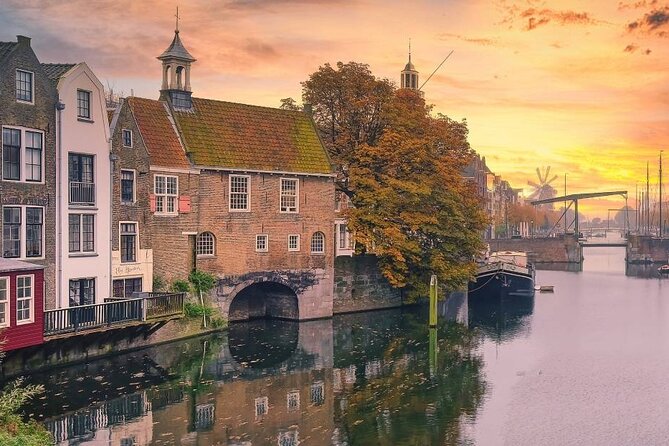
Delfshaven gives you a slice of Rotterdam that still reads like an older port town. As you walk, you’ll see canals, preserved buildings, and harbor details that make the city’s maritime past feel close, not distant. The audio guide pushes you to notice small things you’d otherwise glide past.
You also get two kinds of atmosphere in the same walk. There’s the calm “water and buildings” side, plus the harder side where you can still see marks from World War II. That mix is part of why the tour lands so well: it isn’t only pretty; it’s readable.
You can also read our reviews of more tours and experiences in Rotterdam.



Start near Delfshaven and set off at your own tempo
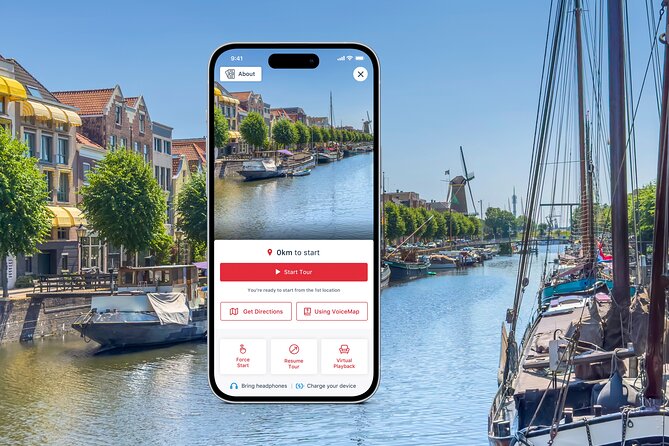
Your tour begins in Delfshaven (3026 VN Rotterdam) and ends near Café de Oude Sluis on Havenstraat 7 (3024 SE). It’s designed as a walking route where the total time is basically your walk between listed points, not time spent inside any optional stops.
This matters because you’ll get more out of it if you treat it like an hour-long amble. If you try to cram in extra museum time, it’ll stretch beyond the planned duration. I like doing it in the afternoon when you can linger by the harbor without feeling like you’re on a schedule.
Also, because it’s GPS-based and self-guided, you’re in control. You can pause for photos on a bridge, then move on when you’re ready. That freedom is especially nice here, because the best views (canals, ships, and towers) show up at slightly different angles as you turn corners.
Piet Heynsbrug: the first bridge with a big name behind it
The first stop is Piet Heynsbrug, a bridge named after Admiral Piet Heyn. This is a smart opener because you get a view immediately—canals and the traditional houses that define Delfshaven’s look.
What I like about starting on a bridge: you naturally get perspective. From up here, the area doesn’t feel like random streets. It feels like a network of water routes, buildings, and working spaces that shaped daily life.
A practical note: bridges are windy and open. If you’re traveling in cooler months, bring something light. If it’s warm, you’ll still want water—because bridges make you stop longer than you think.
Mouterbrug to the harbor: ships, architecture, and the slow-motion vibe
Next comes Mouterbrug, another bridge with calmer harbor vibes. The audio nudges you to look out over the surrounding architecture and toward the harbor feel that Delfshaven is known for.
Then you continue walking along the harbor-lined stretch. This is where you’ll start spotting “working city” details—historic ships and buildings that help explain why Rotterdam’s maritime identity grew the way it did. It’s not only scenery; the tour gives you prompts so the harbor feels purposeful.
If you like photos, this is your zone. Try to grab at least one shot from a bridge edge (wide view), then another a minute later down at street level (texture and details). The audio helps you decide what to focus on.
The windmill stop: a Dutch symbol with a job to do
You’ll pass by an iconic windmill, and the narration explains its role in powering distillery factories. That detail is useful because it turns a familiar Dutch silhouette into something specific to Delfshaven’s industrial past.
This stop helps you connect “pretty landmark” to real function. Delfshaven wasn’t just a pretty canal area. It was a place where production and processing mattered, and the windmill was part of the machine behind it.
If you’re the type who likes photos but hates standing still, you can get what you need quickly. Still, I’d take 2–3 minutes here. The windmill works best when you let your eyes adjust to the scale.
A historic church linked to the Pilgrim Fathers
A key emotional stop is the historic church, connected to the Pilgrim Fathers who set sail from Delfshaven to escape religious persecution and head to the New World. This is the tour’s “why this city mattered” moment.
Even if you’re not a big religion/history person, the story is human. It’s about fear, survival, and leaving for a place that promised a different future. And because you’re walking through the town around it, the church doesn’t feel like a standalone monument. It feels like part of the town people actually lived in.
If churches make you pause, plan a slow step through this segment. You don’t need to go inside to appreciate the connection, but the audio makes the stop linger in your mind.
Beer in the former Delfshaven Town Hall: history you can smell
Next up is the brewery housed in the former Delfshaven Town Hall. The audio explains that traditional Dutch beer is still brewed there, and it ties the location back to Delfshaven’s brewing history.
This is a great stop because it bridges past and present. You’re not just looking at old equipment in theory. You’re in a setting where the craft continues, and that makes the story feel less museum-like.
A small reality check: the tour doesn’t claim you’ll taste beer as part of the audio. If you want a drink, you’ll need to plan that separately. But even without tasting, this stop adds a practical layer to your understanding of what locals valued and built.
A tiny guild house: porters and the grain trade rhythm
You’ll pass a tiny, historic guild house, once a place where porters gathered to carry heavy sacks of grain. This is one of those details that changes how you read a port town.
It’s easy to think a harbor is all ships and big gestures. The guild house story reminds you the work was logistical and physical. Porters, grain, sacks—daily labor that kept goods moving.
Keep an eye out for how small this building feels compared with the larger harbor scenery around it. That contrast helps you understand why maritime towns depend on both grand and mundane places.
The restored 1825 grain warehouse with vintage pinball
One of the most fun side steps is the restored grain warehouse from 1825, which you pass on the way. The tour frames it as a quirky, nostalgic stop with a vintage pinball collection.
Even if you skip lingering, this section breaks the “history talk” rhythm just enough to make the walk feel lighter. It’s also a reminder that old structures can change jobs over time while keeping their bones.
If you do stop for a closer look, factor that into your timing. The tour duration you’re paying for is mainly your walking time between the listed stops, not extra time inside this kind of attraction.
Piet Heyn monument to the Locks of Love seat: photo timing matters
You’ll stop at a monument dedicated to Piet Heyn, one of the Netherlands’ most famous naval heroes. The narration highlights his exploits, including capturing the Spanish silver fleet. This makes Delfshaven’s maritime identity feel focused and specific instead of vague.
Then you reach the popular Locks of Love seat, where couples leave love locks overlooking the canal. The bonus detail here is the view: you get the Euromast observation tower in the background. That sightline is a clever reminder that Rotterdam’s modern skyline is only a short walk from Delfshaven’s older texture.
Practical advice: this is a good place to slow down and frame your photo. Locks of Love work best when you include the canal and at least a hint of the Euromast. If you’re photographing people, keep it respectful and avoid blocking foot traffic.
World War II scars: what to look for in the final stretch
In the closing part of the walk, you’ll explore a well-preserved area where you can still spot scars from World War II. The tour points out the fact that this portion survived the bombing that devastated much of Rotterdam during the war.
This isn’t about being gloomy. It’s about reading the city as a place that endured real events and still looks like a city living through time. When you notice damage or reconstruction patterns, you stop seeing buildings as “just old” and start seeing them as choices.
Give yourself a little extra time here if you can. The last segment is where the walk becomes more reflective, and it pairs well with listening at normal volume so you catch the narration details without rushing your own thinking.
Price and value: how $9.99 buys you a focused story-walk
The price is $9.99 per person, and for that you get a GPS self-guided tour with audio, plus offline access to audio, maps, and geodata. You also get directions to the starting point so you can be sure you’re in the right place before you press play.
Value comes from the way the tour is built. You’re not paying for a single landmark. You’re paying for an hour of walking that turns multiple points—bridges, harbor spots, industrial references, and the Pilgrim Fathers connection—into a single coherent route.
Also, the unlimited, lifetime use is meaningful if you’re in Rotterdam more than once. You can replay sections later or revisit the route in another season, when shadows and canal colors change.
And one more point for your wallet: the tour itself doesn’t require extra entry fees as part of the pacing. You can enjoy most of it just by walking and listening.
What to know before you go (so it feels effortless)
This tour is listed in English, and it’s designed for people who want to move at their own speed. It’s also a private tour/activity, meaning only your group participates, which is good if you’re traveling with friends or family and don’t want to share someone else’s walking rhythm.
Just remember the audio kit needs your gear. The tour does not include a smartphone or headphones. Bring your own headphones so you can focus on the narration, especially near harbor areas where you might hear extra wind noise.
If you want to make the most of offline audio, consider downloading before you start moving. That way you’re not fighting signal while you’re trying to enjoy the canal views and bridges.
Who this self-guided tour suits best
This walk fits well if you want:
- a first-timer-friendly way to understand Delfshaven’s maritime identity
- a history and details tour, but not the type where you’re stuck in museums all day
- a route that mixes photo stops (bridges, harbor, canal) with story stops (windmill, church, Piet Heyn)
It’s also a great choice if you like a smooth audio companion. The reviews emphasize a voice that’s soothing and easy to understand, with pacing that feels right for walking. If that style is your thing, you’ll likely click with this one fast.
If you hate self-guided experiences, or you prefer a live guide to answer questions on the spot, you might find it less satisfying. But if you’re happy to follow a route and listen as you go, it’s a strong match.
Should you book Delfshaven’s self-guided audio tour?
Yes, if your idea of a good Rotterdam day is walking with context—canals, bridges, and real stories tied to places you can actually see. The value is strong at $9.99, and the tour’s pacing is built around an hour to 1 hour 15 minutes of movement, which makes it easy to fit into a busy itinerary.
I’d skip it only if you dislike audio-guided walks or if you don’t want to bring headphones and run your own phone. If you’re willing to do that small setup, you’ll leave with a much clearer sense of why Delfshaven matters.
FAQ
How long is the Delfshaven self-guided tour?
The walking time is about 1 hour to 1 hour 15 minutes. It does not include optional time spent at any of the listed attractions.
What language is the tour available in?
The tour audio is offered in English.
Do I need a smartphone and headphones?
Yes. The tour does not include a smartphone or headphones, so you’ll need to bring your own.
Where does the tour start and end?
It starts in Delfshaven at Delfshaven 3026 VN Rotterdam, Netherlands, and ends near Café de Oude Sluis at Havenstraat 7, 3024 SE Rotterdam, Netherlands.
Can I listen offline?
Yes. You get offline access to audio, maps, and geodata.
Can I replay the tour after booking?
Yes. You get unlimited, lifetime use of the tour, with virtual playback available so you can listen like an audiobook from anywhere.
Is the tour private?
It’s listed as a private tour/activity, so only your group participates. Service animals are allowed, and it’s near public transportation.