REVIEW · ROME
Colosseum, Roman Forum & Palatine Hill Access with Audio Guide
Book on Viator →Operated by Exotic Rome · Bookable on Viator
Colosseum tickets with built-in freedom. This self-guided pass lets you use timed entry for the Colosseum while an English audio guide explains what you’re seeing at your pace. The big win is you’re not stuck following someone else’s shoe pace.
I like the flexibility: you control how long you linger at the best viewpoints, and you’re not paying for a person to talk at you. You also get a choice—standard admission or arena access—which can make the photos and atmosphere feel less cramped.
One consideration: it’s not a guided tour, so the audio takes work to manage in crowds. If you’re the type who wants step-by-step narration tied to each exact turn, you may feel a little on your own.
In This Review
- Key things to know before you go
- How this works in the real world (and why it’s a good fit)
- Entering the Colosseum without wasting your morning
- Audio guide strategy: how to actually use it
- Standard vs arena access: which one is worth the extra cost
- Inside the Colosseum: what to focus on (beyond the obvious)
- Palatine Hill: why this hill feels different
- Roman Forum: where the city’s power shows up in the stones
- Walking time and crowds: your hidden decision-maker
- Price and value: what $45.04 buys you (and what it doesn’t)
- Who should book this Colosseum + Forum + Palatine access
- Should you book this Colosseum + Roman Forum + Palatine Hill access?
- FAQ
- Is this a guided tour with a live guide?
- What language is the audio guide in?
- How do I receive the audio guide?
- Do I need to bring a photo ID?
- Is timed entry the same as skipping all lines?
- Can I visit the Roman Forum and Palatine Hill before or after the Colosseum?
- What happens if poor weather cancels the experience?
Key things to know before you go
- Timed Colosseum entry helps with the front-end, but you’ll still queue for security checks
- Self-guided audio is delivered by email/WhatsApp, requires your phone and headset, and isn’t GPS-based
- Optional arena access is worth it if you want more space for photos and a deeper feel of the show floor
- Roman Forum and Palatine Hill are open-air and huge—plan for lots of walking after the Colosseum
- You get one entry to the Colosseum and one entry to the Forum/Palatine area, so timing matters
- Bring a valid photo ID and make sure names match exactly or entry can be denied
How this works in the real world (and why it’s a good fit)
You’re buying a pre-booked ticket set for three major hits: the Colosseum, the Roman Forum, and Palatine Hill. The setup is simple: you go directly to the entrance for the Colosseum at your timed slot, then you shift gears to the Forum/Palatine when you’re ready.
This is ideal if you like history but hate being herded. Rome’s crowd flow can be unpredictable, and the self-paced format lets you pause when the views are good or when your feet need a break.
The trade-off is clear: there’s no live guide guiding your path. The audio guide covers a lot, but it won’t physically walk you from highlight to highlight, and on very busy days you may struggle to keep the audio and your surroundings in sync.
You can also read our reviews of more tours and experiences in Rome.


Entering the Colosseum without wasting your morning
The Colosseum entry includes a timed reservation, which helps you dodge the ticket-office scramble. Even so, expect security/ticket-check lines. This is normal at the Colosseum, and it’s the part you can’t fully speed up with any ticket product.
When you arrive, go straight to the entrance—don’t hunt around the ticket booths. A big reason this experience scores well is that it’s designed around that direct-to-entrance approach.
Practical tip: keep your photo ID ready and accessible. You’ll also need the names used at booking to match your ID, because the Colosseum checks that at entry.
Audio guide strategy: how to actually use it
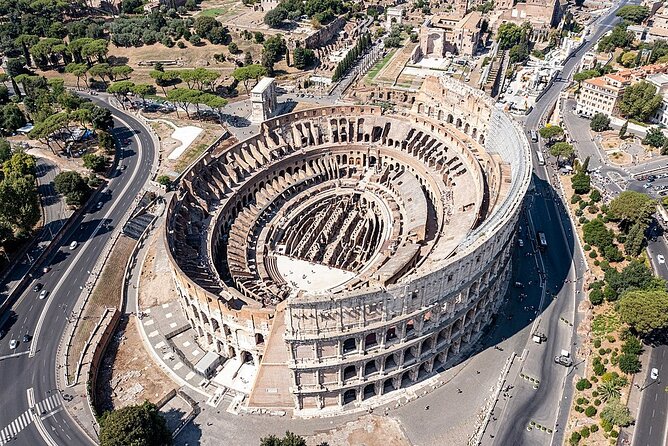
The audio guide is in English and is sent before your visit via email or WhatsApp. You listen on your own phone with your own headset, and it’s not GPS-enabled, so it won’t automatically know where you are inside the monument.
This is where people either get great value or feel frustrated. If you treat the audio as background context while you explore, it often works well. If you want the audio to tell you exactly when to turn and where to stand next—like a live guide—crowds and movement can make that harder.
Here’s a smart way to get the most out of it:
- Listen to a segment, then slow down at the spot it’s describing
- If the area is too packed to stop, switch to scanning and reading signs, then resume audio when you can pause
- If your phone battery is low, charge before you leave—your ears and your map both live on your device
Also plan for the reality of download/access. Some people have run into trouble with files that are hard to download in the moment, so test your access before you walk up to the first gate.
Standard vs arena access: which one is worth the extra cost
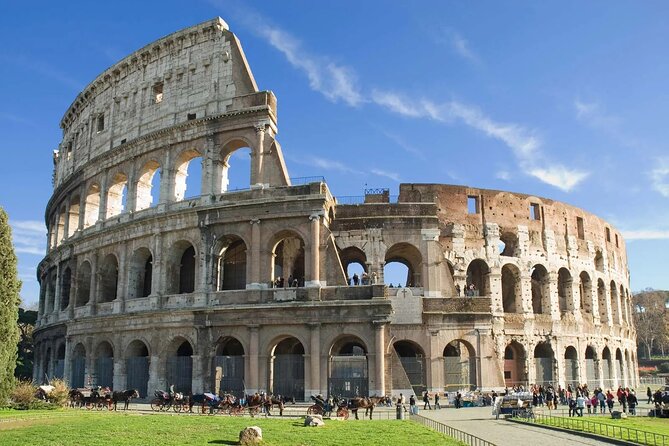
Your base price includes the Colosseum ticket, and you can opt for arena access. Regular admission is listed at €18 per person, while the Colosseum ticket with arena access is €24 per person—the remaining portion of your purchase covers service fees and the audio guidance setup.
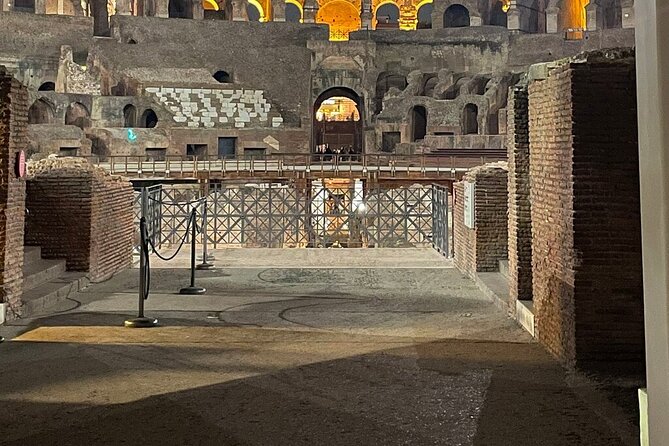
What does arena access change in practice? Based on what you’ll experience on-site, it generally gives you a more hands-on sense of how the space functioned for events. It can also make photography easier because you’re not only viewing from the outer edges.
One more thing: arena access can still be busy. The Colosseum is a high-demand site, so the lines and crowding won’t vanish—but the payoff can feel bigger if you care about standing in the heart of the action.
Inside the Colosseum: what to focus on (beyond the obvious)
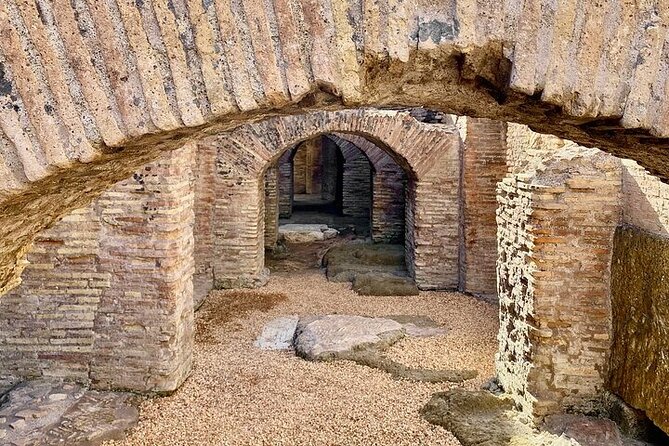
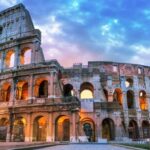
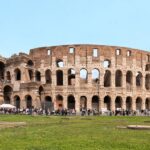
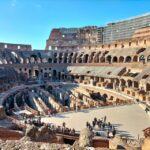
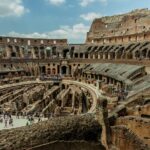
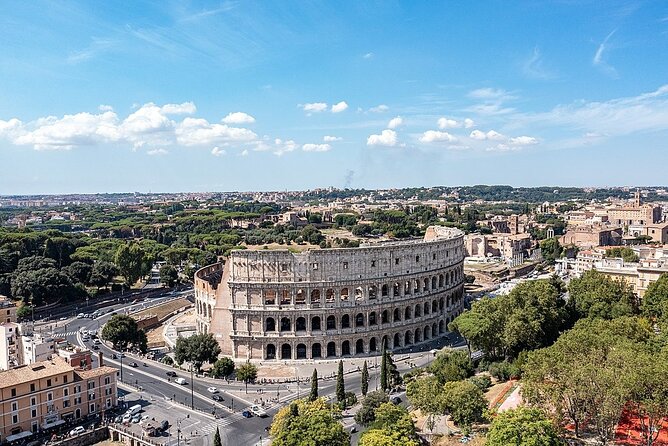
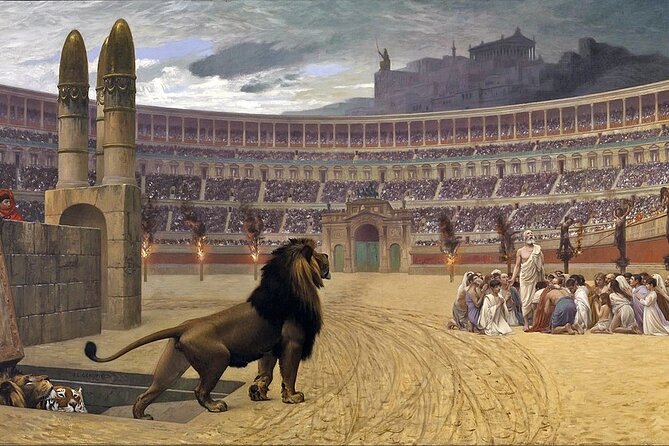
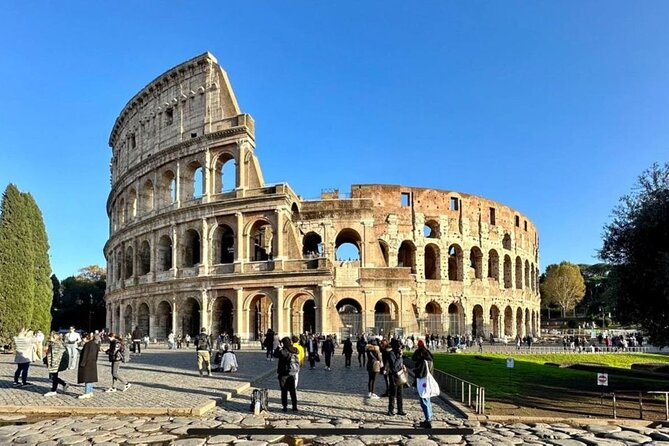
The Colosseum is elliptical, massive, and still one of the most recognizable ruins in the world. It sits just east of the Roman Forum, and from the inside you get that immediate sense of scale—stone rows and pathways that were built for movement and spectacle.
If you’re visiting without a live guide, I suggest choosing a few priorities so you don’t wander in circles:
- Pick one area to linger and take in the architecture
- Look for how the levels connect—doors, stairways, and passageways
- Use the audio as a companion for interpretation, not as a strict route
Wear shoes you can trust. The Colosseum involves stairs, uneven surfaces, and lots of walking in crowded conditions. On hot days, it can also be more exhausting than you expect, especially if you need frequent pauses.




Palatine Hill: why this hill feels different
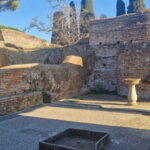
Palatine Hill is more than ruins—it’s an open-air museum area with layered storytelling. It’s often described as the centremost of Rome’s seven hills and was tied to the earliest nucleus of the Roman Empire.
What I like about Palatine as a follow-up to the Colosseum is the change of pace. The Colosseum is a structured spectacle space. Palatine is more about wandering through time: viewpoints, scattered stone details, and museum finds inside the Palatine Museum.
A practical heads-up: Palatine can involve both walking and uneven footing. Give yourself time to move at a comfortable pace and don’t treat it like a quick checkbox.
If you’re relying on audio here, remember it’s not GPS-driven. Plan to pause, look around, then play again when you can match the narration to what you’re seeing.
Roman Forum: where the city’s power shows up in the stones
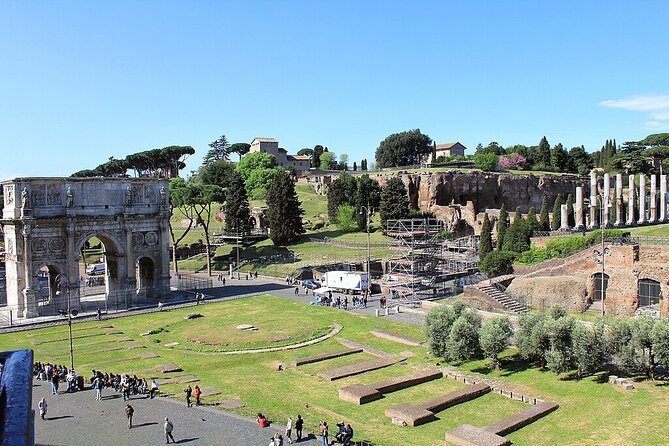
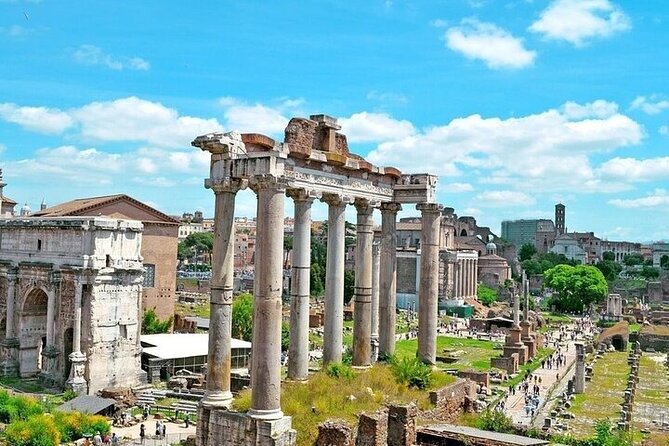
The Roman Forum is a rectangular plaza surrounded by ruins of key government buildings. It was once the center of civic life, with a strong focus on politics, commerce, and public ceremony—so it feels different than Palatine, even though they’re close.
When you step into the Forum area, it’s easy to get the “wow, ruins” feeling. Then you start to notice patterns: the shapes of civic spaces, the spacing between major structures, and how people would have moved through the city center.
This is also the part where timing matters. Your ticket gives you admission to the Forum and Palatine Hill, and you can often visit before or after the Colosseum up to closing. If your Colosseum slot runs late, you may find the Forum shuts before you can fully enjoy it.
Walking time and crowds: your hidden decision-maker
Even with timed entry, the Colosseum day can stretch. Expect queueing for security, possible bottlenecks as crowds funnel between sections, and a lot of walking between big spaces.
That’s why your “2 to 4 hours” duration is believable only if you move with intent. If you want to linger—especially with arena access—think more in terms of a longer, slower plan.
If you’re the kind of person who likes quiet moments, go as early as you can. The Colosseum and the Forum are rarely empty, but starting at a lower-crowd time makes a huge difference in whether you enjoy the audio and take photos without constant stopping.
One more street-smart note: outside the Colosseum area, you may encounter people trying to get your attention with aggressive sales or scams. Keep your focus on your ticket and entrance. Say no, keep walking, and don’t hand over money or personal items.
Price and value: what $45.04 buys you (and what it doesn’t)
At about $45.04 per person, this is positioned as value compared to buying separate admission pieces on your own—especially because the purchase includes:
- a Colosseum reservation/timed entry
- admission to the Roman Forum and Palatine Hill
- an English digital audio guide delivered to your phone
But don’t expect it to be a private-guide experience. It doesn’t include a live guide, and it doesn’t guarantee you skip security lines. You’re paying for organization and the audio layer, not for narration by a person.
If you can use the audio comfortably and you don’t mind managing your own pacing, the value is strong. If you really want a person to route you linearly and point out key spots in sequence, you may feel like you paid for less than you expected—especially on a crowded day.
So the math is simple: this is a great fit if you want freedom. It’s a weaker fit if you want step-by-step guidance.
Who should book this Colosseum + Forum + Palatine access
This works best for you if:
- you prefer self-paced sightseeing over scheduled group marching
- you can handle history through audio and signage
- you want to cover three major sites in one visit without booking separate tickets
It may be less ideal if:
- you struggle to follow audio while moving through busy spaces
- you expect the audio to trigger at exact locations like a GPS guide
- you need a lot of help mapping out where to go next
If you’re visiting with someone who likes different pacing, this format can be a win because you can pause independently inside the same general entry windows.
Should you book this Colosseum + Roman Forum + Palatine Hill access?
Yes, with one big condition: plan to be your own guide.
If you show up with your ID ready, have your audio working on your phone, and give yourself enough time to enjoy the Forum and Palatine before closing, this is one of the most practical ways to see Rome’s top ancient sights without paying for a live guide. Arena access is the smart upgrade if you want more than the usual perimeter views.
If you hate crowds, need ultra-clear turn-by-turn guidance, or you’re worried about troubleshooting audio tech, you might consider a guided option instead. But if you’re comfortable exploring and using audio as a companion, this ticket set offers a lot of value for the time it takes.
FAQ
Is this a guided tour with a live guide?
No. This is a self-guided visit with a pre-purchased ticket and a digital audio guide you listen to on your own phone with your own headset.
What language is the audio guide in?
The digital audio guide is provided in English.
How do I receive the audio guide?
It’s sent to you by Email or WhatsApp before the day of the activity. The audio is not GPS enabled, and you’ll need your phone and headset to listen.
Do I need to bring a photo ID?
Yes. All visitors must carry a valid photo ID/document, and it’s checked at the entrance. A copy or a photo in your phone is accepted.
Is timed entry the same as skipping all lines?
Timed entry is included for the Colosseum, but you still have to follow the security/ticket checking queue. Some waiting is expected on busy days.
Can I visit the Roman Forum and Palatine Hill before or after the Colosseum?
Yes. You can visit them before or after the Colosseum until closing, but you have only one entry to the Roman Forum and Palatine Hill area.
What happens if poor weather cancels the experience?
This experience requires good weather. If it’s canceled due to poor weather, you’ll be offered a different date or a full refund.