REVIEW · VALLETTA
Valletta: Self-Guided Audio Tour, Map and Directions
Book on GetYourGuide →Operated by Ugide Malta audio tours · Bookable on GetYourGuide
Valletta keeps moving, but this guide keeps it simple. With 29 MP3 tracks you can download once and listen when you want, the city stops feeling like a blur. I also like that you get a printable map and clear directions so you’re not wandering in circles.
What makes it especially useful is the way it builds a route around major landmarks you’ll actually want to see: St. John’s Co-Cathedral, the Grand Master’s Palace, Auberge de Castille, plus green breaks like Lower Barracca Gardens. The audio also covers the story of the Knights of St. John as you pass the places tied to their power.
The main drawback is tech. One review flagged clumsy downloads and MP3s that may show up in a weird order, and the tour is not designed as a live, guided experience. If you’re not into managing files, be ready to do a little setup before you start walking.
In This Review
- Key highlights you can plan around
- Starting at Valletta Main Gate: a walk you can actually finish
- How the MP3 audio guide works (and why order matters)
- The route in real walking terms: from City Gate to Hastings Garden
- City Gate and early plaza energy
- Streets with famous names (good for keeping direction)
- Churches and museums that slow you down
- St. John’s Co-Cathedral as the anchor stop
- National Library and Saint George’s Square
- Grand Master’s Palace and Auberge de Castille: where the story tightens
- War-focused landmarks: National War Museum and Fort Saint Elmo
- Gardens and bastions: where your legs get a break
- Victoria Gate and the street-level city
- Palazzo Parisio and the softer end of the walk
- Your tour pacing cheat code
- What I like most about this self-guided approach
- Price and value: $9 for 2 hours of guidance
- Who this Valletta audio tour fits best
- Should you book this Valletta self-guided audio tour?
- FAQ
- Where do I start the Valletta self-guided audio tour?
- How long does the audio tour take?
- What language is the audio guide in?
- What is included with the tour?
- Do I need my own MP3 player?
- Is this a guided tour with a person?
Key highlights you can plan around
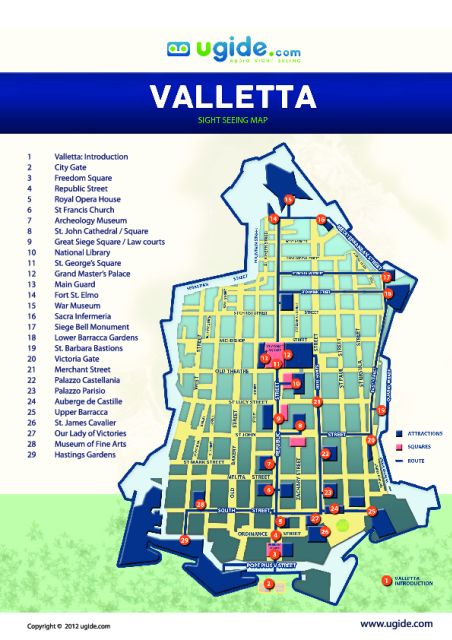
- 29 professionally produced MP3 tracks covering Valletta’s top stops
- Printable map and directions tied to an easy walk route
- Major landmark flow from St. John’s Co-Cathedral to Grand Master’s Palace and Fort Saint Elmo
- Garden and bastion breaks like Lower Barracca Gardens and Saint Barbara Bastions
- Self-paced flexibility so you can linger without waiting for a group
- Potential download/playback hassle if your device doesn’t like the file order
Starting at Valletta Main Gate: a walk you can actually finish
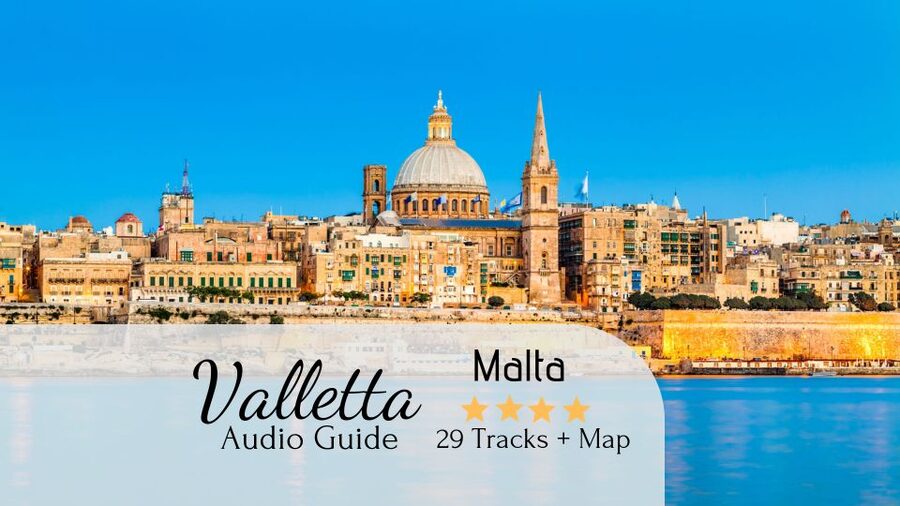
This is a self-guided audio tour of Valletta’s highlights, designed to work within a roughly 2-hour window. You start at the Valletta Main Gate, then follow the route with help from the provided map and directions. That matters because Valletta is compact, but it’s still easy to lose your sense of where you are—especially if you’re there for the first time.
What you’re buying for $9 per person is basically time-saving structure: audio narration that tells you what you’re looking at and where to go next. You don’t have to stick to a group schedule or rush past stops just because someone else is moving faster. And since it’s MP3 format, you’re not locked into streaming Wi‑Fi once you’re out in the streets.
One practical thing to know: it’s not a guided tour with a person walking and talking you through the city. After booking, you get instructions to download the audio guide, plus a printable map. So your experience depends a lot on how smoothly your downloads work before you begin.
You can also read our reviews of more tours and experiences in Valletta.


How the MP3 audio guide works (and why order matters)
The guide is English and comes as 29 audio tracks in MP3 format. You download them to a personal device (the listing notes an MP3 player is not included, so you’ll want your own). The whole point is that you can listen at your leisure—then pause, skip ahead, or backtrack if you need to.
Here’s the potential snag: at least one review said the audio files can feel clumsy to download and may come in a sporadic order, meaning you might have to find the right file each time instead of getting a clean track-by-track sequence. The narration was still praised as insightful, but the playback workflow wasn’t effortless.
So I suggest this simple approach:
- Before you start walking, download the audio guide and take 2 minutes to confirm the files are where you expect on your device.
- If the track order looks messy, don’t assume you can press play and get the whole route in order. Be ready to tap the specific next track you want.
- Use the printable map as your anchor. Even if audio order is odd, the map keeps you on route.
If you like planning routes but hate feeling stuck, you’ll probably enjoy this. If you want an audio tour that feels like a guided narration sequence with zero thinking, this may test your patience.
The route in real walking terms: from City Gate to Hastings Garden
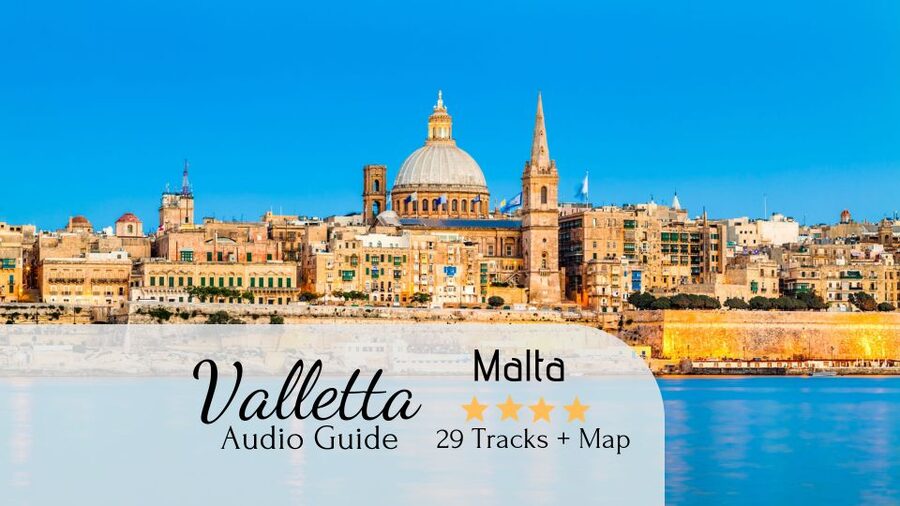
Below is the route you’ll follow as the audio guide steps you through Valletta’s core sights. Think of this as a highlight loop built for walking, not a bus-and-stop itinerary.
City Gate and early plaza energy
Valletta Introduction – This is your setup track. It’s where you get oriented on how the route is meant to flow.
City Gate – The start-of-tour landmark that helps you understand what you’re entering.
Freedom Square – A central open-space stop that works as a reset point while you begin listening.
Streets with famous names (good for keeping direction)
Republic Street – A major street segment that you can use like a spine for your route.
Royal Opera House – A cultural landmark stop where the audio gives you the background context while you stand in front of the building.
Churches and museums that slow you down
Saint Francis Church – A key religious landmark on the way that’s worth giving your attention to rather than treating as a photo stop.
Museum of Archaeology – A museum stop that’s helpful if you want to connect what you’re seeing now to older layers of the island’s story.
St. John’s Co-Cathedral as the anchor stop
St. John’s Co-Cathedral – This is one of the headline sights of the route, and the audio track is built to explain why it matters as you approach it.
Great Siege Square – A named square that keeps the narrative moving, tying the city’s defensive past to what you see around you.
National Library and Saint George’s Square
National Library – A landmark stop that gives you a break from purely military-focused themes and shifts toward civic identity.
Saint George’s Square – Another open area that’s practical for regrouping your pace before heading to the power center.
Grand Master’s Palace and Auberge de Castille: where the story tightens
Grand Master’s Palace – This is the big “center of authority” stop on the route. The audio is there to help you read the place instead of just noticing it.
Main Guard – A nearby stop that keeps the focus on the systems of control and protection tied to the city.
Auberge de Castille – Later in the route, but still part of the same theme: where the Knights’ presence becomes visible in the architecture.
If you care about the Knights of St. John, this cluster is where the audio guide earns its keep. It’s one thing to see buildings. It’s another to hear how they connect.
War-focused landmarks: National War Museum and Fort Saint Elmo
National War Museum – A stop that helps you understand the city through a military lens while you’re walking it.
Fort Saint Elmo – A major fort landmark, and one of the strongest “place-based” stops on the route.
Sacra Infermeria – Another key site in the Fort Saint Elmo area of the route. Even if you don’t go inside anywhere, the narration helps you connect the building to the broader story.
Siege Bell Monument – A named monument stop that wraps that section up with a clear point of focus.
This part is a lot for a walk, but it’s also structured. If you’ve got limited time in Valletta, it’s efficient to cover this narrative in one continuous stretch rather than trying to piece it together later.
Gardens and bastions: where your legs get a break
Lower Barracca Gardens – A lovely public gardens stop that’s built into the route so you get some breathing room.
Saint Barbara Bastions – Bastions keep the viewpoint and fortification theme alive, but you get a more open, outdoor feel compared to museum stops.
Victoria Gate and the street-level city
Victoria Gate – A gate stop that’s useful for navigation. It also helps you understand where you are within the fortress-city layout.
Merchants Street – A street segment that shifts the vibe from defensive to everyday city life.
Castellania – Another named stop on the route that adds more local texture as you keep moving.
Palazzo Parisio and the softer end of the walk
Palazzo Parisio – A palace stop that changes the mood again. The narration gives you context as you pass through this more refined side of Valletta.
Upper Barracca Gardens – A second garden area that lets you cool down before the final cultural cluster.
Our Lady of Victories – A religious landmark near the end of the loop.
Saint James’ Cavalier – A fortification-related stop that keeps you connected to the city’s defensive identity through the final stretch.
Museum of Fine Arts – A cultural finish point that’s great if you want the day’s last audio track to end in art rather than military terms.
Hastings Garden – The final named stop, which is a smart place to pause, sit if you need to, and let the route settle in your brain.
Your tour pacing cheat code
You don’t have to listen at every stop. If you start to feel rushed, pick the tracks that match your interests:
- If you care about the Knights of St. John and power centers: focus on St. John’s Co-Cathedral, Grand Master’s Palace, Main Guard, Sacra Infermeria, and Auberge de Castille.
- If you want outdoor variety: prioritize Lower Barracca Gardens, Saint Barbara Bastions, and Upper Barracca Gardens.
- If you like a strong city narrative: follow from Great Siege Square through Fort Saint Elmo and Siege Bell Monument.
What I like most about this self-guided approach
The best part of this tour is how it turns Valletta into a sequence you can manage. You’re not guessing what to see next. You follow directions, and the audio tells you what you’re looking at as you move.
Two things I genuinely like:
1) You control the timing. If one building feels like a stop you want to linger at, you can pause. If another doesn’t, you can keep going. That’s a big deal in a city where streets and stairs can quietly steal your energy.
2) It’s built for real attention. The audio tracks aren’t just “this is old.” They include descriptions from experienced narrators/writers/historians and are designed to direct you to key highlights like St. John’s Co-Cathedral and Fort Saint Elmo. Even when you’re moving fast, you get enough framing to notice details instead of just snapping photos.
Price and value: $9 for 2 hours of guidance
At $9 per person, the value is mostly about what you’ll do with the time. You’re getting:
- 29 MP3 audio tracks
- a Valletta map and directions
So the question isn’t whether it’s cheap. It’s whether it helps you see more in less time than you would on your own. If you’re the kind of visitor who likes to walk and learn in your own pace, this is a solid use of a small budget.
Where value can slip a bit is the tech side. If downloads are clumsy or file order is messy on your device, you’ll spend more time fixing playback than listening. That doesn’t ruin the content, but it can undercut the ease you’re paying for.
One more note: the tour includes audio files but not an MP3 player. That’s fine if you’re using your phone or another device, but it’s worth checking your setup before you head out.
Who this Valletta audio tour fits best
This experience is ideal if you:
- Like self-guided walking more than live guide chatter
- Want a structured route without joining a group
- Plan to visit several of Valletta’s biggest highlights, especially St. John’s Co-Cathedral, the Grand Master’s Palace, and Fort Saint Elmo
- Prefer learning while you walk, using audio in MP3 format on your own device
It may be less ideal if:
- You want the tour to feel fully hands-off with perfect playback order
- You don’t want to manage downloaded files or troubleshoot your device
Should you book this Valletta self-guided audio tour?
I’d book it if you’re short on time and you want a clean way to hit Valletta’s top highlights in one focused walk. The route is built around major landmarks (St. John’s Co-Cathedral, Grand Master’s Palace, Auberge de Castille, Fort Saint Elmo) and includes pleasant stops like Lower Barracca Gardens so it doesn’t feel like marching from one stone wall to the next.
I’d skip it or go in with low expectations if you hate any audio setup work. One review called out download and playback order issues, and because this is truly self-guided (no live guide), your experience will reflect how easily you can get the MP3s running.
If you’re prepared—download first, use the printable map as the backbone—this is a smart, low-cost way to make a Valletta stroll feel like a planned day.
FAQ
Where do I start the Valletta self-guided audio tour?
You start at the Valletta Main Gate.
How long does the audio tour take?
The duration is about 2 hours.
What language is the audio guide in?
The audio guide is in English.
What is included with the tour?
You get 29 audio tracks in MP3 format and a Valletta map and directions.
Do I need my own MP3 player?
Yes. An MP3 player is not included, but you can listen on your own mobile device or MP3 player.
Is this a guided tour with a person?
No. It’s self-guided. After booking, you receive instructions to download the audio guide and you follow the printable map and directions.