REVIEW · BRUSSELS
A Self-Guided Tour of Brussels: From Medieval to Modern Times
Book on Viator →Bookable on Viator
Brussels has a story you can walk through. This self-guided tour uses the VoiceMap app (with audio by Isaac) to connect medieval street corners, royal landmarks, and modern-day culture in a single, easy-to-follow route through the center. You go at your own pace, with offline maps and narration that helps you spot what you’d otherwise miss.
I like that you get lifetime access plus offline support (audio, maps, and geodata), so you can use it today, on another trip, or even as a virtual option from home. I also like the stop mix: UNESCO Grand Place, the Tintin Comic Mural, the Musical Instruments Museum area, and the pocket-sized comedy of statues like Manneken Pis and Jeanneke-Pis.
One consideration: the route has a lot of uphill moments, including climbs toward major viewpoints, so comfortable shoes and breaks help. Also, you’ll need to bring your own smartphone and headphones, and museum tickets aren’t included if you decide to enter any sites along the way.
In This Review
- Key highlights to know before you go
- Starting at Pl. des Palais: how the tour actually feels in motion
- Royal Palace to Royal Square: monarchy, myth, and a statue you’ll remember
- Grand Place UNESCO to Tintin Comic Mural: the city at its most recognizable
- Mont des Arts garden, bells at Kunstberg, and a music detour that works
- Mary Magdalene Chapel, Agoraplein–Grasmarkt, and clues to medieval Brussels
- Galerie de la Reine, Toone puppet theatre, and the city’s playful side
- La Monnaie De Munt, De Brouckèreplein, and spotting the old-meets-new mix
- Saint Catherine to Sint-Katelijne: church architecture and medieval fragments
- Stock Exchange, City Museum, and Town Hall: when Brussels got organized
- Manneken Pis, Anneessenstoren, and the view moments that reward the climb
- Sablon to Marolles: Our Lady of Victories and finishing with a big skyline look
- Price and value: why $9.99 can be a smart use of your day
- What to bring, plus the pacing tip that saves the day
- Who this self-guided tour fits best
- Should you book this Brussels medieval-to-modern self-guided tour?
- FAQ
- How long does the Brussels self-guided tour take?
- What do I need to use the tour?
- Is the tour fully self-guided?
- Do I need internet to listen and see directions?
- Are museum tickets included?
- Where does the tour start and end?
- Is the tour refundable if I cancel?
Key highlights to know before you go
- Audio by Isaac: clear stories tied to what you’re seeing, not generic facts.
- Offline VoiceMap: audio, maps, and geodata work without relying on spotty connection.
- UNESCO Grand Place + comic culture: guild buildings one moment, the Tintin mural the next.
- Big-picture views: viewpoints from high ground like Palais du Justice and the Marolles area.
- A mix of serious and silly: palaces and churches next to puppet theatre and peeing statues.
Starting at Pl. des Palais: how the tour actually feels in motion
The experience starts at Pl. des Palais 1 (1000 Bruxelles). Once you book, you get instructions plus a unique code to download the tour, and the app guides you to the starting point. When you’re there, you tap start. That sounds simple because it is—but it matters, since you’re not spending your time figuring out where to go next.
This is a self-guided route, but it’s still structured. Expect a steady sequence of landmarks that mostly makes sense on foot through central Brussels rather than a random collection of stops. The total walk time clocks in around 1 hour 30 minutes to 2 hours, depending on how often you pause.
You’ll also love that you can use it before or after your booking date, not only on one specific day. That gives you flexibility if you’re juggling opening hours, crowds, or weather.
You can also read our reviews of more tours and experiences in Brussels.
Royal Palace to Royal Square: monarchy, myth, and a statue you’ll remember
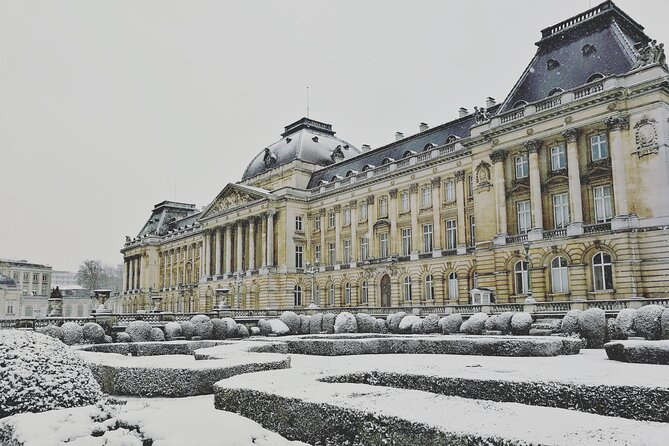
Your first major theme is Belgium’s royal story. As you approach the Royal Palace of Brussels, the audio focuses on the lineage of the Belgian Royal Family and the grandeur of their former residence. Even if you’re not a royal-history person, it helps you read the city differently: Brussels isn’t just a place to stroll; it’s a place that still organizes itself around power and ceremony.
Next is Royal Square, where you’ll spot the statue of Godfrey of Bouillon. He’s one of those historical figures who shows up in Belgium’s cultural memory, and seeing him here gives the early part of the walk a strong anchor. It’s a good moment to slow down, look up, and orient yourself before the route shifts into town-square architecture.
Grand Place UNESCO to Tintin Comic Mural: the city at its most recognizable
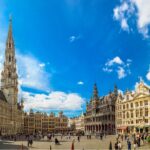
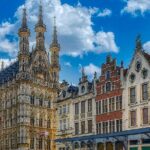
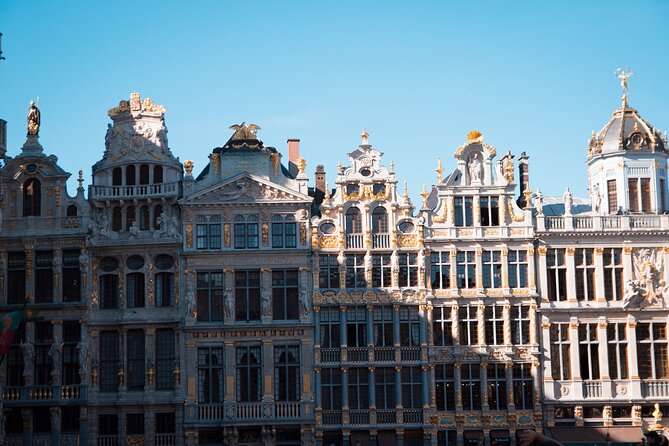
Then you hit Grand Place, the UNESCO-listed centerpiece that still looks unreal if you’ve only seen it in photos. What the audio helps with here is noticing the details: the ornate guild houses and palaces that ring the square. You’ll get a sense of how Brussels used to work—trade, civic pride, and competition—written directly into stone and decoration.
After absorbing Grand Place, the route adds a playful left turn with the Tintin Comic Mural. That placement is smart. It reminds you Brussels doesn’t treat culture like a museum case. Comic art belongs in public space, and Belgium owns that identity.
Tip: spend a few extra minutes here if you’re a slow-walker. This stop is the kind where your camera wants time, and your brain wants time too.
Mont des Arts garden, bells at Kunstberg, and a music detour that works
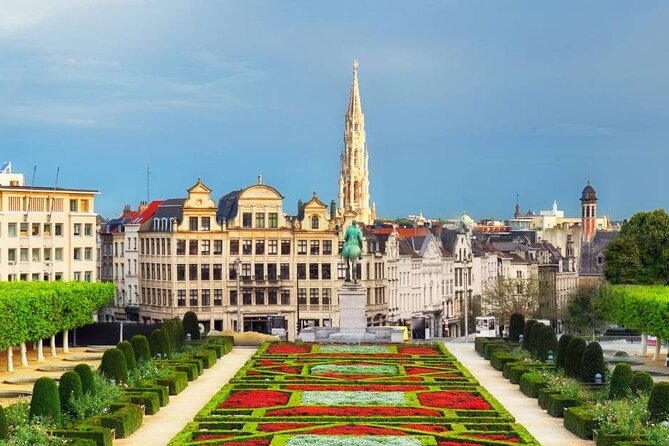
The tour moves into the Mont des Arts Garden area, where the pace softens. The audio points you toward the calmer, scenic side of this stretch—perfect if you need a breather after the “big landmark” zones.
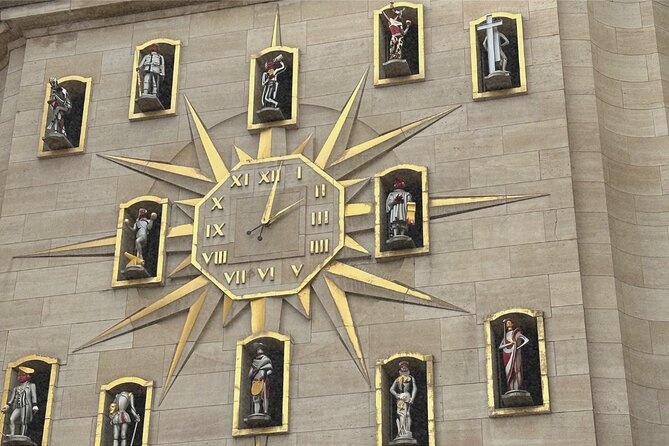
Right nearby you’ll pass Klokkenspel van de Kunstberg. This is where Brussels does its own version of sound-tracking: the bells add a melodious layer to the walk. Even if you’re not planning to stop for long, it’s a strong moment because it changes the tour from visual-only into something you can hear.
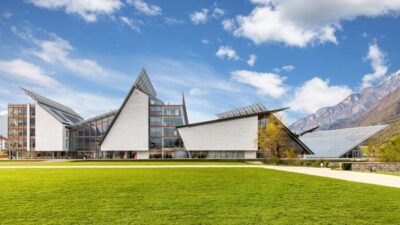
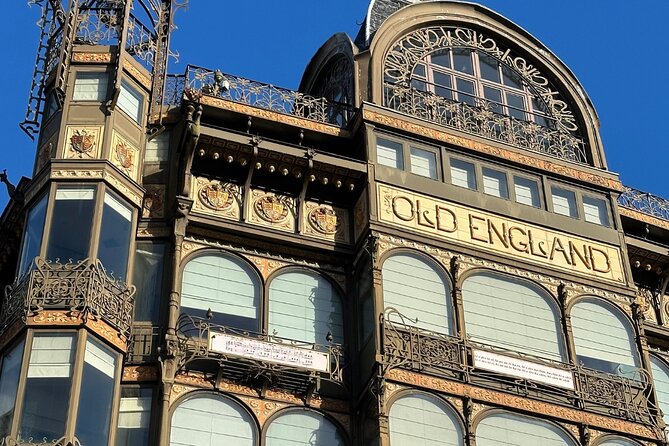
Then you arrive at the Musical Instruments Museum. Even if you don’t plan to enter, the audio framing helps you understand what you’re walking past. You’ll get stories about how music evolved over time, plus a sense of the collection’s purpose. It’s a “why this place matters” stop, not just a landmark name.
Important practical note: the tour doesn’t include tickets or entrance fees. If you want to go inside the Musical Instruments Museum, you’ll need to handle that separately.
Mary Magdalene Chapel, Agoraplein–Grasmarkt, and clues to medieval Brussels
One of the more satisfying “history-reading” sections is around the Mary Magdalene Chapel. This is where the audio leans into religious heritage and architectural significance. You don’t need to be religious to enjoy this stop. What you’re really appreciating is continuity—how older beliefs and older buildings kept shaping the streets around them.
Next comes Agoraplein – Grasmarkt, where you’ll encounter remnants tied to Brussels’ past: traces of the former harbor and hints of medieval city walls. This section works because it makes you look for subtle leftovers rather than expecting every piece of medieval Brussels to be intact. That mindset makes the whole walk more rewarding.
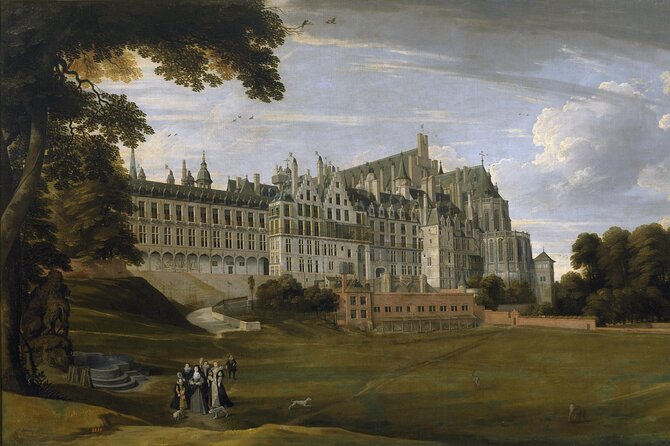
And if you’re the type who likes connecting dots: the tour also references the Coudenberg Palace area as part of its broader story of Brussels shifting from medieval to later eras. Even if you’re not stepping inside, the context helps you understand why people built and rebuilt where they did.
Galerie de la Reine, Toone puppet theatre, and the city’s playful side
Brussels loves an interior corridor, and the Galerie de la Reine gives you exactly that. This historic shopping arcade is a good change of pace from open squares. The audio frames it as elegant and architectural, so you can enjoy it even if you’re not shopping.
Then you get Toone, the puppet theatre. It’s a standout because it’s not just a photo-stop. It anchors Brussels folklore in a living tradition. If you like cultural experiences that feel local rather than international-brand-y, this is a great fit.
The tour also brings you past the smaller-than-Manneken-Pis character, Jeanneke-Pis, which plays into the city’s quirky humor. It’s light, but it also tells you something: Brussels doesn’t only memorialize kings and saints. It keeps jokes in the street-level story.
La Monnaie De Munt, De Brouckèreplein, and spotting the old-meets-new mix
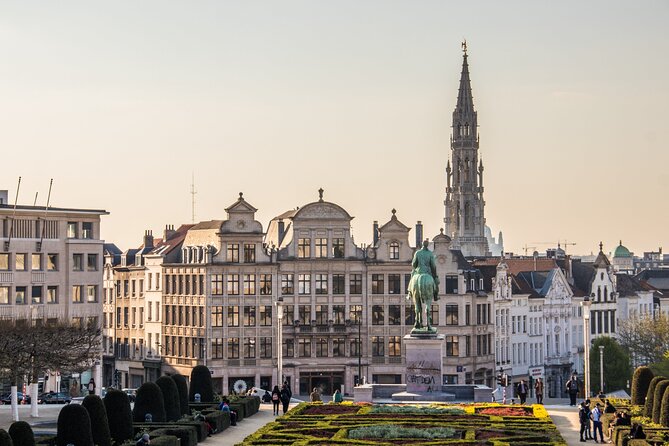
As the route continues, it heads into the cultural center near La Monnaie De Munt, the well-known opera house. The audio helps you appreciate it as part of Brussels’ cultural scene and history. Even if opera isn’t your thing, it’s worth noting how strongly arts institutions shape city identity here.
Then you’ll walk through De Brouckèreplein, a square filled with activity. It’s useful in the tour because it’s a “today” contrast after older architecture. You can feel the city living while the audio keeps the historical thread going.
After that, watch for the Black Tower. This is a classic Brussels contrast moment: an older structure appearing amid more modern surroundings. It’s the kind of detail that makes self-guided tours better than just following a list—you start noticing how layers overlap.
Saint Catherine to Sint-Katelijne: church architecture and medieval fragments
Now you get into Brussels’ religious architecture: the Church of Saint Catherine is a key stop. The audio gives you a way to read it beyond face value—religious heritage and the architectural/spiritual role the building plays in the city.
Near Sint-Katelijneplein, you get a livelier square feel again, with a market-energy vibe that can be fun depending on the day. The stop works as a pause before another architecture clue: the Ancien Clocher Sainte Catherine (an older bell tower remnant). This is one of those “you’re not seeing the whole thing, but you’re seeing proof it existed” moments.
If you’re the type who enjoys small historical leftovers, these stops deliver. If you’re expecting everything to be perfectly restored, you might need a little patience to appreciate the fragments.
Stock Exchange, City Museum, and Town Hall: when Brussels got organized
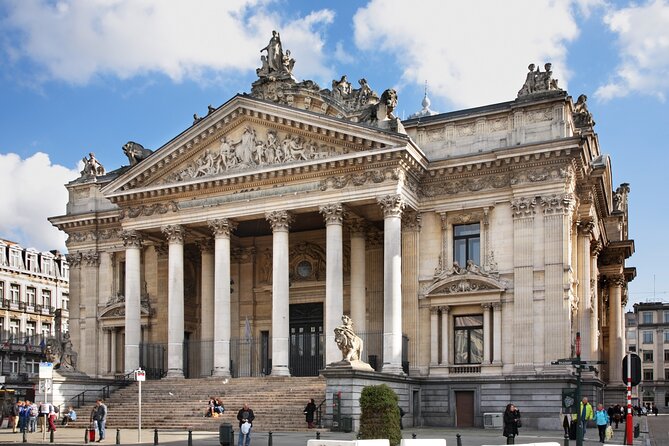
Next up are the city’s administrative and economic landmarks. You’ll pass the Brussels Stock Exchange, and the audio gives context for Brussels’ financial history and its place in the region’s economic landscape.
Then there’s the Brussels City Museum. The tour positions it as a deeper look into Brussels’ past through varied historical artifacts. If you’re curious and want more than street-level storytelling, this is the “go a level deeper” option—again, though, museum entry isn’t included.
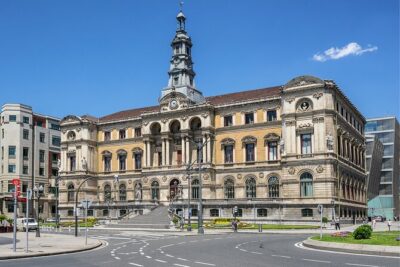
Finally, you’ll reach the Brussels Town Hall, one of the big architectural statements in the area. The audio helps you understand its administrative significance, so it doesn’t feel like just another pretty building. It’s a reminder that Brussels’ public life—and its power—has been formalized for a long time.
Manneken Pis, Anneessenstoren, and the view moments that reward the climb
At some point, you’ll meet the famous Manneken Pis. The tour’s tone here is exactly what Brussels is good at: serious landmarks paired with a wink. Even if you’ve seen photos before, seeing it in place is different. It’s one of the best short “that’s Brussels” moments in the city.
After that, the walk continues toward Anneessenstoren. This stop is both historical and scenic. The audio frames it as a piece of Brussels architecture, and you’ll get a picturesque sense of the surrounding cityscape.
Now for the part many people remember most: the viewpoints. The tour includes climbs that take you up toward Palais du Justice for panoramic views, and it also includes a separate viewpoint experience with View Grande Roue Bruxelles. If you’re worried about energy, keep this in mind: the route isn’t just flat sightseeing. It’s built around elevation changes, which is why the walking shoes matter.
Sablon to Marolles: Our Lady of Victories and finishing with a big skyline look
Near the end, you’ll pass the Church of Our Lady of Victories at the Sablon. This is another religious/architectural stop, but it has a distinct feel compared with earlier churches. The audio ties it to Brussels’ spiritual heritage and architectural beauty.
Then you get your skyline perspective via View Grande Roue Bruxelles. After that, you’ll also climb again to take in the view from Palais de Justice steps. Doing both makes sense because they frame the city differently—one spot gives you a more modern-feeling panorama, while the other ties the view to a civic-monument vibe.
The tour ends at Lookout des Marolles, Rue des Minimes 66 (1000 Bruxelles). Finishing this way gives you a satisfying “capstone” because it feels like you’re seeing the neighborhoods from above rather than just moving between landmarks at street level.
Price and value: why $9.99 can be a smart use of your day
At $9.99 per person, this tour is priced like an audio upgrade, not a full guided day. For that price, you’re paying for three things you’d usually miss if you just wander on your own:
First, you get a planned sequence that hits major anchors like Grand Place, plus cultural variety like Tintin, Toone, and La Monnaie De Munt.
Second, the tour gives you offline maps and audio. That’s a real value point in Brussels, where you’ll often be juggling walking directions among dense central streets.
Third, you get lifetime access and the ability to use it around your booking date, plus a virtual tour option at home. That means the $9.99 isn’t just for one afternoon. It can become your “Brussels basics” tool.
What you should budget separately: smartphone and headphones, plus any museum tickets if you decide to enter places like the Musical Instruments Museum. Food and drink are also not included.
What to bring, plus the pacing tip that saves the day
Bring a charged smartphone and headphones. The tour won’t include them, and audio is the whole point. Also, download the tour in advance if you can, so you aren’t rushing at the start.
Then plan for the uphill. One of the practical complaints about this kind of Brussels route is simple: too many steps and climbs can steal your enjoyment. Your fix is straightforward—take breaks, pause the narration when you need to catch your breath, and resume when you’re ready. The app is designed for you to keep going without feeling lost.
If narration ever acts weird (repeat loops or jumping), that’s usually a tech issue, not a storytelling issue. In that case, contact VoiceMap support through their phone or email so they can help identify what’s going wrong.
Who this self-guided tour fits best
This tour fits you if you want:
- A structured walk through central Brussels without paying for a guide.
- A mix of major sights (Royal Palace, Grand Place) and quirky culture (Tintin, puppet theatre, pee-statues).
- A viewpoint finish that rewards the climb.
It may not fit you as well if you want a fully inside-your-ticket museum day, since tickets and entrances aren’t included. It also isn’t ideal if you can’t handle hilly routes, since the best views involve elevation.
Should you book this Brussels medieval-to-modern self-guided tour?
If you like walking and you want your day to feel connected—palaces to squares to churches to viewpoints—this is a good buy. The offline VoiceMap setup, lifetime access, and the way the audio ties what you’re seeing to what it means make the route worth doing rather than just copying a photo itinerary.
I’d book it if $9.99 feels like a fair price for better orientation, better storytelling, and better moments like Grand Place, Tintin, Manneken Pis, and the panoramic climbs. Just go in expecting an uphill day, bring your own headphones, and plan on paying separately if you decide to enter museums.
FAQ
How long does the Brussels self-guided tour take?
It takes about 1 hour 30 minutes to 2 hours.
What do I need to use the tour?
You’ll need the VoiceMap app on your smartphone and headphones. The tour does not include a smartphone or headphones.
Is the tour fully self-guided?
Yes. Once you download it with your unique code, the app gives directions to the start point and you tap start when you’re there.
Do I need internet to listen and see directions?
No. You get offline access to audio, maps, and geodata.
Are museum tickets included?
No. Tickets or entrance fees for museums or other attractions are not included.
Where does the tour start and end?
It starts at Pl. des Palais 1, 1000 Bruxelles, Belgium and ends at Lookout des Marolles, Rue des Minimes 66, 1000 Bruxelles, Belgium.
Is the tour refundable if I cancel?
No. It is non-refundable and cannot be changed for any reason.