REVIEW · BRUSSELS
Brussels: City Walk with Audioguide in 7 Languages on your Phone
Book on Viator →Operated by City App Tour · Bookable on Viator
Most cities want you to keep up; Brussels lets you wander. With a phone app and GPS guidance, you can pace yourself through major sights like Manneken Pis and the Grote Markt.
I really like the idea of a tour that’s practical instead of rigid: you can pause and restart when you spot a café, pop into a shop, or simply want a slower look at street art. Another win is the sheer amount of content for the money—34 stops/stories over a roughly 2–3 hour walk.
One thing to consider: this experience depends on your phone and on a working internet connection. If the app is glitchy for you—some people report choppy audio, missing photos, or log-in hassles—you’ll want patience and a backup plan.
In This Review
- Key things to know before you go
- Why this Brussels audio walk is such a good “no-stress” option
- Price and value: $8.71 for 34 stories, but bring the right tools
- Starting at Place de la Chapelle: how the route flows through the center
- Grote Markt, Manneken Pis, and the mini-museum vibe around the statue
- Jeanneke Pis: a smaller statue with a big story in 1987
- Chapel Church (Our Lady of the Chapel): Gothic style near the Marollen area
- Royal Palace of Brussels: the official address feeling in the center
- A la Mort Subite and smart break timing (pause, don’t lose the thread)
- Audio quality, voice style, and the app quirks to plan for
- Who this tour suits best (and who should skip it)
- Timing: how long 6.7 km actually feels in central Brussels
- Getting your phone ready so the tour stays fun
- Should you book this Brussels City Walk with Audioguide?
- FAQ
- Does the tour include an audio guide in multiple languages?
- What do I need to bring with me?
- How long is the walk?
- What are some of the main stops on the route?
- Where does the tour start and end?
- Is cancellation free?
Key things to know before you go
- GPS on your phone keeps you oriented as you move between sights, so you’re not constantly checking a map.
- 7 languages mean you can match the narration to your comfort level instead of coping with a single default.
- About 6.7 km on foot, often closer to 3 hours, so wear real walking shoes.
- 34 stops/stories gives you more than postcard stops, with site context as you go.
- Headphones are required, and the tour needs internet access for the audio/photos to load well.
Why this Brussels audio walk is such a good “no-stress” option
Brussels can feel like it has layers on layers: grand squares, small alleyways, official monuments, and then those surprise details—odd statues, quirky corners, and street art that shows up where you least expect it. This kind of self-guided route helps you work with that reality instead of forcing you into a one-size-fits-all group schedule.
I like that you’re not locked into strict timing around each landmark. You can linger at the Grote Markt, then slow down near Manneken Pis and the surrounding streets, and only pick up speed again when you feel ready.
The other practical advantage is that you get to build your own mini-day around the route. You’ll pass places where stopping for a drink or snack makes sense, and the app is designed so you don’t have to abandon the tour just because you want a quick break.
You can also read our reviews of more tours and experiences in Brussels.

Price and value: $8.71 for 34 stories, but bring the right tools
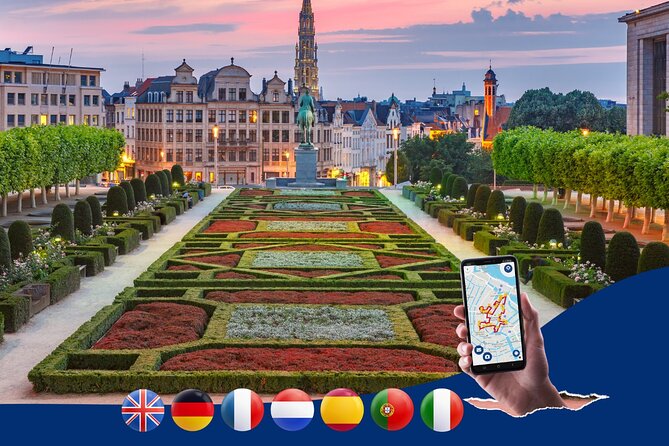
At $8.71 per person, you’re paying for a low-cost way to get structure and narration without paying for a classic guided tour. For that price, the value is in the combination of GPS guidance, multi-language audio, and the fact that it’s private for your group (you’re not sharing the experience with strangers).
But here’s the trade-off: the tour does not include your smartphone or headphones. You’ll be using your own phone with the app, and you’ll need internet connection plus GPS function to make it work properly.
So if you want the tour to feel smooth, plan your setup before you start:
- Charge your phone (or bring a power bank).
- Have headphones ready before you leave the start point.
- Expect that slow mobile data can affect how well the app loads audio and images.
Starting at Place de la Chapelle: how the route flows through the center
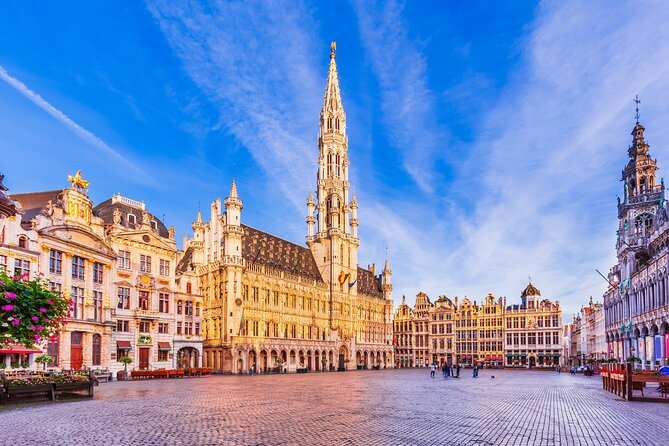
The walk begins and ends at Place de la Chapelle (Pl. de la Chapelle, 1000 Bruxelles). That round-trip convenience matters because you’re not hunting for a final pickup or figuring out transit at the end. You’re simply back where you started.
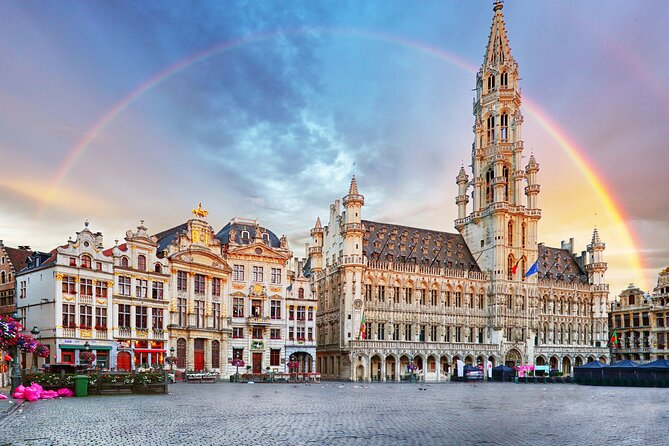
The route is designed to cover a tight cluster of big-name locations in central Brussels. It pulls you along a line that connects the Grote Markt, Manneken Pis, the Gothic Church of Our Lady of the Chapel (often called the Chapel Church), and the Royal Palace area.
You should plan on a total walking distance of 6.7 km. The app’s estimated time is 2–3 hours, but if you actually stop for photos, browse the little shops, and have even one drink, you’ll likely land closer to 3 hours.
Grote Markt, Manneken Pis, and the mini-museum vibe around the statue
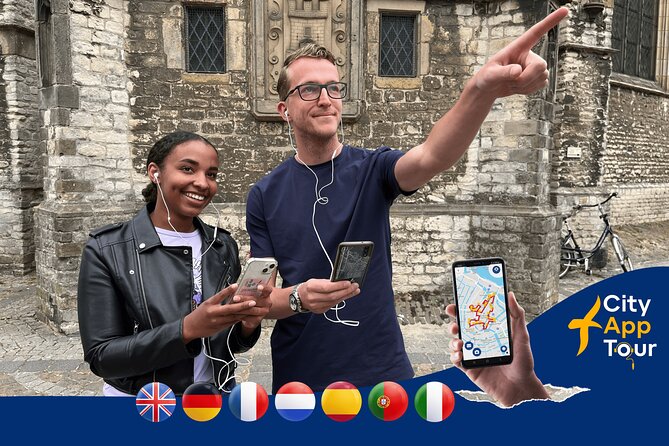
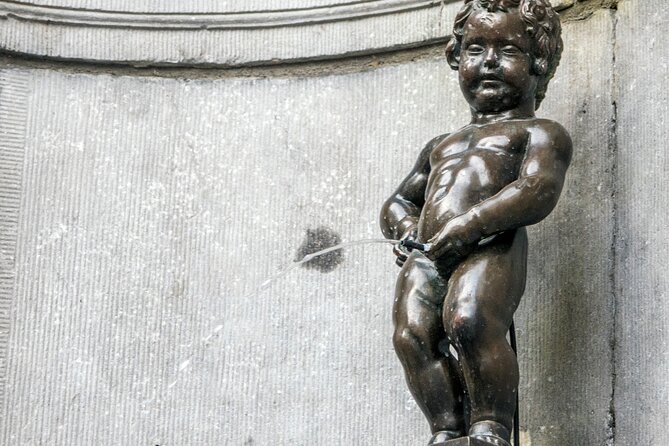
Your route makes you “arrive” in the classic Brussels way—through the grand square zone and into the thick of the city’s famous quirks. The Manneken Pis statue is a key anchor point: it’s only 55.5 cm tall, but it’s one of the most recognizable symbols in Belgium.
You’ll find it near the Grand Place, at the corner of Stoofstraat and Eikstraat. That’s useful because it means you can orient yourself fast even if you miss a turn: you know where you’re heading.
One of the nicer details built into the experience is the surrounding area. There are shops near the fountain where you can buy miniature versions of Manneken Pis. That’s not just souvenir clutter—it’s part of why this spot feels like a little neighborhood ritual. People linger, take photos, and then wander out toward the next landmark.
If you’re the kind of traveler who likes to understand the “why” behind the famous things, this portion helps. You’re not just staring at a statue; you’re walking through the area that turned it into a symbol.
Jeanneke Pis: a smaller statue with a big story in 1987
After Manneken Pis, the route brings you to Jeanneke Pis, another central Brussels “pee statue,” but with a different tone and a specific backstory. Jeanneke Pis is a statue of a girl peeing, installed in 1987 because locals wanted more people to come to their street.
That context changes how you look at it. It stops being only a funny photo-op and becomes a clue about how city culture and local pride can shape public space—even in a playful way.
In a city with lots of official-looking buildings, Jeanneke Pis also serves as a reminder that Brussels has a strong sense of humor right alongside its grandeur. If you’re traveling with kids, this is also the sort of moment they remember because it’s instantly understandable.


Chapel Church (Our Lady of the Chapel): Gothic style near the Marollen area
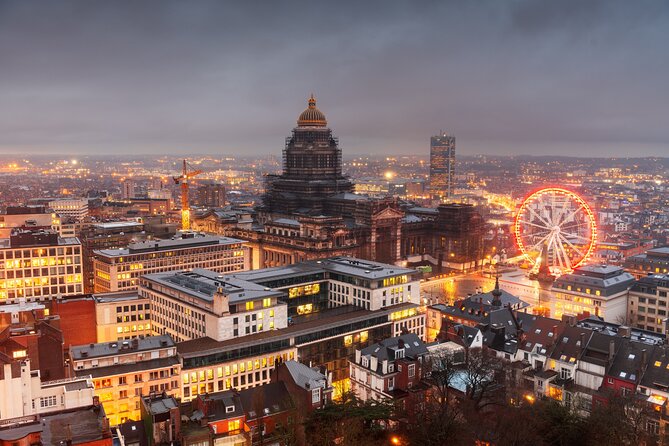
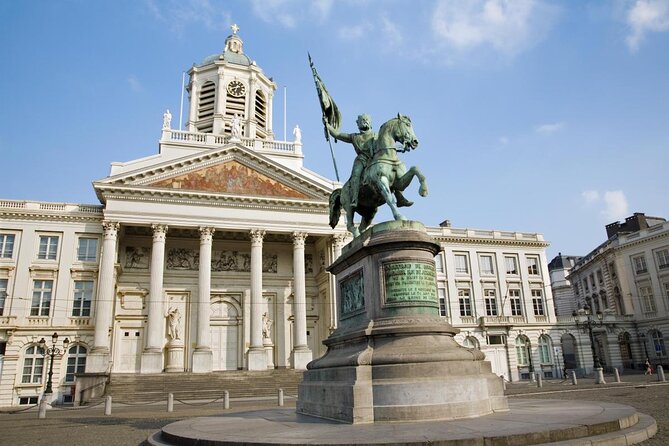
Next up is the Gothic Church of Our Lady of the Chapel, popularly known as the Chapel Church. It sits at the end of Hoogstraat near the Marollen district, which is known as a working-class area.
Even if you don’t go inside (admission isn’t included), the approach matters. You’re moving from the tourist-center feel toward a different Brussels mood—less like a stage set, more like an actual city street leading to an important building.
This stop is valuable because it breaks the run of squares and statues. You get architecture, a sense of place, and a stronger feeling for how the central tourist circuit connects to other neighborhoods.
Royal Palace of Brussels: the official address feeling in the center
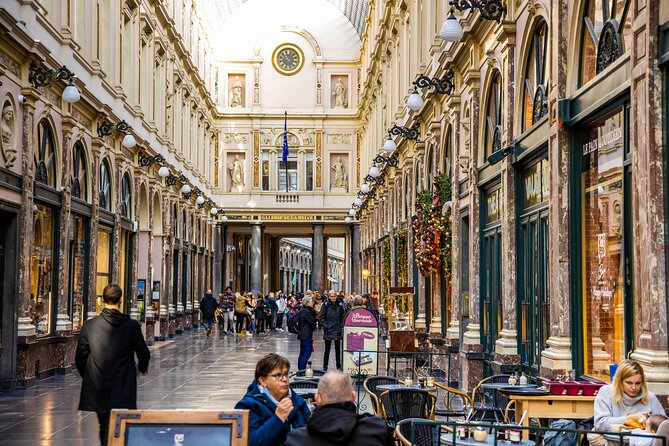
The route finishes this central cluster near the Royal Palace of Brussels, located on Palace Square in front of the Park of Brussels. The palace is Belgium’s main royal residence and serves as the official address of the royal court.
What makes this stop work well in an audio format is contrast. By this point you’ve already seen quirky public statues. Now you’re in front of something formal and ceremonial—so the narration can help you frame what you’re seeing without needing a full guided tour.
Even outside visiting hours, it’s one of those places where the setting does half the work. Palace Square has a sense of order, and the nearby park gives you space to breathe before you loop back toward where you started.
A la Mort Subite and smart break timing (pause, don’t lose the thread)
One of the best ways to get value from self-guided audio is to plan your breaks so you don’t rush through the whole route. This tour actually gives you that flexibility: you can stop at cafés or bars along the walk and you can pause and restart whenever you want.
A highlight mentioned for food and drink is A la Mort Subite, a classic stop on many Brussels beer itineraries. If you like Belgian beer, this is an easy moment to try something local while you’re already passing through the right area.
If you’re not a beer person, you’ll also pass charming cafés where you can choose another local drink. The practical point is this: the audio experience doesn’t punish you for taking a moment to breathe. You can reset your pace without feeling like you’re falling behind.
My tip is simple: don’t schedule a long sit-down meal mid-walk. Keep breaks to a drink or quick bite so the route remains fun and not exhausting.
Audio quality, voice style, and the app quirks to plan for
The tour includes an app with audio in seven languages and GPS guidance. It’s designed to play on your smartphone, with guidance as you walk.
Now for the reality check. Some audio experiences like this rely on voice generation from text rather than a live human narrator. If you want a very warm, human storytelling feel, you might find the synthetic voice less engaging than a traditional guided commentary.
You should also be prepared for app performance issues:
- Some people report the app malfunctioning or repeatedly playing a beeping noise instead of delivering smooth audio.
- Others note audio can be choppy, or certain audio files don’t load.
- There can also be missing or limited photos in places.
None of these are deal-breakers if you go in with the right expectations. Keep your internet working well, and if something fails, treat it like a minor snag—not a reason to ruin the day. A charged phone and headphones help you recover quickly.
Who this tour suits best (and who should skip it)
This is a strong fit if you like flexibility. It works well for solo travelers, couples, and families, especially when you want your own pace instead of a group marching plan.
It’s also good if you enjoy “walk and learn.” The route covers recognizable sights, but the audio approach can add useful context so you don’t just collect photos.
Where I’d be more cautious is if you strongly depend on your phone working flawlessly. Because this experience requires internet + GPS, and because there are occasional reports of logging out or incomplete loading, it’s better if you’re comfortable troubleshooting a bit.
If you’re traveling with someone who hates tech, bring a shared plan: decide who holds the phone, make sure headphones work, and set a realistic expectation that the experience is only as reliable as your connection.
Timing: how long 6.7 km actually feels in central Brussels
The stated duration is 2–3 hours, and you have until the end of the next day to finish. That’s a great safety net if you want to start in the afternoon, pause for a museum, then come back later without stress.
Still, the practical walking time is around 6.7 km. With city stops for photos, statue moments, and at least a small café break, you’ll likely appreciate budgeting closer to 3 hours.
A smart strategy is to start, walk briskly for the first few stops, and then slow down once you reach the more photo-heavy icons like Manneken Pis and Jeanneke Pis.
Getting your phone ready so the tour stays fun
Since this is a smartphone-based audio guide with GPS guidance, your biggest success factor is preparation. Do it before you step into the first stretch:
- Fully charge your phone or bring a power bank.
- Use real headphones so you can clearly hear audio while walking.
- Confirm you have internet access where you’ll be using the app.
Also, because it ends back at the start point, you can treat it like a looped neighborhood walk. You don’t need to decide transit mid-route. When you finish, you’re already in the same area you began.
Should you book this Brussels City Walk with Audioguide?
I’d book it if you want a structured walking route through central Brussels, but you don’t want to commit to a live guide’s pace. For the price, the mix of GPS guidance, seven languages, and 34 stories is a solid deal, especially if you like stopping for drinks and browsing along the way.
I’d pause before booking if you’re picky about audio narration quality or if you know your phone coverage and battery life are unreliable. Because the experience depends on internet and GPS, you’ll have a better time if you’re prepared to keep your connection steady and your phone charged.
If you want a self-guided way to hit the major icons—Grote Markt, Manneken Pis, Jeanneke Pis, Chapel Church, and the Royal Palace area—this is an easy, cost-friendly way to do it at your own speed.
FAQ
Does the tour include an audio guide in multiple languages?
Yes. It includes an app with audio guide content in 7 languages on your smartphone.
What do I need to bring with me?
You’ll need your own smartphone and headphones. The tour also requires internet connection and a GPS function on your phone.
How long is the walk?
Expect about 2–3 hours on average. The walking distance is 6.7 km, and it can feel closer to 3 hours with typical stops.
What are some of the main stops on the route?
The route includes Manneken Pis, Jeanneke Pis, the Chapel Church (Our Lady of the Chapel), and the Royal Palace of Brussels, plus the Grote Markt area.
Where does the tour start and end?
It starts at Place de la Chapelle and ends back at the same meeting point.
Is cancellation free?
Yes. You can cancel for a full refund if you cancel up to 24 hours in advance of the experience’s start time.