REVIEW · TRIESTE
Trieste Bus Tour with Audio Guide
Book on GetYourGuide →Operated by HopTour - Yestour srl · Bookable on GetYourGuide
Trieste turns into sense in 90 minutes. You ride an air-conditioned bus from the sea at Molo Audace, following a timed route with audio that keeps up with what you’re seeing—waterfront, Roman-era corners, and hilltop viewpoints.
I love two things most: the on-board audio guide in English, German, Italian, and Spanish, and the 24-hour ticket that lets you hop off to explore places like Miramare Castle or San Giusto, then get back on later without starting over.
The one wrinkle to plan for is timing. You’ll need to match the return process to the schedule, and San Giusto (bus stop n. 6) may be affected by roadworks.
In This Review
- Key things I’d do with this tour
- Entering Trieste from the waterfront: Molo Audace to the city spine
- How the hop-on hop-off works (and how not to lose your seat)
- The audio guide: your “read the city” cheat code
- Waterfront Trieste first: Mandracchio, Salone degli Incanti, and La Lanterna
- Sea Museum and the Roman pulse: where Trieste’s layers show fast
- The city’s mix of faith and culture: Orthodox churches and church squares
- Piazza della Borsa and the San Giusto payoff (including the roadworks reality)
- Miramare and Barcola: the most scenic reason to ride twice
- Getting your bearings at stations and squares (without getting stuck)
- Price and value: why $20 makes sense for most first-time visitors
- When this tour is a perfect match (and when it’s not)
- Should you book this Trieste bus tour?
- FAQ
- How long is the Trieste bus tour with audio guide?
- How much does it cost?
- Where do I meet the bus?
- Is the ticket hop-on hop-off, and is it valid for more than one ride?
- What languages are available for the audio guide?
- Are entrance tickets to the attractions included?
- Are pets allowed on the bus?
- Is there any issue with the San Giusto stop?
Key things I’d do with this tour

- Use it as your Trieste orientation: you get a big-picture route fast, without walking a lot at the start.
- Let the audio do the storytelling: it’s synchronized to the sights as you pass them, so you’re not guessing what you’re looking at.
- Plan 2 stops with real time: Miramare and San Giusto are the standout “get off and explore” points.
- Expect a short walk at Miramare: the drop-off can be a walk from the castle, so pack water and wear comfy shoes.
- Come ready for light logistics: when you want to return, you’ll follow the on-board staff instructions to get seated again.
- Pets only with a muzzle: that’s the rule, so don’t assume it’s flexible.
Entering Trieste from the waterfront: Molo Audace to the city spine
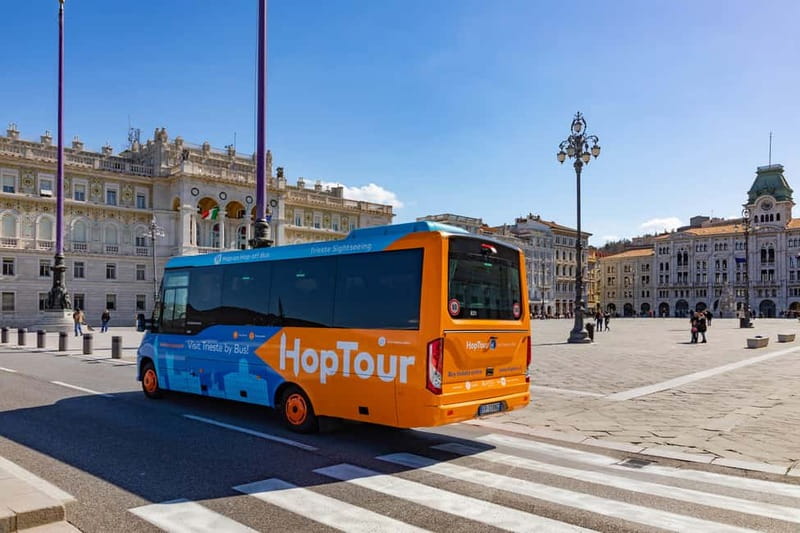
This is a practical way to start your Trieste day because you begin right by the harbor. Board at Molo Audace, in front of Unita d’Italia Square, and you’re immediately in the city’s maritime mood. The audio highlights key water-linked spots too—like Molo Audace, built on the wreck of an older ship—so the tour isn’t just a drive-by.
The ride itself is comfortable. It’s an air-conditioned bus, and you’ll have a USB charger on board, which matters if you’re relying on your phone for maps and translation. You also get on-board assistance, which is handy when you’re trying to figure out where to hop off and how to time your return.
You can also read our reviews of more tours and experiences in Trieste.

How the hop-on hop-off works (and how not to lose your seat)
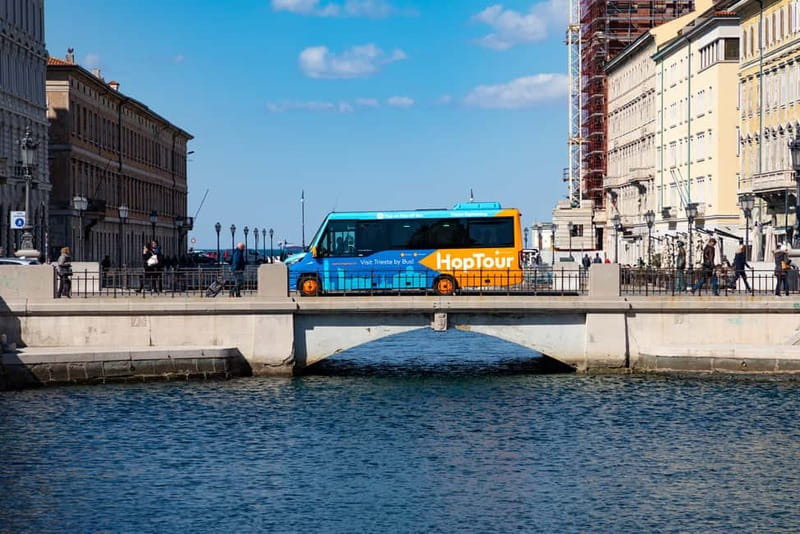
On paper, this is a “hop on, hop off” style tour with a loop. In practice, the best move is simple: treat it like a planned route you can pause, not a free-for-all.
Here’s what you should count on:
- The ticket is valid for 24 hours, so you can use it again later.
- Your seat is guaranteed only for the course you booked.
- You can hop on at stops and take the next bus if there’s room.
When you hop off, follow the staff guidance for getting back on. On this tour, there’s an on-board process where you provide your name when you return, which helps manage seating. It’s a small step, but it makes a difference if the bus is busy.
One more timing reality: to make the most of the 24-hour flexibility, start earlier rather than later. If you wait, you can end up with longer gaps between buses and less flexibility for the stops you care about.
The audio guide: your “read the city” cheat code
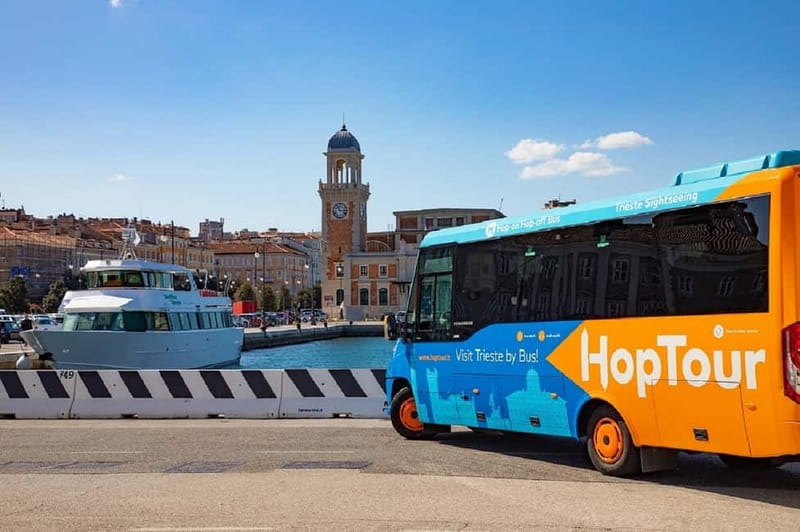
This tour is built around a synchronized audio track. You get audio in English, German, Italian, and Spanish, and the content is designed for what you’re seeing right now—not a generic history lecture that ignores the view outside your window.
For me, the payoff is how it helps you connect the dots without stopping every two minutes. For example, as you pass major landmarks, the audio helps explain what you’re looking at and why it matters in the city’s story. That makes it easier to choose what to explore on foot later.
If you’re the type who hates trying to interpret monuments alone, this format is a relief. You can sit back, get oriented, then walk with purpose.
Waterfront Trieste first: Mandracchio, Salone degli Incanti, and La Lanterna
After Molo Audace, the bus rolls along the water and into the core waterfront sights.
One of the early standouts is Mandracchio Shore / Unita d’Italia Square. Think of this as the port-side backbone of the city—good for orientation and an easy mental map marker.
Then you hit Nazario Sauro Shore, where the route passes Salone degli Incanti – Eataly. This is one of those places where the city feels both historic and lively, and even if you don’t go inside, it gives you a useful reference point for where the waterfront activity concentrates.
Next comes the stretch that’s all about sea views and engineering details. At Via Ottaviano Augusto, you’ll pass the lighthouse and La Lanterna Baths in the area around Campo Marzio Station. If you want photos with the right angles, this is where you’ll appreciate being on the bus—your best view window is usually while you’re moving or just after the vehicle slows at the pass-by moments.
Sea Museum and the Roman pulse: where Trieste’s layers show fast
As you continue, the route includes Campo Marzio Street: Sea Museum. Even without an entrance ticket on this tour, simply knowing this stops you from walking past something important is valuable. It’s the kind of place you can decide later if you want to spend time inside.
Then the story shifts toward older Trieste. The bus passes Teatro Romano Street, and it’s paired in the route description with stops for Santa Maria Maggiore Church and the Roman Theatre of Trieste. This is your quick hit of the city’s deep time—one of the reasons Trieste feels distinct from many purely waterfront towns.
What I like here is the pacing: you get context from the audio while you’re still fresh from the earlier waterfront sections, and you can then decide whether walking these areas makes sense for your time.
The city’s mix of faith and culture: Orthodox churches and church squares
Trieste’s identity shows up clearly around its religious landmarks. The route includes the Orthodox Serbian Temple of Saint Spyridione at Saint Spiridione Street.
It’s not just a pretty stop; it’s also a useful reminder that Trieste isn’t a single-note Italian city. The bus audio frames these landmarks as part of the city’s broader story, which helps you understand why architecture and community life look the way they do.
You’ll also pass Saint Antonio Square and Church of Sant’Antonio Nuovo. These are exactly the kinds of stops you can either enjoy from the bus or use as short walk targets if you hop off there.
If you like spotting differences in style between neighborhoods, this part of the route is worth paying attention to. Even from your seat, you can start to see how Trieste’s “layers” move across town.
Piazza della Borsa and the San Giusto payoff (including the roadworks reality)
This is where the tour turns into hilltop-and-old-town mode.
As you roll through Piazza Vittorio Veneto and into Piazza della Borsa, you’re entering a more civic, historic-feeling Trieste core. Piazza della Borsa is a key orientation marker because it helps you understand the center’s layout relative to both the waterfront and the higher ground.
Next is Saint Giusto Hill with San Giusto Castle and Church. There’s an important practical note: bus stop n. 6 (San Giusto) has been suspended due to roadworks. So if San Giusto is a “must do” for you, build in flexibility. You may need to adjust how you get off and back on, based on how operations are running that day.
This matters because one of the best uses of the hop-on format is to save time on the toughest walking. San Giusto is often the kind of place you’d rather not tackle blindly after arriving. With this tour, you can time your hill visit while your legs are still fresh.
Miramare and Barcola: the most scenic reason to ride twice
If you only choose one reason to make this tour worth it, pick the coastal segment toward Miramare Castle.
The bus follows Miramare Boulevard past the Old Port area, then continues along the Barcola stretch. Along the way you’ll pass:
- Barcola Pine Forest
- Barcola Beach
- Barcola Crossroads
- Miramare Castle
- Topolini Baths
- Greek Orthodox Church of Saint Nicholas (also listed on the route)
This is a prime combo: gardens, sea air, beachfront views, and then a grand castle payoff.
A key practical point: the Miramare stop can involve a walk from where the bus drops you. One of the most common friction points is that it can be tiring if the weather is hot or if you’re mobility-limited. Plan for comfy shoes and water, and give yourself enough time to actually enjoy the grounds once you’re there.
The castle itself isn’t included. You’ll need an entrance ticket if you want to go inside, but the location and route access are what make the bus tour a good value.
Getting your bearings at stations and squares (without getting stuck)
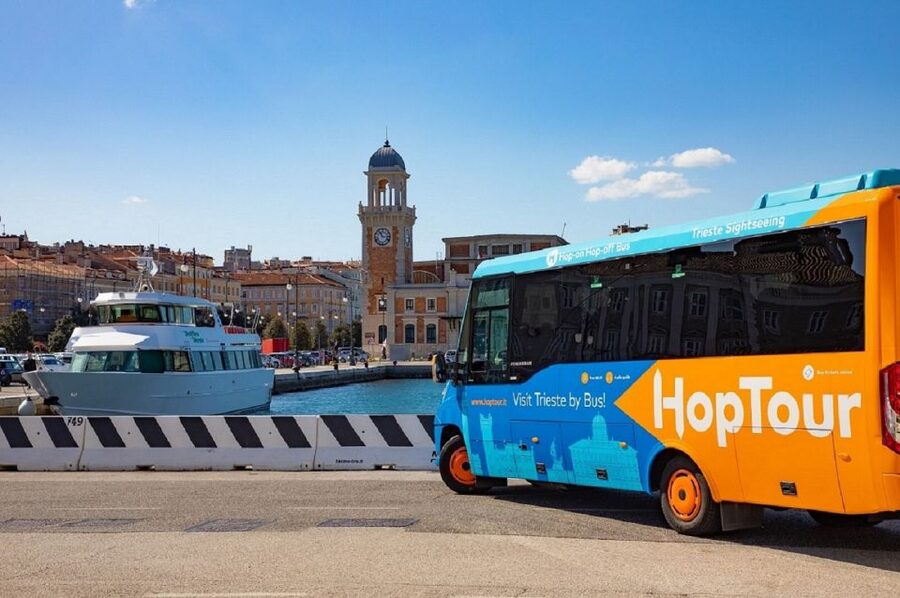
The route weaves through a mix of landmarks and “helpful anchors,” which is why it works so well for short stays. You’ll pass or connect near spots like:
- Campo Marzio Station
- Oberdan Square: Tram Station
- Libertà Square: Train Station
Even if you don’t plan to change transport, seeing these nodes helps you understand where you are in relation to the sea and the city center. It also makes it easier to decide where to walk next after your bus loop ends.
The tour also includes a stop at the Central Hydrodynamics of the Old Port of Trieste. If you like infrastructure and how cities actually work, this is an interesting reminder that Trieste’s history isn’t only about palaces and churches. It’s also about how the port operates and how the city grew around it.
Price and value: why $20 makes sense for most first-time visitors
At around $20 per person for roughly 1.5 hours, this tour isn’t expensive—especially because it bundles more than just a ride.
For your money, you get:
- Transportation via an air-conditioned bus
- A multi-language audio guide that interprets what you see
- USB charging
- On-board assistance
- A 24-hour ticket, which you can use to revisit stops later
Then add the real-life value: Trieste is the kind of city where a short orientation can save you time. If you’ve got half a day (or you’re arriving by cruise and need a plan), this gives you a map in your head fast.
The trade-off is that entrance tickets for highlights like Miramare Castle and San Giusto are not included. So think of the bus as your orientation and route access. If you want the full museum or castle experience, you’ll pay those entrance fees separately.
When this tour is a perfect match (and when it’s not)
This is an excellent choice if:
- It’s your first day in Trieste and you want a quick overview
- You want a break from walking, especially in heat
- You want to compare neighborhoods before deciding where to spend extra time
- You’re short on time but still want to see Miramare and San Giusto on the same day plan
You might be less thrilled if:
- You expect unlimited get-off-and-on freedom at any moment. There’s a process for reboarding, and busy times can affect seating.
- You’re trying to do multiple long explorations back-to-back. The hop-off system works best when you pick a couple of “real time” stops and treat the rest as orientation.
Should you book this Trieste bus tour?
Yes, if you want a smart starting point. For $20, the combination of air-conditioned comfort, a synchronized multi-language audio guide, and a 24-hour ticket makes it a practical deal for almost any short visit.
I’d book it especially if Miramare Castle and San Giusto are on your list. Use the bus to get oriented first, then hop off where you actually want to linger. Just plan around the San Giusto roadworks note and give yourself shoe-and-water time for Miramare.
If your schedule is tight and you want a plan that helps you see a lot without stress, this one is an easy yes.
FAQ
How long is the Trieste bus tour with audio guide?
The tour lasts about 1.5 hours.
How much does it cost?
It’s priced at $20 per person.
Where do I meet the bus?
Board at Molo Audace, in front of Unita d’Italia Square.
Is the ticket hop-on hop-off, and is it valid for more than one ride?
Yes. It’s hop-on hop-off style, and the ticket is valid for 24 hours.
What languages are available for the audio guide?
Audio is available in English, German, Italian, and Spanish.
Are entrance tickets to the attractions included?
No. Entrance tickets are not included.
Are pets allowed on the bus?
Pets are allowed only if they are wearing a muzzle.
Is there any issue with the San Giusto stop?
Yes. Bus stop n. 6 at San Giusto has been suspended due to roadworks.