REVIEW · GERMANY
Self-Guided Walk Around Quedlinburg’s Timber-Framed Houses
Book on Viator →Bookable on Viator
Quedlinburg turns a simple walk into a guided tour of centuries-old timber work. This self-guided route uses audio and GPS so you can follow the story at your own pace, starting near the ivy-covered Quedlinburg Rathaus and finishing on Castle Hill at Schlossgarten.
What I like most is the focus on places you can actually see up close: 300 to 800-year-old half-timbered houses, plus big names tied to the town’s rise. You’ll also hear the human side of the sights, including Johann Christoph GutsMuth (the father of physical education) and the royal setting around Henry I.
One catch to plan around: you need your own smartphone and headphones. If your phone battery is weak or you forget headphones, the “self-guided” part becomes a problem fast.
In This Review
- Key highlights you’ll care about
- Quedlinburg on foot: why the timber frames hit harder this way
- Before you start: timing, phone needs, and how the GPS walk works
- Marktplatz and the ivy-covered Rathaus: your best first 15 minutes
- The shoemaker court alley: medieval street life up close
- St. Benedicti Church and St. Nicholas Church: 13th-century anchors
- GutsMuth and the father of physical education: a surprising stop
- Late-medieval architecture and the oldest timber-framed house
- Henry I’s discovery moment and St. Servatius Cathedral
- Castle Hill, the remains of Quedlinburg Castle, and museum access
- Ending at Schlossgarten: your calm finish with town vistas
- Price and value: why $7.99 can make sense
- Who should book this Quedlinburg walk (and who might skip it)
- Should you book this self-guided Timber-Framed House walk?
- FAQ
- What language is the audio tour available in?
- How long does the self-guided walk take?
- Where do I start and where does it end?
- Do I need tickets for sights along the route?
- What do I need to bring?
- Is the audio and maps available offline?
- Is this tour private or shared with other people?
Key highlights you’ll care about
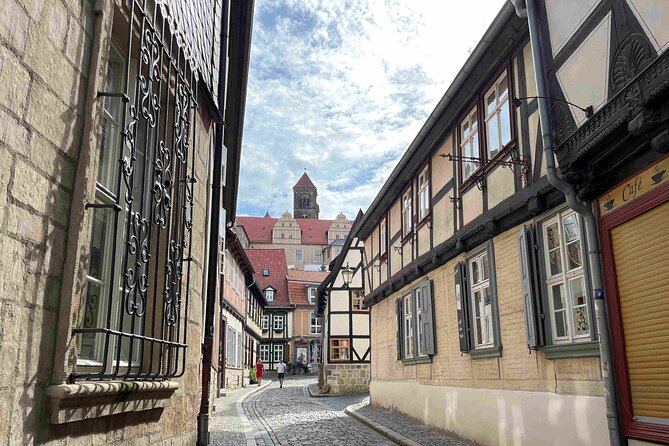
- Start at Marktplatz beside the Quedlinburg Rathaus for an easy, scenic beginning
- Audio with offline maps and geodata helps you keep moving even if signal is patchy
- A tight circuit of medieval churches and timber-framed houses keeps the walk interesting
- GutsMuths Haus and the GutsMuth monument add a surprising, education-focused stop
- St. Servatius Cathedral links Henry I and Otto the Great to Romanesque architecture
- Castle Hill and Schlossgarten give you the satisfying end-point and town views
Quedlinburg on foot: why the timber frames hit harder this way
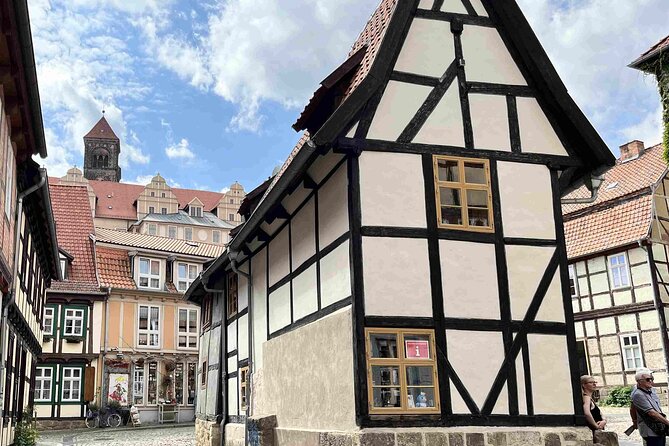
Quedlinburg is small enough that you can connect dots between sights without rushing. The big draw is that it’s not just one old building—it’s a whole town stuffed with UNESCO-recognised timber-framed houses. Over 2,000 of them remain, and the walk is designed to let you notice how the architecture shifts over time.
When you visit by car or only from viewpoints, you miss the feel of medieval building craft: the way beams and patterns shape the street, how different eras leave different proportions, and how the houses sit like they were meant for everyday life, not museum display. On this route, the audio helps you see what you might otherwise overlook.
It also matters that the walking loop mixes street-level architecture with major historic anchors—town hall, churches, and the cathedral. That gives you variety without long transfers. For a place like Quedlinburg, that’s the sweet spot: you get the slow “how did they build this?” feeling, plus clear landmark moments to reset your bearings.
Before you start: timing, phone needs, and how the GPS walk works
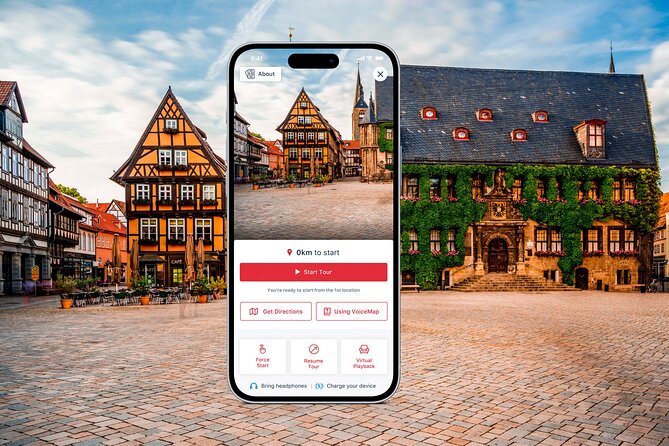
This is built for a one-and-done wandering hour: about 1 hour to 1 hour 15 minutes at a comfortable pace. It’s open all day during the listed period, and the walking day is flexible—Monday through Sunday, with hours shown as 12:00 AM to 11:59 PM.
You’ll begin at Peter Sternehaus Kirsch, KirschMarkt 3, 06484 Quedlinburg and finish at Lookout Point, Schloßberg 36, 06484 Quedlinburg. That end location is a big deal. Instead of finishing somewhere random, you end where the town naturally wants you to pause—Castle Hill and Schlossgarten.
Practically, here’s what you must handle:
- Bring your own smartphone
- Bring your own headphones
- Use the app to access the route, since the experience isn’t printed on paper
- Take advantage of the offline access for audio, maps, and geodata
The offline part is smart for older towns like this. Streets can drop in and out of coverage, and stone alleys don’t always play nicely with mobile networks. Still, I’d treat offline as your safety net, not a guarantee—make sure you download before you leave your lodging.
Marktplatz and the ivy-covered Rathaus: your best first 15 minutes
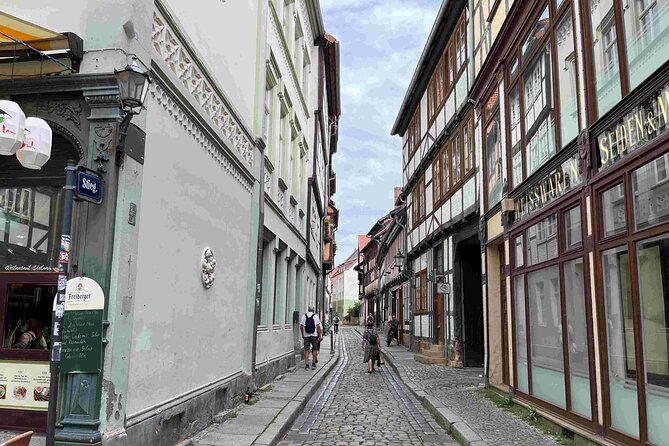
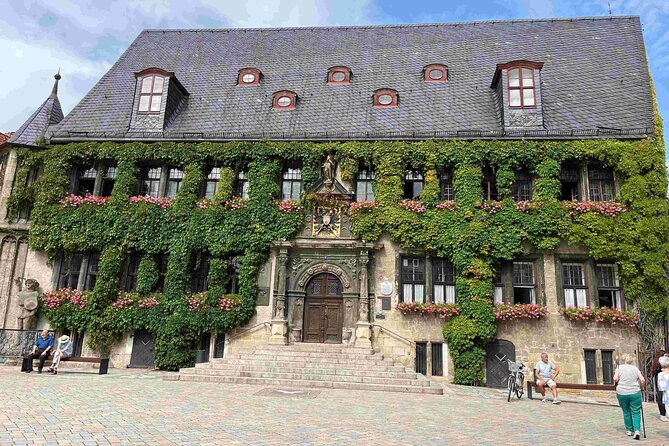
You’ll start in the heart of Quedlinburg at Marktplatz, looking up toward the Quedlinburg Rathaus (the historic town hall). It’s described as one of Germany’s oldest town halls, and the Gothic architecture plus the ivy-covered façade makes it a strong first visual anchor.
This opening matters because it helps you understand the town’s layout. Before you chase the smaller details down alleys, you get a “center of gravity” point. From Marktplatz, Quedlinburg feels like a walkable maze with purpose.
Right away you’ll also get a sense of time. The audio points you toward how medieval towns organized power and life: the town hall represents civic authority, while the surrounding streets reflect the everyday mix of crafts, trade, and religious life.
If you’re the kind of visitor who likes orientation, this start is a win. If you hate waiting for audio to catch up, you’ll still be fine—the route is short, and the early landmark is easy to spot even before the first narration finishes.
The shoemaker court alley: medieval street life up close
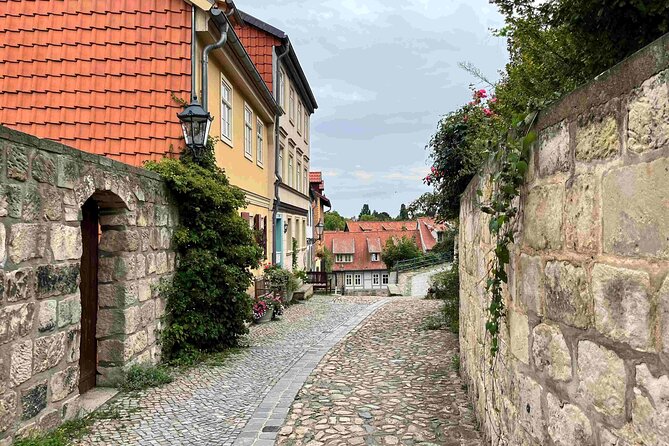
As you move off the main square, the route includes the shoemaker court, tucked away through a narrow alley. The whole point of this stop is that it breaks the “big building only” habit. Instead of just seeing famous façades, you experience how a craft court would feel: cramped entry, hidden passage, and a sudden shift from open square to working-space scale.
This is also the part of the walk where you can slow down on your own. Stand at the alley entrance and look back toward where you came from. You’ll start to see how Quedlinburg’s medieval street network shaped where trades clustered.
A practical note: alleys like this can be harder to navigate in busy periods or if you’re distracted by your screen. Keep the phone at chest level and step carefully—especially if you’re walking with kids or moving at dusk.
St. Benedicti Church and St. Nicholas Church: 13th-century anchors
Next up, the route heads to two churches from the 13th century: St. Benedicti Church and St. Nicholas Church. Churches are more than beautiful walls here. They help you read the town’s priorities.
At St. Benedicti, you’re meant to notice the architectural beauty and feel the weight of long continuity. At St. Nicholas, you get another snapshot of Quedlinburg’s ecclesiastical history—different church, similar era, and that contrast helps the town’s story make sense.
Why I like this pairing: you’re not bouncing between unrelated stops. Both churches act like “chapters” in the audio, giving structure to the walk. It also gives your eyes a break from half-timber pattern hunting. If you’ve been staring at façades for a while, church stonework resets your visual focus quickly.
What to do at these stops: take a step back to see the whole façade, then move closer for details. The route is short, so don’t worry about ultra-long photo sessions. Treat each church like a mini pause, not a detour.
GutsMuth and the father of physical education: a surprising stop
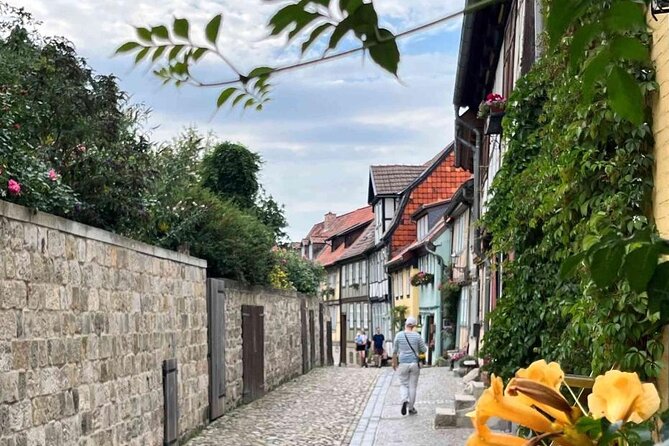
This walk doesn’t stick only to kings and churches. You also meet Johann Christoph Friedrich GutsMuths, described as the father of physical education. The route includes a monument honoring him and points you toward his birthplace, including GutsMuths Haus.
For many visitors, that’s the kind of fact that makes history feel human. It turns Quedlinburg from a postcard of old buildings into a place that shaped ideas that still matter. Physical education may sound offbeat compared with Romanesque cathedrals, but that contrast is exactly why it lands.
If you like quirky history, you’ll enjoy this chapter. If you prefer only the most famous landmarks, you might see this as a breather between big architecture moments. Either way, it gives the audio route a wider range of voices.
Late-medieval architecture and the oldest timber-framed house
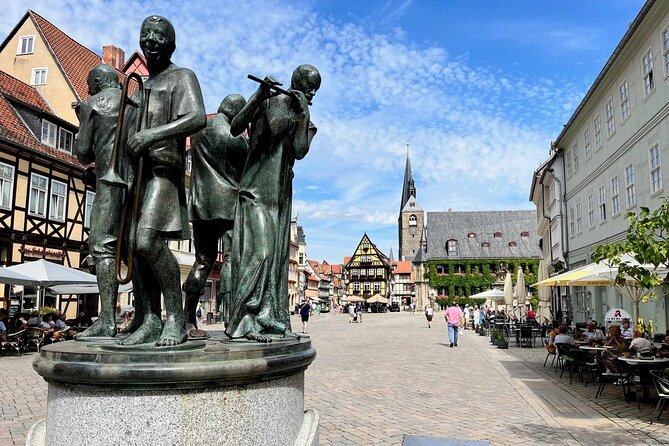
Midway through the walk, you’ll pass a stunning example of late medieval architecture, listed as a notable landmark. Right after that, the route features one of the oldest timber-framed houses in the world, highlighting Quedlinburg’s architectural heritage.
This is where the walk earns its keep. Timber-framed houses look similar at first glance, but once you slow down, you start seeing how age shows in construction choices: beam thickness, spacing, and the way the structure reads from a distance and up close.
The audio helps you connect those visual impressions to specific facts, so you’re not just guessing what you’re looking at. And because the route is GPS-driven, you don’t waste time searching for the correct façades.
Tip: when you reach the oldest-house moment, don’t rush. Even if you don’t go inside (no entrance tickets are included), you can learn a lot just by comparing the house façade to the ones around it—what looks preserved, what looks repaired, and how the street setting frames the building.
Henry I’s discovery moment and St. Servatius Cathedral
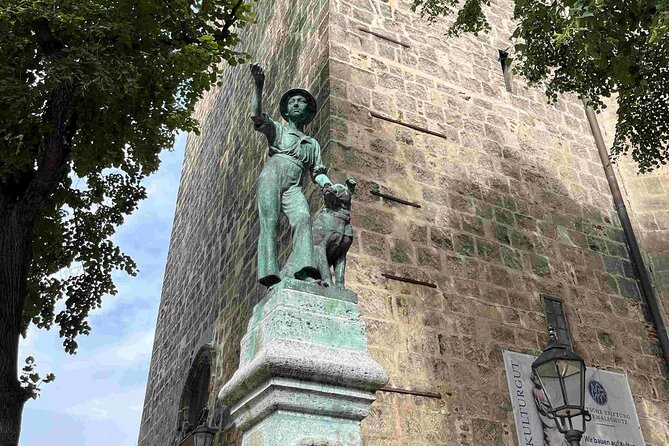
The walk brings in a regal thread when you hear the story connected to Henry I discovering he would be the new German king at a historic site. It’s a historical “now you understand why this place mattered” type of stop—one that adds drama to the architecture without turning the walk into a lecture.
Then you reach St. Servatius Cathedral, founded by Henry I and Otto the Great in the 10th century. The cathedral is known for Romanesque architecture and its historical significance. Even if you don’t step inside, the façade and setting provide enough to feel the shift from everyday medieval life (alleys, crafts, houses) to the town’s higher-status religious center.
This stop is also a timing checkpoint. If you’ve been moving steadily since Marktplatz, you’ll feel your legs again here. That’s perfect: it’s the right moment to slow down, read the audio, and let the cathedral reset the emotional tone of the walk.
Look for how Romanesque style tends to emphasize mass and solidity. Then, contrast that with the lighter look of timber framing nearby. That mix is part of Quedlinburg’s charm: different materials and eras sharing the same streets.
Castle Hill, the remains of Quedlinburg Castle, and museum access
Near the end of the route, you’ll find the remains of Quedlinburg Castle and a museum connected to that royal past. This part of the walk gives you two things at once: context and elevation.
You get the royal storyline, and then you get panoramic payoff. Castle Hill sits above the old town, and the route funnels you toward that higher ground on purpose. Even if you don’t plan to spend long at any museum, the audio and viewpoint angle help you understand why people built there—defense, visibility, and symbolism.
If you enjoy photos, this section is your best place to pause. I’d spend a few minutes turning slowly and letting the town come into view. Timber roofs and façades form patterns from above that you can’t fully appreciate at street level.
Ending at Schlossgarten: your calm finish with town vistas
Your tour ends at the Lookout Point on Castle Hill, in Schlossgarten Quedlinburg. The garden is described as beautiful, and it’s explicitly set up as the place to close the loop with breathtaking town vistas.
This ending is more than scenery. It’s a nice rhythm change after churches, royal sites, and timber-framed façades. You go from “study and listen” to “stand and look.” If you’ve been indoors or museum-heavy during other parts of your trip, this garden finish feels like a breather.
If the weather is decent, you’ll also appreciate the simple comfort of having a defined ending. No hunting for the last stop or worrying you’ll miss the final chapter. The route is built to bring you here at the right time, so you can finish the story with a view.
Price and value: why $7.99 can make sense
At $7.99 per person, this tour is priced like a budget-friendly add-on—but with real staying power because you get lifetime access to the English version before and after your booking date.
That “access over time” is part of the value. It’s not just a one-time download. You can revisit the audio later, use the map again, or re-walk the route if you want to catch details you missed the first pass.
You’re also not paying for museum tickets inside the walk. That keeps the cost low, but it does mean you control your own add-ons. If you do want museum time, factor in extra ticket costs on top.
What makes the price feel fair is the combination of:
- Offline access
- GPS self-guidance
- A route that covers major historic anchors without needing a group schedule
For short trips—like a long weekend in the Harz region—this is a strong way to get orientation fast without sacrificing the pleasure of wandering.
Who should book this Quedlinburg walk (and who might skip it)
You’ll like this if you want independence. This is a private experience for your group, with no need to match anyone else’s pace. If you enjoy reading while you walk, and you like architecture that rewards slow attention, the audio chapters fit well.
It also works well for people with limited time. At about 1 to 1.15 hours, it’s easy to slot into an arrival day or morning-before-museums slot.
One more practical angle: parking can be tighter around midday. If you’re driving, it’s smart to time your arrival to avoid the busiest stretch.
Skip it if you strongly prefer staff-led interpretation or if you don’t want to rely on your phone. This is not a talk from a guide; it’s an audio-driven route where you’re the one walking and managing your tech.
Should you book this self-guided Timber-Framed House walk?
Yes, if you want an efficient introduction to Quedlinburg’s timber-framed character and major historic anchors in one coherent circuit. The route hits the big civic and religious sites, then balances them with more personal history like GutsMuth and the craft-scale feel of places like the shoemaker court.
If you’re comfortable bringing your own smartphone and headphones, and you like to explore at your own pace, it’s a good value at $7.99. You’ll finish with the kind of view that makes the whole walk feel worth it—Castle Hill and Schlossgarten.
FAQ
What language is the audio tour available in?
The tour is available in English. Support information provided also indicates it is available in German.
How long does the self-guided walk take?
The experience takes about 1 hour to 1 hour 15 minutes.
Where do I start and where does it end?
It starts at Peter Sternehaus Kirsch, KirschMarkt 3, 06484 Quedlinburg, Germany. It ends at the Lookout Point, Schloßberg 36, 06484 Quedlinburg, Germany.
Do I need tickets for sights along the route?
No. Tickets or entrance fees for museums or other attractions along the way are not included.
What do I need to bring?
You need a smartphone and headphones, since they are not provided.
Is the audio and maps available offline?
Yes. You get offline access to audio, maps, and geodata.
Is this tour private or shared with other people?
It’s private. Only your group participates. Service animals are allowed, and it’s near public transportation.