REVIEW · ILLINOIS
Springfield Self-Guided Walking Audio Tour
Book on Viator →Operated by History with Action · Bookable on Viator
Lincoln’s Springfield trail is easy to follow. This self-guided walking audio tour strings together 24+ location-triggered stories from the Lincoln Home area to the Lincoln Depot, so you get context exactly when you’re looking at the buildings. I love the hands-free audio that plays as you walk, which makes it feel far less like “reading about history” and more like following a smart guide on foot.
You’ll also get offline maps, which is a real advantage for a downtown walk where signal can be unpredictable. The big potential drawback is that the tour depends on your phone’s GPS and location permissions, so you’ll want the app set up correctly and downloaded on strong Wi‑Fi before you start.
For $14.99, you’re paying for a tight 1–2 hour route with more than one story per stop and lifetime access (no expiry), which is a strong value if you like to learn as you go. It’s about 1.5 miles long overall, and the pace is built around stopping often for quick looks and photos.
In This Review
- Key highlights before you lace up
- How the Springfield Lincoln audio walk works on your phone
- A note on tech requirements (this can make or break it)
- Lincoln Home and First Presbyterian Church: personal loss and faith in 1850
- What to watch for here
- Dean House and the Lincoln-Herndon Law Offices: neighbors, work, and client problems
- Small drawback to keep in mind
- Old State Capitol and Union Square Park: politics, scale, and the second inaugural
- Practical tip for this section
- Lincoln statue, Presidential Library, and museum dioramas at walking pace
- Where the tour fits well here
- Lincoln Depot: departure, handshakes, and a town seeing him off
- A realistic pacing note
- Price, time, and practical tips to make it worth $14.99
- Pacing and headphones
- Download and GPS checklist (do this once)
- Should you book this Springfield Self-Guided Walking Audio Tour?
- FAQ
- How long is the Springfield Self-Guided Walking Audio Tour?
- Where does the tour start and end?
- How much does the tour cost?
- What language is the narration offered in?
- Do I need cellular service or Wi-Fi during the walk?
- Are attraction tickets or entry fees included?
- Do I need to attend with a guide?
- What do I need to access the tour?
- What devices are recommended for navigation?
- What are the opening hours?
- Can I cancel for a refund?
Key highlights before you lace up
- 24+ location-triggered audio stories across the core Springfield Lincoln sites
- Offline maps + offline playback after download, so you can keep walking without cellular
- English narration built for self-paced wandering
- About 10 minutes per stop, which helps you manage time without rushing
- Free-admission stops listed on the route, so you can focus on the stories
- Lifetime access with no expiry, useful for repeat trips
How the Springfield Lincoln audio walk works on your phone
This is a true self-guided experience, so there’s no meeting a guide at the start. You begin at the Lincoln Home National Historic Site Visitor Center (426 S 7th St, Springfield, IL 62701). From there, you open the separate Action’s Tour Guide App, enter the password provided by email/text, and then start the first story when you’re standing at the correct point. The audio is hands-free: it plays automatically based on where you are.
The tour is designed around a simple rhythm. You walk to the next location cue, pause when the story tells you to, then resume when you’re ready. You can start anytime during the posted operating window (9:00 AM–5:00 PM, Monday–Sunday, for the listed date range). You can also pause anywhere for snacks, photos, or a quick detour—just jump back in when you’re ready.
One detail that really matters: setup and download. The provider notes you must download the tour while you’re on strong Wi‑Fi/cellular. After the download, it works offline. I’d treat this as the #1 “success factor.” If you get the app downloaded and GPS permissions sorted before you start walking, the tour usually feels smooth.
You can also read our reviews of more tours and experiences in Illinois.
A note on tech requirements (this can make or break it)
For best results, the tour recommends an iPhone on iOS 15+ or Android version 9+; an iPad/tablet with GPS and cellular connectivity is also recommended for navigation. You’ll get the app’s location permission prompts when downloading. If location access is blocked or slow, the audio may not trigger at the right moments.
Also bring headphones/earbuds. The audio is your main guide here, and a walking tour sounds better when you can actually hear the narration cleanly.
Lincoln Home and First Presbyterian Church: personal loss and faith in 1850
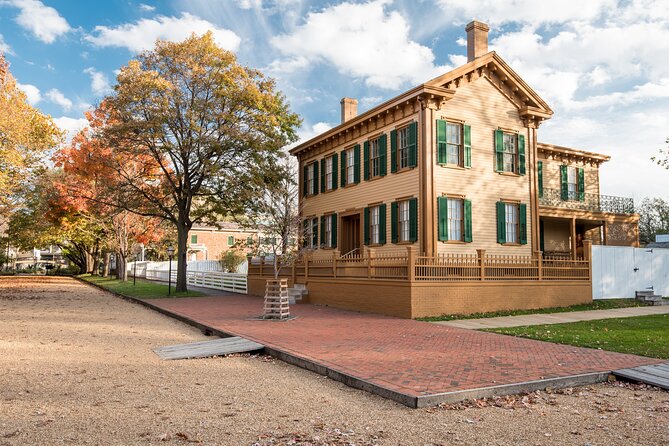
Your first big “freeze-frame” moment is at the intersection with 8th Street. The story has you look across the road at the tan house with green shutters—Abraham Lincoln’s home. This is the only house he’d ever bought and paid for. Even if you’ve seen Lincoln’s face on posters your whole life, seeing the real, everyday setting in Springfield makes the man feel more tangible and less like a statue.
From there, you move to the First Presbyterian Church, described as the Lincoln Family Church. The narration connects the Lincolns to the year 1850, after the death of their three-year-old son Edward. The tour frames the trip to church as more than a routine stop. It’s presented as a search for solace and meaning in the middle of grief.
What I like about this segment is the emotional contrast. You’re looking at brick and streets you can photograph, but the story talks about loss, comfort, and how faith shaped daily life. If you’re the type who gets something from context—not just dates—this is where the tour starts working.
What to watch for here
- You’ll be looking across streets, so take a moment to safely cross or pause where the audio tells you.
- Plan for short standing time. The tour expects you to linger just long enough to take in the “why it matters” details.
Dean House and the Lincoln-Herndon Law Offices: neighbors, work, and client problems

Next you stop at the Dean House, a big brown home with green shutters. The story gives it a personal angle: Harriet Dean bought this land just days before her husband, Frederick, left for gold in California. The twist is that he found no gold, returned to Springfield, and ended up with a cozy home—plus, you get the fun detail that it’s right next to the Lincolns.
This stop is a reminder that history isn’t only about famous speeches. It’s also about the people living next door, making decisions, and building ordinary routines that happen to sit close to big names.
Then comes the Lincoln-Herndon Law Offices, a three-story brick building where Lincoln worked in the mid-1800s. Here, the tour shifts into a “think like a client” scenario. You’re meant to imagine being someone who brings a neighbor dispute—specifically, chickens wandering and damaging gardens—asking Lincoln and William H. Herndon for counsel. It turns the building from a landmark into a workplace with real problems and real stakes.
That imagination piece is part of the value. You’re not just seeing where he worked; you’re getting a mental picture of the kind of everyday legal conflicts that brought people through the door.
Small drawback to keep in mind
These are outdoor orientation stops and street-facing looks. If you’re expecting deep interior access at every point, you’ll need to treat this as a walking narrative. The tour does not include attraction tickets or reservations, and what you see is largely what’s visible from your position near the site.
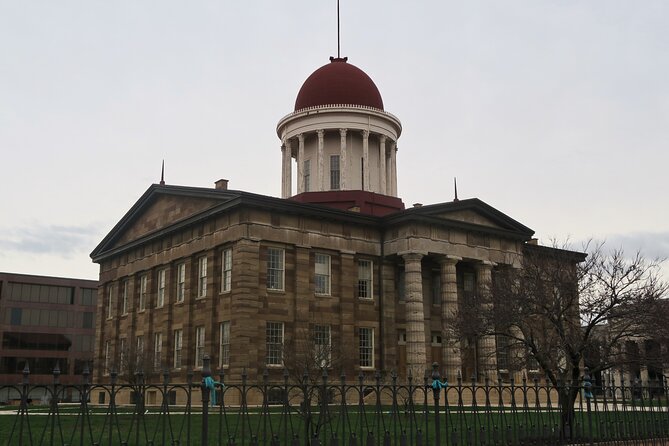
Old State Capitol and Union Square Park: politics, scale, and the second inaugural
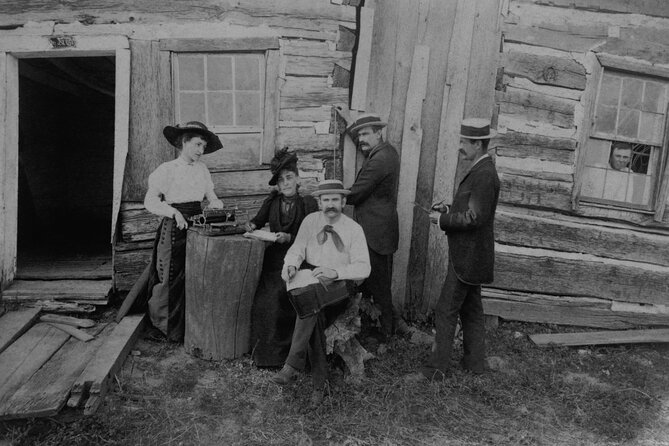
The Old State Capitol is hard to miss on the route—so you’ll naturally slow down here. The narration connects it to the moment Lincoln’s political career ramped up. Springfield residents may not have had daily contact with Lincoln the lawyer, but the story emphasizes how Lincoln the politician was everywhere.
There’s a vivid detail in the audio about Lincoln’s height—six-foot-four. Whether you take that as literal emphasis or theatrical storytelling, it lands the same way: people noticed him. For a modern visitor, it helps explain why this man could move quickly through civic life and become a central figure in the town’s public rhythm.
Then you continue to Union Square Park, where the tour points out the papers Lincoln is holding. Those papers are his second inaugural address, delivered in March of 1865. The audio frames it as the closing act of the Civil War, with slavery in the United States soon to be abolished, and notes that Lincoln would be shot a month later. You’ll also be guided toward a famous excerpt from the speech (without needing to hunt for it yourself).
This is one of the tour’s strongest “big-picture” moments. The route compresses national events into a walkable series of stops. You get the feeling that local streets and public spaces are where major history becomes visible to ordinary people.
Practical tip for this section
Take your time at Union Square Park. The stop is designed to let the emotional and political context sink in. If you rush, you’ll still see the sites, but you’ll miss the point of why they’re connected.
Lincoln statue, Presidential Library, and museum dioramas at walking pace
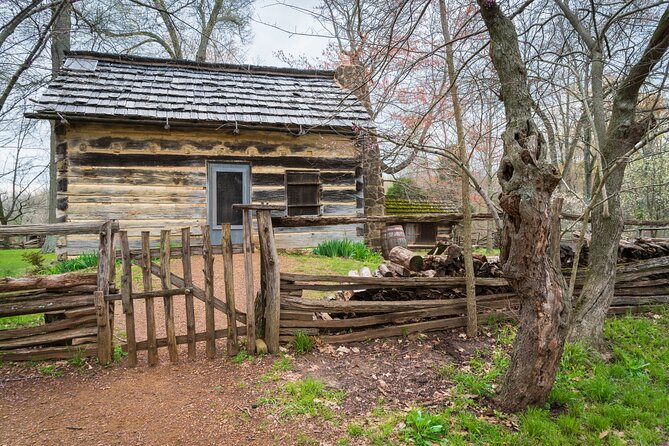
After the political stops, the narration turns quieter at the Lincoln statue. The audio describes a more pensive version of Lincoln, clutching his coat against the cold and looking far away. It invites you to think: is he bracing for war, or weighing hopes and dreams? This isn’t the “history textbook” version of him. It’s the “human pause” version.
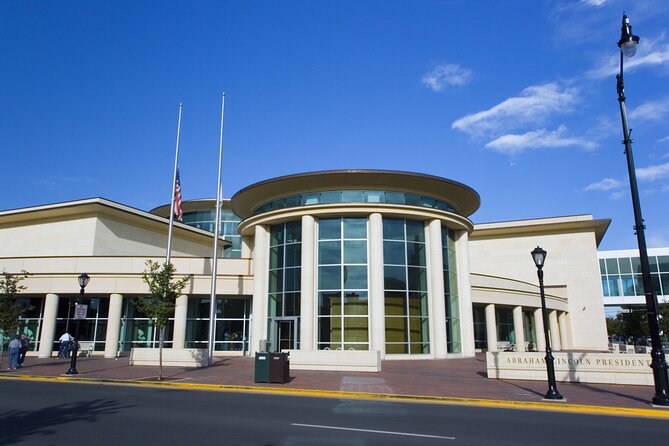
Then you arrive at the Abraham Lincoln Presidential Library and Museum. The audio highlights that this library is 50 percent larger than any other U.S. presidential library. It also explains what you can expect inside: presidential documents, early drafts of speeches, and other materials. Some of the most valuable artifacts are noted as being available only for research purposes. The museum also features life-size dioramas showing Lincoln’s life.
This stop is useful even if you don’t plan to spend hours in the museum. The audio gives you a sense of what you’d look for if you did. Think of it as a preview that helps you decide whether you want to return later for deeper indoor time.
Where the tour fits well here
The audio expects you to pause for context at the library’s exterior and then move on. If you want a longer museum visit, treat this as your planning moment, not your full museum experience.
Lincoln Depot: departure, handshakes, and a town seeing him off
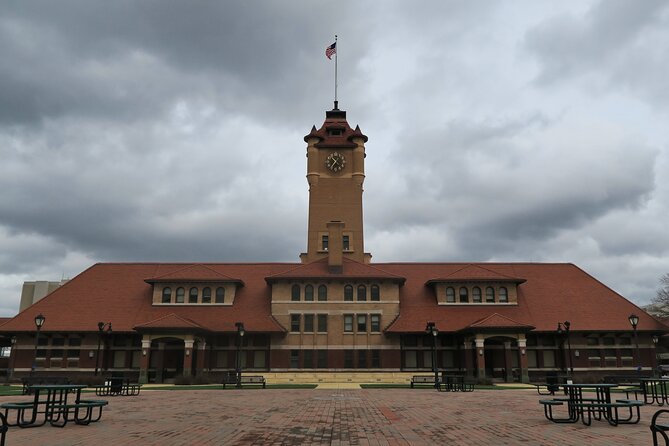
Near the train tracks, you’ll reach the Lincoln Depot. It’s described as a red brick building on the corner of East Monroe, and the audio gives it a detail you can feel: in Lincoln’s time, it wasn’t named that yet—it was known simply as The Depot.
The narration links it to his departure from Springfield. You’ll hear the idea that his hands became bruised from shaking so many hands as friends, colleagues, and hundreds of strangers said goodbye. Then the story frames what happens next: Lincoln heads to Washington, preparing to be sworn in as the next president.
This ending works because it ties together the whole walk. You start with a home and early community life, move through law and politics, then end at the place that symbolizes leaving. For many people, that final beat creates a satisfying “wrap” to the route instead of just stopping at another landmark.
A realistic pacing note
Because the route is about 1.5 miles with more than 24 audio stories, it helps to keep moving between pauses. If you spend too long at one exterior stop, you may finish closer to 2 hours. That’s still fine—the tour is built for your pace—but it’s good to know what changes the timing.
Price, time, and practical tips to make it worth $14.99
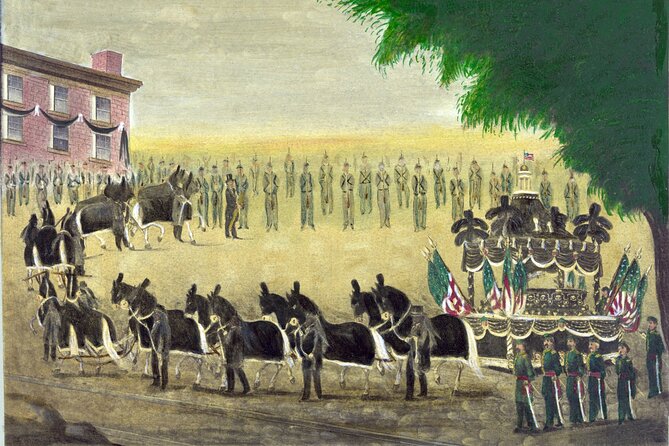
At $14.99 per person for 1–2 hours, the price only feels fair if you’ll actually listen and use the offline audio properly. The good news is that you’re not just buying “audio.” You’re getting structured story stops, location-triggered playback, and lifetime access with no expiry—so the buy once/own it value can last for future trips or for revisiting at a slower pace.
Here’s how I’d think about value for different types of visitors:
- If you want a “first pass” through Lincoln sites in Springfield, this is strong value. For one trip, it helps you connect several locations instead of treating each one separately.
- If you’re the type who only reads plaques and keeps moving, you might not use enough of the tour’s structure to justify the cost. In that case, consider whether a lower-cost self-walk with signage would do.
- If you enjoy replaying stories or plan to return, lifetime access is a big advantage.
Pacing and headphones
The audio pacing is built around about 10 minutes per stop, though your reality will vary based on photos, your pace, and how long you pause for context. Bring headphones so the narration stays clear when street noise picks up.
There’s also a helpful tip for couples: you can share one tour by splitting headphones. If you’re traveling as two, that can cut per-person cost in a practical way.
Download and GPS checklist (do this once)
Before you start walking, I recommend you:
- Download the tour while you’re on strong Wi‑Fi/cellular
- Allow location permissions so the audio triggers correctly
- Stand at the start point long enough for the app to lock on before you begin the first story
This is the difference between a smooth, guided-feeling walk and one where the audio seems late or off.
Should you book this Springfield Self-Guided Walking Audio Tour?
Book it if you want an efficient way to connect the main Springfield Lincoln sites with story-driven narration and you’re comfortable using a phone for navigation. At $14.99, it’s especially worth it if you’ll listen to most of the 24+ stories and like learning while you walk rather than hunting for facts later.
Skip or reconsider if you know your phone setup is unreliable on GPS, you hate downloading apps before you’re ready, or you plan to only glance at places without listening. This tour works best when the audio can trigger at the right spots and you’re willing to pause and look.
If you’re visiting Springfield with limited time and you want to feel the arc—from Lincoln’s home life, to law, to politics, to departure—this route is a smart way to do it.
FAQ
How long is the Springfield Self-Guided Walking Audio Tour?
It typically takes about 1 to 2 hours to complete. The route is over 1.5 miles long and includes more than 24 audio stories.
Where does the tour start and end?
The tour starts at the Lincoln Home National Historic Site Visitor Center at 426 S 7th St, Springfield, IL 62701. It ends back at the meeting point.
How much does the tour cost?
The price is $14.99 per person.
What language is the narration offered in?
The tour is offered in English.
Do I need cellular service or Wi-Fi during the walk?
No. You’ll download the tour while you’re on strong Wi‑Fi/cellular, and then it works offline afterward. Offline maps are included.
Are attraction tickets or entry fees included?
Attraction passes, entry tickets, or reservations are not included. The route notes list the stops as admission ticket free.
Do I need to attend with a guide?
No. It’s self-guided. No one meets you at the start, and the audio plays automatically based on your location.
What do I need to access the tour?
After booking, you’ll receive an email and text with setup instructions and a password. You download Action’s Tour Guide App, enter the password, then start the first story at the correct starting point.
What devices are recommended for navigation?
The tour recommends an iPhone running iOS 15 or later, an Android device running version 9 or later, or an iPad/tablet with GPS and cellular connectivity.
What are the opening hours?
The tour indicates operating hours of 9:00 AM to 5:00 PM, Monday through Sunday, within the listed date range (05/02/2023 to 02/24/2027).
Can I cancel for a refund?
Yes, free cancellation is available. You can cancel up to 24 hours in advance for a full refund. Canceling less than 24 hours before the start time is not refunded.