REVIEW · SOFIA
Sofia Under Communism: Self-Guided Puzzle Quest
Book on Viator →Operated by Questo · Bookable on Viator
A communist-era walking story can sound heavy, but this one is built to keep moving. Sofia Under Communism: Self-Guided Puzzle Quest turns central Sofia into a clue trail you solve on your phone, using the Questo app. I like the low cost for a ~2-hour activity, and I like that you can pause, explore at each stop, and keep going at your own pace.
One thing to plan for: the game can take longer than the estimate when you factor in real walking and time spent reading, solving, and checking out the sites. Also, the puzzle style may feel a little uneven—fun in places, confusing or a bit off in others.
In This Review
- Key Points You’ll Care About
- How the Phone Quest Works in Central Sofia
- Why Sofia Under Communism Fits This City So Well
- The Walk Begins at St. Nedelya Cathedral
- St. George Rotunda: A Short Stop With Big Atmosphere
- Presidential Palace and Republic of Bulgaria: Power in Plain Sight
- National Art Gallery and National Assembly: Art and Authority Together
- Sofia University St. Kliment Ohridski: An Educational Clue Stop
- Soviet Army Monument: Where the Theme Gets Real
- Balgarska Natsionalna Filmoteka and Hotel Slavyanska Beseda
- K.E.B.A. and the First Urban Hospital: Institutions Close to Daily Life
- Ending at the Temple of Bulgarian Martyrs
- Puzzles, Clues, and How Long You Should Budget
- Value for $6.02: Cheap Fun, With One Cost You Must Plan
- Getting Around, Timing, and What to Wear
- Who Should Book This Self-Guided Communism Puzzle Quest?
- Should You Book Sofia Under Communism Puzzle Quest?
Key Points You’ll Care About
- Phone-based clue trail (Questo app) instead of a group guide
- 24/7 availability with a private feel since it’s only your group
- 12 major central stops, from St. Nedelya Cathedral through Soviet-era monuments to the Temple of Bulgarian Martyrs
- No attraction entry tickets included, so you’ll plan admissions separately
- Self-paced timing, but build in extra time for solving and wandering
How the Phone Quest Works in Central Sofia
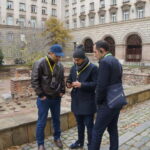
This is not a standard guided walking tour with a person in front of you. You get a mobile game on your phone (Questo), and you follow the story from stop to stop by solving clues. Each location comes with a prompt that keeps you scanning your surroundings and thinking like a detective rather than just a sightseeing passenger.
Because it’s self-guided, you control the rhythm. The format is built around short guidance windows—then you get to linger. You can stop for as long as you like at most stops and continue when you’re ready, which is great if you want more time in one square or if one church photo turns into a 15-minute photo spiral.
The experience is designed to be open air and low-stress for crowds, which matters in a city-center route like this. It also comes with 24/7 customer support, which is reassuring if you hit a snag with the app.
You can also read our reviews of more tours and experiences in Sofia.
Why Sofia Under Communism Fits This City So Well
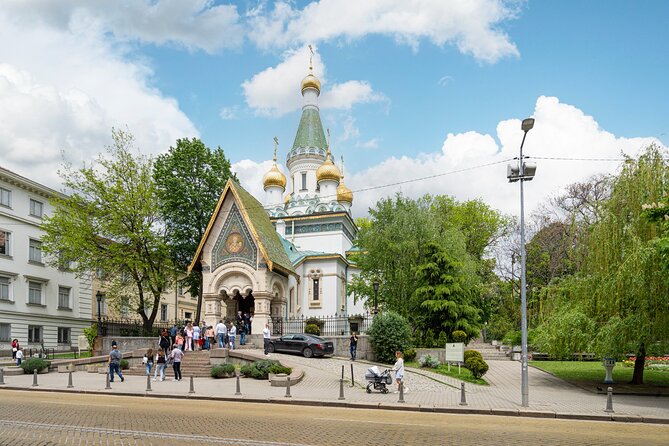
Sofia is a stack of eras—Orthodox churches, state institutions, and monuments that mark political chapters. This quest uses that mix on purpose. Instead of lecturing you about the past, it makes you move through the places where the story echoes: religious sites, government buildings, Soviet-era memory, and the memorial ending point.
It also helps that the route is concentrated. You’re walking through the parts of Sofia where you can connect architecture and public space to ideas about power, identity, and who shaped daily life. Even if you only catch a few key themes, the whole walk gives you a new map in your head.
And because the game is in English, it’s a practical option if you don’t read Bulgarian well but still want more than the usual city highlights.
The Walk Begins at St. Nedelya Cathedral
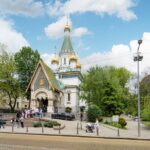
Your starting point is Orthodox Cathedral Saint Nedelia, in Sofia’s old city center near pl. Sveta Nedelya 20. This matters because it sets the tone right away: spiritual Sofia, then political Sofia, then memory Sofia.
You’ll start by getting your first clue at the cathedral. That clue pushes you to look more closely at what’s around you, not just what’s in your guidebook. You then solve the challenge to unlock the next segment, which keeps momentum from the start.
Practical note: the experience includes about 10 minutes at this first stop, and the cathedral itself may involve crowds or a busy atmosphere depending on the day. If you’re sensitive to that, plan to arrive a bit more focused and ready to start the clue quickly.
St. George Rotunda: A Short Stop With Big Atmosphere
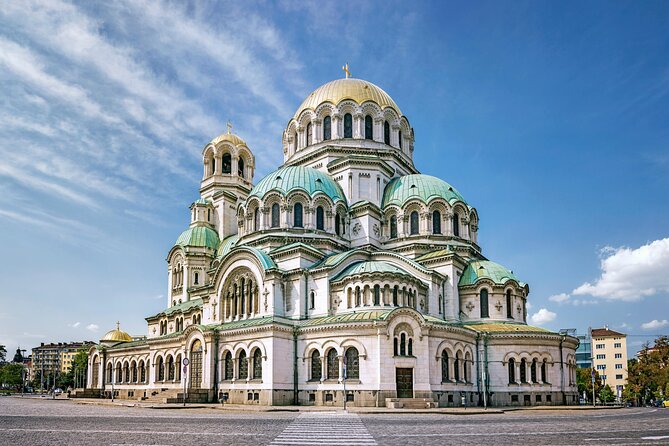
Next up is the Rotunda Church of St George. This is your second clue stop, and the structure stays simple: you’ll get a prompt, work through it, and then you can continue exploring at your own pace.
Rotunda churches tend to create a strong visual “center” effect, and that’s useful for puzzle-style sightseeing. Even when you’re not sure what you’re looking at, the space gives you something to anchor your attention.
This stop is also built for flexibility. You’re given time to pause without rushing, and you can use that window to read the story pieces on your phone before moving on.
Presidential Palace and Republic of Bulgaria: Power in Plain Sight
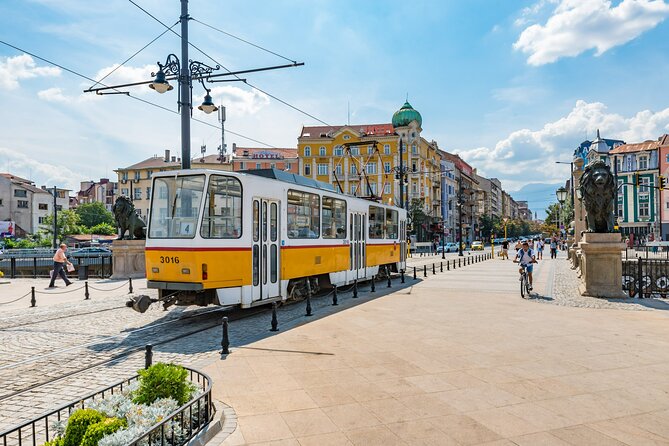
After the churches, the route turns outward toward state space with the Presidential Palace of Republic of Bulgaria. You’ll receive another clue here, tied to the story thread, and solving it guides you forward.
This is where the quest theme starts to feel most practical. You’re not just learning about politics in theory—you’re looking at the physical landscape where official life happens. The transition from religious sites to high-power institutions is one of the smartest design choices in the whole walk. It gives you a clearer sense of how eras overlap in one city.
As with the other clue points, you get a planned window of around 10 minutes, then freedom to explore before you move.
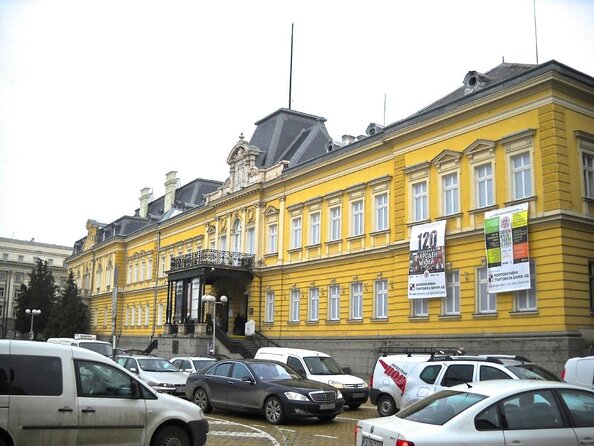
National Art Gallery and National Assembly: Art and Authority Together
The next stretch blends culture and governance: the National Art Gallery and then the National Assembly of the Republic of Bulgaria.
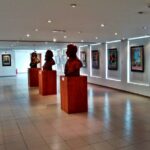
The art gallery stop matters because it can shift how you think about the communist-era theme. Art isn’t only decoration; it’s also messaging. Even without a deep art lecture, the game format nudges you to connect what you see with the era’s worldview.
Then you hit the National Assembly, which brings the focus back to decisions made by institutions. This pairing works well for puzzle quests because it changes your brain mode: look, connect, solve—then look, connect, solve again.
A helpful expectation to set: entry tickets are not included. So if you plan to go inside any museum or building spaces that require paid admission, you’ll need to budget time and money for that on your own.
Sofia University St. Kliment Ohridski: An Educational Clue Stop
Next is Sofia University St. Kliment Ohridski. You’ll get another clue prompt and can continue exploring for as long as you like during your stop window.
University spaces are a smart location for this kind of story, because education is where societies pass ideas forward. Even when the game puzzles focus on specific facts, the stop itself encourages a broader question: who shaped what people learned, and how did institutions influence daily life?
The route keeps you moving through these civic anchors so the theme stays grounded instead of abstract.
Soviet Army Monument: Where the Theme Gets Real
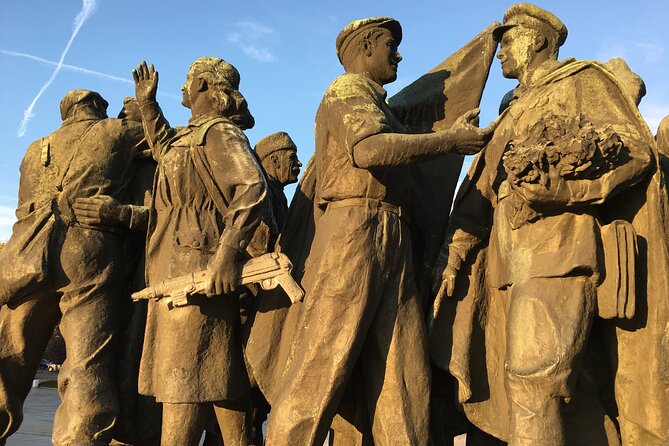
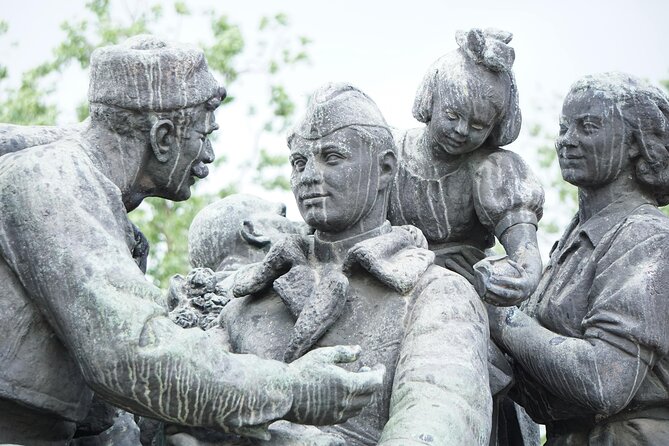
At the Soviet Army Monument, the game switches from “historic context” to “memory made public.” This is a major stop for any visitor, even if you’re not doing a puzzle quest, because monuments are the places where politics becomes visible and permanent.
You’ll receive another clue here and work it out before heading onward. This segment is also one of the most emotionally direct parts of the route, so keep your pace realistic. If you want time to read and think, you can—and the format allows it.
Balgarska Natsionalna Filmoteka and Hotel Slavyanska Beseda
Now the story shifts into media and everyday public life with Balgarska Natsionalna Filmoteka and then Hotel Slavyanska Beseda.
Film-related stops are a clever choice for a communist theme because film and storytelling were often used to shape public understanding. Even if your puzzle answer is based on something small, the stop gives you a useful anchor for thinking about cultural power.
Then you move to a hotel—an everyday space, but still tied to how people gather, travel, and socialize. This kind of contrast helps the overall walk feel more like a city history route than a single-topic checklist.
K.E.B.A. and the First Urban Hospital: Institutions Close to Daily Life
The route continues with K.E.B.A., and then Университетска Първа МБАЛ – София (First Urban Hospital). These are the kinds of places visitors often skip, which is exactly why they work in a game format.
Why? Because health, labor, and institutional services are where regimes show their practical impact. Even if your clue solving stays focused on specific story beats, these stops make you think about systems—what people relied on and what life looked like when politics shaped services.
At this stage, wear-and-tear matters. You’ve already done several blocks of walking. If you’re prone to blisters, this is where you’ll feel them. Plan to have comfortable shoes from the beginning.
Ending at the Temple of Bulgarian Martyrs
Your quest concludes at the Temple of Bulgarian Martyrs, where the story and the city exploration game both end.
Ending with a religious memorial location gives the walk a moral and historical closure. It also provides a satisfying sense of arrival: you’re finished, you’re in a meaningful final place, and you can decide what to do next in the area without chasing one more clue.
This final stop is also your cue to reset. Take a moment to check your phone, read any final story text, and then plan your onward transport.
Puzzles, Clues, and How Long You Should Budget
The activity is designed around short puzzle segments at each stop, but here’s the reality check: the total experience can take longer than the game estimates. That’s often true with phone quests because you’ll naturally pause to read, solve, and look around, especially in churches and civic buildings.
Also, the puzzle quality isn’t uniform. Some puzzles can feel silly or confusing, or tied to details that are not easy to spot in the real world. I’d treat the puzzles as part of the fun experiment, not a test you have to ace.
My practical advice:
- Give yourself extra time beyond the ~2-hour figure, especially if you want to actually enjoy each stop.
- If a clue feels stuck, don’t burn 30 minutes. Skip ahead if the app allows it, or pause and come back with fresh eyes.
- Keep an eye on what’s still visible around you. If you’re looking for something that’s hard to find, you might waste time chasing a clue tied to something no longer present.
Value for $6.02: Cheap Fun, With One Cost You Must Plan
At about $6.02 per person, this is one of the most affordable ways to get a structured walking route with a story component in Sofia. You’re paying for the game framework, not for museum entries or guide time.
The trade-off is clear: no entry tickets are included for attractions. That means the only guaranteed costs are the price of the quest itself. But if you want to go inside any stops that require admission, you’ll pay separately.
Still, for travelers who like self-guided learning, this is strong value. You get:
- A ready-made route across central Sofia
- A themed narrative for context
- Phone-based interaction that keeps you actively looking instead of passively walking
If you hate puzzles, though, the value depends on your patience. This isn’t a quiet audio tour; it’s a game.
Getting Around, Timing, and What to Wear
This is a near-public-transport style route, and it’s built for walking. Since it’s open air and designed to avoid crowds, it’s easiest to enjoy when the city isn’t under extreme weather stress. If it’s hot, you’ll want water and breaks. If it’s cold, you’ll want warm layers.
The best tip is simple: wear comfy shoes. The route hops between 12 stops across central areas, and even with short clue windows, the walking adds up.
Also, it’s available 24/7, and you can start and take breaks. That’s helpful because Sofia’s sights can be unpredictable. You won’t be stuck with a rigid departure time if your day shifts.
Who Should Book This Self-Guided Communism Puzzle Quest?
This suits you if:
- You enjoy learning through a game format rather than a lecture
- You want an easy, structured way to see central Sofia in about a couple hours
- You prefer moving at your own pace and don’t want to manage a group schedule
- You’re comfortable using a phone app outdoors
It may not suit you if:
- You strongly dislike puzzles or want zero problem-solving
- You need deep, formal explanations rather than story-driven prompts
- You’re hoping for included museum entries
Since it’s in English and works on a mobile platform, it’s also a good option for international visitors who want an authentic-feeling theme route without a language barrier.
Should You Book Sofia Under Communism Puzzle Quest?
If you want a budget-friendly way to turn central Sofia into a story walk, I think this is worth booking. The value per person is excellent, and the route design covers a smart mix of sites—churches, state buildings, Soviet-era memory, and the memorial ending point—so the theme stays grounded in real place.
My main caution is time and puzzle quality. Plan for the experience to take a bit longer than the estimate, and keep your expectations flexible about how clever or clear each puzzle feels.
If that sounds like your kind of travel (active, curious, a little playful), book it. If you’d rather have straightforward sightseeing with fewer moving parts, you might prefer a traditional guided option.