REVIEW · GENEVA
Self-Guided Audio Tour to the Many Faces of Geneva
Book on Viator →Operated by myFive · Bookable on Viator
Geneva has a way of turning street corners into stories. This self-guided audio tour strings together 13 major sights, from the Monument to Empress Sissi to the Fontaine de l’Escalade, with professional English narration and a theme you won’t get from a standard guidebook. I like the photo-based directions that help you keep moving, and I like how the commentary connects each place to big human ideas—sins and virtues—so the city feels less like a checklist.
The main thing to keep in mind is tech. You’ll need your own phone, an internet connection, and headphones, and if your signal is spotty you can run into audio slowdowns or dropouts.
In This Review
- Key highlights worth planning around
- How the audio tour works from Sissi to Escalade
- Price and value: $13.29 for a city “with a story”
- Stop-by-stop: the many faces of Geneva in 13 meaningful moments
- Stop 1: Monument to Empress Sissi (Quai du Mont-Blanc)
- Stop 2: Jet d’Eau
- Stop 3: Brunswick Monument
- Stop 4: Statue de Jean-Jacques Rousseau
- Stop 5: Monument National
- Stop 6: The Flower Clock
- Stop 7: Evangelical Lutheran Church of Geneva + the Palace of Justice nearby
- Stop 8: Place Bourg du Four
- Stop 9: Cathedrale Saint Pierre + Jeremiah + Town Hall bench
- Stop 10: Reformation Wall
- Stop 11: Statue of General Guillaume-Henri Dufour
- Stop 12: Bust of Henri Dunant
- Stop 13: Fontaine de l’Escalade (final stop)
- The moral theme: virtues, sins, and why it can work
- Tech and pacing: what can trip you up (and how to avoid it)
- Practical walking tips: navigation that actually helps
- Who this audio tour suits best
- Should you book the self-guided audio tour?
- FAQ
- How long is the self-guided audio tour?
- Is the audio guide available in English?
- What do I need on my phone to do the tour?
- Where does the tour start and end?
- Is there a live guide?
- Is this tour private, and are service animals allowed?
- Can I cancel for a full refund?
Key highlights worth planning around
- Photo-led route that makes it easy to find each stop without a live guide
- Professional English audio recorded by speaking talent, not robotic narration
- A memorable theme linking monuments to vices (anger, envy, etc.) and virtues (justice, courage, etc.)
- 13 major Geneva sights packed into roughly 1 to 2 hours of walking
- Built for your pace: pause when it’s hot, replay a section, then keep going
How the audio tour works from Sissi to Escalade
This is a self-guided, private experience for just your group—no meeting up with a stranger holding a sign. You get a mobile ticket, then you follow the route using the link provided after booking. There’s no live guide, so the whole experience depends on the way your phone handles the audio and directions.
Plan on about 1 to 2 hours for the full walk. The route is set up with a logical start and finish: begin at the Monument to Empress Sissi on Quai du Mont-Blanc (Quai du Mont-Blanc 10, 1201 Genève) and end at the Fontaine de l’Escalade (Rue de la Confédération 4, 1204 Genève). The stops are clustered enough that you can walk it as an orientation-style stroll, not a long day expedition.
One practical note: the tour is offered in English, and most people can participate. If you can walk around city sidewalks and spend time reading short explanations on the screen, you’re in good shape.
You can also read our reviews of more tours and experiences in Geneva.
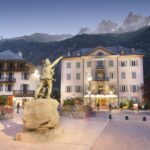
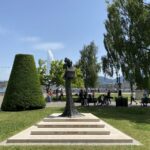

Price and value: $13.29 for a city “with a story”

At $13.29 per person, you’re paying for three things: the recorded narration, the structured route with clear directions, and the way the tour turns famous places into an easy-to-follow narrative. Because the sights themselves are free to view, you’re not buying museum entries as part of this price—you’re buying the route and the commentary.
What makes it feel like good value is the mix of practical navigation and built-in context. You’re not only told where to go; you’re also given a reason to look closer at what’s already there: statues, fountains, monuments, churches, and the public spaces where Geneva’s history still shows up in stone.
I’d call it especially good value if you’re:
- arriving in Geneva and want quick orientation
- the type who reads signs but prefers guided structure
- looking for a different angle than pure dates and rulers
Stop-by-stop: the many faces of Geneva in 13 meaningful moments
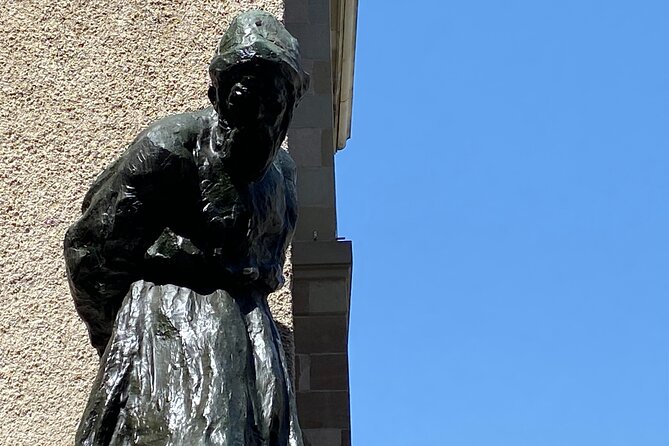
This route walks you through Geneva’s most photographed corners, but the audio keeps steering your attention. Instead of treating each stop like a standalone landmark, it links them into one theme: how people explain themselves through stories of sin, mercy, justice, courage, and restraint.
Stop 1: Monument to Empress Sissi (Quai du Mont-Blanc)
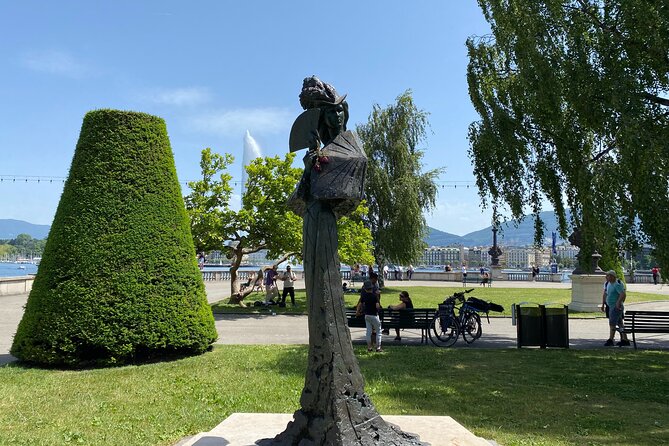
You start at the Monument to Empress Sissi, tied to a tragic political act carried out by an anarchist. The audio frames this as more than a headline—you’ll hear about the event and, importantly, the why behind it. It’s a sharp opening: Geneva immediately shows you that public monuments can carry private grief.
Stop 2: Jet d’Eau
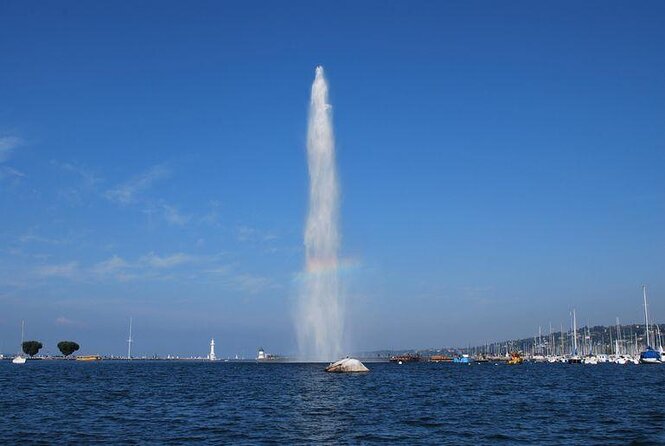
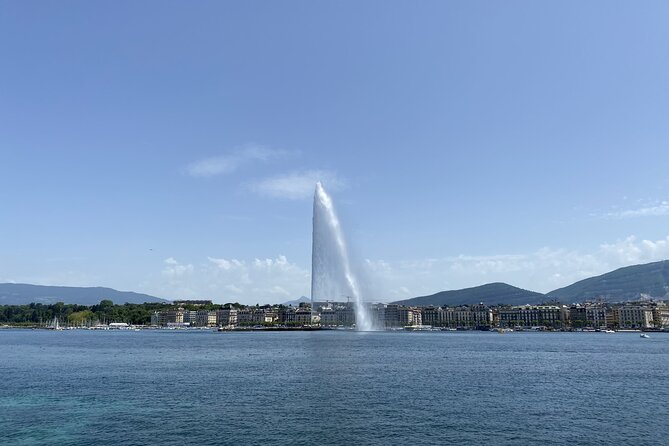
Next is the Jet d’Eau, one of the world’s largest fountains. The narration pushes you to think about what a spectacle like this is for—how it contributes to making the world better. It’s a nice contrast after the heavy start: Geneva’s grandeur isn’t only solemn. It’s also functional and celebratory.

Stop 3: Brunswick Monument
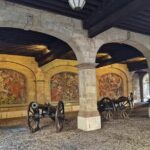
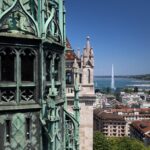
At the Brunswick Monument, you’ll be led to notice how a generous benefactor’s gift is honored through the structure itself. The tour points out images of virtues carved into the monument. This is one of those stops where you’ll get more out of the walk by slowing down for a minute and looking at details you might otherwise miss.
Stop 4: Statue de Jean-Jacques Rousseau
The statue of Jean-Jacques Rousseau gets treated as a human story, not a marble saint. You’ll hear about the sins he openly confessed. If you like the idea of confronting big thinkers as flawed people, this stop lands well.
If your ideal Geneva day is straight political history with less moral framing, this stop may feel like a preview of the tour’s style.
Stop 5: Monument National
At Monument National, the audio explains the story behind its triumphant selection in a competition for erection. It’s a reminder that civic monuments aren’t always inevitable outcomes of history. Someone had to win, design, persuade, and build.
Stop 6: The Flower Clock
Now the route turns playful with the Flower Clock. You’ll learn how it connects to the concept of pride. It’s an example of the tour’s signature approach: even whimsical things get interpreted through virtues and vices, so you start scanning your surroundings differently.
Stop 7: Evangelical Lutheran Church of Geneva + the Palace of Justice nearby
The Evangelical Lutheran Church of Geneva is one of the stops where the narration leans explicitly religious and moral. You’ll hear about different religious perspectives on salvation—how sins and good deeds factor into the picture. Then, adjacent to the church, the tour leads you to the Palace of Justice for a connection involving mercy.
This is where the tour feels most like a guided conversation with Geneva’s moral vocabulary.
Stop 8: Place Bourg du Four
At Place Bourg du Four, the tour points you toward a monument representing a Genevan champion for justice. It also brings up the history of past red-light districts. This is a blunt reminder that cities that sell order and refinement also contain messy human chapters.
Stop 9: Cathedrale Saint Pierre + Jeremiah + Town Hall bench
The Cathedrale Saint Pierre stop is designed to be more than a photo moment. You’ll understand its association with the virtue of temperance. The narration also guides you to the statue of Prophet Jeremiah, commonly referred to as the weeping prophet.
Then the tour continues to the Town Hall building, where a stone bench witnessed the pronouncement of death sentences by Geneva’s judges. That detail makes this stretch of the route feel weighty, because it links architecture to real outcomes for real people.
Stop 10: Reformation Wall
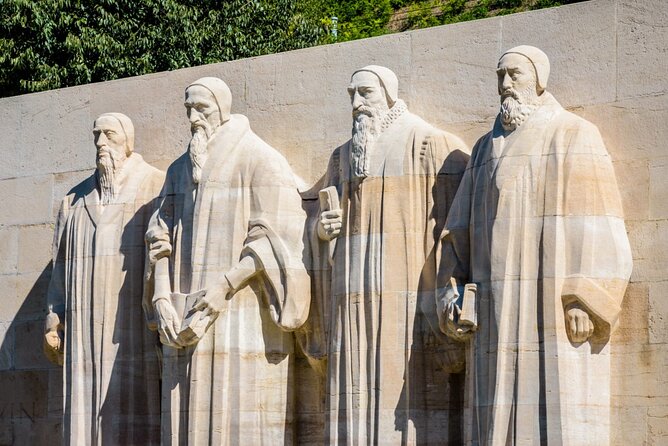
At the Reformation Wall, the audio explains which theologians faced criticism for inflexibility, mercilessness, and heartlessness. This isn’t just names on a wall. It’s a story about how public debate can turn into moral labeling—sometimes with harsh consequences.
Stop 11: Statue of General Guillaume-Henri Dufour
The route then shifts to courage. You’ll see the statue of General Guillaume-Henri Dufour, and the narration gives insight into his valiant struggle against evil. It’s a morale-building stop in the best way—less about spectacle, more about what the figure symbolizes.
Stop 12: Bust of Henri Dunant
Next is the bust of Henri Dunant, recognized as a Red Cross founder. The narration focuses on the intricacies of his life and even draws surprising parallels with Leo Tolstoy. If you enjoy when monuments tie into literature and ethics, this one often makes the tour feel more human.
Stop 13: Fontaine de l’Escalade (final stop)
You end at the Fontaine de l’Escalade, described as a testament to Genevans’ courage. It’s a fitting finish after all the moral framing: the walk closes with resilience rather than judgment. When you reach the end point, you’ll have seen how Geneva’s public art can tell stories about both the darker impulses and the better instincts people claim to follow.
The moral theme: virtues, sins, and why it can work
This audio tour doesn’t treat Geneva like a neutral museum. It treats it like a moral map.
That theme shows up repeatedly in how the tour frames places:
- churches and justice linked through mercy
- public monuments tied to virtues like justice, courage, temperance
- statues interpreted through confession, criticism, and restraint
- even fun city icons like the Flower Clock get moral interpretation
If you’re someone who enjoys ideas—religion, philosophy, ethics in daily life—this approach can make the whole walk feel memorable. It turns an efficient city stroll into something closer to a guided theme walk, where each stop adds a piece of an overall picture.
The possible drawback is tone. One clear critique is that some people want more straightforward history and less commentary about morale, philosophy, and religion. So if your personal style is dates, treaties, and wars only, this might feel like it leans too “thinking” for your taste.
Tech and pacing: what can trip you up (and how to avoid it)
Because this is phone-based, your experience depends on connectivity. The tour requires:
- a mobile phone
- an internet connection
- headphones
- the link provided after booking
There’s an important practical detail: there’s no option mentioned for downloading the tour for offline use. In one case, technical issues came from data coverage problems—audio would drop, load slowly, and in some moments the tour needed restarting.
So here’s how I’d protect your day:
- Start with decent signal if you can
- Give the audio a moment to load before you start walking long blocks
- If it hiccups, don’t panic—just pause, wait for it to catch up, and continue
Also, the route is short enough to adjust. If the weather is warm, you can take breaks and then rejoin the rhythm. One reviewer specifically did that on a hot day, which makes sense: the stops are spaced to let you cool down without derailing the walk.
Practical walking tips: navigation that actually helps

The best part of a self-guided tour is staying on track. This one includes clear explanations of the route, with photos and directions. That matters because Geneva can be confusing if you’re hunting for tiny details between big landmarks.
To make this tour smoother:
- Plan to follow the photo direction cues rather than relying only on street names
- Take advantage of the fact the route has a clear beginning and end
- Don’t rush. The audio is built to make you look at specific parts of each site
And since the tour is private for your group, you won’t feel awkward stopping to check your screen. You can just slow down, read, and listen.
Who this audio tour suits best
This walk fits best if you want:
- an easy way to get your bearings quickly
- an English narration that explains what you’re looking at
- a story-led route through top Geneva sights
- a pace you can control, with no live-guide pressure
I’d also say it’s a strong choice if you like moral or philosophical angles and you enjoy connecting art and monuments to human behavior.
If you hate the idea of religious or philosophical talk, or you mostly want straight historical facts with minimal interpretation, you might find the comments too long or too heavy. In that case, treat this as a themed stroll, not a pure history lecture.
Should you book the self-guided audio tour?
Book it if you want Geneva with structure. For the price, you’re getting a guided way to see major sights in about an hour or two, with professional English narration and directions you can follow on the go.
Skip it or reconsider if your phone connection is often unreliable where you’ll be walking, because the audio depends on internet access and there’s no offline download option mentioned. Also pass if you strongly prefer hard facts and little moral/philosophical framing.
FAQ
How long is the self-guided audio tour?
The tour takes about 1 to 2 hours, depending on your pace and how long you spend at each stop.
Is the audio guide available in English?
Yes. The tour is offered in English.
What do I need on my phone to do the tour?
You’ll need your own mobile phone with internet and headphones. You’ll use the link provided after booking to access the tour.
Where does the tour start and end?
It starts at the Monument to Empress Sissi on Quai du Mont-Blanc 10, 1201 Genève, and it ends at the Fontaine de l’Escalade on Rue de la Confédération 4, 1204 Genève.
Is there a live guide?
No. There is no live guide. You explore using the provided link after booking.
Is this tour private, and are service animals allowed?
Yes, it’s a private experience for only your group. Service animals are allowed.
Can I cancel for a full refund?
Yes. You can cancel for free up to 24 hours before the experience’s start time for a full refund.