REVIEW · YELLOWSTONE NATIONAL PARK
Self-Guided Audio Driving Tour in Yellowstone and Grand Teton
Book on Viator →Operated by GuideAlong (GyPSy Guide) · Bookable on Viator
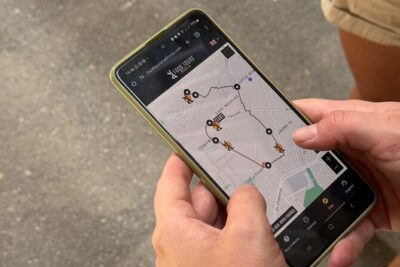
Yellowstone and the Tetons are big. This tour helps you use the day well. The audio automatically calls out what’s coming next as your phone senses where you are, so the parks feel navigable instead of overwhelming.
I especially like that you can set your own pace. You get flexible routes with suggested half- or full-day plans, plus the option to create your own path.
One thing to consider: you’ll want to prep the app ahead of time and keep your phone charged, because Yellowstone can mean very little service once you’re out on the roads.
In This Review
- Key things that make this audio drive worth your time
- Why This Yellowstone and Grand Teton Audio Drive Fits Real Schedules
- The Route at a Glance: A Day Split Between Yellowstone Thermal Worlds and Teton Viewpoints
- Yellowstone Stops: What Each Place Adds to Your Day (and What to Watch For)
- Yellowstone park time + learning as you drive
- Fountain Paint Pot: all four thermal types in one easy loop
- Lamar Valley: your wildlife “try again” zone
- Mammoth Hot Springs: travertine terraces that keep changing
- Artist Paintpots: colorful mudpots with a moderate climb
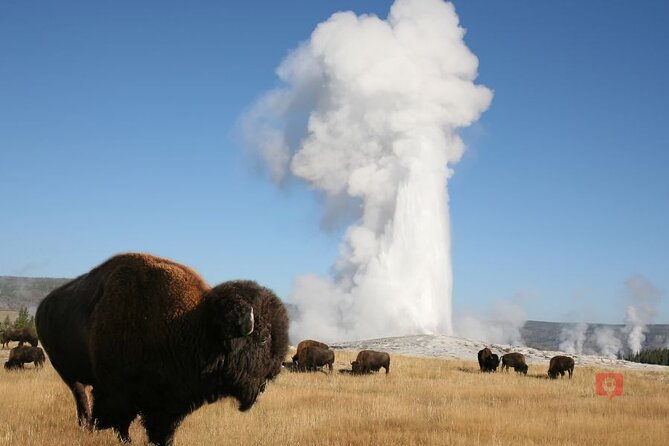
- Old Faithful: the predictability you can plan around
- Upper Geyser Basin: multiple eruptions, one big walking loop
- Grand Prismatic Spring: boardwalk colors and an overlook option
- Grand Canyon of the Yellowstone: waterfalls from different angles
- Boiling River: the one-soak option with strict safety reality
- Menor’s Ferry Historical Trail: a fun non-geothermal break
- West Thumb Geyser Basin: lakeside geothermal, often less crowded
- Grand Teton and Jackson Hole Stops: Viewpoints, Lakeside Walks, and Wildlife Odds
- Moose to Teton Village drive: slow down for moose, bears, and birds
- Mormon homesteads + Moulton barns: a photography-friendly history stop
- Signal Mountain Summit Road: quick altitude, big valley perspective
- Jenny Lake: boat option plus Hidden Falls walk
- How the GPS Audio Autoplay Actually Works in Your Car
- Time Planning, Passes, Crowds, and Seasonal Closures
- Price and Value: Why $32.99 Per Group Usually Beats a Guided Day
- Who Should Book This Audio Drive, and Who Might Skip It
- FAQ
- What language is the audio tour in?
- How long does the Yellowstone and Grand Teton driving tour take?
- How many people can share one purchase?
- Do I need cell service during the tour?
- Are Yellowstone and Grand Teton park passes included?
- Can I start and end the tour at different points?
- Does the audio tour expire?
- What do I need to access the tour after booking?
- Is there a refund if I cancel?
- Should You Book This Yellowstone and Grand Teton Audio Tour?
Key things that make this audio drive worth your time
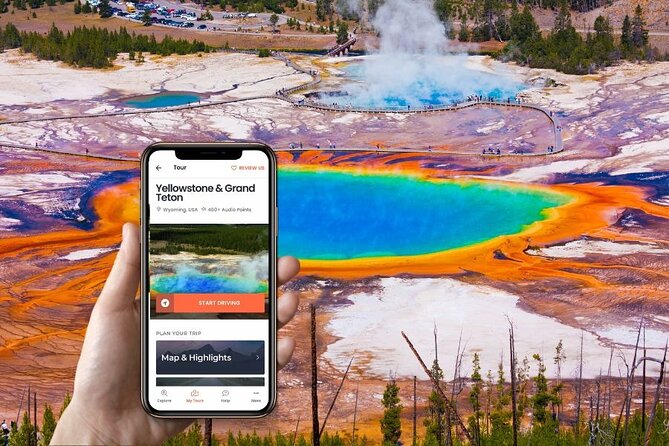
- GPS-triggered stories and directions: commentary plays as you reach each stop area.
- Offline-ready: download the tour once, then tour without cell service.
- Built for flexibility: suggested itineraries, but you can start and stop when you want.
- True “value per group” pricing: one purchase covers up to 8 people in your car.
- Big name stops, plus walkable thermal loops: Old Faithful, Grand Prismatic, and the smaller thermal areas you might skip.
Why This Yellowstone and Grand Teton Audio Drive Fits Real Schedules
If your Yellowstone day feels like a game of whack-a-mole, this is your cheat code. The GuideAlong audio is designed around where you are, so you’re not stuck guessing what you’re looking at or which pullout matters most.
I like that it’s not a rigid “bus tour” script. You still get a strong route through the top hits, but you can linger where you care—thermal basins, wildlife chances, scenic viewpoints, or the canyon waterfalls.
The other smart piece is the “one purchase per car” idea. At $32.99 per group up to 8, it’s easier to make this work even if you’re not traveling as a couple.
You can also read our reviews of more tours and experiences in Yellowstone National Park.
The Route at a Glance: A Day Split Between Yellowstone Thermal Worlds and Teton Viewpoints
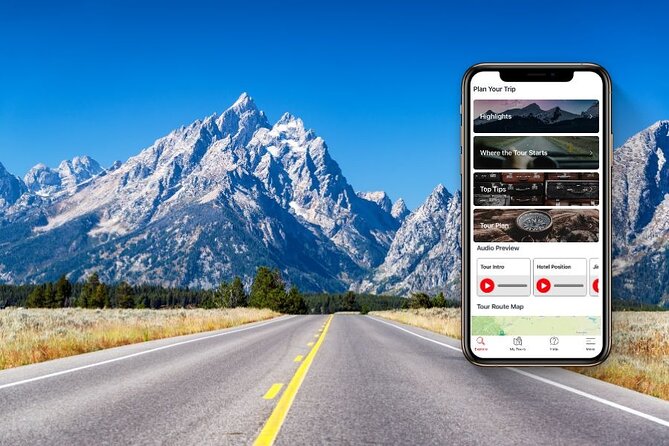
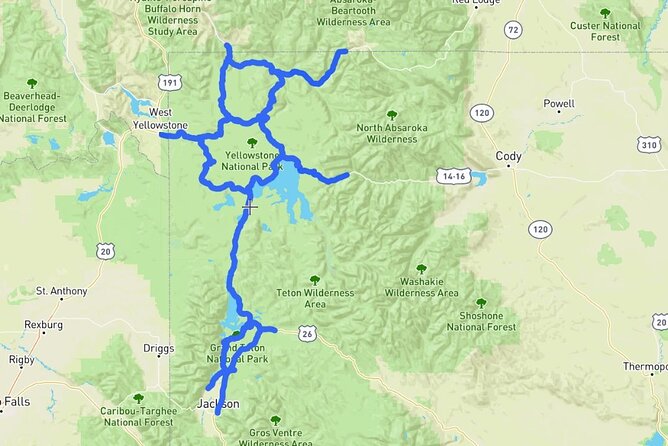
This is set up like a long driving loop that strings together the biggest Yellowstone highlights and key Grand Teton/Jackson Hole areas. You’ll see it as stops that feel like time blocks you can expand or shrink.
The day’s Yellowstone side is loaded with geothermal hits: Fountain Paint Pot, Lamar Valley, Mammoth Hot Springs, Artist Paintpots, Old Faithful, Upper Geyser Basin, Grand Prismatic Spring (with an overlook option), the Grand Canyon of the Yellowstone, and the Boiling River soak area. Then the plan flows toward West Thumb on Yellowstone Lake.
After that, the Grand Teton portion leans into viewpoints, short walks, and a couple of fun cultural detours around Jackson Hole: Jenny Lake, Signal Mountain Summit Road, Menor’s Ferry Historical Trail, plus a scenic drive between Moose and Teton Village.
Yellowstone Stops: What Each Place Adds to Your Day (and What to Watch For)
Yellowstone park time + learning as you drive
The tour starts inside Yellowstone National Park with a long “park route” block built around autoplay commentary. This matters because Yellowstone isn’t just sights—it’s spacing. Distances can eat your time fast, and the audio helps you move with purpose instead of wandering.
You’ll be aiming for a route where the top thermal areas come in a logical order. The audio’s biggest job is to keep you aware of what you’re approaching and what’s worth a quick parking-lot walk.
Fountain Paint Pot: all four thermal types in one easy loop
If you want variety without a major hike, Fountain Paint Pot is a good early stop. This area can show hot springs, geysers, mud pots, and fumaroles in one place, and the boardwalk loop is about 0.6 miles.
It’s also one of those spots where you don’t have to be a “thermal expert” to enjoy it. The audio helps you connect what you see—steam, color, and different surface behaviors—to the thermal type.
Lamar Valley: your wildlife “try again” zone
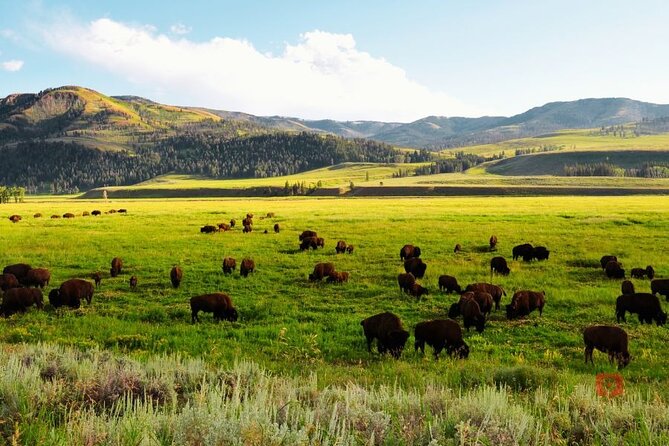
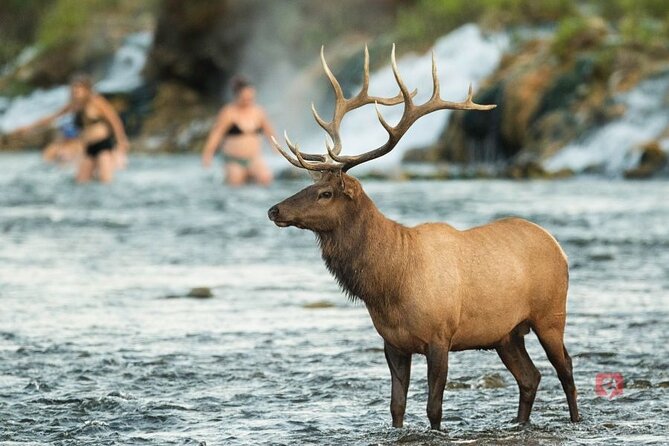
Lamar Valley is the wildlife watcher’s section. Think bison, elk, and the possibility of bears, wolves, and other animals depending on timing and conditions.
This is a good place to slow down and scan. The audio gives you what to look for, but you’ll do the real work with your eyes. If you’re hoping for big wildlife, Lamar is where your chances feel most focused.
Mammoth Hot Springs: travertine terraces that keep changing
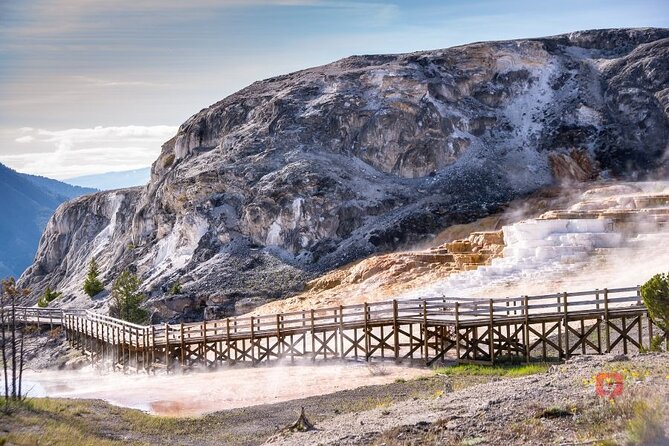
Mammoth Hot Springs is about the look of active geology—about 50 hot springs split between the Upper and Lower terraces. You’ll walk boardwalks close to features, and the Lower Terrace is where you’ll likely find strong photo angles.
One detail I love here is the emphasis on change. Mammoth isn’t a static postcard. The terraces, pools, and colorful mounds shift over time, so your “same spot” photos won’t look identical across days.
Liberty Cap is another named formation you’ll hear about: a tall, slender mound guarding the area, no longer connected to the hot water source. It’s the kind of feature that makes you feel like you’re finally reading the landscape correctly.
Artist Paintpots: colorful mudpots with a moderate climb
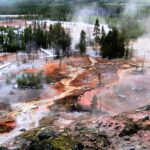
Artist Paintpots is a short walking circuit that packs a visual punch. You get an unpaved trail plus a boardwalk loop a bit over 1 mile with about 125 feet of elevation.
The colors come from minerals, especially iron oxide staining mudpots. If you like photography that looks artistic without heavy editing, this is the stop.
Expect steam, uneven ground in parts, and a trail that gradually climbs. The audio’s pacing cues help you avoid rushing through the most interesting bits.
Old Faithful: the predictability you can plan around
Old Faithful is famous for a reason. In real timing, it erupts roughly every 60 to 90 minutes, so it’s not perfectly on the hour.
What you’ll appreciate is the “time planning” effect. The audio helps you understand why you’re waiting and how to use that waiting time. You can time your arrival better instead of staring at the boardwalk in confusion.
Upper Geyser Basin: multiple eruptions, one big walking loop
Upper Geyser Basin is home to Old Faithful and many other geysers. It’s also where the tour pushes you to think in terms of route-building within the basin.
You’ll be guided toward the 2-mile round trip paved path from Old Faithful Lodge to Morning Glory Pool. Along the way, you’re meant to stop for spots like Castle Geyser, Daisy Geyser, and Riverside Geyser.
Pro move: check at the visitor center for eruption prediction times for multiple geysers. That advice isn’t just trivia—it changes how good your photos and timing feel.
Grand Prismatic Spring: boardwalk colors and an overlook option
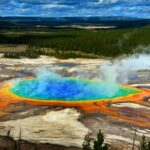
Grand Prismatic Spring is Yellowstone’s color show. The microbial mats around the edges can appear red, orange, yellow, and green, while the center often reads as deep blue.
Steam can blur photos, so arrival timing matters. The tour nudges you to arrive early or late to reduce crowds, and it also gives you an overlook option: the Grand Prismatic Overlook Trail from the Fairy Falls Parking lot. The walk is about 0.6 miles with roughly 100 feet of slight elevation.
If you want a plan that doesn’t require a perfect boardwalk moment, the overlook route is a smart backup.
Grand Canyon of the Yellowstone: waterfalls from different angles
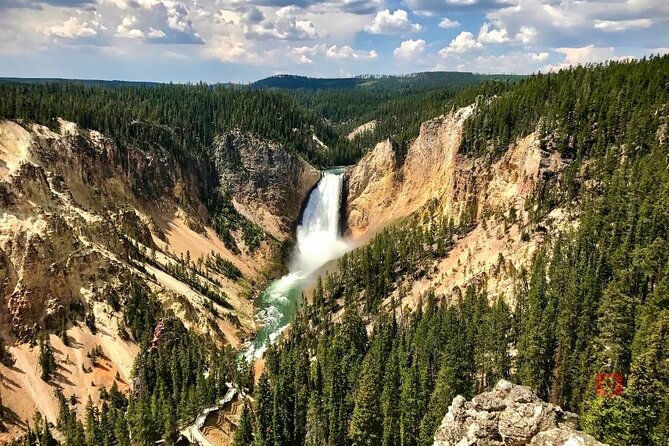
This canyon is carved along the Yellowstone River, with viewpoints for both Upper and Lower Falls. The canyon runs about 20 miles, and the falls can reach up to around 1,200 feet deep depending on the section.
The tour’s angle advice is practical: you’ll want multiple viewpoints, not just one. Even if you’re short on time, don’t skip the viewpoint variety because it changes how the waterfalls read.
Boiling River: the one-soak option with strict safety reality
Boiling River is one of only two Yellowstone areas where you can soak in the river. But it’s seasonal—closed in spring/early summer in many years due to current and water height.
There’s no lifeguard, and the water can contain microorganisms. The key is that you should check current conditions before you go, and you can only soak in the river, not in a hot spring pool.
If you’re traveling with kids, don’t treat this like a casual dip. It’s more like a careful nature experience where safety comes first.
Menor’s Ferry Historical Trail: a fun non-geothermal break
This stop adds history without being heavy. Menor’s Ferry was a cable ferry crossing the Snake River, and a working replica and general store are part of the site now.
It’s a short stop—about 30 minutes—with artifacts and memorabilia from the late 1800s era. It breaks up the thermal intensity and gives you a human-scale story for the day.
West Thumb Geyser Basin: lakeside geothermal, often less crowded
West Thumb sits on Yellowstone Lake, and the tour points out it can feel less congested than some other geothermal areas. You’ll hear about unique thermal features, including Fishing Cone Hot Spring and Abyss Pool.
Abyss Pool is noted for its 53-foot depth. The blue shade is part of why it’s compelling, but it’s also the kind of feature that makes you slow down and look.
Wildlife can wander between hot pools and geysers here, so it’s a spot where scanning matters even while you’re standing still.
Grand Teton and Jackson Hole Stops: Viewpoints, Lakeside Walks, and Wildlife Odds
Moose to Teton Village drive: slow down for moose, bears, and birds
The tour includes a scenic drive connecting Moose and Teton Village, which is tied to the Jackson Hole Ski Area area. This road is also wildlife-heavy in feel: black and grizzly bears, moose, and deer can all show up.
The practical detail: this road is closed to RVs and longer trailers (over 23 feet). So if you’re traveling larger-than-average, this part of the plan may not work for your vehicle type.
Because the tour encourages you to drive slowly, it also helps you stay alert. That’s the real value here.
Mormon homesteads + Moulton barns: a photography-friendly history stop
This is a cultural detour that’s light on logistics and fun for photos. The area includes a story about early settlers and hand-dug irrigation ditches, including reference to clustered homesteads.
The tour highlights two barn structures linked to neighboring Moulton brothers, and it describes the classic photo composition: lineup the barns with the Grand Teton peaks in the background.
If you like an easy, rewarding “stop and shoot” moment, this fits.
Signal Mountain Summit Road: quick altitude, big valley perspective
Signal Mountain Summit Road is an easy route to higher viewpoints in the Jackson Hole valley. The drive is about 5 miles from Teton Park Road to the top, and there are two excellent viewpoints at the summit.
Key vehicle note: RVs and trailers are prohibited on this road. Also, the payoff is perspective—the valley can look like it’s ringed by mountain ranges, which helps you understand the geography you’ve been driving through.
Jenny Lake: boat option plus Hidden Falls walk
Jenny Lake is the most popular and busiest part of the park. The tour’s angle here is to use that popularity smartly.
You can take a boat across Jenny Lake (tickets available at the dock), then walk to Hidden Falls. The tour frames it as about 1 hour total, and the lake-and-waterfall combo makes it feel like a proper “Teton break” from thermal areas.
If you hate crowds, you’ll likely enjoy going early or timing your walk between peak congestion periods.
How the GPS Audio Autoplay Actually Works in Your Car
This is where the experience either clicks or gets annoying, so it’s worth talking straight.
Once you download the tour, the audio uses your phone’s GPS to trigger commentary. That means you’re not hunting for service bars. One review highlights the same practical idea: Yellowstone can have hardly any reception, so offline download matters.
To make it smooth, do these two things before you arrive:
- Download the audio tour over WiFi or cellular data and keep it ready in the app.
- Bring a USB/C car charger and plug in early, so your phone doesn’t run low while the GPS is active.
A couple of technical gotchas show up in real use. Some people run into trouble if they sign in with the wrong account, or if they expect it to work with Android Auto (it’s not supported based on the provided info). Another small issue is that phones can run warmer when GPS is active, so having the phone near airflow from your car AC can help.
You can also use earbuds/headphones if you want to step out and continue listening while walking. The tour is designed for driving, but the audio points you to walk loops like Fountain Paint Pot and Artist Paintpots.
Time Planning, Passes, Crowds, and Seasonal Closures
This tour does not include Yellowstone or Grand Teton park passes. The audio is the guide, not the ticket.
Also plan for seasonal reality. Boiling River can be closed in spring/early summer due to dangerous current and high water. The tour explicitly notes to check current conditions.
Crowds are real at the big three: Old Faithful, Upper Geyser Basin paths, and Grand Prismatic Spring. The Grand Prismatic stop advice is to arrive early or late to avoid the worst congestion, and steam can cloud photos so you may want flexibility on timing.
If you’re visiting outside typical travel months, pay attention to road status. The tour notes that in winter, most Yellowstone roads close to regular vehicles, with limited access until late April. If you’re traveling in winter, you’ll want to check road status before counting on the route.
And for the wildlife-minded parts—like Lamar Valley and the Moose-to-Teton Village drive—be ready for the basics: drive slowly, scan often, and accept that wildlife sightings are never guaranteed. The tour helps you look in the right places, not promise animals on command.
Price and Value: Why $32.99 Per Group Usually Beats a Guided Day
At $32.99 per group (up to 8), this is built for families and for anyone trying to keep a Yellowstone trip from turning into a budget leak. One purchase for everyone in the vehicle matters a lot if you’re sharing costs with friends or traveling with kids.
You also get 550+ location-based points, plus story, tips, and directions that play automatically. That’s a big deal because Yellowstone is a place where you can easily spend hours driving and still feel like you missed context.
The app also includes free updates and no expiry. In practical terms, that means you can download now, use it now, and still have it for a future Yellowstone return without buying again.
Who Should Book This Audio Drive, and Who Might Skip It
This is a great fit if you:
- Want two major national parks in one day without paying for a full guided bus.
- Like the idea of deciding on the fly where you stop and how long you stay.
- Need navigation help where parking feels confusing and distances feel long.
- Are traveling with a group in one car, since the price is per group.
You might think twice if you:
- Need a fully staffed guide to troubleshoot tech problems in real time.
- Rely heavily on Android Auto based on vehicle setup, since it’s not supported.
- Are uncomfortable downloading and prepping your phone before you enter low-signal areas.
FAQ
What language is the audio tour in?
The tour is offered in English.
How long does the Yellowstone and Grand Teton driving tour take?
The duration is about 8 hours to 1 day, depending on how many stops you choose and how long you spend at each.
How many people can share one purchase?
It’s priced per group and supports up to 8 people in the vehicle.
Do I need cell service during the tour?
No. After you download the tour in advance, it works offline, and no internet or cell service is required to run the GPS-based audio.
Are Yellowstone and Grand Teton park passes included?
No. Park passes are not included in the tour price.
Can I start and end the tour at different points?
Yes. Commentary plays automatically based on your location, so you can start and end anywhere along the tour route.
Does the audio tour expire?
No. It’s a one-time purchase with no expiry, and it includes free updates.
What do I need to access the tour after booking?
After booking, you’ll receive email and text instructions to download the GuideAlong app and redeem your voucher code. You’ll sign in using your preferred Apple or Google account.
Is there a refund if I cancel?
Yes. Free cancellation is available up to 24 hours in advance for a full refund.
Should You Book This Yellowstone and Grand Teton Audio Tour?
If your goal is a well-paced, self-directed day that hits the big Yellowstone thermal icons plus key Grand Teton viewpoints, I’d book it. The price makes sense for groups, and the GPS-triggered audio helps you avoid the common Yellowstone problem of seeing a lot of stuff without really understanding what each stop is.
I’d hold off if you’re not ready to do a quick app download and setup before you lose service. Get it working at home or on the edge of town, charge your phone in the car, and you’ll get a smoother day through both parks.