REVIEW · BERN
Self-Guided Audio City Tour in Bern
Book on Viator →Operated by myFive · Bookable on Viator
Bern hides stories in plain sight. This self-guided audio city walk strings together 21 Bern landmarks from Zytglogge to Ryfflibrunnen with English narration, plus clear route guidance and a mobile ticket. I love the self-paced control, so you can pause, skip ahead, or linger on what you care about. The main drawback is pacing: the audio can feel long in spots, and you may end up walking and listening closer to 4–6 hours if you take every detail.
One reason this works is that there’s no live guide to keep up with. You follow the provided link on your phone at your own rhythm, starting at Bim Zytglogge 1 and ending near Ryfflibrunnen on Aarbergergasse. At $13.29 per person, it’s a budget-friendly way to get context for what you’re already seeing in Old Town Bern—as long as you’re comfortable using your own phone, internet, and headset.
In This Review
- Key highlights at a glance
- Walking Bern From Zytglogge to Ryfflibrunnen in Real Time
- Price and Value: What $13.29 Gets You in Bern
- How the Mobile Audio Works (and Why Your Setup Matters)
- Stop-by-Stop: What You’ll Notice at Every Major Bern Landmark
- Zytglogge: The Astronomical Clock You Can’t Ignore
- Zahringerbrunnen: Bern’s Founder Symbol in Fountain Form
- Simsonbrunnen: Samson vs. a Lion, in Stone
- Rathaus Bern: City Hall and the Feeling of Civic Power
- Church of St. Peter and Paul: Interior Details Worth Your Time
- Vennerbrunnen: Medieval Military Leadership in Sculpture
- Gerechtigkeitsbrunnen: Justice as Allegory
- Nydeggkirche: Medieval Church Texture at the Edge of Your Route
- BearPark: Bern’s Symbol, Up Close in a Habitat Setting
- Erlacherhof: A Historic Mansion Moment
- Berner Munster: The Cathedral Stop That Deserves the Long Listen
- Mosesbrunnen: Ten Commandments in Fountain Sculpture
- Parliament Building: Switzerland’s Democratic Stage
- Bundesterrasse: Views Over the Aare and Old Town
- Kafigturm: Judicial History in a Tower Shape
- French Church: Baroque Grace and Cultural Identity
- Child Eater Fountain (Kindlifresserbrunnen): Folklore With a Dark Edge
- Schutzenbrunnen: A Sword, a Man, and Military Memory
- Anna-Seiler-Brunnen: A Person’s Legacy in Public Art
- Pfeiferbrunnen: A Bagpiper and the Theme of Temperance
- Ryfflibrunnen: Marksman Legend or Military Preparedness
- Pacing Tips: How to Keep It Fun Instead of a Listening Marathon
- Who Should Book This Bern Self-Guided Audio Tour
- Should You Book This Bern Audio City Tour?
- FAQ
- How long is the Self-Guided Audio City Tour in Bern?
- What does the tour cost?
- Do I need a phone and headphones?
- Is the tour available in English?
- Is there a live guide?
- Where does the tour start and end?
Key highlights at a glance
- Audio with photo directions that help you find each stop quickly
- Zytglogge’s astronomical clock with its playful mechanical show vibe
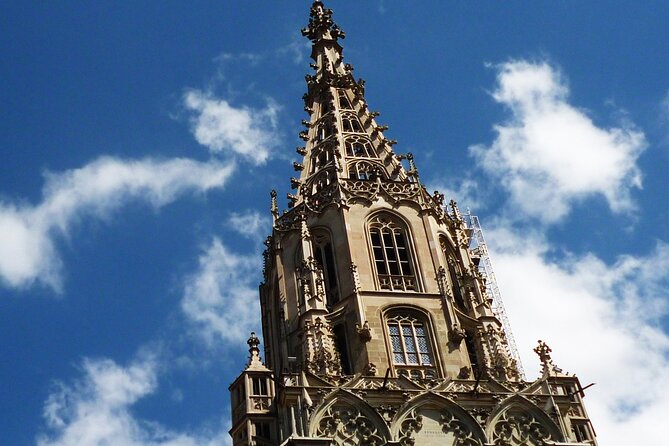
- Berner Munster time on the cathedral and its stained glass
- BearPark (BärenPark) for Bern’s animal-symbol moment
- A route packed with fountains, churches, and civic landmarks without museum-ticket pressure
- Designed for a private group experience, so it’s just your people moving at your pace
Walking Bern From Zytglogge to Ryfflibrunnen in Real Time
This is a self-guided audio city tour in Bern that’s built around one classic idea: if you’re walking through Old Town anyway, you might as well hear what you’re looking at. The route begins at Bim Zytglogge 1 (the name is the giveaway that you’ll be starting right by the clock) and ends at Ryfflibrunnen on Aarbergergasse.
On paper, the time is about 2 to 3 hours. In real life, your pace decides the outcome. If you listen to every segment at full length, you’ll likely take longer—especially when you stop for photos or pause to read your own way through details. The good news is that the tour is structured so you can skip forward when you want to keep walking.
Also, this is offered in English and uses a mobile ticket format. The tour is private, meaning only your group participates—though it’s still self-guided, so you won’t be meeting up with anyone at each stop.
You can also read our reviews of more tours and experiences in Bern.
Price and Value: What $13.29 Gets You in Bern
At $13.29 per person, this sits firmly in the “low-cost context” category. You’re not buying train tickets, paying for guided museum entries, or shelling out for an expensive guided day. Instead, you’re paying for a smart audio layer: history and meaning for the fountains, churches, and major civic buildings you’d otherwise pass by.
Here’s why that matters in Bern. Old Town is full of small, specific carvings—faces on fountains, symbols on portals, and details that are easy to miss when you’re just sightseeing fast. The audio is designed to point you toward those parts, and that’s the real value: it turns a wandering walk into a guided-feeling walk without the time pressure of a live group.
Is it perfect value? Only if you like listening. If you’re more of a “headphones optional, I’ll figure it out” person, then you might find yourself skipping too much audio for the price to feel worth it. But if you enjoy stories—especially about clocks, churches, and sculpture—this price is a bargain.
How the Mobile Audio Works (and Why Your Setup Matters)
This is self-guided, so the experience hinges on your phone setup. You’ll need:
- your own mobile phone
- internet access
- headphones
There’s no live guide, and you don’t get a meeting-time voice in your ear. Instead, you use the link provided after booking. That means you should plan to arrive with time to get the audio running before you start walking.
One practical tip: the tour time estimate assumes you keep moving and don’t stop for long breaks at every location. If your connection is shaky, save a little patience for troubleshooting at the start. Also remember that a lot of what you’ll hear is focused on specific architectural and artistic details—great if you like that depth, less great if you prefer short, punchy descriptions.
Finally, this tour includes mobile ticket access and clear explanations of the route with photos and directions. That’s a big deal in a walk like this, because you’re hopping between sights in a compact area. When instructions are good, you spend less time lost and more time looking.
Stop-by-Stop: What You’ll Notice at Every Major Bern Landmark
The route is built like a storybook page turn: first the playful mechanical landmark, then founders and biblical figures, then churches and civic power, then panoramic views, and finally Bern’s bear symbol and a cathedral crescendo.
Zytglogge: The Astronomical Clock You Can’t Ignore
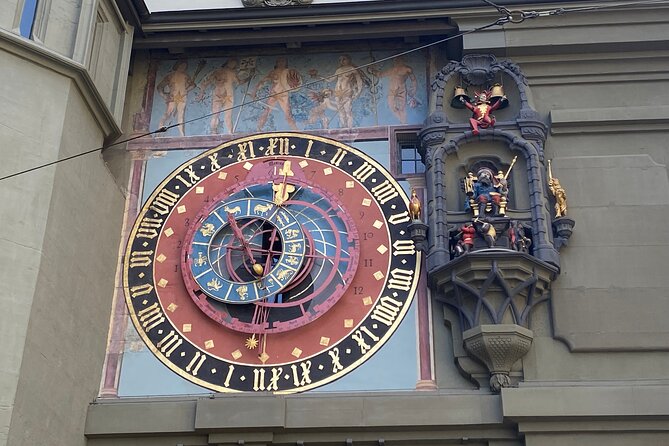
Start at Zytglogge for the astronomical clock with its intricate mechanism and whimsical features—dancing bears, a jester, and a rooster. This is the kind of landmark that feels fun even when you’re just standing near it. The audio helps you interpret what you’re looking at instead of treating it like a random clock.
If you’re in a hurry, you can keep it simple: stand, look, and let the narration give you the meaning behind the show. If you like detail, linger a bit—you’ll get more out of the mechanism talk than a quick glance.

Zahringerbrunnen: Bern’s Founder Symbol in Fountain Form
Next is Zahringerbrunnen, a historic fountain with a bear statue tied to Bern’s founding story and the city’s wealth symbolism. This is a classic Bern move: use public art to communicate identity. The audio framing helps you see the bear as more than decoration.
Since the stop is short, it works well even if you’re not trying to memorize everything. Listen for the meaning, then keep walking.
Simsonbrunnen: Samson vs. a Lion, in Stone
Simsonbrunnen gives you a biblical scene: Samson defeating a lion. It’s brief, but it’s also one of those stops where the sculpture’s subject can be hard to read at a glance without context.
If you’re tired, you can treat this as a quick “story check” stop: listen once, look for the main figure, and move on.
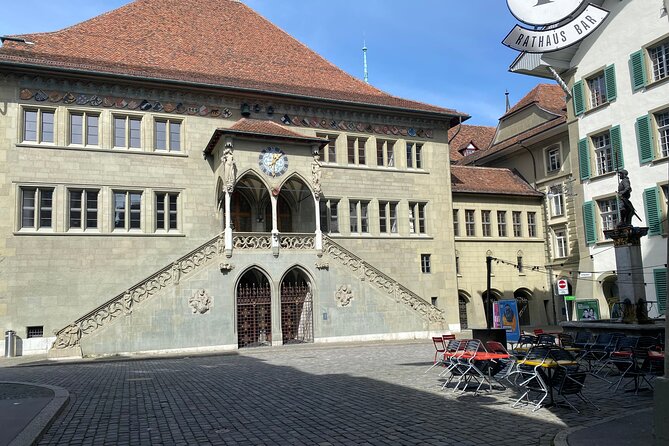
Rathaus Bern: City Hall and the Feeling of Civic Power
At Rathaus Bern, the audio shifts from myth to government. Bern City Hall feels grand and historic, and the commentary is meant to show you how architecture reflects authority and civic pride.
This is a good pause point if you like buildings with presence. If crowds or photo waits slow you down, you don’t lose much by shortening the listen—the key is still the building’s scale.
Church of St. Peter and Paul: Interior Details Worth Your Time
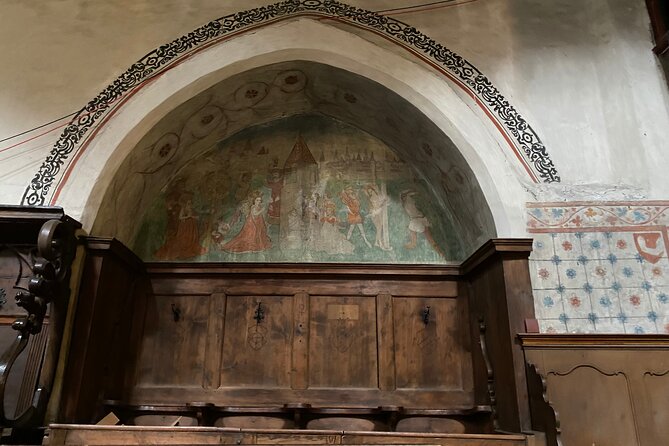
This church stop focuses on architecture and interior decoration. The payoff here is that it’s not just about the outside. You’ll get better results if you can spare a little time to look around instead of treating it like a quick pass.
The drawback: if you’re not into church interiors or you’re rushing, you may feel like you’re spending more time listening than sightseeing. This is a place where you’ll likely want to skim the audio and focus on what looks most interesting to you.
Vennerbrunnen: Medieval Military Leadership in Sculpture
Vennerbrunnen centers on a prominent medieval military leader. Like many of Bern’s fountain stops, the lesson is that public art is also political storytelling.
Because the stop is short, it’s ideal for keeping momentum. Use the audio to identify the figure and the symbolism, then move.
Gerechtigkeitsbrunnen: Justice as Allegory
Gerechtigkeitsbrunnen embodies justice through intricate sculptures and allegorical figures. This one is more “look closely” than “look quickly,” because multiple figures and themes appear in one space.
If you like symbolic art, slow down for this. If you don’t, you can grab the big idea and move on without ruining the rest of the walk.
Nydeggkirche: Medieval Church Texture at the Edge of Your Route
Nydeggkirche is another historic church, with impressive entrance doors and medieval architecture. This is a stop where you can get a lot out of just standing still and letting your eyes adjust to textures and craftsmanship.
It’s also a nice change of pace from fountains. The audio here helps you see why entrance design and medieval construction details matter.
BearPark: Bern’s Symbol, Up Close in a Habitat Setting
Then you hit BearPark for the chance to observe bears in their natural habitat. This is arguably the emotional anchor of the route because Bern’s bear identity is everywhere, and this is where it becomes real.
Two realistic notes: bears may not be active at every moment, and the best viewing can depend on where they are. If you don’t see much right away, don’t panic—stick around long enough for the audio to set the context, and then decide whether to watch longer or keep moving.
Erlacherhof: A Historic Mansion Moment
Erlacherhof gives you a historic mansion with cultural significance and architecture worth noting. This stop is more about atmosphere than a single sculpture or big exterior element.
If you’re listening closely, you’ll understand why it matters. If not, the building is still visually interesting, so you won’t feel like you wasted time.
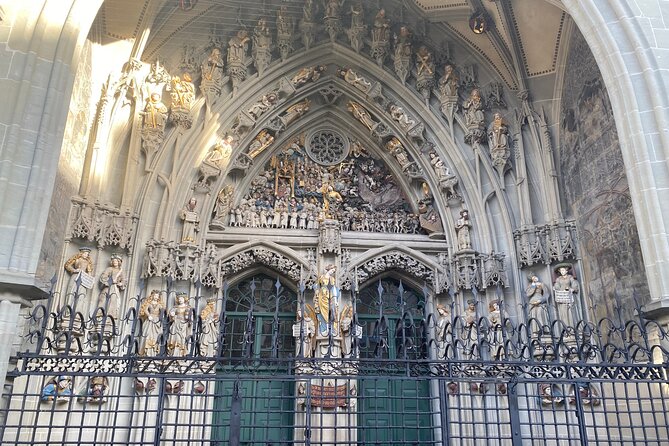
Berner Munster: The Cathedral Stop That Deserves the Long Listen
Berner Munster is the big one on the route: a majestic cathedral with Gothic architecture, a unique portal, and interior stained glass that the tour emphasizes heavily. The audio time at this stop is long (about 40 minutes), and that’s a hint: this is where the tour wants you to slow down.
This is where the “too long in spots” feedback makes sense. If you’re not into stained glass or you want a faster route, skim the narration and focus on the elements that catch your eye. But if you do enjoy art and architecture, this is your reward stop. You’ll come away with a clearer sense of what to look for, instead of just admiring stained glass as color.
Practical pacing tip: wear comfortable shoes here and plan to stay a little longer than your confidence says. It’s the best place to use your bathroom break and photo break without rushing the rest of the itinerary.
Mosesbrunnen: Ten Commandments in Fountain Sculpture
Mosesbrunnen features Moses holding the Ten Commandments. This is another quick stop that depends on the audio to interpret what you’re seeing. When you have the story in your ear, the sculpture becomes far more readable.
If you’re walking fast, don’t overthink it. Listen, look for Moses, then keep moving.
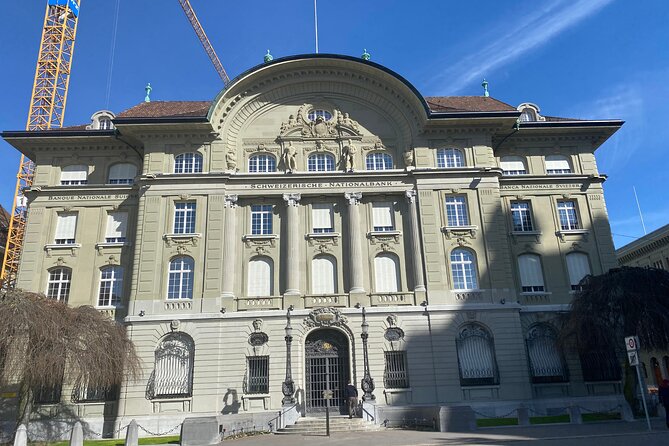
Parliament Building: Switzerland’s Democratic Stage
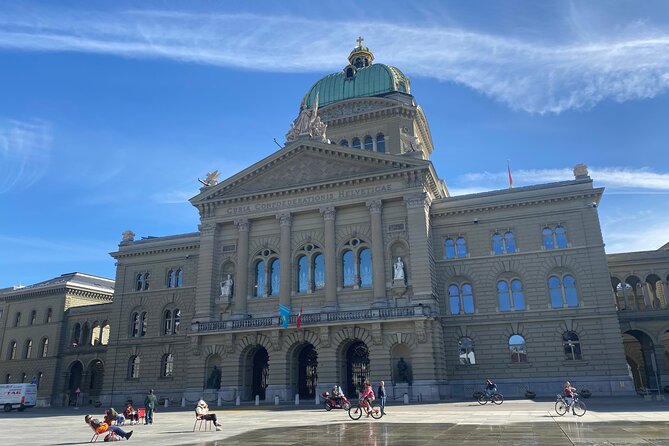
At the Parliament Building, the focus shifts to political life—Switzerland’s democratic governance, represented in Bern. This stop works well as a mental reset after the cathedral. It’s also a good place to appreciate how Bern balances symbolism across different spheres: faith, justice, and governance.
If you prefer strict sightseeing with minimal listening, this is still worth your time because the building itself gives you that “why this city matters” feeling.
Bundesterrasse: Views Over the Aare and Old Town
Bundesterrasse is the scenic pause: panoramic views of the Aare River and Old Town. This is where you stop being a student of symbols and become a viewer of geography.
The audio at this stop helps frame the view. The best move is to stand back, take a few photos, then let your eyes adjust to the river and rooftops.
Kafigturm: Judicial History in a Tower Shape
Kafigturm is a tower that highlights Bern’s judicial history. The point isn’t just the tower itself—it’s what the tower represents in how cities built and enforced law.
This is a good stop for anyone who likes civic history, even if you keep the listen short.
French Church: Baroque Grace and Cultural Identity
The French Church is Baroque and elegant, with emphasis on cultural and religious significance. The audio here helps connect the architecture style to the city’s identity—another example of Bern using buildings as signals of belonging.
If you’re tired of listening, shorten the audio and focus on what you see. If you like the arts, don’t rush this one.
Child Eater Fountain (Kindlifresserbrunnen): Folklore With a Dark Edge
Kindlifresserbrunnen is unmistakable: a grotesque figure devouring children, surrounded by folklore. This stop is intense, and the audio’s job is to explain the meaning behind the story instead of treating it like a shock sculpture.
If you’d rather keep things light, don’t skip the audio entirely. Understanding the folklore gives you a more grounded read on why this exists in public space.
Schutzenbrunnen: A Sword, a Man, and Military Memory
Schutzenbrunnen shows a man wielding a sword as a symbol of Bern’s military strength. It’s a quick stop, but it helps complete the theme of civic identity that runs through the whole route.
Short listen is fine here. The main thing is catching the idea behind the figure.
Anna-Seiler-Brunnen: A Person’s Legacy in Public Art
Anna-Seiler-Brunnen is a tribute to Anna Seiler, with the fountain acting as memory in stone. This stop is one of the more human-feeling ones because it centers a specific individual rather than a story everyone already knows.
If you like biographies and “who mattered” history, linger just a bit and let the narration do its work.
Pfeiferbrunnen: A Bagpiper and the Theme of Temperance
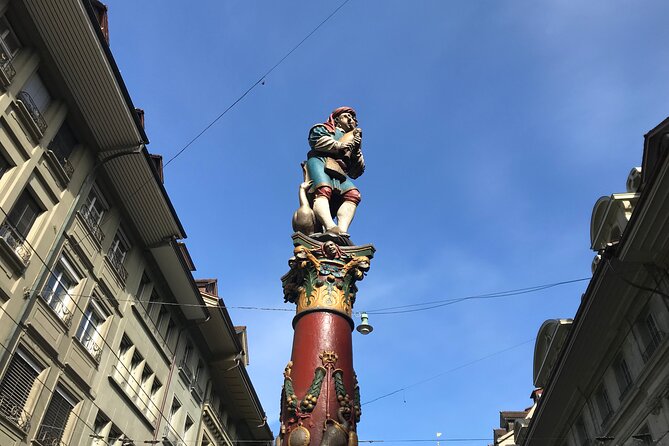
Pfeiferbrunnen features a bagpiper sculpture connected to temperance and prudent living. It’s a charming contrast to some darker stops earlier, and the audio helps link the music figure to the moral theme.
If the sound of fountains is getting repetitive, this one usually breaks the mood in a good way.
Ryfflibrunnen: Marksman Legend or Military Preparedness
The final stop is Ryfflibrunnen, connected to the legendary marksman Ryffli or to a symbol of medieval military preparedness. It’s a fitting ending: you end where Bern connects individual skill or readiness back to identity.
If you’re tired, you can treat this as a “wrap-up” point. You’ll likely recognize more symbols across Bern’s fountains by now, and that makes the ending feel satisfying.
Pacing Tips: How to Keep It Fun Instead of a Listening Marathon
This tour’s main risk is time. People often plan for 2–3 hours and then get pulled into longer listening segments, especially at Berner Munster and around stained glass descriptions. The fix is simple: choose your listening level.
Here’s how to get a great day:
- Use the audio for meaning at each stop, but don’t feel obligated to hit every second.
- When an exterior looks obvious, skim the narration and keep walking.
- When an interior or detailed artwork calls for attention, slow down and give that segment time.
You’ll also enjoy it more if you pair it with normal breaks. This route runs through Old Town, so stopping for a coffee or a quick bite is easy without breaking the flow. The tour structure is designed so you can pause, take a breather, then restart where you left off.
Who Should Book This Bern Self-Guided Audio Tour
Book it if you like:
- historic streets where symbolism is built into everyday things (fountains, portals, towers)
- an itinerary you can control—pause, skip, and move on
- English audio and photo-supported navigation
- a walking route that covers major Bern icons without museum-ticket hassle
Skip it (or keep expectations modest) if you strongly prefer short, punchy commentary. The audio style leans into detail. Some listeners also find that the narration can feel flat after a while, especially for long segments about windows or specific decoration.
If you want an “easy win” Bern introduction—especially for your first visit—this is a solid choice. You’ll walk away with more than photos. You’ll have context you can carry into future stops across the city.
Should You Book This Bern Audio City Tour?
I’d recommend it if you want a low-cost, structured way to see Bern’s big-name sites while still having freedom. At $13.29, you’re paying for guidance and interpretation, not transportation or complicated logistics. The route is packed with high-impact landmarks—Zytglogge, the cathedral area, Parliament—plus a thoughtful sweep of fountains and churches that most people usually glance past.
If you know you love listening to architectural detail and symbolism, you’ll get your money’s worth. If you only want quick highlights, you may end up skipping too many segments for it to feel efficient. Either way, as long as you’re ready for walking and comfortable using your phone with internet and headset, this is one of the more practical self-guided ways to learn Bern while you explore.
FAQ
How long is the Self-Guided Audio City Tour in Bern?
The tour is listed as about 2 to 3 hours, but you can take longer because it’s self-paced and some stops are designed to take extra time (especially Berner Munster).
What does the tour cost?
It costs $13.29 per person.
Do I need a phone and headphones?
Yes. You’ll need your own mobile phone with internet and a headset to listen to the audio.
Is the tour available in English?
Yes, it’s offered in English.
Is there a live guide?
No. There is no live guide. You explore using the link provided after booking.
Where does the tour start and end?
It starts at Bim Zytglogge 1, 3011 Bern, Switzerland, and ends near Ryfflibrunnen on Aarbergergasse, 3011 Bern, Switzerland.