REVIEW · BALTIMORE
Baltimore Walking & Driving Self-Guided Audio Tour
Book on Viator →Operated by Action Day Trips · Bookable on Viator
Baltimore turns into a story you can drive. This self-guided audio tour strings together 42+ audio stories across key sites, letting you start anytime and move at your pace. I like that it’s priced per car (up to 4), so the value is strong if you’re traveling with friends or family.
The biggest thing to plan around is navigation and audio timing. If you miss a turn, GPS can get finicky, and if you pass a checkpoint too fast, the narration may cut out while you’re trying to keep moving.
In This Review
- Key takeaways before you hit play
- Starting at Light Street: how long this Baltimore route takes
- Setting up Action’s Tour Guide App and using offline playback
- Driving with the right audio: Bluetooth, car stereo, and pacing
- Visitor Center to Inner Harbor: the “big picture” intro that gets you oriented
- USS Constellation, the aquarium area, and the harbor’s odd treasures
- Isaac Myers, Douglass Place, and Fells Point: where the route gets personal
- City Hall, the Washington Monument, and the Poe-Toaster atmosphere
- H. L. Mencken, Babe Ruth, and Federal Hill: sports and writers in the same drive
- Fort McHenry and the Star-Spangled Banner Flag House: 1814 to the anthem
- Port Discovery, Church Home and Hospital, Mother Seton, and the art museums
- B&O Railroad Museum, Camden Yards, and Maryland Science Center: ending with big-city fun
- Price and value: what $16.99 per group really buys you
- Who this Baltimore audio tour is perfect for (and who should skip it)
- FAQ
- Is this tour per person or per group?
- How long does the Baltimore audio tour take?
- Do I need internet to use the tour?
- What language is the audio tour available in?
- Are attraction tickets included for stops like the aquarium or children’s museum?
- Where does the tour start and end?
- Will I have a guide with the tour?
Key takeaways before you hit play

- Offline-first audio: download the tour with solid cellular/wifi, then keep going with offline maps and playback.
- Listen hands-free: stories start automatically based on your location, with an easy start/pause rhythm.
- Per-car value: one purchase covers up to four people, so it beats per-person tours for road trips.
- Real Baltimore voices and names: the route flags major figures like Frederick Douglass and Edgar Allan Poe.
- Great mix of stops: outdoor landmarks (Fort McHenry, Poe’s gravesite area) plus options tied to attractions.
Starting at Light Street: how long this Baltimore route takes
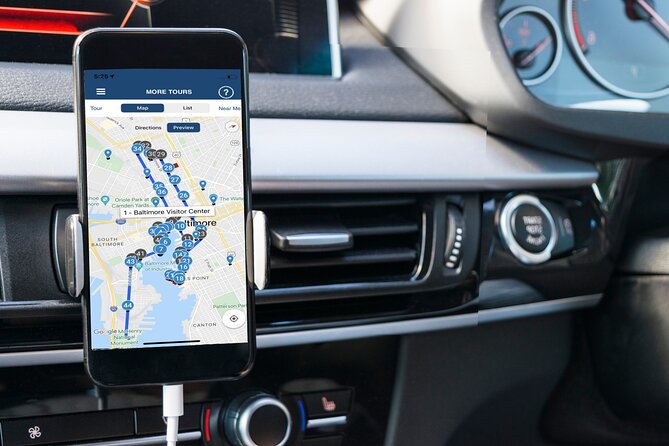
Your tour begins at the Light St Visitor’s Center area in Baltimore and ends at the Star-Spangled Banner National Historic Trail (2400 E Fort Ave). Expect about 1–2 hours for most people, with a stated range of 1–3 hours depending on how much walking you do and how long you pause for photos.
It’s also a good heads-up that the full route is over 9 miles long. That doesn’t mean you have to sprint between stops. The best strategy is to think of it as a guided drive with optional short strolls when it makes sense.
The tour is designed to play without a guide in the car. There’s no meeting point staff waiting to hand you a headset. Instead, you’ll open the app at the first story point, and audio cues will run as you follow the route.
You can also read our reviews of more tours and experiences in Baltimore.

Setting up Action’s Tour Guide App and using offline playback

This experience runs through Action’s Tour Guide App, and that matters for how smoothly your day goes.
Here’s the practical setup flow you should plan for:
- After booking, you’ll receive an email/text with setup instructions and a password.
- You need to download the tour while you’re on strong wifi/cellular.
- After that download, it works offline—so you’re not stuck if signal disappears in a thicker city block.
A small but important tip: your phone will be your brain here. So before you leave the hotel/parking spot, make sure you’re logged in, the app is installed, and the download is finished. If you’re trying to download while parked somewhere with spotty service, you’ll burn time and nerves.
Once you’re onsite:
- Open the app.
- If there’s more than one version, pick the one that matches your starting point and direction.
- When you reach the first story cue point, playback should start automatically.
If audio doesn’t start, don’t panic. Instead, get back to the story’s location pin and let it trigger again.
Driving with the right audio: Bluetooth, car stereo, and pacing

One of the smartest parts of this tour is that audio can work with your setup. You can connect your phone to your car stereo using Bluetooth, USB, or AUX. If you prefer headphones (especially for the walking parts), that’s an option too.
For folks who want navigation on-screen: the app uses location-based playback, but your phone will still likely need maps for your own comfort. If you’re a solo driver, don’t assume this is a perfect turn-by-turn system in a dense city. Plan to slow down at intersections and confirm you’re aligned before you press onward.
Also watch your speed near checkpoints. The tour is designed so that when you hit a new stop point, the story transitions. If you’re rolling through the pin too quickly (or walking into it without pausing), you may lose the ending of a story. The fix is simple: treat the checkpoint like a “wait a breath” moment, even if you’re eager to keep moving.
Visitor Center to Inner Harbor: the “big picture” intro that gets you oriented
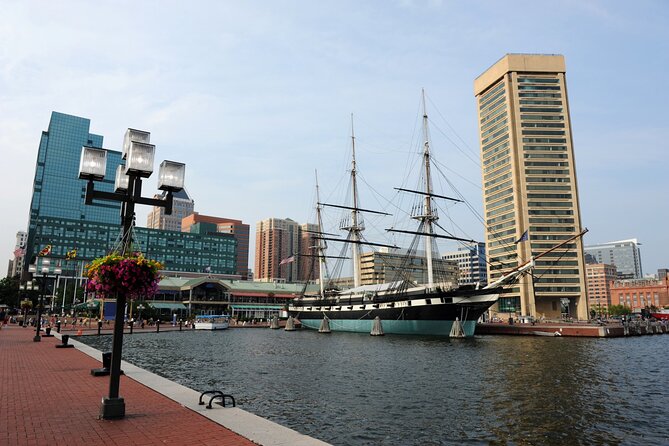
Stop 1 is the Baltimore Visitor Center, and that’s a smart place to begin. The audio here sets context—this is Baltimore as a stage for major figures like Frederick Douglass and Edgar Allan Poe—so the rest of the route won’t feel like random roadside facts.
Then you roll into the Inner Harbor, the area most first-time visitors head for. Even if you’ve been there before, I like how the narration frames it as more than scenery. You get history and connections that make the waterfront feel intentional rather than just touristy.
If you’re driving with multiple people in the car, this early segment is where the group benefit really shows. One person taps play, and everyone else can listen at once.
USS Constellation, the aquarium area, and the harbor’s odd treasures

This is where the tour starts feeling like a maritime museum—minus the ticket line pressure.
You’ll see the USS Constellation, one of the oldest ships in the country. The story angle here is darker and more specific than the typical “old ship museum” framing: it’s tied to efforts to apprehend vessels illegally carrying enslaved people. That contrast is powerful, and it gives the waterfront context that’s easy to miss on your own.
Next comes the National Aquarium area. Even if you don’t buy a ticket, the audio helps you understand why this stretch is so well known. If you do enter, you’ll need your own admission—this tour doesn’t include entry.
After that, the route cues you to the Seven Foot Knoll Lighthouse area. Again, some elements here are best viewed from outside, while others may overlap with attraction access depending on what’s open when you go. Either way, it’s a different kind of Baltimore landmark—harbor infrastructure, not just “famous buildings.”
From there you’re pointed toward the National Katyn Memorial, and the narration also brings in Mr. Trash Wheel—the working device that helps keep the harbor clean. It’s an easy stop to enjoy because it’s both practical and slightly quirky. If you like smart engineering stories, this is one of the more fun turns on the route.
Isaac Myers, Douglass Place, and Fells Point: where the route gets personal
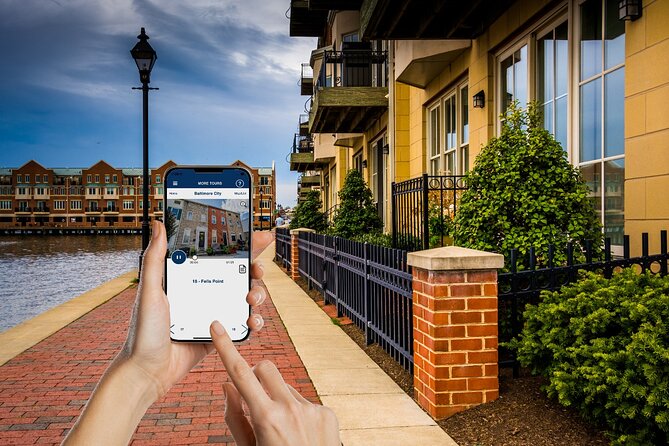
The route’s center of gravity shifts to African-American maritime history through stops tied to Frederick Douglass and Isaac Myers.
You’ll pass the Frederick Douglass – Isaac Myers Maritime Park, with narration connecting the names to shipyard work and broader civil-rights battles. The tour also returns here with a second Douglass-focused story. One detail I’d circle in advance: Douglass is presented not only as an abolitionist, but also as a supporter of women’s rights, including his attendance at the First Women’s Rights Convention in Seneca Falls. The narration highlights his belief that rights shouldn’t depend on sex or race, and it connects his activism across multiple causes.
Then you’ll hit the Horse You Came In On Saloon, which is described as a colonial-era building with drinks, pub fare, and live music nightly. Even if you’re not planning to stop for a drink, this kind of place adds texture. Baltimore isn’t just museums and monuments; it’s also long-running neighborhoods and local hangouts.
After that, the tour points you toward the Fells Point Corner Theatre area. The storytelling links Fells Point’s older history to the presence of free and enslaved African Americans, and to how people worked at the ship port. That’s the kind of context that makes walking through older streets feel more grounded.
City Hall, the Washington Monument, and the Poe-Toaster atmosphere

Baltimore has a habit of putting dramatic stories near ordinary sidewalks, and the route leans into that.
You’ll pass the Reginald F. Lewis Museum area next, and then the narration turns to Baltimore City Hall. The story tied to City Hall is an old political brawl that ends in a fatal shooting. It’s the kind of tale that feels almost too cinematic—until you realize it happened right there.
From there, you’ll be directed toward the Washington Monument and Mount Vernon Place. The big point is that Baltimore’s monument has its own identity. The narration notes it was the first major monument honoring George Washington, and the architect later reused the design idea for Washington D.C.’s monument (with a bigger scale). Even if you’ve seen the D.C. version, this helps you notice the design lineage.
Then the tour takes you to Edgar Allan Poe’s Grave. The audio here includes the famous “Poe Toaster” tradition: a mysterious figure arrives on Poe’s birthday, leaves roses and an unfinished bottle, and returns on subsequent years in a pattern that’s described as arriving under cover of darkness. If you’re the type who likes urban folklore, this is a standout chapter on the route.
H. L. Mencken, Babe Ruth, and Federal Hill: sports and writers in the same drive
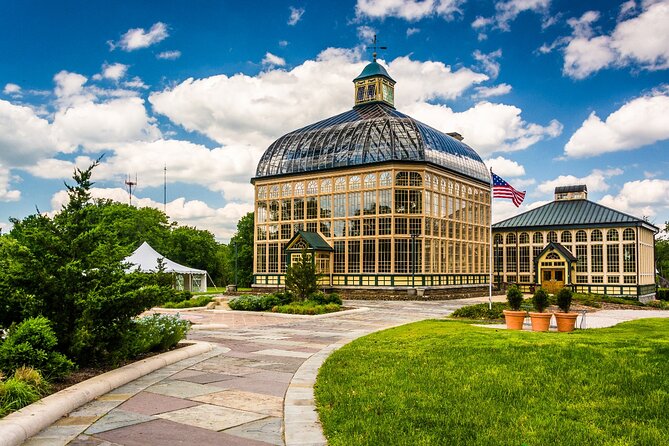
After Poe’s grave, the route moves through areas tied to American pop culture and journalism.
You’ll pass the H. L. Mencken House area, where the narration connects back to the civil-rights fight and the influence of Douglass and Isaac Myers. Even though the site is associated with Mencken, the audio keeps the focus on how Baltimore ties into national social movements.
Next is the Babe Ruth Birthplace and Museum area. This is a natural fit for families or sports fans, especially if you want a break from heavy civic history.
Then the tour cues Federal Hill Park. Even with minimal “stop-and-stare” time, this kind of green viewpoint slot usually works well on a self-guided audio route: it’s a spot to slow down, reset, and let the next story land.
Fort McHenry and the Star-Spangled Banner Flag House: 1814 to the anthem
This is the part of the route that many people come for, and it delivers narrative payoff.
You’ll reach Fort McHenry National Monument and Historic Shrine, with the story centered on the 1814 defense of Baltimore’s harbor. The narration calls out Major George Armistead and the lead-up to the bombardment by British warships. It’s not just “look at a fort,” it’s a war-tension storyline with specifics about reinforcement and the impact of cannon fire.
Then you’re guided to the Star-Spangled Banner Flag House, where the audio explains how Francis Scott Key wrote what became the national anthem after seeing the flag flying over Fort McHenry. The narration references the original text as Key wrote it on that morning, tying one historic view to one enduring document.
If you’re short on time, I’d treat this segment as must-listen. It’s the strongest “why this place matters” loop on the drive.
Port Discovery, Church Home and Hospital, Mother Seton, and the art museums
After the fort-and-anthem peak, the route cools down into a mix of family-friendly stops, religious history, and art.
You’ll pass Port Discovery Children’s Museum next. This is described as a family-friendly stop, and since entry isn’t included, you can decide based on your group. Even if you don’t enter, the audio helps you understand why this corner of town is popular with kids.
Then the tour points you to the site of Edgar Allan Poe’s death, tied to Church Home and Hospital. The audio explains that Poe boarded a train from Richmond to Philadelphia, but he never arrived, and the mystery of his disappearance and death remains part of the story. If you’re already in a Poe mood from the grave segment, this makes the whole Poe section feel like a connected arc rather than separate landmarks.
Next is the Mother Seton House, the temporary residence of Elizabeth Ann Seton, the first American-born person to be canonized as a saint. The narration includes her background in New York, the shift to Italy for health reasons, her discovery of Catholicism, and her later dedication.
Then you’ll reach The Walters Art Museum area. The audio notes it as another landmark-worthy stop where you can also take photos of the prominent City Hall structure nearby, so this feels like a “slow down for views” moment.
After that, the route continues to Mount Clare Museum House, another historical stop tied to architecture and the city’s built legacy.
B&O Railroad Museum, Camden Yards, and Maryland Science Center: ending with big-city fun
The late stretch of the route leans toward museums, baseball, and hands-on learning.
At the B&O Railroad Museum, the narration circles back to Poe-related folklore, including the Poe Toaster theme again. This is one of those “repeat themes” parts of the route where you may catch something you missed earlier, or simply enjoy the consistency of the story.
Next is Oriole Park at Camden Yards. Even if you’re not catching a game, the route frames it as a place where baseball greats have made their names. For sports fans, it’s the easiest end-of-day stop because the payoff is visual.
Finally, you’ll pass the Maryland Science Center, described as one of the oldest scientific institutions in the country. If your group wants something lighter after the historic anchors, science is a good closer. Again, entry isn’t included, so treat it as an optional add-on depending on time and interests.
Price and value: what $16.99 per group really buys you
At $16.99 per group (up to 4 people), this tour is a bargain if you’re traveling as a small team in one car. The reason matters: self-guided tours often charge per person, which can make a city day pricey. Here, your cost stays tied to the car, not the headcount.
You’re also buying lifetime access with no expiry. That means you can reuse the audio on a later trip without paying again, which is rare in this category. If you like the idea of doing Baltimore once now and revisiting favorite stops later, this pricing supports that plan.
What you are not getting: attraction tickets. Several stops are tied to places that likely have their own hours and admissions. The audio tour can guide you past or help you decide what to enter, but it won’t cover entry.
Who this Baltimore audio tour is perfect for (and who should skip it)
This tour is a strong match if:
- You want a car-friendly way to learn Baltimore without booking a full guided group.
- You like story-based stops and want to pause for photos without asking permission.
- You’re traveling with up to four people who can listen in the same vehicle.
I’d think twice if:
- You rely on perfect, always-correct turn-by-turn directions and don’t want to troubleshoot.
- Your day depends on strict timing at multiple indoor attractions, because the tour doesn’t include admission and some places may be closed on the day you go.
- Your phone battery is fragile. You’ll be using it for audio playback and app control, so start charged.
Should you book this self-guided Baltimore audio tour?
If you want an easy way to get oriented and hit the big story spots—Inner Harbor, Douglass and maritime ties, Poe landmarks, and Fort McHenry—this is a solid buy. The best-case day is a calm drive with good narration, offline audio, and enough flexibility to pause when something catches your eye.
My advice: download the tour before you arrive, keep your speed steady near checkpoints, and treat it as guided-by-audio, not a flawless GPS pilot.
FAQ
Is this tour per person or per group?
It’s priced per group, up to 4 people. If you’re sharing one car, that’s where the value really shows.
How long does the Baltimore audio tour take?
It’s listed as about 1 to 3 hours. The route is over 9 miles long and the tour length is roughly 1–2 hours on average.
Do I need internet to use the tour?
You must download the tour while you have strong wifi/cellular. After that download, it works offline, with no signal needed for playback.
What language is the audio tour available in?
The tour is offered in English.
Are attraction tickets included for stops like the aquarium or children’s museum?
No. Admission tickets, attraction passes, or reservations are not included, so you’ll need your own entry if you want to go inside.
Where does the tour start and end?
It starts at the Light St at Visitor’s center, Baltimore, MD 21230 and ends at the Star-Spangled Banner National Historic Trail, 2400 E Fort Ave, Baltimore, MD 21230.
Will I have a guide with the tour?
No. This is a private, self-guided activity. No one meets you at the start.
If you tell me your travel month and whether you’ll be walking any stops, I can suggest a realistic “time-boxed” way to run it so you don’t feel rushed.