REVIEW · MANCHESTER
Private Manchester Self-Guided Tour
Book on Viator →Operated by Pandemic Tours · Bookable on Viator
Manchester can be a bit of a hop-and-drop city. This self-guided loop gives you a clear plan, then lets you wander at your own speed. You start at Vimto Park and work your way past Alan Turing’s memorial, Canal Street’s Gay Village, and big-city landmarks like St Peter’s Square and the John Rylands Library.
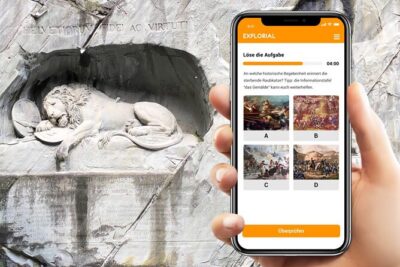
Two things I like a lot: the GPS map guidance so you’re not constantly rechecking your phone, and the human audio narrated by Jake (no robotic voice). It’s also a smart use of time—about 2 to 3 hours for a long list of famous places.
One thing to consider: this is not a live guided tour. It’s app-based, and the experience depends on your phone battery, GPS permissions, and getting the activation working smoothly.
In This Review
- Key takeaways
- Getting your bearings fast with GPS and Jake’s audio
- Price and value: $12.35 for a full city-centre story loop
- Start at Vimto Park, end by the Roman Fort: how the route flows
- The 18-stop walk: what you’ll see and what to look for
- Stop 1: A Monument to Vimto at Vimto Park
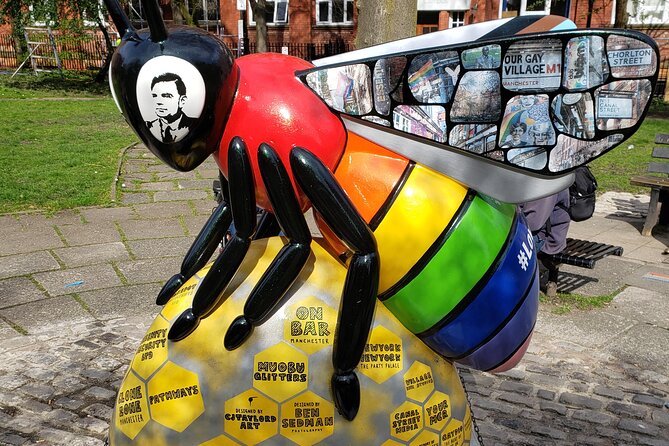
- Stop 2: Alan Turing Memorial and Sackville Gardens context
- Stop 3: Gay Village via Canal Street
- Stop 4: Chinatown archway and Manchester–China ties
- Stop 5: St Peter’s Square and the buildings that define the centre
- Stop 6: Bridgewater Hall and the darker stories tied to the station
- Stop 7: Royal Exchange Theatre and cotton-industry consequences
- Stop 8: The Shambles, pub history, and the Royal Corn Exchange connection
- Stop 9: Manchester Cathedral (short stop, entry not included)
- Stop 10: John Rylands Library (entry not included, plan for 30 minutes if you can)
- Stop 11: Castlefield Urban Heritage Park and the Roman beginnings
- Extra stop: The Guardian Telephone Exchange, Manchester’s best-kept-secret vibe
- Extra stop: The Midland Hotel stories (architecture with long memory)
- Extra stop: Public lending and reference library legacy (Public Libraries Act 1850)
- Stop 12: Manchester Central and station-linked mysteries
- Extra stop: The Corn Exchange story—how cotton money changed trade
- Extra stop: Old Wellington and Sinclair’s Oyster Bar, plus Punch House history
- What you should know before you go (so the app experience feels smooth)
- Who this self-guided Manchester walk suits best
- Should you book the Private Manchester Self-Guided Tour?
- FAQ
- How long is the Private Manchester Self-Guided Tour?
- Where does the tour start and end?
- How much does it cost?
- Is there a live in-person guide?
- What language is the tour available in?
- Do I need to pay entry fees at the stops?
- Do I need tickets for any parts of the tour?
- How do I navigate during the tour?
- How long do I have access to the tour after booking?
- When will the tour be available?
- Is it refundable if my plans change?
Key takeaways
- GPS route guidance keeps you moving through 18 stops without constantly consulting a map
- Audio by Jake brings the stories to life with a real-person feel
- Mostly free sights along the route, with only two paid entries suggested
- City-centre focus means you hit lots of landmarks in a short walk
- Ends near Deansgate and the Roman fort area, with built-in place-to-eat prompts
Getting your bearings fast with GPS and Jake’s audio
This tour is built for independent travel. You load the app, follow the GPS maps, and press play when you arrive at each stop. The promise is simple: don’t worry about getting lost—your phone guides your route, while the audio tells you what matters.
What makes it work well is the pacing. Each stop has a suggested time window (many are 5 to 15 minutes), so you’re not stuck at one spot for an hour wondering what to do next. I also like that most stops are admission free, which keeps the tour feeling like a walk-with-context instead of a string of ticket counters.
Where you’ll want to be a little careful is setup. You get a 3-week window of access on the app, plus an email with instructions to activate your tour. One catch is that your booking reference isn’t the code, so don’t expect the usual shortcut. Also, if GPS permissions aren’t allowed, your route tracking may not behave the way it’s supposed to.
You can also read our reviews of more tours and experiences in Manchester.

Price and value: $12.35 for a full city-centre story loop
At $12.35 per person for about 2 to 3 hours, this is priced like an affordable “hit the highlights” walk. The big value isn’t just the sights—it’s the way the audio stitches them together so you understand why each place matters.
Here’s the value logic I see:
- You’re paying for direction + storytelling + recommendations, not for a human-led group.
- Most stops are free to enjoy, so you’re not spending extra to keep the tour going.
- You get GPS maps and turn-by-turn stop routing, which is usually the part that costs energy on self-guided days.
The trade-off is also clear: since it’s self-guided, there’s no in-the-moment correction, no live Q&A, and no flexibility if your phone misbehaves. If you’re comfortable using your phone for navigation and audio, the price starts to look very fair.
Start at Vimto Park, end by the Roman Fort: how the route flows
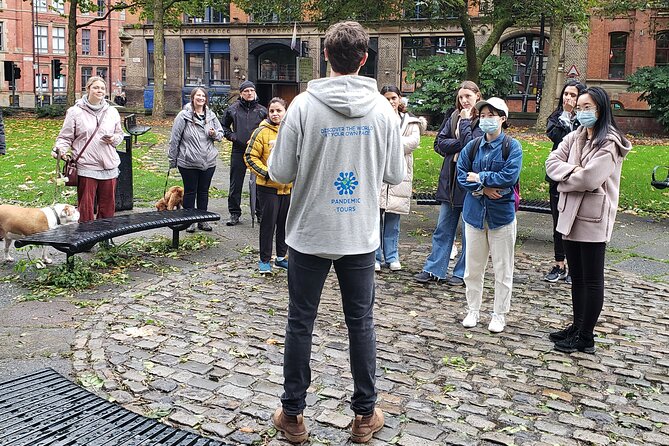
You begin at Vimto Park, Manchester M1. From there, the route climbs through central Manchester landmarks and cultural areas, then finishes at Castlefield Bowl, Rice Street (near the Roman Fort), M3 4JR. The ending point matters because Castlefield and Deansgate are where the “last impressions” tend to stick: canals, Roman remains, and lots of places to pause for food.
The tour is labeled as private, meaning only your group participates. That doesn’t add a live guide, but it does mean you aren’t sharing earbuds with strangers. If you like moving on your own rhythm—stop early, speed up, take a longer pause at one building—this format supports that.
The tour window is listed as basically daily from 12:00 AM to 11:30 PM (within the stated availability dates), so you can plan a time that suits your energy. Late morning and early afternoon are usually easiest for photos and opening hours of the paid sites.
The 18-stop walk: what you’ll see and what to look for
You’ll move through a concentrated route designed to cover major Manchester names and themes: industry, tech pioneers, immigrant communities, libraries, markets, and pubs.
Stop 1: A Monument to Vimto at Vimto Park
This is where you start, and it’s a fun hook: the audio explains the history behind Vimto and notes that it was originally produced in this location. Even if you’re not a soft-drink person, this stop gives you an anchor for Manchester pop-culture and local identity.
Tip: use this first stop to get your phone settings right—GPS on, volume ready—before the tour gets busy.
Stop 2: Alan Turing Memorial and Sackville Gardens context
Next comes Alan Turing—and the tour frames why he’s important for the city. It also points you toward practical details around Sackville Gardens and its monuments, then starts building perspective on the Gay Village and its past.
If you like tech history, this is one of the more meaningful stops. Even a quick read through the audio makes Turing feel connected to place instead of a name on a textbook list.
Stop 3: Gay Village via Canal Street
You’ll walk through the Gay Village and hear how Canal Street has a dark past, plus how local people helped turn the odds around to build the modern-looking area you see today. This stop is more about understanding than sightseeing.
Look around as you listen. City-centre streets can feel ordinary until you know the story underneath.
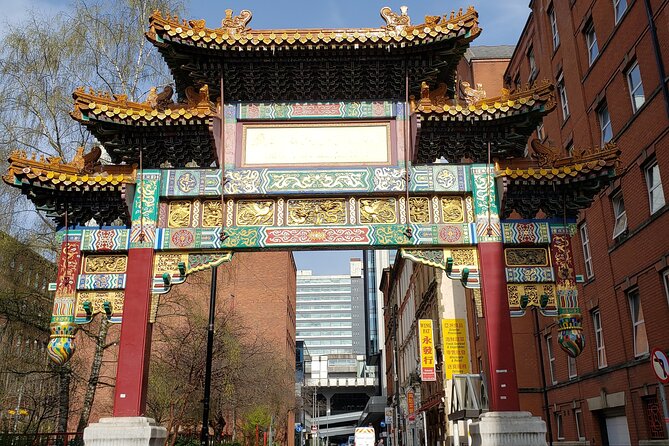
Stop 4: Chinatown archway and Manchester–China ties
At Chinatown, you’ll pass under the archway and learn about Manchester’s twin connection in China—and why the archway ended up here. Then you get time to browse shops and restaurants.
Drawback note: this is a walk-through with orientation, not a deep museum visit. If you want a long stop for food and shopping, give yourself extra time here.
Stop 5: St Peter’s Square and the buildings that define the centre
This stop is a crowd-pleaser because it packs famous architecture into one area. You’ll get the practical “what is it?” plus the story angle for:
- Manchester Central Library (described as the oldest free library in the country)
- The Midland Hotel
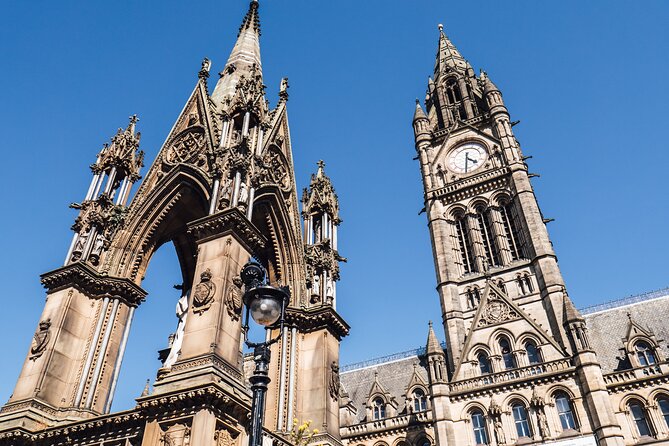
- Manchester Town Hall
The audio also explains why the whole area is called St Peter Square. If you’re someone who likes to “read” buildings as you walk, this is a great place to slow down.
Stop 6: Bridgewater Hall and the darker stories tied to the station
Here you get the Bridgewater Hall plus surrounding context. The tour also includes two grim stories connected to Manchester Central Station—one in 1819 and another in 1963.
This stop can feel heavy, but that’s the point: it ties the grand public spaces to real-life events. If you prefer lighter themes, you may want to take a breath before continuing.
Stop 7: Royal Exchange Theatre and cotton-industry consequences
You’ll learn how the cotton industry grew so strongly in Manchester and what that meant for the city. The Royal Exchange Theatre gets placed in that industrial story.
The audio also covers the IRA Bomb and how it affected the city. Again, this is not a quick sightseeing flash. It’s place-based history: a landmark plus the human impact.
Stop 8: The Shambles, pub history, and the Royal Corn Exchange connection
The audio calls The Shambles the most beautiful square in the city centre, and it’s easy to see why: you get the atmosphere plus key details. You’ll see the oldest pub in town and hear its history, plus stories linked to cotton industry boom times and the Royal Corn Exchange in the same square.
Practical idea: plan for this stop to be your first “sit down and people-watch” moment. Since many nearby sights are architectural, a short pause helps the walk feel human.
Stop 9: Manchester Cathedral (short stop, entry not included)
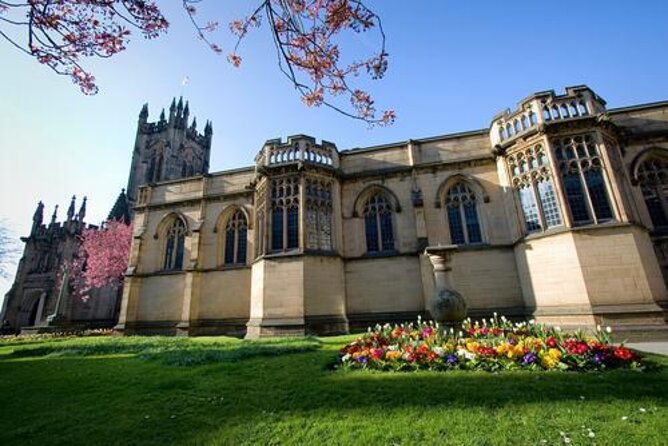
You’ll cover the mother church of the Anglican Diocese of Manchester, and it’s described as the seat of the Bishop of Manchester and the city’s parish church. This stop is brief—around 5 minutes—but it frames the cathedral as a core city emblem.
Entry isn’t included, so if you want to go inside, you’ll need to handle any ticketing separately. Even outside, it’s worth it just for orientation.
Stop 10: John Rylands Library (entry not included, plan for 30 minutes if you can)
This is one of the “best-kept secrets” on the route. The tour highlights the library’s special look and mentions the outside-in feeling by comparing it to something you might recognize from Harry Potter vibes—while still keeping the focus on the building itself.
The key advice here is timing: the suggested stop is 30 minutes, and the tour recommends you go inside if you have time. Since entry isn’t included, think ahead if you want a longer visit.
Stop 11: Castlefield Urban Heritage Park and the Roman beginnings
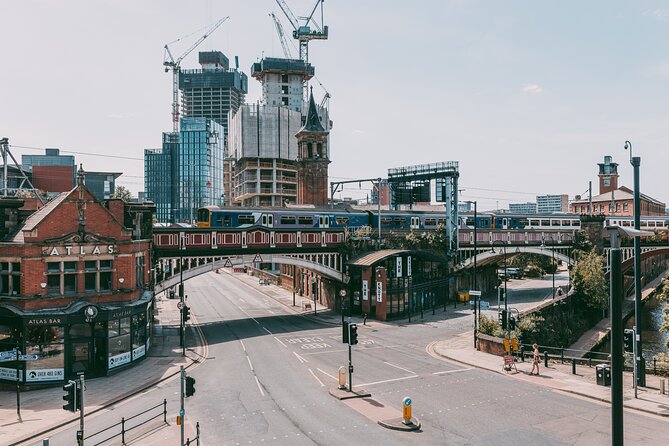
This is your “roots” stop. You’ll learn about the city’s Roman heritage, see reconstructed structures, and get the basic story behind why the city is called Manchester. Then the tour ends this segment by steering you toward the canals around Deansgate, with a list of recommendations for things to do and places to eat.
If you’ve spent the earlier stops mostly on industry and institutions, this Roman section resets your mental map of the city.
Extra stop: The Guardian Telephone Exchange, Manchester’s best-kept-secret vibe
The route also includes The Guardian Telephone Exchange, described as the Best kept secret in Manchester. Even though you don’t get a full museum-style time block here, it’s a fun break from the biggest-name landmarks.
If you like unusual architecture, this stop can be a highlight.
Extra stop: The Midland Hotel stories (architecture with long memory)
You’ll hit the Midland Hotel, described as part of Manchester life for over 118 years and known for its architecture. The audio includes stories tied to the hotel across the years.
This is one of those stops where even if you’re not doing an inside visit, the outside and surroundings give you that feeling of continuity: Manchester keeps evolving, but certain places hold their shape.
Extra stop: Public lending and reference library legacy (Public Libraries Act 1850)
Another stop focuses on the legacy of the UK’s Public Libraries Act 1850, and how Manchester local council supported a first public lending and reference library. The audio clarifies that this isn’t the original building, but it explains how the library tradition shaped the later Greek-structure design.
This works best if you enjoy how laws and institutions affect daily life. Libraries are a great travel theme because they’re both civic and calm.
Stop 12: Manchester Central and station-linked mysteries
Now you move into another big building story. Manchester Central is described as a convention centre today, but it used to be Manchester Central Train Station. The audio covers events that happened there before the train even existed (as framed by the tour), plus a mysterious story about a suitcase left in 1965.
This stop gives you that classic Manchester contrast: grand civic buildings, industrial eras, and human weirdness.
Extra stop: The Corn Exchange story—how cotton money changed trade
You’ll learn about a market exchange that became important because of how cotton helped commercialization of other goods. The audio notes that the first Corn Exchange was built on the site in 1837, and it explains how it became a listed building housing a Food Court, a Hotel and more now.
If you want a practical tip for later, this is it: buildings often shift roles, and Manchester is full of those second lives.
Extra stop: Old Wellington and Sinclair’s Oyster Bar, plus Punch House history
The tour ends with one of the most famous pub stops in the city centre: The Old Wellington and Sinclair’s Oyster Bar. The audio links it to John Shaw’s Punch House, and explains why it keeps drawing people in.
If you’ve been walking for a couple hours, this is a solid place to wrap up. Grab a drink or just enjoy the bustle while you replay your favorite stop stories.
What you should know before you go (so the app experience feels smooth)
This is where the tour either feels effortless or gets annoying.
First: treat it like a smartphone activity. Bring a charger if your battery is already low. The route includes many short stops, which means frequent screen time and audio playback.
Second: give GPS permission. The tour depends on your phone tracking your location so it can keep you oriented. If GPS is off or restricted, you may have to manually search or risk missing stops.
Third: plan for ticketed entrances if you want them. Manchester Cathedral and John Rylands Library list admission fees as not included, while most other stops are free. If you skip those paid options, you can still keep the route moving and enjoy the external architecture and square views.
Finally: expect a city-centre loop. The content concentrates on top sights and famous districts. If you’re hunting for quiet streets and local-only corners, you’ll likely want to add your own detour after the tour finishes by Deansgate and Castlefield.
Who this self-guided Manchester walk suits best
This experience is a good match if you:
- Like strolling with structure, not wandering without a plan
- Prefer a self-paced approach (stop when you want, skip when you don’t)
- Enjoy stories tied to buildings and neighbourhood change
- Are comfortable using a phone for navigation and audio
You might skip it if you:
- Want a live guide to answer questions on the fly
- Hate app setup or already know your phone GPS is unreliable
- Expect a traditional group walking tour feel
Should you book the Private Manchester Self-Guided Tour?
If you want an efficient, story-led way to see a lot of Manchester highlights in a short window, I think this is worth booking. The mix of GPS routing, audio narration by Jake, and mostly free stops makes it a strong value for the money.
But book with clear expectations: it’s truly self-guided, so your phone and setup matter. If you’ll arrive with a charged battery, GPS permissions turned on, and time for the two possible paid interiors, you’ll get the best experience.
If you want, tell me what day/time you’re going and what you most care about—industry history, architecture, or neighbourhood stories—and I’ll suggest an easy add-on plan before or after the route ends near Castlefield and Deansgate.
FAQ
How long is the Private Manchester Self-Guided Tour?
It’s designed to take about 2 to 3 hours.
Where does the tour start and end?
It starts at Vimto Park, Manchester M1, UK and ends at Castlefield Bowl, Rice St, Manchester M3 4JR, UK near the Roman Fort.
How much does it cost?
The price is $12.35 per person.
Is there a live in-person guide?
No. It’s an app-based self-guided experience, with an audio guide in the app.
What language is the tour available in?
The tour is offered in English.
Do I need to pay entry fees at the stops?
Most stops are listed as free. Admission is not included for Manchester Cathedral and the John Rylands Library.
Do I need tickets for any parts of the tour?
Not for the free stops. If you want to go inside Manchester Cathedral or John Rylands Library, you would handle any admission separately.
How do I navigate during the tour?
You use GPS maps and a route with stops in the app.
How long do I have access to the tour after booking?
You get 3 weeks unlimited access to the self-guided tour in the app.
When will the tour be available?
It’s listed as open daily, 12:00 AM to 11:30 PM, within the provided availability dates.
Is it refundable if my plans change?
No. The experience is non-refundable and cannot be changed for any reason.