REVIEW · GREAT OCEAN ROAD
Self-Guided Audio Driving Tour of the Great Ocean Road, Australia
Book on Viator →Operated by GuideAlong (GyPSy Guide) · Bookable on Viator
Your phone becomes the co-pilot here.
This self-guided, location-based audio tour plays stories and practical tips as you approach each highlight on the Great Ocean Road, with no cell service needed once downloaded. You’ll pass iconic Southern Ocean scenery and get context on why the places matter, from a historic lighthouse to limestone stacks off Port Campbell.
I like two things a lot: the 260+ GPS-triggered points that turn long drives into something you actually look forward to, and the fact that it’s one purchase per vehicle (up to 8 people), so the value gets better if you’re traveling with family or friends. It also works with suggested half-day, full-day, or multi-day plans, plus you can pause, start, and resume at your own pace.
One consideration: you’re relying on your phone’s battery and GPS. Bring a car charger and make sure the audio is downloaded before you leave Wi-Fi, because you don’t want to be solving app issues with ocean winds in your face.
In This Review
- Key things that make this drive tour work
- Your in-car co-pilot: location-based audio that plays as you drive
- Price and value: $19.99 per vehicle for a 10–12 hour coastal story
- From Allansford to Cape Otway: starting with Australia’s oldest surviving lighthouse
- Torquay and Bells Beach: surfing culture with real-world context
- Aireys Inlet and the Split Point Lighthouse: panoramic views and the White Queen vibe
- Eastern View Memorial Arch, Lorne, and Erskine Falls: history, then a green reset
- Apollo Bay to Port Campbell: gateway towns that make the big sights easier
- Twelve Apostles, Loch Ard Gorge, and the Bay of Islands: the limestone stack triangle
- Practical driving tips: getting the most from offline GPS audio
- Should you book the Great Ocean Road audio drive?
- FAQ
- How does the audio tour know when to play stories?
- Do I need cell service or Wi‑Fi during the drive?
- How much does it cost and how many people can use one booking?
- How long does the Great Ocean Road tour take?
- Where does the tour start and end?
- What’s included in the tour price?
- Is food included?
- When is the tour available?
- Can I cancel for free?
Key things that make this drive tour work

- Autoplay audio by GPS: stories, tips, and directions start when you reach each spot
- Offline-ready: no cell service or Wi‑Fi needed after the download
- Value for groups: one paid booking covers everyone in your vehicle (up to 8)
- 260+ tour points: more than just scenic narration, it’s useful driving guidance
- Flexible timing: suggested itineraries for half, full, or multi-day use, with no time limits
Your in-car co-pilot: location-based audio that plays as you drive
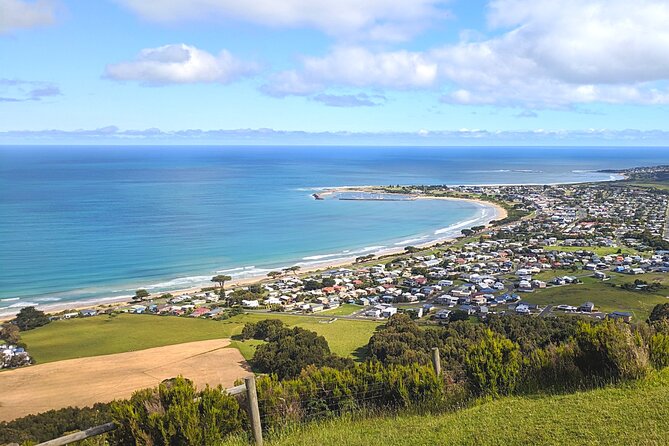
The big idea here is simple: GuideAlong (GyPSy Guide) turns your smartphone into a quiet, helpful guide that stays out of your way. As you drive, the audio commentary triggers automatically using your phone’s GPS chip, so you don’t have to stop and tap through menus every time you hit a viewpoint.
I love how this design fits the Great Ocean Road’s rhythm. You’re constantly moving from one pull-off to the next, and timing matters for things like photos and viewpoints. With GPS-based autoplay, the tour keeps you oriented without turning the drive into a chore.
This is also an offline plan in real life, not just in marketing. After you download the tour in the GuideAlong app (using Wi‑Fi or cellular data), you can keep listening even where service is spotty or absent. That matters on the coast, where you don’t want your trip dependent on signal bars.
One practical note: the tour strongly nudges you to charge your phone. Plan to use a USB/C car charger, and top up fully before you set off from the Allansford VIC 3277 meeting point. If your battery drops, your audio goes quiet—and you’ll still be driving.
Price and value: $19.99 per vehicle for a 10–12 hour coastal story

At $19.99 per group (up to 8), the cost structure is one of the most sensible parts of this experience. You’re not paying per person for narration; you’re paying once per vehicle. If you’re a couple, it’s still affordable. If you’re rolling with a carload, the math gets even better.
The duration range is 10 to 12 hours (approx.), which is right in the middle of a true Great Ocean Road day. You’re getting enough time for the “signature” stops without pretending you’ll do everything in one lightning sprint. If you prefer a lighter day, the tour also offers suggested itineraries for half-day use and even multi-day spread-out options.
Another value win: buy once, use forever with no expiry and free updates. That means you’re not stuck “finishing it” by a certain date. If you end up taking a second road trip later, you can reuse the same purchase.
Food and drinks aren’t included, which is honest and practical. You’ll want snacks and water anyway on a long scenic drive. The audio takes care of interpretation and navigation cues; you handle the breaks.
From Allansford to Cape Otway: starting with Australia’s oldest surviving lighthouse
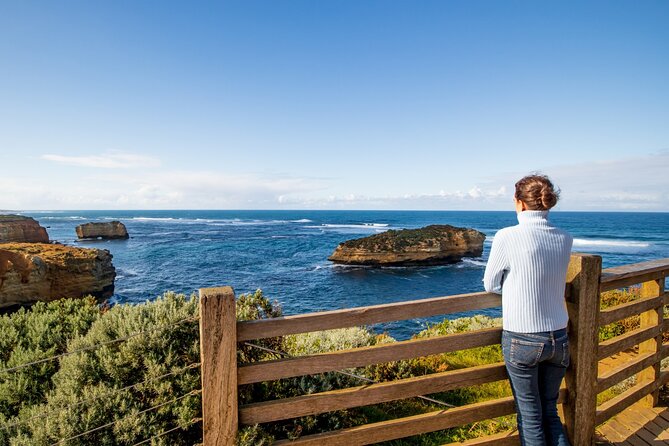
Your day begins back at the meeting point in Allansford (and the experience ends back there). From there, the route gets you into the coastal mindset quickly, starting with Cape Otway Lightstation.
Cape Otway Lightstation is Australia’s oldest surviving lighthouse, set on rugged coast where the Bass Strait meets the Southern Ocean. Expect big ocean views and a clear sense of maritime history as you stand near a working reminder of how essential light was for ships in rough waters. There’s also an admission ticket included for this stop, so you don’t have to budget for it separately.
Why this first stop works: it gives you context before the scenery turns into a highlight parade. Once you’ve got that lighthouse background in your ears, the rest of the route feels less like random viewpoints and more like a living coastal story.
Torquay and Bells Beach: surfing culture with real-world context

Next up is Torquay, the gateway to the Great Ocean Road. This is a surfing-minded beach town, known for its coastal vibe and iconic surf brands. The tour also points you toward the Australian National Surfing Museum, which is a nice option if you want a break from driving and learn what shaped the region’s identity.
Even if you’re not a surf person, the value of Torquay is that it’s a natural “reset button.” It’s a chance to stretch your legs, grab coffee, and let the audio settle into a calmer pace before the bigger wave-energy stops.
Then the tour moves to Bells Beach, one of the world’s most famous surfing spots. You’ll hear why it’s known for powerful waves and rugged cliffs, plus how it hosts the annual Rip Curl Pro Surfing competition. If you’re visiting during non-event season, you’ll still get that sense of place—this is a location where the ocean isn’t just scenery, it’s the main character.
Practical thought: Bells Beach is the kind of stop where the best experience comes from taking in the coastline from a safe viewpoint area. The audio helps you understand what you’re looking at so you don’t just snap photos and move on.
Aireys Inlet and the Split Point Lighthouse: panoramic views and the White Queen vibe
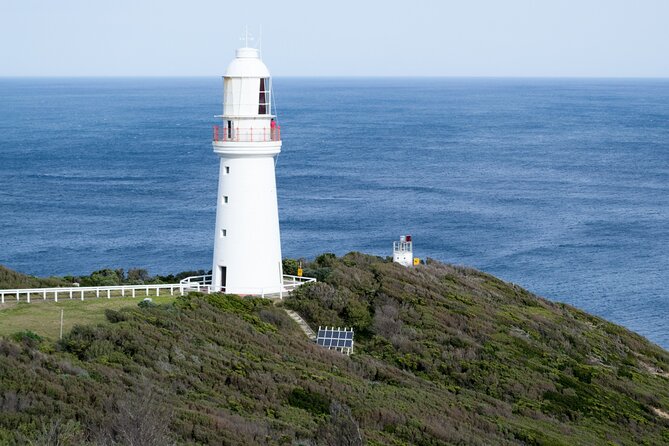
In Aireys Inlet, you’ll reach Split Point Lighthouse, known as the White Queen. The tour frames it as an iconic landmark with panoramic coastline views, and it notes its fame from a TV series appearance.
The real takeaway here is not the nickname—it’s the perspective. Lighthouses work because they force you to look at the coastline in layers: the rock edges, the sea direction, and how the land channels the wind and waves. Even for quick photo stops, a lighthouse view gives your brain a clearer map than looking at the ocean from the roadside alone.
If you’re doing a full day, this is a good moment to slow down. You’ll likely find yourself wanting to linger a few extra minutes for one more angle.
Eastern View Memorial Arch, Lorne, and Erskine Falls: history, then a green reset

The Memorial Arch at Eastern View marks the start of the Great Ocean Road and commemorates the soldiers who built it after World War I. It’s also a strong photo stop, because it’s designed for you to frame the road forward and feel the “beginning” of the journey.
From there, the route hits Lorne, a charming seaside town known for beaches, an arts scene, and cafés. This is another useful break in the day. After multiple coastal viewpoints, Lorne gives you a town rhythm: wander, snack, and re-energize.
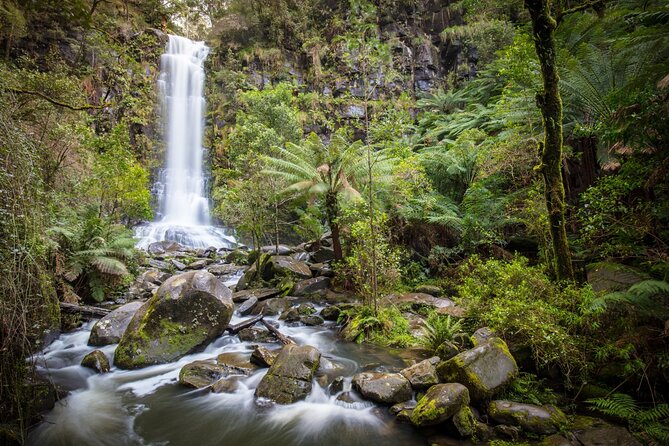
Then comes Erskine Falls, a 30-meter waterfall in the Otway Ranges near Lorne. The tour points you to a short walk for access, with fern-filled forest surroundings that feel quieter and more sheltered than the open coast.
This is one of those stops that balances the whole route. Twelve Apostles and Loch Ard Gorge are dramatic ocean moments, but Erskine Falls is your palate cleanser—fresh air, greenery, and a slower pace that doesn’t require staring at waves.
Apollo Bay to Port Campbell: gateway towns that make the big sights easier
After Lorne, you’ll reach Apollo Bay, a picturesque coastal town between ocean and rolling hills. It’s known for beaches and fresh seafood, and it works well as a mid-day place to take a longer break before the biggest limestone stack segment.
Apollo Bay is also positioned like a gateway to the Otways. That matters because it gives you an easy “base” feeling, even if you’re just passing through on a single driving day. You’ll likely feel less rushed once you’ve built in a real pause here.
Next, the route brings you to Port Campbell, a small coastal town that serves as a base for nearby landmarks like the Twelve Apostles and Loch Ard Gorge. Even if you don’t linger long, Port Campbell is a helpful “hub stop.” It’s where the day’s big geology moments cluster, so it’s easier to plan your timing around viewpoints without feeling like you’re constantly re-navigating.
Twelve Apostles, Loch Ard Gorge, and the Bay of Islands: the limestone stack triangle
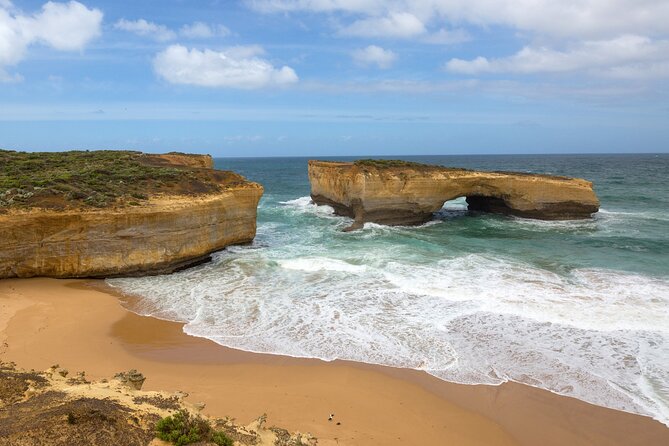
Now we get to the stuff people drive hours to see.
The Twelve Apostles, near Port Campbell, are limestone stacks rising from the Southern Ocean. The tour emphasizes that they’re best viewed at sunrise or sunset, which is a key tip for getting more than just a daytime snapshot. If you can plan around it, you’ll likely enjoy the lighter, more dramatic sky and the way shadows carve the stacks.
Then you’ll head to Loch Ard Gorge, a dramatic inlet with steep cliffs and a sandy beach. The tour ties it to the history of the Loch Ard shipwreck, adding context to what can otherwise be just a wild coastline scene. This stop is a reminder that the ocean’s beauty and danger are connected.
Finally, the route includes the Bay of Islands, known for towering limestone stacks and rugged cliffs, with the note that it’s less crowded than the Twelve Apostles. If your goal is to see the geology without feeling boxed in, this can feel like a pressure-release valve after the main celebrity viewpoint.
A smart way to approach these stops is to treat them as a sequence, not independent “tourist moments.” Once you’ve seen the Twelve Apostles, you’ll start noticing how the coastline changes across the next viewpoints. The audio’s storytelling helps you connect the dots between stacks, inlets, and shipwreck-era history.
Practical driving tips: getting the most from offline GPS audio
Here’s how I’d make this day go smoothly.
First, download early and fully. After booking, you’ll get instructions to redeem the voucher code, and you’ll want to sign into the free GuideAlong app using your preferred Apple or Google account. Then download the tour under My Tours while you still have Wi‑Fi or cellular data. You can preview the route and start locations inside the app before you hit the road.
Second, think about power. The tour explicitly recommends bringing a USB/C car charger, and I agree. Even if you start fully charged, a long coastal drive with GPS running and audio playing can drain battery faster than you expect.
Third, plan your timing around daylight. The audio tour itself doesn’t force strict timing, but the scenery recommendations do. The Twelve Apostles have the best viewing at sunrise or sunset, so choose your start time inside the available operating window of 6:00 AM to 6:00 PM.
Fourth, expect that your “visit time” is flexible. You control pace because this is a self-guided experience. Start, stop, and resume any day, anytime, with no expiry. That freedom is great when weather shifts or when you just want an extra 10 minutes for a calmer view.
Finally, pack for real stops. This is a drive day with multiple viewpoint and short-walk moments, so wear comfortable shoes and bring water. Food isn’t included, so plan snacks that are easy to grab and eat without turning the day into a detour.
Should you book the Great Ocean Road audio drive?
Book this if you want the Great Ocean Road with structure, but without a rigid schedule. The biggest reason to choose it is that GPS-triggered audio makes the route feel guided while still letting you linger where you want. At $19.99 per vehicle up to 8, it’s also a strong value when you can share the cost.
You might skip it if you prefer a hands-on, live human guide, or if you’d rather avoid using your phone for navigation and audio entirely. It’s also worth noting that some people have had iPhone download setup issues, so if you’re worried about app tech, test the download process on Wi‑Fi before you leave.
If you’re planning your first Great Ocean Road road trip, I’d see this as the smart middle path: you get stories, context, and place-based tips, while keeping the day flexible enough to adjust to your energy level and the light.
FAQ
How does the audio tour know when to play stories?
The guide audio plays automatically based on your phone’s GPS location, so the commentary triggers as you drive to each stop.
Do I need cell service or Wi‑Fi during the drive?
No. After you download the tour in the GuideAlong app, you can use it offline without needing cell service or Wi‑Fi.
How much does it cost and how many people can use one booking?
It’s $19.99 per group, and one purchase covers everyone in your vehicle, up to 8 people.
How long does the Great Ocean Road tour take?
It’s listed as approximately 10 to 12 hours.
Where does the tour start and end?
The tour starts at Allansford VIC 3277 and ends back at the same meeting point.
What’s included in the tour price?
Included are the GuideAlong (GyPSy Guide) audio tour with 260+ points, location-based stories and directions, trip planners (in-app, web, and PDF), and free updates with no expiry.
Is food included?
No. Food and drinks are not included.
When is the tour available?
The tour runs during Monday through Sunday, 6:00 AM to 6:00 PM, within the stated date range.
Can I cancel for free?
Yes. You can cancel for a full refund up to 24 hours in advance. If you cancel within 24 hours of the start time, the amount paid is not refunded.