REVIEW · PLOVDIV
Plovdiv: Old Town Self-Guided Audio Tour
Book on GetYourGuide →Operated by Audio Guide Bulgaria · Bookable on GetYourGuide
One-way phone audio makes Old Plovdiv feel surprisingly easy. You get a self-paced route with a map and a phone audio guide built around the city’s Roman layers. The route highlights key photo moments like the Roman Stadium and viewpoints where you’ll recognize spots as you walk.
Two things I like a lot: the walk-at-your-own-pace freedom and the clear plan that loops through the sights without forcing a tour-group rhythm. One thing to consider is that you’ll need to get your phone working (link access, headphones, and some internet use), and hot weather can make long stretches feel tough.
In This Review
- Key points to know before you set off
- Why a self-guided Plovdiv audio walk works so well
- The route overview: what the loop is trying to do
- Starting with the Roman Stadium: your first “anchor” moment
- Ancient theater, Klianty, and Lamartine’s house: texture and contrast
- Saborna street: the neighborhood walk that links everything
- Armenian Church Museum: the detail stop you’ll remember
- Nebet Tepe: viewpoint audio that makes the stone feel alive
- Artisans Street to the East Gate of Philippopolis: moving from people to power
- Small Basilica mosaic: the “pause and stare” stop
- Great Basilica and Trakart Museum: finishing with depth
- Finishing back near the new city center and Roman Stadium area
- Price and value: is $15 fair for what you get?
- Tech and logistics that can make or break your day
- Timing: how to avoid heat and keep the route enjoyable
- Who this tour suits best
- Should you book the Plovdiv Old Town self-guided audio tour?
- FAQ
- How much does the Plovdiv Old Town self-guided audio tour cost?
- How long does the tour take?
- What’s included in the price?
- Are museum entrance fees included?
- Do I need internet to use the audio guide?
- What should I bring?
- Which languages is the audio guide available in?
- Can I start from any spot along the route?
- Is this tour suitable for wheelchair users?
- Does it run in bad weather?
Key points to know before you set off
- Circular route, flexible start: the walk is designed as a loop so you can begin at different points along the trail.
- Phone audio, timed access: after purchase, you get a link by email that activates on your chosen day and works for 24 hours.
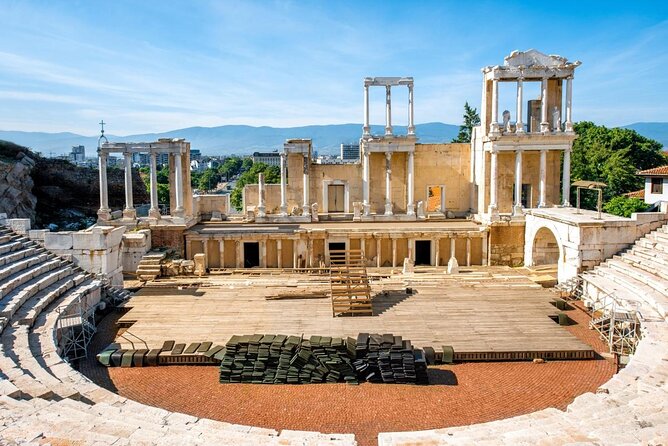
- Expect Roman-heavy highlights: Roman Stadium, ancient theater, basilicas, and mosaic stops shape the experience.
- Armenian Church Museum stands out: the audio includes the specific story around a nail and a wooden-board fragment marked with INRI.
- Heat and device friction matter: you can pause and restart your playback, and strong sun can slow you down.
- Map isn’t interactive: you’ll rely on navigation by route rather than tapping a live map.
Why a self-guided Plovdiv audio walk works so well

Plovdiv has a way of mixing eras in the same block. You’ll spot Roman structures near older streets, then round a corner and feel like you’ve changed centuries. This kind of experience can either feel magical… or confusing. That’s where this audio format helps.
The big win is that you control tempo. You don’t have to wait for anyone. If you want to linger at Nebet Tepe for a view, you can. If a street feels less interesting that day, you can shift when you listen to the next recording. The tour is built to be circular, so you’re not stuck with one rigid start time or one one-way march.
I also like that the audio is guided by a route plan rather than random “top sights” stops. The itinerary is designed as a loop that keeps you moving logically through major landmarks. It starts with the Roman Stadium area, then it layers in the ancient theater zone, old houses, and the Armenian museum stop before carrying you back through other basilica and city-center areas.
The trade-off: it’s not a guided conversation. When you want deeper back-and-forth context, you’ll only get what’s inside each audio track. And because it’s phone-based, the experience depends on you having headphones, a charged smartphone, and at least some internet access for recordings in temples.
You can also read our reviews of more tours and experiences in Plovdiv.
The route overview: what the loop is trying to do
This walking tour is described as circular and convenient for seeing the highlights in one sweep. Expect roughly 2.5 to 4 hours, depending on how long you pause for audio and photos.
Here’s the flow you should mentally picture:
- Start around the Roman Stadium
- Move toward the ancient theater area and notable historic houses
- Walk via Saborna street
- Reach the Armenian Church Museum stop
- Continue toward Nebet Tepe for a viewpoint
- Pass Artisans Street
- Head to city gates and basilicas (including mosaic sights)
- Add Trakart Museum
- Finish back near the new city center and return for another look at the Roman Stadium area
You can remodel it because you decide when you play each audio track. That means you don’t need to listen in perfect order, as long as you don’t get totally lost—so use the route map even if it isn’t interactive.
Starting with the Roman Stadium: your first “anchor” moment
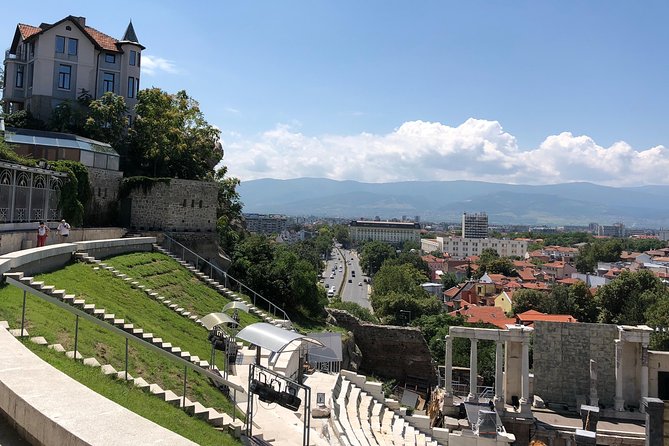
The tour’s first point is the Roman Stadium. It’s a smart place to start because it acts like a landmark you can keep returning to in your mind as the route unfolds. Even if you’re not a Roman-sport-history person, you’ll likely pause here just because it feels like the city’s “open-air structure” that’s hard to ignore.
Once you’re oriented, the audio helps you understand what you’re seeing. The stadium is also a good warm-up for the kind of walk you’re doing: you’ll be looking at stonework, taking in viewpoints, then moving on to indoor or museum-style stops where audio can give more specific details.
Practical tip: this area can set the tone for the rest of your day. If you want the tour to feel easy, don’t rush the first stop. Spend enough time at the Roman Stadium so the later landmarks click into place.
Ancient theater, Klianty, and Lamartine’s house: texture and contrast
After the stadium, the route opens up into the zone with the ancient theater and other local historic points like Klianty and Lamartine’s house. This is where Plovdiv starts feeling less like “a set of monuments” and more like a lived-in old town.
What makes these stops valuable in an audio self-guided format is contrast. The theater area is about dramatic space and Roman architecture. The historic houses help you connect the city to later eras and the way Plovdiv’s center evolved over time.
A potential consideration: one review noted a preference not to do a route that requires returning backward. So while this itinerary is circular by design, you may still feel like you’re retracing a bit in some segments. If you know you dislike backtracking, save your longer listening sessions for the viewpoints and museum interiors rather than stretching every street-level passage.
Saborna street: the neighborhood walk that links everything
From there, the route continues through Saborna street. Streets like this are underrated in monument tours. Even when the audio is quiet for a stretch, you’re collecting the real feel of the old town.
This is also a good segment for you to decide your day pace. If you want a slower, more photo-friendly rhythm, this kind of street break helps. If you’re trying to hit most tracks, you can keep audio playing while you walk.
And since the tour is built around the loop, you don’t have to treat each street as a “dead end.” The route is meant to bring you back toward the next big stop.
Armenian Church Museum: the detail stop you’ll remember
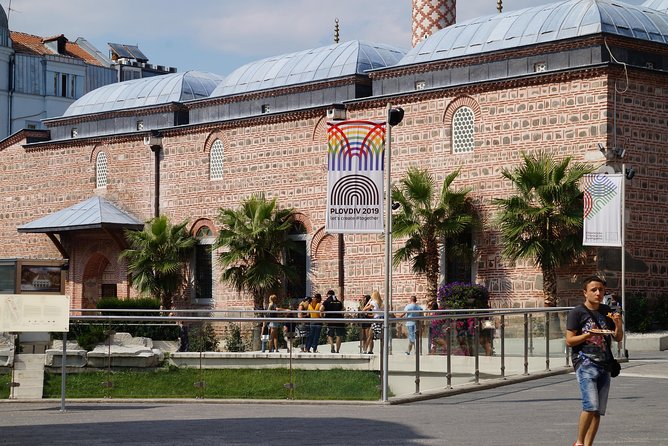
One of the most distinct parts of this tour is the Armenian Church Museum on the route. The audio points you to specific artifacts, including a nail and a piece of a wooden board with the Latin abbreviation INRI—the kind of detail that turns a museum visit from “I saw stuff” into “I understand one story.”
This is also where the audio guide shines in a self-paced setting. Museums can be overwhelming when you’re reading everything at once. A focused track helps you prioritize the elements that matter most.
The museum is described as having some of the richest collections worldwide related to Armenian history. Even if you skim the museum highlights, knowing the audio is designed around those specific objects helps you feel like you’re not just wandering.
Reality check: entrance fees for the museum are not included, so keep that in mind when you calculate value.
Nebet Tepe: viewpoint audio that makes the stone feel alive
Next up is Nebet Tepe, where the pitch is straightforward: a beautiful view over the city paired with century-old remains. This is often the kind of stop that makes audio tours worth paying for because the audio can explain what you’re seeing while you’re standing in the same spot.
You’ll likely use this time for photos, because a viewpoint gives you both an overview and a sense of scale. Nebet Tepe helps connect the earlier Roman monuments and street-level walking to the bigger geography of Plovdiv.
If it’s hot out, watch your timing here. One review mentioned a dangerously hot sun for their group and suggested the tour might be better later in the day when it’s cooler. You don’t need a perfect plan, but you do need to avoid cooking yourself mid-route. Nebet Tepe is exactly the kind of place where you’ll regret rushing.
Artisans Street to the East Gate of Philippopolis: moving from people to power
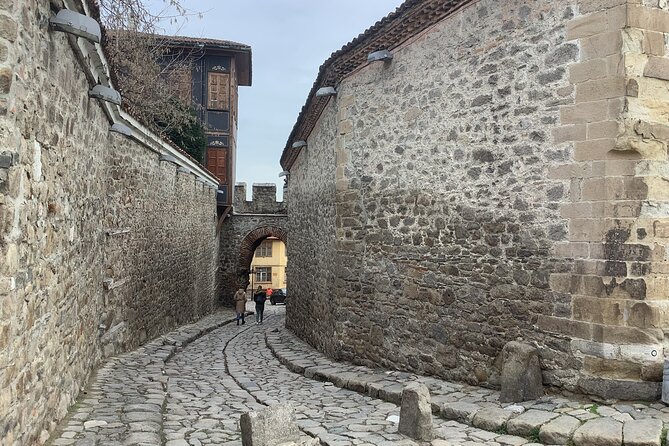
As you pass Artisans Street, the walk shifts from scenic city feel to the sense of historic movement. Then you reach the East Gate of Philippopolis.
This kind of gate stop is a great audio moment because it helps you read the city’s structure like a map. Gates, roads, and adjacent ruins are often just “more stone” if you don’t get a guided explanation. With an audio track, you get a reason to look closely: what was there, what it meant, and how it connected to the rest of the city.
Small Basilica mosaic: the “pause and stare” stop
Continuing onward brings you to the Small Basilica, where you can discover a Roman mosaic. This is the sort of detail that rewards being willing to slow down.
In a self-guided tour, mosaics can go one of two ways:
1) you see them for ten seconds and move on, or
2) you use audio to point your eyes at the shapes and meaning so you actually understand why it’s special.
This tour includes audio specifically for the Small Basilica stop, so you’re not left guessing what to focus on.
Again, entrance fees for the Small Basilica stop aren’t included, so it’s worth building this into your budget if you want the full value from the paid tour.
Great Basilica and Trakart Museum: finishing with depth
After the Small Basilica, you’ll reach the Great Basilica. Then you continue to Trakart Museum.
This is where the route earns its “don’t rush” reputation. Basilicas and museum collections are naturally longer than outdoor ruins. If you move too fast, the end of the tour can feel like a blur.
Trakart Museum also has its own audio track included, which is helpful if you like learning in context. You’ll get a guided framework so you can spend your attention where it counts, instead of just reading labels at random.
Finishing back near the new city center and Roman Stadium area
The tour finishes with the new city center and a portion of the Roman Stadium again. That “loop back” idea is key. It gives you a chance to re-check the stadium with fresh understanding after you’ve seen the other landmarks along the route.
If you like finishing strong, this is a good structure. You end with a familiar anchor and a sense that your day formed a complete circuit rather than scattered stops.
Price and value: is $15 fair for what you get?
At $15 per person for a one-day self-guided audio experience, the value depends on your travel style.
If you like history but hate rigid tours, this format can feel like good value because you control pace. You also get:
- a map of the ancient Plovdiv route
- an audio guide in multiple languages (Spanish, Turkish, Bulgarian, English, Greek, Russian, French, Italian, German)
- extra audio tracks for Trakart Museum, Small Basilica, and the Armenian Church Museum
The tour also supports flexible duration since the walk can take 2.5 to 4 hours based on how you move and listen.
Where value may drop is if your phone setup is slow or if the map navigation frustrates you. Multiple critiques focused on the experience feeling harder to start and manage than it should. One review said it was difficult to figure out how to start, and that pausing meant starting over again often. Another review complained the map wasn’t interactive.
That’s why I think the biggest “value test” isn’t just the price tag. It’s whether you’re comfortable relying on your phone for a walking experience.
Tech and logistics that can make or break your day
This tour is simple in concept but phone-dependent in execution.
After purchase, you get a link by email. On your selected day, it becomes active and stays usable for 24 hours. You listen through your phone, using headphones. You also need internet access, with the note that internet consumption is minimal, but it’s needed—especially for recordings in temples.
So here’s what you should do before you walk:
- charge your smartphone fully
- pack headphones
- confirm you’ll have at least light internet access in spots where the audio may require it
- test your audio link early if possible
A separate practical issue came up: one review described confusing and contradictory info about the meeting point and the need for headphones and mobile. Another said the voucher meeting point was wrong and delayed the start. Even though this tour is circular (meaning you can start from different objects), you still want to verify your starting location so you don’t waste time at the wrong spot.
Also, the map is not interactive. That’s not fatal—route maps can still work—but it does mean you’ll need patience and careful reading.
If you happen to need help from staff, one review praised a guide named Natalia. That’s a good sign if you run into a real-world question. Still, self-guided means you’ll do most of the work yourself.
Timing: how to avoid heat and keep the route enjoyable
The tour happens rain or shine, and it’s available year-round. That’s great because Plovdiv isn’t a “summer-only” destination.
But hot sun can be a problem. One review said the sun was dangerously hot for their group and they couldn’t do the full walk. The practical takeaway is simple: choose your timing with care. If you know you get affected by heat, start earlier or plan to spend less time paused on the most exposed stretches.
Nebet Tepe and major outdoor zones are the places where heat can feel intense. You don’t need to force a perfect schedule, but don’t assume the tour will feel pleasant if the sun is strong.
Who this tour suits best
This works best if you:
- like Roman sites and old-town walking
- want a self-paced experience instead of group pressure
- enjoy learning through short audio prompts while you look around
- want an itinerary that loops so you can start from different points
It might not be ideal if you:
- hate phone-based navigation
- want a talkative human guide answering questions
- need wheelchair access (this tour is not suitable for wheelchair users)
- prefer paper-only info (one review wished for a paper map)
Should you book the Plovdiv Old Town self-guided audio tour?
Book it if you want structure without rigidity. The route makes sense, the highlights are iconic—Roman Stadium, basilicas, Armenian Church Museum, Nebet Tepe—and the included audio tracks give you a way to understand what you’re seeing at each key stop. The price is low enough that you won’t feel punished if you move slower than planned.
Skip it or plan carefully if you know you’ll struggle with tech on the street. The map isn’t interactive, and the tour relies on you starting and managing playback on your phone. Heat can also be a deal-breaker on outdoor stretches.
If you’re organized and you’re comfortable with a phone audio guide, this is a solid way to experience Old Plovdiv at your own pace—without paying for a full group tour.
FAQ
How much does the Plovdiv Old Town self-guided audio tour cost?
It costs $15 per person.
How long does the tour take?
The walk is described as taking about 2.5 to 4 hours, depending on how you pace it.
What’s included in the price?
You get a map of the ancient Plovdiv route, an audio guide, and audio records for Trakart Museum, the Small Basilica, and the Armenian Church Museum.
Are museum entrance fees included?
No. Entrance fees for the three museum stops are not included.
Do I need internet to use the audio guide?
You need internet access. The notice says internet consumption is minimal, but internet is needed to listen to recordings in temples.
What should I bring?
Bring headphones and a charged smartphone, plus internet access for the audio where required.
Which languages is the audio guide available in?
Spanish, Turkish, Bulgarian, English, Greek, Russian, French, Italian, and German.
Can I start from any spot along the route?
Yes. The route is circular, so you can start from any object on the excursion.
Is this tour suitable for wheelchair users?
No, it is not suitable for wheelchair users.
Does it run in bad weather?
Yes. The tour takes place rain or shine.