REVIEW · OLYMPIA GREECE
Ancient Olympia Entry Ticket & Virtual Reality Audio Tour
Book on GetYourGuide →Operated by SIGHTS OF ATHENS-GRAY LINE · Bookable on GetYourGuide
Olympia feels closer on your phone. With a virtual reality app and a 9-language audio guide, this ticket turns the ruins into a guided storyline of the original Olympic Games. Add the prebooked entry (and express security), and you’ll spend more time looking and less time sorting out lines.
I especially like that you get unlimited time on the archaeological site, so you can slow down at the stops that click for you. The other big plus is the museum time slot: you choose your entry time up front for the Archaeological Museum of Olympia, which helps you plan a calm route instead of reacting to crowds. One possible drawback: this is a self-guided phone experience, so you’ll want to keep your smartphone ready and follow the app instructions closely—if anything goes wrong with access, you’re on your own to troubleshoot on site.
In This Review
- Quick Take: What You’ll Like Most
- Ancient Olympia, Rebuilt in Your Head (and on Your Screen)
- The Real Value: Prebooked Entry Plus Express Security
- What 4 Hours Looks Like in Real Life
- Archaeological Site: Temple of Hera and the Olympic Flame Site
- Temple of Zeus: The Statue Story That Makes the Stones Matter
- Stadium and Bouleuterion: Sports + Decision-Making in One Area
- The Museum Stop: Completing Olympia in One Ticket
- VR on a Smartphone: Tips to Avoid Common Friction
- Value Math: Is $36 Worth It?
- Who This Tour Fits Best (and Who Might Feel Frustrated)
- Booking Reality Check: When Things Can Go Sideways
- Should You Book This Ancient Olympia VR + Audio Ticket?
- FAQ
- How long is the Ancient Olympia entry and virtual reality audio experience?
- What’s included with the ticket?
- Do I need headphones?
- Is a charged smartphone required?
- How many languages are available for the audio guide?
- Is there a live guide?
- Do I get to choose a time for the museum?
- Can I enter the archaeological site anytime that day?
- What are the opening hours?
- Is the experience wheelchair accessible, and are pets allowed?
- What’s the cancellation policy?
Quick Take: What You’ll Like Most
- VR + audio in 9 languages: English, German, Spanish, Chinese, Polish, Portuguese, Russian, Italian, French, all built into the same experience.
- Prebooked museum time, flexible site timing: pick a set entry time for the museum, then visit the site anytime on your booked date.
- Express security check: you’re guided into a faster lane at security compared to walk-up lines.
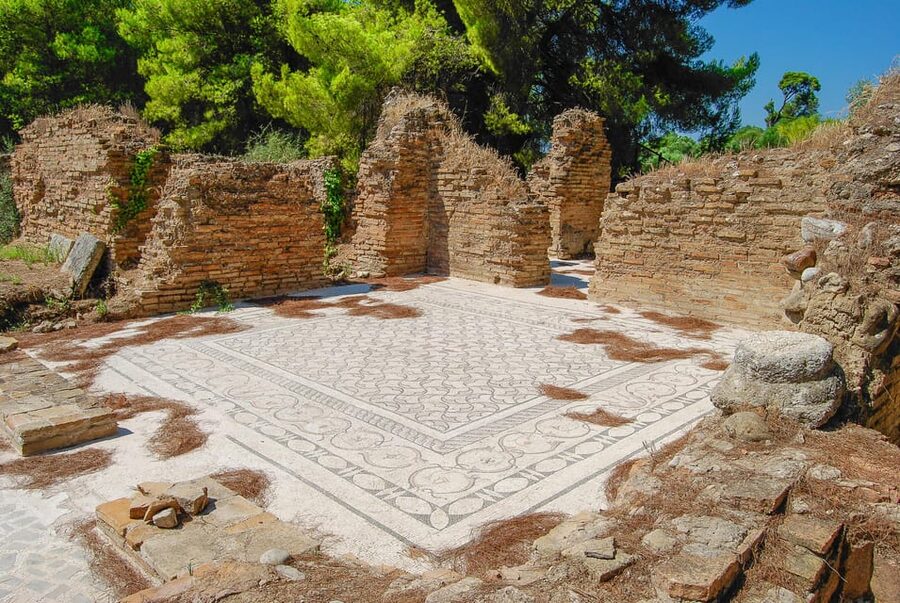
- Built around Olympia’s headline spots: Temple of Hera, Temple of Zeus, the stadium, and the Bouleuterion, plus the museum to cap it off.
- Phone-powered, not headset magic: you bring your own device setup (headphones and charged phone), so plan for battery life.
Ancient Olympia, Rebuilt in Your Head (and on Your Screen)
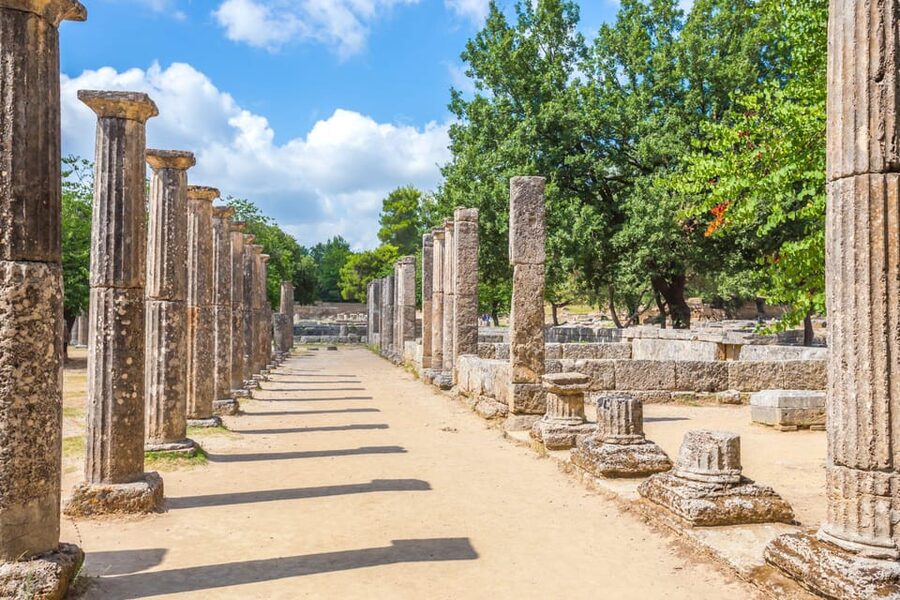
Ancient Olympia sits in Elis on the Peloponnese, and it’s famous for hosting the Olympic Games in classical times. This experience is designed for one key outcome: you don’t just see ruins—you connect them to what they once were. The virtual reality app is paired with multilingual audio guidance, so you can move at your pace without waiting for a live guide to catch up.
The heart of the value is the combination of prebooked tickets and a phone-based interpretation. Prebooking helps you arrive with fewer surprises, and the audio/VR layer helps you make sense of stone that can otherwise feel repetitive. If you’ve ever stood in front of ancient foundations thinking, okay… but what did it look like when it mattered?—this is aimed directly at that moment.
At $36 per group up to 1, you’re paying for convenience plus the app experience. In practice, that can be worth it if you’ll actually use the audio and VR features rather than treating them as optional extras.
The Real Value: Prebooked Entry Plus Express Security
One of the biggest practical wins here is that you’re not relying on last-minute ticket booths. You’re selecting a time for the Archaeological Museum of Olympia ahead of time, and you also get access for the archaeological site on your booked date.
You also get an express security check. That matters at Olympia because even when you’re not stuck in a long ticket line, the whole area can still move slowly when security queues build up. Faster entry doesn’t just save minutes—it helps you start your visit with momentum, which makes the audio/VR experience feel more “in sync” with where you are.
Here’s the trade-off to know: tickets for this setup come with restrictions. Museum entry requires a specific date and time, and you can’t change that after booking. Also, ticket terms state non-refundable tickets with no reduced admission or child-infant tickets. If you’re traveling with kids or expecting a discounted rate, this is a place to double-check your total cost early.
What 4 Hours Looks Like in Real Life
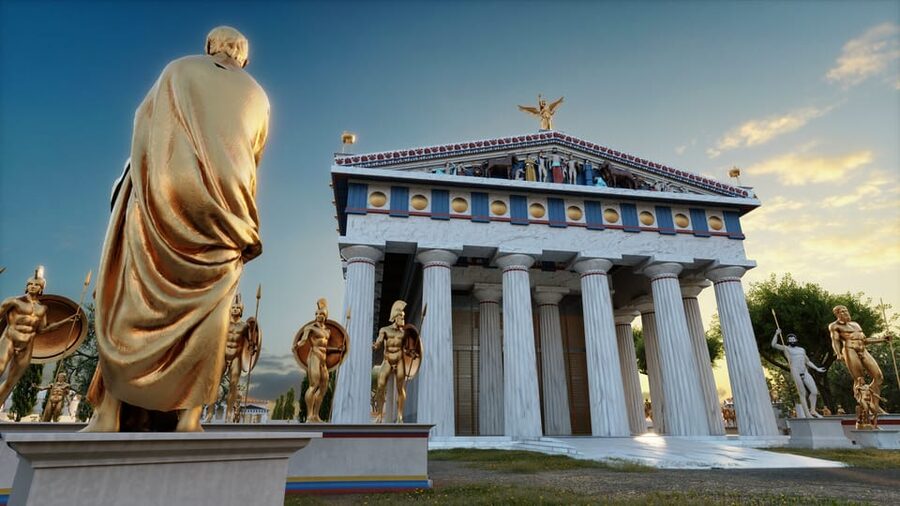
The activity is listed as 4 hours. That’s a helpful planning frame, but the experience is really about how you pace yourself across two areas: the archaeological site and the museum.
A typical flow goes like this:
- Start with the archaeological site, where you can roam and use the app without being trapped in a tight group schedule.
- Then move to the Archaeological Museum of Olympia for the “finish the story” portion.
- Use the audio/VR instructions in sequence so the key monuments make sense as you go.
Because museum entry is tied to a time slot, you’ll want to build in enough travel and walking time between the site and the museum. In other words, don’t schedule your museum entry like you’re racing a stopwatch. Give yourself a buffer so you can enjoy the stops instead of rushing through them.
Archaeological Site: Temple of Hera and the Olympic Flame Site
At the archaeological site, the experience guides you through Olympia’s major landmarks. You’ll be aimed at the spiritual and sporting core of the ancient sanctuary.
One of the most striking stops is the Temple of Hera, listed as a focus point in the experience. In modern Olympic tradition, the Olympic Flame is lit in front of the Temple of Hera during the Games. Even if you’ve only seen flame moments on TV, standing near this location gives you a physical sense of why the tradition stuck around.
What I like about building the audio/VR around Hera is that it anchors Olympia in the idea of sanctuary, not just stadiums and crowds. Olympia wasn’t just a sports venue. It was a sacred site—and that emotional context can change how you interpret the stones.
Practical note: since this is phone-guided, your progress will depend on staying aware of where you are. The app can be fantastic when it lines up with your orientation, but if you lose your place, you’ll spend time “re-syncing” rather than watching the story unfold.
Temple of Zeus: The Statue Story That Makes the Stones Matter
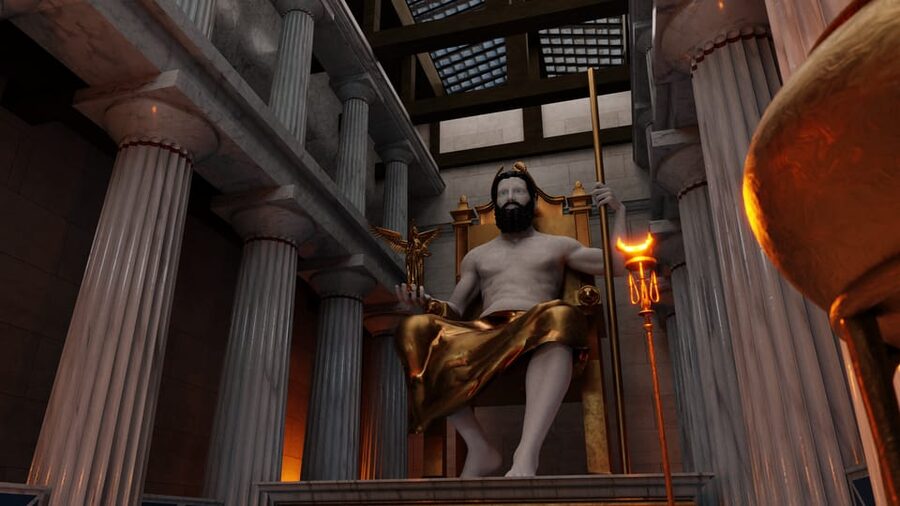
Next up is the Temple of Zeus. The experience specifically calls out the famous statue tradition: once, the temple housed the Golden and Ivory statue of Zeus, one of the Seven Wonders of the Ancient World.
This stop is the kind that can go either way on a self-guided visit. If you don’t have context, you may see a large footprint and move on. With the audio and VR framing, you get the statue narrative, so the scale and significance feel purposeful, not abstract.
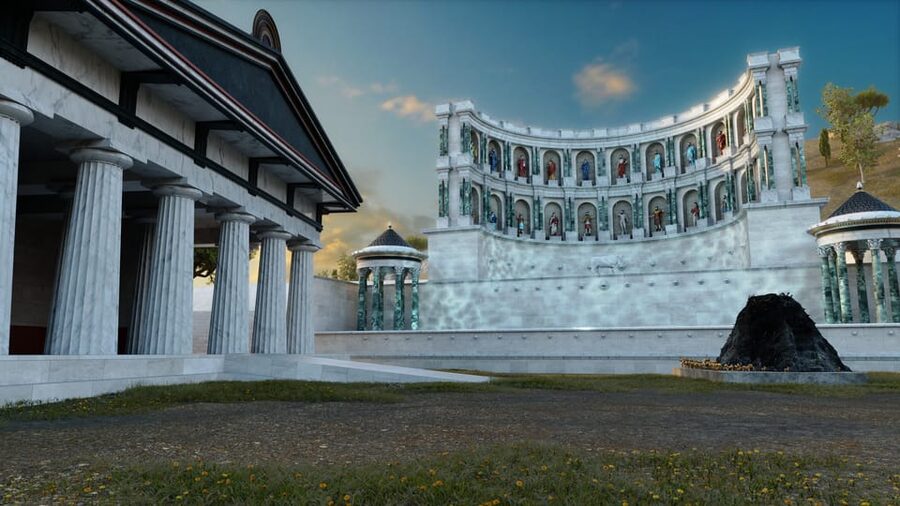
This is also where the virtual part can help the most. The ruins show you what survived; the app helps you imagine what once stood there. If you’re the kind of traveler who likes to convert “ruins” into “reality,” you’ll likely enjoy how the experience is structured around the big, story-heavy monuments.
Stadium and Bouleuterion: Sports + Decision-Making in One Area
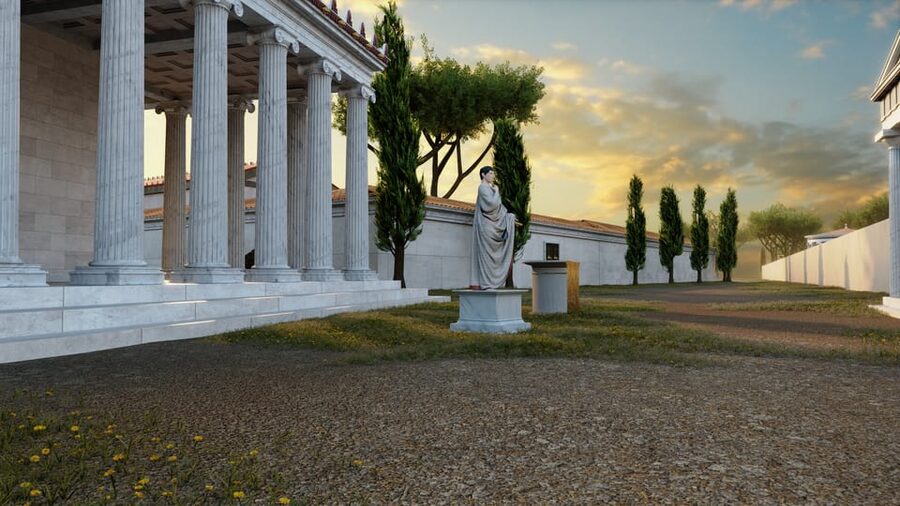
The experience also includes the original stadium and the Bouleuterion. These are two different “function” spaces, which is a good thing. Not every ancient site does both: a place for competition and a place for civic or administrative meetings.
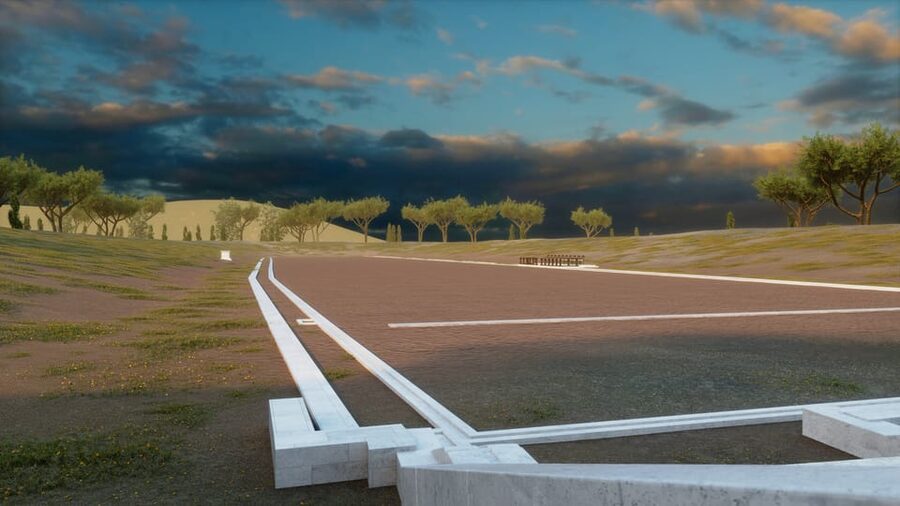
Standing at the stadium area, you’re looking at how sport was built into a ritual cycle. Even without special visuals, Olympia’s layout makes it clear this was where people came to watch and compete, year after year across the centuries.
The Bouleuterion adds a different angle. It reminds you that big events are run by institutions, not just athletes. In a normal visit without interpretation, it’s easy to focus only on the obvious. Here, the app encourages you to pay attention to the “supporting” structures too.
The Museum Stop: Completing Olympia in One Ticket
You’ll finish your experience at the Archaeological Museum of Olympia. The museum part is important because artifacts and reconstructions help you understand what the site’s layout alone can’t explain.
You must pick a specific date and time for the museum entry, and you can’t change it after booking. On the site side, entry timing is more relaxed: you can enter the archaeological site at any time on your booked date.
This museum structure is good for planning. If you’re traveling during busy months, your set museum slot keeps you from getting stuck outside when the museum fills up. If you’re traveling in slower seasons, it still gives you a clear anchor in the day.
VR on a Smartphone: Tips to Avoid Common Friction
This experience is built around a VR app on your phone. That sounds simple—until reality meets battery life and app behavior. A couple of practical points will save you stress:
Bring headphones. This isn’t optional comfort; audio guidance is part of the design.
Bring a charged smartphone and keep it charged if you can. If your phone dies, the experience loses its main interpretive layer.
Keep your device open and running. The setup relies on the app functioning while you move between viewpoints.
Also, don’t expect a full standalone headset system. This is more like a structured phone-based tool. That’s great when it works well, but it also means you’re responsible for the tech part: brightness, sound, battery, and following on-screen instructions.
Value Math: Is $36 Worth It?
Here’s the honest value check.
You’re paying for:
- prebooked entry access for museum and site
- express security check
- the VR app and audio guide in 9 languages
- the freedom of unlimited time on the site (within your day plan)
In practical terms, this can feel like good value if:
- you want interpretation without paying for a live guide
- you’ll actually use the VR/audio features instead of skipping them
- you care about pacing yourself at major monuments like Hera, Zeus, the stadium, and the Bouleuterion
- you’re visiting in a season where time-savings help (especially April through October)
You should also weigh the “phone experience” cost. If you’re traveling with limited time, a solo traveler might feel the trade-off: you’re paying not only for entry, but also for a device-based guide. If you’re a traveler who prefers classic printed guides and simple signage, you might prefer other options.
And one more money issue to consider: ticket terms here don’t mention reduced admission, and the setup specifies no reduced admission tickets and no child-infant tickets. If family pricing is a big factor in your decision, calculate your total cost early rather than assuming discounts apply.
Who This Tour Fits Best (and Who Might Feel Frustrated)
This is a strong fit for:
- first-time visitors to Olympia who want help translating major ruins into story
- families who like interactive explanations (especially when kids get bored with plain walking)
- travelers who prefer self-guided pacing but still want structure
It may feel less ideal for:
- travelers who don’t want to manage a smartphone app while walking
- anyone with phone reliability concerns (low battery, unstable data, or limited comfort using apps on the fly)
- people who prefer a “meet at X, follow Y” live-guided flow
Booking Reality Check: When Things Can Go Sideways
I’ll be straight with you: self-guided tech can fail in the real world. In this kind of setup, problems are usually operational rather than historical. For example, if you arrive expecting someone to meet you and nobody is there, you’ll need to solve entry using your voucher and be ready to walk in rather than wait around.
Other common hiccups can include:
- confusion about what route to take inside the site for the best app alignment
- audio/visual elements not matching your exact position if you’re off by a bit
You can reduce the odds of frustration by doing two things before you ever arrive:
- Make sure your ticket voucher includes the instructions you need for the audio/VR app.
- Arrive with enough time to settle in and orient yourself before your museum slot begins.
Should You Book This Ancient Olympia VR + Audio Ticket?
If you want an easier, more meaningful Olympia visit, I’d book it—especially if you’ll use the audio and VR features and you appreciate planning your museum time. The combination of prebooked entry, express security, and a phone-guided interpretation around the big monuments makes it a practical choice for many visitors.
Skip it (or consider another approach) if you strongly dislike smartphone-guided experiences, or if your group depends on fixed staff support at a meeting point. Also, if you’re budgeting for family discounts, make sure you understand the lack of reduced admission/child-infant ticket types in the pricing rules.
If you’re comfortable traveling with your phone as your guide, this is one of the better ways to turn Olympia from ruins into a story you can follow—without being trapped by a group schedule.
FAQ
How long is the Ancient Olympia entry and virtual reality audio experience?
The duration is 4 hours.
What’s included with the ticket?
You get the virtual reality application and entry tickets.
Do I need headphones?
Yes. You should bring headphones.
Is a charged smartphone required?
Yes. You should bring a charged smartphone.
How many languages are available for the audio guide?
The audio guide is available in English, German, Spanish, Chinese, Polish, Portuguese, Russian, Italian, and French.
Is there a live guide?
No. A live guide is not included.
Do I get to choose a time for the museum?
Yes. You must select a specific date and time for entry to the Archaeological Museum of Olympia, and you cannot change it after booking.
Can I enter the archaeological site anytime that day?
Yes. You can enter the archaeological site at any time on the date you booked.
What are the opening hours?
In high season (April–October), it’s daily 8:00–20:00. In low season (November–March), it’s daily 8:30–15:30. Last admission is 15 minutes before closing, and you should confirm hours for your travel month.
Is the experience wheelchair accessible, and are pets allowed?
Yes, it is wheelchair accessible. Pets are not allowed.
What’s the cancellation policy?
Free cancellation is available up to 24 hours in advance for a full refund.