REVIEW · PLOVDIV
Plovdiv Old Town Self-Guided Audio Tour
Book on Viator →Operated by Audio Guide Bulgaria · Bookable on Viator
Plovdiv in your pocket, one story at a time. This self-guided audio walk is a smart way to learn how the city layers itself—Ottoman, Roman, medieval, and revival-era—while you move at your own pace. I especially like how it bundles key sights, including the Roman Theatre, without dragging you into a rigid group schedule.
One catch: the route guidance relies on your phone, and the map on-screen can be harder to read in bright sun. If you hate fiddly screen time while walking, plan a simple workaround.
You’re looking at about 2 to 3 hours on foot, in English, for a private group (just you). Expect a moderate walking pace, a mobile ticket, and a bonus 15% discount you can use at a city restaurant during your visit.
In This Review
- Key things to know before you start
- Why this self-guided walk works in Plovdiv Old Town
- Starting at the Ancient Stadium sets your timing and expectations
- Jumaya Mosque: medieval Plovdiv’s Muslim layer
- The Ancient Stadium to the Church of the Holy Mother of God
- Lamartine House and Balabanov House: Plovdiv’s 1800s elegance
- Ancient Theatre of Philippopolis: the big “wow” moment
- Ethnographic Museum: when you want more than ruins
- Nebet Tepe hill: starting at 4000 BC without getting lost
- Hisar Kapia and the Small Basilica: gates and layered belief
- TrakArt Cultural Center-Museum: mosaics, glass, and little portraits
- Saints Constantine and Helena: one of the oldest churches in town
- How long it takes, and how to avoid the phone-map problem
- Price and value: $15.49 that’s actually worth doing
- When this tour fits you best
- Should you book this Plovdiv Old Town self-guided audio tour?
- FAQ
- How long is the Plovdiv Old Town self-guided audio tour?
- Is the audio available in English?
- Where does the tour start?
- Does the tour end at the same place?
- Is this a private experience?
- Do I need to pay admission at every stop?
- Which stops have admission not included?
- Is there a discount included?
- What physical level do I need?
- What is the cancellation policy?
Key things to know before you start
- Private, self-guided format: Only your group, so you control the stops and timing.
- Roman Theatre is the anchor: One major highlight sits right in the middle of the Old Town route.
- Most admissions are free: Several top sites are included without extra tickets.
- A few museums cost extra: Ethnographic Museum, Small Basilica site, and TrakArt are not included.
- Phone map can be annoying: You may need to switch between audio and map while you walk.
- You’ll get a restaurant discount: A 15% cut at a city restaurant adds real value.
Why this self-guided walk works in Plovdiv Old Town
Plovdiv’s Old Town can feel like a maze at first. This route helps because it’s built around a logical walking loop and an audio story that gives you context as you reach each place. Instead of reading signs like a homework assignment, you get the background right when you’re standing in front of it.
The other big win is pacing. You can linger where you like and skip what you don’t. The tour runs about 2 to 3 hours, which is perfect for getting a lot done without turning your legs into sand.
You can also read our reviews of more tours and experiences in Plovdiv.

Starting at the Ancient Stadium sets your timing and expectations
Your walk begins at the Ancient Stadium of Philippopolis in the Staria grad area (Plovdiv Center, ul. Hristo G. Danov). That’s a great starting point because it immediately frames Plovdiv as a Roman city that kept evolving instead of a “museum town” that froze in time.
This first stop is quick—about 10 minutes—and admission is free. Use those first minutes to get your phone ready (sound on, ticket accessible) and make sure you’re comfortable following the route as it plays.
Jumaya Mosque: medieval Plovdiv’s Muslim layer
Next up is Djumaya (Jumaya) Mosque, a medieval Muslim temple. The story you’ll hear links it to Ottoman-era rulers, with references to Sultan Murad I (1362–1389) or Sultan Murad II (1421–1451). That range matters because it hints at how history in Plovdiv isn’t always a single neat date—it’s a timeline with overlap.
Plan for about 5 minutes here. The good news: admission is free, so you can pop in, listen, and keep moving without worrying about extra costs.
The Ancient Stadium to the Church of the Holy Mother of God
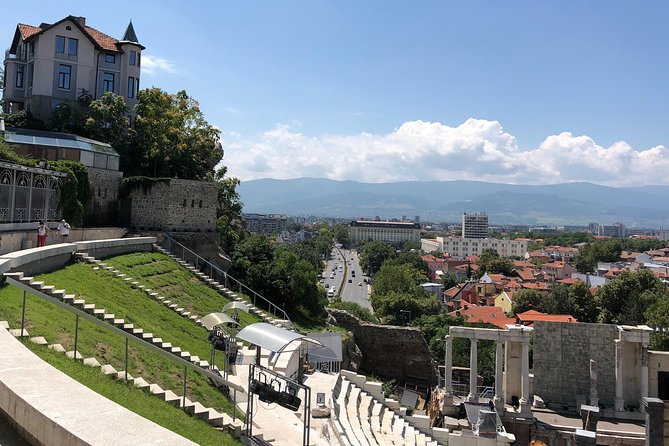
After the stadium, the route moves from entertainment architecture to religious layers. You’ll reach the Church of the Holy Mother of God, where the site story stretches back further than the current building suggests.
The key context is that a church existed there by the 9th century and was renovated in 1186 by Bishop Constantine Pantehi. Later, the church and monastery were destroyed in 1371 during the Ottoman conquest in the Bulgarian-Ottoman conflicts. That’s heavy material for a short stop, but it’s exactly what a good Old Town route should do: give you meaning fast.
This one is around 15 minutes, and admission is free. Since the story is long for the time you have, I’d keep your expectations realistic: don’t try to memorize every detail—just let the dates anchor the bigger picture.
Lamartine House and Balabanov House: Plovdiv’s 1800s elegance
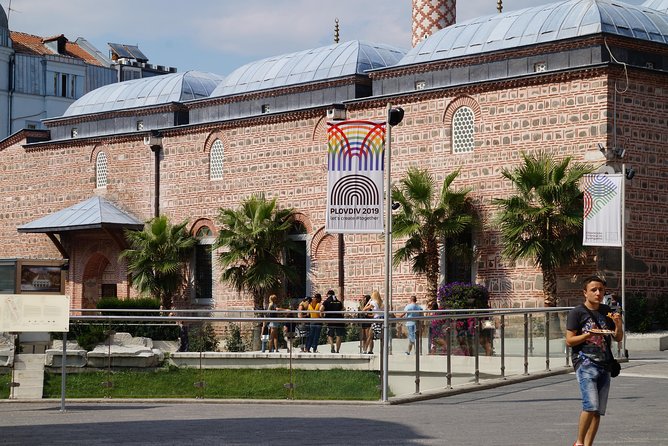
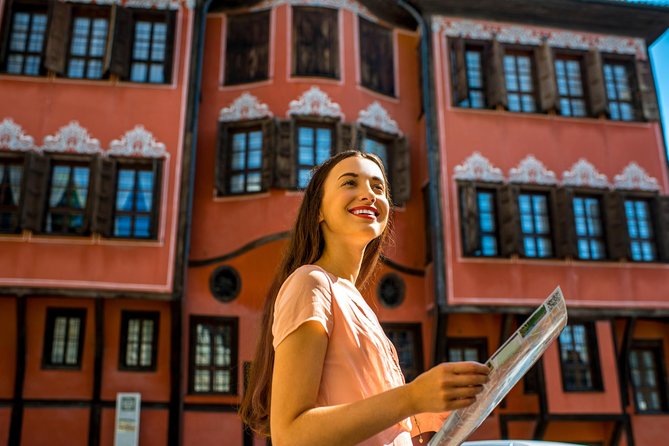
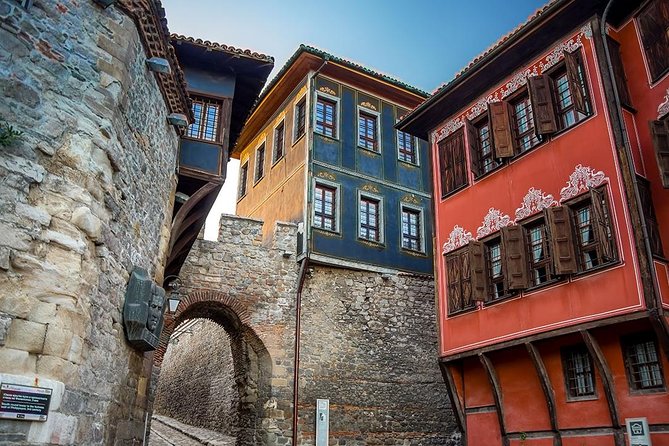
Now you shift into the Old Town’s revival-era face. Casa Lamartine is built around 1829–1830 and is described as one of the biggest and most beautiful symmetrical houses in the Old City. Even if you don’t go inside, the structure helps you picture how Plovdiv looked when wealthy families shaped the streets.
Then comes Balabanov House, also known as the House of Hadji Panayot Lampsha, built in the early 19th century. This stop is about 10 minutes and admission is free.
These houses are a good reset after Roman and medieval stops. They make you notice the human scale: the windows, the frontage, and the way the Old Town is built for everyday life, not just grand monuments.
Ancient Theatre of Philippopolis: the big “wow” moment
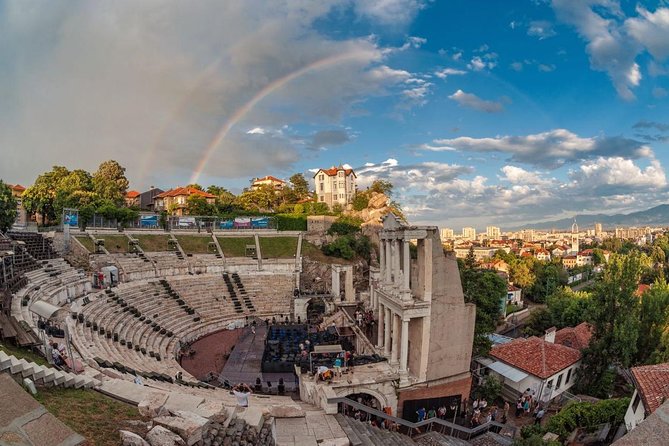
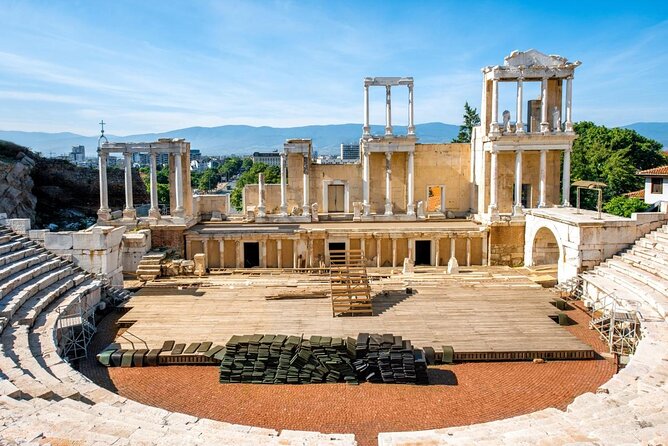
The route’s centerpiece is the Ancient Theatre of Philippopolis. It’s Roman, located in the city center, and is known as one of the best-preserved ancient Roman theatres in the world—exactly the kind of statement you can test with your own eyes.
Expect about 10 minutes here, with free admission. But don’t treat it like a quick photo stop. The value of an audio route is that it helps you imagine the theatre’s purpose while you stand in the seating and look out over the surrounding urban fabric.
If you only have energy for one longer pause on this whole walk, make it here. The theatre isn’t just impressive; it’s also easy to understand. You can see why people traveled and performed here.
Ethnographic Museum: when you want more than ruins
The Ethnographic Museum is one of the route’s optional add-ons in terms of cost. Admission is not included, but it’s built into the walk so you can decide on the spot if it fits your day.
This stop is short—around 5 minutes—which is a hint that the audio likely gives you context and a reason to care, even if you don’t spend a long time inside.
If you’re the type who likes everyday culture (clothing, crafts, domestic life), this is the point where that interest can pay off. If you’d rather stay focused on Roman and medieval history, you can treat it as a quick check.
Nebet Tepe hill: starting at 4000 BC without getting lost
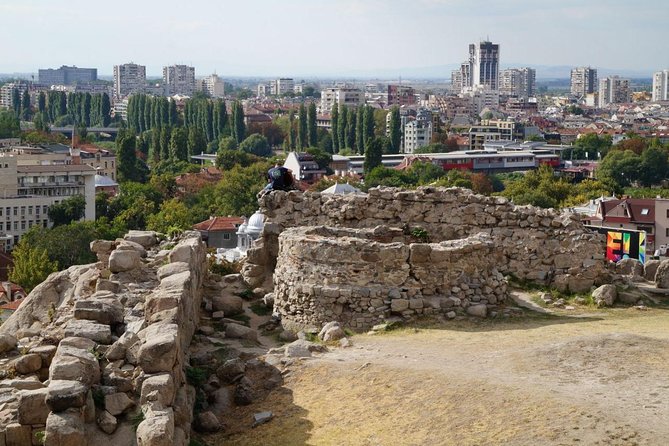
Next, the route climbs to Archaeological Complex Nebet Tepe. This is one of those places where Plovdiv stops being “a city you visit” and becomes “a city you time-travel through.”
The site story reaches back to early settlement dates around 4000 BC. That’s a huge time jump compared to the Roman theatre and Ottoman-era mosque, and it works because it helps you understand that the hills were settled long before later cities took shape.
Plan for about 15 minutes and free admission. If you only do one long listen on this section, do it here: the chronology is the point, and the audio helps keep it coherent.
Hisar Kapia and the Small Basilica: gates and layered belief
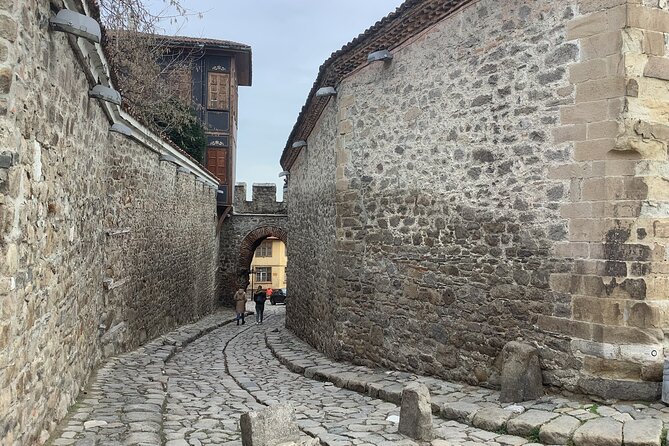
You’ll then hit Hisar Kapia—a medieval gate, with the Turkish meaning Hisar Kapı as Castle Gate. This is a great “connective tissue” stop: gates explain movement, defense, and how people entered and exited the Old Town.
Expect about 5 minutes here, and admission is free. It’s quick, but it’s also the kind of spot that makes the next areas feel less random.
After that, the route includes the Small Basilica of Philippopolis (a 5th–6th century archaeological site). Admission is not included, and the stop is about 15 minutes. If you love early Christian sites, this is one of the more rewarding places to justify spending a little extra ticket money on your walk.
TrakArt Cultural Center-Museum: mosaics, glass, and little portraits
The route also includes TrakArt Cultural Center-Museum. Admission is not included, but the museum content is the type that makes a short visit feel worth it.
You’ll see Roman mosaics (160 square metres “in situ”) from the 3rd–4th century. There’s also an exhibition on glass in ancient art, tracing glassmaking development from the 5th century BC through the 4th century AD. If you like objects and craft processes, that glass exhibit can be surprisingly satisfying.
Another display focuses on Protothracian portraits (ceramic objects from the eneolith and neolith periods). The museum also includes Roman miniature portraits from the 1st century BC up to the 1st century AD.
This stop is about 15 minutes. If you’re choosing between museums with limited time, TrakArt tends to give you more variety per minute because it covers multiple materials and themes.
Saints Constantine and Helena: one of the oldest churches in town
The final leg brings you to Church of St Constantine and Helena. The audio story frames it as one of the oldest churches in Plovdiv, built in 337 on the site of an ancient pagan temple located on the acropolis hill.
That “site built over site” detail is the real payoff here. It’s not just a building; it’s a map of changing belief systems in one location.
This stop is about 10 minutes, and admission is free. It’s a strong ending because it ties together the route’s theme: Plovdiv keeps rebuilding, and layers don’t disappear—they stack.
How long it takes, and how to avoid the phone-map problem
The tour typically runs 2 to 3 hours. That timing makes sense because the route includes multiple small stops, not one or two huge visits.
One practical note: there’s an audio/map interaction while you’re walking. Some people found they had to switch between the audio and the phone map, and the zoom level can look unclear in bright conditions. Your best move is simple: before you start, take a moment to check that you can comfortably read the map zoom on your specific screen. If you can, keep a second reference ready (like a saved screenshot) so you’re not constantly pinching and squinting mid-walk.
Also, bring a little patience. This is a self-guided format, and the best experience comes when you give the route system a minute to settle.
Price and value: $15.49 that’s actually worth doing
At $15.49 per person, this isn’t a “pay and forget” experience. It’s a decent value because it combines:
- A guided narrative in English
- A route that hits major landmarks like the Roman Theatre
- Several stops with free admission
- A 15% discount at a city restaurant
The key value math is in the admissions. You’ll get many big-name sites without extra ticket costs, and only a handful of museums/sites require separate admission. If your plan is to see several of those major Old Town highlights in one go, paying for the audio route can save time and confusion—especially if you like context as you walk.
If, on the other hand, you already know Plovdiv well and only want one or two ruins, the audio spend might feel unnecessary. But if you’re new—or you want a structured way to learn—you’ll likely feel like you got your money’s worth.
When this tour fits you best
This works especially well if you:
- Want structure without a group pace
- Like walking and learning in short, readable chunks
- Prefer major landmarks plus a few museums if you feel like it
- Are okay with a moderate walking level over 2–3 hours
It may not be the best fit if you:
- Really dislike using a phone while walking
- Want to spend long hours inside museums (this route is timed for a full loop)
- Struggle with sustained uphill or uneven Old Town steps (the route includes hill territory like Nebet Tepe)
Should you book this Plovdiv Old Town self-guided audio tour?
I’d book it if you want an easy, high-value way to understand Plovdiv’s layers while checking off major sights like the Ancient Theatre of Philippopolis. The audio-guided pacing keeps the walk from turning into a random hunt, and the mix of Roman, medieval, and revival-era stops gives you variety without exhausting you.
Skip it only if you’re strongly anti-phone or you’re planning to do a museum-heavy day instead. For a practical Old Town morning or afternoon—this is a solid choice.
FAQ
How long is the Plovdiv Old Town self-guided audio tour?
It typically takes about 2 to 3 hours on foot.
Is the audio available in English?
Yes. The tour is offered in English.
Where does the tour start?
The start point is Ancient Stadium of Philipopolis, Staria grad, Plovdiv Center, ul. Hristo G. Danov, 4000 Plovdiv, Bulgaria.
Does the tour end at the same place?
Yes, it ends back at the meeting point.
Is this a private experience?
Yes. It’s private, and only your group participates.
Do I need to pay admission at every stop?
No. Many stops list free admission, but a few places are marked as not included (Ethnographic Museum, Small Basilica Archaeological Site, and Cultural Center-Museum TrakArt).
Which stops have admission not included?
Admission is not included for the Ethnographic Museum, the Small Basilica Archeological Site, and TrakArt Cultural Center-Museum.
Is there a discount included?
Yes. You get a 15% discount at a city restaurant.
What physical level do I need?
The tour notes moderate physical fitness.
What is the cancellation policy?
You can cancel for a full refund if you cancel at least 24 hours in advance of the experience start time.