REVIEW · OLYMPIA
Olympia: The Famous VR Glasses Tour (+Audio Guide)
Book on Viator →Operated by Olympia Back In Time · Bookable on Viator
Ancient Olympia makes sense with VR glasses. This experience uses GPS-guided VR recreations plus an audio narration so you can understand what you’re looking at while you walk through the ruins. One note up front: the VR rental does not include the archaeological site entry ticket, and the day involves real walking and timing.
I like that it’s not a sit-and-listen group tour. You start with a quick demo at Olympia back in time, then you explore at your own pace with step-by-step guidance as the VR history plays around you.
The main drawback to plan around is time. If you’re coming from a cruise or another tight schedule, the office has a mid-afternoon closure, and returns aren’t available in the window from 13:30 to 15:00.
In This Review
- Key takeaways before you go
- Why this VR tour works better than just reading ruins
- Entering at Olympia back in time (and why the pick-up matters)
- Price and logistics: the VR is $31.13, the site ticket is extra
- A 2–3 hour plan: what you’ll do at each stop
- Stop 1: Olympia back in time (the quick demo)
- Stop 2: Temple of Zeus (stand before the restored legend)
- Stop 3: Stadium at Olympia (watch the race moment)
- Stop 4: Temple of Hera (the flame and the lesser-known games)
- Stop 5: Archaeological Site of Olympia (12 more monuments)
- Stop 6: Return to Olympia back in time (VR drop-off)
- The GPS virtual map and audio guide: what changes on the ground
- What the walkthrough feels like in real life (and who should love it)
- Practical tips to make it smoother (especially if you’re on a cruise)
- Should you book Olympia: The Famous VR Glasses Tour?
- FAQ
- How long does the VR tour take?
- What’s included in the $31.13 price?
- Is the Olympia entrance ticket included?
- Where do I meet the tour?
- Is the tour offered in English?
- Does the tour use GPS or maps?
- Are returns allowed all day?
- How many people can be on the tour?
- Can I cancel if my plans change?
Key takeaways before you go
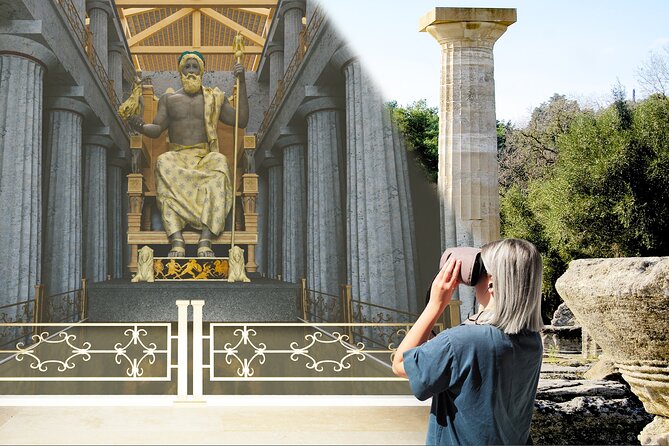
- Walk with GPS in your ear: audio directions trigger as you move, plus a virtual map to help you find your way.
- Zeus goes from statue fragments to full scale: you stand before a restored view of the Temple of Zeus.
- You’ll see the Olympic race moment: VR recreates athletes running inside the ancient stadium setting.
- Women’s games and the Olympic flame: Temple of Hera includes a ritual-style moment and lesser-known games for Hera.
- VR rental is only part of the budget: you still need to pay the site entrance ticket on the day.
Why this VR tour works better than just reading ruins
Ancient Olympia today is mostly broken stone. That’s part of the magic, but it can also feel like you’re staring at puzzle pieces with missing edges. The VR component fixes that problem fast.
As you move through the site, the glasses help rebuild what’s gone—statues, color, and scale—so you can look at the ruins and actually understand their original shape. I love how the experience targets your main question while you’re standing there: What would this have looked like in use?
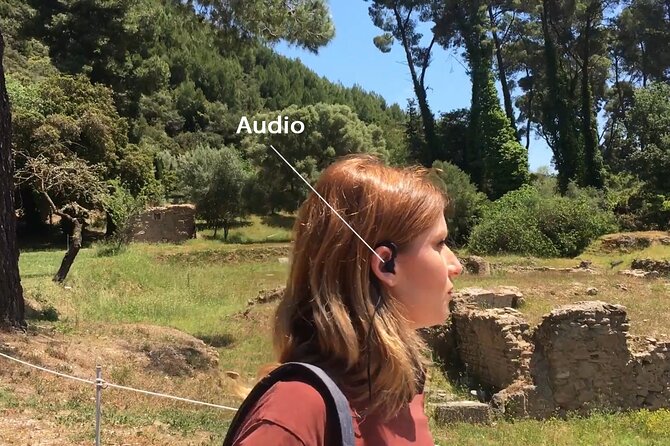
The second thing I really like is the way the audio guide and GPS-enabled map work together. Instead of being “tour-guide dependent,” you get directions as you walk. That means you can slow down when something catches your eye, then keep moving without feeling lost.
The one consideration: you’re still walking through an archaeological site. VR helps the mind, but it can’t eliminate the heat, sun, or uneven ground.
You can also read our reviews of more tours and experiences in Olympia.
Entering at Olympia back in time (and why the pick-up matters)
Your starting point is Olympia back in time, at Tsouřeka Θ., Archea Olimpia 270 65, Greece. This is where you meet the team, get a short orientation, and pick up the VR glasses.
There’s also technical support & information included, so if your headgear feels awkward or your audio isn’t behaving, you’re not stuck figuring it out alone. The whole process starts with a brief live demonstration (it’s short, but it sets you up for the rest of the walk).
Timing matters because the office is close to the archaeological area. One helpful detail: the office is described as about an 8-minute walk on foot from the archaeological site. In real life, it may take a bit longer depending on your pace and how you route yourself, but either way, it’s not a multi-bus transfer day.
Price and logistics: the VR is $31.13, the site ticket is extra
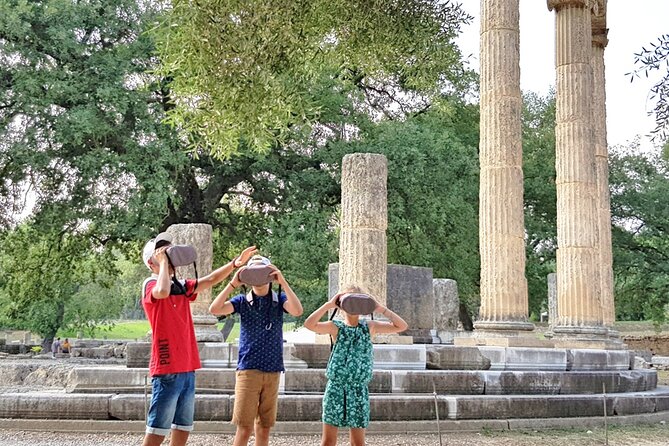
The tour price is $31.13 per person, and that covers the VR glasses, the audio guide, and the live demonstration. It’s also offered in English, and you’ll receive confirmation at booking.
What’s not included is the entry ticket to Olympia. The listed additional cost is €20.00 per person. The site entry can be free or discounted depending on age and where you live, and you’ll confirm that at the gate (for example, visitors from the EU under 25 and non-EU under 18 are noted as free in the provided info, and there’s mention of senior discounts for EU visitors).
Here’s how I think about value: if you’re the type who gets annoyed by ruins with no context, the VR rental pays for itself in understanding. You’re paying to turn “interesting but unclear” into “I get it.” If you already love reading signage and interpreting stone fragments, you might feel you could manage without VR—but most people find that VR saves a lot of mental guesswork.
A 2–3 hour plan: what you’ll do at each stop
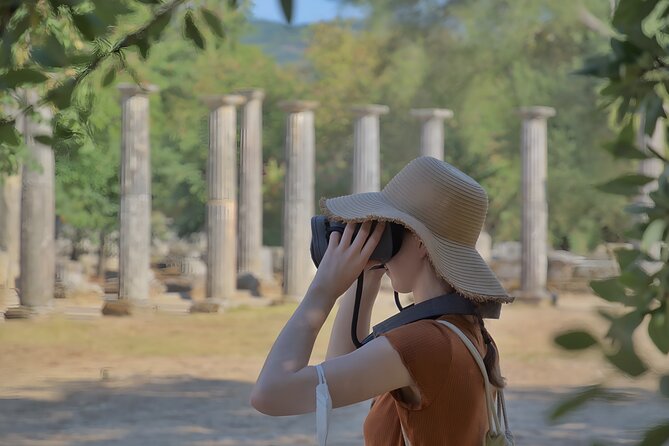
This is designed as a self-guided walk, but with structured “chapters” along the way. The total time is about 2 to 3 hours.
Stop 1: Olympia back in time (the quick demo)
You begin at Olympia back in time for a short demonstration. Expect it to be brief (around 4 minutes) and focused on getting the glasses and audio working as you move.
This is important because the tour isn’t just “put on the headset and wander.” You’re guided using GPS-enabled audio directions and a virtual map. The better you understand that setup early, the smoother the rest of the experience feels.
Stop 2: Temple of Zeus (stand before the restored legend)
Next comes the Temple of Zeus, where the VR experience takes you into the kind of scale you don’t get from ruins alone. You’re guided to a viewpoint where you can “stand” before the massive statue of Zeus—so tall it nearly reaches the ceiling in the VR recreation.
The VR here also focuses on restoration. Statues that are now broken or faded come back to life and appear in restored color, as they were roughly 2,000 years ago. This is one of the stops I’d prioritize because it answers a common Olympia problem: the ruins look smaller and stranger than they should, until you can see the original proportions.
Stop 3: Stadium at Olympia (watch the race moment)
Then you move to the ancient stadium setting for an Olympic race recreation. The VR “chapter” places you in the action: athletes running hard as spectators cheer, with the winner celebrating at the finish line.
This is where the tour becomes more than explanation. It turns Olympia from a static site into a place that had noise, emotion, and momentum. If you like sports history, you’ll get a lot out of this scene.
Stop 4: Temple of Hera (the flame and the lesser-known games)
At the Temple of Hera, the experience includes the Olympic Flame lighting ritual—presented as a powerful sacred moment. After that, VR shifts to a rarer angle on Olympia’s past: games held for women in honor of Goddess Hera.
Even if you’ve heard the name Olympia, the “games for women” element is the kind of detail that makes the whole trip feel more three-dimensional. It’s not only about what you expect; it’s about Olympia as a bigger cultural event than the ruins alone suggest.
Stop 5: Archaeological Site of Olympia (12 more monuments)
This is the longest single section—about 1 hour. You’ll move through the broader archaeological site and discover 12 additional monuments, each with its own story.
This is where you’ll most appreciate the GPS map and audio guidance. With ruins, you often don’t know what you’re looking at until someone explains it. Here, the glasses provide that context as you walk from stop to stop.
Stop 6: Return to Olympia back in time (VR drop-off)
You end back at Olympia back in time, where you drop off the VR glasses. The return is brief (around 2 minutes), but it’s critical to get your timing right.
There’s an explicit warning: returns between 13:30 and 15:00 are not available due to the working schedule. So if you’re tight on timing, plan your visit so you finish the site portion before that window.
The GPS virtual map and audio guide: what changes on the ground
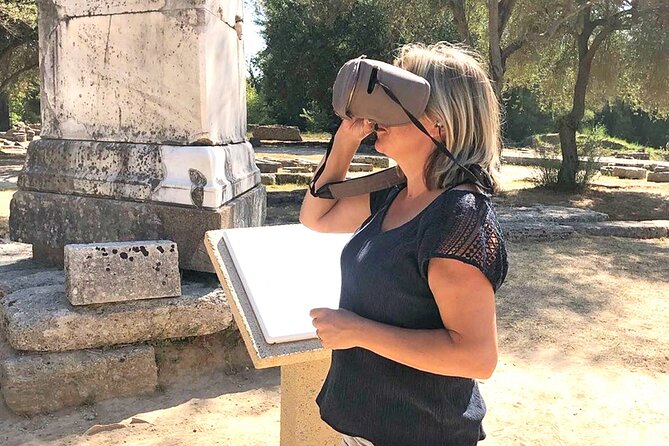
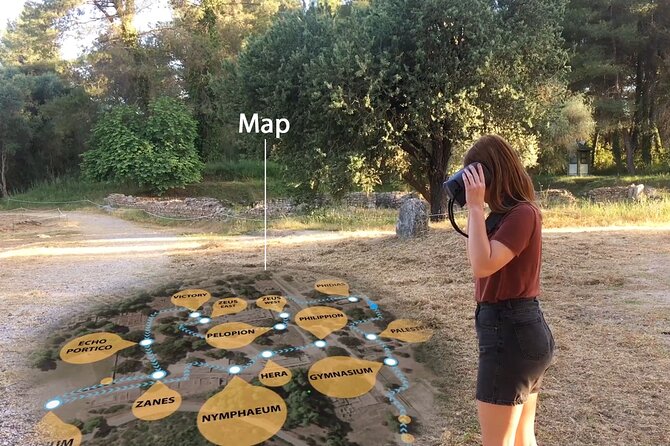
This is one of those tours where the “tech” is actually the point. The VR isn’t just pretty imagery; it’s tied to where you are.
As you walk, the GPS-enabled system triggers audio directions so you know what to look at next. That cuts down on the usual Olympia frustration: you arrive at ruins and think, okay… but what is this exact piece?
The audio is also part of how the VR feels alive. One review mentioned a British-sounding narration style, and that matches the general experience of an English audio guide that keeps you moving with a clear voice. Even if you’re not glued to every word, it helps to know you’re in the right spot at the right moment.
One practical note: navigation can be tricky if you’re directionally challenged. If you find yourself stopping to figure out which way to go, you’ll want to slow down early and follow the virtual map carefully rather than rushing through the middle.
What the walkthrough feels like in real life (and who should love it)
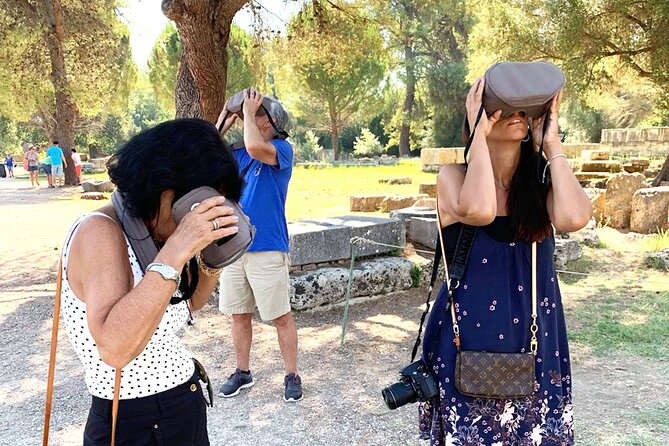
You’ll be on your feet. This tour includes walking between points and inside the archaeological area, so good shoes matter. One common theme is that the VR turns ruins into “places,” but you’re still outdoors and moving.
Families tend to do well here. There’s clear evidence that kids can enjoy the VR portion, and the interactive format makes it easier for younger travelers to stay interested when stone fragments might otherwise be a struggle. If you’re traveling with kids who don’t like headsets, you might choose to share rather than force the whole experience on one person.
Older adults can also manage it, because the experience is self-paced and guided through audio. Still, be realistic about stamina: you’re not on a short photo loop.
If your schedule is tight, I’d be careful. The mid-afternoon closure and the fact that the entrance ticket costs extra can make a “quick stop” day stressful. If you’re visiting from a cruise and only have a narrow window, aim for the earliest possible start.
Practical tips to make it smoother (especially if you’re on a cruise)
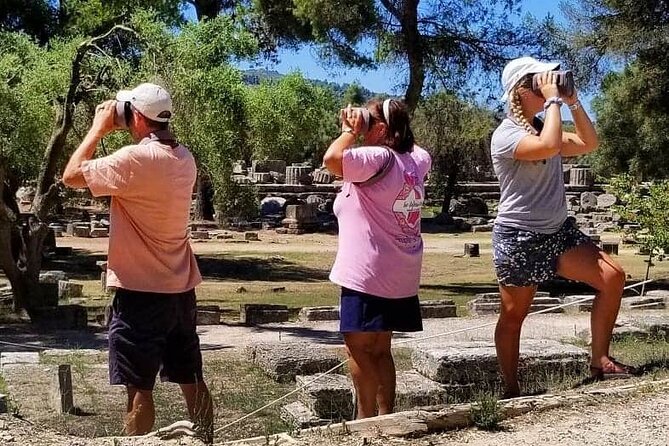
Here’s how to avoid the most common headaches.
- Start early: the office closure window (13:30 to 15:00) is real, so plan around it.
- Budget for the entrance ticket: €20.00 per person is listed, and you’ll pay it at the site.
- Give yourself extra time for walking: even though the office is close, you still need time to get from pick-up to the entrance and then complete the loop.
- Keep an eye on directions: the GPS virtual map helps, but if you’re the type who needs more visual cues, slow down when choosing paths.
- If you’re arriving from a port, arrive with a plan: there’s a strong hint in the feedback that transportation becomes harder later in the day. If you can, don’t gamble on late-day logistics.
One more small but smart move: when you pick up the glasses, use the demonstration time well. The better you understand how audio guidance works with the GPS, the less you’ll fumble around once you’re in the ruins.
Should you book Olympia: The Famous VR Glasses Tour?
Book it if you want Olympia to make sense quickly. If you’ve ever visited a ruin and felt like you were missing the “who/what/why,” these glasses supply the missing context. The VR chapters at Temple of Zeus, the stadium race moment, and the Temple of Hera flame and women’s games give you clear anchors for understanding.
Think twice if your day is tightly scheduled or you hate walking. You need site entry on top of the VR rental price, you’ll be outdoors, and the office return window matters. If you’re rushing—especially in the early afternoon—you may spend more time managing timing than enjoying the experience.
If you’re on the fence, I’d lean toward booking because this is one of the few ways to see beyond the current ruin shapes. VR here doesn’t replace the real site. It helps your brain reconstruct what’s missing, right where you stand.
FAQ
How long does the VR tour take?
It’s about 2 to 3 hours, depending on your pace.
What’s included in the $31.13 price?
The VR glasses, the audio guide, a live demonstration, and technical support & information are included.
Is the Olympia entrance ticket included?
No. Entry to Olympia is not included. An additional €20.00 per person is listed, with possible age-based free or discounted entry confirmed at the gate.
Where do I meet the tour?
You meet at Olympia back in time at Tsouřeka Θ., Archea Olimpia 270 65, Greece. The tour ends at the same place.
Is the tour offered in English?
Yes, it’s offered in English.
Does the tour use GPS or maps?
Yes. There’s a GPS-enabled virtual map and GPS-based audio directions as you walk around the site.
Are returns allowed all day?
No. Returns between 13:30 and 15:00 are not available due to the working schedule.
How many people can be on the tour?
There’s a maximum of 60 travelers.
Can I cancel if my plans change?
Yes, free cancellation is available up to 24 hours in advance for a full refund.