REVIEW · OLYMPIA
Olympia Archaeological Site & Museum E-Ticket with Audio Tour
Book on Viator →Operated by Clio Muse Tours · Bookable on Viator
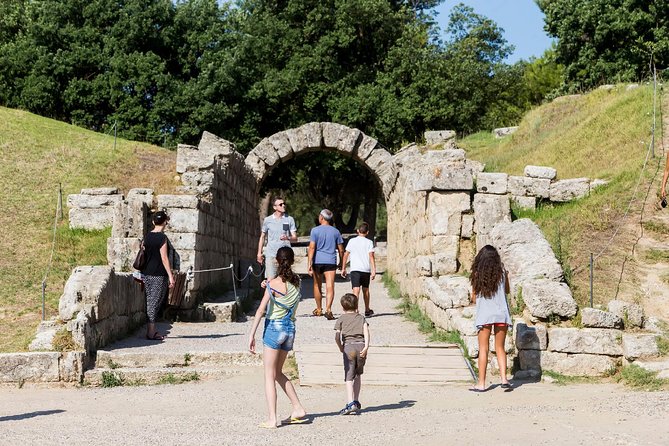
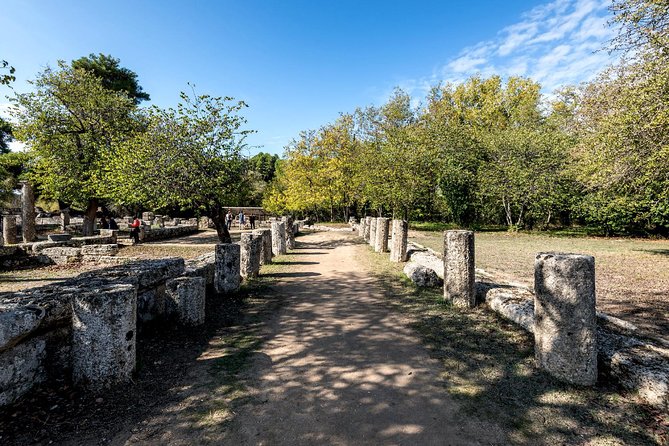
Olympia feels big, but the stories land fast. This e-ticket package adds a location-based audio tour to your visit, plus an on-screen site map so you can follow along at your own speed. You’ll hit the Ancient Gymnasium, Temple of Hera, Ancient Stadium, and the Temple of Zeus.
What I like most is that the audio is designed to help you make sense of what you’re physically standing in front of—so you’re not wandering blind. I also love that the content is available offline, with text, narration, and maps, which matters in Greece where mobile signal can be hit-or-miss.
The main downside is that this is a phone-first experience. If your device can’t run it, you don’t download in time, or the audio won’t open, you may lose the whole point of the tour.
In This Review
- Key things to know before you go
- Olympia on your terms: what this e-ticket audio tour really gives you
- Getting in: ticket time slots and what to double-check
- The audio tour setup: activation email, offline download, and a working headset
- Stop-by-stop: Ancient Gymnasium to Temple of Zeus in about 1.5 hours
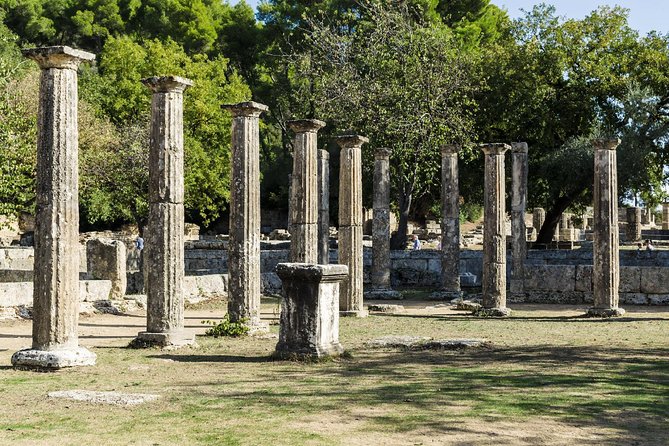
- Ancient Gymnasium: health, values, and how the site sets the tone
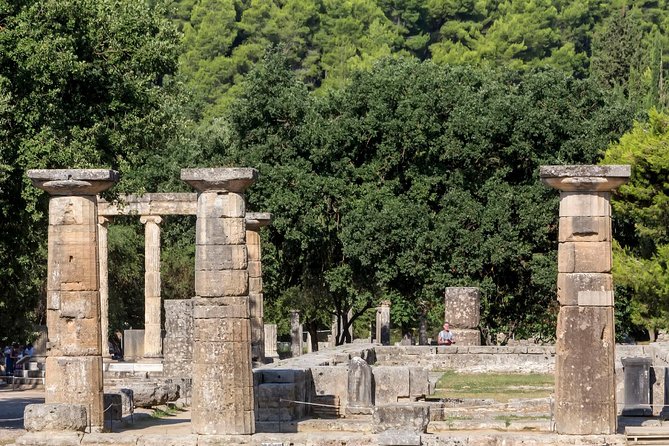
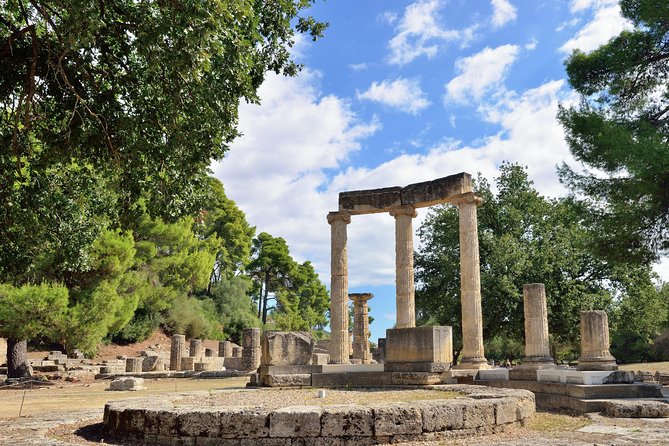
- Temple of Hera: the Heraean games and the Olympic fire connection
- Ancient Stadium: portico walkways and the feeling of standing where stories happened
- Temple of Zeus: gold-and-ivory statue legend, centaurs, and the games’ founding story
- The smartphone map and stop numbers: helpful, but not perfect
- Price and value: when $41.70 makes sense (and when it doesn’t)
- Who this is best for at Olympia
- Should you book the Olympia audio tour?
- FAQ
- Is the Olympia audio tour available in English?
- How long is the tour?
- Do I need a live guide?
- Does the tour include admission to Olympia?
- Can I use the audio tour offline?
- How do I access the audio tour?
- What do I need to listen to the audio?
- What phones are compatible?
- How much storage space do I need on my phone?
- Is it refundable?
Key things to know before you go
- Smartphone audio, stop by stop: You listen as you move through Olympia rather than reading from a brochure.
- Offline narration + maps: Download ahead so roaming charges and weak signal won’t wreck your plan.
- Four big highlights covered: Ancient Gymnasium, Temple of Hera, Ancient Stadium, and Temple of Zeus.
- No live guide: You’re in charge, which is great if you like freedom, but it means fewer on-the-spot explanations.
- Smartphone compatibility matters: Android and iOS versions are limited, and you need storage space.
- Map feedback is mixed: Some people found the map helpful; others said it didn’t guide them as well as expected.
Olympia on your terms: what this e-ticket audio tour really gives you
If you’ve ever visited Olympia and felt a little lost—huge stones, scattered ruins, and too many things to read—this setup is meant to fix that. The audio tour runs on your smartphone, and it’s built around the main stops of the site so you can connect the visuals with the stories.
The “value” here is simple: you’re paying for guidance without paying for a live guide. With a price of $41.70 per person and a duration of about 1 hour 30 minutes, you’re buying a structured route plus narration you can pause or replay. That’s often a sweet spot in Greek archaeological sites, where the best visits usually come from pacing rather than rushing.
Another smart perk is the offline design. The tour provides offline content—text, audio narration, and maps—so you can keep going even if mobile data disappears. If you hate the stress of roaming charges, you’ll appreciate this.
You can also read our reviews of more tours and experiences in Olympia.

Getting in: ticket time slots and what to double-check
This experience includes an entry ticket for Olympia with a time slot, and it’s delivered through an e-ticket. Still, there’s a small detail in the materials that can confuse first-time buyers: one part notes admission ticket not included. Since both statements exist, I’d treat it as a prompt to verify your confirmation email before you leave your hotel.
Practically, you’ll want to plan for the normal site entry time—plus a few extra minutes to get your phone ready. If you arrive and realize you haven’t downloaded the audio yet, you’ll be stuck. The instructions are clear that internet may be unavailable and the mobile signal may be weak, so download before you go.
You start at the Archaeological Site of Olympia (Archaia Olympia 270 65, Greece). The tour ends back at the meeting point. There’s no live guide and no additional meeting point provided, so your “check-in” is basically just arriving at the correct location for your scheduled entry.
The audio tour setup: activation email, offline download, and a working headset
This is not a QR-code-and-go situation in the moment. You receive an email from the local supplier with important audio instructions, including how to access and download your tour. Do yourself a favor and check your spam folder, because that’s where these activation emails sometimes land.
You’ll also want earphones. Headphones aren’t included, but the tour clearly expects you to listen on your phone. If you normally travel with basic earbuds, you’re all set.
Storage is another real-world factor. You need about 100–150 MB free on your phone. If you’re tight on storage, clear space before you download, or you’ll run into errors that are hard to fix while standing among the ruins.
Finally, consider device compatibility. The audio tour needs an Android version 5.0 or later or an iOS device that meets the stated requirements (it won’t work on older iPhones/iPads or Windows phones). If you’re using an older handset, this can become the deal-breaker.
Stop-by-stop: Ancient Gymnasium to Temple of Zeus in about 1.5 hours
The tour is structured around four major areas inside Olympia. Think of it as a narrative route: you start with what the Greeks valued, then you move into female and male athletic traditions, and you end with the myths and symbolism tied to Zeus.
Here’s what you can expect at each stop, and how that plays for a self-guided visit.
Ancient Gymnasium: health, values, and how the site sets the tone
Your tour begins at the Ancient Gymnasium, where you’ll learn about ancient Greek values and their approach to health and wellbeing. Even if you already know the broad idea of the Greeks as athletes, this kind of opening matters because it frames what you’re about to see: sport wasn’t just entertainment—it was identity.
For a self-guided audio experience, this start is useful. It gives you context early, before you’re staring at stones and wondering what’s important. You’ll likely find it easier to follow the story once you understand why this place mattered.
A small practical note: since it’s a smartphone tour, you’ll want to keep your screen brightness manageable so you can read any on-screen elements tied to the audio stops.
Temple of Hera: the Heraean games and the Olympic fire connection
Next comes the Temple of Hera. You’ll hear about the Heraean games, described as an ancient female running event lost in time. That’s a compelling angle because it adds a human-scale detail to the ruins—this wasn’t only about men training for glory.
You’ll also get the famous connection that the Olympic fire is lit here every four years. This is one of those facts that makes the site feel less like a museum display and more like a living tradition.
If you’re the type of visitor who likes stories that shift your perspective, this stop is a highlight. It gives Olympia an extra layer beyond big-name monuments.
Ancient Stadium: portico walkways and the feeling of standing where stories happened
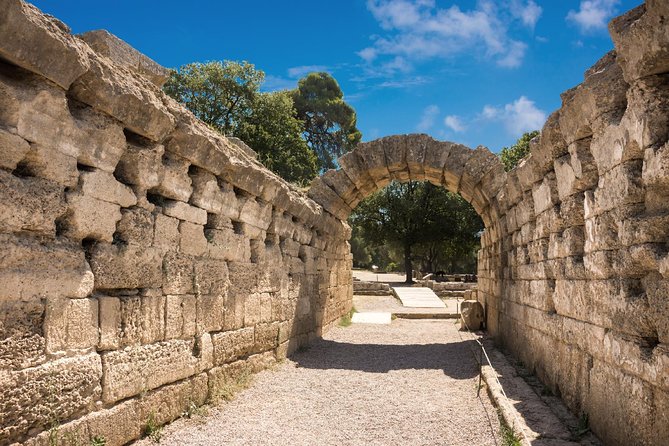
Then you reach the Ancient Stadium, which is a headline moment for many visitors. You’ll move through the monumental portico, called the Krypte, which the tour describes as crossed by countless ancient youths dreaming of glory. The name itself is memorable, but the point is the mental picture: people weren’t just “watching”—they were participating in the idea of becoming someone.
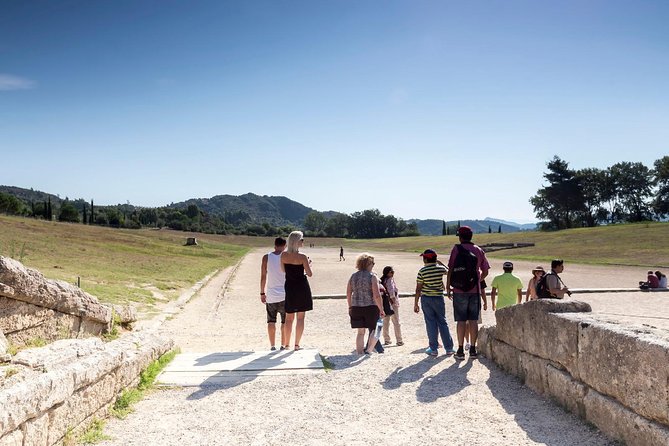
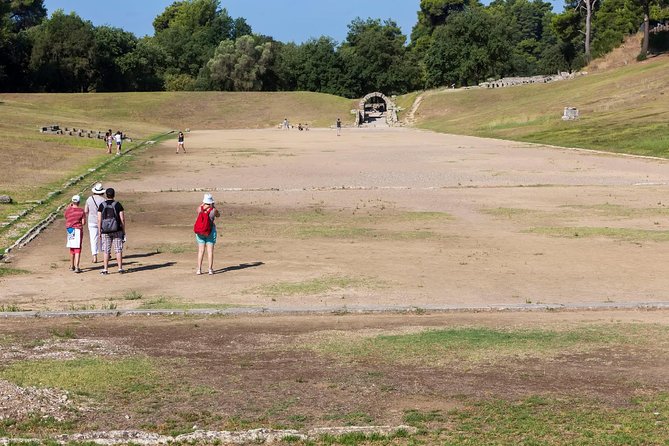
After that, you step into the celebrated stadium area and listen to stories tied to athletic events, both real and mythical. That balance between fact and myth is exactly what helps you stay engaged in a ruin setting. Without narration, the stadium is easy to appreciate as architecture; with narration, it turns into a stage.
One caution: the tour is stop-number-based and relies on a digital map. If you don’t line up your audio stop number with where you are standing, it can feel like the audio is ahead of you. That mismatch is mentioned as a drawback by some users, and the map is the tool meant to prevent it.
Temple of Zeus: gold-and-ivory statue legend, centaurs, and the games’ founding story
Finally, you get the imposing Temple of Zeus. The tour includes the legend of the gold and ivory statue of Zeus—ranked among the Seven Wonders of the ancient world. Even if you’ve heard the “Seven Wonders” line before, having it tied to the actual temple ruins helps it feel less like trivia.
You’ll also hear stories about Centaurs and Lapiths, plus the founding myth of the Olympic games. That last piece is especially valuable on a self-guided visit because it gives you a reason to care about the athletes and the rituals you saw earlier.
The materials suggest about 50 minutes for the Zeus segment, but your pace will vary. If you like to linger for photos, factor in extra time. If you keep it brisk, you can likely stay within the approximate 1 hour 30 minute duration.
The smartphone map and stop numbers: helpful, but not perfect
The tour includes a digital map of the archaeological site. In theory, this should make it easy to match audio chapters to physical locations. The strongest praise here is that people found the experience “location enabled,” with the audio getting close and talking as you move around.
But there’s also feedback that the map didn’t always guide the route well, and some visitors weren’t able to match up what they saw with what they heard. If you want the cleanest experience, download the tour and check that you can see the map and stop numbering before you enter.
My practical advice: when you start a new chapter, look at the map and confirm you’re in the right zone. If the audio sounds like it’s describing a different structure, pause, check your position, and restart that stop.
Price and value: when $41.70 makes sense (and when it doesn’t)
At $41.70 per person, you’re paying for the audio tour plus the included ticket with time slot (with the note to confirm ticket details in your email). You’re also paying for offline capability and a structured route that removes the need to hire a guide.
This tends to be good value if you:
- Prefer self-guided travel and want to move at your own speed.
- Like explanatory narration when you’re standing in the right place.
- Want to avoid the higher cost of a live guide.
It may be less ideal if you:
- Expect the audio app to work perfectly without any prep (it depends on phone compatibility and correct download).
- Want someone live to correct you if you drift off the route.
- Don’t enjoy long stretches of names, terms, and information without much emotional storytelling. One criticism described the narration as monotonous and name-heavy.
In other words, this is best as a tool for focus, not as a substitute for every kind of human interpretation.
Who this is best for at Olympia
This audio tour shines for independent visitors. No meeting point drama. No scheduling a guide. Just your phone, your earphones, and a route through Olympia’s core highlights.
It also fits well if you’re traveling with limited time. The duration is about 1 hour 30 minutes, which is long enough to feel satisfying but short enough to combine with other Olympia plans.
On the other hand, if your phone is older or your storage is tight, plan extra time for download prep. Tech friction is the biggest real-world risk with this kind of product.
Should you book the Olympia audio tour?
Book it if you want a structured, self-guided way to see the Ancient Stadium, Temple of Zeus, and Temple of Hera, and you’re comfortable using your phone as your guide. The best moments come from the location-based narration and the offline maps that help you keep moving without signal stress.
Skip it—or at least be cautious—if you’re not willing to troubleshoot. This tour depends on a compatible smartphone, enough storage, a successful activation, and properly downloaded offline content. If that sounds like too much pressure, a live guide might be the calmer choice.
FAQ
Is the Olympia audio tour available in English?
Yes. The tour is offered in English.
How long is the tour?
It’s about 1 hour 30 minutes (approximately).
Do I need a live guide?
No. This is a self-guided audio tour on your smartphone, with no live guide.
Does the tour include admission to Olympia?
The included details say entry ticket for Olympia with a time slot is included. One note also says admission ticket not included for a portion, so check your email/confirmation to confirm what’s tied to your booking.
Can I use the audio tour offline?
Yes. The tour provides offline content, including text, audio narration, and maps.
How do I access the audio tour?
You’ll receive an email from the local supplier with important audio instructions, including an activation link. Be sure to check your spam folder.
What do I need to listen to the audio?
You’ll need a smartphone and earphones/headphones (earphones are not included). The tour is accessed through your phone.
What phones are compatible?
Android 5.0 and later and compatible iOS devices are required. It is not compatible with Windows Phones, and it won’t work on certain older iPhone/iPad models listed in the details.
How much storage space do I need on my phone?
You’ll need about 100–150 MB of storage space.
Is it refundable?
It is non-refundable once activated.