REVIEW · HELSINGOR
Helsingør Castle and Historic City Self-Guided Walking Tour
Book on Viator →Operated by VoiceMap Audio Tours · Bookable on Viator
Hamlet leads your walk in Helsingør. This self-guided GPS audio route pairs Kronborg Castle’s Hamlet legend with offline maps and listening so you can wander without signal. The trade-off is that it does not function as a full narrated tour of Kronborg’s interior rooms.
At $11.99 and about 2 to 2.5 hours, it’s a practical way to string together waterfront views, medieval streets, and shipbuilding memory without rushing. You finish at Brostræde Ice Cream, a 100-year-old stop that gives your legs a reward right by Axeltorv.
In This Review
- Key things I’d circle before you go
- Where this Helsingør walk starts (and how long it really takes)
- Kronborg Castle: what you’ll get at the UNESCO gates
- Svea Column and the Denmark–Sweden connection
- Culture Yard + M/S Maritime Museum: the underground history stop
- St. Mary’s Priory and Saint Olaf’s Church: quiet cloister, wealth in stone
- Harbor Promenade: where the town’s water story becomes visible
- Gl Færgestræde and the Shipyard Museum: old street textures and workers’ memory
- The He statue and a mural that explains the Middle Ages
- Ending with Brostræde Ice Cream: a practical finale in Axeltorv
- How the VoiceMap self-guided GPS audio works on the ground
- Price and value: is $11.99 a good deal for this route?
- Should you book this Helsingør walking tour?
- FAQ
- Is this walking tour in English?
- How long is the Helsingør Castle and Historic City self-guided walking tour?
- Where does the tour start and where does it end?
- Do I need to bring headphones and a smartphone?
- Are museum entry fees included?
- Can I cancel for free?
Key things I’d circle before you go
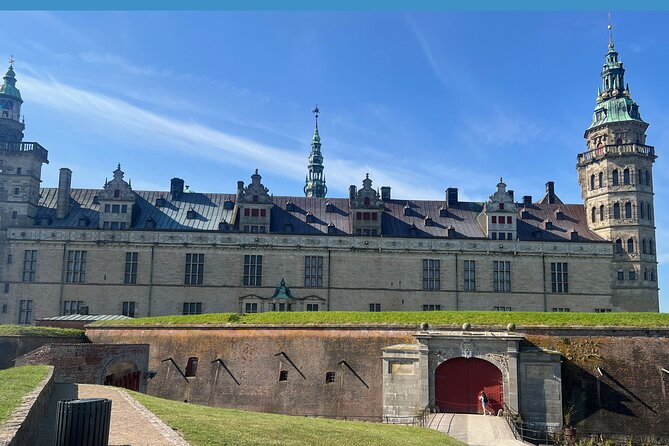
- Kronborg Castle is your first big moment, with Hamlet connections and tips for what to notice outside.
- Culture Yard and the underground M/S Maritime Museum are built right into the walk.
- Harbor Promenade + churches + Priory cloister make the route feel like a real town stroll, not just sights on a list.
- Offline audio, maps, and geodata let you keep going even if your phone struggles.
- Gl Færgestræde and its potato-sized paving stones add a very old-street feel.
- You end with Brostræde Ice Cream in the center of town, so you don’t have to plan your finale.
Where this Helsingør walk starts (and how long it really takes)

I like self-guided routes when they do two things well: they help you get your bearings fast, and they keep you from feeling lost when you stop to read or take a photo. This one starts at Helsingør Station3000, then guides you through the medieval core and down toward the water before bringing you back to town for ice cream.
The timing is listed as about 2 hours to 2 hours 30 minutes. In real life, you’ll stretch it if you pause for museum time (entry fees aren’t included) or if you’re the type to enjoy the harbor views from multiple angles. Plan for comfortable walking shoes and a little patience at crossings, because Helsingør’s center is designed for people, not speed.
One extra perk that matters on a trip: you get unlimited, lifetime use of the tour on either side of your booking date. That means you can replay parts at home, or use the same audio later when you feel like returning to a spot.
Kronborg Castle: what you’ll get at the UNESCO gates
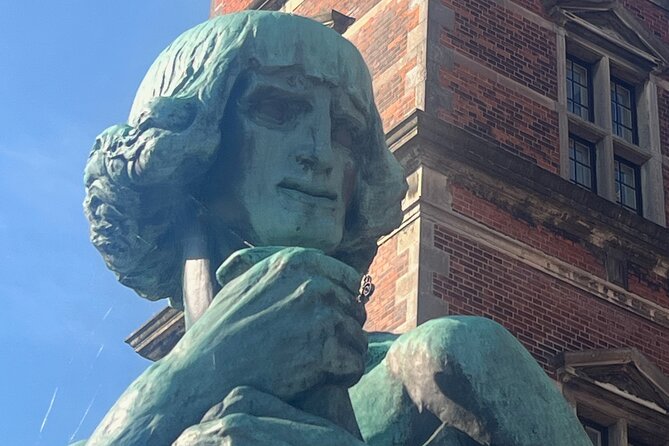
Kronborg Castle is the headline in Helsingør, and this walk treats it that way. You start right at the castle grounds, a UNESCO World Heritage site and the setting tied to Shakespeare’s Hamlet. The route points you toward the seaside stone ramparts—famously connected to the story of Hamlet’s ghostly father—so you can connect the words you’ve heard with the actual coastline.
Here’s the practical expectation to set upfront: the audio is designed as a self-guided town walk, not a narrated tour of every interior room. So if you’re hoping for a step-by-step audio guide inside the castle, you should adjust your mindset. You may see tips for what’s worth looking for, and you can choose whether to pay entry to go inside—but the tour itself focuses on the walk experience.
Still, it’s a strong start because you get immediate context. You’re reminded that the castle wasn’t just a stage for fiction. The story includes the real kings and queens who resided here, plus cues about the castle’s Renaissance architecture. Even from the outside, those notes help you read the building better instead of just photographing it and moving on.
Tip for your photos: before you step away, take a minute to frame the coastline lines and the ramparts. The castle looks different when you aim for the water rather than the main facade.
Svea Column and the Denmark–Sweden connection
After Kronborg, you hit Svea Column, a monument tied to historical connections between Denmark and Sweden. This isn’t the kind of stop where you need a long stay. What it gives you is a thread: Helsingør sits at a crossroads of water routes, politics, and cultural exchange.
I like these smaller monuments on a route because they slow you down just enough to understand why the big sights matter. Kronborg is about power and drama. Svea Column helps you see the wider regional story without making the walk feel like a textbook.
Culture Yard + M/S Maritime Museum: the underground history stop
Next you reach Culture Yard, a modern cultural complex that includes the M/S Maritime Museum. The museum’s standout feature is its underground design, which you’ll feel as soon as you arrive. The audio cues set you up to notice how the space supports the subject: Denmark’s maritime past.
This museum is included in the walk, but museum entry fees aren’t. That means you’ll need to decide on the spot whether you want to pay for the full indoor experience. If you’re short on time or traveling on a tight schedule, you can still use the stop as a landmark and keep moving—but you’ll miss the heart of what makes the route special.
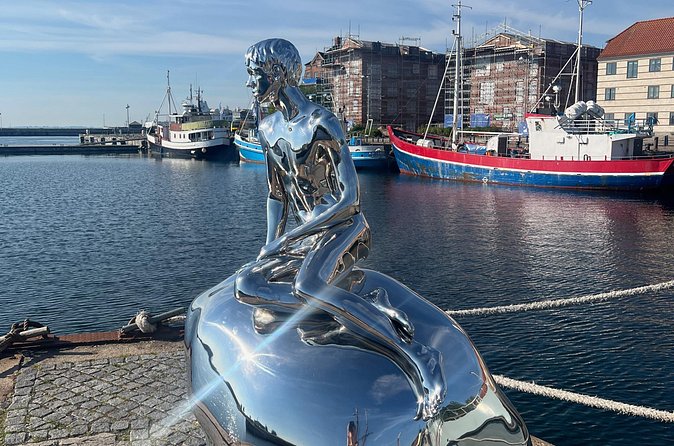
One detail worth planning around: nearby you’ll find the “He” statue, described as a male counterpart to Copenhagen’s Little Mermaid. It’s part of a newer wave of public art, created by artists Elmgreen and Dragset. I like pairing this kind of modern sculpture with maritime museum themes, because it makes Helsingør feel current instead of stuck in the past.
St. Mary’s Priory and Saint Olaf’s Church: quiet cloister, wealth in stone
As the route continues, you pass St. Mary’s Church and Priory. The big draw here is the quiet cloister, noted as being even older than Kronborg Castle. Even if you only take a brief look, that age reference lands. It reframes Helsingør: yes, Kronborg gets the spotlight, but the religious life here goes back farther than you might expect.
Then you pass Saint Olaf’s Church, which is described as a local cathedral. The route connects it to the wealth Helsingør collected from ships passing by Kronborg Castle. That’s a key idea for understanding the town: money didn’t just appear. It traveled through the Sound, and the churches are where that prosperity shows up in architecture and story.
What I appreciate is that these stops don’t feel random. The audio ties them into the same bigger theme—Helsingør as a port town where different kinds of power (royal, religious, economic) overlap.
Practical note: churches can be calm and sometimes dim inside. If you’re going to read signage, give yourself time and avoid rushing.
Harbor Promenade: where the town’s water story becomes visible

The Helsingør Harbor Promenade is your breathing space. You’ll walk along the water and get views over the harbor, with the maritime heritage feeling more literal than at any museum caption.
This section is also where your self-guided format really pays off. If the wind is annoying, you can shorten the promenade. If you see something interesting across the water, you can pause and take your time. With an audio walk, you control the pace.
I also like that the harbor segment breaks the walking rhythm after churches and monuments. Your brain has time to reset, and by the time you return toward the older streets, you’re ready to notice details instead of just covering ground.
Gl Færgestræde and the Shipyard Museum: old street textures and workers’ memory
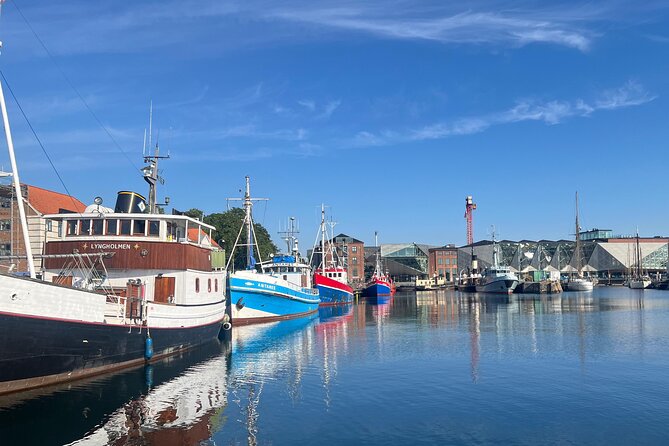
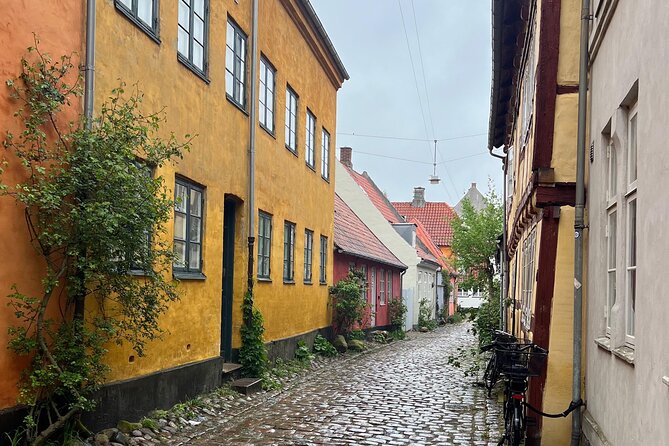
One of the coolest “small detail” stops is Gl Færgestræde, described as a medieval street preserved as it might have looked in the 1700s. The route adds a very specific tactile detail: the paving stones are described as being the size of potatoes. That’s exactly the kind of info that makes you slow down and look down, not just ahead.
From there, you reach the Shipyard Museum, created by former shipyard workers. That origin matters. The museum is positioned around oral histories, tools, and models of the giant ocean-going ships built in Helsingør. Instead of treating shipbuilding as a distant industrial topic, it becomes personal and practical.
Just like the other museum stop, entry fees aren’t included. But even if you don’t go inside, the route sets you up to understand why this part of town deserves attention. Helsingør wasn’t only a stage for royalty. It was also a workshop town, and the shipyards helped shape livelihoods and identities.
Tip: if you plan to visit the Shipyard Museum, set aside the extra time. Model viewing and listening to stories can take longer than you’d expect.
The He statue and a mural that explains the Middle Ages
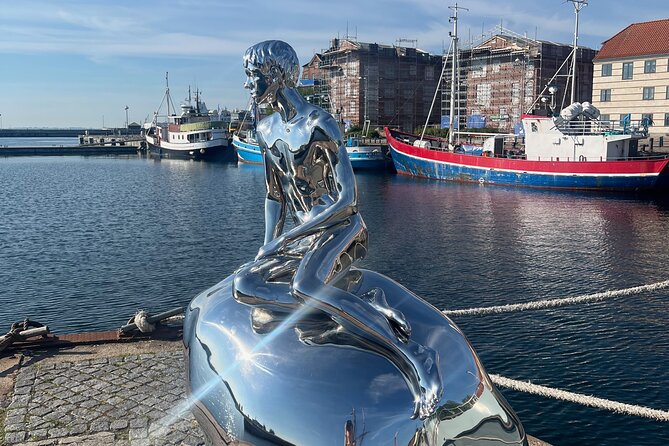
Between the maritime focus and the older streets, you’ll also see the “He” statue. Because it’s described as a male counterpart to Copenhagen’s Little Mermaid, it’s a fun moment of comparison: same idea, different tone. It’s also a modern reminder that public art in Denmark often carries conversation, not just decoration.
Later, the walk includes a colorful mural depicting the Middle Ages and the Sound Dues. The point of the mural is that it translates a complicated past into images you can read quickly while you’re walking. It’s a good stop for fatigue too—if your legs are tired, you can still get value by standing still and letting the visuals do the work.
Ending with Brostræde Ice Cream: a practical finale in Axeltorv
The tour ends at Brostræde Ice Cream on Brostræde 2G, st, in Helsingør. This is a 100-year-old establishment, and the route encourages you to enjoy your dessert in Axeltorv, the town square.
I like an ending like this because it turns your last 10 minutes into a reward instead of a scramble to find a snack. If you’ve timed the walk well, your body will be ready for a break, and you’ll be in the center of town rather than stranded near a parking lot.
The listed hours for the shop are shown as open essentially around the clock. That gives you flexibility if you end up stretching the walk.
How the VoiceMap self-guided GPS audio works on the ground
This is a private self-guided experience. Only your group participates, and the tour is described as being usable like an audiobook through the virtual playback option. That matters if you want to get familiar with the route before you even arrive in Helsingør.
You also get offline access to audio, maps, and geodata, plus directions to the starting point. In plain terms: you can download or use the app so you don’t have to fight with weak signal at waterfront edges.
What you must bring:
- a smartphone
- your own headphones
Because headphones and smartphone aren’t included, this is an easy thing to forget—then you lose audio at the exact moment you most want it.
My advice: test your audio volume before you start walking. Also download for offline use before you leave for the day, not after you’re already near the harbor.
Price and value: is $11.99 a good deal for this route?
At $11.99 per person, you’re paying for the self-guided audio package plus offline access and route flexibility—not for museum tickets. The good value is that you get a structured walk that can still stay personal. If you move slowly, stop for photos, or spend time at a church or museum, the tour won’t suddenly end because someone else is waiting.
The biggest value win for many people is the combination of:
- major anchor sight at Kronborg
- maritime museum stop via Culture Yard
- harbor promenade views
- shipyard storytelling through the Shipyard Museum
- a finish at a classic ice cream shop
If you’re the type who likes to see a few big things plus a handful of smaller, meaningful stops, the price matches the time you’ll spend. If you want only Kronborg and nothing else, you may feel like you’re paying for a broader walking route than you needed.
Should you book this Helsingør walking tour?
I think it’s a smart booking if you want a self-paced introduction to Helsingør that connects landmarks into one story—royal drama at Kronborg, maritime meaning at Culture Yard and the Maritime Museum, and local character along the harbor and medieval street.
You might skip or hesitate if your main goal is a full guided narration inside Kronborg Castle. This format is built to guide a town walk, so you may want to pair it with your own choices about paid interior entry.
If you like planning light, walking at your own speed, and using offline audio to keep the day flowing, this one is a solid value for the price. Finish with ice cream in Axeltorv, and you’ll leave Helsingør with the feeling that you actually spent time in the town—not just checked off a site.
FAQ
Is this walking tour in English?
Yes. The experience is offered in English.
How long is the Helsingør Castle and Historic City self-guided walking tour?
It’s listed as about 2 hours to 2 hours 30 minutes.
Where does the tour start and where does it end?
It starts at Helsingør Station3000, Denmark, and ends at Brostræde Ice Cream at Brostræde 2G, st, 3000 Helsingør, Denmark.
Do I need to bring headphones and a smartphone?
Yes. The tour requires you to bring your own smartphone and headphones.
Are museum entry fees included?
No. Entry fees to museum or attractions mentioned en route are not included.
Can I cancel for free?
Yes. Free cancellation is available if you cancel up to 24 hours in advance of the experience start time.