REVIEW · HONG KONG SAR
Hong Kong Self-Guided Audio Tour
Book on Viator →Operated by Uvamai Niche Tourism · Bookable on Viator
Hong Kong sounds better when you control the pace. I like the low cost for a full route through 15 major sights, and I also like that the audio works before, during, or after you visit so you can plan smarter. One thing to watch: several big-ticket stops include separate admission, so you’ll want to budget beyond the $9.
This is built for independent pacing, with start and end times that fit your schedule within 72 hours, plus access links that stay valid longer. The audio is available online or offline, in multiple languages, and you don’t need a tracking app.
In This Review
- Key points before you go
- How this Hong Kong audio tour actually fits your day
- Price and value: $9 for 15 stops, plus a few paid add-ons
- Your audio toolkit: links, map, and offline listening
- Start and finish anywhere: the 72-hour window and flexible pacing
- Stop-by-stop: Kowloon side sights that make a strong first loop
- Stop 1: Victoria Harbour
- Stop 2: Kowloon Park
- Stop 3: Avenue of the Stars
- Stop 4: Tsim Sha Tsui Promenade
- Hong Kong Island mood shift: shopping, parks, and the climb to The Peak
- Stop 5: Causeway Bay
- Stop 6: Hong Kong Park
- Stop 7: The Peak Tram
- Stop 8: Victoria Peak (The Peak)
- Quiet refuge on the outskirts: Tang-style gardens to wooden-nail-free temples
- Stop 9: Nan Lian Garden
- Stop 10: Chi Lin Nunnery
- Stop 11: Ten Thousand Buddhas Monastery (Man Fat Sze)
- Lantau Island: two religious stops plus Big Buddha and the cable car choice
- Stop 13: Po Lin (Precious Lotus) Monastery
- Stop 14: Tian Tan Buddha (Big Buddha)
- Stop 15: Ngong Ping 360
- Where Hong Kong Disneyland fits: optional, ticketed, and very self-guided friendly
- Stop 12: Hong Kong Disneyland
- Messaging service and support: small help, big comfort
- Best ways to use the audio: planning ahead without overplanning
- Who should book this Hong Kong audio tour
- Should you book this Hong Kong self-guided audio tour?
- FAQ
- How much does the Hong Kong Self-Guided Audio Tour cost?
- How long is the tour?
- Can I start and end whenever I want?
- Do I need to download an app or use tracking?
- Are attraction entry fees included?
- Is it refundable?
Key points before you go
- 15 attractions, one simple path: A suggested route that you can follow—or pick and choose—at your own speed.
- Audio on any device: Listen online or take it offline; no special app download needed.
- Interactive Google map: Tap each stop to jump to that attraction’s audio guide.
- Skip-and-switch flexibility: You can split the tour across multiple days and keep exploring.
- Some stops cost extra: Peak Tram, Disneyland, and Ngong Ping 360 require separate tickets.
- Message support included: If something’s unclear, you can request more info through the service.
How this Hong Kong audio tour actually fits your day
A guided tour can be fun, but it also locks you into someone else’s timing. This self-guided Hong Kong audio tour is the opposite: you walk when you want, linger when something grabs you, and skip what doesn’t. At around 3 hours if you follow the order, it’s a practical way to get a strong first pass at Hong Kong without feeling rushed.
I like the design logic here. The itinerary isn’t just a list of places—it’s set up like a chain you can run, with short “listen and look” segments. Each stop is roughly 10 minutes of audio, which is long enough to pick up context without forcing you to sit still.
The other big value is control over your listening. You can access the audio before you start (to get your bearings), while you’re there (to understand what you’re seeing), or after (to fill in gaps). And yes, you can do it on any device—no location-tracking app needed. That matters in a city where it’s easy to burn time juggling battery life, data, and dead-end navigation.
Price and value: $9 for 15 stops, plus a few paid add-ons
At $9 per person, this is priced like a low-friction “support your planning” tool rather than a full-service tour. You’re not paying for a guide’s time. You’re paying for interpretation: short, targeted audio at each stop, plus a map that links everything together.
Here’s how I’d judge the value in real terms:
- Many stops are free (parks, promenades, temples, viewpoints you can walk to).
- A handful are not included and may require entry tickets: Victoria Harbour (listed as not included), The Peak Tram, Hong Kong Disneyland, and Ngong Ping 360.
- Even with those add-ons, paying for audio plus a map can still be cheaper than a guided sightseeing package when you only want a few “must-see” paid attractions.
So the smart move is budgeting like this: treat the $9 as the cost of explanation and navigation. Then add whatever ticketed experiences you choose from the route.
Your audio toolkit: links, map, and offline listening
You’ll get an email before your starting time with two links: one for the audio and one for the interactive map. The audio link points to a secure SoundCloud web link. From there, you can play individual attraction guides or the whole tour playlist.
For navigation, the map link is a Google My Maps view with an interactive point for each stop. When you click a stop on the map, it corresponds to that attraction and the audio guide.
Three practical tips if you want this to run smoothly:
- Listen in small bites. Ten minutes per stop means you can start audio before you reach the exact spot, then cut it off if you’re already getting the scene.
- Plan with the full playlist once. The whole route audio is useful as a “preview,” so you know what to prioritize when you get there.
- Use offline if signal is spotty. The tour explicitly supports offline listening, which helps if you’re hopping between waterfront areas and hills.
Also, the tour is private in the sense that it’s set up for your group only. That usually means less awkward coordination than group tours—though there’s still no live guide voice, since this is fully self-guided.
Start and finish anywhere: the 72-hour window and flexible pacing
The tour is designed so you don’t have to show up at one fixed time like a bus tour. You can start and end within a 72-hour period. The access links are valid for up to 6 days, which gives you room to test audio, map out the route, then execute on your schedule.
That flexibility is helpful in Hong Kong because the “perfect day” often depends on weather and energy. If clouds roll in over The Peak, for example, you can swap order. If you want more time in temples or parks, you can do it without feeling like you’re falling behind.
It’s also clearly built for “real life.” You can take breaks, spend extra time at your favorite stops, and even split the tour across multiple days.
Stop-by-stop: Kowloon side sights that make a strong first loop
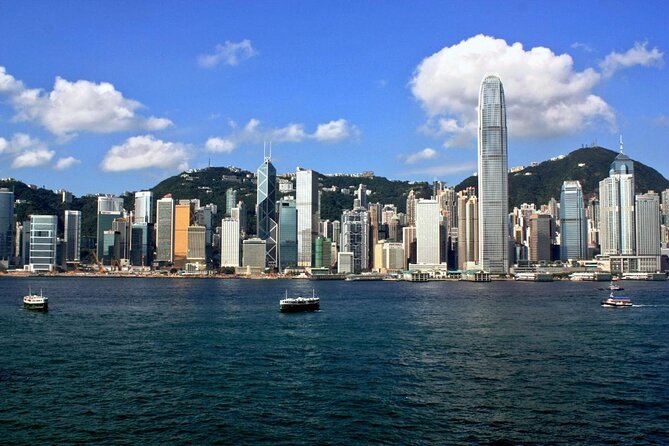
Your route starts at Victoria Harbour, then moves through Kowloon’s waterfront and nearby neighborhoods. If you’re new to the city, this is a smart way to anchor your visit: you get big-picture context early, then you walk the storyline through film, parks, and promenade views.
Stop 1: Victoria Harbour
This is framed as the city’s heart—going from fishing village roots to a global financial hub. Even if you’re just viewing the water, the audio is meant to give you the “why it matters” story so it doesn’t become just a pretty backdrop.
Practical note: Victoria Harbour is listed as having admission ticket not included, so you may need a paid option depending on what you choose to do here.
Stop 2: Kowloon Park
This urban park is described as an oasis in the Tsim Sha Tsui area, and the audio focuses on its transformation—from a military barracks to a public park. Parks like this are where Hong Kong’s old layers show up quietly, without turning into a museum day.
Stop 3: Avenue of the Stars
If you like pop culture or just want something easy to walk, this stop gives context to Hong Kong cinema and its influence. It’s a tribute route tied to film stars, so it’s naturally short and photo-friendly.
Stop 4: Tsim Sha Tsui Promenade
This waterfront promenade is set up as the view-side companion to Avenue of the Stars. The audio angle is about how the promenade fits into Hong Kong’s urban development—so it complements the harbor stop instead of repeating it.
When I plan routes like this, I usually group waterfront walking together to avoid backtracking. This sequence does that for you.
Hong Kong Island mood shift: shopping, parks, and the climb to The Peak
After Kowloon, your route heads toward Causeway Bay, then toward Hong Kong Park and The Peak. This part of the day is about changing pace: moving from waterfront and film-history walks into city streets and finally up toward a big viewpoint.
Stop 5: Causeway Bay
This is one of Hong Kong’s busiest shopping districts. The audio covers the shift from a quieter residential area into a commercial center. If you’ve only seen Hong Kong through photos, this is the reality check: the city runs on foot traffic and fast decisions.
Stop 6: Hong Kong Park
Here, you trade the shopping energy for an urban park that mixes natural elements and modern design. The audio mentions features like a tea house and an aviary, which gives you a “pause button” when you’re on your feet all day.
Stop 7: The Peak Tram
This stop is special for two reasons: it’s one of the world’s oldest and most famous funicular railways, and the audio covers history and engineering dating back to 1888. It’s also listed as admission ticket not included, so treat this as one of the paid “anchor experiences” in the itinerary.
Stop 8: Victoria Peak (The Peak)
At the top, the audio frames The Peak as moving from an exclusive colonial enclave to a must-visit destination. Even if you only spend a short time at the viewpoint area, that story helps you understand why it became famous.
Quiet refuge on the outskirts: Tang-style gardens to wooden-nail-free temples
Once you leave the “city view” phase behind, the route becomes slower and more contemplative. The garden and temple stops are all free on this route, which makes this portion of your day feel like high value.
Stop 9: Nan Lian Garden
This is presented as a meticulously landscaped Chinese garden with Tang dynasty-style architecture and classical garden-design principles. Gardens are ideal for audio because you can look around while the guide explains why the layout matters.
Stop 10: Chi Lin Nunnery
This temple complex is described as a tranquil stop amid urban motion. One standout detail in the audio angle: the wooden architecture is built without a single nail. That’s the kind of fact you’ll actually remember when you see the structure.
Stop 11: Ten Thousand Buddhas Monastery (Man Fat Sze)
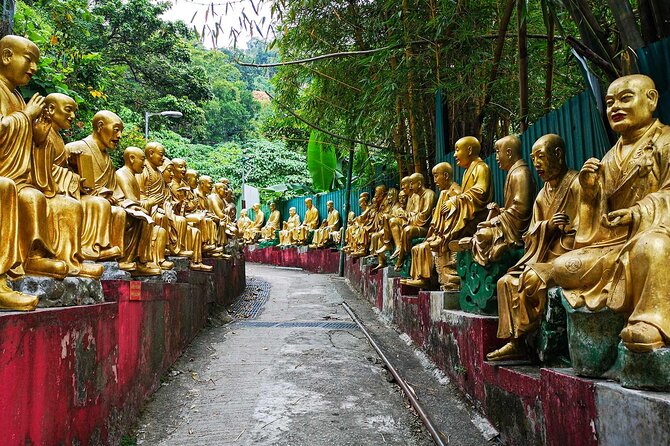
This is a temple complex built around a huge number of Buddha statues. The audio is centered on the stories behind its construction and its distinctive features. Expect this to be visually intense and easy to lose time in, so keep an eye on your total schedule if you’re trying to stay near the 3-hour target.
Lantau Island: two religious stops plus Big Buddha and the cable car choice
Your route then shifts to Lantau Island with Po Lin Monastery, Tian Tan Buddha (Big Buddha), and the Ngong Ping 360 cable car stop. This is a classic Hong Kong day-swap situation: you can treat it as a full-day add-on, or you can squeeze it in if you’re efficient.
Stop 13: Po Lin (Precious Lotus) Monastery
This is described as an important Buddhist sanctuary on Lantau Island, with a focus on history, artistic treasures, and its role in Hong Kong’s religious landscape. If you want to understand what you’re seeing before you reach the main statue areas, this stop helps set the tone.
Stop 14: Tian Tan Buddha (Big Buddha)
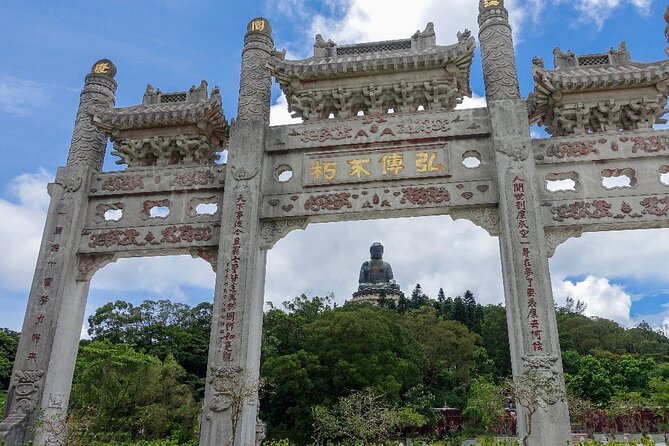
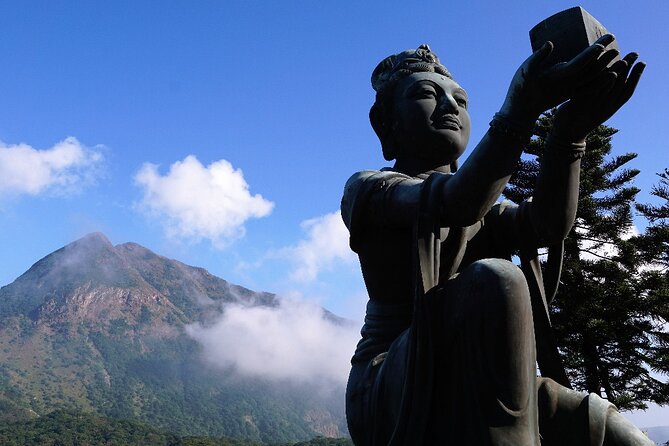
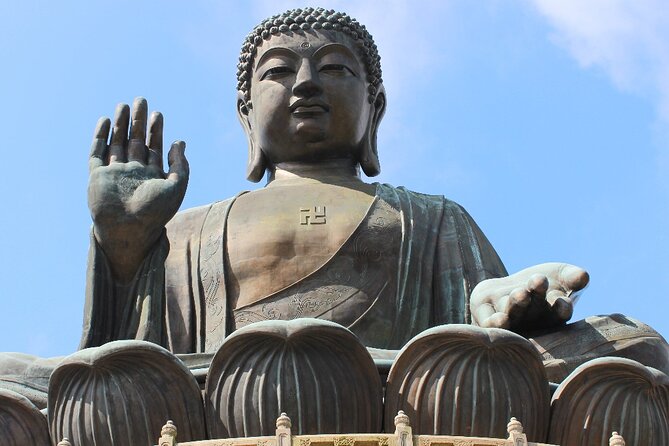
This is one of Hong Kong’s best-known landmarks: a colossal bronze statue. The audio focuses on how it was constructed, what it symbolizes, and why it’s culturally significant. It’s the “big visual” portion of the route, and the audio makes that bigness feel more grounded.
Stop 15: Ngong Ping 360
The route includes a scenic cable car ride with panoramic views of Lantau Island. It also includes the engineering angle and its role in promoting tourism. Like The Peak Tram, it’s listed as admission ticket not included, so this is a paid experience you’ll want to weigh against your time and budget.
Where Hong Kong Disneyland fits: optional, ticketed, and very self-guided friendly
Stop 12: Hong Kong Disneyland
Hong Kong Disneyland appears as a stop in the audio route, and it’s listed as admission ticket not included. That means you can’t rely on this audio tour to cover the park entry cost.
If you’re a Disney fan, the audio’s angle is about how the park has a Hong Kong twist, including cultural adaptations for the Chinese market. It can be a helpful way to decide which areas to prioritize once you’re inside, especially if you’re trying to reduce decision fatigue.
If you’re not doing Disneyland, you can still keep the rest of the route. The audio is set up so each attraction has its own guide, and the map lets you jump around.
Messaging service and support: small help, big comfort
One highlight is that a messaging service allows you to request more information as needed. That’s useful because self-guided tours can get confusing when you’re tired, jet-lagged, or unsure if you’re at the right entrance.
On top of that, there’s customer support if you have questions about accessing or using the audio guide. That matters because the biggest risk with tech-based travel is not the sights—it’s the setup. Here, the instructions are clear: you get the links by email, click, and play.
Best ways to use the audio: planning ahead without overplanning
Here’s a simple way to get the most out of it:
- Before you start: play the full playlist once (audio link) and look at the map so you know the order and which stops are free vs ticketed.
- During the visit: only start audio when you’re close to each place. That keeps it from feeling like a lecture.
- After you’re done: listen to any stops you skipped. You don’t lose the value, because the audio stays accessible while your access links remain valid.
This kind of reuse is exactly why the tour earns its reputation for being worthwhile: the audio isn’t stuck in a single time window. You can turn it into a planning tool, then a walking tool, then a memory refresher.
Who should book this Hong Kong audio tour
I think this works best if you want:
- Flexibility over a fixed group schedule
- A guided “explanation layer” on top of walking
- Short stops with context, rather than long museum-style narration
- To choose your own mix of free sights and paid attractions
It also fits independent travelers who don’t want to coordinate with anyone else. The route includes a mix of waterfront walks, parks, temples, viewpoints, and one major entertainment stop, so you’re not locked into a single theme.
If you’re the type who hates wandering without a plan, you’ll still get direction from the suggested order and the map. If you’re the type who hates being rushed, you’ll like that it’s structured but not controlling.
Should you book this Hong Kong self-guided audio tour?
Book it if you want a cheap, flexible way to understand Hong Kong while you walk. The $9 price is a strong value when you’re planning to hit several of the stops, especially the free ones like Kowloon Park, Avenue of the Stars, Tsim Sha Tsui Promenade, and the temple/garden cluster.
Skip—or at least scale down—if your goal is only one or two attractions. In that case, the audio may feel like more effort than it’s worth. Also, treat the ticketed stops as optional add-ons: Peak Tram, Disneyland, and Ngong Ping 360 aren’t included.
Finally, with a 4.3 rating based on a small number of reviews, I’d still call it a sensible choice. The main praise is consistent: the information is useful, and the ability to listen before, during, and after makes the whole thing easier to fit into a real trip.
FAQ
How much does the Hong Kong Self-Guided Audio Tour cost?
It costs $9.00 per person.
How long is the tour?
The tour is about 3 hours in total (approx.), with each stop running about 10 minutes.
Can I start and end whenever I want?
Yes. You can start and end whenever it suits your schedule within 72 hours. The tour is self-guided, so you’re not tied to a meeting time.
Do I need to download an app or use tracking?
No. The audio can be listened to on any device, with no need to download any tracking apps.
Are attraction entry fees included?
No. Entry fees are not included wherever required, and transportation is not included either. The tour notes that some stops have admission ticket not included (like The Peak Tram, Hong Kong Disneyland, and Ngong Ping 360).
Is it refundable?
No. This experience is non-refundable and cannot be changed for any reason. If you cancel or request an amendment, the amount paid is not refunded.