REVIEW · TREVISO
Medieval Canals and Fountains: A Treviso Self-Guided Audio Tour
Book on Viator →Operated by VoiceMap Audio Tours · Bookable on Viator
Treviso feels like a movie set. This self-guided GPS audio walk turns medieval streets and water into a clear little story, with offline maps and narration so you’re not hunting for Wi‑Fi.
I especially like the freedom to go at your own tempo and stop for photos without feeling guilty. You’ll also get a satisfying mix of sights: a neoclassical cathedral façade and staircase, then real canal scenes and bridges tied to big Italian themes.
One catch to plan around: it’s English only. If you need Spanish or French, this may not be the right fit.
In This Review
- Key Things You’ll Notice on This Treviso Audio Tour
- Before You Start: how this audio walk really works
- Price and value: $9.99 for a structured self-guided stroll
- Stop 1: Lodge of Knights, where the city starts feeling theatrical
- Stop 2: The 1989 lucky statue replica by Miguel Miranda Quinones
- Stop 3: Treviso’s late-1700s neoclassical cathedral and its staircase
- Stop 4: Walking the canal from the Boteniga River to Treviso’s famous corner
- Stop 5: A religious building with an 883-origin core
- Stop 6: Dante Alighieri’s bridge and the views tied to Paradise
- Stop 7: Ending at the castle wall complex rebuilt in 1509, with Sile River views
- Timing, pacing, and what it feels like to walk it
- Who should book this Treviso canals and fountains audio tour
- Should You Book Medieval Canals and Fountains in Treviso?
- FAQ
- How much does the Medieval Canals and Fountains: A Treviso Self-Guided Audio Tour cost?
- How long is the tour?
- Is the tour available in English?
- Do I need my own smartphone and headphones?
- What is included with the tour?
- Where does the tour start and where does it end?
- Is this tour private?
- What does self-guided GPS mean here?
- What are the opening hours?
- What is the cancellation policy?
Key Things You’ll Notice on This Treviso Audio Tour
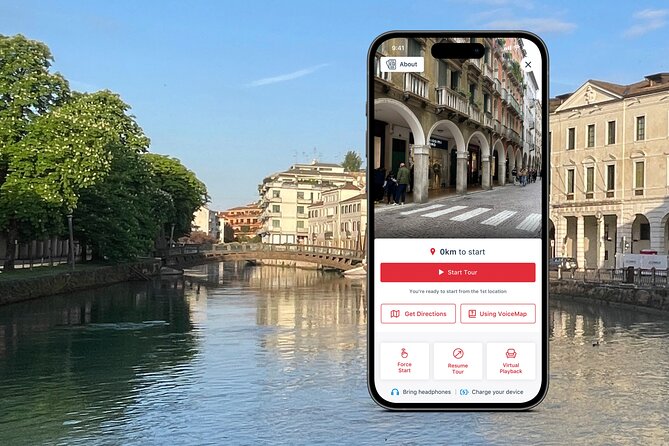
- You control the pace, so you can linger at photo corners and viewpoints.
- Offline audio and maps help you keep moving even with weak cell service.
- A tight 1h15–1h45 route that works as a fast Treviso introduction.
- Canals tied to the Boteniga River and one of the area’s most photographed bends.
- Dante Alighieri at the bridge stop, with narration linked to his Paradise.
- A budget-friendly price for a structured walk with themed storytelling.
Before You Start: how this audio walk really works
This is not a live tour guide standing in front of you. It’s a phone-in-your-hand walk that gives you directions, audio stories, and map guidance as you move through Treviso.
The format is simple: you load the tour in the VoiceMap app (Android or iOS), follow the GPS, and press play when you reach each stop. Since offline audio, maps, and geodata are included, you can treat this like a low-stress walking plan instead of a scavenger hunt.
Practical tip: bring a smartphone and headphones. They’re not included. And yes, you’ll want comfortable shoes. The route is short, but it’s still a city walk with multiple viewing points.
Timing-wise, expect about 1 hour 15 minutes to 1 hour 45 minutes once you’re actually walking and passing the sights. The app also includes directions to the starting point, so you’re not stuck staring at street corners wondering where the “real start” begins.
Price and value: $9.99 for a structured self-guided stroll
At $9.99 per person, this is priced like an entry-level activity, not a big-ticket guided experience. What you’re really paying for is structure: themed stops, narration, and GPS guidance that helps you understand what you’re looking at instead of just passing it.
In practical terms, this kind of audio tour is great when you want:
- a short Treviso circuit you can finish the same day
- photo time without rushing
- a way to connect architecture and landmarks with human stories
If you already know you want a calm walk and you’re fine doing it on your own, the value is strong. If you expect a multilingual guide or a hands-on tour escort, you may feel a little shortchanged—because it’s built around one language and one device.
Stop 1: Lodge of Knights, where the city starts feeling theatrical
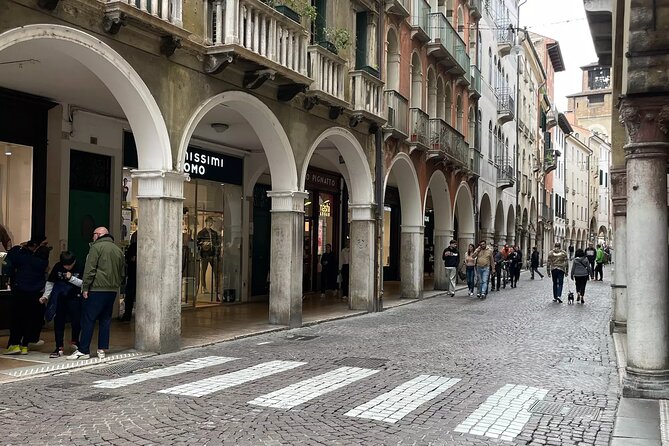
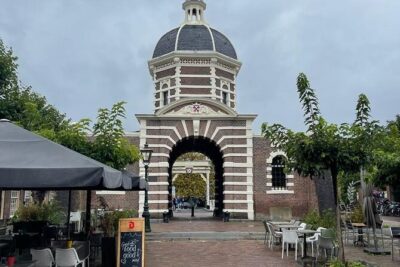
You begin at the Lodge of Knights at Via Martiri della Libertà 48. The opening note sets the scene like a meeting place for nobles—less about modern tourism and more about imagining a room where games, status, and conversation mingle.
This first stop matters because it reframes Treviso. Instead of viewing the city as a bundle of separate monuments, the audio nudges you to think in terms of how people gathered and displayed culture. That context makes the later stops more than just “look at that building.”
You won’t need to linger here. But it’s worth taking 1–2 minutes to orient yourself visually and mentally. When the narration starts talking about what came before, you’ll catch more of the meaning as you walk.
Stop 2: The 1989 lucky statue replica by Miguel Miranda Quinones
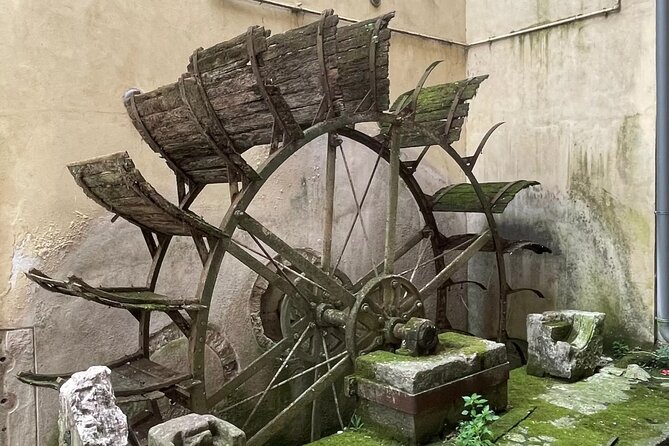
Next, you’ll catch a glimpse of a replica of a historic statue, described as being made in 1989 by the Peruvian sculptor Miguel Miranda Quinones. The story says it’s believed to bring good luck.
This is a smaller stop, but it’s a clever one. It shows how cities keep myths, traditions, and symbols alive even when the original isn’t exactly what’s on the street today. You’re not just learning facts. You’re learning how urban legends and artistic choices survive through time.
If you like noticing details while you walk, this is a good spot to slow down. You can frame a quick photo and move on while the story is still fresh.
Stop 3: Treviso’s late-1700s neoclassical cathedral and its staircase
Then comes one of the big visual moments: a majestic cathedral from the late 1700s, built in neoclassical style, with a staircase at the entrance and precious artworks inside.
Even if you don’t go in (the tour data doesn’t specify admission), the exterior is a strong cue. Neoclassical architecture often feels like it’s trying to impose order—clean lines, formal design, and a sense of permanence. The audio narration helps you read the façade and staircase as part of a larger statement, not just a pretty wall.
If you do want extra time here, you’ll likely appreciate it. This stop is one of those moments where you may naturally start scanning for symmetry and details. Build in a few extra minutes if you enjoy architecture, because the cathedral is the kind of sight you’ll want to look at twice.
Stop 4: Walking the canal from the Boteniga River to Treviso’s famous corner
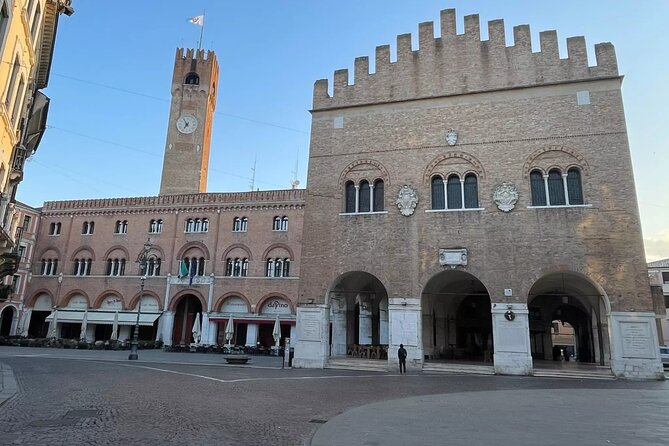
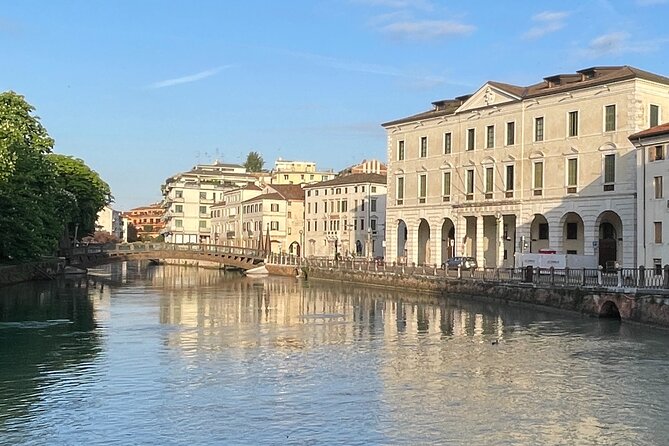
Now you get to one of the most rewarding parts: walking along the historic canal, where water is described as coming from the Boteniga River as it flows into the city.
This is also where the tour leans into atmosphere. Canal walks are different from plaza walks. The city stretches out sideways. Reflections and bridges create natural “framing devices” for photos, and the soundscape stays gentler than main roads.
The audio also points you toward one of the most photographed corners of Treviso. You’ll probably recognize it when you’re near it, because these are the kind of spots people gravitate toward—water, stonework, and buildings aligning in a way your camera loves.
Tip: when you reach the photo corner, don’t just snap and go. Take 30 seconds to watch how the light sits on the canal surface. That’s the kind of small payoff audio tours rarely capture with words, but the location provides it.
Stop 5: A religious building with an 883-origin core
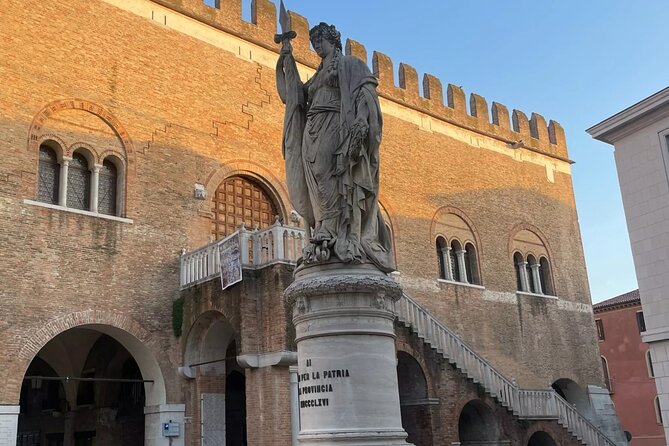
Next, you’ll pass one of the city’s oldest religious buildings, with the initial nucleus dating back to 883.
Even without a long pause, this stop does something important: it anchors the walk in deep time. When the narration connects modern streets to something that goes back to the 800s, it changes how you read everything nearby. The stone you’re seeing now sits on top of earlier phases, like layers of notes in the margins of a book.
This is also a good moment to keep your expectations realistic. The tour data focuses on the building’s early dating and significance, not on a detailed interior visit. So treat this stop as a “pause, notice, move” kind of checkpoint unless you later decide to explore more on your own.
Stop 6: Dante Alighieri’s bridge and the views tied to Paradise
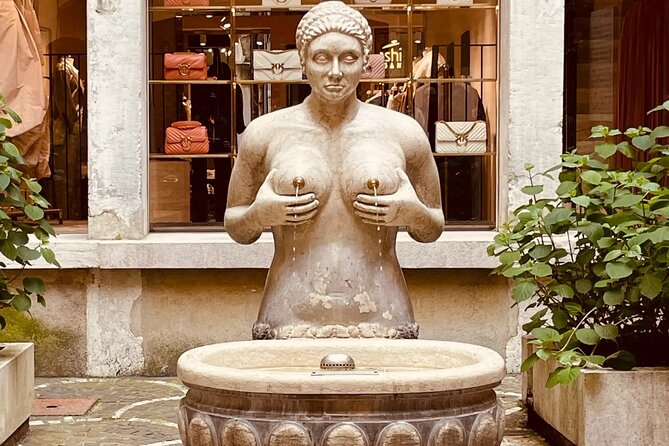
Then you reach a bridge with awe-inspiring views, dedicated to Dante Alighieri. The narration ties this point to Dante’s Paradise.
Bridges are built for perspective. And this one sounds like it gives you that classic moment where the city opens up behind you. The dedication to Dante adds another layer: you’re not just looking at water; you’re looking at a specific kind of cultural memory. That’s why this stop feels more “literary” than a typical sightseeing stop.
If you’re a fan of Dante or Italian literature, this may be one of the more satisfying moments on the route. Even if you’re not, you’ll probably enjoy it simply because bridges give you the best views per step.
Take a breath. Then keep walking.
Stop 7: Ending at the castle wall complex rebuilt in 1509, with Sile River views
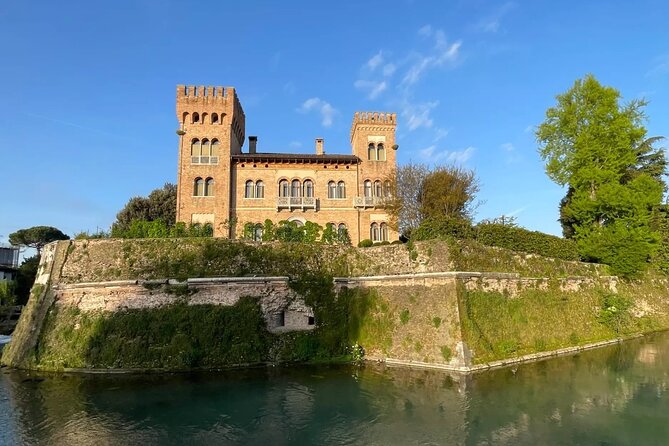
The tour finishes outside an iconic castle connected to the wall complex rebuilt in 1509, with a glorious view of the Sile River.
This ending is smart because it doesn’t end in a random dead-end. It brings you back to water again—this time the Sile River—so the whole walk feels like one continuous theme. Medieval Treviso here isn’t just pretty canals. It’s a city shaped by rivers and defensive lines and the way people moved.
The ending point is Portello Sile – Spazio Culturale degli Alpini on Viale J. Tasso. The tour ends opposite the cultural space, so you’ll know you’re done when you reach that final riverside stretch and feel the view open up.
Timing, pacing, and what it feels like to walk it
Because it’s self-guided and designed for a private group (only your group participates), the experience tends to feel calm. No waiting for a tour group to form up. No awkward pacing between slower and faster walkers.
The total duration range—1h15 to 1h45—is also a useful planning tool. If you’ve got half a day in Treviso, this can fill it neatly. If you’re arriving from somewhere else and you want a quick orientation, it works well as a first loop.
What makes this pace work best is the way the stops alternate:
- civic/architecture moments (knights lodge, cathedral)
- symbolic culture moments (lucky statue, historic religious nucleus)
- scenic water moments (canal corner, bridge views)
- a final scenic payoff (Sile River + castle walls)
It’s a balanced rhythm for a short audio walk.
Who should book this Treviso canals and fountains audio tour
I think this is a great choice if you:
- want a short, structured introduction to Treviso
- like canals, bridges, and architecture
- prefer independent pacing over following a group
- enjoy learning little stories tied to what you’re seeing right now
It may not be ideal if:
- you need languages other than English
- you’re expecting a guided, conversational explanation with a live human
- you’re mainly looking for paid museum-style interior time (the tour’s focus is on the walk and what you see along the way)
If you’re traveling with someone who likes to stop for photos often, this tour matches that style well. You can pause without having to negotiate with a guide’s timing.
Should You Book Medieval Canals and Fountains in Treviso?
Yes, I’d book it if your goal is a low-cost, high-comfort way to understand Treviso’s medieval-to-neoclassical blend while you walk. The price is reasonable, the route length is manageable, and the offline setup helps you keep moving without tech headaches.
I’d think twice if English-only is a dealbreaker for you. For everyone else, it’s a smart way to turn a casual walk into something more meaningful, with canal scenery and Dante-linked views doing the heavy lifting.
If you want a simple plan for one afternoon (or one focused morning), this gives you that. You just show up, start listening, and let Treviso do what it does best.
FAQ
How much does the Medieval Canals and Fountains: A Treviso Self-Guided Audio Tour cost?
It costs $9.99 per person.
How long is the tour?
Plan for about 1 hour 15 minutes to 1 hour 45 minutes.
Is the tour available in English?
Yes, the tour is offered in English.
Do I need my own smartphone and headphones?
Yes. A smartphone and headphones are not included.
What is included with the tour?
You get lifetime access to the English tour (before your booking date and after), a self-guided GPS experience, directions to the start, an app for Android and iOS, and offline access to audio, maps, and geodata.
Where does the tour start and where does it end?
Start: Lodge of Knights, Via Martiri della Libertà 48, Treviso.
End: Portello Sile – Spazio Culturale degli Alpini, Viale J. Tasso, Treviso (the tour ends opposite this location).
Is this tour private?
Yes. It’s private, so only your group participates.
What does self-guided GPS mean here?
You follow the route at your own pace using GPS guidance and audio prompts as you move from stop to stop.
What are the opening hours?
The tour is listed as open 12:00 AM to 11:59 PM during the period 06/13/2025 to 02/16/2027.
What is the cancellation policy?
Free cancellation is allowed. You can cancel up to 24 hours in advance for a full refund. If you cancel less than 24 hours before the experience’s start time, the amount you paid is not refunded.