REVIEW · DUSSELDORF
Düsseldorf Scavenger Hunt and Sights Self-Guided Tour
Book on Viator →Bookable on Viator
Your phone turns Düsseldorf into a game. I like the English/German setup and the photo tasks that make you notice landmarks instead of just passing them by. One thing to watch: the experience can feel heavy on reading and screen time compared with a pure object-hunt.
This is built for an easy walk with a clear flow: you follow hints, reach a sight, answer questions, then move on when you’re ready. The tour isn’t locked to a schedule, so you can pause for coffee or linger if a view stops you.
At about $6.18 per person for an interactive 1–2 hour stroll, it’s a strong value if you enjoy puzzles and low-pressure sightseeing. It’s also set up as a private activity, meaning your group plays together—no awkward crowd to dodge.
In This Review
- Key highlights to know before you go
- Making Düsseldorf a self-guided walking hunt
- Start at Brauerei Zum Schiffchen: then let the map guide you
- How the app handles hints, scoring, and getting to each stop
- Kuhna Wall, St Lambertus, Triton Fountain, and the rest of your route
- Kuhna Wall: the first “find it” vibe
- Basilica of St Lambertus: details you can hunt for
- Triton Fountain: a moment for both eyes and creativity
- The route’s overall feel: old lanes plus modern edges
- What the clues ask you to do: questions and photo challenges
- Sight-finding hints
- Questions tied to what you can see
- Photo tasks that reward creativity
- How long it takes and how to pace your 1–2 hour outing
- Price and value: what $6.18 per person buys you
- When this is the right fit (and when to skip it)
- Should you book this Düsseldorf scavenger hunt?
- FAQ
- How long does the Düsseldorf Scavenger Hunt and Sights tour take?
- Where does the tour start and end?
- How much does the tour cost?
- How do I access the tour on my phone?
- What languages are available?
- Is the experience timed?
- Is it private or shared with other groups?
- What if I need to travel with a service animal or change my plans?
Key highlights to know before you go
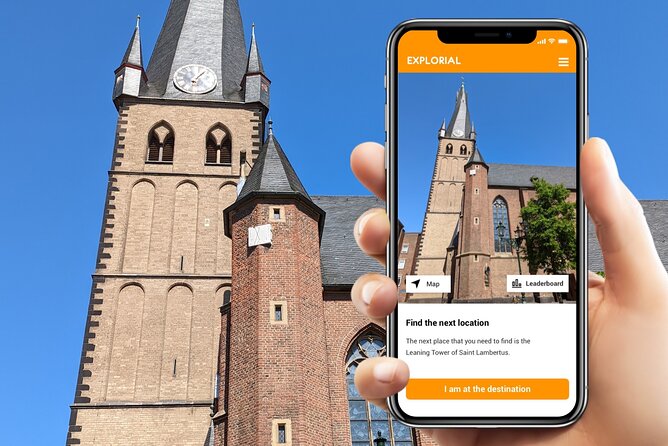
- Phone-led route with a map: you use the app’s directions to get from stop to stop.
- Sight questions use what you can see: answers often come from signs, pictures, and details at the location.
- Creativity points through photo tasks: you earn points by doing snapshot challenges.
- Not time-restricted: the tour lasts about 1–2 hours on average, but you’re free to take breaks.
- Düsseldorf variety in one walk: you may get sent through older lanes and also newer areas.
- Multiple languages: you can play in English or German.
Making Düsseldorf a self-guided walking hunt
I love walking tours, but I also like when the route gives my brain a job. This Düsseldorf experience does that job for you with a scavenger-hunt format: follow the next hint, arrive at the place, and solve what’s asked there.
What makes it work well is the mix of tasks. You’re not only reading trivia—you’re using clues to find the sight, then answering questions tied to what’s in front of you. And when you hit photo tasks, you get points for taking creative shots, which turns sightseeing into a small challenge game.
The tradeoff is screen time. If you’re expecting to sprint from one “thing” to another, you might feel like you’re mostly scanning text on your phone. If that doesn’t sound fun, consider this a puzzle walk first and a traditional scavenger hunt second.
You can also read our reviews of more tours and experiences in Dusseldorf.



Start at Brauerei Zum Schiffchen: then let the map guide you
The tour starts and ends back at Brauerei Zum Schiffchen, Düsseldorf Hafenstraße 5. That’s an easy anchor point. Even if you’re new to Düsseldorf, having a clear “go here” starting spot keeps the whole thing from feeling vague.
When you arrive, your first move is in the app. After you buy your ticket, you’ll get an access code, and that code is what you enter to start playing. From there, the app becomes your guide: you follow its instructions and use the map function to reach each next location.
One practical tip: wear shoes that can handle a steady walking pace. This is “walking tour” energy, even though you can go at your own pace and take breaks. In other words, you don’t need speed, but you do need comfort.
How the app handles hints, scoring, and getting to each stop
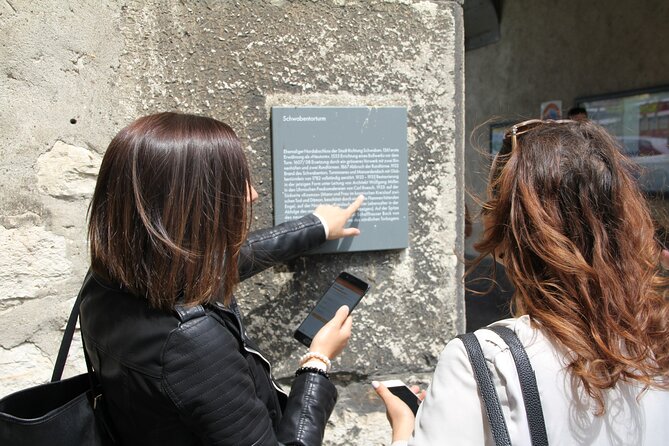
This experience runs through your smartphone. The big promise is a smooth blend of sightseeing, puzzles, and scavenger-hunt mechanics—without needing a person to lead every step.
Here’s what you’ll do along the way:
- Find sights: the app gives hints, and you use the map to get there.
- Solve questions: once you arrive, you answer prompts that are usually tied to visible details like signs and pictures.
- Earn points with photo tasks: some challenges ask for creative snapshots, and those also feed your score.
You don’t need to complete it in one sitting either. It’s not limited in time, and the average duration is about 1–2 hours. That flexibility matters, because it means you can slow down at a building you like, or stop for a snack without worrying you’ll fall behind.
Also note the “private activity” setup. Only your group participates, so you’re not stuck waiting for strangers to figure out the app. That can make the whole game feel calmer, especially if you’re playing solo or with friends.
Kuhna Wall, St Lambertus, Triton Fountain, and the rest of your route
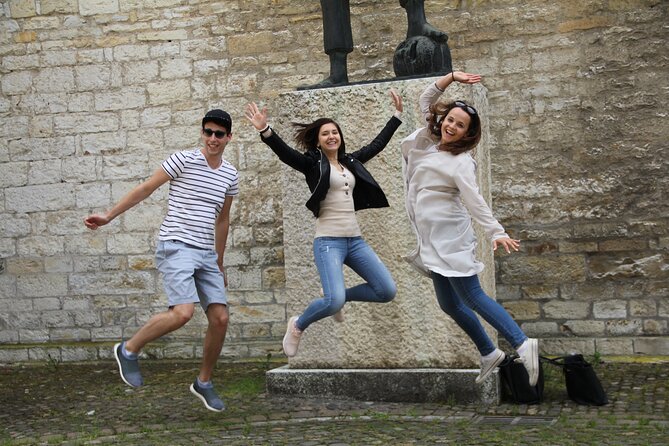
Your route includes several named sights plus additional stops. The ones you’ll run into include Kuhna Wall, the Basilica of St Lambertus, and the Triton Fountain—along with other places the app routes you to.
Even without a live guide talking at you, these stops act like milestones. Each one is a “reach this location, then do the tasks” moment. That structure turns famous places into parts of the game, not just photo backdrops.
Kuhna Wall: the first “find it” vibe
The Kuhna Wall is a great example of how the experience nudges you into active looking. You’re not just passing by; you’re reaching a specific point using hints, and then you’re prompted to answer questions tied to what you see there.
If you enjoy puzzles where your eyes have to do the work, this kind of stop hits the sweet spot. If you hate scanning for clues, you may want to mentally prepare for extra looking and extra phone-checking.
Basilica of St Lambertus: details you can hunt for
At the Basilica of St Lambertus, you’ll likely be asked questions that can be answered from info displayed on-site—signs, pictures, or details you can observe. That’s valuable because it encourages you to slow down long enough to notice features you’d normally miss.
I like this approach for big churches and landmarks. You don’t just admire the exterior and move on. You look for the information the questions want, and that naturally deepens your understanding without turning the walk into a lecture.
Triton Fountain: a moment for both eyes and creativity
The Triton Fountain is the kind of place that fits photo tasks well. You’re at a landmark that naturally has visual impact, so the creative snapshot challenges feel less forced than they might at a random intersection.
Even when the main activity is “answer questions,” you still get those photo moments that reward participation. It’s a nice reset: solve, then shoot something, then move again.
The route’s overall feel: old lanes plus modern edges
One of the best parts of this kind of city game is that it can mix neighborhoods. You may be guided through historic lanes as well as more modern areas. That mix is useful if you want a Düsseldorf walk that doesn’t just repeat the same postcard view.
The drawback is that you’re relying on the app to steer you. If you’re the type who prefers to roam without instructions, you might feel slightly constrained by the route logic—even though you’re free to pause and go at your pace.
What the clues ask you to do: questions and photo challenges
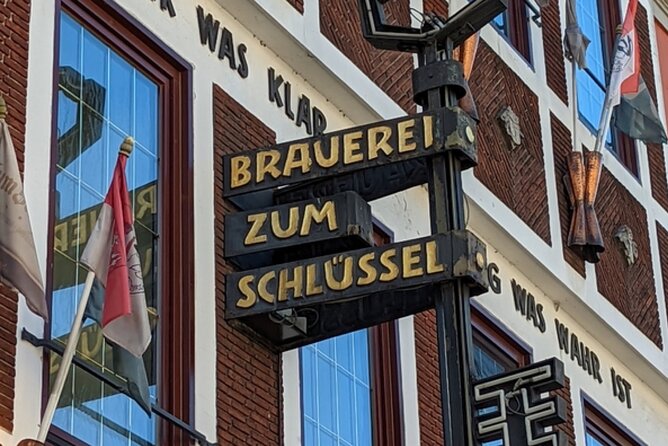
The core fun here isn’t only the sightseeing. It’s the format of tasks.
Sight-finding hints
Hints get you to the next place, using the app’s map function. In practice, this is what keeps the walk from turning into “wander and hope.” It’s like having a soft rail guide—enough structure to help, not enough to babysit.
If you hate navigation, this is a big plus. If you love wandering, the best strategy is to treat each hint as a reason to check one area closely rather than as a strict demand to move on immediately.
Questions tied to what you can see
Questions are often answered using visible clues: signs, pictures, and details near the sight. That means you get learning without a heavy amount of reading beforehand.
It also means you’ll likely do short “look and answer” cycles at each stop. If you’re okay with that rhythm, you’ll probably enjoy the way the walk teaches you indirectly.
Photo tasks that reward creativity
Photo tasks add a playful layer. If you get stuck, just aim for the brief the app gives you. Even simple creative angles can score points, and the photo tasks are often the most memorable part later.
One practical thing to plan for: saving or processing images might take a moment. If your phone is slow or your connection is patchy, build in patience so you don’t feel rushed at that stage.
How long it takes and how to pace your 1–2 hour outing
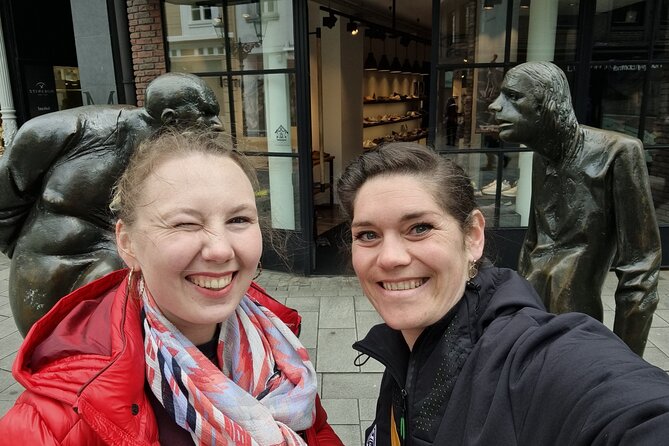
Most of the time, you’re looking at about 2 hours (approx.), with an average around 1–2 hours. But the big advantage is that it’s not limited in time. You control the pace.
That freedom matters in two scenarios:
- If you need breaks—coffee, photos, or just standing and looking—this layout won’t punish you.
- If you want to spend extra time at Basilica of St Lambertus or the Triton Fountain, you can linger and still finish.
The experience is available across a very wide window: the listed opening hours run from Monday to Sunday, from 12:00 AM to 11:30 PM. Translation: you can fit it into almost any day plan, whether you’re doing sightseeing earlier or later.
My practical pacing advice: plan to start, then accept you’ll probably be walking and stopping more than you would on a straight sightseeing loop. If you’re trying to squeeze it between timed museum tickets, leave buffer time.
Price and value: what $6.18 per person buys you
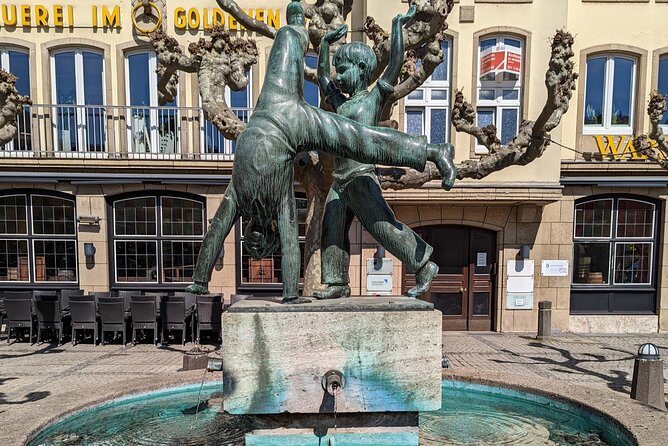
The price is $6.18 per person. That’s low for an experience that blends navigation, puzzle prompts, and interactive tasks—all using your phone instead of a staffed guide.
The value comes from three things:
- You’re paying for structure, not just info. You get hints and tasks that tell you where to look.
- You get flexibility. It’s not timed hard, so you’re not forced to rush.
- You get variety in tasks. Sight questions plus photo challenges keep it from becoming one-note trivia.
Two things to consider before you buy:
- If you’re traveling solo, double-check the ticket setup inside the app process. There have been cases where solo players felt the ticket requirement didn’t match what they expected.
- If you don’t like phone reading, this might feel like too much screen time for the price. The cost is fair, but your enjoyment depends on your tolerance for the format.
On balance, the price fits what it is: a low-cost interactive walk meant to make sightseeing more playful.
When this is the right fit (and when to skip it)
This is a strong pick if you:
- like scavenger-hunt style tasks and solving prompts on the go
- want English or German support without booking a live guide
- enjoy photo challenges and small creative tasks
- want to explore Düsseldorf at your own pace while still following a route
It might be less satisfying if you:
- expect lots of physical “find the object” hunting rather than solving questions tied to visible details
- prefer a mostly conversation-based walking tour where you’re not staring at your phone for clues
- get frustrated by slow app features, especially around saving images
Also, the experience is private for your group. That can be a big comfort factor if you don’t want to coordinate with strangers or move at someone else’s pace.
Should you book this Düsseldorf scavenger hunt?
Book it if you want a fun, low-pressure way to learn Düsseldorf details while moving through the city. The combination of self-guided routing, sight-based questions, and photo tasks gives you more than a normal walk—especially if you’re the type who enjoys puzzles and small challenges.
Skip it if you mainly want a classic guided tour with minimal phone use. If your ideal day is mostly conversation and viewpoints, the “read and solve” structure may feel like work instead of play.
If you do book, go in with the right expectations: treat it like a game you play while walking. Wear good shoes, bring a fully charged phone, and plan a little breathing room for photo tasks. Then you’ll get the best of what this format is built to do—turn Düsseldorf into something you actually interact with.
FAQ
How long does the Düsseldorf Scavenger Hunt and Sights tour take?
It’s listed at about 2 hours (approx.), with an average duration of around 1–2 hours. You can take breaks because the tour is not limited in time.
Where does the tour start and end?
The start (and end) is at Brauerei Zum Schiffchen, Düsseldorf Hafenstraße 5, 40213 Düsseldorf, Germany. The activity ends back at the meeting point.
How much does the tour cost?
The price is $6.18 per person.
How do I access the tour on my phone?
After you purchase, you receive an access code you can use in the app. The tour uses a mobile ticket, and you’ll start by downloading the app and going to the starting point.
What languages are available?
The tour is available in English and German.
Is the experience timed?
No. It’s not limited in time, and you can explore at your own pace.
Is it private or shared with other groups?
It’s a private tour/activity, so only your group participates.
What if I need to travel with a service animal or change my plans?
Service animals are allowed. You can cancel for a full refund if you cancel at least 24 hours in advance; within 24 hours, the amount paid is not refunded.