REVIEW · AMSTERDAM
Amsterdam Self-Guided Audio Tour
Book on Viator →Operated by Uvamai Niche Tourism · Bookable on Viator
A cheap guide you can play anytime. This self-guided Amsterdam audio tour packs 21 major sights into one easy mobile setup, so you can wander at your own speed instead of matching a group’s pace. I especially like the privacy of listening your way, and the fact that the narration points out details most people miss. One thing to consider: you’ll be using headphones and relying on an internet connection to open the audio and map links.
If you want a low-cost way to understand the city while you walk, this fits the bill. You can mix free stops (like Centraal Station and Dam Square) with ticketed ones (like the Anne Frank House and the big museum names) and build a route for 3 to 9 hours. Think of it as your personal city briefing that you control—start where you want, stop when you want, and even split it across multiple days.
In This Review
- Quick hits before you press play
- At Your Own Speed: How This Audio Tour Actually Works
- Price and Value: Why $6 Can Work in Amsterdam
- Your 21 Stops, Explained Like a Good Walking Buddy
- Stop 1: Centraal Station’s floating-sea foundation story
- Stop 2: OBA Library of Amsterdam and the “glass cathedral” idea
- Stop 3: NEMO Science Museum and the ship-shaped landmark
- Stop 4: The National Maritime Museum at Het Scheepvaartmuseum
- Stop 5: Verzetsmuseum Amsterdam and the choices people faced
- Stop 6: H’ART Museum and art in a restored canal house
- Stop 7: Rembrandt House (Museum Het Rembrandthuis) and art made in real rooms
- Stop 8: Our Lord in the Attic (Ons’ Lieve Heer op Solder) and faith hidden in plain sight
- Stop 9: Body Worlds and the ethics behind plastination
- Stop 10: Dam Square and the evolution of a national stage
- Stop 11: Royal Palace Amsterdam and Golden Age power in stone
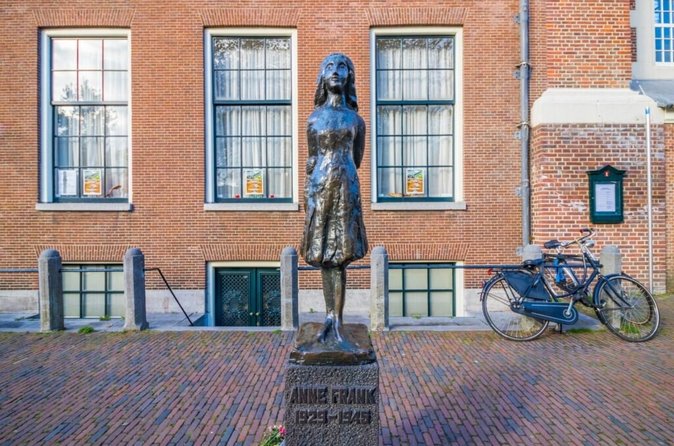
- Stop 12: Anne Frank House and the meaning of hidden rooms
- Stop 13: Begijnhof and a peaceful courtyard with long memory
- Stop 14: Rijksmuseum and Dutch art as a national story
- Stop 15: Moco Museum Amsterdam and contemporary art in an intimate setting
- Stop 16: Van Gogh Museum and the link between struggle and style
- Stop 17: Stedelijk Museum Amsterdam and modern art’s architecture of ideas
- Stop 18: Vondelpark and the city’s planned cultural corridor
- Stop 19: Albert Cuyp Market and day-to-day Amsterdam food culture
- Stop 20: A’dam Lookout and Amsterdam from above
- Stop 21: Zaanse Schans and Dutch heritage windmill engineering
- Pick Your Stops Like a Local, Not Like a Checklist
- Who Should Book This (and who might not love it)
- Should You Book This Amsterdam Self-Guided Audio Tour?
- FAQ
- Is this tour GPS guided?
- How do I access the audio and map?
- Do I need an internet connection?
- Is the tour available in English?
- Are admission tickets included?
- Can I choose my own starting point and order?
- How long is the tour?
- Can I get a refund or change the date?
- Is it only for my group?
Quick hits before you press play
- Private, self-paced touring means no waiting around for slow walkers or losing the group in crowds.
- SoundCloud playlist access lets you tap each attraction’s audio as you arrive, in a suggested order or your own.
- Interactive Google My Maps shows each stop with a headphone icon so you can pick what matters most.
- A mix of free and ticketed sights helps you shape your day and your budget.
- A 6-day link window gives you breathing room if your schedule shifts.
At Your Own Speed: How This Audio Tour Actually Works
This is a self-guided audio experience, not a GPS-guided one. You get two private links for your chosen travel date, and you use them in a browser on your phone (not the Maps app) to access the content.
Here’s the practical flow:
- You click the audio link to open a SoundCloud playlist that contains the narration for each of the 21 stops.
- You click the map link to open Google My Maps in your browser. You tap a headphone icon (or select an attraction from the list), and then jump to that stop’s audio.
You’re not locked into a strict route. You can follow the suggested order, or you can reorder stops based on your hotel location, museum hours, or what you actually feel like doing that day. The audio chunks are short (about 10–20 minutes each), which is great for Amsterdam walking.
What I like most is the “on your schedule” approach. When you’re tired, you pause. When something catches your attention—say, a building detail or a square layout—you can slow down and replay. Amsterdam is ideal for this kind of independent wandering.
One caution: since it’s audio-on-your-phone, you should pack fully charged headphones-ready time and make sure you have internet access when you start.
You can also read our reviews of more tours and experiences in Amsterdam.

Price and Value: Why $6 Can Work in Amsterdam
At $6 per person, you’re not paying for entry into museums. You’re paying for the narration track and the map tools that help you interpret what you’re looking at while you walk.
That value shows up in two ways:
- You get context that turns “I saw a building” into “I understand why it’s here and why it looks like that.”
- You can visit a lot of highlights across the city without paying a tour operator for guide time.
You’ll still need to budget separately for attraction entry where required. In the itinerary, some stops are labeled free (you’ll still want to check on-site entry rules), while others explicitly say admission is not included. The good part is you can design your day to lean more on the free stops if you want.
Also, the suggested duration of 3 to 9 hours gives you flexibility. If you want a quick orientation day, choose fewer stops. If you want a bigger day, stack in the major museums and viewpoints—then switch back to smaller, calmer sites when the city gets loud.
Your 21 Stops, Explained Like a Good Walking Buddy
Below is what you’ll get at each location, why it’s worth your time, and what to watch for. You can absolutely skip any stop that doesn’t match your interests.
Stop 1: Centraal Station’s floating-sea foundation story
Centraal Station isn’t just a pretty gateway. The narration explains how the building rises from the harbor context—made possible by thousands of wooden poles driven deep into the harbor floor, which fundamentally changed how Amsterdam handles water.
I like this stop because it sets up the city’s big theme: land, water, engineering, and politics all tangled together. You’ll also hear about the façade symbolism and even wartime resistance operations tied to the station’s walls—so it’s not only architecture watching.
Tip: If you’re arriving or departing through the station, it’s an easy first listen while you’re already there.
Stop 2: OBA Library of Amsterdam and the “glass cathedral” idea
The OBA Library is one of those buildings that makes you stop walking and look up. The audio frames it as an innovative public library space, with its waterfront district story shifting from industrial use toward cultural life.
You’ll get guidance on the building’s design philosophy and why the layout can encourage unexpected encounters. And yes, the sustainability angle is part of the story, which matters in a city built around water management and long-term planning.
What to note: Since this stop is free to enter, it’s a great mid-day anchor when you want something interesting without ticket friction.

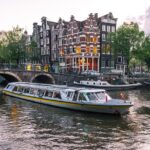

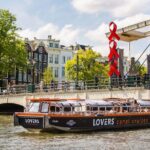
Stop 3: NEMO Science Museum and the ship-shaped landmark
NEMO is hard to miss—the green, ship-like building that holds science exhibits and a rooftop view. The narration highlights the engineering behind the structure built over a tunnel, and it connects the design to architect Renzo Piano.
This is a strong stop if you like modern architecture and hands-on learning (even if you only browse a few areas). The audio also ties the museum back to Amsterdam’s maritime identity, plus details about the copper cladding that relate to the city’s water-and-innovation story.
Heads-up: Admission isn’t included here, so treat it as a choose-to-enter stop, not a free wander.
Stop 4: The National Maritime Museum at Het Scheepvaartmuseum
If you want to understand why the Dutch built global influence, this is where the audio starts making the “why” clear. You’ll be inside a 17th-century naval storehouse, and the narration brings to life explorers, admirals, and merchant power built from these docks.
Expect themes like ship construction and navigation techniques that shaped world trade. The audio also points you toward architectural grandeur, while linking maritime innovation (like cartography and hull design) to Amsterdam’s rise.
What to note: Admission isn’t included, so plan to decide based on how much museum time you actually want that day.
Stop 5: Verzetsmuseum Amsterdam and the choices people faced
This museum turns the volume down and the emotions up. The narration focuses on ordinary Dutch people becoming resistance heroes during World War II, with stories tied to underground newspapers, rescue operations, and the tactics resistance fighters used under occupation.
What stands out here is the emphasis on moral dilemmas. The audio doesn’t just list events—it frames the human cost of decisions made in fear, hiding, and constant risk. Amsterdam’s geography also gets a mention as it relates to covert movement.
Tip: If you’re doing a heavy museum day, consider pairing this with a calmer free stop after it.
Stop 6: H’ART Museum and art in a restored canal house
H’ART is a modern-culture stop in a restored historic canal-house setting. The audio explains the building’s transformation (from a 19th-century banking hall into an exhibition space) and how the galleries support contemporary exhibitions.
I like stops like this because it shows how Amsterdam handles change without pretending history disappeared. You’ll hear about the curatorial approach and the mix of established and emerging artists, which helps you understand what you’re looking at instead of treating it like random modern art chaos.
What to note: Admission isn’t included.
Stop 7: Rembrandt House (Museum Het Rembrandthuis) and art made in real rooms
This one has an instant wow factor because it’s Rembrandt’s actual home and studio. The narration walks you through the restored rooms and ties the story to his creative peaks and financial trouble when he lost his grip on the household finances.
You’ll also get audio notes about Rembrandt’s habits, including the way he collected exotic objects and how that connects to his art. The audio even sets up what to look for by connecting specific paintings to the rooms you’re standing in.
What to note: Admission isn’t included, so check your willingness to spend time inside before you commit.
Stop 8: Our Lord in the Attic (Ons’ Lieve Heer op Solder) and faith hidden in plain sight
This is one of those Amsterdam secrets people talk about because it makes no sense until you see the place. The narration explains how a complete Catholic church was hidden in the attic of a 17th-century canal house for over 200 years, when Protestant authorities made public worship dangerous.
You’ll learn about the architectural solutions that concealed the sacred space and the families who risked everything to keep the faith alive. The audio also places it in the wider context of Dutch religious politics and gradual tolerance.
Tip: This is a great listen if you like atmosphere and hidden-history spaces more than big museum halls. Admission isn’t included.
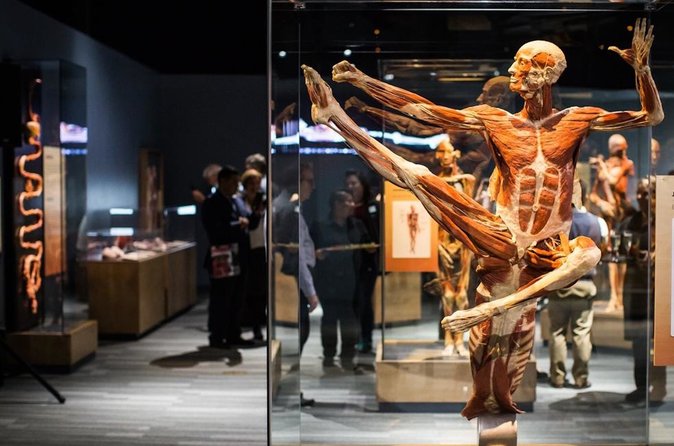
Stop 9: Body Worlds and the ethics behind plastination
Body Worlds is a science-and-philosophy stop. The audio explains the plastination process used to preserve real human bodies for educational viewing, and it addresses ethical considerations alongside the anatomy content.
You’ll also hear about voluntary donation programs and how different cultures approach mortality and body preservation. The framing matters here because it helps you process what you’re seeing without losing sight of the educational purpose.
What to note: Admission isn’t included. If you prefer lighter stops, you might skip this or save it for a day when you can handle heavier themes.
Stop 10: Dam Square and the evolution of a national stage
Dam Square is Amsterdam’s central stage, and the audio gives you a sense of time passing. The narration covers how it evolved from medieval marketplace into a national ceremonial center.
You’ll get stories tied to royal moments, wartime proclamations, and peaceful protests shaping Dutch democracy. The audio also points out symbolism around the National Monument and links the Royal Palace’s creation to a competition—so you don’t just stand there taking photos.
Best part: This stop is marked free, so it works even on tight days.
Stop 11: Royal Palace Amsterdam and Golden Age power in stone
The Royal Palace narration is about opulence with a purpose. You’ll hear how it was built in Amsterdam’s Golden Age to show off wealth and power to visiting dignitaries, plus why the construction required a foundation system that worked in Amsterdam’s marshy conditions.
The audio also connects the building to political maneuvering that shifted a city hall into a royal residence. And you’ll learn what ceiling paintings celebrate—maritime victories—plus how the palace played a role in Napoleon’s European empire.
What to note: Admission isn’t included here, so it’s a choose-your-own-adventure stop.
Stop 12: Anne Frank House and the meaning of hidden rooms
This stop is emotionally heavy, and the narration sets it up carefully. You’ll walk through the secret rooms where Anne Frank and others hid for more than two years, and you’ll get context about the systematic persecution of Dutch Jews.
The audio focuses on courage, cramped daily life behind the movable bookcase, and Anne’s development as a writer. It also explains the broader legacy work around preserving her testimony.
Tip: If you’re sensitive to intense history, plan extra time and don’t feel rushed. Admission isn’t included.
Stop 13: Begijnhof and a peaceful courtyard with long memory
Begijnhof is your quiet reset button in the middle of the city. The narration explains the Beguines—women who lived in a self-sufficient community for centuries without formal vows—and how the courtyard survived wars and upheaval.
You’ll learn why the place is special architecturally, including mention of Amsterdam’s oldest surviving wooden house. The audio also frames religious tolerance, including Catholic and Protestant worship within these walls.
Best part: This stop is marked free, so it’s easy to add without budgeting stress.
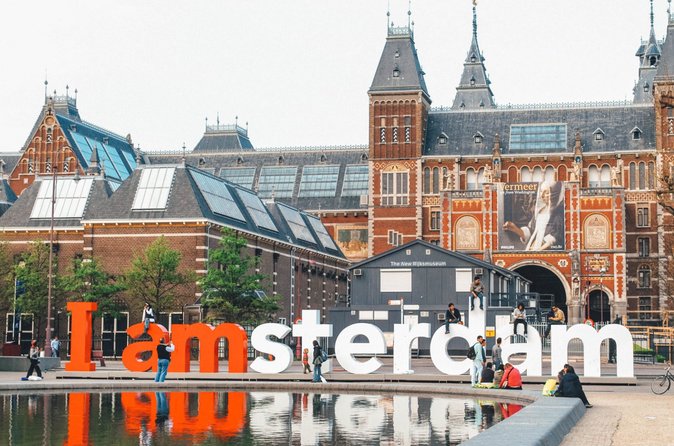
Stop 14: Rijksmuseum and Dutch art as a national story
The Rijksmuseum stop is a “big picture” art and history experience. The audio frames it as a cultural treasure house where centuries of Dutch art and history are arranged to highlight masterpieces.
You’ll get context around renovations and key works like Rembrandt’s Night Watch, plus what made the Dutch Golden Age so productive for painters, sculptors, and related arts. The audio also touches conservation techniques and explains how the Gothic Revival building design connects to national identity ideas from the 1800s.
What to note: Admission isn’t included. If you only want one major museum day, the Rijksmuseum is usually the most efficient choice.
Stop 15: Moco Museum Amsterdam and contemporary art in an intimate setting
Moco is where the tour shifts to modern art and pop-culture crossover. The audio explains its curatorial approach and why it mixes street art, digital installations, and contemporary works in a format meant for personal interpretation.
You’ll hear about artists featured, plus how modern art movements influence what you see now. It’s a useful stop if you want contemporary art explained in a “here’s what to notice” way rather than only a title and label.
What to note: Admission isn’t included.
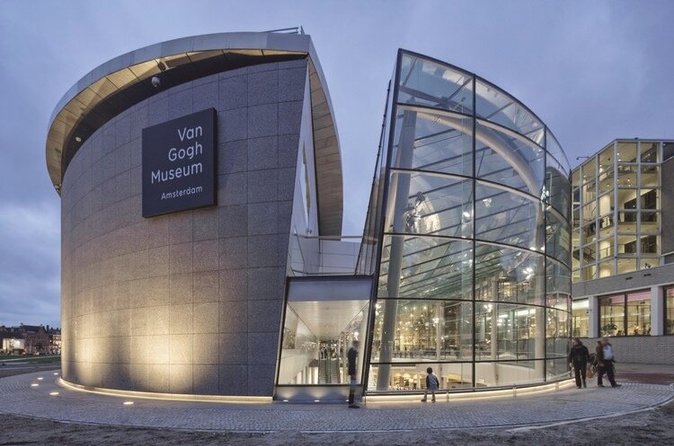
Stop 16: Van Gogh Museum and the link between struggle and style
The Van Gogh Museum stop focuses on his life and how his painting changed over time. The narration covers mental struggles alongside creative breakthroughs, and it explains techniques that shaped his distinctive look.
You’ll get connections to pigments and brushwork, plus how relationships with family, friends, and other artists contributed to his evolution. The audio also frames the tragic irony of fame arriving after his death.
Tip: This is a good stop to slow down for, especially if you like looking at brushstroke texture and color relationships.
Admission isn’t included.
Stop 17: Stedelijk Museum Amsterdam and modern art’s architecture of ideas
Stedelijk is Amsterdam’s modern and contemporary art anchor. The audio explains how the museum supported innovation over 150 years and connects that to movements born in the Netherlands, like De Stijl and CoBrA.
You’ll also hear about the museum’s extension (including its controversial “bathtub” design), and how architecture and exhibitions interact with public reaction. If you like art that responds to social and political issues, this is a strong match.
What to note: Admission isn’t included.
Stop 18: Vondelpark and the city’s planned cultural corridor
Vondelpark is not just a park; it’s a planning concept built around culture and quality of life. The narration talks about 19th-century urban planning and how wealthy patrons helped shape the area.
You’ll also learn why this district gets compared to places like London’s South Kensington or Paris’s Champs-Élysées—because museums and refined shopping streets sit next to the green escape. If you’ve been museum-hopping hard, this stop gives your legs a breather.
Best part: This stop is marked free.
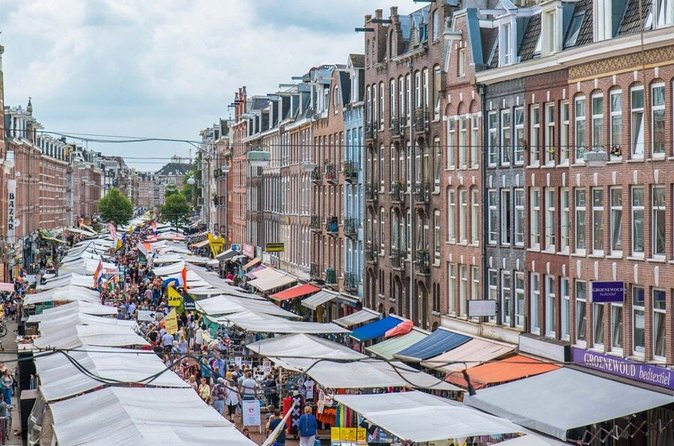
Stop 19: Albert Cuyp Market and day-to-day Amsterdam food culture
Albert Cuyp Market is where the city smells and sounds local. The audio explains how the market evolved from neighborhood gatherings into a widely known food destination, including how immigration waves expanded culinary variety.
You’ll hear stories of multi-generational vendors and discover notes about Dutch cheese-making techniques and seasonal specialties tied to agricultural heritage. This is also a good stop to practice slow browsing, because the narration helps you interpret what you see.
What to note: This stop is marked free.
Stop 20: A’dam Lookout and Amsterdam from above
If you like a viewpoint that helps you place the city in your head, do this. The audio guides you through the history of the tower’s transformation and explains the viewpoint’s relationship to Amsterdam’s geography and reclaimed-land challenges below sea level.
It also points out hidden landmarks you can spot from the deck—useful if you’re trying to connect canal layouts to neighborhood planning. Bring your camera and plan time to just look.
What to note: Admission isn’t included.
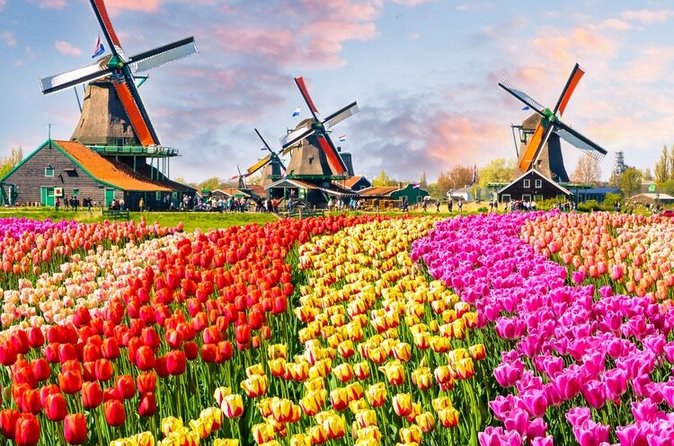
Stop 21: Zaanse Schans and Dutch heritage windmill engineering
This final stop shifts from city to heritage. Zaanse Schans is described as a living museum with 18th-century windmills, crafts, and preserved buildings that feel like stepping back in time.
The audio explains windmill technology and how it powered the economy during the Golden Age. You’ll also hear about traditional cheese-making processes and wooden shoe craftsmanship designed for marshy environments, linking it to how Dutch ingenuity adapted to water conditions long before modern renewable energy talk.
What to note: Admission isn’t included.
Pick Your Stops Like a Local, Not Like a Checklist
Because you’re not required to visit all 21, you should choose based on what kind of day you want.
If you want a classics day, I’d prioritize: Centraal Station, Dam Square, Royal Palace, and then one big-ticket art museum like the Rijksmuseum or Van Gogh Museum. Add Begijnhof if you want quiet contrast.
If you want “Amsterdam is built on water” energy, stack: Centraal Station, OBA, NEMO, Het Scheepvaartmuseum, and finish with A’dam Lookout. The audio ties the city’s maritime identity to modern engineering, so it feels connected rather than random.
If you want emotionally intense history, plan for Anne Frank House and Verzetsmuseum Amsterdam on separate days if you can. Those are the kind of stops you’ll remember for a long time.
Who Should Book This (and who might not love it)
This is a great fit if you:
- Want a budget-friendly way to tour major Amsterdam sights.
- Like the idea of a guide that’s there when you want it, not when a schedule says so.
- Enjoy architecture, art, and city context—not just photo stops.
It may not be your best choice if you:
- Prefer a true live guide who can answer questions on the spot.
- Don’t want to manage tech steps like opening SoundCloud and a browser-based map.
- Want a strict, timed, no-decisions itinerary.
Also, since the narration pieces are relatively short at each stop, it works well if you’re planning multiple stops in a day. If you want long guided walkthroughs, you may find yourself craving extra time inside each ticketed site.
Should You Book This Amsterdam Self-Guided Audio Tour?

I’d book it if you want a smart, low-cost way to understand what you’re seeing while you walk. For $6, the value is in the structure: clear stops, short audio segments, and a map that helps you keep moving. And the big win is control—your pace, your order, and your breaks.
Skip or rethink if you hate depending on headphones and internet, or if you strongly prefer a guided group experience. In that case, you might be happier with a traditional tour where someone handles the route and logistics.
If you do book: pick 6–10 stops for a first day, mix free sights with one or two ticketed ones, and don’t feel guilty dropping anything that doesn’t grab you. That’s the whole point of this kind of tour.
FAQ
Is this tour GPS guided?
No. It’s a self-guided audio tour, not a GPS-guided experience.
How do I access the audio and map?
You’ll receive two private access links through your booking platform’s messaging system: one for a SoundCloud audio playlist and one for an interactive Google My Maps itinerary.
Do I need an internet connection?
Yes. You need internet access to open the audio and the map links in your browser.
Is the tour available in English?
Yes, the audio is offered in English.
Are admission tickets included?
No. Entry fees are not included. Some stops are marked free, but ticketed stops require separate admission.
Can I choose my own starting point and order?
Yes. Since it’s self-guided, you can start and finish wherever you like and visit stops in any order.
How long is the tour?
It’s listed as lasting about 3 to 9 hours, depending on how many stops you choose and how long you stay at each.
Can I get a refund or change the date?
This experience is non-refundable and cannot be changed after confirmation.
Is it only for my group?
Yes. It’s a private tour/activity, and only your group participates.