REVIEW · WEST YELLOWSTONE
Big Sky Drive Self Guided Driving Audio Tour
Book on Viator →Operated by Travel with Action · Bookable on Viator
Turning your car into a classroom is fun. I love the hands-free GPS-triggered stories and the offline maps that keep working beyond cell service. One possible drawback: start a bit early/late or off the suggested spot, and the audio timing can feel off.
This is a simple idea done well: you drive, the app listens to your location, and the narration kicks in at the right moments. You get Montana place-names, Indigenous legends, wildfire history, and ranch-era routes, all packaged into a route that’s long enough to feel like an adventure but short enough to do on a half-day schedule.
The route runs about 75+ miles and takes roughly 2 to 3 hours, with 41+ audio stories along the way in English. If you hate car audio or you prefer your nature and history in a totally neutral tone, this may feel a little one-sided in places—but the practical value for the price is strong.
In This Review
- Key highlights (what’s most worth your time)
- The Big Sky Drive: a self-guided audio lesson you can steer
- Price and value: $16.99 per group is the real headline
- Setup in Bozeman: how you start the audio without losing time
- Entering the drive: Madison River and the Ice Age origin story
- U.S. Route 191: the road with huge reach
- At the Montana-Wyoming line: Gallatin River country and named mountains
- The Spanish Peaks and the Lave Lake detour (if you have strong legs)
- Sagebrush, mule deer, and the human trail through the canyon
- Peaks with personality: Storm Castle and a canyon that feels dramatic
- Ranch-era routes: Gallatin Gateway and John Bozeman’s trail impact
- One thing to think about: narration tone and optional stops
- How to make this work for your day (and get good photos)
- Should you book the Big Sky Drive audio tour?
- FAQ
- How long does the Big Sky Drive self-guided audio tour take?
- What does the $16.99 price include?
- Do I need cellular service to use the tour?
- Is the tour hands-free once it starts?
- What language is the tour offered in?
- Where do I start and end?
- Is there a guide meeting you at the start?
- Can I pause the tour to take breaks or explore?
- What if I need to cancel?
Key highlights (what’s most worth your time)

- 41+ location-triggered audio stories that play automatically as you drive
- Offline maps + offline playback after a one-time download in strong signal
- Big Sky region names and legends, from Chief Crowfoot to the peaks around King Butte
- Follow-the-river scenery as the drive tracks the Gallatin River for much of the route
- Optional Lave Lake hike: about 5 miles with nearly 2,000 feet of climbing
- Good value per group: one purchase covers up to 4 people in your car
The Big Sky Drive: a self-guided audio lesson you can steer
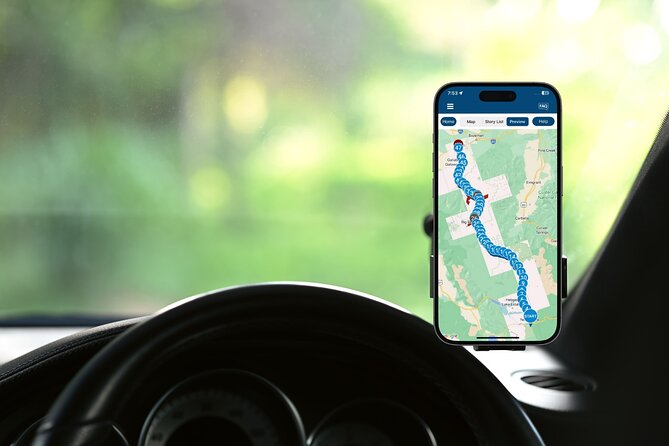
If you’ve ever driven through a place like Montana and wished someone would explain what you’re seeing, this is made for you. You start with your phone loaded, then you simply follow the route cues while the story layer turns road time into something more meaningful.
I especially like that the tour is hands-free by design. You’re not hunting for a playlist or tapping through chapters. Instead, the narration plays based on your location, so the story lands right where the view and the history connect.
The “best” part is that it’s not only about geology or only about people. You get both: the Ice Age origins behind the Madison River story, and then the human story of trails, towns, and who settled where. It’s also a smart length: 2 to 3 hours means you’re not committing the whole day, but you still cover a real stretch (more than 75 miles) of Big Sky country.
You can also read our reviews of more tours and experiences in West Yellowstone.
Price and value: $16.99 per group is the real headline
At $16.99 per group (up to 4 people), this is priced like a movie ticket and used like a half-day activity. That matters because many guided options charge per person, and driving tours can get expensive fast.
Here’s the value logic I’d use if I were deciding for my own trip: you’re paying for time, not admission. There are no required ticketed stops listed, and the tour is designed so you can pause for photos and quick breaks whenever you like. If you’re traveling with family or friends, the per-car purchase is the make-or-break advantage.
Add the lifetime access (no expiry) and it becomes something you can reuse later. If you return to Montana—or if you just want to redo parts when you’re in a different mood—you can. For repeat travelers, that lifts the value even higher.
Setup in Bozeman: how you start the audio without losing time
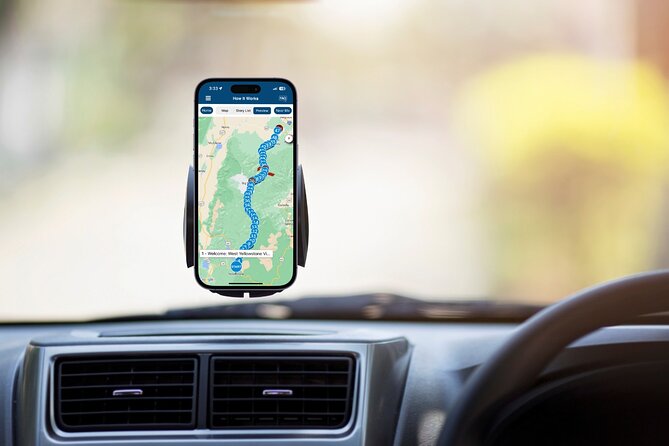
The tour’s meeting point is 102 Eagle Fjord Rd suite a, Bozeman, MT 59718. There’s no person meeting you at the start. You do your own setup and begin at the first story point.
Before you roll anywhere, do the one task that can make or break the whole day: you must download the tour while you’re on strong Wi‑Fi/cellular. After that, it works offline. So, even if you lose signal in the drive country, the audio keeps going.
When you’re ready to listen, you’ll use Action’s Tour Guide App. Once you’re onsite, open the app, pick the correct tour if you see multiple versions, then enter the password you receive by email/text. After that, the tour follows your location.
If you want sound in the car, plan to connect your phone to your stereo using Bluetooth, USB, or AUX. CarPlay support is mentioned as compatible, and Android Auto is on the way. If you’re also walking short stretches, headphones can help—especially since you’ll want to keep your ears free for both narration and wildlife sounds.
Practical tip: start exactly at the designated start point and follow the route and speed limits shown in the app. One of the clear pieces of feedback from real users is that starting a little out of place can make the audio timing feel off.
Entering the drive: Madison River and the Ice Age origin story
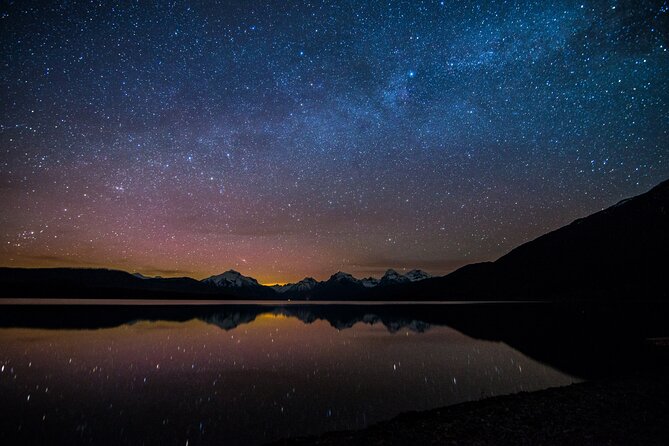
The tour begins by setting the geological stage with the Madison River. The narration connects Yellowstone-area origins to the idea that the Madison travels over 150 miles, eventually reaching the Missouri River near Three Forks.
What you’ll notice as you drive is that Montana views can feel timeless, but the stories aren’t. The Madison River story puts a time scale on the scenery—long, long ago—so you start seeing the river and valleys as outcomes of deep processes rather than just pretty features.
One reason this first stop works so well is pacing. You’re not thrown into a dense history lecture immediately. Instead, you ease in with a river story that’s easy to picture, and then you transition into the road itself.
A small note: the tour summary says “30 minutes • admission ticket free” at that first stop. In practice, you’re doing this as a driving and listening experience, so think of it as a story checkpoint, not a ticketed attraction.
U.S. Route 191: the road with huge reach
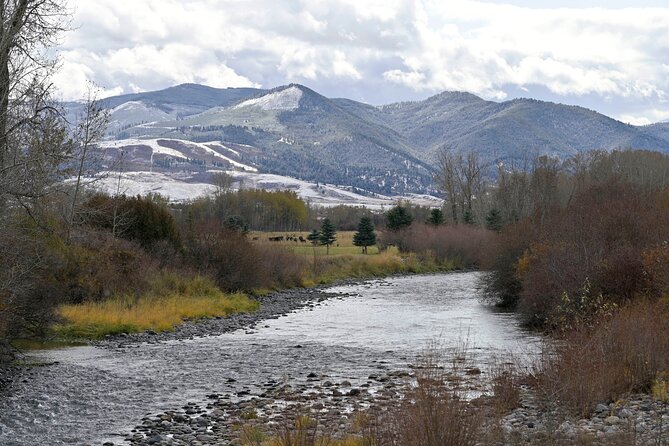
Next comes U.S. Route 191, described as a road with big geographic implications: keep driving and you’d reach near the U.S.-Canada border; go the other direction and you’d head toward deserts like Arizona.
This segment is useful because it changes your mental map. You stop thinking of the route as just local driving. You start recognizing it as part of a much bigger network—one that connects ecosystems, climates, and human movement across vast distances.
The narration also keeps you aware of how people name and interpret places. That leads right into the peaks and tribal legends that show up as you move along the route.
At the Montana-Wyoming line: Gallatin River country and named mountains
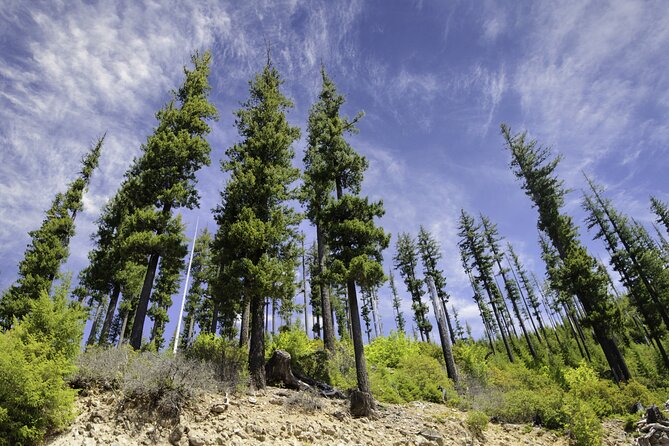
A highlight here is the way the tour guides your attention to what’s where. You’ll pass driving near the Montana–Wyoming state line, with the Gallatin Range to your right stretching down into Wyoming.
Then the narration shifts to the Gallatin River, which the route follows “almost all the way” toward the final destination. If you like river-driven scenery—changes in valley width, subtle shifts in vegetation, the sense of a corridor shaping travel—this is the heart of the drive.
As you approach mountain clusters, the audio points out specific high points:
- A cluster with King Butte and Big Horn Peak, each described as rising to almost 10,000 feet
- Cinnamon Mountain, tied to Montana wildfire history
- Mount Chipperfield and Wilson Peak (Wilson Peak is noted at about 10,600 feet)
What I find useful is that the narration turns those names into stories you can remember. For Wilson Peak, there’s a direct connection to a person who helped ratify the 19th amendment, granting women the right to vote. That’s the kind of detail that makes a view feel less generic the next time you see the same peaks.
Also watch for the Big Sky Ski Resort turn-off. The story explains the resort’s origins through Montana native Chet Huntley. Even if you’re not skiing, that origin story gives you a reason why this area got the “Big Sky” spotlight in modern times.
And when you pass roads toward Big Sky Meadow Village and the ski resort, the audio prompts you to look toward Lone Mountain. It’s these small “look left/right” moments that make a driving audio tour feel active instead of passive.
The Spanish Peaks and the Lave Lake detour (if you have strong legs)
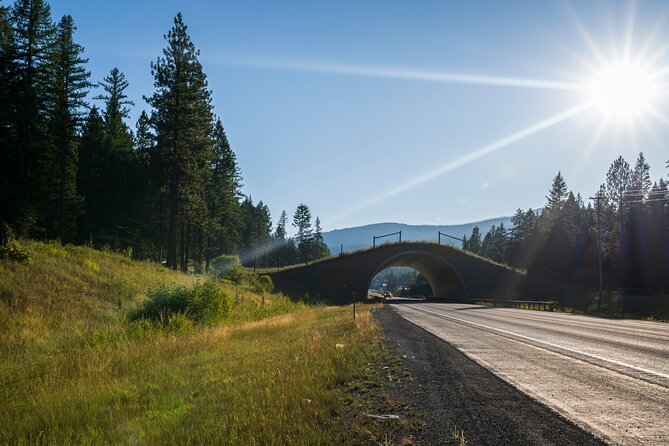
One of the most interesting optional add-ons is the Spanish Peaks area. As you drive, the audio notes that the left-side mountains belong to a sub-range of the Madisons.
Then comes the best “get out of the car” moment on the route: a moderately challenging hike to Lave Lake.
- About 5 miles
- Roughly 2,000 feet of climbing
- Can take over 3 hours
- Ends at a snow-fed lake that’s very chilly, with forested slopes climbing around it
- Offers views into the center of the Spanish Peaks
This is the part of the tour that turns the audio experience into something more personal. You’re not only listening to the story—you’re earning the view with your own effort.
Drawback to consider: if your plan is strictly a 2-hour drive with minimal walking, skip this stop. The hike length and elevation suggest it’s for people who really want that payoff.
Sagebrush, mule deer, and the human trail through the canyon
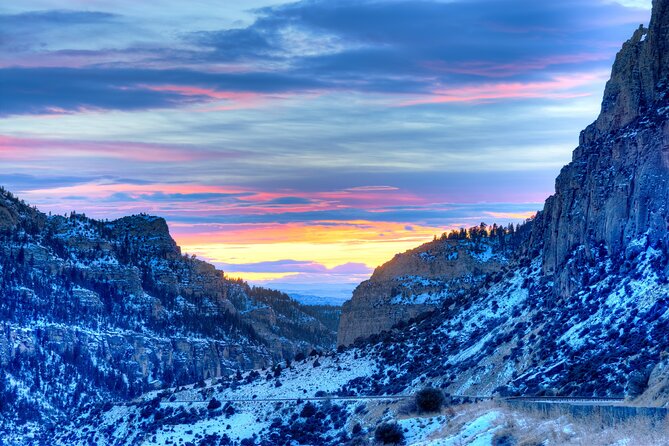
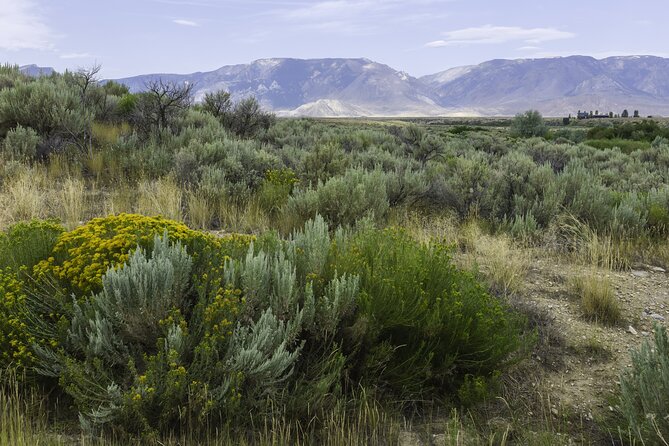
The narration pays attention to what’s growing and what’s moving. As you pass sections of grayish-green scrub, you’ll hear about sagebrush and why it matters in the area.
Then the drive turns to how life uses the corridor along the canyon and the river. The audio describes U.S. Route 191 running through the bottom of the canyon, following the natural path of the Gallatin River. That corridor is described as an essential passageway for millennia, where animals can use relatively flatter ground to avoid the rougher terrain higher in the mountains.
You also get human history tied to movement and food. Indigenous tribes like the Shoshone and the Bannock are mentioned as traveling down the Gallatin River Canyon, gathering fish and aquatic plants. That detail helps you picture the canyon not as scenery, but as a working route.
The narration also calls out mule deer as a classic Montana character to watch for while you drive. In other words, keep your eyes up as well as your ears on.
Peaks with personality: Storm Castle and a canyon that feels dramatic
A striking named feature comes up as a “tall, rocky outcropping” to your right called Storm Castle, described at about 7,000 feet.
That kind of name matters. It gives you a visual anchor when the mountains start to blur together. Even if you can’t pinpoint the exact peak after you park, the story gives you something memorable to look for while you’re actually driving.
The tour’s strength is how it blends that with practical advice: stick to the route, don’t rush, and use the audio prompts to time your quick photo stops.
Ranch-era routes: Gallatin Gateway and John Bozeman’s trail impact
As the drive approaches the end, you’ll hear about ranchers, cattlemen, and homesteaders using the Gallatin River corridor and stopping in Gallatin Gateway on their way to and from Bozeman.
The town name comes from John Bozeman, and the narration gives him a specific claim to fame: he masterminded the Bozeman Trail. That’s a key type of historical thread a good driving tour should offer. It explains why roads and towns ended up where they did, instead of treating them like random dots on a map.
One thing to think about: narration tone and optional stops
A driving audio tour is still storytelling, and storytelling has a point of view. One piece of feedback called out a disliked section connected to wolves and another raised concern about one-sided framing around environmental topics and climate language.
So here’s my practical way to handle that: treat this as a chance to learn local names and geography with a narrative spine, but don’t assume it will match every viewpoint you’d want. If you strongly prefer purely factual geology and neutral cultural history, you might find some segments annoying rather than enlightening.
The good news is that the tour also gives you control. You can pause, move on, or skip what you don’t want to hear without ruining the whole outing.
How to make this work for your day (and get good photos)
This is a 2 to 3 hour drive, but the real value is flexibility. Start when you want within the app’s flow, pause for photos, and take snack breaks as needed. It’s designed so you’re not boxed into a fixed schedule at every turn.
If you want the best results:
- Plan to drive at a calm pace so you’re not frantically stopping.
- Keep an eye out for wildlife like mule deer when you’re scanning for pullouts.
- If you care about syncing, start right on the cue and follow the speed limit shown in the app.
- If you’re doing the Lave Lake hike, consider making that your main “stretch goal” so you don’t feel rushed.
Also, check how you’ll listen. If your car audio setup is finicky, arrive early enough to connect your phone properly. A smooth start helps the whole drive feel easy.
Should you book the Big Sky Drive audio tour?
Book it if you want a high-value, flexible half-day with real storytelling tied to place names, rivers, and peaks. The offline setup is a big deal in Montana, and the per-group price makes it easier to justify than most guided options.
Skip it (or at least approach it cautiously) if you know you dislike mixed-perspective commentary in narration, or if you want a strictly “nature only” experience with minimal human history threads. Also, if you hate coordinating phone audio and GPS triggers, you may find the start-point syncing requirement annoying.
If you’re the type who loves learning while driving, this is a smart use of time in the Big Sky region—less waiting around, more listening, and plenty of chances to pull in, look out, and keep going.
FAQ
How long does the Big Sky Drive self-guided audio tour take?
It takes about 2 to 3 hours on average, covering a route that is over 75 miles long.
What does the $16.99 price include?
It’s priced per group (up to 4 people). You get access to the self-guided audio tour through Action’s Tour Guide App.
Do I need cellular service to use the tour?
You need strong Wi‑Fi/cellular to download the tour first. After the download, it works offline.
Is the tour hands-free once it starts?
Yes. Audio stories play automatically based on your location, and you can pause or resume as you like.
What language is the tour offered in?
The tour is offered in English.
Where do I start and end?
Both the start and end point are listed as 102 Eagle Fjord Rd suite a, Bozeman, MT 59718, USA.
Is there a guide meeting you at the start?
No. This is self-guided, so you start on your own at the first story point.
Can I pause the tour to take breaks or explore?
Yes. You can start anytime and pause anywhere, taking breaks for snacks and photos.
What if I need to cancel?
Free cancellation is offered. You can cancel up to 24 hours in advance for a full refund; within 24 hours, no refund is given.