REVIEW · WEST YELLOWSTONE
Yellowstone National Park Self-Guided Audio Tour
Book on Viator →Operated by Shaka Guide Apps · Bookable on Viator
Yellowstone feels huge until you see it by car. This self-guided offline GPS audio tour turns the park into a drive-with-purpose day, and I like the freedom to skip stops and linger where you want. One drawback to know up front: plan for a long sit-and-scan day, about 10 to 14 hours on average.
You start and end back in West Yellowstone, and your narration cues pop up as you drive. It’s one of the easiest ways to see more than just the famous geysers—because the route also threads in rivers, terraces, canyon overlooks, and wildlife-friendly valleys.
In This Review
- Key things to know before you go
- How the offline audio tour plays while you drive
- A practical setup tip (important in Yellowstone)
- Price and value: $15.19 per group for a whole-vehicle route
- Picking your day: how the 10–14 hour loop really works
- Madison River to Firehole Canyon Drive: start with water, then steam
- Midway Geyser Basin and Grand Prismatic Spring: color first, crowds later
- Where Old Faithful fits in
- Continental Divide, bridges, and wildlife chances in Hayden Valley
- Yellowstone’s canyon viewpoints: Upper Falls, Artist Point, and Uncle Tom’s Trail
- Washburn Hot Springs and Tower Falls: caldera views and big drops
- Mammoth Hot Springs terraces and the white-rock drama
- Norris Geyser Basin and Artists’ Paintpots: when you want more thermal edge
- Gibbon Falls, Tuff Cliffs, and the West Yellowstone finish
- Who this tour suits best (and who should look elsewhere)
- Quick, high-impact booking advice
- FAQ
- How many people can use one booking?
- Is this tour in English?
- Do I need Wi-Fi or cell service to use the tour?
- How long does the Yellowstone audio tour take?
- What’s included in the tour price?
- Is the Yellowstone entrance fee included?
Key things to know before you go
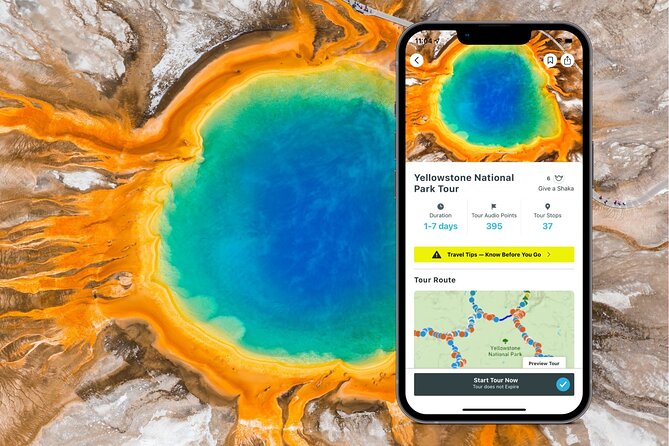
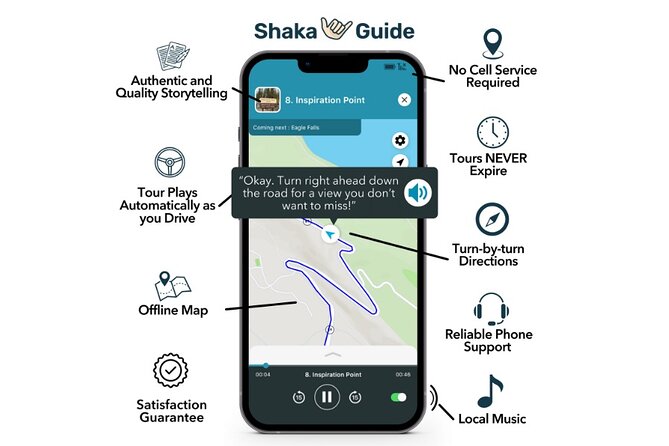
- Offline map + GPS turn-by-turn: no Wi-Fi or data needed once you download.
- Auto-play narration while driving: stories and directions trigger as you pass key spots.
- One booking covers your whole vehicle (up to 15): the price is per group, not per person.
- You can start at your customized tour start point: follow your GPS directions when you’re ready.
- Pick-your-own pacing: stop longer at the places you like; skip the rest.
- Major stops plus practical breaks: the route includes areas with visitor centers, lodges, and bathrooms.
How the offline audio tour plays while you drive
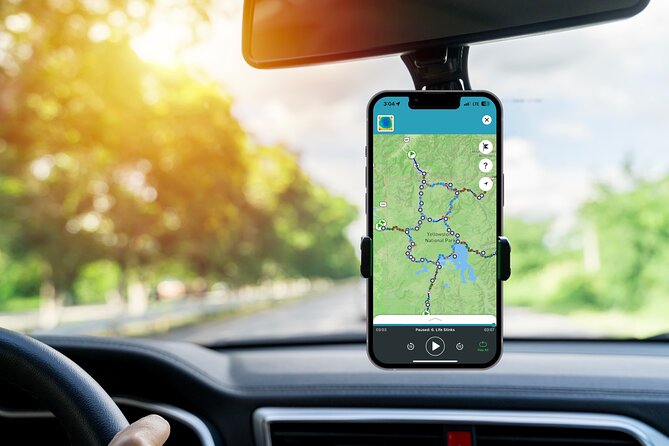
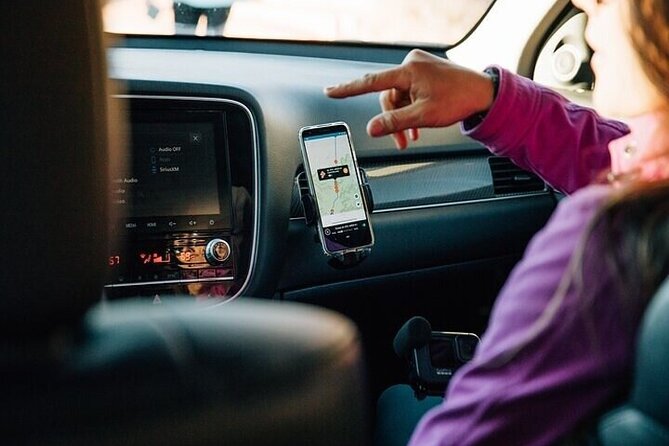
This is a mobile audio tour in English with an offline map and GPS navigation. After you book, you get an email with instructions, then you redeem a code in the Shaka Guide app. Once the tour is downloaded, the app handles the heavy lifting: it plays narration automatically as your GPS matches the route, and it also provides turn-by-turn directions so you don’t constantly re-check your phone.
In practice, this means you can focus on the road and pullouts instead of reading your way through the park. Yellowstone moves fast. Even when you’re trying to be calm, you’ll miss things if you’re fumbling with apps. Here, the audio cues are timed to the drive, so you get context right when you arrive.
A practical setup tip (important in Yellowstone)
Download the tour using strong Wi-Fi before you enter the park. One common snag people hit is realizing they need download time once they’re already inside and service is spotty or absent. I’d treat it like a must-do: arrive with the tour ready to play.
If you like audio through your car sound system, pairing your phone via Bluetooth can work well (so you’re not leaning over your phone screen).
Price and value: $15.19 per group for a whole-vehicle route
The listed price is $15.19 per group (up to 15 people), and the big value here is that it’s not per person. If you’re traveling as a family or a small group, this is where the math starts to look good quickly compared with guided group tours that charge per seat.
Now add the one extra cost you should budget: the park entrance fee for a private vehicle is $35 per booking, and parking fees are not included. Meals also aren’t included. So your full day cost is really:
- audio tour: low per vehicle
- Yellowstone private-vehicle entrance fee: fixed
- parking, food, and any snacks: your call
Even with those add-ons, the audio tour still often feels like a bargain because it helps you use every hour. In Yellowstone, “wasting time” usually means driving without knowing what you’re passing or skipping the quick stops that make the day feel complete.
Picking your day: how the 10–14 hour loop really works
This route is built for an all-day drive. On average it runs 10 to 14 hours, and the order of stops is designed to keep you moving between hot spring areas, canyon viewpoints, and wildlife zones without backtracking too much.
Here’s the basic feel of the day:
- You start with river scenery and hydrothermal features.
- You hit the big geyser belt (Midway, Old Faithful) while you still have full daylight.
- You shift to bridges, valleys, and falls where wildlife and birds can steal the show.
- Then you finish with more unique hydrothermal/geologic stops and quick scenic drives.
If you’re short on time, you don’t have to do everything. The app is designed so you can skip suggested stops and only take the parts you care about. That flexibility is a real quality-of-life feature in a park with lots of pullouts and lots of temptation.
Madison River to Firehole Canyon Drive: start with water, then steam
Your first stretch is Madison River, a crystal-clear ribbon known for fly fishing. The narration route keeps it practical, with quick context as you pass landmarks like Talus Mountain, Mount Haynes, and National Park Mountain. If you like to photograph reflections and fast-moving water, this is a strong opening act.
Near the river you also get easy options for breaks: a Visitor Center, the Tribal Heritage Center, and hydrothermal features along the Geyser Loop Trail. If you need a snack, coffee, or restroom time, the historic Old Faithful Lodge is called out as a handy stop.
Next comes Firehole Canyon Drive, a classic travertine-and-steam drive. Expect white travertine terraces and major thermal highlights such as Orange Spring Mound, Angel Terrace, and Aphrodite Terrace. This stretch is short, but it’s visually “wow” per minute.
A quick detour on Fountain Flat Drive adds variety: a grassy meadow vibe, small hot springs, and Maiden’s Grave. You’ll also get another look at the Firehole River, with trout activity in season.
Then the day leans deeper into hydrothermal variety on Firehole Lake Drive, where short roadside lookouts and small boardwalk walks lead you to features like the White and Pink Dome Geysers and the Great Dome Geyser.
Watch-out for this part: you’re still early in the day, and parking lots fill fast. If you want maximum time at each stop, roll in with a mindset of short, focused photo runs and quick walks instead of long detours.
Midway Geyser Basin and Grand Prismatic Spring: color first, crowds later
The Midway Geyser Basin segment is built around the big star: Grand Prismatic Spring. The route uses a short boardwalk loop that lets you circle the feature, which is the best kind of sightseeing in Yellowstone—close enough to understand the scale, without turning into a half-day hike.
If you have time, you get an optional add-on: pull into Fairy Falls Trailhead and consider the short one-way walk to the Grand Prismatic Overlook. The route notes the longer continuation toward Fairy Falls if you want to keep going.
Where Old Faithful fits in
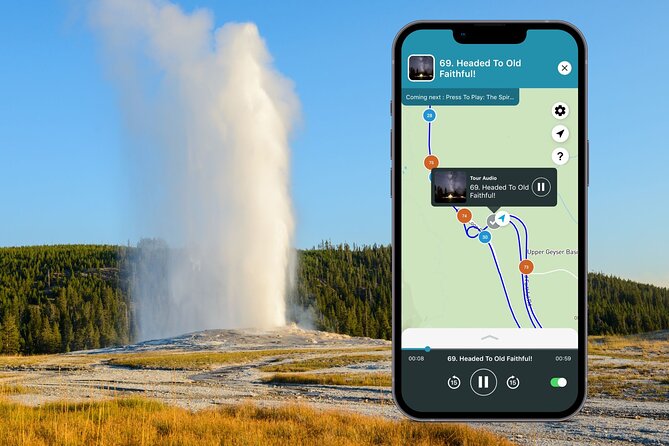
Then you’re at Old Faithful, the reliable one. The big eruption timing is about every 60–110 minutes, and the route gives you the “show up early so you’re not stressing” logic. Even if you’ve seen Old Faithful in photos, the power hits differently when you’re standing close and listening to the steam build.
Around Old Faithful, the app also points you toward nearby choices like the Visitor Center, Tribal Heritage Center, and Geyser Loop Trail options. For logistics, it calls out the Old Faithful Lodge again for restrooms, snacks, and the gift shop.
A useful follow-on is Kepler Cascades—short boardwalk access to a multi-tier waterfall system with drops up to about 50 feet.
Continental Divide, bridges, and wildlife chances in Hayden Valley
After geysers, the route shifts to a more relaxing pace—still scenic, but more about moving your eyes from steam to wildlife.
You stop at the Continental Divide at Isa Lake, where the narration explains the unusual hydrology: water flows toward two different oceans, draining one direction to the Atlantic side and the other to the Pacific. It’s a quick stop, but it’s the kind of odd Yellowstone fact that makes your brain feel smarter without trying too hard.
Next, Gull Point offers a scenic lake peninsula drive and a picnic-style pullover option. If you want a lunch moment without committing to a long hike, this is the kind of stop that works.
Then you’re at Fishing Bridge and the General Store area. The route encourages a short walk along the bridge to scan for Cutthroat trout below. It’s also where you can rest your legs and reorient before continuing the Grand Loop north.
The wildlife-heavy portion comes with Hayden Valley. The app frames it as a wildlife haven: grazers attract predators, and this is a place where you can slow down and watch. The route’s pacing also suggests you keep going until you reach the south rim area of the Grand Canyon of the Yellowstone for the next big visual shift.
A nearby stop, Lehardy’s Rapids, adds energy back into the day. In early spring, the narration notes jumping, spawning cutthroat trout—so if your timing matches that season, it’s a great place to look for movement in the water.
Yellowstone’s canyon viewpoints: Upper Falls, Artist Point, and Uncle Tom’s Trail

The Grand Canyon of the Yellowstone driving section is where the day earns its drama.
The route points you to two major viewpoints—Upper Falls View and Artist Point—and it also recommends Uncle Tom’s Trail as an optional hike. If you’re choosing just one “walk” here, Uncle Tom’s is typically the one that gives you a more intimate sense of scale compared with only viewing from above.
After looping around, there’s another stop logic: a turn right just past the North Rim Drive to get a final, close-up look at Upper Falls at a viewpoint right at the brink. The route calls out that you need only a short, easy walk—around a quarter mile—to reach the platform. This is ideal if you want a big photo moment without burning your legs before the later drives.
At Canyon Village, the tour suggests visiting the visitor center. The route highlights a lit diorama of Yellowstone, which can help you understand the geometry of the canyon and caldera system without needing a geology degree.
Washburn Hot Springs and Tower Falls: caldera views and big drops
Next you get Washburn Hot Springs as a quick stretching and restroom stop, plus a view out over the Yellowstone caldera. Short stop, big payoff.
The route then includes the drive up toward Mount Washburn, calling out how the road and heights can feel intense, but the view is the reward—over river, peaks, and distant valleys.
Then you reach the classic waterfall stop: Tower Falls. The app notes:
- a short boardwalk leading to multiple overlooks of the 132-foot falls
- and a one-mile there-and-back option to see down toward the river area
Nearby, it also includes Soda Butte, described as a hot spring cone that’s no longer active, but still worth the stop. The narration adds a bird angle: cliff swallows have taken over and turned the cone into a kind of bird condo, so you can watch activity even when the thermal action isn’t happening.
For services, Tower Junction is a practical restroom and fuel-stop style moment. The route also mentions the Roosevelt Lodge if you want to refuel with food.
Mammoth Hot Springs terraces and the white-rock drama
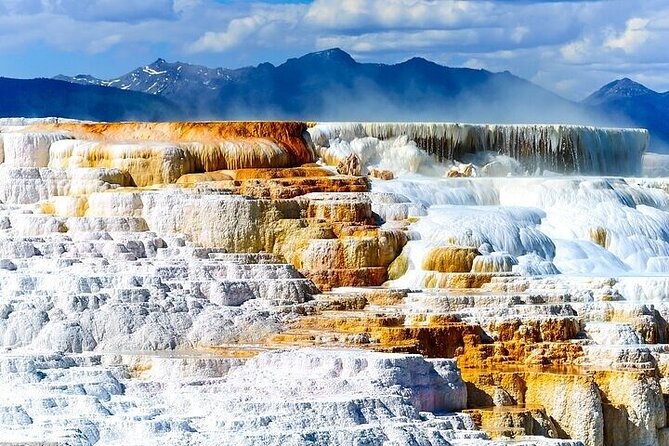
This part of the day is where Yellowstone’s look changes. Instead of steaming basins, you get Mammoth Hot Springs Terraces—the snow-white look that people come for.
You’re shown the Lower Terrace as a highlight, and the route later includes Upper Terrace Drive with those same named terrace features: Orange Spring Mound, Angel Terrace, and Aphrodite Terrace. Even if you’re not a thermal expert, the terraces are easy to “read” visually: bright mineral edges, layered textures, and the sense that you’re looking at slow-time geology.
Also on the route:
- The Hoodoos, where the guide explains they’re boulders that rolled down from Terrace Mountain, with real hoodoos formed by erosion
- Rustic Falls, viewed from pullovers, plus the Golden Gate viaduct
- Sheepeater Cliffs, with geometric basalt columns tied to the Sheepeater people
- Obsidian Cliff, where direct access is restricted, but you get great views from the road and a short walk to another viewpoint plus an exhibit stop
- Roaring Mountain, known for fumaroles that hiss and roar, with sulfur-reducing bacteria responsible for the ash-gray look
- Museum of the National Park Ranger, a film and exhibit stop built around park ranger stories and history
This is also a good segment for pacing. Many of these are short stops—perfect when you want to see a lot without committing to long hikes.
Norris Geyser Basin and Artists’ Paintpots: when you want more thermal edge
Once you think you’re done with geysers, the route adds Norris Geyser Basin. It’s described as Yellowstone’s hottest and oldest geyser basin, and the walking loop is highlighted as a 2.9-mile looping boardwalk experience. If you only do one “extra” thermal zone beyond the big ones, this is the kind that can make Yellowstone feel deeper than a greatest-hits list.
After that, you get Artists’ Paintpots, a 0.6-mile boardwalk in pine woods that opens into colorful mud pots. The narration notes this is a strong choice when you want hydrothermal color without heavy crowds.
The route also includes quick road-access thermal stops like Beryl Spring (noted for its blue color) and then transitions out toward the falls and picnic areas.
Gibbon Falls, Tuff Cliffs, and the West Yellowstone finish
The route keeps you moving toward scenic water and geology.
Gibbon Falls is paired with a picnic-area lunch concept at Gibbon Picnic Area. Then it’s less than a half-mile drive to the falls, named for early Yellowstone explorer Colonel Gibbon.
Tuff Cliffs Picnic Area is another quick geology stop. The narration notes it’s made from Yellowstone’s early volcanic eruptions and welded volcanic ash, plus it includes picnic tables and a restroom at the pullover.
Finally, the route closes by guiding you back toward West Yellowstone, with a suggestion for a scenic drive at dusk as you exit. The app frames it as a chance to rest and recharge before your next stop—like a day in Grand Teton.
Who this tour suits best (and who should look elsewhere)
This works best if you:
- want the flexibility to spend more time where you personally care
- prefer a self-paced drive instead of joining a bus schedule
- like learning while you go, via GPS-triggered stories
- are traveling in a group that benefits from one price per vehicle
It may not be the best fit if you:
- want minimal driving and mostly short walks
- dislike using your phone (even with offline maps, the app is still the guide)
- are hoping for a hands-on human guide for Q&A in the moment
Quick, high-impact booking advice
If you’re the kind of person who wants Yellowstone to feel organized without feeling rushed, book this. Download the tour first so it plays smoothly, then treat the route like a menu: take the geyser basins that call to you, slow down at the canyon stops, and don’t rush the terrace and cliff side stops—those short ones often become the photos you didn’t plan on.
Should you book? If you can handle a full-day drive and you’re comfortable following GPS, yes. It’s a strong value way to turn a huge park into a day with a clear rhythm.
FAQ
How many people can use one booking?
The tour is priced per group and allows up to 15 people in the vehicle.
Is this tour in English?
Yes. The audio narration is offered in English.
Do I need Wi-Fi or cell service to use the tour?
No. The tour includes an offline map and works with GPS offline, so you do not need continuous Wi-Fi or data.
How long does the Yellowstone audio tour take?
It’s listed as 10 to 14 hours (approx.).
What’s included in the tour price?
You get the offline audio guided tour, automatic narration as you drive, GPS turn-by-turn directions, and an offline map. You also get freedom to explore at your own pace.
Is the Yellowstone entrance fee included?
No. The tour does not include the entrance fee for a private vehicle, listed as $35 per booking, and parking fees are also not included.