REVIEW · RIGA
Audio Tour of Riga Old Town
Book on GetYourGuide →Operated by Tours Across Baltics APP, SIA · Bookable on GetYourGuide
Riga Old Town is best with your own pace. This GPS-aided audio walk gives you 32 sights with prepared descriptions and images, so you always know what you’re looking at. I also liked the clear tour line concept, because it turns a confusing maze of streets into a simple route you can follow. One thing to consider: the map guidance can be a bit tough at times, so it helps to be ready to use a backup map.
You start right at the Statue of Roland, then your smartphone location services do the work. I liked that it’s genuinely self-guided, which means you can pause for a shop stop without feeling rushed. The access window is 15 days, which is handy when you’re building a Riga itinerary around real life (sleep, weather, and how long you get distracted by architecture).
In This Review
- Key highlights you will actually use
- Starting at the Statue of Roland: your Riga Old Town launch point
- How the GPS audio works in English (Story Builder web link)
- The 32-sight walk: pacing yourself through Old Riga
- The trade-off: quick stops mean you need to choose
- Riga’s UNESCO Old Town and Art Nouveau context you’ll see as you walk
- A practical stop-by-stop strategy (32 sights, grouped by vibe)
- Phase 1: Get your bearings in the medieval core
- Phase 2: Churches and squares where the city’s past shows on the surface
- Phase 3: Art Nouveau details you can spot once you know what to look for
- Phase 4: Special detour logic, including Riga Black Magic and the cathedral tower option
- When the map overlay struggles: how to avoid getting stuck
- Price and value: is $12 fair for 32 GPS stops?
- Who should book this audio tour (and who should think twice)
- Should you book this Riga Old Town audio tour?
- FAQ
- Where does the audio tour start?
- Is this a guided tour with a person?
- How many sights are included?
- What language is the audio guide?
- How do I access the tour content?
- Does it use GPS on my smartphone?
- Can I start the tour at any time?
- What’s the wheelchair accessibility like?
- Is there free cancellation?
- What should I do if the map guidance is unclear?
Key highlights you will actually use
- Start at the Statue of Roland, the clean handoff point for your Old Town route
- 32 pre-set sights you can do at your speed without joining a group
- English GPS audio on your phone, triggered with location services
- Photos included at each stop, so you can match what you see in the street
- Flexibility when you want to detour, like a stop for black balsam at Riga Black Magic
- Wheelchair accessible, so the format works for more visitors
Starting at the Statue of Roland: your Riga Old Town launch point
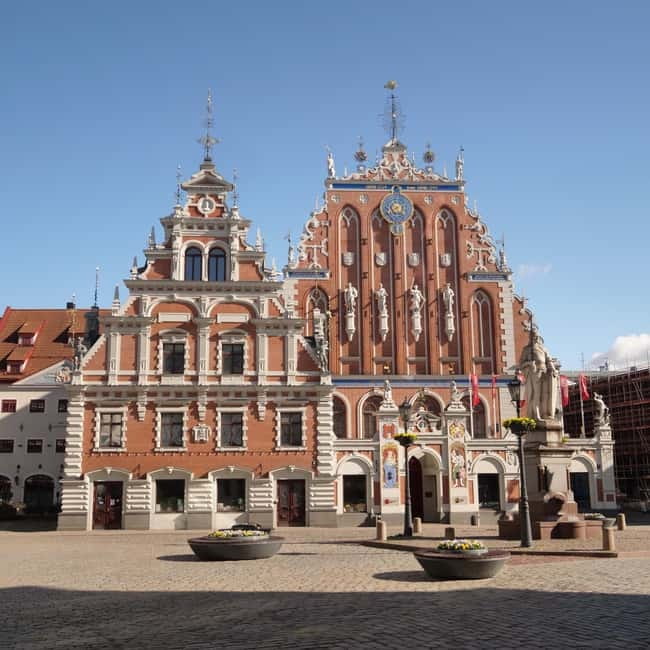
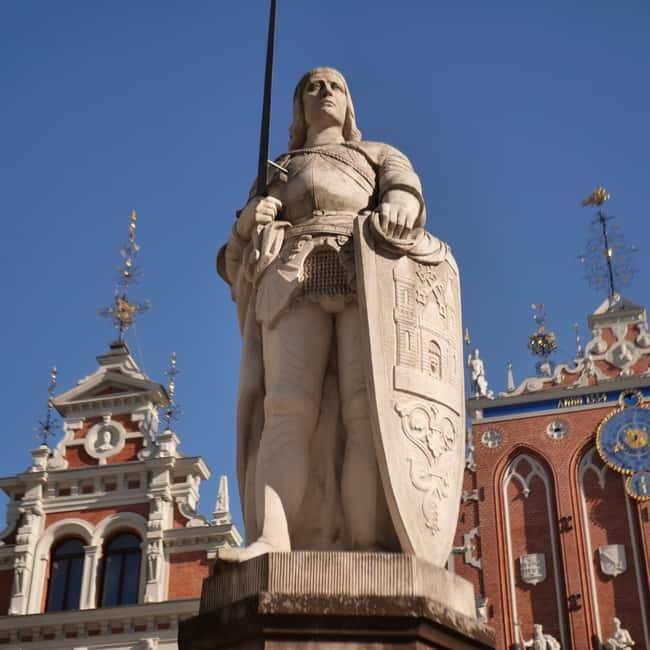
The meeting point is the Statue of Roland (Rolanda statuja), which is a smart choice. It’s central, easy to find, and it helps you start in the middle of the action instead of wandering first and learning later.
When you arrive, take 60 seconds to get your phone ready. Make sure location services are on before you begin, because the tour relies on GPS to activate the right audio as you walk. Then you can step off with confidence, rather than stopping every few minutes to figure out where you are in relation to the route.
Also, give yourself permission to get oriented first. Old Riga streets can feel like they twist on purpose, and that’s not you doing something wrong. It’s just how the city is.
You can also read our reviews of more tours and experiences in Riga.


How the GPS audio works in English (Story Builder web link)
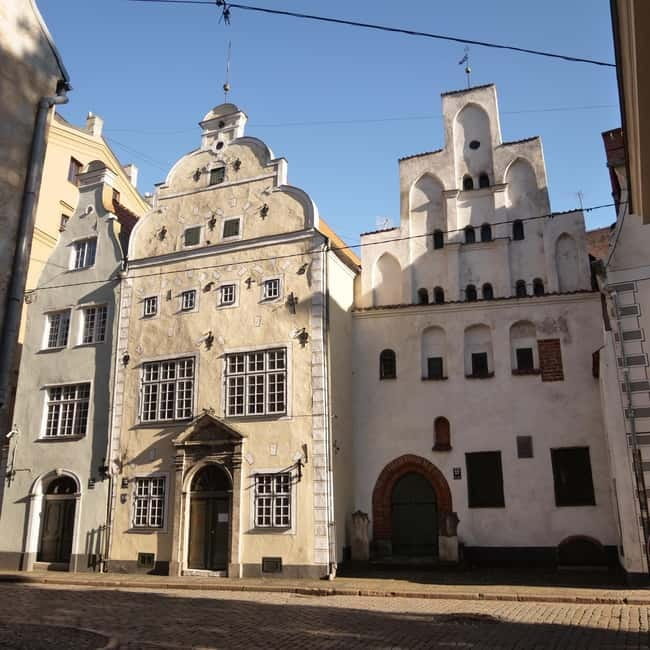
This is an English-language, GPS-guided audio tour for your smartphone. You’re given a web link that you open in your browser on any smart device, which means you’re not stuck hunting for a specific app store download.
Once you’re on the link, you can enable location services so the guide can act like a walking co-pilot. The tour is already prepared for you: descriptions and images are built in, and the phone handles the timing while you focus on the streets.
A useful tip from real usage: you may be able to start the tour whenever you want, not only from the beginning. In practice, that means you can fit the route into your day based on where you’re already standing, whether you’re starting earlier, late, or after a café break.
Finally, keep your expectations aligned with the format. The guide clips are designed to be quick introductions at each stop, not long lectures. If you want deep, layered commentary at every building, you might find this style more like orientation than textbook history.
The 32-sight walk: pacing yourself through Old Riga
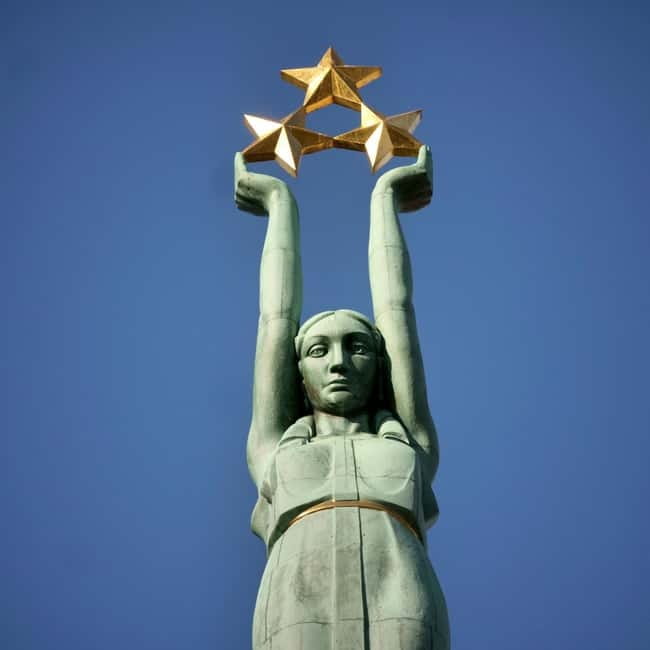
The tour is built around 32 interesting sights that you can reach on foot from Old Town. That matters because you’re not scheduling rides, transfers, or waiting for a group to assemble. You’re doing a continuous walk where each new stop pulls you forward.
In a self-guided setup, pacing is everything. I suggest you walk the route steadily, then choose your personal “linger spots” when a place catches your eye. That could be a photo-worthy façade, a church exterior, or a moment where the street opens into a small square and you can finally see what’s around you.
This format also makes it easy to add your own mini-detours. One clear example from experience with this tour is the flexibility to pause for a black balsam stop at Riga Black Magic. You get the information you need from the tour, and you still control how long you stay.
The trade-off: quick stops mean you need to choose
The tour’s audio is short per stop. That’s good if you’re tired, busy, or you like a snack-sized history dose. It can feel limiting if you want slow, detailed explanations of every architectural feature and historical era.
Riga’s UNESCO Old Town and Art Nouveau context you’ll see as you walk
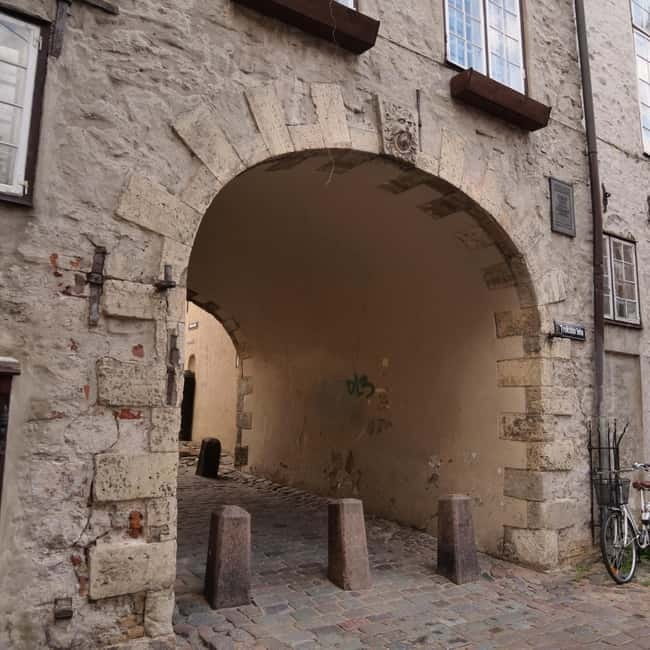
Riga is one of Northern Europe’s big three metropolises, alongside Stockholm and Copenhagen, and it earns that place. It’s also the leading city of the Baltics, shaped by centuries of change, from early pagan influences to German knights, Swedish kings, and later Soviet authorities.
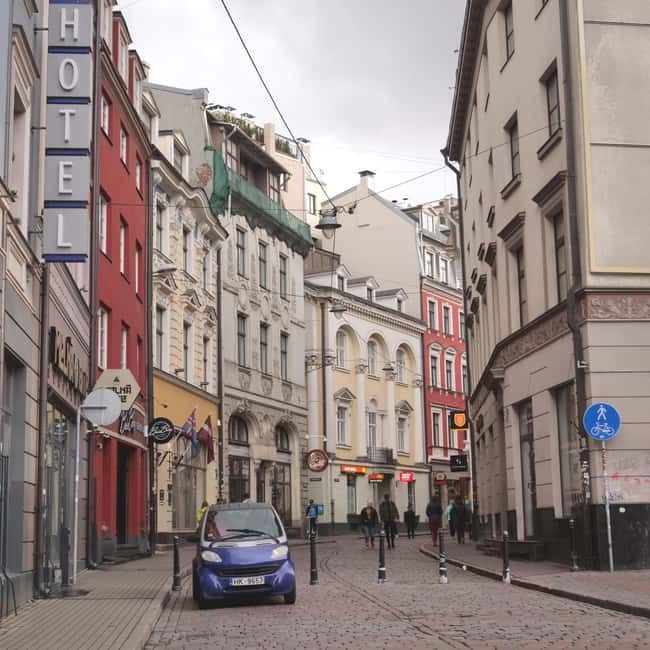
As you do the walk, you’ll notice why Riga is so often praised for architecture. The medieval Old Town is a UNESCO World Heritage Site, and the streets are the kind where every corner feels like a scene change. Churches, cobblestones, and historic squares give you that strong sense of being in the center of a story.
Then there’s the Art Nouveau angle. Riga is known for its staggering collection of Art Nouveau buildings, described as the second-largest in the world. That doesn’t just matter for architecture nerds. It changes how you look at ordinary street corners, because facades become the main attraction, not background scenery.
The tour is useful here because it keeps you from doing the common mistake: staring at the prettiest building in front of you without understanding why it matters in Riga’s bigger timeline.


A practical stop-by-stop strategy (32 sights, grouped by vibe)
Even without a single giant “official itinerary list” in front of you, you can treat the 32 stops like a sequence of themes. That helps you stay oriented when the GPS map overlay gets finicky.
Phase 1: Get your bearings in the medieval core
The early part of the route is about setting context: medieval street layout, historic exteriors, and the feel of Old Town. The audio gives you short descriptions and images, so you can match what you’re hearing to what’s right in front of you.
If you’re the kind of person who likes photos, this is where the visuals are most helpful. You’re building a mental model of how the Old Town fits together, so later stops feel easier.
Potential drawback: because the audio intro is brief, you might want to slow down for one or two stops even if the next one is already queued. Otherwise, the story can feel a bit quick.
Phase 2: Churches and squares where the city’s past shows on the surface
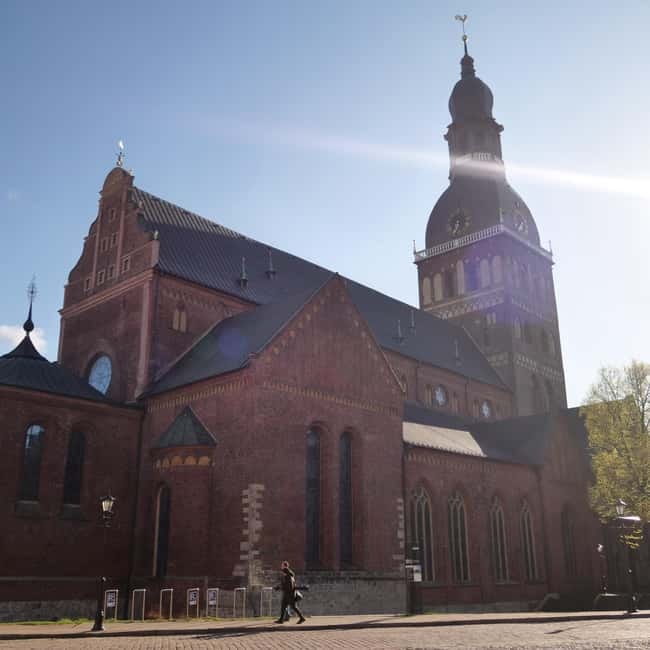
Next come stops tied to churches and the public rhythm of squares. This is where Riga’s history becomes visible fast: stonework, spires, and the way people used to gather in open spaces.
What I like about this stage is that it’s naturally photogenic. You don’t need to hunt for views, because the built environment hands them to you. The audio then gives you enough context to understand what you’re seeing, without turning the walk into a class.
Consideration: if your phone is low on battery, this phase is where you’ll feel it. You’ll rely on GPS location cues and audio playback, so plan a charge or bring a small power bank.
Phase 3: Art Nouveau details you can spot once you know what to look for
As you move along, the tour helps you spot the Art Nouveau side of Riga. The guide’s images act like a visual checklist, so you learn what to notice: ornament style, façade shape, and the kind of architectural “character” that defines this city.
This is also where you can get your best “aha” moments. Without guidance, you might admire a building and move on. With guidance, you start to recognize patterns and stop treating every facade as a one-off.
Phase 4: Special detour logic, including Riga Black Magic and the cathedral tower option
Two stops are explicitly the kind of things you can make part of your personal routine.
- Riga Black Magic: you can pause for black balsam shopping and still stay on track with the tour’s flow. This is a great example of why a self-guided format beats a rigid group tour.
- Riga Cathedral tower: at least one stop includes the option to go up the tower. That means you can choose to add a vertical detour if you want a bigger view, even if you skipped that on other days.
These are the moments where the tour becomes more than narration. It becomes a flexible planning tool.
When the map overlay struggles: how to avoid getting stuck
This is the one practical problem to prepare for. The tour uses smartphone GPS, and that’s usually smooth. Still, there are cases where the map isn’t as easy to follow as you’d hope.
If you notice the overlay doesn’t make it obvious where you are, you can use the map version instead. Another practical workaround is to use Google Maps to get to the next point of interest. This keeps you moving without losing the spirit of the self-guided format.
Also, give your phone brightness a quick check. If the street names are hard to read due to overlay graphics, you’ll spend more time staring than walking.
If you do get slightly off route, don’t panic. Old Town is compact. You can re-align with GPS and continue rather than forcing yourself back to the exact spot like it’s a museum security checkpoint.
Price and value: is $12 fair for 32 GPS stops?
At $12 per person, this tour sits in the “good value” category for a few reasons.
First, you’re paying for 32 pre-built stops with descriptions and images, delivered right to your phone. That’s not just a voice track; it’s a guided structure that replaces the need for a paper map and a lot of decision-making.
Second, you’re buying flexibility. A paid walking tour with a person can be great, but it’s also time-locked. Here, you can pause, detour, and control your pace. If you enjoy shopping or taking breaks, self-guided value climbs quickly.
Third, the access window is 15 days, which reduces pressure. If one day gets busy or rainy, you still have time to fit the route later.
Where the value drops a bit: if you want detailed, stop-by-stop history with long explanations, the short audio introductions may not satisfy. In that case, a more narration-heavy guide might feel more worth the money.
Who should book this audio tour (and who should think twice)
This is a strong fit if you want Riga at your own speed. You’ll like it if:
- you prefer learning through walking instead of sitting through a group briefing
- you want a structure that covers major sights without planning every detail in advance
- you’re comfortable using a smartphone for navigation
It might not be your best match if:
- you hate GPS-based guidance or struggle with smartphone maps
- you need deep historical storytelling rather than quick explanations
- you’re the type who wants every stop explained at length, not introduced briefly
One more thought: this tour shines for people who like independence with guardrails. You’re not left completely alone, but you also don’t have to coordinate with anyone else.
Should you book this Riga Old Town audio tour?
If you’re visiting Riga and want a simple way to cover a lot of Old Town sights while keeping control over your time, I’d book it. The combination of a self-guided GPS route, English narration, and 32 stops with images makes it an easy win for planning.
Book it especially if you like the idea of lingering where you want, like pausing for black balsam at Riga Black Magic, or choosing whether to go up a tower for a bigger view. If you’re ready to handle the occasional map confusion by using an alternate map view or Google Maps, you’ll likely find the experience smooth enough.
If you crave long historical lectures at every stop, you may feel the audio is too short. In that case, consider pairing this with one or two longer guided experiences during your trip, and use this audio tour as your flexible walking backbone.
FAQ
Where does the audio tour start?
You start at the Statue of Roland (Rolanda statuja).
Is this a guided tour with a person?
No. It’s a self-guided audio tour you use on your own.
How many sights are included?
The tour covers 32 interesting sights.
What language is the audio guide?
The audio guide is in English.
How do I access the tour content?
You’ll receive a web link that you can open on any browser or smart device to access the GPS-aided audio guide.
Does it use GPS on my smartphone?
Yes. You’ll need to enable location services for the GPS function to work.
Can I start the tour at any time?
Yes. You don’t have to start from number 1, and you can start whenever you want.
What’s the wheelchair accessibility like?
The activity is listed as wheelchair accessible.
Is there free cancellation?
Yes. Free cancellation is available up to 24 hours in advance for a full refund.
What should I do if the map guidance is unclear?
If the map overlay doesn’t guide you clearly, use the map version and consider using Google Maps to reach the next point of interest.