REVIEW · SPLIT
Sightseeing Split’s Roman Ruins: A Self-Guided Audio Tour
Book on Viator →Operated by VoiceMap Audio Tours · Bookable on Viator
A palace sounds best when you can wander. This self-guided Split Roman Ruins audio walk lets you explore Diocletian’s Palace at your pace, with GPS to keep you moving and audio that helps you read the site. I loved the freedom of not following a crowd, and I also liked the lifetime access so you can replay it when you come back to Split. One small catch: the GPS can start a bit off for a moment, but you can usually correct and continue without losing time.
The route is built for people who want the big Roman highlights and the useful context that makes ruins feel less like random stone. You’ll spend about 1 to 1 hour 15 minutes, moving through palace spaces, brief stops in key areas, and then out toward the city’s living corners near the market and fruit square. The whole experience is designed to run with the VoiceMap app, including offline audio, maps, and geodata, which matters in old-city streets where signals can be hit-or-miss.
If you’ve ever wanted to do Split’s Roman core but hate slow tours that don’t quite match your interests, this is a strong fit. You’ll walk a compact but varied loop, and you’ll get enough structure to know what you’re looking at, without someone holding you back. Just be ready with a smartphone and headphones, since those aren’t included.
In This Review
- Key things to love about this VoiceMap walk
- Diocletian’s Palace, on your time
- Price and value: $14.99 for a route you can replay
- Getting started: the Model point and the Riva start
- Inside Diocletian’s Palace: cellars, mosaics, and the triclinium
- Jupiter’s Temple and the palace rhythm
- Silver Gate, the Cathedral area, and Golden Gate
- Synagogue, old city hall, Standarac, and chapel stops
- Fish market, square time, and finishing at Fruit Square
- Using VoiceMap smoothly: offline audio and GPS
- Timing tips for a 1:00 to 1:15 walk
- Who this self-guided audio tour is best for
- Should you book this Roman ruins audio walk?
- FAQ
- How long is the Split Roman Ruins self-guided audio tour?
- Do I need to buy tickets for museums or attractions on the route?
- Is the tour available offline?
- What do I need to bring?
- Where does the tour start and end?
- Can I get a refund if I cancel?
Key things to love about this VoiceMap walk
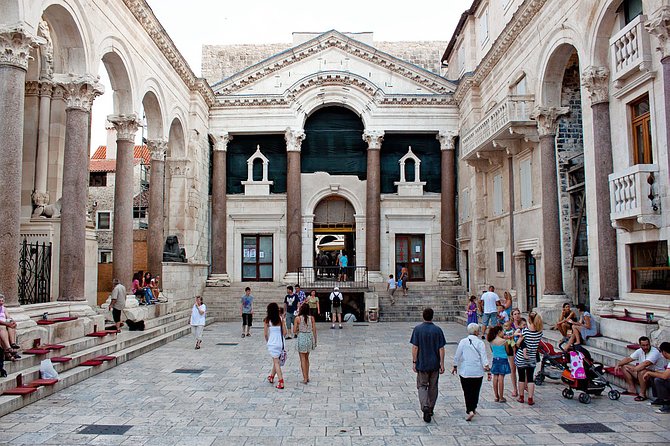
- GPS-guided route that helps you stay oriented inside Diocletian’s Palace
- Lifetime access in English, so you can repeat the walk whenever you want
- Offline audio + offline maps to keep the tour smooth even with weak service
- A smart mix of palace interiors and city streets (gates, cathedral area, synagogue area, market)
- Frequent short “pause points” like Peristyle and Jupiter’s Temple where the audio gives you focus
- A clean finish in Fruit Square, right where you naturally want a coffee or gelato
Diocletian’s Palace, on your time
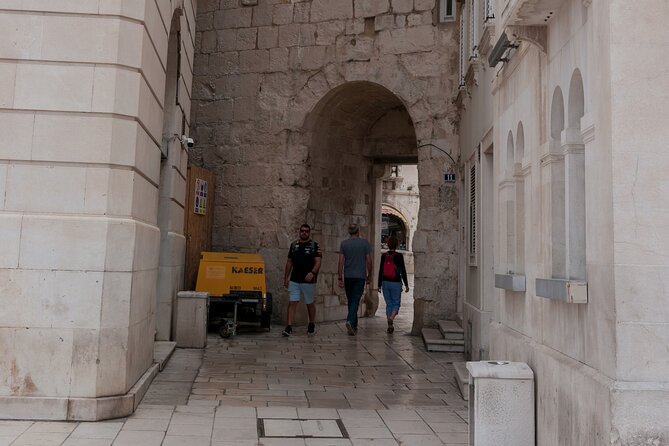
Split’s Roman core has a built-in problem for most visitors: it’s famous, but it’s also easy to get lost in the maze of walls, alleys, and reused stones. This tour solves that with a self-paced format and GPS guidance, so you can keep your own rhythm while still having a clear route. You’re not waiting for a group to regroup, and you’re not constantly checking your phone to figure out the next turn.
I like that the walking path covers the palace in a way that feels logical: you start by the waterfront, then move into the palace spaces, then gradually transition back toward everyday Split. The audio is paced like a conversation with someone who wants you to notice the right shapes, not just memorize facts.
There’s also a practical side to doing it this way. With self-guided tours, you can choose a time that matches your energy and the light. The tour is available daily from 12:00 AM to 11:59 PM within the listed period, which gives you flexibility if you’re balancing ferry times, dinner plans, or a late afternoon arrival.
You can also read our reviews of more tours and experiences in Split.



Price and value: $14.99 for a route you can replay
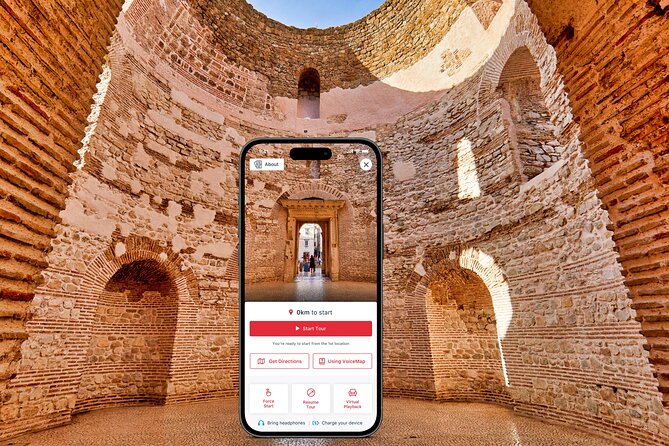
At $14.99 per person, this isn’t trying to be a budget “textbook walk,” and it also isn’t priced like a premium guided group. What you’re really paying for is the combination of route guidance plus commentary in English that explains what to look at as you pass each landmark.
The lifetime access is a big part of the value. If you later return to Split, you’re not stuck paying again just to re-see your favorite parts. And because the audio is downloadable for offline use, you can do the walk without burning through roaming data or hunting for signal every few minutes.
One more value point: the tour is designed to be done in about an hour to an hour and 15 minutes. That shorter commitment can be perfect when you’re pairing it with beach time, a harbor meal, or another attraction later in the day. You can still fit real life into your schedule instead of turning the whole day into “Roman ruins duty.”
Getting started: the Model point and the Riva start
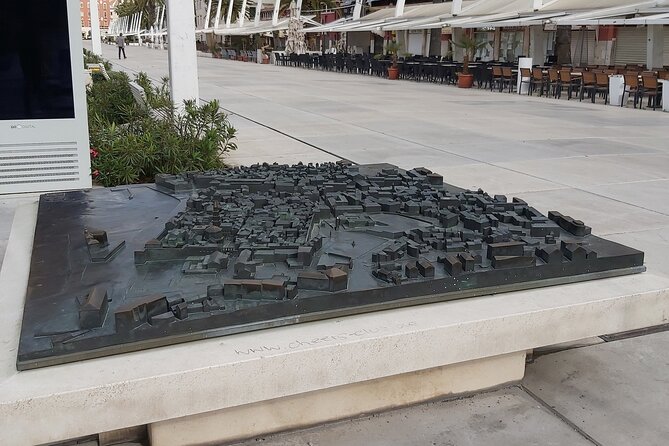
You begin at the Model of the historical core of the city of Split, on Obala Hrvatskog narodnog preporoda 23. From there, the tour leads you to where it actually starts walking: the Riva. That sequence is helpful if you like to orient yourself before you move, and the location is central enough that it feels easy to reach on foot.
The most useful habit here is to download and open the app before you start walking. The experience is built around the VoiceMap platform, and the offline setup matters. When the audio and maps are ready, you can focus on the streets and not fight with screens.
If your GPS lands you slightly wrong at the first moments, don’t panic. The tour is short, and once you match the correct spot, it’s easy to continue. That one hiccup is worth mentioning because it’s the only drawback hinted in the experience: you may need a quick recalibration at the start.
Inside Diocletian’s Palace: cellars, mosaics, and the triclinium
Once you’re moving through Diocletian’s Palace, the audio approach becomes the star. As you pass from one named area to the next, the commentary helps you connect the physical space to its purpose, so you’re not just looking at walls and arches with no “why.”
You’ll hit brief moments in the cellars, then continue toward the Mozaik Podrum. Even if you only catch a glance, the names alone tell you what kind of features to pay attention to. The audio is there to guide your eyes to the parts you might otherwise miss.
Next comes the Triclinium, a stop that works well for people who enjoy learning how daily routines were shaped by Roman architecture. You’ll also pass a Museum area along the way. Since entrance tickets aren’t included for museums or attractions, treat the museum stop as an orientation and a visual stop—something to understand the context, even if you don’t go inside.
Then you reach two more “stop and listen” segments: the Peristyle and the Vestibulum. These are the kinds of places where a guided moment really matters, because open space and transitions can feel confusing when you’re walking without direction. The audio helps you make sense of how these areas fit together.
Jupiter’s Temple and the palace rhythm
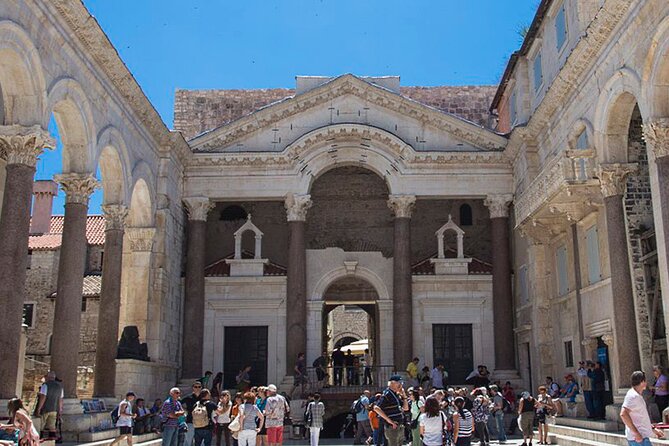
A highlight moment is the brief stop at Jupiter’s Temple. Even without long explanations in advance, you’ll know you’re in a major Roman-themed area because the tour pauses here. That pause is key: it gives your brain a chance to slow down, take in scale, and understand why this spot matters.
After that, the route continues through more named areas around the palace zone, including Palaca Cindro and then toward major boundary points like Silver Gate. Moving past gates is where the tour stops being just “ruins viewing” and becomes “how the palace met the city.” Gates are natural wayfinding anchors, and they help you feel the loop.
As you go, the audio keeps you moving through the story at a steady pace. That matters because Diocletian’s Palace can feel like endless corridors if you don’t have a framework. With VoiceMap running, the framework is built into your walk.
Silver Gate, the Cathedral area, and Golden Gate
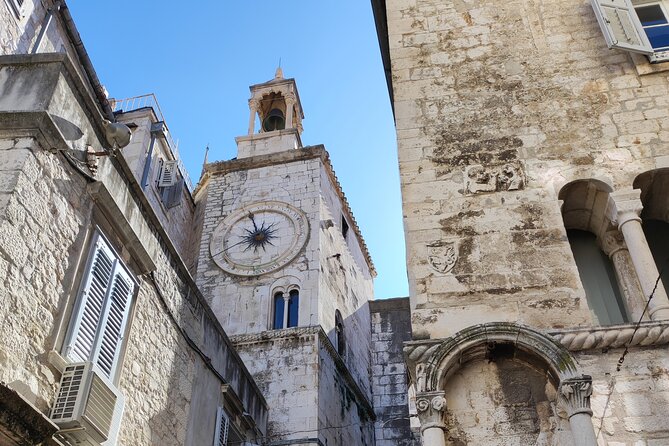
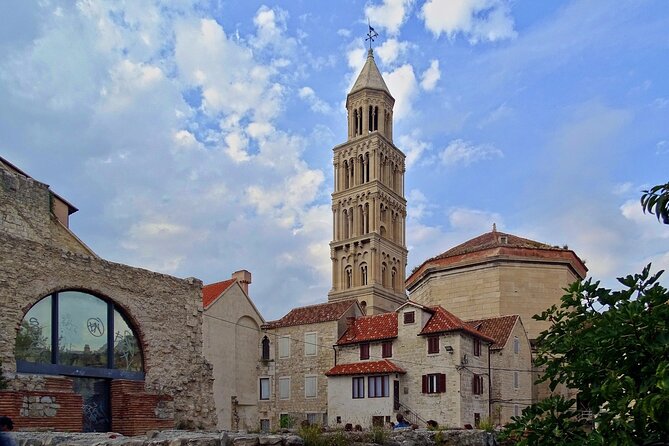
The tour continues past the Silver Gate, then on to the Cathedral area. After that, you’ll pass the Split City Museum, and later the Golden Gate. This section is particularly good for you if you like seeing layers—Roman foundations, later reuse, and modern streets threading through the old walls.
What I like here is the practical rhythm: you don’t spend half the trip stuck deciding which entrance to use. You move from one named landmark to the next and let the audio tell you what each one represents in the larger whole.
The palace-to-city feel becomes stronger as you reach and pass the Golden Gate. At this point, it’s easier to imagine how people would have moved through the space then and how they move through it now. The tour doesn’t need to over-explain everything to make that connection click.
Synagogue, old city hall, Standarac, and chapel stops
After the gates, the walk shifts outward into recognizable city life. You’ll pass a statue, then continue toward the Synagogue and the old city hall area. These are stops where the audio helps you notice how the Roman framework sits under and around later community spaces.
Next is Standarac, followed by a Chapel stop. Names like these give you a sense that you’re no longer only in a palace exhibit—you’re moving through a working neighborhood where history is part of daily scenery. That’s a big reason I think this tour works: it doesn’t treat the ruins like a sealed museum.
The route also feels well balanced between “brief listen moments” and “walk and take in the street” sections. You’re not forced to stand still too long, which helps the whole walk feel lively instead of labored.
Fish market, square time, and finishing at Fruit Square
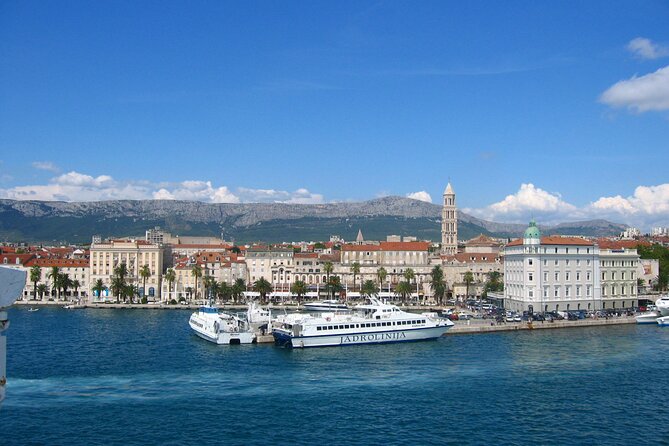
Near the end, you’ll pass by the fish market, then move through a square, and finally end in Fruit Square (Radić Brothers Square). This finish is smart because it drops you right back into a place where you can keep moving with your day—snack, sit, take photos, or just watch street life.
For me, endings matter as much as beginnings. Ending at Fruit Square means you don’t have to plan the next step too carefully; it’s a natural “wrap-up” point. And because the tour is about 60 to 75 minutes, you’re not arriving at the end already drained.
Even better: the tour includes offline audio and maps, but it doesn’t trap you inside the palace forever. You get a Roman walking experience that still lands in real Split.
Using VoiceMap smoothly: offline audio and GPS
This tour lives inside the VoiceMap app, and that’s where most of the experience is made or broken. The good news is that you get offline access to audio, maps, and geodata. That means you can download ahead, start when you want, and trust the tour to work even if your mobile connection is weak.
Here’s what I suggest you do:
- Download the tour before you leave your hotel.
- Start the walk with enough battery to last the whole loop.
- Use headphones at a comfortable volume so you can still hear basic street sounds.
GPS guidance is the other key tool. It helps you stay on track inside Diocletian’s Palace, where streets can look similar. If you notice the dot jump slightly at the start, don’t assume you’re totally off-course. Pause for a moment, line up with what you see, and continue.
Timing tips for a 1:00 to 1:15 walk
Even though the tour is listed around 1 hour to 1 hour 15 minutes, I treat audio walks as “about 20 minutes of audio plus sightseeing pauses.” That means you’ll get the full value faster if you move steadily and save long photo stops for the places you care about most.
I also like doing this earlier in the day or right before dinner, when you can pair it with a meal without feeling rushed. If you do it midday, the tour still works well, but take water and plan for sun and stone. The route includes open spaces and transitions, so comfort matters.
Bring your own headphones and smartphone. Transportation isn’t included, so make sure you can comfortably reach the start point near the Riva. Once you begin, the rest is walking.
Who this self-guided audio tour is best for
This is a great choice if you want to see the key Roman palace areas—cellars, mosaic cellar area, triclinium zone, peristyle zone, vestibulum, and Jupiter’s Temple—without locking yourself to a group schedule. If you like structure but hate being herded, you’ll probably enjoy the built-in pause points and the GPS route support.
It also fits you if you don’t want museum tickets included in the cost. The tour is focused on passing major landmarks and learning what to look for as you walk. If you later decide to go inside a museum or attraction, you can, but the audio doesn’t require it.
And because it’s private in the sense that only your group participates, it tends to work well for couples and small groups who prefer quiet learning. You control the pace, and no one else sets the tempo.
Should you book this Roman ruins audio walk?
I’d book it if you want a clean, structured way to explore Diocletian’s Palace and the surrounding Roman core areas, ending in a lively spot like Fruit Square. The offline audio + maps feature is a big plus, and the lifetime access makes it feel less like a one-time ticket and more like a tool you’ll use more than once.
I wouldn’t book it if you strongly prefer a live guide who answers questions on the spot, or if you dislike using a phone while walking. Also, if you know your GPS tends to misbehave on unfamiliar devices, plan to take a minute at the start to confirm your location.
If you like your history with room to breathe—and you want Split’s Roman sights explained while you actually walk through them—this is a smart value.
FAQ
How long is the Split Roman Ruins self-guided audio tour?
It’s listed as about 1 hour to 1 hour 15 minutes.
Do I need to buy tickets for museums or attractions on the route?
No. Tickets or entrance fees for museums or other attractions are not included. The tour covers nearby stops, but you’d need separate entry tickets if you want to go inside.
Is the tour available offline?
Yes. It includes offline access to audio, maps, and geodata, using the VoiceMap app.
What do I need to bring?
You’ll need your own smartphone and headphones. Transportation and food or drink are not included.
Where does the tour start and end?
It starts at the Model of the historical core of the city of Split (Obala Hrvatskog narodnog preporoda 23) and ends at Radić Brothers Square (Fruit Square), Trg Braće Radić 5.
Can I get a refund if I cancel?
No. The experience is non-refundable and cannot be changed for any reason.