REVIEW · RIGA
Riga Sightseeing Tour by Canal Boat with Audioguide
Book on Viator →Operated by Boatcruises.lv · Bookable on Viator
Riga looks different from the water. This one-hour canal cruise strings together parks, big monuments, and a Daugava panorama with an audio guide in English that you control on your phone. It’s an easy way to get your bearings fast, and the ride is built for comfort with life vests and cold-weather blankets.
I especially like two things: the variety of sights packed into a short time, and the fact that you can ask the captain questions as you pass key landmarks. A small group limit (20 max) also helps keep the experience calm, not chaotic. If you’re someone who likes architecture and photo angles, this route gives you lots of them.
The main drawback is the audio setup. You’ll need your own smartphone and headphones, and a few people found the sound hard to hear at times or got distracted by others listening without headphones.
In This Review
- Key moments to look forward to
- Riga canal boat: why this 1-hour loop works so well
- Where to start: finding the Canal Boat pier and staying ready
- The audio guide setup: how to make the narration actually work
- Stop by stop: what you see on the route
- The park pier moment: monuments in a concentrated area
- Latvian National Theater: a landmark you can frame from the water
- Bastion Hill: a different angle on Riga’s fortification story
- Freedom Monument: the photo stop you want to ask about
- Another standout monument: ask the captain for the “why”
- Latvian National Opera: architecture and cultural scale
- Stockmann Shopping center tunnel: where old city meets modern change
- Central Market: history through the canal view
- National Library building: another pass, another meaning
- Daugava old town panorama: St. Peter’s Church and Dome Cathedral
- Kipsala island: wooden-house district for a calmer feel
- Vansu Bridge: ask for the story as you pass under it
- Historical boat harbour: where old Riga meets the night scene
- Value for the money: $15.69 for a one-hour city sampler
- Comfort and small-group dynamics on the boat
- Who should book this Riga canal boat tour (and who might skip)
- Final verdict: should you book Riga Sightseeing by Canal Boat with Audioguide?
- FAQ
- How long is the Riga sightseeing tour by canal boat?
- Is the audio guide available in English?
- Do I need to bring anything for the audio guide?
- What happens if the route changes due to construction or weather?
- How many people are on the boat?
- Are service animals allowed, and what’s provided on board?
Key moments to look forward to
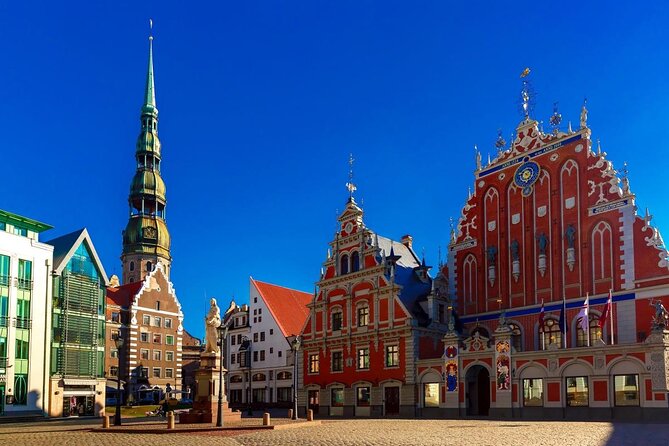
- Park + monuments from the water: You cruise through a park area and view multiple landmark clusters at canal speed.
- Daugava old-town panorama: You get a classic Riga skyline view while the guide points out major churches.
- Big-photo stops by bridge and bastions: Freedom Monument, Vansu Bridge, and Bastion Hill all come with a different angle.
- Modern Riga along the route: Stockmann tunnel and rail construction show the city changing in real time.
- Kipsala wooden-house district: A quieter, residential island moment breaks up the “big sight” run.
Riga canal boat: why this 1-hour loop works so well
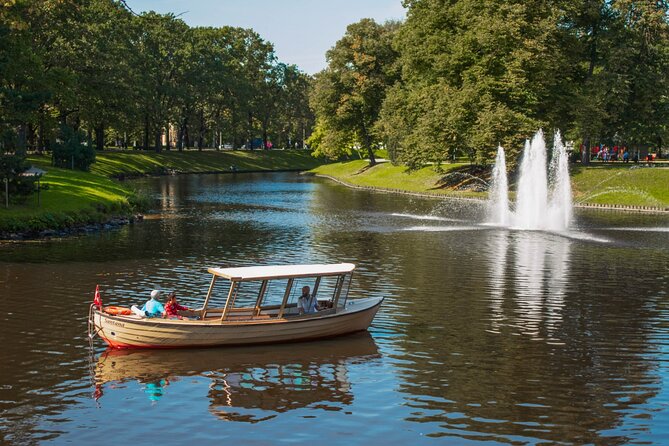
If you only have a day (or even half a day) in Riga, this cruise is a smart shortcut. It’s short enough that you won’t lose your whole afternoon to logistics, but packed enough that you’ll still feel like you did something meaningful.
The big win here is perspective. From street level, it’s easy to miss the relationship between buildings, bridges, and the river. From the water, Riga “lines up” in your view. You see the geometry—how Bastion Hill sits, how monuments relate to surrounding space, and how bridges frame the skyline. Even if your first Riga instinct is to walk everywhere, this is the angle that helps walking make sense later.
Another practical plus: the tour is designed to be flexible. The route may shift due to construction work or unsuitable weather. That matters because Riga is actively changing in places, and waterways can be affected too. If you hit a day when the route adjusts, you’ll still get the core idea—water-level sightseeing with commentary—but a couple of named stops might be skipped.
You can also read our reviews of more tours and experiences in Riga.
Where to start: finding the Canal Boat pier and staying ready
The meeting point is the canal boat pier at Boatcruises.lv Centrs, Central District, Riga (LV-1010). It returns to the same place at the end, so you don’t need to think about getting back across town afterward.
Bring two essentials:
- Your smartphone + headphones for the audio guide
- A layer for being on the water, even if the day seems mild on shore
The ride includes a life vest for each passenger, plus blankets in colder weather. That’s a comfort detail that pays off, especially if you’re traveling in shoulder season or if clouds roll in. The boat also aims to keep you dry in rain, which is worth noting because Riga weather can switch moods quickly.
One more small planning tip: the pier area is part of a cluster of companies along the canal. I’d give myself a few extra minutes to locate the right dock rather than sprinting the last block. Some people say it can be tricky at first.
The audio guide setup: how to make the narration actually work
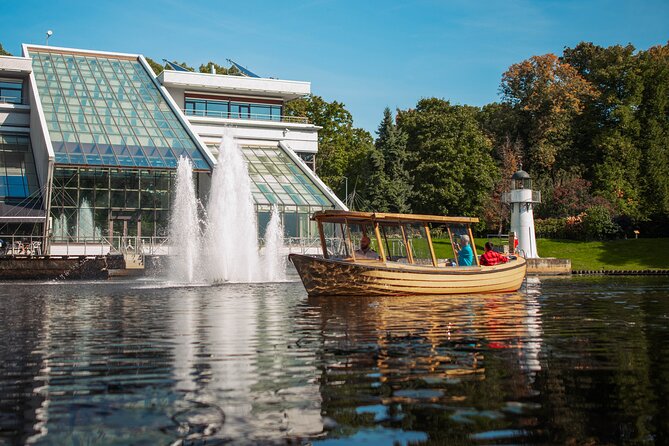
This tour offers audio guidance in multiple languages, with English offered. The key detail is that audio is delivered through your device. You bring the smartphone and headphones; the boat provides the life vest and blankets.
Here’s how to use that to your advantage:
- Download or open the audio access before you board (so you’re not troubleshooting tech in the cold).
- Keep headphones in both ears. You want clear narration without competing sounds from nearby boats or people.
A couple of reviews flagged two audio issues: the volume coming through at a low level, and people listening to other languages without headphones. That’s not something you can control, but you can control your own setup. Good headphones make the difference between a relaxing ride and a “what did they say?” afternoon.
Also, don’t assume the narration is purely automated. Even with audio, the captain may add extra local context if you ask. That turns the cruise from just sightseeing into actual story-telling.
Stop by stop: what you see on the route

This is a roughly 1-hour itinerary, and the stops flow as you move from calmer park water toward the wider Daugava view, then across more urban shorelines and bridge moments.
The park pier moment: monuments in a concentrated area
You start at a boat pier in a park area with unique monuments nearby. During the cruise through the park section, you can ask the captain to talk about what you’re seeing.
This is a good “warm-up” segment because it helps you learn what to look for. Instead of staring at buildings as random photos, you start attaching names and meaning to them. If you’re the type who likes architecture details, this park-and-monuments stretch is where the camera roll begins to earn its keep.

Latvian National Theater: a landmark you can frame from the water
As you pass the Latvian National Theater, you can ask the captain about the building’s history. Even if the outside details are obvious in passing, the story behind a theater tends to be more interesting than the facade alone.
From the water, the theater sits in a different composition—less like a street-corner stop and more like a major piece of the city’s cultural landscape. You’ll likely catch that “why it matters” angle faster than if you saw it on foot with traffic and distractions.
Bastion Hill: a different angle on Riga’s fortification story
Next up is historical Bastion Hill. You discover it from a water-level perspective, which changes how you interpret the hill’s placement and shape.
If you’ve walked Riga before, you know how hills and walls affect street views. From this angle, you can start imagining how defensive planning shaped today’s routes. It’s not just scenery—it’s city structure.
Freedom Monument: the photo stop you want to ask about
As you pass the Freedom Monument, the cruise gives you another water-level viewpoint. You can ask the captain about its story, and this is one of the moments where that personal question can make your experience better.
Monuments are easy to photograph but hard to fully understand without context. If you care about meaning (not just images), this is a stop where you’ll feel the value of a captain’s extra details.
Another standout monument: ask the captain for the “why”
The itinerary also includes passing another beautiful and unique monument. The specific name isn’t provided in the tour description, so the best move is simple: ask what it is and why it’s unique.
This is one of those “you get what you ask for” parts of the cruise. If you keep questions flowing, the captain can help you make sense of details you might otherwise overlook.
Latvian National Opera: architecture and cultural scale
You’ll also pass by the Latvian National Opera and see it from a different angle. Like the theater, this is a cultural landmark that can feel abstract if you only see it as a photo.
From the water, you get context about its placement within the city’s flow—how it sits relative to bridges and open stretches. It’s the kind of visual that helps you remember Riga as a layered city, not just a set of street attractions.
Stockmann Shopping center tunnel: where old city meets modern change
A major “modern Riga” moment comes when the boat passes under the Stockmann Shopping center through the tunnel. After the boat passes, you can see construction works for a new and modern railway station connecting the Baltic states with Central Europe and Scandinavia.
This is a useful segment because it’s not only about looking back. You’re literally seeing change happen while you’re on the water.
Important note: the tour description says that due to construction works in Riga or unsuitable weather conditions, the route might be changed. If that happens, you may not see this place during your trip.
Central Market: history through the canal view
You pass along the Central Market, again with the option to ask about its history. The water view gives you a “wider context” look—how the market sits within the larger urban waterfront area.
Same caveat as above: construction or weather might alter the route, and if so, you might miss this stop.
National Library building: another pass, another meaning
Next comes the National Library building. You’ll discover it from a different angle, and the same route-change note applies here too.
Even when you’re just passing, the chance to learn what a landmark represents helps you travel more thoughtfully. Otherwise it’s easy to treat the cruise as a scenic blur.
Daugava old town panorama: St. Peter’s Church and Dome Cathedral
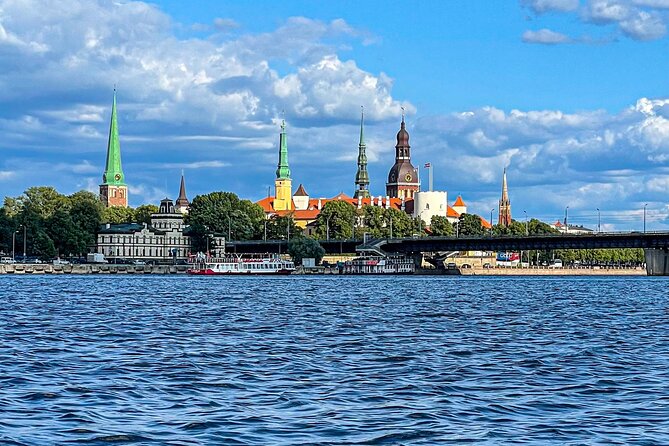
While traveling on the river Daugava, you’ll see a panorama of the old town—often described as Riga’s calling card from this angle. The guide highlights historical buildings and churches, including St. Peter’s Church and Dome Cathedral (and more).
This is where the cruise turns from “nice views” into “wow, now I get Riga.” The skyline feels like it has layers. You can distinguish major church silhouettes and understand why they anchor the old town’s identity.
If you’re walking the next day, you’ll probably recognize shapes and street clusters later.
Kipsala island: wooden-house district for a calmer feel
You pass Kipsala island, known for its wooden house district. This is a welcome break from “big landmark” spotting because it shifts your gaze from monuments to residential character.
As you pass, you can ask the captain about Kipsala’s story. That’s useful because wooden districts are easy to romanticize without context. A bit of background helps you see it as a living neighborhood with history, not just photogenic houses.
Vansu Bridge: ask for the story as you pass under it
Another must-get-context moment is Vansu Bridge. The boat passes under it, and the itinerary specifically nudges you to ask the captain about its story.
Bridge history is often tied to trade, city planning, and how people moved across water. From a moving boat, it’s also one of those spots where the “meaning” sticks faster because you literally feel the bridge’s place in motion.
Historical boat harbour: where old Riga meets the night scene
Finally, you pass through the historical boat harbour, a place where historical Riga mixes with a modern district. It’s described as having famous restaurants and night clubs.
This end segment helps you connect the dots. Riga isn’t only historic. It’s active now. And the waterfront is one of the places where nightlife and dining blend with the city’s longer story.
Value for the money: $15.69 for a one-hour city sampler
At $15.69 per person, this tour is priced like a practical “city sampler.” You’re not paying for a half-day guided walk. You’re paying for a shortcut: water-level sightseeing plus commentary, with included safety gear and cold-weather blankets.
For me, the value comes from the density of sights. In about an hour you cover a sequence of major landmarks (theater, opera, Bastion Hill, Freedom Monument area, bridges) plus river views. If you were to try to walk all those distances in a short time, you’d spend more energy and miss the exact perspective you get here.
What keeps it balanced is also what you should watch: audio is part of the experience, not a supplement. If your audio setup isn’t working well, you’ll feel it more than on a live walking tour.
So the best value comes when you:
- bring headphones,
- keep them in,
- and ask the captain one or two questions when a landmark catches your eye.
Comfort and small-group dynamics on the boat
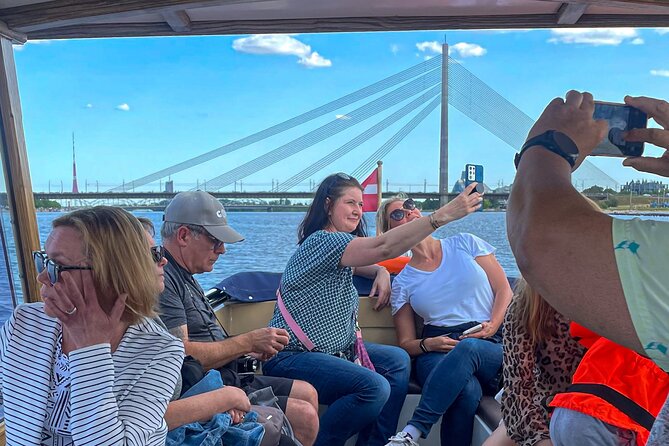
This tour is limited to a maximum of 20 travelers, which helps it stay manageable. Small groups matter on short rides. You can see without being pressed up against strangers, and you can hear your own audio without constant fighting for space.
Comfort is generally described as good, including the boat staying dry during rain and being cozy. But there are also complaints about seating—some people mention limited leg space. That’s the kind of thing you can’t fix on the day, but you can plan around it by dressing for warmth and settling in early.
Also keep in mind that some boats can affect viewpoint angles—one review noted trouble seeing scenery because of where people sat relative to the boat’s front. If you’re picky about shot composition, arrive a touch early so you can find a spot that suits how you like to photograph.
Who should book this Riga canal boat tour (and who might skip)
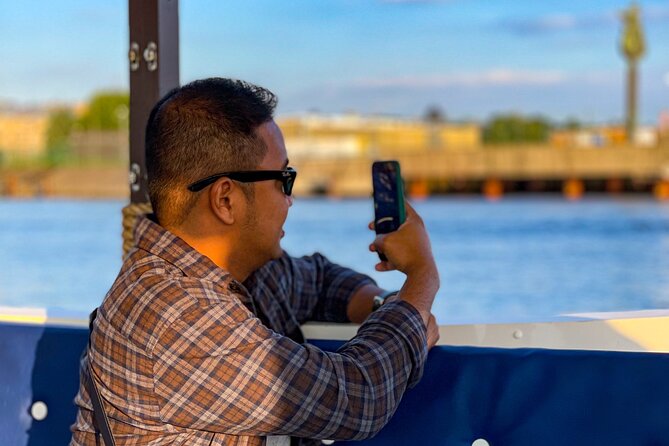
This is a great fit for:
- First-time visitors who want a quick intro to Riga from the water
- People who enjoy monuments, bridges, and architecture but don’t want a long walking plan
- Travelers who like flexibility and don’t mind using an audio guide instead of a fully live lecture
You might want to consider another option if:
- You hate audio-guided experiences or have trouble hearing narration (especially if you don’t have good headphones)
- You’re very sensitive to seat comfort or leg space
- You’re expecting lots of back-and-forth interaction. Some tours rely heavily on the recorded narration, so the captain’s questions may be the main interactive element.
Final verdict: should you book Riga Sightseeing by Canal Boat with Audioguide?
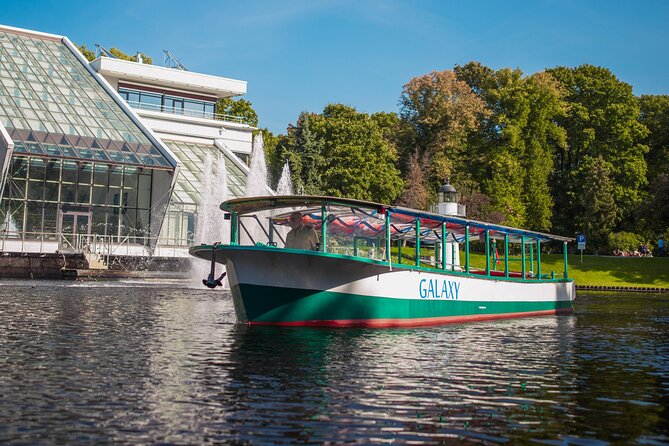
Yes—if your goal is efficient, scenic orientation in Riga, this is an easy booking. The hour length is perfect for days when you still want time for walking old streets afterward. The mix of park monuments, Daugava skyline, and bridges gives you enough highlights to build a mental map.
Book it with two expectations:
1) Bring smartphone + headphones and treat the audio as part of the experience.
2) Expect the route to possibly change due to construction or weather, so don’t plan your whole day around seeing one specific stop.
If you can do those two things, you’ll likely come away with exactly what you want from a canal cruise: calm time on the water and a better understanding of Riga’s shape.
FAQ
How long is the Riga sightseeing tour by canal boat?
It’s about 1 hour long (approx.).
Is the audio guide available in English?
Yes. The tour is offered in English, and the audio guide is available in a range of languages.
Do I need to bring anything for the audio guide?
Yes. You’ll need your own smartphone and headphones to listen to the audio guide.
What happens if the route changes due to construction or weather?
The route might be changed, and you may not be able to see certain places on the boat trip. If the experience is canceled due to poor weather, you’ll be offered a different date or a full refund.
How many people are on the boat?
This tour has a maximum of 20 travelers.
Are service animals allowed, and what’s provided on board?
Service animals are allowed on board. Each passenger gets a life vest, and blankets are provided in cold weather.