REVIEW · MARYLAND
Self-guided Waterfall Hiking Tour through Great Falls National Park
Book on Viator →Operated by Doug Z · Bookable on Viator
Great Falls gets personal when you listen on foot. This self-guided VoiceMap GPS audio tour takes you from the visitor center through the park with step-by-step, phone-guided directions, including stops tied to what you can actually see in front of you. I especially like the hands-free, GPS-triggered narration (so you’re not reading a brochure every five minutes) and the way the route mixes big-scenery overlooks with quieter detours. One thing to watch: you’ll need your phone, and cell service can be unreliable inside the park—so setup before you enter is key.
You start at the Great Falls Visitor Center in McLean, then work through three main areas: the main falls viewpoints, the Matildaville Trail ruins, and the broader Great Falls overlooks. Plan on 2–3 hours of moderate walking, and come ready for an independent experience—there’s no tour guide to answer questions on the spot.
In This Review
- Key things I’d bank on before you go
- Where Great Falls Park fits into a DC-area day
- VoiceMap setup: the difference between a smooth hike and a frustrating one
- Stop 1: Great Falls Visitor Center and the main waterfall area
- Stop 2: Matildaville Trail and the ruins tied to George Washington
- Stop 3: Great Falls viewpoints, Mather Gorge, and cliff-trail drama
- How long it takes, and what your feet should expect
- Price and logistics: the costs that matter beyond the audio
- Practical tips that make the route feel easier
- Should you book this Great Falls self-guided audio hike?
- FAQ
- Where does the self-guided tour start?
- How long does the tour take?
- Do I need the VoiceMap app and a phone during the tour?
- Is the $20 vehicle access pass included?
- Is parking included?
- Is this tour stroller-friendly?
Key things I’d bank on before you go

- GPS-triggered audio that runs as you walk, using your phone’s location
- Three waterfall viewing platforms plus views toward Mather Gorge and dramatic cliff trails downstream
- Matildaville Trail for ruins tied to George Washington’s early presidential era
- Easy navigation by step-by-step directions, but only if your phone is set up right
- A more adventurous feel than a purely paved walk, with plenty of spots to pause and listen
- Not stroller-friendly, though a baby in a carrier can work well
Where Great Falls Park fits into a DC-area day

Great Falls National Park is one of those rare places where you can get a real outdoors hit without leaving the Washington, DC orbit. From the visitor center area, you’re close to major viewpoints and trails that focus on the Potomac River’s dramatic drop-off. If you’ve got limited time, this is one of the easiest ways to see why the falls are such a big deal in the US—Great Falls is the third largest waterfall in the country.
What I like about this particular tour format is that you don’t just race from overlook to overlook. Instead, the audio keeps you moving at a comfortable pace and helps you notice details that you’d otherwise walk right past—especially on side trail segments and viewpoints that feel a little less crowded.
This is also a good option if you prefer independence. You’re not coordinating with a group schedule, and you can spend a little extra time where the audio pulls you in—kayakers, cliff features, and the sights around the gorge system tend to reward slow looking.
You can also read our reviews of more tours and experiences in Maryland.
VoiceMap setup: the difference between a smooth hike and a frustrating one
This tour lives and dies by your phone setup. The good news: once it’s working, it’s genuinely hands-free.
Here’s what matters:
- Download the VoiceMap app and the Great Falls Tour before entering the park grounds.
- When you start the tour, enable GPS/Location so the experience can trigger at the right spots.
- Have your tour code ready to access the audio in the app.
- Cell phone service can be less than ideal once you’re in the park, so don’t count on downloading audio on-site.
- Headphones are recommended, and a phone is required.
I’ll add a practical note that’s saved people time: if the download stalls, step back until you regain signal, then finish downloading. Planning that 5–10 minute “tech buffer” into your arrival makes the whole day feel calmer.
Also, don’t worry about being tech-heavy. This tour is designed so you can follow the walk with audio prompts and GPS-triggered guidance, not by constantly checking a map.
Stop 1: Great Falls Visitor Center and the main waterfall area
Your tour begins at the Great Falls Visitor Center at 9200 Old Dominion Dr, McLean, VA 22102, and it’s structured as a self-guided audio route through Great Falls Park. This is the big-scenery core, and it’s where the park earns its reputation.
The audio here is built to give you context while you’re looking at the falls. Great Falls Park is known for having multiple viewing points, and this tour leans into that. You’ll get oriented around what you’re seeing and why it’s impressive, then you’ll move on when it’s time to shift viewpoints.
Two real values of starting at the visitor center:
- You have a clear starting point, so you don’t waste time guessing where the route begins.
- You can finish app setup and sync before you lose signal and start walking into the deeper park areas.
Access isn’t included. To have full vehicle access to the park grounds and trails, you’ll need a $20 vehicle access pass that is not part of the package. Parking is also a separate cost. If you skip this step, you can still enjoy some areas, but you risk limiting what you’re able to reach for the walking route the audio is steering you toward.
Stop 2: Matildaville Trail and the ruins tied to George Washington

After the main falls area, you’ll head to the Matildaville Trail, a short stop designed for a change of pace. This is where the tour shifts from roaring water to quiet remnants of a former community.
Matildaville is tied to an abandoned city that was visited by George Washington—a striking detail because it turns the park into more than scenery. Instead of only asking what you see, it invites you to think about what used to be here: working life, industry, and settlement patterns that have long faded from everyday memory.
The walking time is brief—about 10 minutes—which makes it an easy add even if you’re pacing yourself. The main “why” for this stop is that it gives your hike a human story. You’re not just collecting views; you’re also seeing how the area has transformed over time.
A practical drawback to keep in mind: it’s still a walk, and the tour expects you to follow along at your own pace. If you’re expecting a stroller-friendly route with smooth surfaces all the way, you might find it challenging based on how hikers report the overall feel.
Stop 3: Great Falls viewpoints, Mather Gorge, and cliff-trail drama

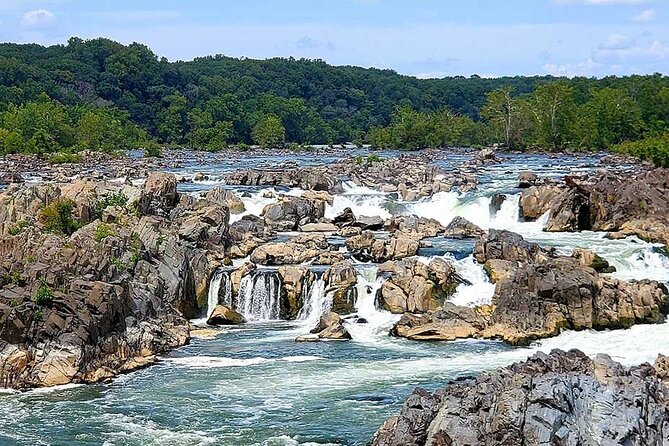
This is the part that most people come for. The tour gives you time for the falls themselves, emphasizing that Great Falls is the third largest waterfalls in the United States.
You’ll see the falls from three different viewing platforms, which matters more than it sounds. Each platform gives you a slightly different angle, so you’re not just repeating the same photo spot. If you like to understand what you’re looking at—how water funnels, how viewpoints frame the gorge—having multiple platforms helps a lot.
But the best part for many people is what happens beyond just the falls:
- You’ll also get views over Mather Gorge downstream.
- From there, you can spot hikers on the Billy Goat Trail cliff sections.
- You can also see the cliff rappelling areas, including references to Romeo’s Ladder and Juliet’s Balcony.
Even if you’re not attempting those trails, watching the landscape through that lens can be thrilling. You start to realize the park isn’t only about waterfalls. It’s about terrain—steep, technical, and close to the river in a way that shapes how people move through the area.
Time-wise, this stop is about 20 minutes in the tour flow. I’d treat that as a minimum. If you’re the kind of person who pauses for a second look (especially after the audio sets up what you should be paying attention to), you’ll likely want a few extra minutes.
How long it takes, and what your feet should expect
The experience is listed at roughly 2–3 hours, self-paced. That’s a realistic window if:
- you download before you arrive,
- you move at a steady walking pace,
- and you stop when the audio tells you to.
The tour expects moderate physical fitness. That doesn’t mean you need hiking legs forged in the mountains. It does mean uneven terrain and some steady walking are part of the deal—especially if you’re trying to catch viewpoints that require getting off flatter paths.
I also recommend thinking about your footwear. This is a natural setting with trail sections. Bring shoes that grip well and aren’t just “city sneakers for walking to brunch.”
If you’re traveling with kids, one practical note from real-world use: the route isn’t stroller friendly. A baby carried in a backpack-style carrier can work better because it keeps your hands free and avoids the awkwardness of maneuvering over rougher segments.
And yes, dogs do show up—so it’s a dog-friendly setting in practice. If you bring your pup, keep an eye on the trail flow and stay aware in busy viewing moments.
Price and logistics: the costs that matter beyond the audio

This tour includes the audio itself: GPS-triggered, hands-free VoiceMap narration. That’s the value engine. You’re paying for guidance, context, and route structure, not for a guide walking beside you.
But you should budget for the park access extras:
- $20 vehicle access pass is not included.
- Parking fees are not included.
That doesn’t make the tour a bad deal—it just means you shouldn’t treat the package price as the full day cost. If you’re comparing options, weigh it like this: the audio is what you’re buying, while the access pass and parking are the “bring-your-car” reality of Great Falls.
If you already plan to drive in and you want a structured route without the cost of a live guide, this format can be strong value. If you hate tech setup or don’t want to rely on a phone, you might prefer a traditional, printed map approach—because the app is central to how the experience works.
Practical tips that make the route feel easier
These are small choices that add up to a smoother outing:
- Set up before you enter: download the VoiceMap app and the Great Falls Tour early.
- Turn on GPS/Location at the start so the audio triggers properly.
- Use headphones so the narration doesn’t fight with wind and river noise.
- Give yourself a tech buffer if your download is slow; it’s common to need a couple minutes to stabilize.
- Plan your timing around daylight: the listing shows opening hours from 7:00 AM to 7:00 PM daily. In practice, daylight makes the cliffs and gorge views much more satisfying.
One more “good to know” detail: the activity has a maximum of 20 travelers. Even though it’s self-guided, smaller caps often help keep the meeting point and early trail areas from feeling chaotic.
Should you book this Great Falls self-guided audio hike?
I think you should book it if you fit this profile:
- You want to explore independently, with GPS-triggered narration instead of a live guide.
- You like using a route that gives structure but still lets you linger at the good spots.
- You’re comfortable with a phone-based experience and you can spend a few minutes downloading the app and tour before you lose signal.
- You want more than just the main overlooks—Matildaville adds a meaningful change of pace.
I’d skip or reconsider if:
- you don’t want to rely on cell service or GPS-enabled phone tech,
- you expect a stroller-friendly route,
- or you’d rather have a human guide to handle questions and reroute on the fly.
If you’re a first-timer in the DC area and you want the falls plus a couple of more interesting angles without paying for a guided walk, this is a solid, modern way to do it. Just do the setup step carefully, and you’ll get a hike that feels guided—without a guide.
FAQ
Where does the self-guided tour start?
The tour starts at the Great Falls Visitor Center, 9200 Old Dominion Dr, McLean, VA 22102, USA.
How long does the tour take?
It’s listed as approximately 2 to 3 hours.
Do I need the VoiceMap app and a phone during the tour?
Yes. A cell phone is required, and you should download the VoiceMap app and the Great Falls Tour before entering the park. GPS/Location must be enabled for the GPS-triggered audio.
Is the $20 vehicle access pass included?
No. The $20 vehicle access pass is not included in the package.
Is parking included?
No. Parking fees are not included.
Is this tour stroller-friendly?
Based on reported experience, it is not stroller friendly. A backpack-style carrier for a baby has worked for at least some visitors.