REVIEW · WARSAW
Warsaw’s Old Town A Self-Guided Audio Tour
Book on Viator →Operated by VoiceMap Audio Tours · Bookable on Viator
Warsaw’s Old Town feels rebuilt by stories. This self-guided English audio tour uses your phone and location to bring the area’s WWII destruction and careful restoration to life, while you keep your own pace through Castle Square and the historic lanes. I especially like how it sets the stage fast, with the idea that Poland rebuilt the Old Town using old photos, original building plans, and even Canaletto street scenes.
Two things I really appreciate: first, the tour gives you a clear walking route with meaningful stops, from Jan Kiliński to Mały Powstaniec, so you’re not just drifting through pretty streets. Second, you get offline audio plus offline maps and geodata, which makes it a lot less stressful if data is spotty. The main drawback is simple: this is audio-only. You’ll need your own smartphone and headphones, and you’re not guided inside museums or paid attractions mentioned along the way.
In This Review
- Quick hits before you start
- Price and what you truly get for $7.99
- How the route works (and how to make it feel effortless)
- Start: Sigismund’s Column to Castle Square in front of the Royal Castle
- Jan Kiliński: a shoemaker statue with a fighter’s story
- Mały Powstaniec: the Little Insurgent tribute you can’t ignore
- Rynek Starego Miasta: the central square you’ll understand more on foot
- Church of the Jesuits and St John’s Archcathedral: listen to the walls
- St Martin’s Church and Lech Wałęsa’s Solidarity spark
- Castle Square again, and why it keeps resurfacing
- Dzwon na Kanonii ending walk and the Strong Man statue by the Vistula
- What I’d do differently if you’re short on time
- Who this audio tour is best for
- Should you book this Warsaw Old Town audio tour?
- FAQ
- How long is the Warsaw Old Town self-guided audio tour?
- What language is the audio offered in?
- Where do I start and where does it end?
- Do I need headphones and a smartphone?
- Does the tour include entrance to museums or attractions?
- Can I download audio and maps for offline use?
- What’s included in the price?
- Is it available all day?
Quick hits before you start
- Offline audio and maps mean fewer tech headaches and more time staring at buildings you actually care about
- A tight historical thread connects WWII rubble, postwar rebuilding, and later occupations you can still feel in the monuments
- Specific street stops keep you oriented, from Castle Square to Rynek Starego Miasta and St John’s Archcathedral area
- Kids’ resistance is front and center via the Mały Powstaniec (Little Insurgent) tribute
- End views by the Vistula give you a satisfying finish rather than an abrupt stop
Price and what you truly get for $7.99
At $7.99 per person, this is one of the more budget-friendly ways to understand Warsaw Old Town without joining a big-group tour. The real value is that you’re paying for guidance, context, and a route you can replay later, not for museum entry or transport. You also get lifetime access to the tour, so it’s something you can return to if you want a second pass with different attention.
What’s included is practical: the VoiceMap app for Android and iOS, plus offline access to audio, maps, and geodata. What’s not included is just as important for planning: you bring your smartphone and headphones, and you handle anything beyond walking (like museum tickets or anything you choose to enter). If you’re looking for a guided ticketed experience, this isn’t that.
One more detail that matters for expectations: the tour is private for your group only. That’s a small advantage with audio tours—less randomness about where people stop, shuffle, and rejoin.
You can also read our reviews of more tours and experiences in Warsaw.


How the route works (and how to make it feel effortless)
This isn’t a “press play and hope” download. The VoiceMap app routes you along the streets and triggers audio as you reach key points. That means your job is mostly to walk steadily and keep your phone powered.
Here’s how I’d set it up so you get the best experience:
- Download the tour and offline content before you go outside Wi‑Fi coverage.
- Plug in or use Bluetooth headphones so you’re not competing with street noise.
- Keep your screen brightness low but readable, so you can check location when the app needs a nudge.
Timing also helps. The walking experience is described as about 75 minutes for the main stroll from Dzwon na Kanonii onward, and the overall tour time is roughly 1 hour 30 minutes to 2 hours. If you like lingering for photos or pausing for one extra story, plan closer to the longer end.
Start: Sigismund’s Column to Castle Square in front of the Royal Castle
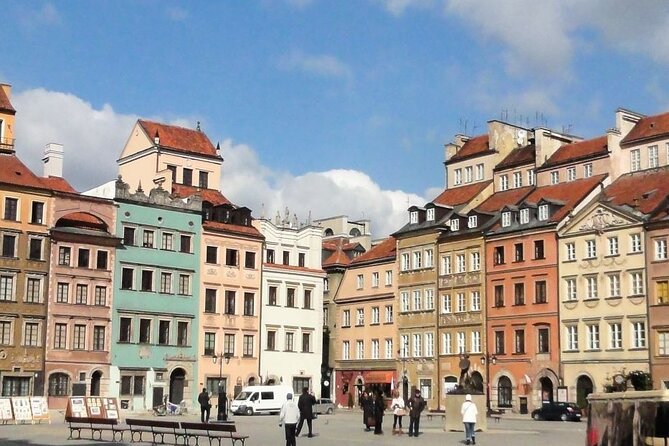
You begin at Sigismund’s Column at plac Zamkowy, right by the Royal Castle area. This start position is smart because it drops you into the heart of the Old Town’s layered past before you even take a full lap down the lanes.
From here, the audio sets the tone with the Old Town’s WWII story: the city was reduced to rubble, and yet the rebuilt Old Town wasn’t a blank slate. The narration frames the restoration as almost archaeological in spirit—piece by piece and stone by stone—guided by old photographs, original plans, and paintings by Giovanni Battista Canaletto, an Italian artist known for Warsaw street scenes.
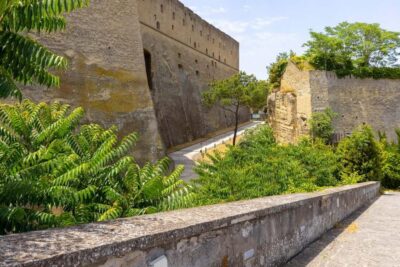
Then the tour turns toward fortifications. You’ll hear about the defensive character of the area as you take in the space around the castle and the surrounding walls. Even if you’re not a “history person,” that fortifications context helps you notice how the Old Town was shaped to withstand pressure.
A small consideration: you’re outdoors for the opening stretch. If weather turns ugly, you’ll want a quick fallback plan and maybe shorten your stops.
Jan Kiliński: a shoemaker statue with a fighter’s story
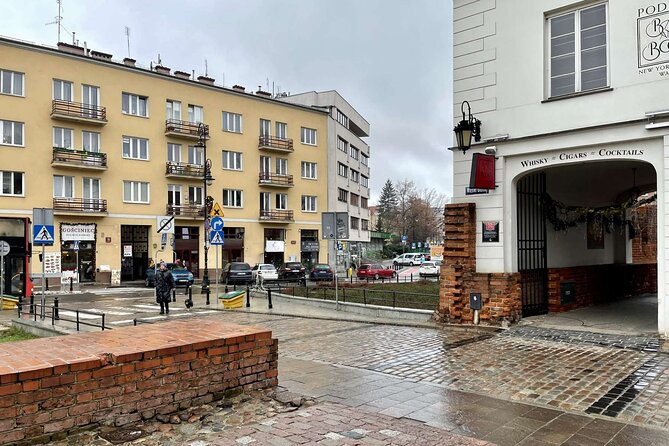
As you move through the Old Town lanes, you’ll reach the statues area tied to Jan Kiliński—a shoemaker who opposed the Russian invasion in the late 1700s. It’s an effective stop because it flips the usual monument script. This isn’t only about nobles and generals. A regular tradesman becomes a symbol of resistance.
The benefit for you is that the story gives meaning to the statue beyond its placement. You start seeing the Old Town as a series of messages in stone—some about power, some about refusal.
If you’re sensitive to heavy history, pace yourself here. The audio keeps facts focused, but the theme is still resistance against occupation, and it can feel weighty in an area that also looks very pretty.
Mały Powstaniec: the Little Insurgent tribute you can’t ignore
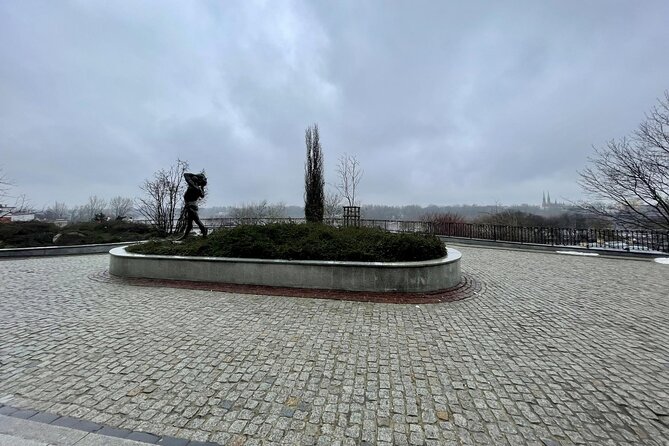
One of the most memorable stops is Mały Powstaniec, the tribute to child soldiers who resisted Nazi occupation. I like that the tour doesn’t bury this topic in the background or treat it as a footnote. It’s given its own place in the walking path, which helps it land.
Standing near this memorial, you’ll get context that pulls the Old Town’s WWII narrative into a specific human lens. That makes the earlier “rubble and restoration” theme more than a historical summary. It ties to what was lost and what people tried to protect, even when the odds were brutal.
Practical note: since this is a walking tour, you’ll want to keep an eye on your footing near curbs and uneven paving. The tour is designed for walking, so it’s worth wearing shoes you can move in comfortably.
Rynek Starego Miasta: the central square you’ll understand more on foot
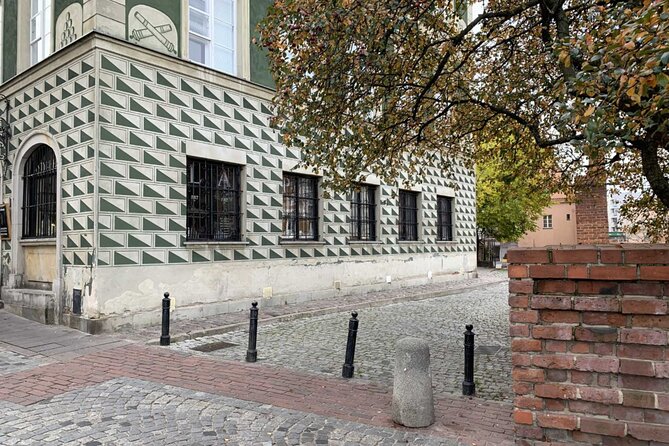
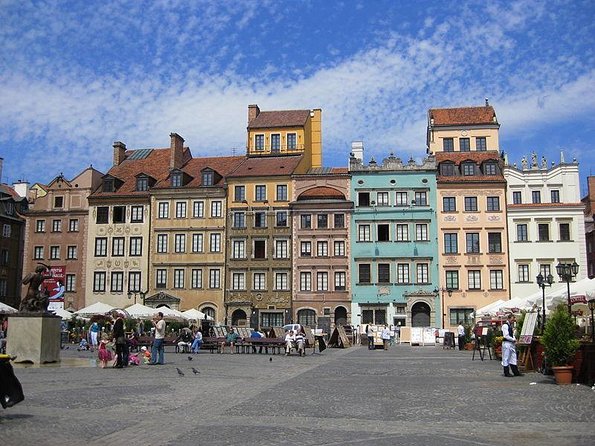
As the tour passes by Rynek Starego Miasta (Old Town Market Square), the narration fills in what you’re seeing. Even if you’ve already heard general descriptions of Old Town squares, this approach helps because it anchors the square in events rather than only architecture.
I find central squares like this work best when you get a story while you’re still standing in the geometry. You can actually “feel” why gatherings mattered, and why squares became stages during conflict and rule changes. This tour uses your walk to do that.
One drawback: squares can get crowded. The audio keeps your attention anchored, but if you prefer quiet photos, go with a bit of patience and expect you may have to wait for clear angles.
Church of the Jesuits and St John’s Archcathedral: listen to the walls
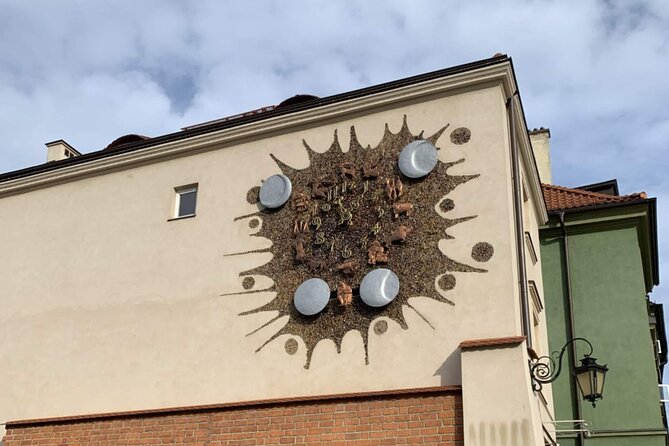
Next you’ll pass the church of Jesuits and then move by St John’s Archcathedral while the audio provides the context. The audio approach is useful here because it prevents the classic problem—seeing impressive churches but not knowing why they matter.
Even if you don’t step inside, the stories help you read the buildings as part of the city’s power map: who influenced people, who held influence, and how faith and politics often bumped shoulders. If you do decide to enter a church, you’ll do it on your own, since the tour doesn’t guide you through attractions or handle ticketing.
If you want maximum impact, keep the audio going when you slow down. Churches reward that kind of attention.
St Martin’s Church and Lech Wałęsa’s Solidarity spark
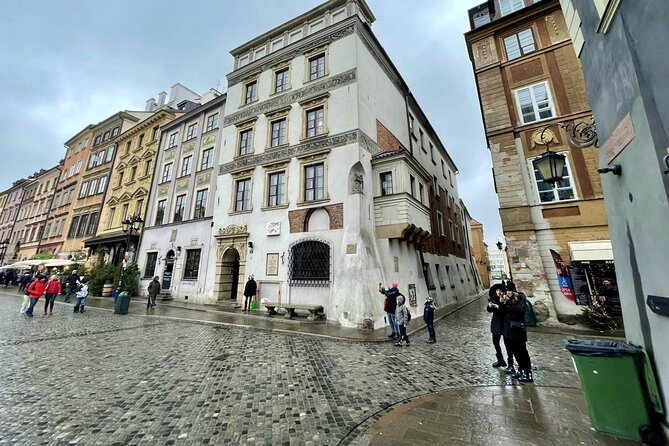
As you stroll past St Martin’s Church, you’ll hear about a hunger strike against Communist oppression that inspired Lech Wałęsa and the Polish Solidarity Trade Union movement. This is one of the places where the Old Town theme expands beyond WWII.
It’s also a reminder that Warsaw’s history didn’t stop in 1945. The tour threads occupation and resistance across different political eras, which helps you understand why monuments in the Old Town feel so layered.
A consideration for your expectations: this is not a deep documentary stop where you sit and read a plaque for 30 minutes. It’s narration while you walk. If you’re the kind of person who wants to spend time inside or linger for extra reading, plan extra break time yourself.
Castle Square again, and why it keeps resurfacing
You’ll circle back toward Castle Square as part of the route, with the audio tying together the specific happenings that played out in the space. I like this looping structure because it reinforces the idea that places in Warsaw have repeated “chapters” over time.
The tour’s big storyline is clear: the Old Town repeatedly flourished and fell as it encountered dukes, kings, warriors, Nazis, and Communists—and it fought back each time. Walking the same area more than once makes that claim feel less abstract and more like a physical pattern.
This is also where you start to see the restoration theme in a new light. The city didn’t just get rebuilt once. People rebuilt meaning, identity, and public memory, again and again.
Dzwon na Kanonii ending walk and the Strong Man statue by the Vistula
The tour ends near the Strong Man Statue at Brzozowa 1, with a view toward the River Vistula. Before that finish, you’ll reach Dzwon na Kanonii, and the audio shares the dramatic long-history arc—old regimes, occupation, and rebuilding—framed as a cycle the Old Town kept reversing.
I like that ending because it gives you a mood shift. You’re not just “inside the past.” You’re finishing with an open view toward the river, which feels like a natural exhale after a walk filled with conflict and recovery.
Also, it’s a good way to plan your next move. If you’re continuing your day on foot, the end point near the river area helps you avoid the awkward scramble of finding your bearings at the last minute.
What I’d do differently if you’re short on time
If you have only a partial afternoon, you still can make this tour work. Since it’s self-guided and audio-triggered, you can:
- Start at Sigismund’s Column and focus on the strongest story points (Kiliński, Mały Powstaniec, Rynek Starego Miasta, St Martin’s Church).
- Let the app guide your pacing without forcing every stop equally.
You might miss some transitions if you rush, but you’ll still get the narrative spine that makes Warsaw Old Town more than postcard architecture.
If you want photos, take them at your “audio beats.” For example, pause near monuments when the story is talking. You’ll get both the visuals and the context in the same moment, which makes the memory stick.
Who this audio tour is best for
This works best if you:
- Want a low-cost, independent way to understand Warsaw Old Town
- Enjoy walking at your own speed instead of syncing to a group
- Like history stories that connect people and events, not just dates
- Want offline reliability with audio, maps, and geodata
It’s less ideal if you:
- Expect a guide to lead you into museums or paid attractions
- Don’t want to use a smartphone on a walking route
- Need a fully structured, “no distractions” experience with zero tech
Should you book this Warsaw Old Town audio tour?
I think you should book it if you want value + context in one outing. For $7.99, lifetime access, and offline audio, it’s a practical way to learn why Warsaw’s Old Town looks the way it does today—and why that look comes with hard-earned meaning.
Skip it only if you specifically want a guided inside-museum tour or you’d rather avoid app-based navigation entirely. If you’re comfortable using VoiceMap and headphones, this is an easy win for first-time visitors who want the Old Town to make sense fast.
FAQ
How long is the Warsaw Old Town self-guided audio tour?
The walk is listed as approximately 1 hour 30 minutes to 2 hours. The main stroll is described as about 75 minutes as you move through the Old Town toward the ending area.
What language is the audio offered in?
The audio tour is offered in English.
Where do I start and where does it end?
It starts at Sigismund’s Column, plac Zamkowy, 00-001 Warszawa, Poland. It ends near the Strong Man Statue, Brzozowa 1, 00-258 Warszawa, Poland, with a view toward the Vistula.
Do I need headphones and a smartphone?
Yes. Your smartphone and headphones are not included, though the tour provides you with access through the VoiceMap app.
Does the tour include entrance to museums or attractions?
No. You are not guided through museums or other attractions mentioned along the route. If you want to enter them, you pay for them separately.
Can I download audio and maps for offline use?
Yes. The experience includes offline access to audio, maps, and geodata through the VoiceMap app.
What’s included in the price?
Included are lifetime access to the tour in English, the VoiceMap app for Android and iOS, and offline access to audio, maps, and geodata.
Is it available all day?
The stated opening hours are Monday through Sunday, 12:00 AM to 11:59 PM. Confirmation is received at booking.