REVIEW · TORONTO
Toronto Old Town: Self-Guided Dark History Walking Game
Book on Viator →Operated by Questo · Bookable on Viator
This self-guided dark history walking game turns downtown Toronto into a scavenger hunt, and I like that it’s paced by you while you work through 10 puzzle challenges at key landmarks. The main downside is that you won’t have a live guide to answer questions on the spot, so you’ll be leaning on what you read in the app and what you notice around you. You still get a guided-feeling experience because the Questo app leads step by step from the start near City Hall to the finish at St. Lawrence Market.
I also like the practical setup: you only need your mobile access code and the initial download, then you can keep going without chasing Wi-Fi. If you’re traveling with friends or family, it’s an easy way to bond while covering a lot of ground without coordinating a fixed meeting time for every stop.
At $8.44 per person, it’s priced like story content and directions, not like a full guided tour. With a 4.9 rating across 15 reviews and 100% recommendation, it’s clearly hit-or-like for people who want movement, curiosity, and a “find the answer” format rather than a traditional lecture.
In This Review
- Key things to know before you play
- How the Toronto game format works (and why it feels good)
- Start at Toronto City Hall, then follow the clues to St. Lawrence Market
- The temporary Pan Am sign that stuck around (and how to spot the answer)
- Old City Hall: civic power, courts, and a chance to read the stone
- TD Centre and Oscar Peterson Place: the downtown between the towers
- Fairmont Royal York: what the hotel story says about the city
- Hockey Hall of Fame: the building’s move becomes part of the story
- King Edward Hotel: 1903 design, big claims, and a close look
- St. James Cathedral and St. Lawrence Hall: older roots, civic culture
- St. Lawrence Market South: the walk ends where locals shop
- Pricing and value: why $8.44 can make sense here
- Who this Toronto dark history puzzle suits best
- Should you book this self-guided Toronto Old Town game?
- FAQ
- How long is the Toronto Old Town self-guided dark history walking game?
- How much does it cost?
- Do I need Wi-Fi during the walk?
- Where does the experience start and end?
- Is there a physical tour guide with you?
- What happens if my plans change?
Key things to know before you play
- Self-guided, not a live guide: You get app narration and challenges, so you control pace and pauses.
- 10 puzzle challenges: Each stop asks you to look around and find an answer before moving on.
- Step-by-step app routing: The Questo app guides you from Toronto City Hall to St. Lawrence Market.
- No Wi-Fi needed after download: Plan around the one-time setup, then keep walking.
- Designed for small groups: It’s private for your group, which can make the experience feel smoother.
- Free cancellation up to 24 hours: If plans shift, you have flexibility.
How the Toronto game format works (and why it feels good)
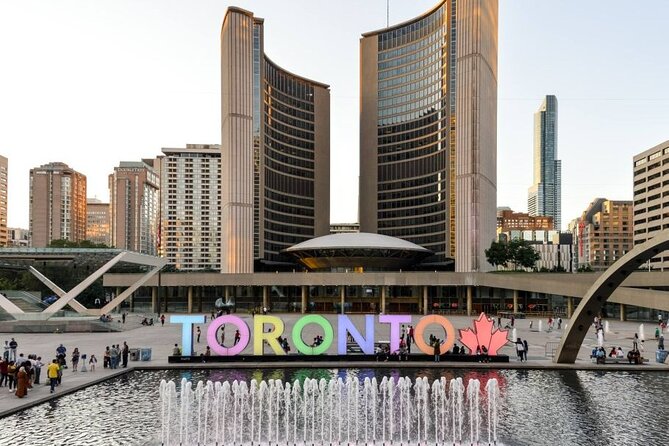
This experience is built like a walking game with a story layer. You start at Toronto City Hall, 100 Queen St W, and you end at St. Lawrence Market, Toronto (the app guides you step by step). The total time is about 1 hour 30 minutes, which is a sweet spot for downtown: long enough to see real variation in the architecture, short enough that you’re not stuck “touring” all day.
The big practical advantage is pacing. You can pause and resume anytime, which matters in downtown Toronto where you might want a quick coffee stop, a bathroom break, or just time to catch your breath. It also means you can slow down at a stop that grabs you instead of rushing because someone else’s group schedule says so.
You’ll be using the Questo app, with a mobile access code. After the initial download, the game doesn’t require Wi-Fi, which is useful if your phone tends to drop signal between buildings. Just do yourself a favor and start with a charged battery and a clear screen brightness setting so you’re not squinting while you search for whatever the challenge is asking.
Start at Toronto City Hall, then follow the clues to St. Lawrence Market
The route is anchored by two major downtown points: City Hall at the west end of the walk, and St. Lawrence Market at the east end. Along the way, you hit civic buildings, financial district landmarks, and classic Toronto institutions that help you understand how the city grew from governance and industry into tourism and culture.
What I like about this start-to-finish approach is that it naturally strings together neighborhoods most people pass through without stopping. You’re not doing a random checklist. You’re being nudged from one landmark story to the next, and each location is meant to give you something to look for before the app moves you forward.
If you prefer a guided feel without the structure of a fixed group tour, this format usually works well. If you hate reading on your phone while walking, you’ll still manage, but you’ll want to slow down at each stop so you can actually find the “answer” the game wants.
The temporary Pan Am sign that stuck around (and how to spot the answer)
One of the first stops centers on a landmark that began life as a temporary attraction for the 2015 Pan American Games. It was initially intended to be dismantled by November 2016, but the City of Toronto kept it running because it became popular with both tourists and residents.
That detail matters, because it’s a reminder that cities don’t just grow from grand plans. Sometimes a public favorite, even something designed to be temporary, becomes part of the permanent tourist map. In the game, you’ll need to look around and find the response to the challenge so you can continue toward the next location.
Practical tip: this kind of clue-stop can reward slow looking. Instead of doing a fast photo sweep, give yourself a minute to scan your surroundings the way the game expects you to.
Old City Hall: civic power, courts, and a chance to read the stone
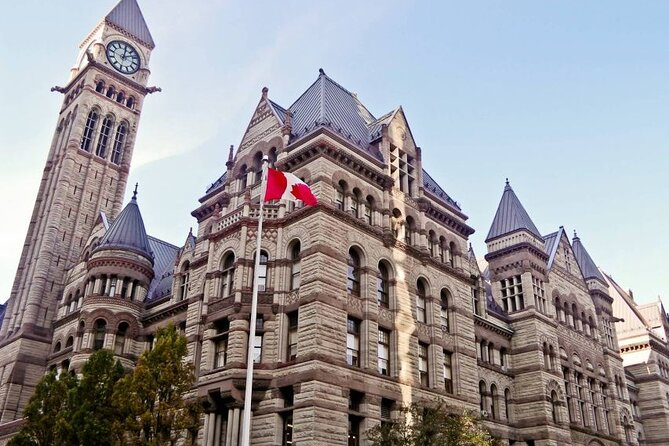
Next up is Old City Hall, described in the game as one of Toronto’s largest buildings when it was completed in 1899—and the largest civic building in North America at that time. It served as the municipal government and court space for York County and Toronto, taking over from the Adelaide Street Court House.
Here the “dark history” theme likely lands through civic control and what courts and government mean in a city’s story. Even if you’re not reading courtroom history, you can still feel the weight of a building designed for authority and public business.
As with each stop, you’re challenged to search around for the answer before moving on. The good part is that the building is visually “busy,” which usually makes these clue hunts less repetitive. The watch-out is that if you’re visiting at a busy time, you might want to step aside for a clear moment to look carefully without blocking foot traffic.
TD Centre and Oscar Peterson Place: the downtown between the towers
The game moves you into the Financial District with the Toronto-Dominion Centre (TD Centre), a complex of six towers and a pavilion covered in bronze-tinted glass and black-painted steel. The app frames it as the global headquarters for the Toronto-Dominion Bank and notes that about 21,000 people work there, making it the largest commercial office complex in Canada.
Between the towers are two outdoor spaces known collectively as Oscar Peterson Place. The northern space has more formal granite, while the southern area includes the lawn and features The Pasture, a sculpture by Saskatchewan artist Joe Fafard (who passed away in early 2019).
This is a smart pairing because it gives you contrast. You go from institutional downtown power (banks, offices, scale) to a more human outdoor pause between buildings. In a game format, that contrast helps you stay mentally engaged without feeling like every stop is a tall, similar office façade.
For your experience: don’t rush through the outdoor spaces. The clue hunt works better when you give your eyes time to settle, especially when architecture and sculpture details are easy to miss at walking speed.
Fairmont Royal York: what the hotel story says about the city
The next stop is the Fairmont Royal York, highlighted in the game for nearly 90 years of hosting royal guests, heads of state, celebrities, superstar athletes, and millions of others. The message here is clear: this isn’t just a hotel. It’s a location where major events and international attention filtered into Toronto.
Even without the game spelling out every headline, this kind of landmark helps you understand how cities brand themselves. Luxury and global visibility shape how Toronto is remembered, and that shapes what tourists see and what residents feel proud of.
In practice, you’ll again search around to answer the challenge and advance. These hotel stops can be slightly different from strictly civic buildings because you may want to be mindful of entrances, private areas, and footpaths. Keep your clue hunt on public-facing parts of the property and give yourself a little extra time if crowds are thick.
Hockey Hall of Fame: the building’s move becomes part of the story
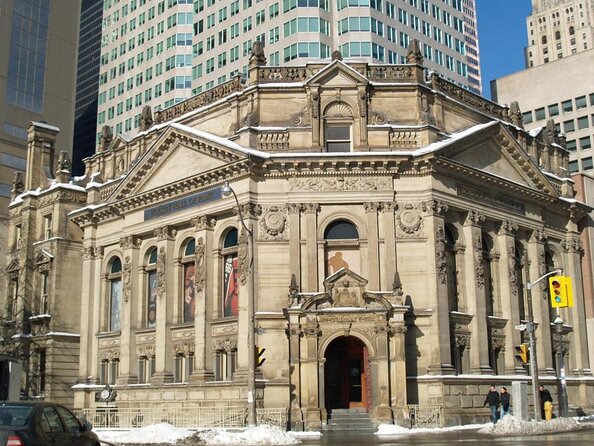
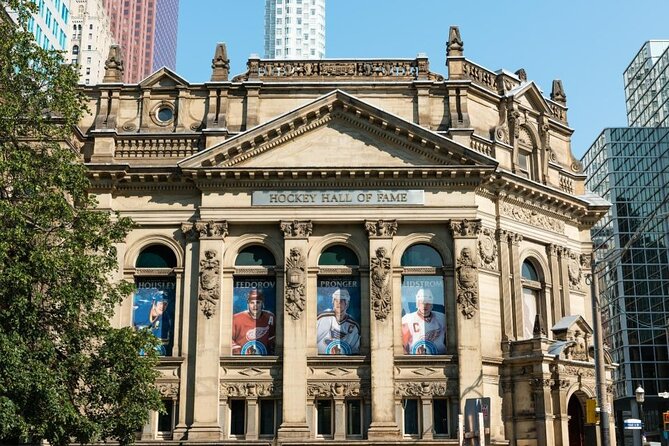
Then you head toward the Hockey Hall of Fame. The game notes that the first permanent building opened at Exhibition Place in 1961, and that the hall was relocated in 1993 into downtown within Brookfield Place, inside a historic Bank of Montreal building.
It also says the Hockey Hall of Fame has hosted International Ice Hockey Federation (IIHF) exhibits and the IIHF Hall of Fame since 1998.
This is one of the more interesting historical turns in the walk because it’s about relocation: a museum moving with the city’s changing center of gravity. You can also interpret the choice of building. Using a historic banking structure for a sports museum flips the “serious” energy of finance into something public and joyful.
You’ll still be solving a clue at this stop, so look for the details the game is pointing you toward. If you’re the type who loves a good “why did this move here” moment, you’ll likely enjoy this chapter.
King Edward Hotel: 1903 design, big claims, and a close look
The King Edward Hotel stop is anchored by the architects and the original scale of the building. It was designed by Chicago architect Henry Ives Cobb and Toronto architect E.J. Lennox for developer George Gooderham. It opened in 1903 with 400 rooms and 300 baths and was claimed to be entirely fireproof.
Even if you take that fireproof claim with the caution you’d apply to any 1900s-era boast, the details still tell you a lot. This was a big statement building, meant to reassure and attract. In a dark-history themed route, you can read this as part of Toronto’s growth in ambition and infrastructure.
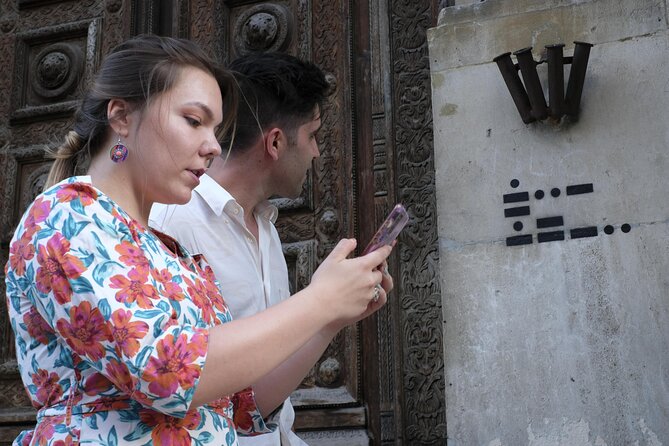
The game keeps you engaged by forcing you to look around for the challenge answer. At a hotel, those clues may involve signage, façades, or other exterior features. The main consideration: bring a bit of patience and don’t expect clues to be obvious at a glance.
St. James Cathedral and St. Lawrence Hall: older roots, civic culture
Next you reach the Cathedral Church of St. James, an Anglican cathedral in downtown Toronto. The game points out that it is the location of the oldest congregation in the city, with the parish established in 1797.
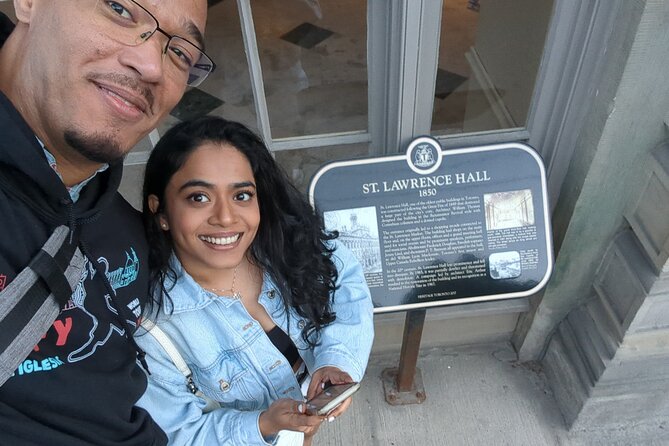
A short walk later is St. Lawrence Hall, opened in 1850 and described as Toronto’s first large meeting hall. The game emphasizes how central it was for cultural and political life, hosting balls, receptions, concerts, exhibitions, and lectures.
These two stops are valuable because they give you a sense of continuity. The TD Centre and the TD-era steel-and-glass environment are modern. St. James Cathedral and St. Lawrence Hall pull the timeline back to earlier structures of community and public life.
Because the game is puzzle-based, you’ll still be on the lookout for the answers the app wants you to find. This kind of stop usually rewards respectful observation rather than rushing. Give yourself space to read architectural features and inscriptions if they’re visible from public areas.
St. Lawrence Market South: the walk ends where locals shop
Finally, the route ends at the St. Lawrence Market South building. The game describes it as a major public market building, located on the southwest corner of Front and Lower Jarvis Streets. It notes that it’s part of a market complex that includes St. Lawrence Market North and St. Lawrence Hall.
Ending here makes sense. Markets are where city history becomes daily life. Even if your visit is mainly for the game, you’re finishing at a place that people use, not just a place people pose in front of.
Pricing and value: why $8.44 can make sense here
This experience costs $8.44 per person, lasts about 1 hour 30 minutes, and includes a storyline content built around Old Town’s darker themes plus 10 puzzle challenges. That’s the key to the value math: you’re paying for content and direction more than you’re paying for a human guide.
If you’re a solo traveler, the price can still work because you’re not paying for a whole group guide. If you’re traveling with friends, the private format can feel especially worth it since you’re only competing with your own group’s pace instead of a bigger tour herd.
The other value lever is flexibility. Being able to pause and resume anytime helps you actually enjoy the time instead of treating the walk like a deadline. And since the app works after the initial setup, you don’t need to keep checking for a Wi-Fi connection.
One more note: the experience is offered in English, uses a mobile ticket, and works with a mobile access code. So the real requirement is that you’re comfortable using a phone for navigation and story prompts.
Who this Toronto dark history puzzle suits best
This is a good fit if you want:
- Downtown walking with a reason to slow down at landmarks
- Puzzle-style motivation instead of a traditional guided script
- A low-pressure activity that can handle your pace and your group’s energy
It may feel less satisfying if you’re the type who wants a lot of live context, back-and-forth Q&A, or deep explanations for every building. The app can guide you, but it can’t replace the kind of spontaneous answers you’d get from a person standing beside you.
It’s also a nice option for travelers who hate the typical “hit every stop on schedule” feeling. With pause/resume, you can adapt on the fly.
Should you book this self-guided Toronto Old Town game?
Book it if you like the idea of exploring Toronto with your own rhythm and you’re excited by challenges that make you look closely at what’s in front of you. The price is low enough that it doesn’t need to be a once-in-a-lifetime decision, and the stop choices connect civic buildings, financial district scale, and major Toronto institutions in about 90 minutes.
Skip it or consider pairing it with something else if you want a guided lecture. Since it’s self-guided, your experience will depend on reading the app prompts and taking the time to spot the clues.
If you’re planning a downtown day and you want a structured way to cover City Hall through St. Lawrence Market, this is a straightforward, modern way to do it with 10 challenges and a built-in story.
FAQ
How long is the Toronto Old Town self-guided dark history walking game?
It takes about 1 hour 30 minutes.
How much does it cost?
The price is $8.44 per person.
Do I need Wi-Fi during the walk?
No. It says you will not need Wi-Fi after the initial download.
Where does the experience start and end?
It starts at Toronto City Hall, 100 Queen St W, Toronto, ON M5H 2N2, and ends at St. Lawrence Market, Toronto, ON M5E 1C3.
Is there a physical tour guide with you?
No. It is self-guided, and no physical tour guide is included.
What happens if my plans change?
You can cancel for a full refund if you cancel at least 24 hours before the experience’s start time.