REVIEW · TAORMINA
Taormina: Ancient Theater Skip-the-Line Ticket & Audio Guide
Book on GetYourGuide →Operated by Distributor: GetYourGuide Tours & Tickets GmbH · Bookable on GetYourGuide
Taormina’s theater feels like a time machine. This skip-the-line ticket for the Ancient Theater of Taormina helps you get in faster, then adds a multilingual audio guide so you can wander the ruins at your own pace.
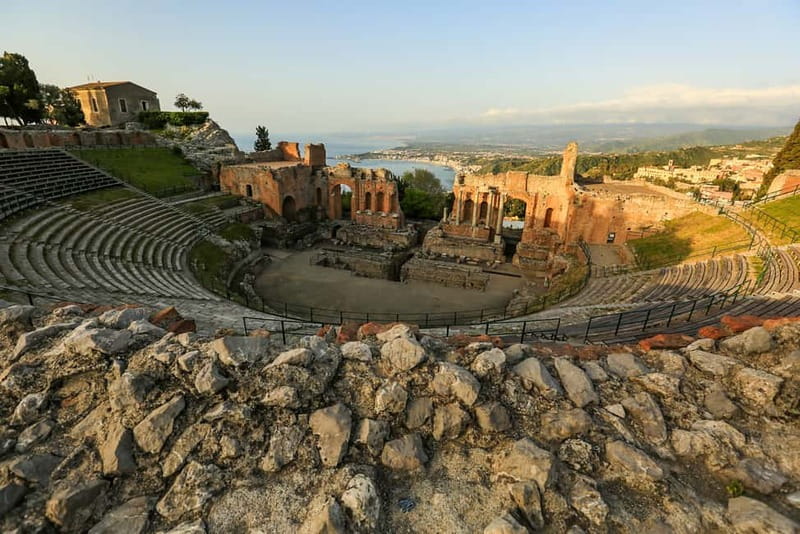
I love the payoff of seeing a theater that changes shape across centuries, from its Greek design to later Roman upgrades under emperors like Trajan or Hadrian. And I love the sweeping views over Taormina and Giardini Naxos, with Mt Etna sometimes in the mix, all while you’re sitting in the old stone seats. One possible snag: timing matters, and arriving late can affect how the audio setup works.
You’ll swap your digital voucher at the box office, go through security, and then spend as long as you want inside the amphitheater complex.
In This Review
- Key highlights to know before you go
- Why the Ancient Theater of Taormina is worth your time
- Skip-the-line entry: how it works on arrival
- Your visit starts with the audio guide, not a tour group
- What you’ll see inside: Greek layout and Roman imperial changes
- The Greek foundation
- The Roman makeover under Trajan and Hadrian
- The gladiator-era transformation under Caracalla
- A later chapter: the Zumbo family palace (1465)
- Views from the seats: Taormina, Giardini Naxos, and Mt Etna
- How long to stay and where to take breaks
- Price and value: what you’re really paying for
- When to go: timing that protects your audio experience
- Accessibility and what to bring for a smooth entry
- Who this works best for
- Should you book this skip-the-line ticket with audio guide?
- FAQ
- How do I use my ticket on arrival?
- Is a live guide included?
- What languages are available for the audio guide?
- Does the ticket include skip-the-line entry?
- Can I enter more than once with the same ticket?
- How long is the ticket valid for?
- Is there a security check before entering?
- Do I get free entry sometimes?
Key highlights to know before you go
- Skip-the-line entry by exchanging your digital voucher at the box office
- Audio guide included in English, Spanish, French, and German (no live guide)
- Greek-to-Roman story: what you see reflects multiple eras, not just one
- Big viewpoint payoff over Taormina, Giardini Naxos, and sometimes Mt Etna
- Self-paced visit with time to sit in the theater and take it all in
- Wheelchair accessible for visitors who need it
Why the Ancient Theater of Taormina is worth your time
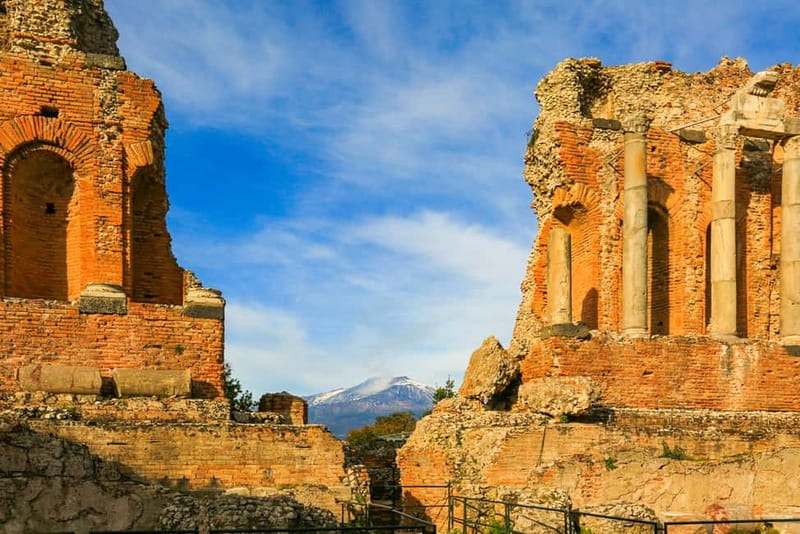
The Ancient Theater of Taormina is one of those places where the setting does half the work. The theater sits in a dominant position, and that location turns history into something you can feel in your body. You’re not just looking at old stones. You’re in the same kind of space ancient audiences used—set for shows, set for drama, set for views.
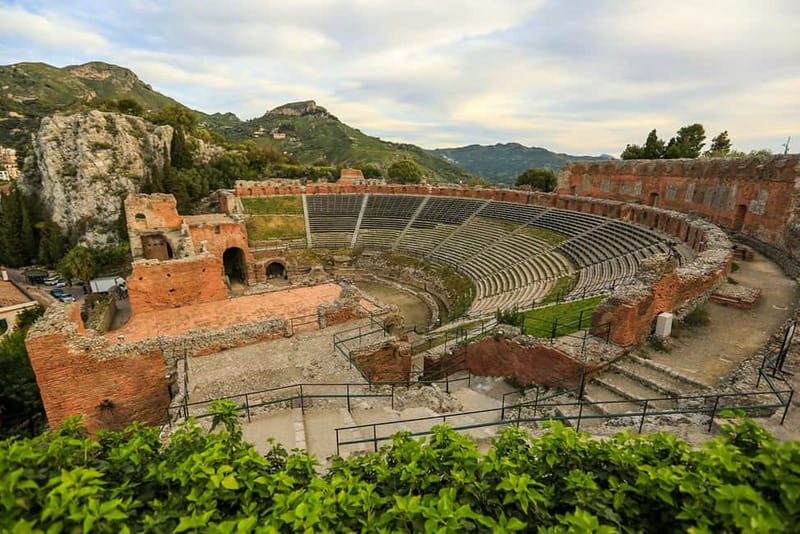
What makes it especially interesting is that you’re not touring a single “snapshot” from one era. The theater’s layout connects to the Greek world, with a dominant-era design that dates, by layout, to the 3rd–2nd century B.C. Then, the forms you recognize today come from Roman imperial changes, associated with emperors like Trajan and Hadrian. After that, it shifts again under Caracalla’s period—becoming an amphitheater where the orchestra gets converted for gladiator-fight staging.
That “layers of change” idea is the reason I like pairing the site with an audio guide. You can stand in one spot and understand why the structure looks the way it does, and how different rulers used the same bones for different kinds of public spectacle.
You can also read our reviews of more tours and experiences in Taormina.
Skip-the-line entry: how it works on arrival
This is a straightforward experience, but it’s still worth knowing the flow so you don’t lose time.
First, you come to the Ancient Theater of Taormina and exchange your digital voucher at the box office. After that, you pass through a security check before entering the archaeological site. The “skip-the-line” part is basically about avoiding the ticket-purchase queue. Once you’ve got your entry confirmed, you’re free to go in and start exploring.
Practical tip: if you’re traveling in hot months, treat entry like part of your sightseeing plan, not an afterthought. One of the most consistent reasons people feel this ticket is worth it is that it saves you from waiting in the sun just to buy something simple.
Your visit starts with the audio guide, not a tour group

A live guide is not included here. Instead, you get a multi-language audio app with an English, French, Spanish, and German option.
That matters because you can move at your own speed. Some people want to race through for the key sights. Others slow down to read, look closely, and take breaks. The audio lets you do both. You can also pause when you find a view you want to frame from the seats.
One timing note from experience: the audio experience depends on getting everything set up correctly when you arrive. If you show up near closing time or near the end of the entry window, you might run into trouble activating the audio program you paid for. A good rule is to arrive earlier than you think you need, so you’re not rushed while setting up.
What you’ll see inside: Greek layout and Roman imperial changes
Once you’re in, plan to look at the theater as a “map of time.” The big idea is that the site you’re seeing reflects multiple build phases and repurposing.
The Greek foundation
By layout, the theater is tied to the Greek period (3rd–2nd century B.C.). Even if you’re not a classics expert, the structure gives you clues about how it was meant to function: a staged space designed for public performances with an audience facing a central area.
The Roman makeover under Trajan and Hadrian
The forms you admire today are largely those acquired during the Roman imperial age, linked to emperors like Trajan or Hadrian. This Roman period is often what gives the theater its more familiar look from many modern photos—stonework and architectural changes that make it feel like a unified monument rather than a rough ruin.
The gladiator-era transformation under Caracalla
In the same general period as Caracalla’s reign, the theater becomes an amphitheater. The orchestra area gets converted into an arena, allowing for gladiator fights and other combat-style spectacles. If you listen to the audio while you stand where the orchestra would have been, it’s easier to picture the space in action instead of just viewing it as empty architecture.
A later chapter: the Zumbo family palace (1465)
There’s also a later period layered onto the monument’s story. In 1465, part of the structure was used as a residence/palace connected to the Zumbo family. That reminder helps you stop thinking of ruins as frozen objects. This site has lived through neglect, reuse, and restoration—not just one uninterrupted era.
Views from the seats: Taormina, Giardini Naxos, and Mt Etna
Let’s be honest: the views are a big part of the reason people come back to Taormina. From inside the theater, you get a built-in vantage point. You’re framed by ancient stone, while the sea and nearby towns stretch out below.
With good weather, you can catch views that include Taormina and Giardini Naxos. Some visitors also mention the possibility of seeing Mt Etna, depending on clarity and conditions. Even if you don’t spot it, you still get that sense of looking out from an old performance space into a working modern coastline.
Practical approach: don’t rush the “picture moment.” Sit down. The theater is one of those places where your best photos come after you’ve watched the view change for a few minutes—shadows shift, light flattens or sharpens, and you start noticing more than the obvious.
How long to stay and where to take breaks
This experience is built for a self-paced visit, and that’s a blessing. You can take your time moving through the main areas, then slow down for the best viewing spots.
I’d plan your day so you’re not sprinting from one stop to the next. People often enjoy having enough time to sit within the theater walls and actually take the place in, not just walk past it. And since Taormina can be hot, building in a break helps you keep the experience pleasant instead of sweaty.
Inside the area, there are facilities like toilets and a cafe. You might also find that certain shops are closed at times (for example, one visit noted the bookshop wasn’t accessible), so don’t base your plan on buying anything. Instead, treat the cafe and basic amenities as your backup for keeping energy up while you explore.
Price and value: what you’re really paying for
At about $28 per person, this ticket sits in the “pay extra to save time and get context” category.
Here’s the useful breakdown from the info provided: an adult entry ticket at the gate is €12. The audioguide is priced at €5. The rest is GetYourGuide’s booking fee. So you’re not only buying access—you’re paying for the convenience layer: the voucher exchange plus skip-the-line entry.
When it’s good value:
- If you’re visiting in peak season and don’t want to wait in a long ticket line in direct sun
- If you want history explained through audio while you’re standing in the right spots
- If you’re traveling with limited flexibility and you want a smoother entry day
When it might feel less worth it:
- If you arrive during a quiet period and there’s little or no line at the gate
- If you’re planning to visit early in the day and already expect short entry lines
My advice: don’t look at the price in isolation. Look at your likely conditions. Taormina can turn into a heat-and-queue situation fast, and saving 20–40 minutes can be worth more than a few dollars—especially if your time is tight.
Also worth noting: the Ancient Theater has free access on the first Sunday of each month. If your trip lines up with that, it can change the math entirely.
When to go: timing that protects your audio experience
This ticket is valid for one day, and it’s tied to the entry timeframe shown on your booking. In one case, a ticket specified entry between 09:00 and 19:00, and arriving close to the end of that window was treated as late for audio use.
So here’s the practical move: give yourself a cushion. If your plan includes sunset-style timing, arrive earlier to set up and start the audio comfortably. This way you’re not troubleshooting right when you most want to relax and listen.
And if you’re visiting on a free-access first Sunday, plan for crowds. Skip-the-line may not matter as much if the gate is operating under different rules that day, but the main site will still be popular.
Accessibility and what to bring for a smooth entry
This experience is wheelchair accessible.
For what to bring, keep it simple:
- Passport or ID card (you may need it for identity/security checks)
- Comfortable shoes (the site involves walking on uneven archaeological surfaces)
Also consider bringing water and a hat. The ruins don’t care if you’re comfortable, and summer in Sicily can be intense.
Who this works best for
This setup is ideal if you like:
- A self-guided pace instead of a fixed group schedule
- A low-stress entry (less waiting, less friction)
- Clear historical context while you stand in front of the relevant architecture
- Views as part of the main event, not just an add-on
It’s less ideal if:
- You strongly prefer a live guide for question-and-answer (a live guide is not included)
- You’re on a tight budget and your timing suggests minimal queues at the gate
Should you book this skip-the-line ticket with audio guide?
Book it if you want a smoother entry and you’ll actually use the audio to make sense of what you’re seeing. The price premium over the gate ticket can feel much more reasonable when you factor in the time saved, the heat you avoid, and the fact that the site’s story really benefits from being explained in place.
Skip booking it (or consider buying at the gate) if you’re visiting when crowds are clearly low and you’re comfortable managing any entry line without stressing. Also, if your schedule pushes you too close to closing time, arrive early if audio activation is important to your plan.
FAQ
How do I use my ticket on arrival?
You exchange your digital voucher at the box office when you arrive at the Ancient Theater of Taormina, then you enter the archaeological site.
Is a live guide included?
No, this ticket includes an audio guide, not a live guide.
What languages are available for the audio guide?
The audio app is available in English, Spanish, French, and German.
Does the ticket include skip-the-line entry?
Yes. It’s a skip-the-line entry ticket for the Ancient Theater of Taormina.
Can I enter more than once with the same ticket?
No. The ticket allows a single entry.
How long is the ticket valid for?
It’s valid for one day.
Is there a security check before entering?
Yes. You will need to pass a security check before entering the archaeological site.
Do I get free entry sometimes?
Yes. The Ancient Theater has free access on the first Sunday of each month.