REVIEW · FRANKFORT
Michigan Lakeshore, M-22 Self-guided Driving Audio Tour
Book on Viator →Operated by History with Action · Bookable on Viator
M-22 is famous for a reason. This self-guided driving audio tour gives you hands-free stories as you roll from Frankfort toward Traverse City, with stops built around Lake Michigan views and the people who shaped them. I like the offline-first setup, so you’re not trapped by spotty cell service, and I also like how the narration is paced for real stops, not a rushed checklist.
The one thing to think about is that it’s not a turn-by-turn GPS tour. You’ll want to pay attention to the audio cues and road signs, and some locations can be seasonally closed, so a little flexibility helps.
In This Review
- Key highlights you’ll feel on the road
- How this M-22 audio tour really works in your car
- From Great Lakes Bay into Portage Lake: start with the big picture
- Arcadia Marsh boardwalks and dunes near Frankfort
- Point Betsie and the Sleeping Bear Dunes day that most people remember
- Glen Arbor, North Manitou Island, and the lake-drama viewpoints
- Good Harbor Bay, Leelanau Peninsula, and Historic Fishtown
- Lighthouses, reservations, and port towns toward Traverse City
- Dennos Museum Center as a flexible last stop
- Price and value: $14.99 for up to 4 people is the real win
- Should you book this M-22 self-guided audio drive?
- FAQ
- How much does the Michigan Lakeshore, M-22 audio tour cost?
- How long does the tour take?
- Does it work offline?
- Do I need cellular or Wi‑Fi while driving?
- Are admission tickets included for stops like museums and parks?
- Do I need to meet someone to start the tour?
Key highlights you’ll feel on the road

- Offline maps + offline playback after you download the tour (no signal required mid-trip).
- Hands-free audio by location, so stories start as you reach each stop.
- A full M-22 route in one purchase for up to 4 people per group at $14.99.
- Major Sleeping Bear Dunes coverage, including the visitor center, dune climb, and side trails.
- A mix of beaches, marshes, and towns, from Arcadia Marsh boardwalks to Historic Fishtown in Leland.
- Lifetime access, no expiry, so you can repeat the drive on a different day or season.
How this M-22 audio tour really works in your car
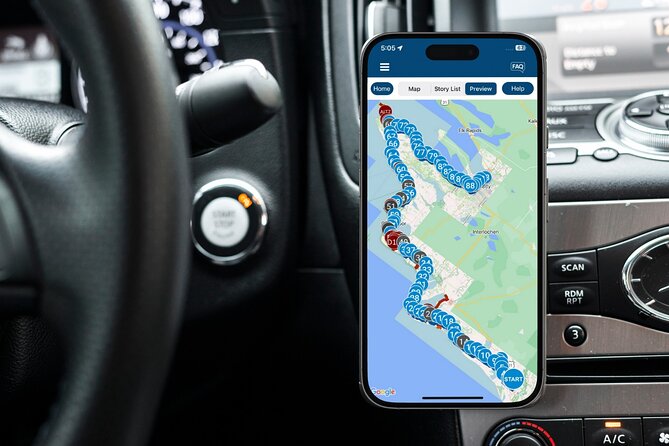
This is designed for one simple plan: drive, park when the story tells you to, then listen while you explore. After you book, you get an email and text with setup instructions and a password. You then download Action’s separate audio app (you’re told to do that while you’re in strong Wi‑Fi or cellular), and after the download it works offline.
Once you’re onsite, there’s no person meeting you at the start point. You open the app, start the tour version tied to your starting direction, and the audio begins automatically when you reach the first story location. The narration is built to follow your location, which is great when you want your eyes on the road and your hands free.
For audio, you can connect your phone to the car stereo using Bluetooth, USB, or AUX. If you use Apple CarPlay, audio playback is compatible, and Android Auto support is described as coming soon. For walking stops, I strongly suggest headphones, since you’ll often be out of speaker range.
Timing is the next big factor. The route is over 121 miles long, with more than 78 audio stories, and the audio run itself is described as about 2 to 4 hours. In real life, you’ll likely stretch it into a full day, and the overall experience is listed as about 8 to 9 hours, depending on how long you linger at beaches and overlooks.
You can also read our reviews of more tours and experiences in Frankfort.
From Great Lakes Bay into Portage Lake: start with the big picture
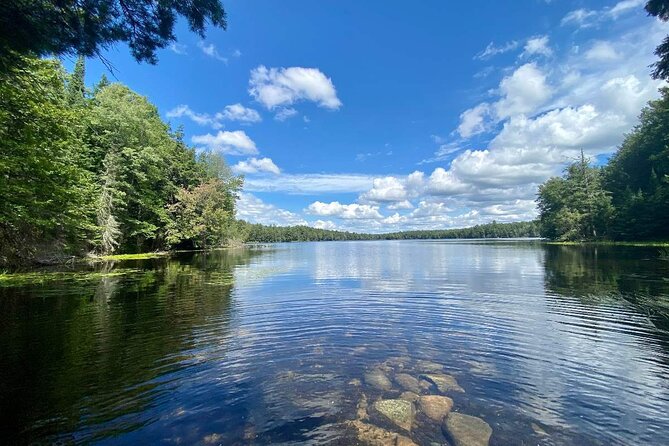
The tour opens with Great Lakes Bay, where the stories frame Michigan’s whole setting as part of one connected freshwater system. You get the scale numbers—Great Lakes freshwater is said to cover 21% of the world’s surface freshwater—and you also get the idea that the waters connect through smaller lakes and rivers until they reach the Atlantic Ocean.
This first section helps you understand why M-22 feels so “alive” even when you’re just driving. It’s not only scenic. You’re learning the geography and the water stories that explain why the shoreline keeps reinventing itself.
Next comes the tour stop at Lake, which plays with Michigan’s shape like a lesson you can remember. You’re guided to hold up your left hand like a mitten, and the route runs along the pinky-finger side. It’s a quick mental map trick, and it makes the rest of the drive feel less like random stops.
Then you hit Portage Lake, where the story turns toward lumber. Mid-1800s lumber boom, mills along the Lake Michigan coast, trees shipped by Great Lakes routes—this stop gives you the “how the coast became a highway” angle. If you like seeing how industry leaves a stamp on place names and settlement patterns, this one lands.
Arcadia Marsh boardwalks and dunes near Frankfort
After you get the big geographic framing, the route starts delivering the “walkable” nature moments. Arcadia Marsh Nature Preserve is one of only 15 remaining coastal marshes along Michigan’s Lower Peninsula shoreline, and you get a dry, elevated boardwalk to experience it. The practical note here: entry is free, but dogs aren’t allowed, so keep that in mind if you’re traveling with a pet.
If marsh birds and butterflies aren’t your first thought, you might still enjoy this stop because it’s rare to get a protected coastal wetland along a road trip route. It also sets you up for the next shift: sand, wind, and shoreline engineering.
Crystal Lake Alpacas adds a different kind of viewpoint. The story explains that Crystal Lake was once a bay on Lake Michigan, and sand dunes closed it off around 2,000 years ago. Then you learn about Archibald Jones and the Benzie County River Improvement Company and the effort to remove sand between Crystal Lake and Lake Michigan. Even if you’re just doing a short photo stop, the story makes the scenery feel like a timeline.
Green Point Dunes is a more active break. The stop is built around a 2-mile hike through shady, green-filled woods on the way to a golden beach, and you’ll descend wooden stairs to reach the sand. This is the moment on the drive where the tour stops nudging you toward shoes that handle uneven sand and stairs.
Then you roll into Frankfort Beach, a straightforward beach stop with practical directions: continue straight on Forest Avenue to the water, and look for a small parking lot for Frankfort Public Beach. The story also points out the Frankfort lighthouse and pier just offshore, which makes this a good spot for a calm stretch of sand plus a few easy photos.
Point Betsie and the Sleeping Bear Dunes day that most people remember
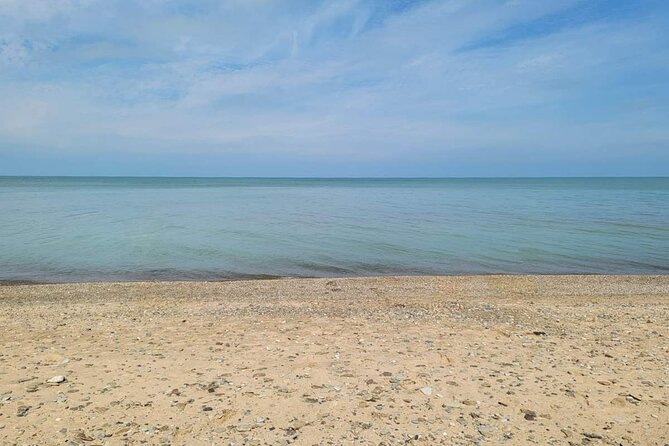
If you want the crown jewels, this portion is why M-22 gets attention. Point Betsie Lighthouse is described as one of the most photographed lighthouses in Michigan, and it comes with a beach setting that’s easy to enjoy without overplanning. You can tour the grounds, and guided tours run Memorial Day weekend through late October for a small fee, which matters if you’re visiting outside that window.
From there, the audio starts building your Sleeping Bear Dunes game plan. Before you even arrive, you’re given context and details, which is useful because Sleeping Bear can overwhelm you if you only know it from photos. Your next stop is the Philip A. Hart Visitor Center, and the tour strongly recommends starting there.
The visitor center directions are part of the experience too: turn right onto West Front Street, then look for a bluish building and park signs on the left. The way the directions are spoken makes it easier to park and focus right away, instead of circling.
Once you’re set, you get a mix of iconic and quieter trail options. Old Indian Trail is presented as a National Park trail with two roughly 2.5-mile loops that follow part of an early Native American path between camp and fishing sites. If you want something less crowded than the headline dune stops, this is a smart choice built into the route.
Then comes Empire, a story about a steamer ship. You get the scale—40-foot paddle wheels, launched in 1848—and the role the ship played carrying passengers north from Chicago in luxury. This is a reminder that Great Lakes history isn’t only about land. It’s about movement on water and the economy that movement created.
Next is the Dune Climb, one of the biggest draws at Sleeping Bear Dunes National Lakeshore. The nearly 300-ft dune is described as steep, and it’s also one of the few places in the park where climbing on dunes is encouraged. The tour notes there’s plenty of parking and you’ll see the towering sand right away, which is great for first-timers who don’t want to search.
Just after that, Alligator Hill Trail offers a gentler uphill option leading to the Islands Lookout. The hike to the lookout is about 3 miles roundtrip, and on a clear day you can see the Manitou Islands. This stop is a good “views reward” if you don’t want another steep climb right after the dune.
Glen Arbor, North Manitou Island, and the lake-drama viewpoints

The route then shifts into small-town pace at Glen Arbor. The story focuses on the area’s tourism since the early 1900s and mentions art galleries, wine and cider tasting rooms, and cafes. It’s not just a photo stop. It’s a practical one if you want to stretch the day with a meal or even consider an overnight base, especially if you’re exploring more of the Leelanau Peninsula beyond this drive.
Then you head toward the Manitou story again, starting with North Manitou Island. The narration frames both islands as officially part of Sleeping Bear Lakeshore and largely uninhabited. That uninhabited feel matters because it changes how you think about the water: less resort energy, more wild shoreline.
Pyramid Point Trail is another “earned view” stop. You’re told to look for the turn for Port Oneida Beach and Pyramid Point, and that Pyramid Point is about a three-mile hike from the trailhead. It’s specifically described as worth it for panoramic Lake Michigan views, which is exactly what you want after a day of driving.
After that, Manitou Passage gets its spotlight through maritime trade. The story points to the waterway separating the islands from mainland Michigan and notes that in the mid-1800s to early 1900s, maritime trade was booming with ships carrying goods through Lake Michigan. It’s a helpful story bridge between the islands you’re thinking about and the shipping routes that shaped the region.
Good Harbor Bay, Leelanau Peninsula, and Historic Fishtown

Good Harbor Beach is next, with a turnoff for Good Harbor Beach on your left-hand side. The story frames it as a place for strolling, swimming, or sunset viewing, and then gets very practical about water safety: there are no lifeguards, and you should be wary of waves and rip current. If you plan to swim, you’ll feel better going in with that warning in mind.
Then you move along the Leelanau Peninsula story. The tour explains the peninsula name came from Henry Schoolcraft, Michigan’s Indian agent in the 1820s, who served as a go-between with the US government and Native American tribes. It also includes a personal detail: he was assigned to live in Sault Ste. Marie, where he met his wife Jane Johnston. This stop is proof that even “just a drive” sections can add context without adding time.
In Leland, Historic Fishtown becomes the classic kind of stop people remember long after the photos. You’re told this stroll is a must-do, and the narration ties it to one of the oldest Ottawa villages in the Great Lakes region. It also points out a natural fish ladder where the Leland River flows into Lake Michigan, explaining why fishing was built into the site.
Lighthouses, reservations, and port towns toward Traverse City

As you approach Beaver Island, the story zooms out to Lake Michigan’s other islands. Beaver Island is described as the largest one north of the Leelanau Peninsula, and the history includes a stint as a self-proclaimed theocratic monarchy. Even if you can’t reach the island on this drive, the audio broadens your mental map of the lake.
Northport follows, and the narration gives a sharp origin story: settlers arrived in the mid-1800s after a statewide smallpox epidemic caused a mass scattering. It’s the kind of detail that turns “a town along the bay” into something with real human history behind it.
Then you get a lighthouse-focused stop at the Grand Traverse Lighthouse Museum. You learn about Philo Beers as the second lighthouse keeper after David Moon, who only lasted about 8 months before calling it quits. That kind of keeper-life detail helps the lighthouse feel like a job, not just a postcard.
Peshawbestown is another stop where the story becomes very specific and location-based. You’re told you’re passing through part of the Grand Traverse Indian Reservation, south of the original settlement at Omena led by Reverend Dougherty. The narration also mentions that a later group moved in and the settlement was called Eagle Town before becoming Peshawbestown after Chief Peshaba.
Suttons Bay is the coastal port-town payoff. The town is named after Harry C Sutton, who founded the port in 1854, and it was originally called Suttonsburg. The story describes steamer ships treating the place like a gas station stop, with cordwood loaded onto ships that burned wood to heat their boilers. That’s the sort of practical detail that makes these places feel connected to the larger Great Lakes economy.
Finally, Traverse City arrives at the head of the East and West arms of Grand Traverse Bay. The audio frames it as a place with plenty to see and do and suggests using it as a basecamp for Sleeping Bear Dunes and the rest of the Leelanau Peninsula. Even if you’re only finishing the drive here, that advice helps you decide where to spend your next day.
Dennos Museum Center as a flexible last stop

If you’re still rolling after the scenic portion, Dennos Museum Center works as a “weather-proof” finish. The narration notes it hosts rotating exhibits, and it even lists past temporary shows like Dale Chihuly, Mathias J. Alten, Orna Ben-Ami, Andy Warhol, and the traveling Bodies Human exhibit. Since exhibits rotate, you’ll know it’s built for variety rather than a single must-see object.
This is also useful because it gives you a way to end the day without chasing one more beach viewpoint.
Price and value: $14.99 for up to 4 people is the real win
At $14.99 per group (up to 4), the value is about car-based savings. If you’re traveling as a small family or with two friends, one purchase covers the whole group in the car, which is usually cheaper than per-person audio or guided formats.
You also get lifetime access with no expiry, which matters if you plan to return to Northern Michigan. A lot of road-trip content becomes outdated fast, but this one is described as staying usable across trips, so your first drive can turn into a repeatable “refresher” later.
The other value piece is control. The audio plays automatically based on location, but you still choose when to pause, explore side stops, and skip anything that isn’t your style. That flexibility is often what you pay for with live guides, except here you’re driving at your own pace.
Should you book this M-22 self-guided audio drive?
Book it if you want an efficient way to turn M-22 into an interpretive route, not just a drive with photo stops. It’s especially good if you care about a mix: dunes and lighthouses, plus human history like lumber shipping, lighthouse keepers, and place-name stories.
Skip it or be cautious if you strongly rely on turn-by-turn GPS. The tour uses location-triggered audio cues, and one review experience you can learn from is the desire for GPS guidance, plus a reminder that some locations can be closed seasonally or due to government shutdown timing. If you prefer totally hands-off navigation, you might find you need to keep your eyes on the road and manage directions yourself.
If you’re planning a full-day Northern Michigan itinerary and want that “stories on the move” feeling, this is a solid pick—simple, flexible, and built for the exact rhythm of Lake Michigan road trips.
FAQ
How much does the Michigan Lakeshore, M-22 audio tour cost?
It costs $14.99 per group, and one purchase covers up to 4 people in the same vehicle.
How long does the tour take?
The route is listed as about 8 to 9 hours overall, while the audio run is described as taking about 2 to 4 hours if you follow the stories.
Does it work offline?
Yes. You need to download the tour while you have strong Wi‑Fi or cellular connection, and then it works offline during the drive.
Do I need cellular or Wi‑Fi while driving?
No. After the download, it’s designed to work without cellular signal.
Are admission tickets included for stops like museums and parks?
No. Attraction passes, entry tickets, or reservations are not included.
Do I need to meet someone to start the tour?
No. It’s self-guided, and you start in the app at the first story point, where the audio begins automatically.