REVIEW · TAIPEI CITY
Taipei: Hop-On Hop-Off Sightseeing Bus with Audio Guide
Book on GetYourGuide →Operated by Fontrip · Bookable on GetYourGuide
Two decks make Taipei feel bigger. This hop-on hop-off bus gives you easy city coverage and an audio guide as you hop between top sights like Taipei 101 and Ximending.
I especially like the simple structure: board at Taipei Main Station and use two routes (Blue and Red) when you want them. The other win is comfort and connectivity—free onboard Wi‑Fi and USB charging for your phone. One thing to plan around: buses can fill up, and audio can get lost in street noise, so you may need to choose your seat.
In This Review
- Key takeaways before you ride
- Taipei’s double-decker shortcut for first-time planning
- Price and value: why $10 can still make sense
- Routes, stops, and how the Blue and Red lines work
- Taipei Main Station meeting point: QR code to paper ticket
- Riding comfort: wi-fi, charging, and the double-decker view
- Where to hop off: Taipei 101 and nearby time tactics
- National Palace Museum: what a hop-on bus gets you (and doesn’t)
- Chiang Kai-Shek Memorial Hall: good for a structured stop
- Ximending and street energy: how to time it with hopping
- Dinghao Market and Taipei Fine Arts Museum: easy local flavor options
- What the audio guide does well (and where it may frustrate)
- On-time expectations, boarding rules, and traffic reality
- Ticket flexibility and cancellation: keep your plans realistic
- What kind of traveler this pass fits best
- Tips to make your hop-off day feel easy
- Should you book this hop-on hop-off bus?
- FAQ
- Where is the meeting point for the hop-on hop-off bus?
- What sights can I reach with the bus stops?
- How long is the pass valid?
- Is Wi-Fi and charging available on board?
- Does the ticket include entrance fees to attractions?
- Can I cancel after booking?
- What languages is the audio guide available in?
Key takeaways before you ride
- Blue and Red routes: a 9-hour pass lets you mix both without stressing about timing.
- Taipei Main Station is your anchor: start and end at the same spot, which makes planning easier.
- Wi‑Fi + USB charging: keeps your maps, photos, and translation apps alive.
- Audio guide in multiple languages: Chinese, English, Japanese, Korean, and Thai as you pass key landmarks.
- Expect real-world traffic changes: schedules can slip, and you’ll want to line up a bit early.
Taipei’s double-decker shortcut for first-time planning
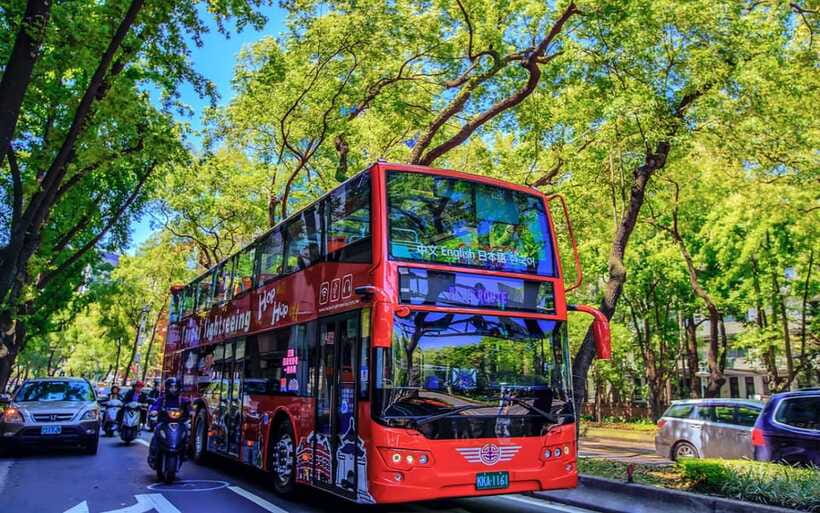
A hop-on hop-off bus is a practical tool, not a theme park ride. In Taipei, it works because many of the main sights sit across connected neighborhoods, and you don’t want to spend your limited energy guessing routes, transfers, and walking distances.
This one runs as a classic loop out of Taipei Main Station (Zhongxiao), then brings you back at the end. You’ll pass major names tourists aim for—Taipei 101, the National Palace Museum, Chiang Kai-Shek Memorial Hall, and Ximending—while the narration fills in what you’re seeing along the way. The big advantage is flexibility: you can get off for photos, visit one indoor stop, then return when you’re ready.
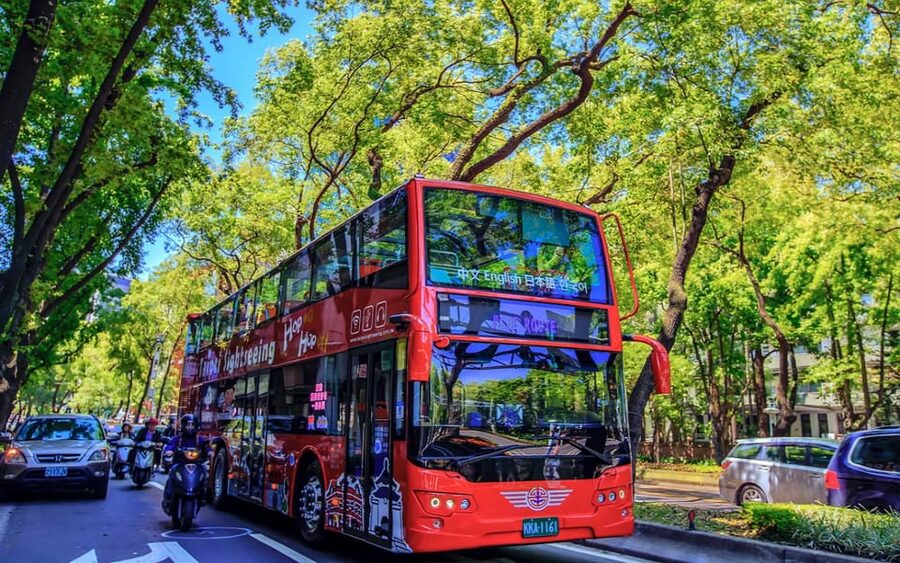
The double-decker part matters. From the higher deck, you’ll get an easier view down long boulevards and over dense city blocks. That means faster orientation: you start recognizing where you are in relation to the MRT lines and major districts, so later on you can branch out on your own.
If you’re thinking of a “one-day sampler,” this pass is built for that. Just remember: it’s transportation plus storytelling, not paid entry to museums or towers.
Price and value: why $10 can still make sense
The cost you’ll see listed is around $10 per person for the hop-on hop-off service, but the duration options are what really define value. You can choose a 4-, 9-, or 24-hour pass, and the ticket you buy is valid for a 1-day window based on the option you select.
Here’s how I’d judge the value for you:
- If you only have a few hours: the 4-hour pass can work if your plan is tight—hit Taipei 101 and one more anchor, then stop.
- If you want breathing room: the 9-hour pass is often the sweet spot because you can hop off, eat, and still catch the bus again without treating the day like a race.
- If you plan multiple indoor stops or more wandering: the 24-hour pass gives you time to do “one thing at a time” instead of stacking everything.
Two costs to keep in mind:
- Entry fees aren’t included. That matters for Taipei 101 and the National Palace Museum—great stops, but budget separately for tickets inside.
- You can’t refund used tickets. So once you board and use the pass, you’re committing to the day.
For most first-time visitors, the best value isn’t just saving money. It’s saving decision fatigue. Instead of piecing together bus routes or trying to time multiple MRT transfers, you’re riding a simple loop and choosing when to get off.
Routes, stops, and how the Blue and Red lines work
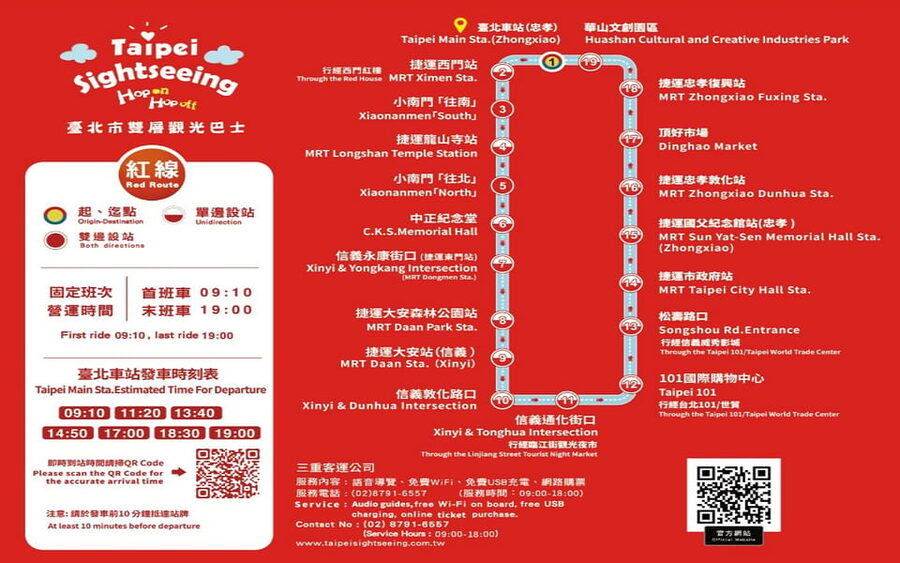
This service gives you access to two bus routes. The routes are commonly referred to as Blue and Red, and the key practical benefit is that a longer pass lets you ride either route whenever it fits your plan.
You board at Taipei Main Station, then get dropped at 23 stop locations along the way. That’s a big deal in a city where “walkable” can still mean 20–30 minutes in heat or rain. With a hop-on bus, you can reduce long walks and spend that time where you want it: viewpoints, markets, and museums.
Two route tips that can save your day:
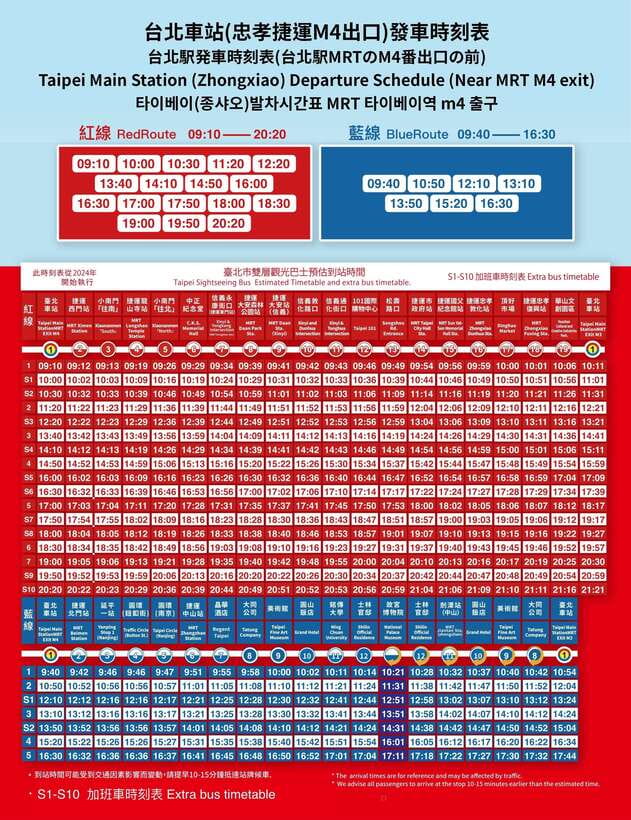
- Don’t plan a fragile schedule. The service notes that the bus schedule adjusts based on real-time conditions, and traffic can affect arrival times.
- Line up early. If you want a spot upstairs and you care about hearing the audio, waiting at the stop before the bus arrives can make a difference.
Also, keep your expectations aligned with how hop-on services operate. One limitation to know up front: the bus does not necessarily stop at every listed map point at every moment. If you’re counting on a specific pickup location, it’s smart to confirm on the ground once you reach the stop or use the main anchor stops that you’re confident the bus serves.
Taipei Main Station meeting point: QR code to paper ticket

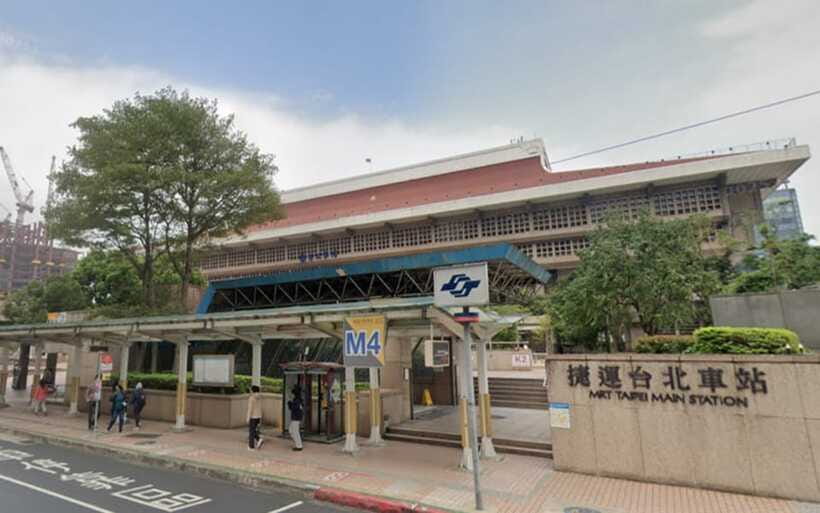
Your day starts at Taipei Main Station (Zhongxiao) near MRT Exit M4. You’ll use your electronic voucher with a QR code.
What happens next is straightforward:
- Service personnel scan your QR code.
- They exchange it for a paper ticket.
- That paper ticket is what lets you board and ride.
This is one of those “small but important” details. If you can get that scan done quickly, everything feels less stressful afterward. Since this is a central station, it’s also easier to navigate to and from the bus line compared with smaller pickup points.
End-of-day note: the activity ends back at the meeting point. That means you don’t worry about tracking down a final departure area far from where you started.
Riding comfort: wi-fi, charging, and the double-decker view
The onboard experience is more than just sightseeing. You get:
- Free Wi‑Fi
- USB charging ports
- A multi-lingual audio guide (Chinese, English, Japanese, Korean, Thai)
Those details matter because in Taipei, you’ll likely use your phone for:
- MRT navigation
- Translate apps
- Restaurant searches
- Map checks for hop-off timing
On the bus itself, the double-decker design gives you two ways to enjoy the ride: photo angles from above and a slower, calmer view while the narration plays.
Sound quality is the one mixed point. The audio guide exists, but city traffic and bus noise can make it harder to catch details depending on where you sit. You’ll get more out of the narration if you can hear it clearly—so don’t pick the seat that’s right next to the noisiest traffic view unless you’re okay with the story becoming “background.”
Where to hop off: Taipei 101 and nearby time tactics

Taipei 101 is one of the stops you’ll have access to, and it’s also one of those places where you can shape your visit around time.
If you’re planning the classic Taipei 101 moment—photos, a viewpoint, and maybe a quick look around—consider doing it with an eye for timing:
- Do it earlier in the day if you want better photo angles and more comfortable walking.
- Do it later if you prefer the city glow and are okay with more crowds.
The hop-on hop-off bus gives you the flexibility to match your mood. You can get off for 30 minutes and then return, or you can treat it as your anchor stop and stay longer. Either way, the bus gives you a backup plan if your original plan runs long.
One practical advantage: you’re not locked into a tour schedule. If it’s crowded or the line feels slow, you can pivot—hop somewhere else, eat, and come back when it suits you.
National Palace Museum: what a hop-on bus gets you (and doesn’t)
The National Palace Museum is another major stop on the route list. It’s also the kind of place where you can easily lose an entire half-day or more, depending on your interests.
Here’s the honest value from a hop-on perspective:
- The bus helps you get there without route planning headaches.
- It gets you close enough to time a visit that fits your day.
But it does not include your entry. That means you’ll want to budget for tickets separately, and you should plan your hop-off window around how long you think you’ll stay.
A good strategy when museums are involved:
- Decide your “minimum” plan before you go (for example, a few highlights rather than trying to see everything).
- Use the bus as your clock, not your commitment. If you’ve hit your minimum, you can return to Taipei Main Station and reset.
Chiang Kai-Shek Memorial Hall: good for a structured stop

The Chiang Kai-Shek Memorial Hall stop is useful because it’s a “clear, landmark stop.” Even if you only spend a short time there, it gives you a strong sense of Taipei’s central civic area.
Because the bus loops and returns to Taipei Main Station, you can use this stop in a few ways:
- as a quick stretch break
- as a photo-and-walk checkpoint
- or as a cultural stop before heading to a more lively neighborhood like Ximending
If you’re someone who likes seeing major symbols and then moving on, this is a strong match. If you love slow museum time, you may still enjoy it, but you’ll want to manage your energy so you don’t crowd the rest of your itinerary.
Ximending and street energy: how to time it with hopping
Ximending is one of the most practical hop-off choices because it’s a shopping and hangout area where you can flex your plan on the fly. The bus puts you in range so you’re not stuck trying to figure out the best MRT exit plus a long walk.
For your day planning, think about how you want your evening to feel:
- If you want lively streets, consider saving more time for later hours.
- If you prefer calmer browsing, go earlier and use the extra time to visit an indoor stop first.
This is also where the “hop-on hop-off” style shines. You can get off, explore for a while, and then reboard when you want to regroup rather than committing to a fixed walking route.
Dinghao Market and Taipei Fine Arts Museum: easy local flavor options
You’ll also have access to stops like Dinghao Market and the Taipei Fine Arts Museum.
Why these are good fits:
- Dinghao Market gives you a chance to shop and snack in a more local-feeling setting than the biggest tourist magnets.
- The Taipei Fine Arts Museum gives you a quieter indoor break, especially helpful if the weather turns or you need a change of pace.
Since entry fees aren’t included, build those costs into your “food and tickets” budget. But the hop-on bus still earns its keep by letting you choose which side of your interests you want more that day—street life or indoor culture—without paying for a separate transfer plan.
What the audio guide does well (and where it may frustrate)
The bus includes an audio guide in multiple languages, including English and several Asian languages. This is one of the best features for new visitors, because you’re not just looking at buildings—you’re getting context as you pass.
When it works great:
- You hear a story while you see the landmark.
- You connect what you’re seeing now with what you can research later.
When it can fall short:
- The bus environment is loud.
- Traffic and general noise can overwhelm the narration, especially if you’re toward the back or near the loudest parts of the road view.
If clear audio matters a lot to you, plan for the practical side: sit where you can hear better, and accept that some details may be easier to catch once you’re off the bus and at the stop itself.
On-time expectations, boarding rules, and traffic reality
This hop-on service runs with real schedules, but Taipei traffic can change things. The service notes that the bus schedule adjusts according to real-time conditions, and arrival times can be affected by congestion.
Two rules matter for your comfort:
- Queue space is limited. If the bus is full, you cannot board.
- Line up early. Don’t show up right as the bus arrives unless you’re okay with missing that one.
There’s also a policy detail that affects how you use the day. If you board at stops along the route (not just Taipei Main Station), you must also get off at Taipei Main Station and you cannot return to your original boarding point. In plain terms: you can hop, but your ending still funnels back to the hub.
So I’d treat Taipei Main Station as your “home base,” even if you board again later. It makes the system easier to manage.
Ticket flexibility and cancellation: keep your plans realistic
The service includes standard flexibility features. There’s free cancellation up to 24 hours in advance for a full refund, and there’s also a reserve now & pay later option for keeping your travel plans flexible.
One note for your planning brain: starting times depend on availability, and the schedule adjusts to conditions. That’s not unusual for city transportation, but it does mean you should avoid building a rigid itinerary around a single bus timing.
If you’re the type who likes to move on a moment’s notice, you’ll likely appreciate the structure here. If you like guaranteed, timed departures down to the minute, this is more “guide your day” than “clockwork tour.”
What kind of traveler this pass fits best
This tour-style bus makes the most sense if:
- you’re in Taipei for a short time
- you want to see big sights without memorizing transit maps
- you like the freedom to hop off, take photos, eat, and reboard
It can also work if you’re traveling with different pacing in your group. One person can do a quick view while another spends more time browsing.
It may be less ideal if:
- you need very quiet, clear audio details
- you’re counting on hitting every single stop on a map with perfect accuracy
- you want entry included
Tips to make your hop-off day feel easy
Here’s how I’d use this bus to get the best day with the fewest hassles:
- Plan around anchor stops. Use Taipei 101, the National Palace Museum, Chiang Kai-Shek Memorial Hall, and Ximending as your “must check” nodes.
- Treat the bus as your transport spine. Build your walking and museum time around it, not the other way around.
- Pick one indoor stop maximum. If you add too many indoor visits, your day becomes rushed fast even with hop-on freedom.
- Keep your QR code handy. The QR gets scanned and exchanged for the paper ticket, so you don’t want to scramble at the start.
- Don’t rely on printed stop schedules as gospel. Real-time conditions can shift things, and posted schedules at pickup points can be outdated.
Should you book this hop-on hop-off bus?
If your goal is to get your bearings fast and stitch together Taipei’s top highlights without complicated planning, I think this is a solid value. The combination of two routes, free Wi‑Fi, USB charging, and a multi-language audio guide makes it practical for a day where you want both movement and context.
I’d skip or downgrade expectations if you mainly want deeply detailed narration and precise stop-to-stop accuracy. In that case, you might prefer a smaller guided tour or a self-paced plan where you control timing more tightly.
For most people—especially first-timers—the bus is a smart foundation. You ride, you see the big landmarks, you adjust on the fly, and you end back at Taipei Main Station ready to continue your own Taipei story.
FAQ
Where is the meeting point for the hop-on hop-off bus?
You start at Taipei Main Station (Zhongxiao), near MRT Exit M4. You’ll use your electronic voucher QR code at the departure point, where staff scan it and exchange it for a paper ticket.
What sights can I reach with the bus stops?
You can hop off at stops near major attractions including Taipei 101, the National Palace Museum, Chiang Kai-Shek Memorial Hall, and Ximending. The route also includes options like Dinghao Market and the Taipei Fine Arts Museum.
How long is the pass valid?
The pass is available in 4-, 9-, or 24-hour options depending on what you select. It’s described as valid for 1 day, and you should check availability to see starting times.
Is Wi-Fi and charging available on board?
Yes. The bus includes free Wi‑Fi and USB charging ports to help you keep your devices powered while you ride.
Does the ticket include entrance fees to attractions?
No. Entry fees are not included, so you’ll need to pay separately for attractions that require tickets.
Can I cancel after booking?
Yes—there is free cancellation up to 24 hours in advance for a full refund.
What languages is the audio guide available in?
The audio guide is available in Chinese, English, Japanese, Korean, and Thai.