REVIEW · ALABAMA
Selma Civil Rights Walk of Freedom Self Guided GPS APP Audio Tour
Book on Viator →Operated by WalknTours · Bookable on Viator
Selma deserves more than a quick stop. This self-guided GPS audio tour strings together the key Civil Rights sites at your pace, with step-by-step directions and stories timed to where you are. You start at the Old Depot Museum and finish at Brown Chapel AME Church, with the most famous moments of the Selma-to-Montgomery campaign woven into the route.
What I like most is the way the audio does the heavy lifting. It’s designed to be easy to follow while you walk, so you can pause when you want, skip when you don’t, and keep moving when you’re ready to hear the next chapter. And at $9.75 per person, it’s a low-cost way to get meaning into the landmarks instead of just taking photos.
One thing to plan for: the route is fully outdoors and depends on your phone working well. If you show up at the wrong time of day—or if your connection/GPS is spotty—you’ll feel it fast, and the area near the start can also feel a bit rough if you’re expecting a polished downtown stroll.
In This Review
- Key highlights worth knowing before you go
- Selma Civil Rights Walk: GPS audio instead of a fixed group schedule
- Price and value: what $9.75 gets you in Selma
- From Old Depot Museum to St James: starting with context, not trivia
- Edmund Pettus Bridge and Bloody Sunday: the emotional core in 15 minutes
- The 30-minute streets walk: historic sites, stitched together by narration
- Brown Chapel AME Church: where the march planning story lands
- Courts and memorials near the finish: MLK, voting rights, and Rev. James Reeb
- How to make the audio walk work smoothly (and not feel stressful)
- Who should book this Selma Civil Rights GPS audio tour?
- Should you book the Selma Walk of Freedom self-guided tour?
- FAQ
- FAQ
- How long is the Selma Civil Rights Walk of Freedom GPS audio tour?
- Where does the tour start and end?
- Is this a guided tour with a person?
- What’s included in the ticket price?
- Is there an admission fee included for museums or buildings?
- What language is the audio tour offered in?
- Is the tour private?
- Is the tour refundable if my plans change?
- Is the end location (Brown Chapel AME Church) open all day?
Key highlights worth knowing before you go
- Mobile ticket + go-anytime flexibility: you don’t have to match a group schedule.
- Step-by-step audio tied to real locations: Edmund Pettus Bridge and the march story are built in.
- Most of the experience is outside: no ticket lines or indoor closures to mess up your timing.
- Brown Chapel AME Church as the anchor: it’s the planned-and-organized finish point for the march planning story.
- Short stops with clear durations: you get quick context at multiple sites instead of one long lecture.
Selma Civil Rights Walk: GPS audio instead of a fixed group schedule

This experience is built for independent pacing. Once you have your mobile ticket and launch the app, you follow the route with GPS-guided audio that walks you from stop to stop. The whole thing is about 1 hour to 1 hour 15 minutes, which makes it realistic even on a busy day in Alabama.
I like that the format respects how people actually travel. If you want a slower rhythm at a moving spot—like the bridge—you can. If you’ve only got an hour before the next stop, you can still finish without feeling rushed. And since it’s private for your group, you won’t get stuck listening to the back-and-forth of strangers.
The biggest mindset shift is simple: you’re not just sightseeing; you’re doing a guided walk using your phone. That’s why you’ll want to think about power and signal like you would for any GPS day.
Price and value: what $9.75 gets you in Selma
At $9.75 per person, this tour sits in the “small price, big context” category. You’re not paying for museum admissions or a staff-led program. Instead, you’re buying audio storytelling plus the route guidance that connects several key Civil Rights locations.
For a site like Selma, where the meaning is in the details, that matters. A self-guided walk can turn into a checklist unless the narration gives you something to pay attention to. Here, the audio is structured around major moments—like Bloody Sunday at Edmund Pettus Bridge—and around specific places tied to MLK’s actions and imprisonment.
If you’re on a tighter budget, this is one of the more approachable ways to get informed without committing to a half-day tour or adding multiple paid entries. It also helps if you’re traveling with people who have different interests—one person can read less, another can listen longer, and you still stay together.
From Old Depot Museum to St James: starting with context, not trivia
You begin at the Old Depot Museum on Martin Luther King St (4 Martin Luther King St, Selma, AL 36703). Even though the walking tour is outdoors, the narration starts by explaining the building’s history and linking it to the Civil Rights Movement. That’s a smart opening because it gives you a mental map before you move into the most famous locations.
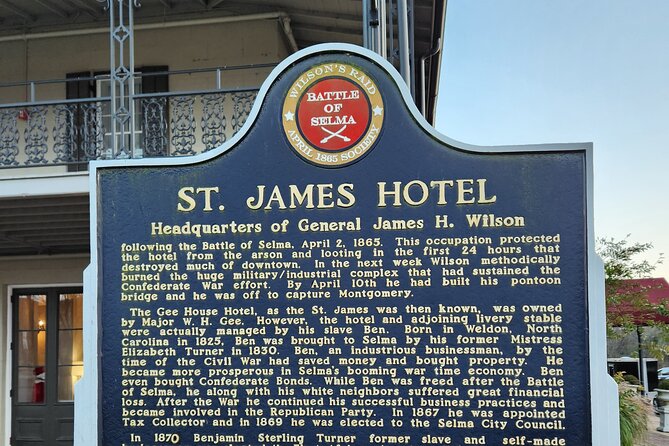
Your next stop is outside St James. The audio focuses on its history and the battle connection, then zooms in on why it still stands—linked to one man, described as a former slave. The value here is that the story doesn’t treat the town like a museum set. It frames the surviving structures as part of the Civil Rights landscape, not just “backdrops” for photos.
A practical drawback: these early segments set the tone for the rest of your walk. One review highlighted that the area near the start can look run down, with boarded buildings, rusting cars, and trash. If that would stress you out, treat daylight as your friend and keep your expectations grounded.
Edmund Pettus Bridge and Bloody Sunday: the emotional core in 15 minutes
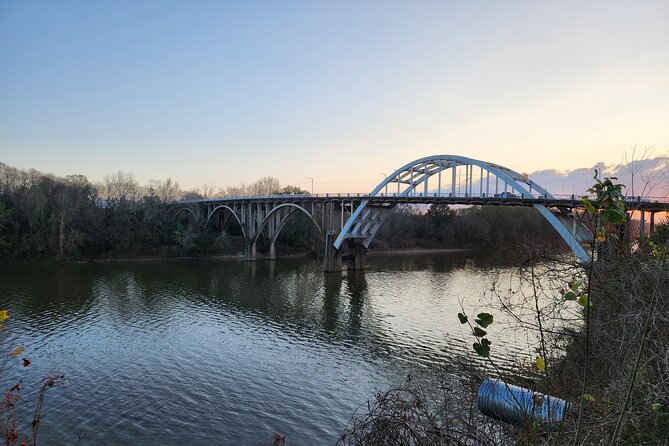
Next comes the centerpiece: Edmund Pettus Bridge. The narration is built around reliving the March and the brutal attack of Bloody Sunday. You’ll also hear about turnaround Tuesday and the 3rd march, which helps connect the event you’ve heard about in headlines to the larger timeline that led from protest to change.
This is where the audio format shines. A bridge can be just scenery if you don’t have the sequence in your head. With GPS audio, you’re hearing the events exactly as you reach the relevant spot, which makes it easier to understand why it mattered—and why the memory of it still sits heavy.
Give this segment a little extra space in your timing. Even if the guided audio portion is about 15 minutes, you might want a few minutes afterward to look around and take in the setting before you move on.
The 30-minute streets walk: historic sites, stitched together by narration
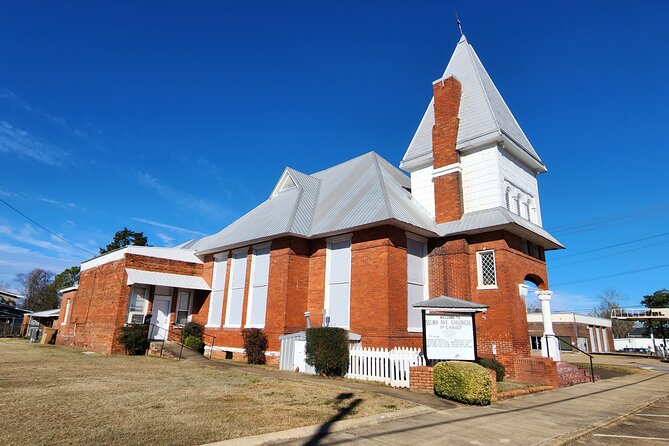
After the bridge segment, you spend about 30 minutes walking through Selma’s streets to see historic sites while the audio keeps the Civil Rights story moving. This part is less about one single “wow” object and more about pattern recognition: learning how different places connect to the same struggle.
I like this middle section because it slows down the “big events only” problem. You’re not just sprinting from one headline location to the next. Instead, you get a guided thread that makes the town’s geography feel purposeful, even when you’re on your own.
One thing to watch: because it’s a walking route through active streets, you’ll likely see the ordinary reality of the town—sidewalks, curb cuts, and street litter. One person noted trash on the street at their timing, which is worth keeping in mind so it doesn’t distract you from the bigger mission of the walk.
Brown Chapel AME Church: where the march planning story lands
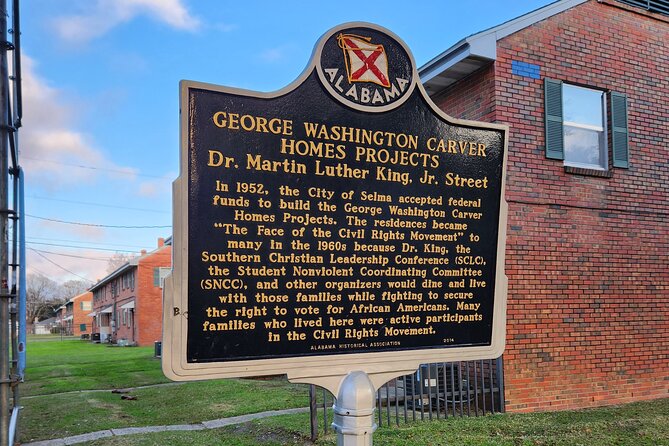
The tour route leads you to Brown Chapel AME Church (410 Martin Luther King St, Selma, AL 36703). The audio describes it as the spot where the Selma to Montgomery march was planned and organized, with deep roots in the Civil Rights movement.
This is the emotional landing point. If the bridge gives you the confrontation, Brown Chapel gives you the planning and organizing—what happened before the world watched Selma on TV. It also helps you understand that marches weren’t just spontaneous courage; they were built step by step by people who knew how to organize.
The end point is listed with very broad hours: 12:00 AM to 11:30 PM, Monday through Sunday (as provided for the listed date range). Since most of the tour is outside and guided by your phone, the key advantage is flexibility—less stress about timing if you’re finishing later in the day.
Courts and memorials near the finish: MLK, voting rights, and Rev. James Reeb
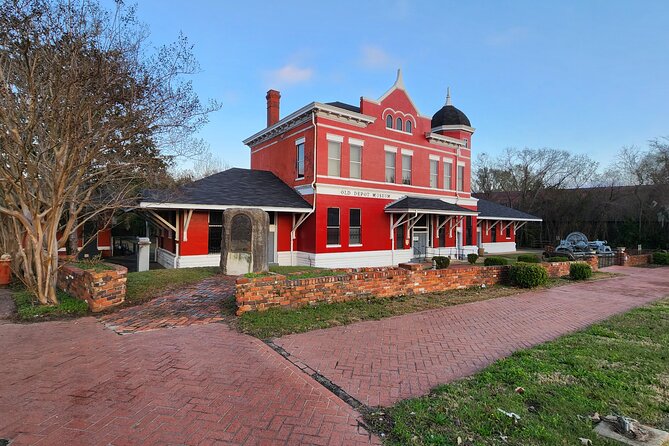
Even though Brown Chapel is the named end point, the tour also calls out several crucial places in the area as you wrap up the story. These stops matter because they show Civil Rights progress as both moral conviction and legal fight.
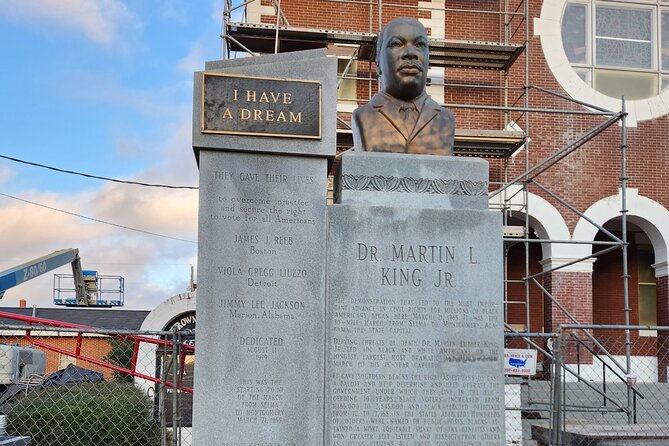
You’ll stop outside Selma Municipal Court, described as the spot where MLK was jailed, with narration explaining why and sharing his story in that context. Then you’ll stop outside the Dallas County Courthouse, tied to voting rights, with audio about what MLK did there.
Right after that, the tour includes the Rev. James Reeb memorial plaque, with the story of how he came to Selma in support of Civil Rights and was killed. This part is short—listed at around 5 minutes—but it’s the kind of moment that benefits from slowing your pace. If you’re the type who likes to stand still and listen, this is your cue to do it.
If you want your route to feel coherent, think of it like this: the bridge is the public shock, Brown Chapel is the organizing heart, and the courts and memorial plaques show what came through the legal system and beyond it.
How to make the audio walk work smoothly (and not feel stressful)
This tour is “walking + phone audio.” That sounds simple, but small details decide whether it feels effortless or annoying.
First, plan for daylight if you’re concerned about the vibe around the start. One note from a lower-rated experience described the area near the beginning location as run down and sketchy, so your own comfort level matters. Going earlier rather than later also tends to make the walking part easier on your nerves.
Second, treat your phone like part of your gear. Keep it charged, and don’t let the screen battery drop low mid-route. Because the tour is self-guided GPS audio, a dead battery can turn your “guided” walk into a confusing walk.
Third, give yourself a buffer. The tour is about 1 to 1 hour 15 minutes, but that’s an average. If you stop to read, take a moment at the bridge, or listen through the court and memorial segments slowly, you’ll want some breathing room so you don’t finish with a sprinty feeling.
Finally, dress for heat and real walking. One person couldn’t do the tour due to 94-degree heat and the pace wouldn’t be kind to older travelers. Selma can be hot, and there’s not a lot of built-in “escape time” since the tour is outdoors.
Who should book this Selma Civil Rights GPS audio tour?
This is a great fit if you want meaning without committing to a long, scheduled group tour. You’ll enjoy it if you like learning at your pace, walking while listening, and using a route that keeps you oriented.
It’s also a strong choice if your schedule is flexible. Since it’s go anytime with a mobile ticket, you can start when your day allows. That also helps if you’re visiting on a weekend or when you might not want to plan around what’s open inside buildings—this experience is designed to stay mostly outdoors and keep moving.
On the other hand, I’d hesitate if you strongly dislike phone-based navigation. Because the whole thing relies on your device and audio playback, it won’t feel like a traditional guided tour with a human fallback. Also, if you need a polished, comfortable urban feel from start to finish, the area around the Old Depot Museum might not match your expectations.
Should you book the Selma Walk of Freedom self-guided tour?
If you want a practical, budget-friendly way to connect the dots between major Civil Rights locations, I think this is worth your time. The narration is structured around the landmarks that most people come to see—Edmund Pettus Bridge, Brown Chapel AME Church, and the nearby court-related stops—so you’re not wandering with no context.
I’d book it if:
- you want guided audio without lining up for admissions,
- you like walking at your own speed,
- and you’re comfortable using your phone for GPS audio.
I’d think twice if:
- you’re worried about relying on your device,
- you’re visiting in extreme heat,
- or you prefer the whole experience to feel “touristy” and tidy from the first minute.
FAQ
FAQ
How long is the Selma Civil Rights Walk of Freedom GPS audio tour?
It takes about 1 hour to 1 hour 15 minutes (approx.), depending on how long you pause for each stop.
Where does the tour start and end?
The tour starts at Old Depot Museum, 4 Martin Luther King St, Selma, AL 36703. It ends at Brown Chapel AME Church, 410 Martin Luther King St, Selma, AL 36703.
Is this a guided tour with a person?
No. It’s a self-guided tour using a smartphone app with GPS and audio guidance.
What’s included in the ticket price?
You get the tour on the Walking Tour app in Selma, plus a mobile ticket. You can go anytime at your own pace.
Is there an admission fee included for museums or buildings?
No. This is all outside and guided by your phone, so admissions are not included.
What language is the audio tour offered in?
The tour is offered in English.
Is the tour private?
Yes. It’s listed as a private activity, so only your group participates.
Is the tour refundable if my plans change?
Cancellation is free, and you can cancel up to 24 hours before the experience start time for a full refund. If you cancel within 24 hours, the amount you paid is not refunded.
Is the end location (Brown Chapel AME Church) open all day?
The provided hours for Brown Chapel AME Church are 12:00 AM to 11:30 PM, Monday through Sunday, during the listed date range.