REVIEW · VARNA
Self-guided tour in Varna Archaeological Museum + ticket
Book on Viator →Operated by VisitBulgariaOn Bespoke Experiences · Bookable on Viator
Varna’s museum is a real change of pace. If you want something family-friendly that beats the sun and crowds, this self-guided visit gives you pre-booked entry and a chance to see standout finds like ancient tombstones, surgical tools, and jewelry. You also get a clear picture of how this region connects Hellenistic, Roman, and medieval life.
My favorite part is how smoothly the visit fits your day. You can take your time with the displays without feeling rushed, and the ticket plan is meant to prevent the classic last-minute disappointment. One thing to keep in mind: this isn’t a straightforward paper admission ticket you hand over. You’ll rely on the voucher/confirmation process, so check your email carefully.
In This Review
- Key things to know before you go
- A museum in a former Girls High School (and why the building matters)
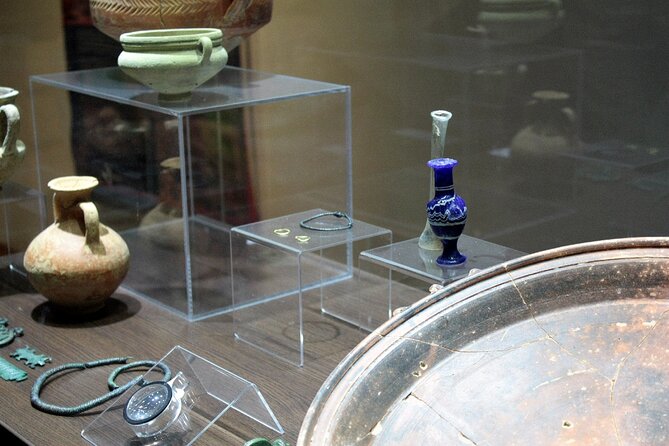
- What you’ll see: tombstones, surgical tools, and jewelry
- Tracing time in Varna: Hellenistic, Roman, and medieval layers
- The Škorpil brothers and the museum’s origin story
- Self-guided doesn’t mean unsupported: how to use your time
- Price and value: what $22.48 is really buying
- Tickets, vouchers, and the one thing you must double-check
- When to go: opening hours and planning your 2–3 hour window
- Who this experience fits best (and who should consider a different plan)
- Should you book the Varna Archaeological Museum ticket?
- FAQ
- How long is the Varna Archaeological Museum self-guided visit?
- Where does the experience take place?
- Is the tour offered in English?
- Is the admission ticket included?
- Do I receive a real museum ticket?
- What are the museum opening hours?
- Is it near public transportation?
- Can children participate?
- What should I do if my ticket/voucher email isn’t where I expect it?
- Is free cancellation available?
Key things to know before you go
- Pre-booked entry: you get access through a voucher flow meant to avoid surprises at the door.
- Artifact variety: tombstones, surgical tools, and jewelry show more than one side of ancient life.
- English-friendly visit: the experience is offered in English, and museum info is designed to be readable.
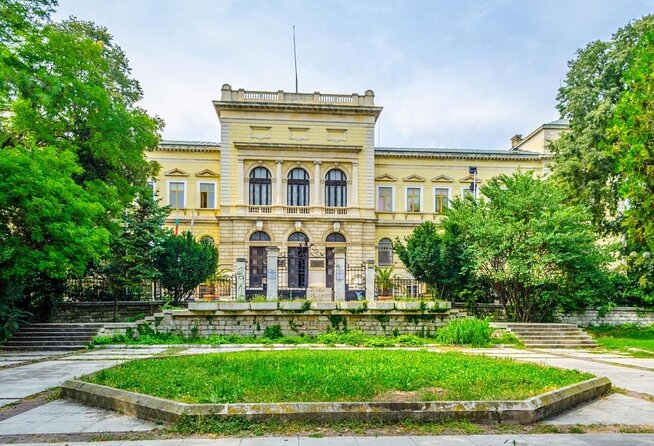
- Historic building setting: the museum is in a former Girls High School (1892–1898) in New Renaissance style.
- Easy logistics: it’s near public transportation and the group size is capped at 15.
- Plan for 2–3 hours: enough time to actually look, not just pass through.
A museum in a former Girls High School (and why the building matters)
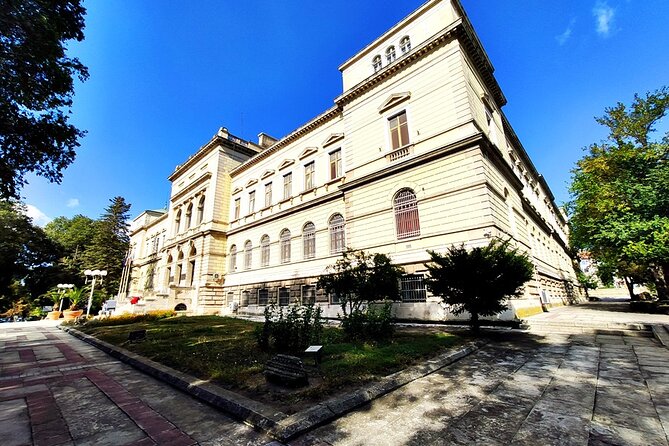
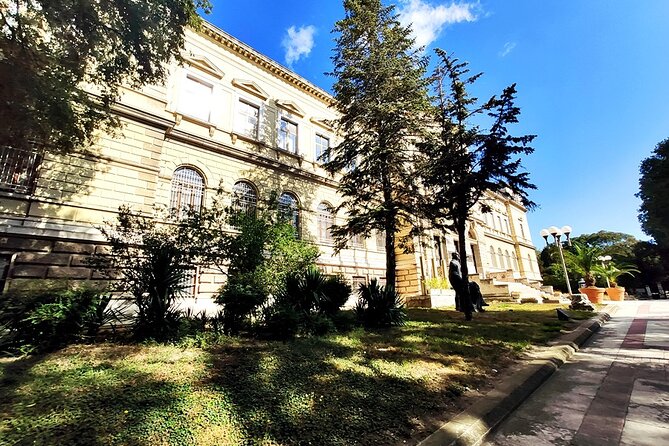
The Varna Archaeological Museum isn’t just where you go to see artifacts. It’s also the artifact’s neighbor—literally. The museum building was originally constructed between 1892 and 1898 as a Girls High School, designed by the Bulgarian architect Petko Momchilov. The architecture is New Renaissance, and once you’re inside, you start noticing the design choices that guide how you move.
The layout is part of the experience. The building nearly forms a complete square and includes a spacious inner yard. You also have a basement area plus two floors, so you’re not stuck in one narrow room. A continuous corridor runs through the whole building, connecting you to the exhibition rooms. That matters because you’re not constantly hunting for the next display—you get that steady, “walk and learn” rhythm.
If you like places where architecture supports the story, you’ll appreciate details like the wall paintings in some rooms and corridors. They don’t replace the exhibits, but they set a mood that makes the museum feel like a living space rather than a storage room.
What you’ll see: tombstones, surgical tools, and jewelry
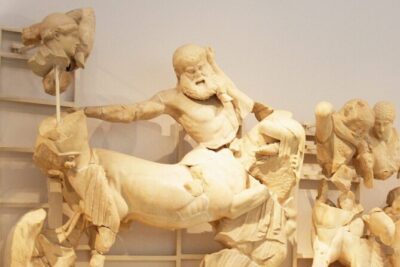
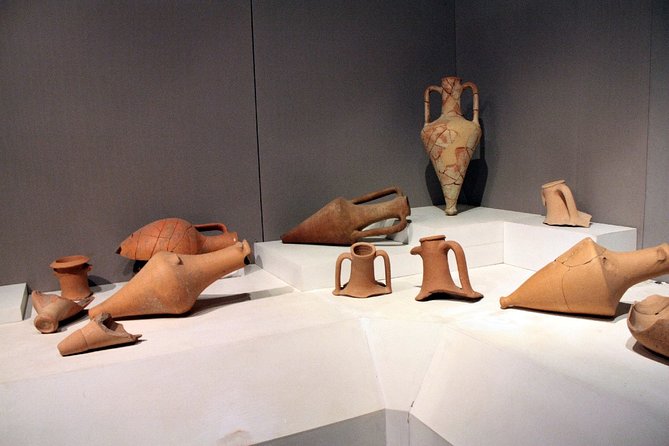
You’re visiting a museum designed to show objects with strong visual punch. Expect highlights that include ancient tombstones, surgical tools, and jewelry. These categories are a smart mix because they cover different angles of human life:
- Tombstones help you connect to identity, ritual, and how communities remembered people.
- Surgical tools shift the focus toward daily expertise—health, craftsmanship, and what treatment might have looked like.
- Jewelry brings you back to style and status, and it’s often the quickest way to spark curiosity for kids and adults alike.
A big plus here is that these aren’t random “one of each” items. The museum approach helps you see how objects fit into a longer regional timeline. That’s exactly the kind of structure that makes a self-guided stop feel worth it, even if you only have a couple hours.
If you’re worried about whether a museum will feel “too much text,” don’t. You’ll still spend time reading, but the objects do a lot of the heavy lifting. This is a place where looking carefully works better than trying to race through.
Tracing time in Varna: Hellenistic, Roman, and medieval layers
Varna sits at a crossroads, and the museum’s displays reflect that. You’ll learn about the area’s Hellenistic, Roman, and medieval history, which matters because it explains why you’re seeing such a broad range of cultural influences in one location.
Here’s what that timeline gives you as a visitor: context. Instead of treating artifacts like isolated “cool things,” you start noticing patterns—how the region changed over time, and how later periods built on earlier life.
Also, this is a practical museum for travelers because it’s not only about kings and battles. It’s about real objects that point to real activities: how people lived, marked life events, practiced crafts, and dealt with health. That’s why it’s a nice break from beach-only days. Even on a sunny vacation, your brain still gets a different kind of workout—and in a good way.
The Škorpil brothers and the museum’s origin story
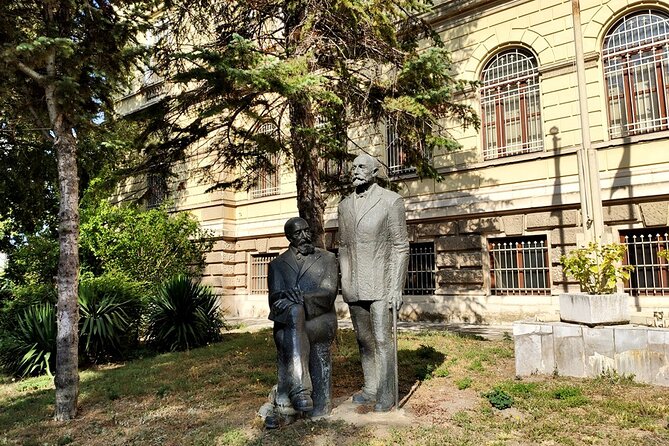
You might not come here thinking about Bulgarian museum history, but the museum actually has a strong story behind it. The museum’s inauguration and later development are tied to Herman and Karel Škorpil, Czech by origin, who moved to help with education and culture after Bulgaria’s Liberation from the Turkish Yoke. They settled permanently in Varna in 1894.
The museum momentum didn’t come from one person alone. In 1901, socially active figures and teachers created the Varna Archaeological Society, and the society became a long-running engine for studying the history of Varna, the Varna region, and Northeast Bulgaria. In other words: this museum didn’t happen by accident. It was backed by people pushing for local history to be preserved and taught.
Why does this matter for you during your visit? Because it turns the museum from a building into a project with purpose. When you see items connected to local heritage, knowing there was organized effort behind their study and display makes the visit feel more grounded—and less like a generic “look at old stuff” stop.
Self-guided doesn’t mean unsupported: how to use your time
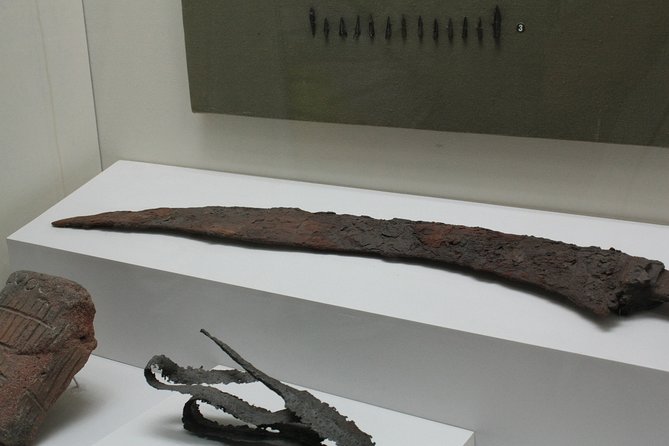
This is a self-guided experience, offered in English, and it’s set up so you can move at your own pace. You don’t need to wait for a group briefing that slows you down. You simply start at the museum and follow the flow.
Still, self-guided works best if you give yourself a plan. I’d do it like this:
- Start with one floor or one wing and scan the room layout so you know where you’ll end up.
- Pick 4–6 displays that interest you most, like tombstones or the more technical-looking tools.
- For everything else, aim for “good enough reading,” not perfection. The key is to connect themes across objects.
You’re looking at roughly 2 to 3 hours total. That’s an ideal window for a museum day because it’s long enough to see the main highlights and short enough that you won’t feel trapped indoors.
If you’re visiting with kids, stick to the objects that naturally trigger questions—jewelry and tools usually win. Then let them choose one tombstone to spend extra time on. It gives them ownership, which makes museums far easier.
Price and value: what $22.48 is really buying
The price is listed at $22.48 per person, and the big value point is the ticket approach. This experience promises guaranteed entry via a pre-booked ticket plan, so you’re not gambling on whether the museum is open, whether lines are heavy, or whether tickets are sold out.
That guarantee is worth something in real travel life. Museums can be closed for holidays, and hours can shift. A bundled, pre-booked access setup can save you from the painful scenario where you show up, have your day planned, and then get turned away.
That said, a price like this is also convenience pricing. If you’re the type who hates markups, keep your expectations realistic: you’re paying to reduce uncertainty, not just for the museum’s standard admission.
One more practical thought: the museum itself is the point. So if you go in expecting a quick photo stop, the price will feel steeper. If you take the time to look at the displays—especially the tombstones, surgical tools, and jewelry—the value improves fast.
Tickets, vouchers, and the one thing you must double-check
Here’s the part that can make or break the experience: this is not an actual ticket. You’ll receive a second voucher to gain access to the museum. In other words, you should treat your email confirmation as the first step in your entry process.
If you do everything right, it’s simple. But if you ignore the email or miss the voucher, you can end up stressed at the door—exactly the kind of stress you bought this to avoid.
So before you leave your hotel, do these two quick checks:
- Search your inbox for the booking confirmation.
- Also check spam or junk folders.
Near public transportation helps too, because if anything feels off, you’re not far from a quick correction. You can relocate easily and still keep your day calm.
When to go: opening hours and planning your 2–3 hour window
The museum’s listed hours are Tuesday through Saturday, 10:00 AM to 5:00 PM. The experience runs with those same operational expectations.
Because this is a self-guided visit, timing affects how you feel. If you arrive earlier in the day, you typically get calmer conditions to read and move. Later in the afternoon can still work, but you may feel more pressure if you have other plans.
Plan for 2 to 3 hours, not 45 minutes. This is not a “grab a souvenir and go” museum. With the continuous corridor layout and multi-floor structure, time disappears if you only give yourself a short stop.
And if you’re visiting on or near a Bulgarian National Holiday, be cautious. There have been situations where museums close for multiple days, and that can mess with planned entry. If you have a fixed travel schedule, it’s worth verifying that the museum is operating on your exact visit date.
Who this experience fits best (and who should consider a different plan)
This museum stop is a strong fit if you want:
- A family-friendly break from beach crowds.
- A structured learning experience without the heavy pace of a guided tour.
- Something you can enjoy even if you don’t speak Bulgarian, since the experience is offered in English.
It also works well for culture-focused travelers who enjoy archaeology but don’t want to spend half a day on logistics.
Where it may not fit as well:
- If you want a strictly “walk in and pay” museum experience with no pre-booked steps.
- If you hate any waiting period tied to email vouchers.
- If your schedule is inflexible and you’re traveling during major public holiday closures.
Should you book the Varna Archaeological Museum ticket?
If you’re heading to Varna and you want a reliable cultural stop that keeps your day moving, I think this is a good booking. The pre-booked entry angle is the real win, and the museum itself is packed with objects that make the past feel tangible—especially the mix of tombstones, surgical tools, and jewelry.
My only caution is practical: don’t treat it like a normal ticket. Confirm the voucher/entry instructions in your email before you go, and check that the museum is open on your exact day.
If you do those two things, you’ll likely come away happy you traded beach time for a smart, low-stress museum visit in Varna.
FAQ
How long is the Varna Archaeological Museum self-guided visit?
It’s approximately 2 to 3 hours.
Where does the experience take place?
It takes place at the Varna Archaeological Museum in Varna, Bulgaria.
Is the tour offered in English?
Yes. The experience is offered in English.
Is the admission ticket included?
Yes. The admission ticket is included, but it’s handled through the voucher process described for access.
Do I receive a real museum ticket?
No. This is not an actual ticket. You’ll receive a second voucher to access the museum.
What are the museum opening hours?
The listed opening hours are Tuesday to Saturday, 10:00 AM to 5:00 PM.
Is it near public transportation?
Yes, it is near public transportation.
Can children participate?
Yes, but children must be accompanied by an adult.
What should I do if my ticket/voucher email isn’t where I expect it?
Check your email and spam for the booking message and follow the voucher instructions you receive.
Is free cancellation available?
Yes. You can cancel up to 24 hours in advance for a full refund.