REVIEW · BAR HARBOR
Self-Guided Ebike Tours of Acadia National Park Carriage Roads
Book on Viator →Operated by Island Time Ebike Rentals & Tours · Bookable on Viator
Carriage roads plus pedal-assist power sounds perfect. You start at Hull’s Cove and connect right to Acadia’s wide, hard-packed paths, with extra push whenever your legs ask for a break.
Two things I love: the safety-first orientation led by staff such as Wilton and Gilbert (they walk you through how to ride and what to look for), and the fact that your basic gear comes ready to go, including a helmet, lock, and basket. That means you can concentrate on the views instead of juggling rentals and straps.
One possible drawback is battery range planning. Expect about 30 to 50 miles of assist per charge depending on how hard you pedal and your body weight, so you’ll want to pick routes that fit your day.
In This Review
- Key things that make this Acadia e-bike rental work
- Hull’s Cove setup: how you get onto Acadia’s carriage roads fast
- The e-bike kit: what you get (and why it matters on the roads)
- First ride rules: Class 1 assist and what you must pedal
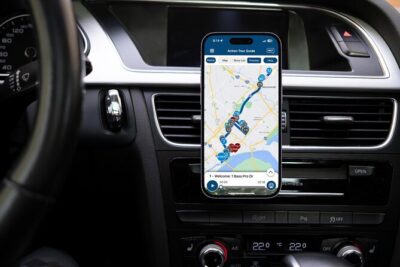
- Building your self-guided day: pace, stops, and navigation
- Park Loop Road: the popular choice for long, scenic miles
- Jordan Pond add-on: a classic ride when you have extra time
- Comfort and bike quality: what makes the ride feel easy
- Price and value: why $130 can feel fair for the right rider
- Weather, safety, and practical riding tips that actually help
- Who should book this Acadia carriage road e-bike ride
- Should you book? My decision guide
- FAQ
- Where is the meeting point for the e-bike rental?
- What is included with the e-bike rental?
- Are these e-bikes Class 1?
- About how far can the battery last?
- What is the minimum age to ride?
- Can I bring pets or a trailer?
- What areas of Acadia are part of the ride?
- How do cruise ship passengers get to the meeting point?
- What if weather is bad or I need to cancel?
Key things that make this Acadia e-bike rental work
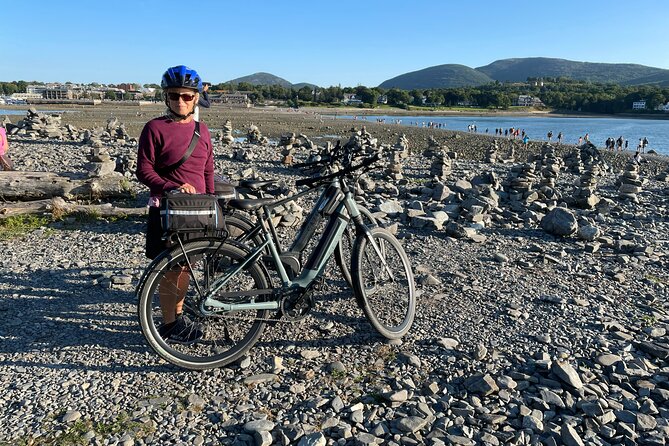
- Hull’s Cove is the smart start: You meet at 25 Visitor Center Rd and roll quickly onto the carriage roads.
- Class 1 e-bikes use pedal assist: You still pedal, but the motor helps when you need it.
- Everything for safe stops is included: Helmet, lock, basket, insulated bag, and a phone holder all come with the bike.
- Self-guided freedom with real structure: You get a map and an orientation lesson, then you choose your pacing.
- Carriage roads are built for bikes: Wide, hard-packed gravel with pedestrians and bikes (and the occasional carriage).
- You can tailor your day from 1 to 6 hours: Short loop for a quick taste, or longer rides for more of the park.
Hull’s Cove setup: how you get onto Acadia’s carriage roads fast
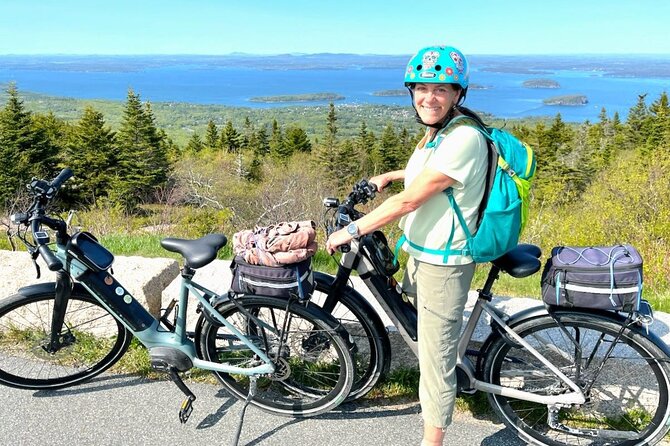
Meeting at the Hull’s Cove area is a big part of the appeal. You begin at 25 Visitor Center Rd, Bar Harbor, and the start times are exact, which helps the day feel smooth instead of rushed.
Before you ride, you’ll get an orientation lesson on bike use and safety. This matters because Acadia’s carriage roads are easy to ride once you’re rolling, but you still need to know how the bike’s assist works, how to manage stops, and how to follow the route with your map and guidance.
If you’re arriving by cruise ship, plan ahead. This operator does not provide human transport to the visitor center, and you’ll want to use the Island Explorer (free) or a Cadillac Mtn. Shuttle (taxi) to reach Hull’s Cove Visitor Center.
You can also read our reviews of more tours and experiences in Bar Harbor.



The e-bike kit: what you get (and why it matters on the roads)
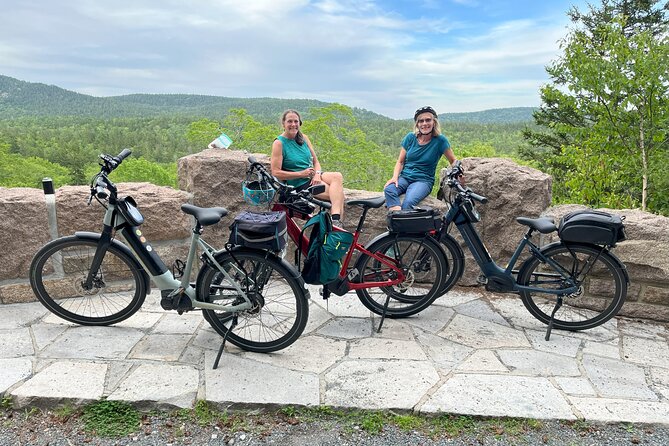
This rental doesn’t make you hunt for the basics. Your e-bike comes with an included helmet, bike lock, basket, and a cell phone holder, plus an insulated bag and a map. That’s the kind of practical setup that keeps you from pausing to figure out where to store your stuff or how to safely step off for wildlife photos.
The phone holder is a small thing that pays off. Acadia’s animals don’t wait for perfect timing, and having your phone in a stable place helps you grab a shot without dropping your gear while you’re stopped.
Your lock is also more than an accessory. Carriage road breaks often turn into longer photo stops or snack breaks, so having a lock ready lets you park the bike and stretch without dragging everything with you.
One detail I like: the ride includes a helmet, but the orientation also helps you use the assist intelligently. A lot of people like e-bikes for the boost, but the real win is learning when to let the motor help and when to pedal more to stretch your battery.
First ride rules: Class 1 assist and what you must pedal
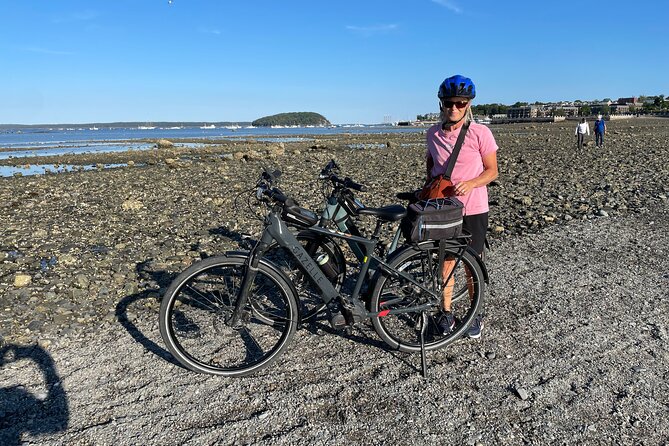
All the e-bikes are Class 1, meaning pedal assist only. You still have to pedal for the motor to engage, which keeps you moving efficiently without turning the ride into a stroller-like cruise.
That Class 1 rule lines up well with how Acadia’s carriage roads feel. They’re wide and hard-packed gravel, and bikes (plus pedestrians and occasional carriages) are the main action. With pedal assist, you can ride steadily without worrying that every small hill turns into a full-body workout.
You’ll also want to remember the range limit. The battery charge typically supports 30 to 50 miles of riding, depending on effort and body weight. For a first-time e-bike rider, that usually feels like plenty, but for a “see everything” day, it’s smart to keep a rough mileage idea in mind.
Building your self-guided day: pace, stops, and navigation
This is a self-guided tour, so you control the pace. You pick a route, ride at your comfort level, and stop as often as you want. That flexibility is a perfect match for Acadia, where you might want to linger near scenic sections, then move on quickly when the weather shifts.
You’ll get a map and route tips before you ride. Some riders find the navigation doable with patience, even if the map isn’t the type of turn-by-turn plan you’d expect from a guided bike tour.
Here’s how I’d plan the feel of your day:
- If you want a quick hit (1 to 2 hours), stay focused on one main loop area and don’t over-reach.
- If you’re aiming for interior views and more miles (closer to 4 to 6 hours), give yourself time for breaks so the day doesn’t turn into a sprint.
The best part is you can make it match your mood. Feel like pushing the pace? Do it. Want to slow down for wildlife and photos? Do that too—just keep an eye on your battery.
Park Loop Road: the popular choice for long, scenic miles
Park Loop Road is called out as a popular destination, and it makes sense. It’s a natural way to string together carriage road scenery while still feeling like you’re following an intentional path.
On this kind of route, an e-bike is more than convenience. It’s how you keep momentum on longer stretches without arriving exhausted. When you hit a climb or a windier section, you can ease off the pedaling effort while still staying engaged and balanced.
This is also where the “carriage road vibe” really shows. The surface is hard-packed gravel and wide enough for easy passing. You’ll likely move at a pace that’s comfortable for stopping often, not just pushing through.
If you’re someone who likes seeing both scenery and some of the park’s interior, this is usually the anchor plan. You can then add or subtract time based on your battery and your comfort level.

Jordan Pond add-on: a classic ride when you have extra time
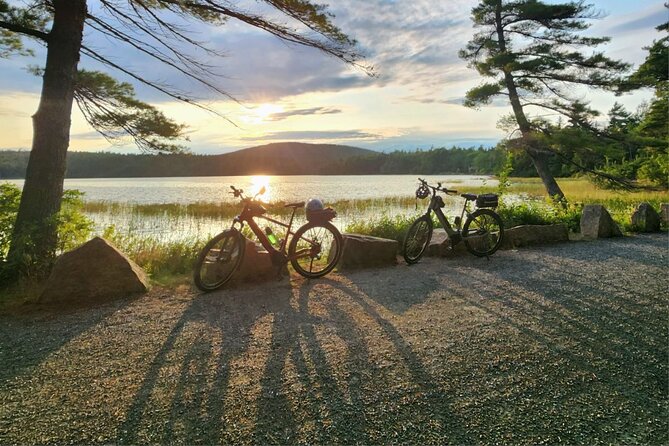
Jordan Pond shows up in the route suggestions, and that’s a big deal if you want a signature Acadia view. It’s the type of place where you’ll want to slow down, park the bike, and take a long look instead of treating it like a quick roadside stop.
With self-guided e-biking, the Jordan Pond idea works best when you’re not trying to do the absolute maximum in one day. Give yourself time to arrive, enjoy the area, and return without feeling rushed.
If you’re riding in cooler weather, treat this as your “get your best photos” stop. Some riders rode during cold, rainy conditions and still had a great time, but that kind of weather makes steady riding and smart stopping even more important.
Comfort and bike quality: what makes the ride feel easy
The e-bike experience improves when the bike fits well and feels stable. Multiple riders highlighted smooth, easy handling and comfortable saddles, plus the sense that the bikes are well prepared.
You may see models like 2025 Cannondale e-bikes, and at least one rider specifically called out Cannondale Movaro 2 bikes. The common thread is that the machines are in good condition and ready to ride, which reduces the “first-day troubleshooting” anxiety.
On Acadia’s gravel, that matters. If the bike is performing well and the assist is predictable, you’ll focus on route choice and scenery instead of worrying about shifting, braking, or how steady the ride feels.
One small caution: if you’re sensitive to minor mechanical quirks, pay attention to shifting while you’re still at the start area. One rider mentioned a second gear slipping on their husband’s bike, and it resolved after switching gears. Still, it’s a reminder to speak up early if something doesn’t feel right.
Price and value: why $130 can feel fair for the right rider
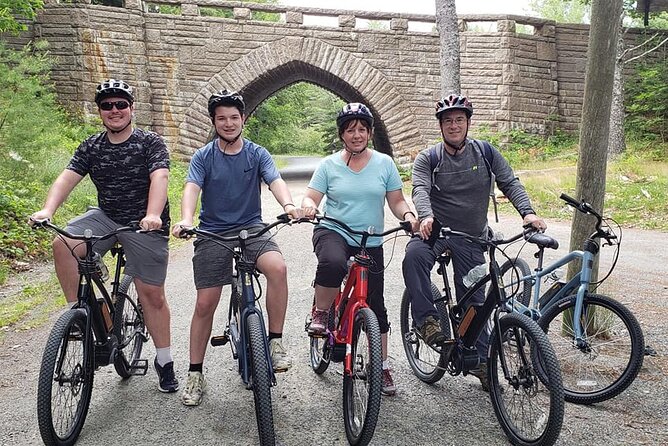
At $130 per person, this isn’t a budget-only activity, but it can be strong value when you price it by what you get: an e-bike rental with safety gear and navigation support, plus the chance to cover real mileage on carriage roads without draining yourself.
The value also comes from how much you can realistically see. With an assist range of about 30 to 50 miles per charge, people who choose longer time windows can cover significant ground and still come back feeling like the day was enjoyable.
You’re also buying time efficiency. Carriage roads are not where you want to spend half your day parking, hiking back and forth, or battling fatigue from constant pedaling. With pedal assist, you can spend your energy on enjoying the park instead of paying for every mile twice.
If you’re only looking for a 30-minute spin, this might feel like too much. But if you want a memorable chunk of Acadia—especially on a day when you’d otherwise rely on cars or long hikes—this price often lines up with the experience.
Weather, safety, and practical riding tips that actually help
This activity requires good weather. That’s not just a legal line—it matters because gravel, wind, and cold can change how comfortable and confident you feel on a bike.
Bring a plan for temperature too. One rider did a fall trip in cold, rainy weather and still enjoyed it, but you’ll likely be happier if you dress for wet conditions and expect less warmth than you’d get in a car.
Safety basics are built into the orientation, but your habits matter once you’re on the road:
- Ride at a steady pace when traffic of walkers appears.
- Leave extra room when you stop abruptly for wildlife.
- Use the lock when you step away for photos or breaks.
Also, remember the rules: no pull-behind attachments and no child seat attachments. Pets are not allowed on the ebike rental, and riders must be 16 years or older. Those limits shape who this works for, especially if you were hoping to bring a young kid or a furry companion.
Who should book this Acadia carriage road e-bike ride
This is best for you if you want freedom and mileage without committing to a traditional bike endurance day. It’s also a great fit for first-time e-bike riders because the orientation is a real part of the setup, and the assist is strong enough to feel like a benefit instead of a gimmick.
It’s also a smart pick for couples and small groups who don’t want to coordinate with a tour group schedule. Self-guided means you can slow down for scenery, then move faster when you’re ready.
You might skip it if you:
- Don’t feel comfortable riding a typical pedal bike.
- Want a fully guided, turn-by-turn experience with constant narration.
- Need to travel with a pet, trailer, or child seat attachment.
- Expect to rely on the bike for more distance than your battery range allows.
Should you book? My decision guide
I’d book this if you’re trying to see a good chunk of Acadia by bike without turning the trip into a workout you regret. The start at Hull’s Cove makes the access easy, and the included gear (helmet, lock, basket, phone holder, map) makes it feel ready on day one.
The biggest reason to choose it is how the self-guided freedom works with Acadia’s carriage roads. You get structure from the orientation and map, then real flexibility once you’re rolling. Names like Wilton and Gilbert show up in the guidance experience, and the overall theme is clear: safety and simple instructions first, then you’re out there enjoying the park at your own pace.
If you’re the type who loves planning every minute, self-guided might feel less satisfying than a guided tour. But if you want to stop when the moment hits—especially around popular areas like Park Loop Road and suggestions that include Jordan Pond—this is a strong match.
If the weather looks solid and you can handle pedaling, this is an efficient way to experience Acadia’s carriage roads in a memorable, less exhausting way.
FAQ
Where is the meeting point for the e-bike rental?
You meet at 25 Visitor Center Rd, Bar Harbor, ME 04609 at the Hull’s Cove Visitor Center area. The activity ends back at the meeting point.
What is included with the e-bike rental?
Each e-bike rental includes a helmet, lock, basket, insulated bag, a cell phone holder, and a map. You also get an orientation lesson before you start.
Are these e-bikes Class 1?
Yes. All the e-bikes are Class 1, consistent with park service rules, which means pedal assist is used and pedaling is required.
About how far can the battery last?
Battery charges last about 30 to 50 miles depending on effort and body weight of the rider.
What is the minimum age to ride?
All riders must be 16 years of age or older.
Can I bring pets or a trailer?
Pets may not accompany you. Pull behind attachments are not allowed on the ebikes, and child seat attachments are also not allowed.
What areas of Acadia are part of the ride?
You ride Acadia National Park carriage roads and can connect directly to the park’s roads from Hull’s Cove. Park Loop Road is listed as a popular destination, and Jordan Pond is mentioned as part of route suggestions.
How do cruise ship passengers get to the meeting point?
Cruise ship passengers must arrange travel to Hulls Cove Visitor Center since no human transport vehicles are provided. The Island Explorer (free) or Cadillac Mtn. Shuttle (taxi) are recommended.
What if weather is bad or I need to cancel?
The experience requires good weather. If it’s canceled due to poor weather, you’ll be offered a different date or a full refund. Free cancellation is available up to 24 hours in advance for a full refund.