REVIEW · SALAMANCA
Salamanca: Convent of Las Claras with Free Audioguide
Book on GetYourGuide →Operated by Convento de las Claras · Bookable on GetYourGuide
Salamanca’s art doesn’t just hang on walls. At the Convento de las Claras, you move through a medieval space where painted decoration and choir architecture still do the talking. It’s been turned into a museum of medieval painting, so you can connect the dots between devotion, art, and everyday convent life.
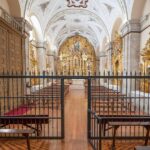
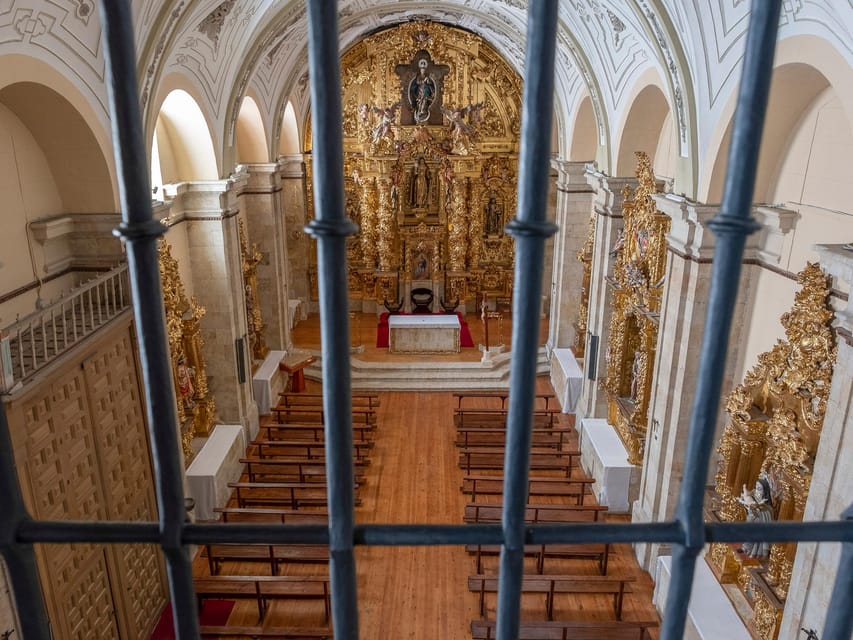
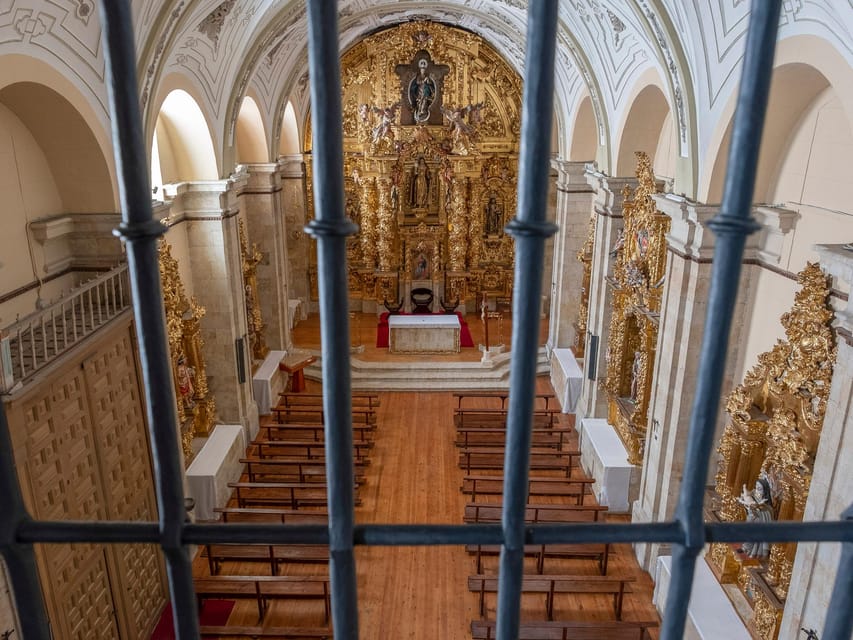
I especially love the polychrome roof and mural setting in the church. I also like that the audio guide points you to specific areas—like the high choir—so you’re not just wandering.
One drawback to consider: the experience is strongly audio-led. If you find audio tours flat or slow, you may want to move briskly between the highlights, especially the tower.
In This Review
- Key highlights you’ll care about
- Convento de las Claras: why this former convent is more than a stop
- The church’s murals and the polychrome roof: what to watch for
- High choir and wooden coffered ceiling: the best “up close” moment
- The art and devotional objects: why the museum format works
- Tower views over Salamanca: what you’ll see and what can block photos
- Audio guide with free options: how to use it well
- Price and value: is $7 actually fair for this much art?
- How to plan your hour so you don’t miss the best parts
- Who this visit suits (and who should rethink it)
- Should you book the Convento de las Claras with the free audioguide?
- FAQ
- How much does the Convent of Las Claras visit cost?
- How long is the experience?
- What is included with the ticket?
- Are the audio guides available in English?
- Can I access both the high choir and the low choir?
- What key medieval features will I be able to see?
- Is there a view from a tower?
- Is food and drink allowed during the visit?
- Is skip-the-line entry included?
- Is it wheelchair accessible?
Key highlights you’ll care about
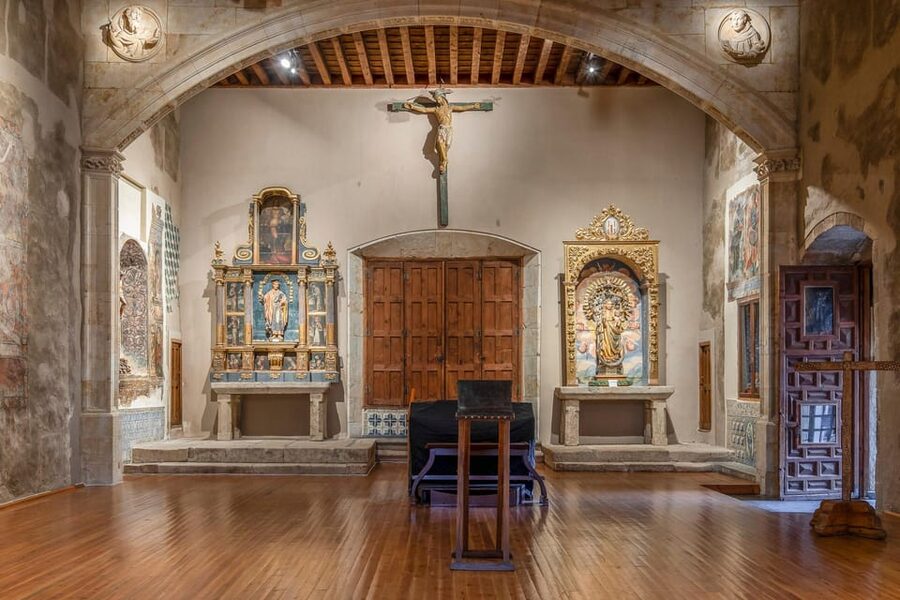
- Polychrome church roof (late 14th century) that once covered the space in color
- Murals from the late 14th century, uncovered in the late 20th century
- High and low choirs, with the high choir letting you walk and see the woodwork up close
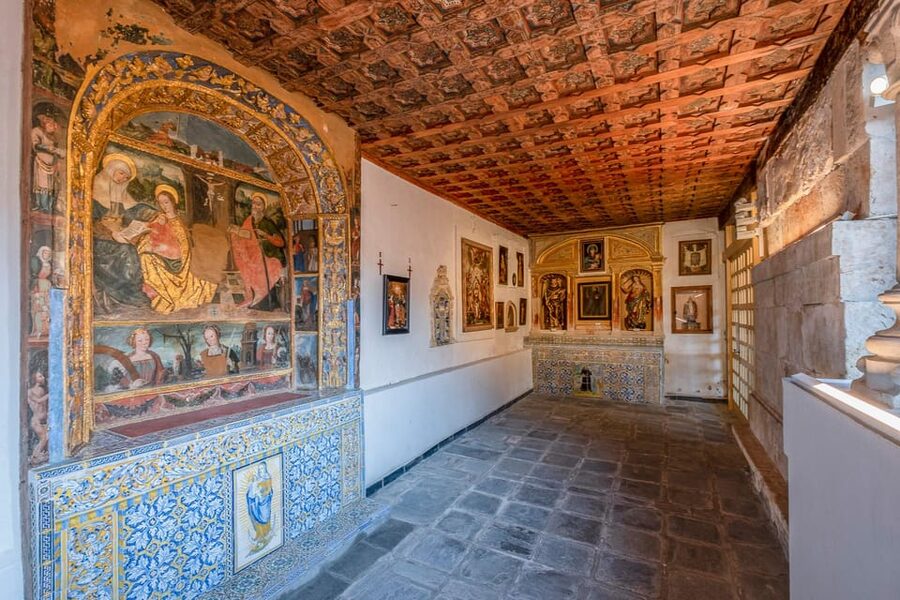
- Wooden coffered ceiling from medieval times in the high choir area
- Medieval devotional objects and artworks tied to the nuns’ world
- Tower views over Salamanca, with some built-in barriers that can affect photos
Convento de las Claras: why this former convent is more than a stop
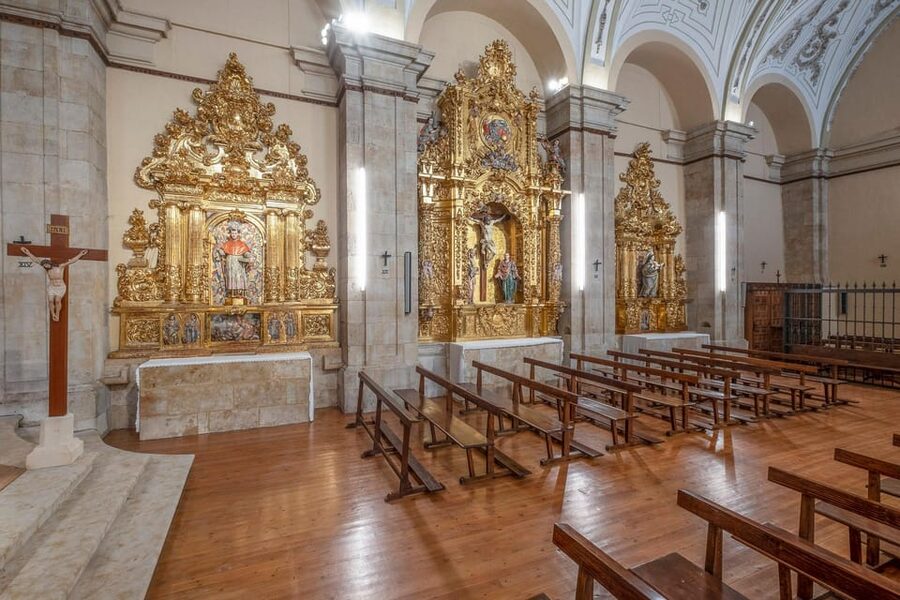
The Convento de las Claras is one of those places where the building itself is the exhibit. A convent turned into a museum means you don’t have to imagine how it worked—part of it feels like the art is still in conversation with the space around it. The big idea here is medieval painting shown in the context where it belonged.
This museum is shaped by an important intervention carried out by the Ages of Man Foundation. That matters because you’re not looking at a few “nice bits.” You’re seeing a focused collection built around late medieval decoration: murals, a church roof originally painted in multiple colors, and the kind of wood and religious imagery that gave the choir area its atmosphere.
You can also read our reviews of more tours and experiences in Salamanca.
The church’s murals and the polychrome roof: what to watch for
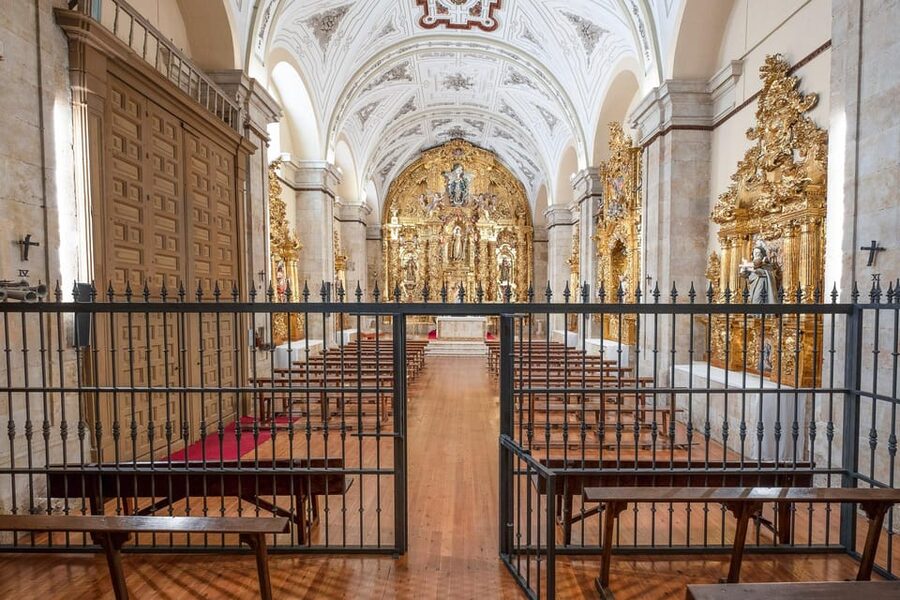
When people say the roof is the star, they’re not exaggerating. The church space includes a polychrome roof dating from the late 14th century—meaning it wasn’t just architecture. It was visual theology: color, form, and symbolism wrapped into the ceiling you looked up at during worship.
You’ll also see a series of murals linked to that same late medieval period. What makes this more interesting is how you experience them: the museum doesn’t treat the paintings like isolated gallery pieces. They’re presented as part of a once-painted whole, which makes the scale feel bigger than it would in a standard room.
Practical way to get value: spend a little time at the points the audio guide emphasizes, then re-look at the same areas with your own eyes. The second glance is often where things click—especially with mural surfaces that can be easier to miss if you’re hurrying.
High choir and wooden coffered ceiling: the best “up close” moment
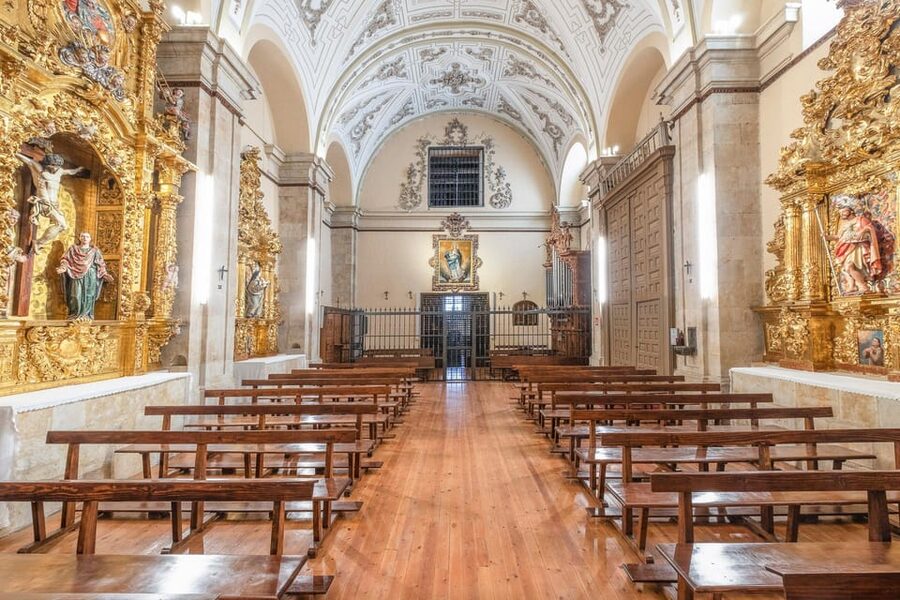
The Convento de las Claras gives you two choir areas: a high choir and a low choir. The high choir is the one you can walk through, and that’s where the museum really earns its ticket.
Plan on focusing there first. The high choir lets you get close to a wooden coffered ceiling from medieval times. Even if you’re not a “wood ceiling person,” this is the kind of craftsmanship you feel in your bones. Cofered ceilings have this strong rhythm—repeating shapes that guide your eye upward and hold the space together.
The low choir is different. It’s a reminder that the convent wasn’t designed as one uniform viewing area; it had roles, rhythms, and separate sightlines. If you like architecture that affects behavior, you’ll appreciate how the two choirs relate to each other.
The art and devotional objects: why the museum format works
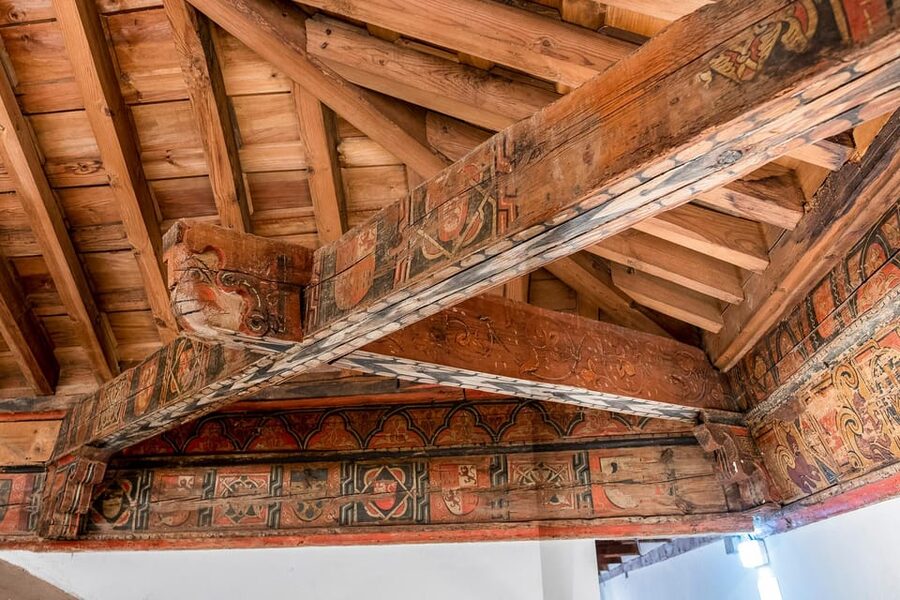
Beyond the headline paintings, the museum rooms let you see works of art and devotional objects that belonged to the nuns. That detail is what turns the visit from “wow, pretty paintings” into “oh, this is how devotion showed up in real life.”
Here’s what you’ll likely find satisfying: the objects aren’t just framed like abstract artifacts. They’re presented as part of the convent’s spiritual world. That makes the experience feel grounded. You’re not only viewing medieval art as style—you’re seeing it as function.
Keep your expectations realistic. Museums inside working religious buildings tend to feel quieter and more intimate than big-city galleries. If you enjoy slower looking, you’ll get a lot from the devotional section because it rewards attention.
Tower views over Salamanca: what you’ll see and what can block photos
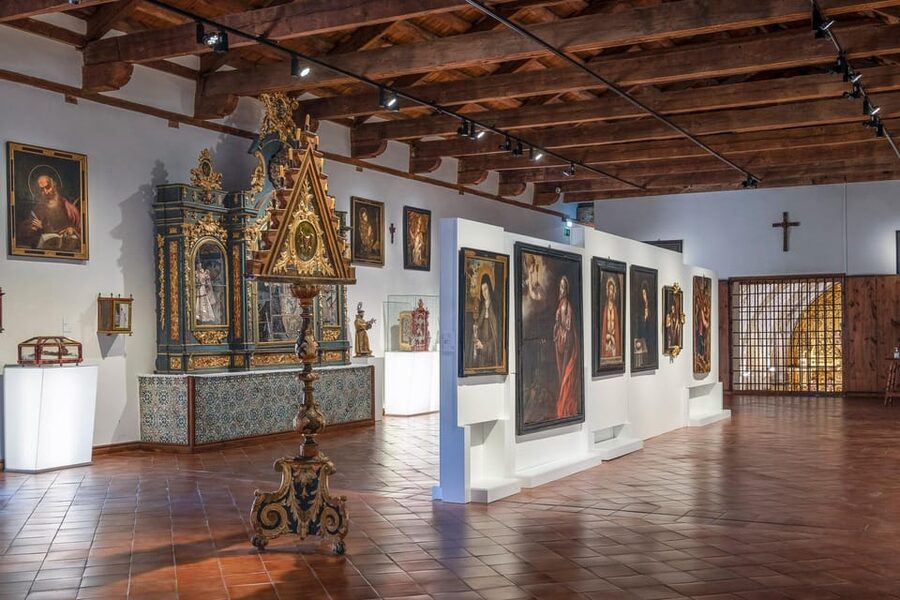
At the end, you get views from the tower—a classic way to cap a convent visit. From up there, you can take in Salamanca and its main historical buildings. Even if you’ve already been walking around the Old City, seeing it from above helps you get your bearings fast.
One heads-up if you care about photography: the top viewing area may include built elements (like fencing/metalwork) that can interfere with an unobstructed shot. The views are still worth it, but if you’re picky about “clean frames,” adjust your expectations.
Also take the tower seriously from a comfort standpoint. The activity information lists it as not suitable for people afraid of heights, with vertigo, or with heart problems. That doesn’t mean you must be fearless; it means the tower setting could feel intense.
Audio guide with free options: how to use it well
The free audio guide is included, with languages in English, Spanish, and French. For a site like this, audio is actually a good match. The museum has multiple key zones—church murals, choirs, notable rooms, and then the tower—and an audio track helps you connect what you’re looking at to what it likely meant.
That said, audio tours aren’t perfect. One fair criticism you should take seriously is that the narration style can feel boring to some listeners. If you’re in that camp, don’t force it. Use the audio like a flashlight, not a whole meal.
My practical approach:
- Use audio on the major stops (roof, murals, high choir ceiling).
- Turn it down or off while you look on your own, especially on the wooden ceiling where your eyes do better without commentary.
- Let the tower moment be mostly visual. That’s where your brain wants silence.
Price and value: is $7 actually fair for this much art?
$7 per person is the kind of price that makes you suspicious—in a good way. For that amount, you’re paying for a museum experience with real attractions: medieval murals, a late-14th-century polychrome roof, access to high and low choirs, time with the wooden coffered ceiling, plus tower views.
What makes the value feel genuine is that these are not separate add-ons. The highlights are tied together by the building’s layout. You’re not just buying admission to a collection—you’re getting a structured way to move through the space.
If you’re short on time in Salamanca, this is a strong choice because the experience hits multiple “must-see” categories: art, architecture, and a payoff view. It’s also long enough to feel complete without being exhausting.
How to plan your hour so you don’t miss the best parts
This is a 1-day experience with an audio guide, plus access to multiple areas. Since the pacing isn’t detailed in the provided info, I recommend you think in zones rather than minute-by-minute.
A smart order for most people:
- Start with what requires attention to detail: murals and the polychrome roof.
- Move to the high choir second, since the ceiling rewards standing still and looking up.
- Then check the low choir to understand how the convent’s layout changes the feel.
- Spend time in the rooms for devotional objects and artworks.
- Finish with the tower view, since it’s your quick “big picture” wrap-up.
If you want photos, do the tower last—but if you’re sensitive to heights, consider whether you’d rather take fewer photos and more breathing room up top.
Who this visit suits (and who should rethink it)
I’d book the Convento de las Claras if you like medieval art that’s still tied to place. The combination of late 14th-century murals, church decoration, and choir architecture is a specific kind of treat. It’s also a good fit if you enjoy calm, structured looking rather than crowds and sprinting.
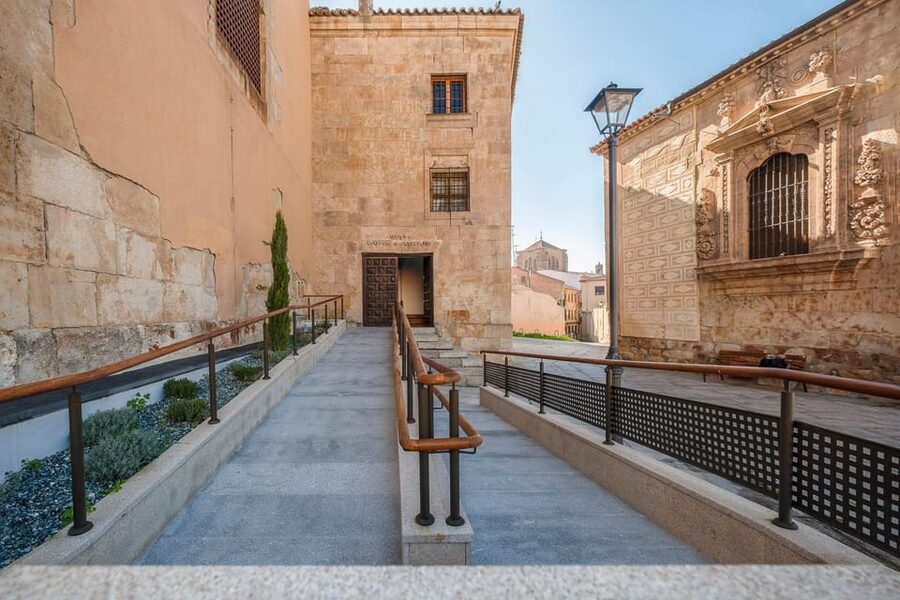
You should rethink it if any of the following apply, based on the operator’s notes: claustrophobia, vertigo, fear of heights, heart problems, epilepsy, pregnancy, or serious mobility constraints. Even though the activity is listed as wheelchair accessible, it’s still marked as not suitable for people with mobility impairments—so if that affects you, double-check what access means on the day you plan to go.
Should you book the Convento de las Claras with the free audioguide?
Yes, I think you should book it if you want a value-packed, art-and-architecture experience in Salamanca with a clear set of highlights. The polychrome roof, the medieval wooden ceiling in the high choir, and the tower views are the kind of stops that stick in your memory because you see them from multiple angles.
Skip it (or adjust your expectations) if you know you strongly dislike audio tours or if the tower’s height challenges you. For everyone else, the $7 price point makes this an easy decision—because you’re not paying extra to reach the best parts.
FAQ
How much does the Convent of Las Claras visit cost?
It’s priced at $7 per person.
How long is the experience?
It’s listed as a 1-day activity.
What is included with the ticket?
You get an audio-guided tour, access to the high and low choirs, time to view the wooden coffered ceiling and the murals, tour of notable rooms, and tower views over Salamanca.
Are the audio guides available in English?
Yes. The audio guide is offered in English, Spanish, and French.
Can I access both the high choir and the low choir?
Yes, access to both choirs is included.
What key medieval features will I be able to see?
You can view the wooden coffered ceiling from medieval times, a series of murals discovered at the end of the last century, and the polychrome roof that covered the church in the late 14th century.
Is there a view from a tower?
Yes. The experience includes a fantastic view of Salamanca and its main historical buildings from the tower.
Is food and drink allowed during the visit?
No. Food and drinks are not allowed.
Is skip-the-line entry included?
Yes, it includes express security check.
Is it wheelchair accessible?
It’s listed as wheelchair accessible, but it is also noted as not suitable for people with mobility impairments.