REVIEW · PANTHEON ROME
Rome: Pantheon Fast-Track Ticket and Official Audioguide
Book on GetYourGuide →Operated by D'Uva · Bookable on GetYourGuide
The Pantheon hits different with a story in your ears. This fast-track ticket gets you past the crowd and into the building faster, then the official audio guide turns the dome, the oculus, and the chapels into a guided walk through Roman and church history. You’ll get to “listen” to key figures tied to the monument, including Emperor Hadrian and Pope Bonifacio IV.
One big plus is the voice cast: actors and church voices like Mons. Daniele Micheletti, along with performances and music by Antonio Fresa. The second is the architecture-led pace, so you’re not just looking at stone—you’re learning why the geometry matters.
The only real drawback to plan for is the audio pickup rules. You’ll need to leave an ID or credit card as a deposit to borrow the audio guide, and you must return it at the end, which some people may find a bit strict.
In This Review
- Key takeaways before you go
- What makes the Pantheon work with fast-track entry
- Pickup at OhMyGuide (Via dei Bergamaschi 49) and the pacing trick
- Hadrian’s voice and the dome math you’ll remember
- The oculus: sundial light, plus the rain-drain effect
- Pope Bonifacio IV and the Basilica transformation
- Pink granite portico columns and why “materials” matter
- Raphael, Renaissance burials, and the feeling of “chosen rest”
- Margherita of Savoy, the rose petals, and the church calendar vibe
- Audio guide voices and music: what it’s like to actually listen
- Price and value: why this $5 ticket can make sense
- Who should book this Pantheon audioguide and fast-track ticket
- Should you book? My take
- FAQ
- Where do I pick up the fast-track ticket and audioguide?
- How long is the Pantheon visit with this ticket?
- Which languages are available for the audio guide?
- Do I need a live guide?
- What do I need to borrow the audioguide device?
- What’s the dress code for Basilica access?
Key takeaways before you go
- Fast-track entry helps you avoid the long exterior queues and go in on your time slot
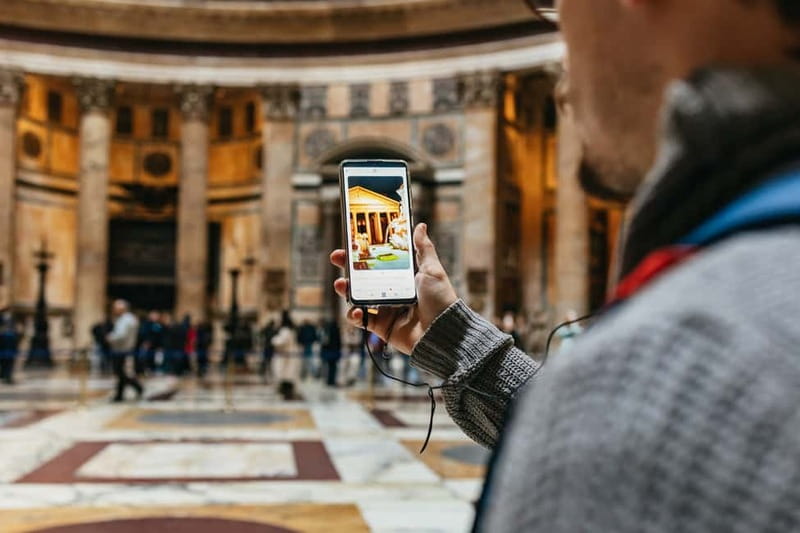
- Official audioguide ties stories to what you’re actually seeing inside, including the 43.44-meter dome
- Actor voice cast and church narration adds personality to figures like Hadrian, Raphael, and Margherita of Savoy
- The oculus experience is the star: sunlight works like a sundial, and rain can make the drain effect more noticeable
- You support the Basilica of Santa Maria ad Martyres through your ticket’s donation
- Dress code matters for Basilica access (no shorts, short skirts, or sleeveless tops)
What makes the Pantheon work with fast-track entry
The Pantheon is one of those Rome must-dos where lines can swallow your whole visit. A fast-track ticket is the practical fix: you trade waiting outside for time inside, where the building actually does the talking.
Once you’re in, you’re not stuck in a big group shuffle. The format is simple: you pick up your audio materials first, then you follow the guided audio segments at your own pace. For many people, that’s the ideal match for the Pantheon, because you’ll want to pause—at the dome, at specific chapels, and at the nave where the light hits.
Also, the whole thing is built around the site’s dual identity: it’s both a monument and an active church. The audio doesn’t treat that as a footnote. It uses it to help you see why the building still matters.
You can also read our reviews of more tours and experiences in Pantheon Rome.
Pickup at OhMyGuide (Via dei Bergamaschi 49) and the pacing trick
Your ticket and official audioguide start at OhMyGuide – Roma Museum Store, Via dei Bergamaschi 49. It’s close enough that it’s usually a quick walk to the Pantheon, but it’s still worth plotting it before you arrive—one review flagged that the shop can be tricky if your maps view is outdated.
Here’s the pacing trick I like: arrive with enough time to collect your audioguide calmly. The experience is designed to run on your reservation window, and if you’re rushed, you’ll miss the easiest part—the first moments where you get your device and get your bearings.
Once you have the audio, you can head straight to the Pantheon entrance for your timed entry. You’ll use the separate fast-track line, then collect your audio guide (or device) as instructed so you’re ready before you start listening.
Hadrian’s voice and the dome math you’ll remember
The best part of the official audio guide is how it anchors you to specific features. You start with Adriano, Emperor Hadrian, with a narration that frames the Pantheon as something engineered as well as worshipped.
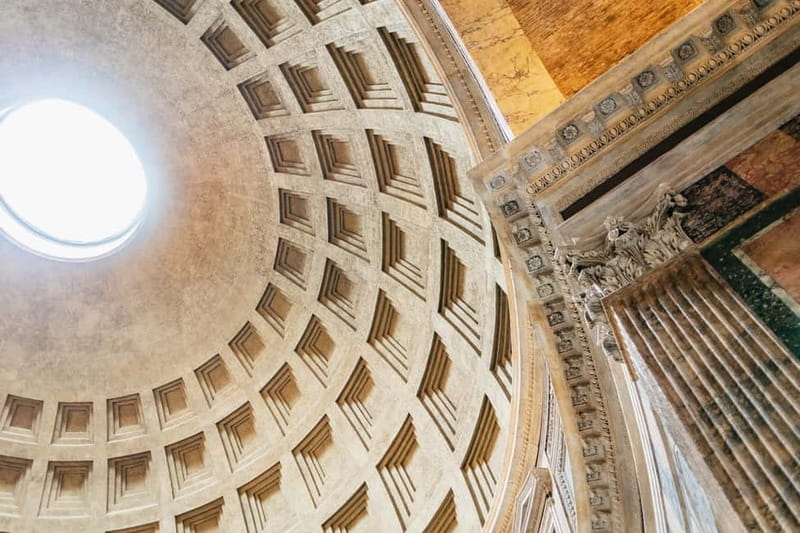
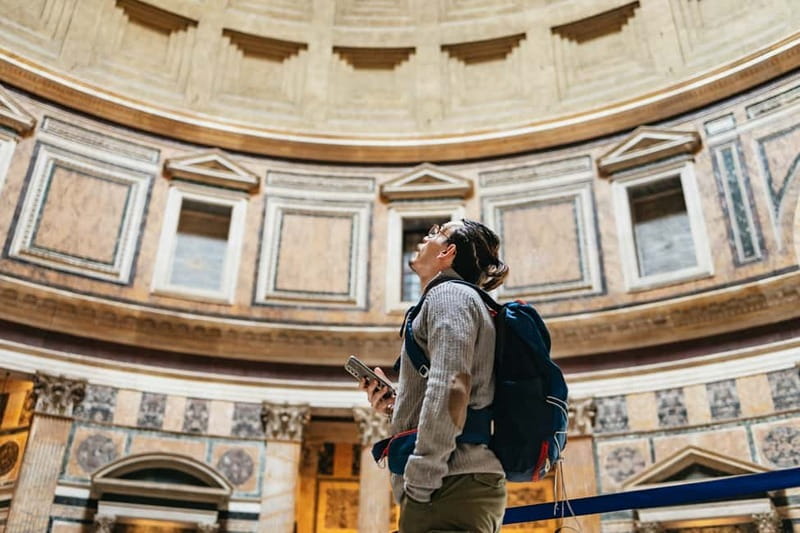
Then you hit the dome. The audio calls out that the dome measures 43.44 meters in diameter, which is a detail you can actually feel once you’re inside. Instead of vague awe, the guide helps you connect scale to space—how that sweeping curve shapes sightlines and acoustics, and why the Pantheon’s interior feels so controlled.
If you tend to tune out when tours get abstract, this one usually helps. The stories are tied to what you’re physically standing in front of. You’re not just hearing about Rome; you’re seeing the decisions Rome made, and why.
The oculus: sundial light, plus the rain-drain effect
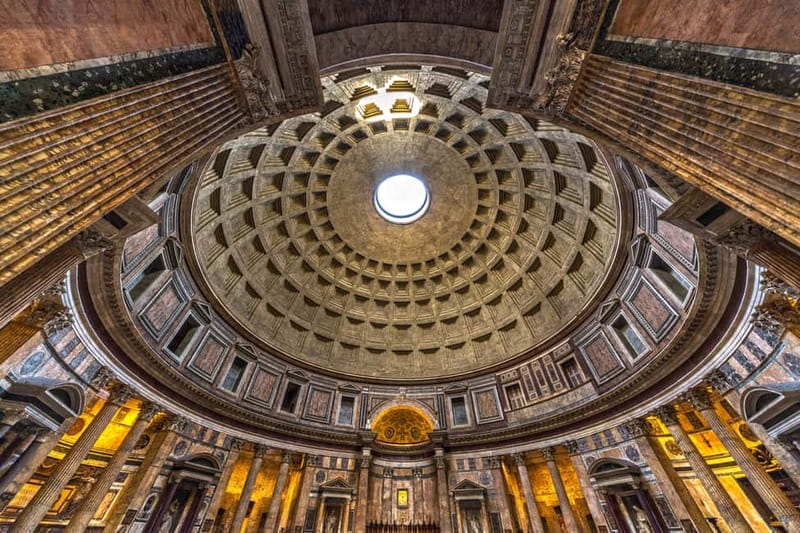
The oculus is the Pantheon’s signature, and the audioguide makes it more than a photo stop. The narration explains its role in letting sunlight illuminate the interior like a sundial, which is exactly what you should look for while you’re there.
Two things help your visit when you treat the oculus as an active part of the experience:
- Stand still long enough to notice how light shifts as you move.
- Don’t rush your listening. The audio’s segments are timed to match visual cues.
And if the weather is dramatic, you might get an extra moment. One review mentioned the rain draining away through the clever design near the oculus, so on a rainy day you may notice the effect more than usual. Even if it’s not raining, the guide’s explanation gives the oculus a purpose—so it feels less like a gimmick and more like engineering.
Pope Bonifacio IV and the Basilica transformation
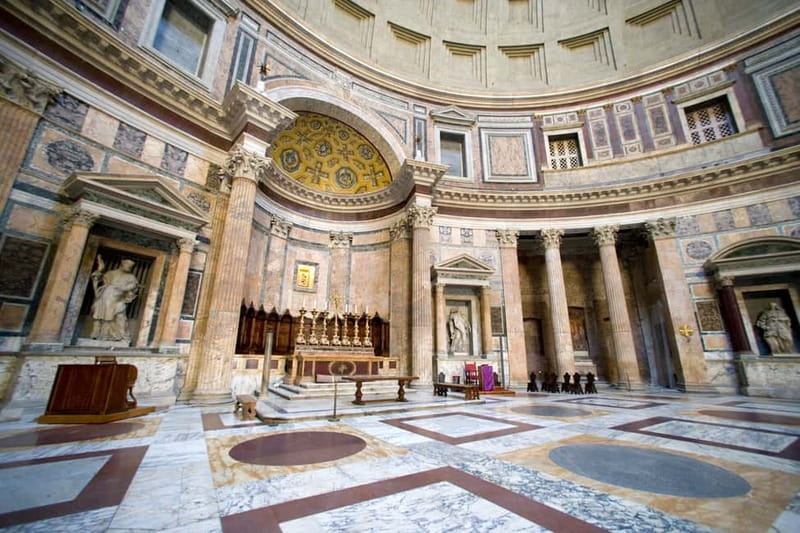
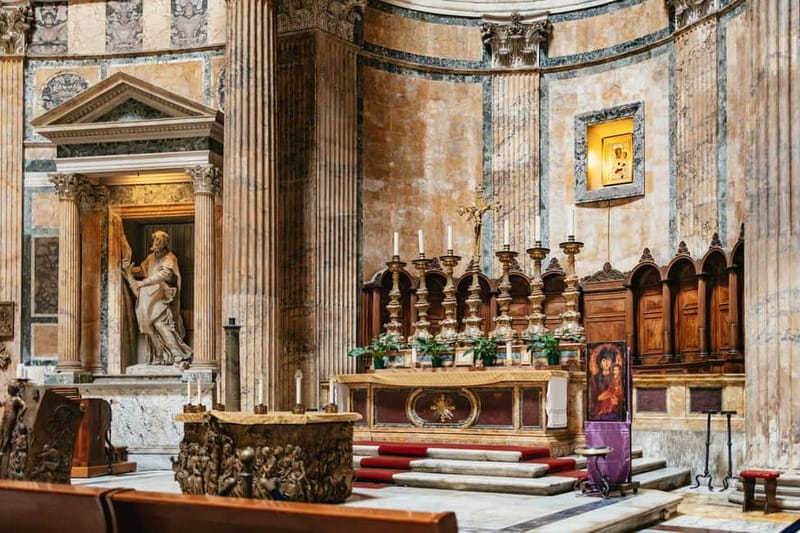
Another reason this works so well is that it doesn’t ignore the church layer. Pope Bonifacio IV’s story is part of the audio: in 609 AD, the temple was converted into the Basilica of Mary and all Martyrs, helping protect it from plunder and preserve its integrity.
This matters because it changes how you read the room. Without that context, the Pantheon can feel like a museum of Roman power. With it, you understand why the building kept living, and why religious function influenced how people used the space over time.
You’ll also get direction from Mons. Micheletti (the archpriest rector of the Pantheon in Rome) as you look at the building with different eyes. That voice shift is a subtle but effective way to remind you: this is still a church, not just a landmark.
Pink granite portico columns and why “materials” matter
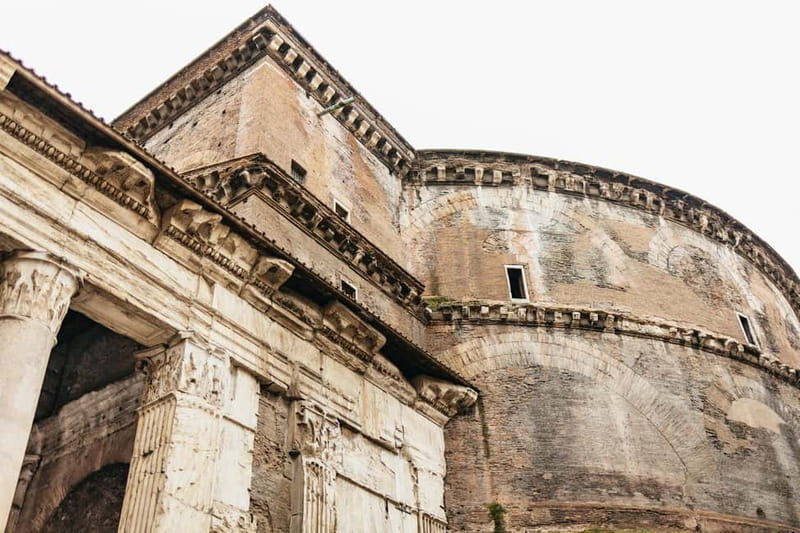
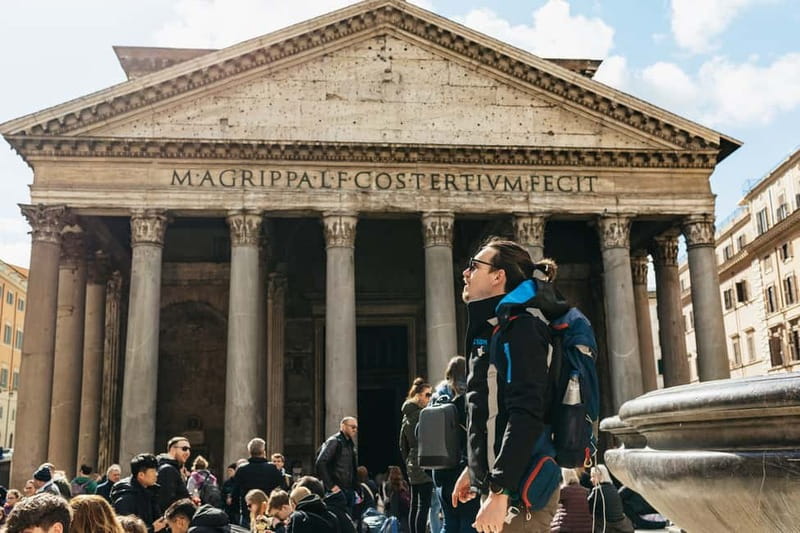
The portico isn’t decoration. The audio guide points you toward the columns of pink granite from Egypt, and that’s a smart detail because it explains how Rome built its identity out of imported parts.
Once you notice the material story, you’ll start paying attention to textures and finishes you might have otherwise skipped. You’re no longer just walking along a pretty front porch—you’re seeing how geography traveled into stonework.
This is also a good place to slow down. If you’re moving fast just to reach the dome, you’ll miss the way the portico frames the building. The audio helps you read the façade like a setup, not the end of the show.
Raphael, Renaissance burials, and the feeling of “chosen rest”
One of the most compelling segments is the one tied to Raphael Sanzio of Urbino. The guide connects him to the Pantheon as a burial site, along with other Renaissance artists who admired classical architecture.
I like this part because it ties together two time periods without forcing you to be a scholar. You start with a Roman monument, then you see why later artists still cared. They didn’t just want inspiration from a distance—they wanted to be close to it, in a place that carried meaning.
When you listen in this section, look around at how the space organizes attention. Even without heavy interpretation, the architecture feels like it’s guiding you toward certain focal points—then the audio gives you a reason why.
Margherita of Savoy, the rose petals, and the church calendar vibe
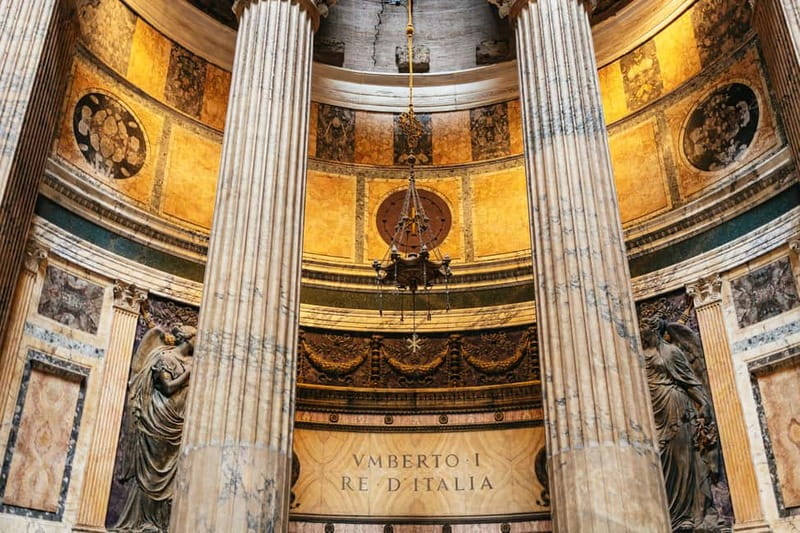
The Pantheon has ceremonial memory built into it, and the audioguide brings that out through Queen Margherita of Savoy. She rests here with King Umberto I and Vittorio Emanuele II of Savoy, and the audio adds a vivid seasonal tradition: each year during Pentecost, red rose petals can fall from the oculus to commemorate the descent of the Holy Spirit on the Apostles.
You’re not guaranteed to see this exact event, but you should know it exists because it changes how you experience the oculus. Instead of thinking only about light and geometry, you’re also thinking about ritual and time—how centuries used the same opening for different kinds of meaning.
If you’re the type who likes museums but hates being lectured, this segment usually lands well. It’s visual in your imagination, and it ties the building to something emotional instead of only technical.
Audio guide voices and music: what it’s like to actually listen
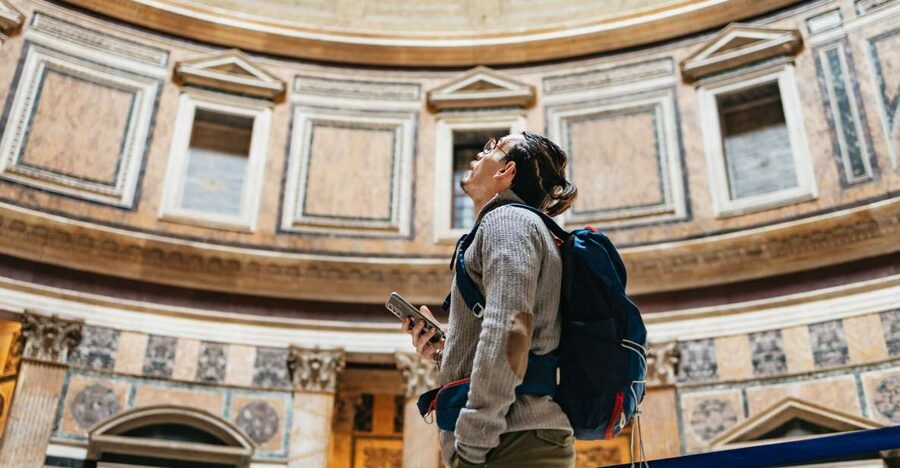
The audio isn’t a bland narration track. It includes voices by talented actors such as Sergio Rubini, Alessandro Haber, and Daniele Parisi, plus other performers like Giusi Cataldo. You may also hear church narration from Mons. Daniele Micheletti.
There’s also original music by Antonio Fresa, performed with the Orchestra of Teatro La Fenice. That combination matters because it keeps the stories from turning into a monotone lecture. You’ll still get facts, but the delivery feels human.
From practical experience—based on how people talk about this type of system—the key is comfort and control. You’ll be using the provided audio device (not your phone), so you don’t have to fight with signal strength. Some visitors do note they don’t love the device deposit requirement, but they still say the audio content is worth the trade.
One more practical note: the Pantheon can feel cold inside, even when Rome is warm outside. Bring a layer. You’ll listen longer and enjoy it more if you’re not shivering through the best part.
Price and value: why this $5 ticket can make sense
At $5 per person, this package is hard to beat on value—if you want what the ticket is actually offering. You’re paying for two things:
1) fast-track admission so you lose less time to queues
2) an official audioguide with voice acting and architecture-linked storytelling
There’s also a third value angle that’s easy to miss: donations to the Basilica of Santa Maria ad Martyres are included. That doesn’t mean you should treat it like a charity purchase, but it does explain why this isn’t just a generic discount ticket.
If your priority is speed, learning, and flexibility (not a live guide), this fits. If you expect a conversation with a real person or a group-led pacing with Q&A, you’ll want something different because a live guide is not included.
Who should book this Pantheon audioguide and fast-track ticket
This is a great fit if you:
- Want to see the Pantheon quickly without lining up
- Like self-paced sightseeing where you can linger at the dome or chapels
- Enjoy story-driven interpretation, especially Roman-to-church continuity
- Prefer a structured audio track that points you where to look next
It’s also a smart choice for families or couples because the pacing is flexible. Everyone can stop where they want, and you aren’t forced to match a group rhythm.
Where you might pause is if you strongly dislike the deposit rule (you must leave an ID or credit card to borrow the audio guide). Also, you’ll need to dress appropriately for Basilica access—no shorts, short skirts, or sleeveless shirts/tops.
Should you book? My take
Book it if you’re doing the Pantheon as a must-see and you want your visit to feel guided without being tied to a tour group. The fast-track access saves real time, and the official audioguide gives you a concrete way to understand what you’re looking at—dome geometry, the oculus, and the people connected to the site.
Skip it only if you already plan to read everything on-site or you specifically want a live guide experience with back-and-forth questions. For most people, this setup hits the sweet spot: quick entry, high-impact storytelling, and a visit you can control.
FAQ
Where do I pick up the fast-track ticket and audioguide?
You collect your ticket at OhMyGuide – Roma Museum Store, Via dei Bergamaschi 49, Rome. After you get your ticket, you can go directly to the Pantheon entry line as instructed and collect your audio guide.
How long is the Pantheon visit with this ticket?
The duration is 1 hour. You should check available start times and stick closely to your reservation time.
Which languages are available for the audio guide?
The audio guide is available in Chinese, English, French, German, Italian, Portuguese, Russian, Spanish, Arabic, Dutch, Korean, and Polish.
Do I need a live guide?
No. This experience includes an official audio guide, not a live guide.
What do I need to borrow the audioguide device?
A valid ID (passport, ID card, driver’s license) or a credit card is required as a deposit to borrow the audio guide. Photocopies, photos on your phone, student cards, and digital IDs aren’t accepted.
What’s the dress code for Basilica access?
For Basilica access, you need suitable attire: no shorts, vests, or sleeveless tops.