REVIEW · COLOSSEUM
Rome: Colosseum, Forum, Palatine Hill Entry & Audioguide App
Book on GetYourGuide →Operated by GetYourGuide Tours & Tickets GmbH · Bookable on GetYourGuide
Rome starts with a timed step into the Colosseum. With 24-hour access to all three stops and a multilingual audio app, this is one of the easiest ways to see Rome’s ancient core at your own pace. The main catch is that Colosseum entry is strict to your scheduled time, and rescheduling isn’t possible.
I like that the experience is built for wandering: you pick what to linger over at the Colosseum, then you can pace yourself through the Roman Forum and up to Palatine Hill for those wide views over the ruins. You also get a real confidence boost from the practical setup—show your ticket, pass security, and go. One possible drawback to plan around: because it’s phone-based, the audio experience depends on your device working smoothly that day.
It’s also not a full-access Colosseum ticket. This entry does not include the arena or the underground, so if that’s your must-see, you’ll want a different ticket type. Still, you can get plenty of impact from the scale, the stone, and the stories the app tells as you walk.
In This Review
- Key points worth knowing
- 24-hour access across Colosseum, Forum, and Palatine Hill
- Timed Colosseum entry and airport-style security
- Using the audio guide app on your phone (and what to do if it acts up)
- Colosseum highlights you can see (without the arena and underground)
- Roman Forum essentials via the Sacra entrance and Forum Museum areas
- Palatine Hill for legends, imperial palaces, and Rome views
- Timing tips: how long it takes, and how to avoid burnout
- Price and value: what $30 covers and what it doesn’t
- Who should book this ticket (and who might prefer something else)
- Should you book this Colosseum Forum Palatine ticket?
- FAQ
- Do I need to book with specific entry time for the Colosseum?
- Where do I show my ticket for the Colosseum?
- Can I access the Colosseum arena or underground with this ticket?
- How do I enter the Roman Forum area?
- Is the audio guide included, and what languages are available?
- Do I need to provide names for everyone traveling?
- Is this ticket refundable?
Key points worth knowing
- 24-hour ticket links the Colosseum, Roman Forum, and Palatine Hill so you can spread your visit out
- Audio guide app (8+ languages) means you’re not stuck reading tiny signs
- Timed Colosseum entry is non-negotiable, so arrive with extra time for security
- No arena or underground access keeps the ticket simpler, but changes what you can see
- Nominative tickets require you to enter participant names at booking for entry
24-hour access across Colosseum, Forum, and Palatine Hill
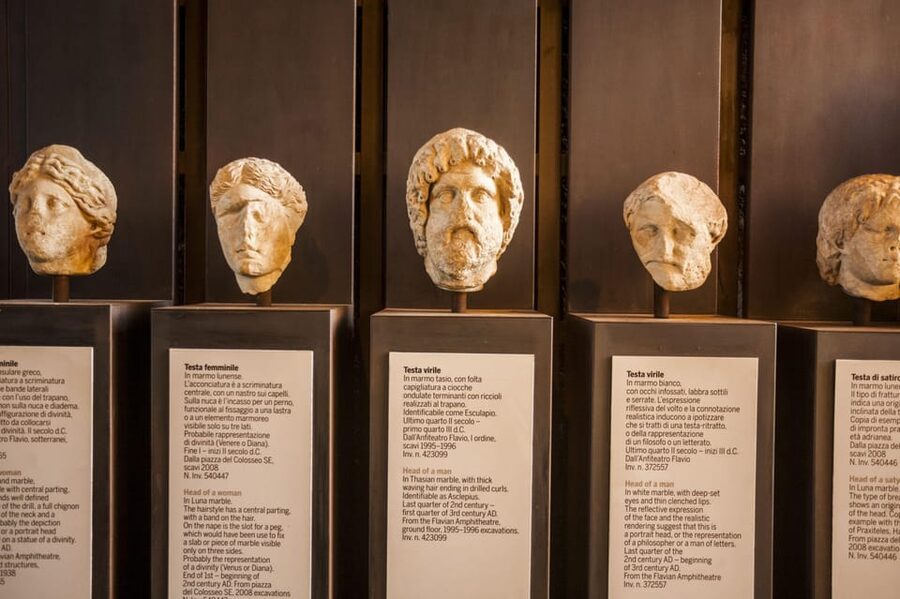
This is a single ticket that covers three headline sights: the Colosseum, the Roman Forum, and Palatine Hill. The timing is anchored by your scheduled Colosseum entry, but the big advantage is that you can return to the other sites within the 24-hour validity window included with the ticket. That matters in Rome, where crowds and heat can swing your day fast.
I like how the ticket structure lets you pick a rhythm. If the Colosseum goes quickly for you, you’re not forced to cram everything in one hour. If you want a slower walk through Forum ruins and artifact areas, you can do it without feeling like you’re racing a group.
Think of it as three different moods:
- The Colosseum is stone spectacle and engineering—big, loud in your imagination, and oddly intimate up close.
- The Roman Forum is about the feeling of daily life—meetings, politics, religion, and power layered into a compact area.
- Palatine Hill shifts to outlook and legend, including the traditional birthplace story linked with Romulus and Remus, plus the remains of imperial palaces.
Also, you can add another Roman layer if you want: the info provided allows visiting the Imperial Fora within 24 hours before or after your Colosseum slot, depending on opening hours. That’s useful if you’re spending more than a single day in the historic center and want to keep stacking related sites.
You can also read our reviews of more tours and experiences in Colosseum.
Timed Colosseum entry and airport-style security
Your Colosseum time slot is the part you must respect. Access to the Colosseum is only permitted at your scheduled time, and you can’t reschedule if something goes wrong. So I strongly suggest you plan your day around getting there early enough to handle the Rome reality check.
You’ll also pass airport-style security at the site. In high season, the wait at security can be up to 30 minutes. That one detail changes how you should behave: don’t treat the ticket time as the time you should arrive. Treat it as the time you need to be through security and at the entrance line.
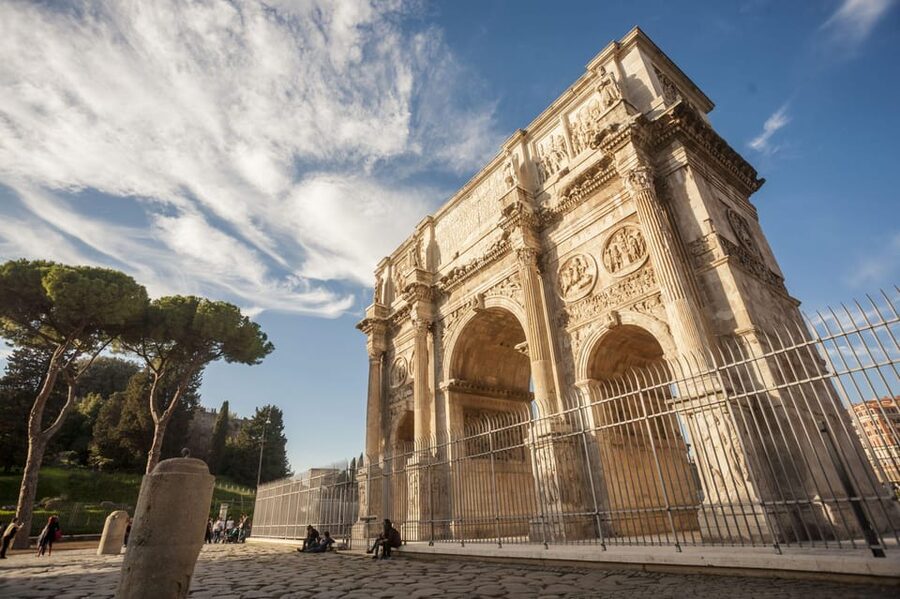
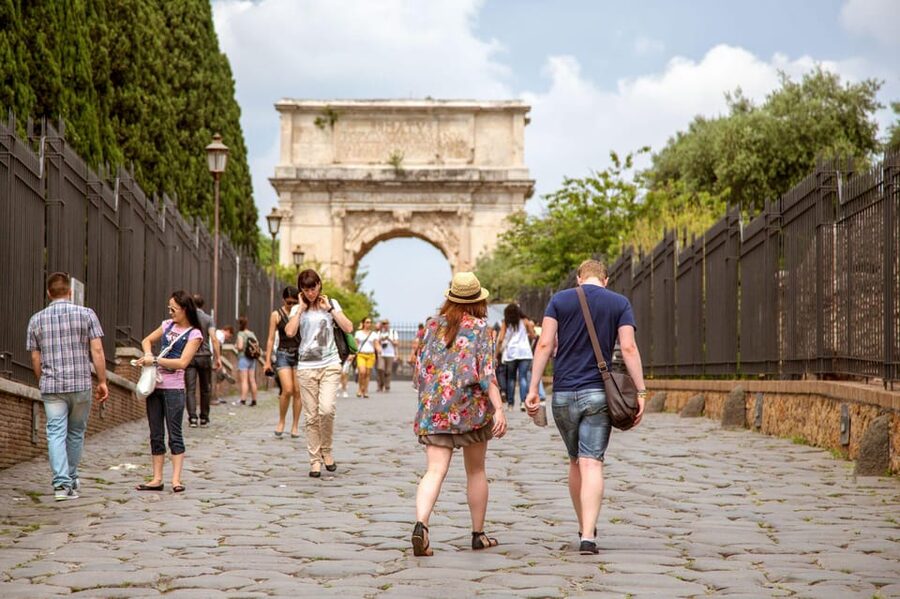
Good news: the entry process is built to be straightforward. For the Colosseum, you show your ticket directly at the entrance in front of the Arch of Constantine, and there’s no person meeting you at a designated spot. For directions, follow signs for Entrance for individuals.
One practical planning note: there’s often a long opening-time line. If you’re aiming for a later morning entry, you can still end up waiting. If you’re trying to get in early—one common pattern is that lines start forming well before the doors—so arriving earlier than you think helps.
And yes, bring ID. You need a passport or ID card. Since the ticket is nominative, you must enter the correct names of each participant during booking. If the names aren’t provided properly, you may not be able to access the attraction.
Using the audio guide app on your phone (and what to do if it acts up)
This experience includes a downloadable audio guide app for your phone. It’s offered in English, Italian, Chinese, Portuguese, Polish, Spanish, French, and German. You’ll receive download instructions after you book, and confirmation is delivered within 48 hours after purchase.
Here’s the key idea: you’re self-guided, not led by a person. The app is your “quiet companion” that adds context as you stand in front of the stones. When it’s working, it’s a great way to transform a fast photo-stop into an actual understanding of what you’re seeing.
A few practical things I’d do:
- Keep your phone charged. You’re relying on it for audio the whole time.
- If you have a weak signal in the thick of the crowds, you might find that the audio experience depends on how the app loads content. Plan to download and test before you leave your hotel.
- If you get confused, don’t panic. The app is digital, so you’ll likely need to navigate within it to find your place at each site.
Some people find audio app playback a little less seamless than a dedicated handheld device. So if you’re the type who hates fiddling with apps during sightseeing, build in patience. The good part: even if audio is imperfect at the first stop, you’ll still be standing in one of the most iconic places in the world, and the Forum and Palatine Hill are still worth your time.
Colosseum highlights you can see (without the arena and underground)
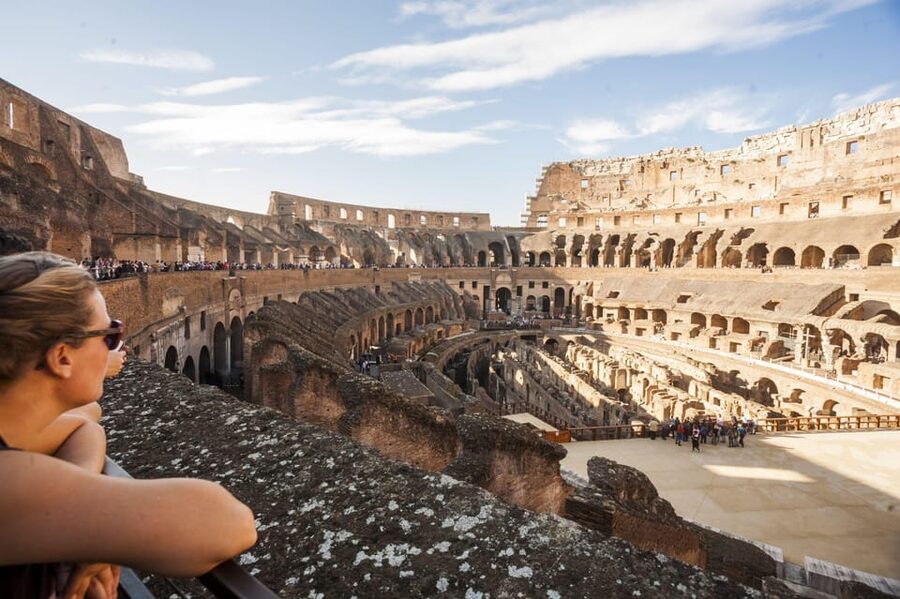
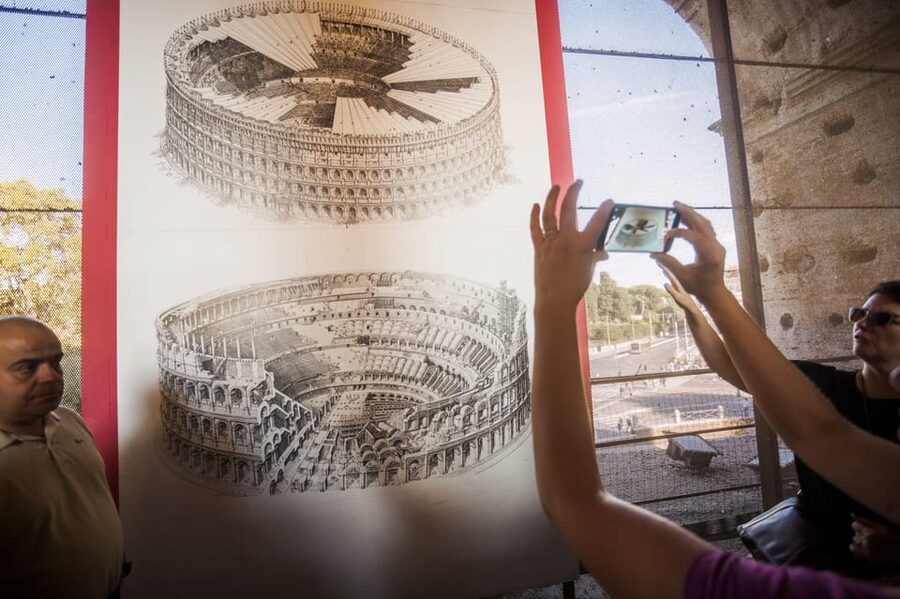
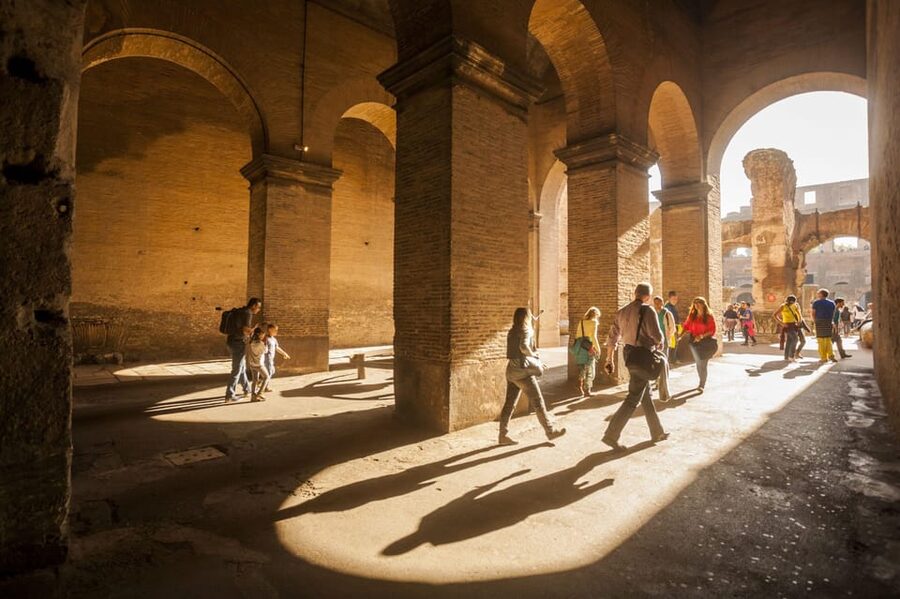
The Colosseum is why most people come to Rome, and this ticket gets you in to see it at a self-paced level. Expect the familiar wow-factor: the scale, the tiers, the sheer engineering audacity. Even without arena access, it’s not a watered-down experience. You’ll still be close enough to feel how this place was built for massive crowds.
What you should know upfront: your ticket does not include access to the arena or the underground. That means:
- You won’t be walking the floor area or viewing the systems beneath the structure.
- Your best “up close engineering” moments will come from where you’re allowed to stand, look, and move through the upper and surrounding pathways.
Still, the experience is designed to give you context. The description you’re given points to things like the ancient stage machinery and panoramic terraces. And when you’re there in person, you start noticing what your brain previously glossed over in photos: how sightlines and levels were planned, how the structure holds shape, and how the building still reads like a machine even after centuries.
Also plan for crowds. The Colosseum is often busy, and you may feel bottleneck moments near popular viewpoints. That’s normal. I’d rather treat the Colosseum like a series of mini-moments—pause, look, move—than like a single straight-line path.
Roman Forum essentials via the Sacra entrance and Forum Museum areas
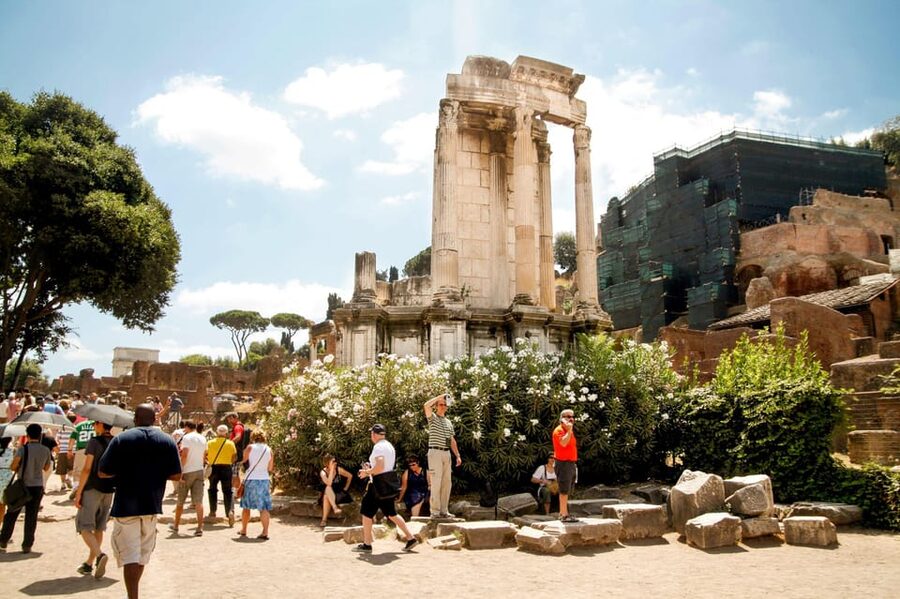
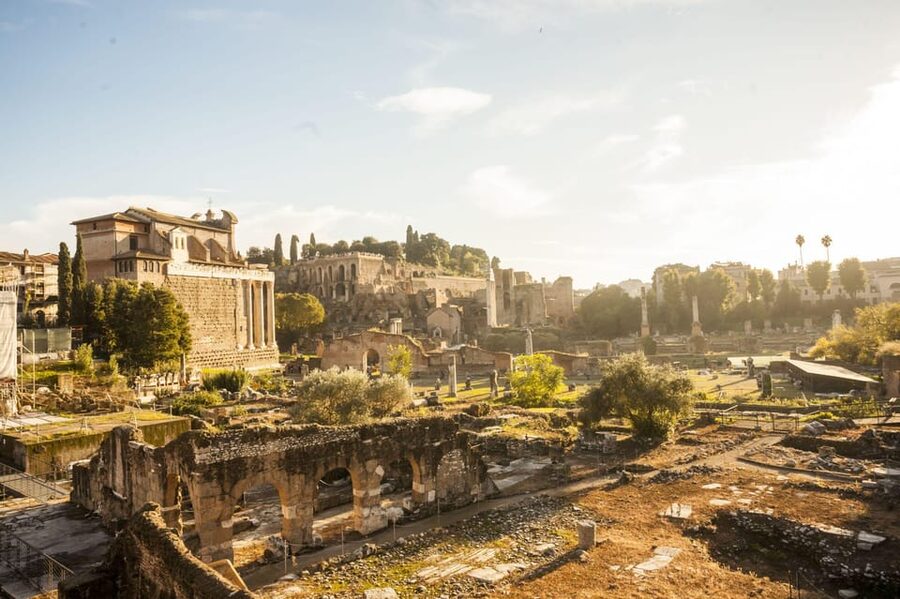
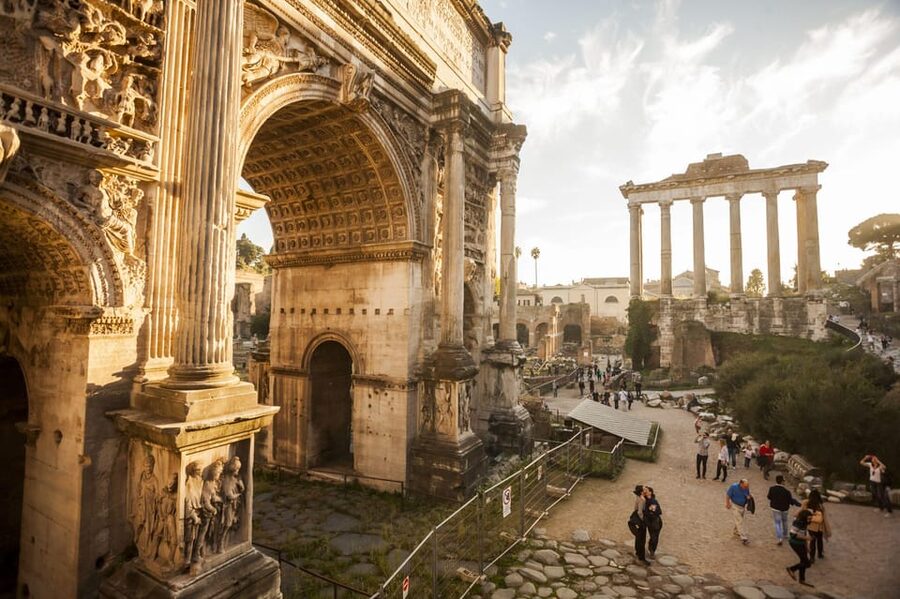
After the Colosseum, the Roman Forum hits differently. The Colosseum is monumental; the Forum is layered. This is where the city’s political and social energy once concentrated, and now you walk through ruins that feel like a timeline you can touch.
Access-wise, the entry approach matters. For the Forum, you can go in via Sacra, using the ticket holders line on the right. That detail helps you avoid wandering around looking for the correct queue while people move past you.
Once inside, the Forum is a walk through connected spaces—temples, public buildings, and archaeological zones. You’ll also encounter Roman Forum Museum areas with extensive artifact collections, which is a big reason this stop isn’t just about scenery. If you want to understand what you’re looking at, the museum sections often help put the ruins in context.
What I like about doing the Forum as part of this ticket: it’s flexible. You can spend time where your curiosity pulls you—religion and civic life, the physical remains of government spaces, or simply the way ruins cluster into a kind of open-air lesson.
One more practical note: Rome’s signage and crowds can make navigation feel harder than it should. If you get turned around, don’t waste time spiraling. Use the clearest route cues you see and keep heading toward the main open areas rather than chasing every side corridor.
Palatine Hill for legends, imperial palaces, and Rome views
Palatine Hill is where you trade close ruins for a wider perspective. This place sits high enough to let you look across the Roman Forum and understand the scale of the whole ancient zone.
The tradition attached to Palatine Hill is part of what makes it fun: it’s described as the legendary birthplace of Romulus and Remus. But it’s the physical remains that really do the work. You’ll find the majestic ruins of imperial palaces, and it’s hard not to imagine the power concentrated here.
The view is a major payoff. Even if you’re not a “lookouts” person, standing on Palatine Hill changes how you interpret the city. You stop thinking of the Forum as separate ruins and start seeing the ancient city as a connected system of neighborhoods, politics, and prestige.
This stop is also a good place to slow down. If you’ve been speed-walking the Colosseum, Palatine Hill rewards a calmer pace. And if the heat is pushing hard—Palatine Hill can be exposed—you can still do it effectively by mixing walking with short pauses where shade exists.
Timing tips: how long it takes, and how to avoid burnout
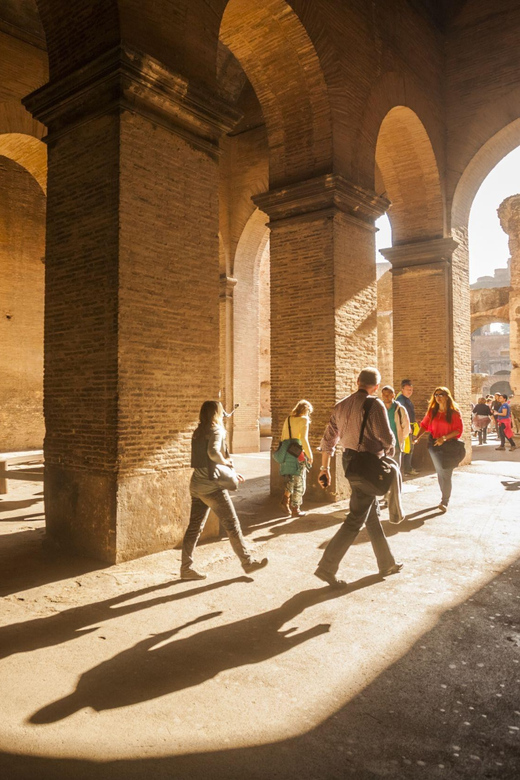
The activity is sold with a 75-minute duration, but in real life you can easily stretch your time depending on how much you want to read, photograph, and pause. For many people, a solid pass through all three areas can work in roughly about an hour and change if you stay moving. If you linger in the museum sections or stop for multiple viewpoints, plan for longer.
Crowds are the big timing variable. The Colosseum tends to feel the most chaotic. The Roman Forum can also get jammed in certain corridors, and Palatine Hill may feel more spread out—but still busy.
I recommend you build your day like this:
- Give the Colosseum the strict time slot and enough buffer to get through security.
- Treat the Forum like your learning stop—walk it slower than you think you need.
- Use Palatine Hill as your viewpoint finish, so you end with something that feels like perspective rather than another ruin grid.
Also remember: there are quite a few steps, and there are times when restrooms can feel limited. That doesn’t mean you can’t do it—it’s just a reason to pick comfortable shoes and pace yourself.
If you’re visiting in hot season, you can feel how the heat changes everything. One smart strategy is to shift more “reading time” to shaded or indoor-feeling areas (like museum parts), then use the exposed areas for shorter bursts.
Price and value: what $30 covers and what it doesn’t
The listed price is about $30 per person. What you’re paying for isn’t just entry—it’s a bundle:
- Entry to the Colosseum, Roman Forum, and Palatine Hill
- A multilingual audio guide app
- A small-group product structure (limited to 10 participants)
And you’re not buying a guided tour. This is designed as self-paced exploration with audio support, which can be a great value if you like roaming on your own and controlling how long you stay at each stop.
But you should compare value based on what you want to see:
- This ticket does not include the arena or the underground in the Colosseum.
- If those areas are central to your ideal Colosseum experience, you’ll likely need a different ticket that specifically includes them.
Still, for most people, getting into all three headline areas in one timed-and-24-hour structure is a strong deal. You get freedom, audio context, and the convenience of a single ticket route through the ancient core—especially helpful if you don’t want to organize multiple purchases and time slots yourself.
Who should book this ticket (and who might prefer something else)
This option fits best if you:
- Want the classic Colosseum + Forum + Palatine Hill combo
- Like self-guided touring and don’t want to follow a group pace
- Enjoy learning in small bursts through a phone audio guide rather than a live guide
It may be less ideal if you:
- Strongly want access to the Colosseum arena or underground
- Don’t want your experience tied to app playback and phone reliability
- Prefer a more guided, interpretive walkthrough where someone corrals the details in real time
The good news is that even within those limits, you’re still getting into the heart of ancient Rome. The app is there to add meaning as you go, but the sites themselves do most of the heavy lifting.
Should you book this Colosseum Forum Palatine ticket?
If your goal is a smooth, self-paced visit to the Colosseum, Roman Forum, and Palatine Hill—without paying for a live guide—this is a sensible booking. The 24-hour access is the real confidence-builder, and the audio app helps you get more from the stones than you’d get by wandering without context.
Book it if:
- You’re comfortable being responsible for your own timing
- You can handle the strict scheduled entry time for the Colosseum
- You’re traveling with the right documents and you’ve entered participant names correctly
Skip it or look at an upgrade if:
- You need arena/underground access in the Colosseum
- You know you’ll be frustrated by phone-based audio or app issues on the day
One final practical tip: arrive early enough to beat the security line, and treat the Colosseum time slot like the moment you must be ready to enter—not the moment you should start walking from the metro.
FAQ
Do I need to book with specific entry time for the Colosseum?
Yes. Colosseum access is only permitted at your scheduled time, and rescheduling isn’t possible.
Where do I show my ticket for the Colosseum?
You can show your ticket directly at the Colosseum entrance, in front of the Arch of Constantine. There is no one to meet at the meeting point.
Can I access the Colosseum arena or underground with this ticket?
No. Access to the Colosseum arena and underground is not included.
How do I enter the Roman Forum area?
You can access via Sacra, using the ticket holders line on the right.
Is the audio guide included, and what languages are available?
Yes. A multilingual audio guide app is included and available in English, Italian, Chinese, Portuguese, Polish, Spanish, French, and German.
Do I need to provide names for everyone traveling?
Yes. Tickets are nominative, and you must insert the names of each participant during booking to access the attraction.
Is this ticket refundable?
No. This activity is non-refundable.