REVIEW · OSAKA
Osaka Food Quest: Self-Guided Culinary & History Adventure
Book on Viator →Bookable on Viator
Osaka has a way of feeding your curiosity fast. This self-guided food-and-history quest turns Dotonbori into a clue trail, built around Japanese dishes, local customs, and what the city used to be.
I like that you can set your own pace and keep moving without waiting for anyone. I also like that the route hits major landmarks, so you’re not just walking around hungry with no plan. One thing to consider: you’re relying on your smartphone, and if the app feels slow or confusing, it can frustrate the whole experience.
The best part for me is how practical it feels. You’re not stuck inside a museum or listening to a lecture; you’re walking the streets and solving puzzles as you go, with a story that connects food to Osaka’s past.
The main drawback is technical. One recent low rating complained the app was slow and made it hard to tell where to go next, so download any data you need and start on stable service.
In This Review
- Key Highlights You’ll Actually Notice
- A Smartphone Quest Through Dotonbori and Kansai Food Traditions
- How the Game Portion Works When You’re Walking
- Ebisu Bridge: Shortcut Links and the Hanshin Tigers Curse
- Konamon Museum and Takoyaki Making Moments
- Horumon Dotonbori: Beef Offal with a Story Behind It
- Hozenji Temple Built in 1637 and Bunraku Theater Details
- Kuromon Market: The Black Gate Snack Circuit
- Namba Yasaka Shrine: A Shrine That Was Moved by Power
- Price and Timing: Worth It If You Plan Around Walking Speed
- Tips to Avoid the App Stress (Including the Data Concern)
- Where It Starts, Where It Ends, and How to Pair It with Meals
- Who This Self-Guided Quest Fits Best
- Should You Book Osaka Food Quest?
- FAQ
- How long is the Osaka Food Quest?
- Is there a physical tour guide?
- How do I access the quest on my phone?
- Where does the quest start and where does it end?
- What are the main areas covered during the walk?
- Are there admissions or ticket costs at the stops?
- How many puzzles do I solve?
- Can I pause and resume the quest?
- Can I cancel and get a full refund?
- Is this a private experience and are service animals allowed?
Key Highlights You’ll Actually Notice
10 puzzle challenges built into the walk so you’re always doing something, not just sightseeing.
Dotonbori route with big-name stops including Hozenji Temple and the National Bunraku Theater.
Food-linked moments that match Osaka favorites like Takoyaki and horumon (beef offal).
Pause and resume anytime which is great when you want a snack break or a photo detour.
A budget-friendly price for a private self-guided outing at $7.85 per person, with a mobile ticket/code.
A Smartphone Quest Through Dotonbori and Kansai Food Traditions
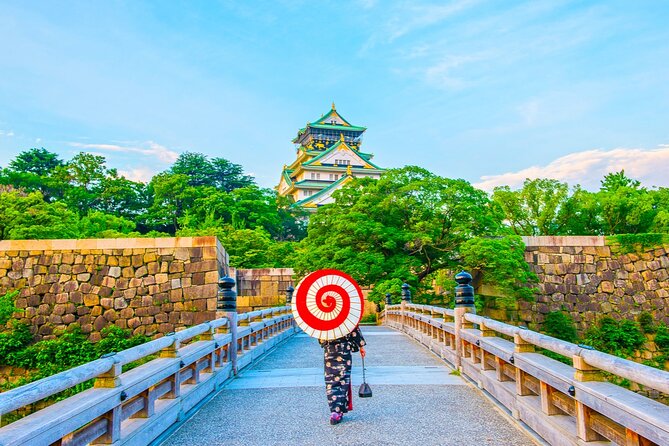
This is a 1-hour (approx.) self-guided walk that’s more like an interactive neighborhood route than a traditional tour. You solve 10 puzzles on your smartphone while moving through famous parts of Osaka, including Dotonbori and Kuromon Market.
The theme stays focused: how Osaka’s food culture developed, and how daily eating ties into local rituals and older entertainment districts. You’re also nudged to try what you see, especially Osaka staples.
It’s private in the sense that only your group participates, but there’s no physical guide. That’s a key difference in how you’ll experience it: you lead, the app prompts.
You can also read our reviews of more tours and experiences in Osaka.
How the Game Portion Works When You’re Walking
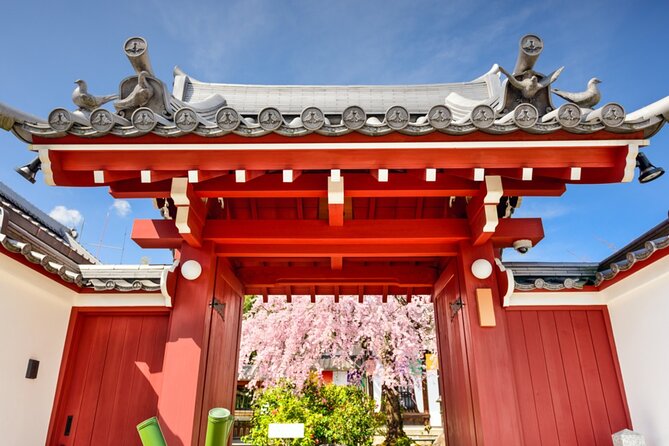
You’ll get a mobile access code and use it to access the quest content on your phone. The plan is built for walking, with short “look around” challenges that push you to pay attention to specific details at each stop.
In a good run, the puzzles make you slow down in the right places. You’re not just drifting past a bridge or temple; you’re scanning for clues that connect location to story.
In a bad run, you’ll feel it instantly. One low rating said the app was slow and direction was hard to follow, which led them to give up and just explore with Google. That’s the main risk with any self-guided app-based walk.
My practical advice: start when you have stable service, and don’t open a bunch of other heavy apps at the same time.
Ebisu Bridge: Shortcut Links and the Hanshin Tigers Curse
You begin at Ebisu Bridge, which was originally built to provide access to Ebisu Shrine. It’s also famous for a legendary curse tied to the Hanshin Tigers baseball team.
Practically, this bridge is a connector. It links the Shinsaibashi-suji and Ebisubashi-suji shopping districts, so it’s a perfect start point because you immediately feel the neighborhood flow.
The challenge here is quick—about 5 minutes—and the plan lists it as free to access. You’ll be hunting around for the answer to the clue that opens your next location.
What to watch for: this area is photo-friendly and crowded at times, so give yourself a little buffer if you’re easily distracted.
Konamon Museum and Takoyaki Making Moments
Next comes Konamon Museum, framed as a place where you can eat, learn about, and make takoyaki—often called Osaka’s soul food. This stop is designed to connect the puzzle-story with something you can physically associate with Osaka street life.
The clue style stays the same: you’ll look around to find the answer and move forward. What makes this useful is that it anchors the quest theme in an iconic dish, not just vague “food history.”
One caution: the tour info you have explicitly labels some stops as ticket free (Ebisu Bridge and Kuromon Market), but it does not list admission details for Konamon Museum. So if you’re planning to do hands-on making, treat that as a possible extra cost based on what the venue offers.
Best use of this stop: if you’re hungry, this is a smart moment to decide whether you want to snack before the next walk.
Horumon Dotonbori: Beef Offal with a Story Behind It
Then you’ll hit Showa Taishu Horumon Dotonbori. It’s a horumon restaurant specializing in beef offal—exactly the kind of food that tends to separate Osaka from “safe” tourist eating lists.
The quest keeps it interactive: you look around, solve the challenge, and learn the story tied to the place. Even if you’re not planning to order anything right away, it helps you understand why this kind of dish is part of local food culture rather than just shock-value street food.
If you’re cautious about offal, you don’t have to force it. The tour is about learning and noticing; eating is optional. But since you’ll likely smell the food and see menus, it’s a good place to gauge what you can handle.
Hozenji Temple Built in 1637 and Bunraku Theater Details
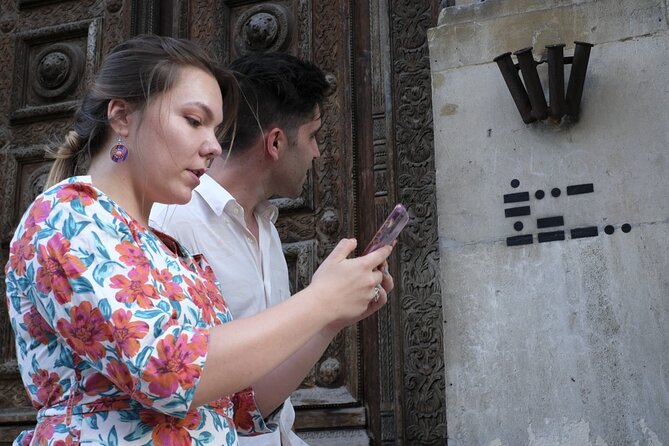
After the food-focused stops, the route shifts to spiritual and performance history, starting with Hozenji Temple. It was built in 1637 and pays homage to Fudo Myoo, one of five Buddhist guardians.
In the 1600s, the Namba area around Dotonbori was thriving as an entertainment zone. That matters because it explains why food streets and performance streets often grow up together in old cities: people came out to watch shows, then ate while they were there.
Then the quest leads you to the National Bunraku Theater, established in 1984 as a home for Bunraku in the Kansai region. The theater details are specific: the main hall has 753 seats, and a smaller hall has 159 seats. The main hall is used mainly for Bunraku performances, with traditional dance and other drama happening too.
Your clue here again is “look around.” That’s important because it keeps your attention from drifting. You’re learning while standing in front of real places, not staring at a map.
How this stop can help you later: if you connect entertainment and food historically, you’ll understand Dotonbori better as more than neon and crowds.
Kuromon Market: The Black Gate Snack Circuit
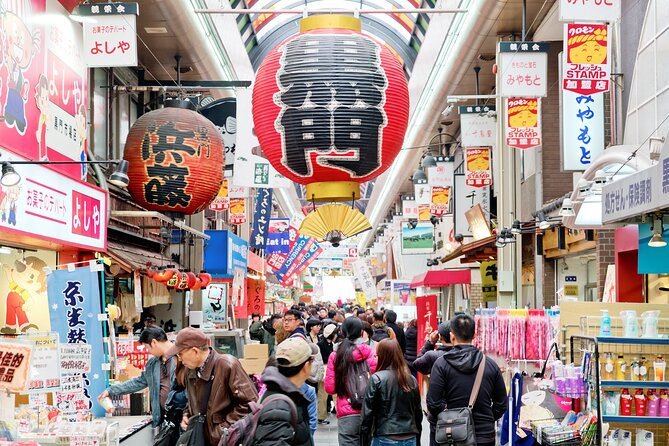
Kuromon Market is next, described as meaning “black gate.” Historically, it was a fish market opening around 1822, and it became an official market in 1902. The name is said to link to the black gate of Enmyo Temple, which stood there until 1912.
This is one of the most practical stops for travelers because it’s a real-world food target. You’ll solve your clue while you scan stalls, which is exactly what you’d do if you were just wandering hungry—except now you’re also learning why the market has that specific identity.
The plan lists 10 minutes and notes admission as free for this stop.
Tip for a smooth experience: markets move fast. Keep your phone ready, but don’t let it make you walk into other people. I’d also do any serious shopping after you finish the clue, so you don’t constantly break focus mid-task.
Namba Yasaka Shrine: A Shrine That Was Moved by Power
To close out the walk, you’ll visit Namba Yasaka Shrine. It’s said to have been commissioned by Emperor Hanzei in honor of his father, Emperor Nintoku.
The shrine’s location has an interesting backstory: the present-day site links to Kawachi Matsubara City as its original setting. Then after Hideyoshi Toyotomi began construction of Osaka Castle, the shrine was moved to its current location.
This last storytelling turn helps the whole quest land. You start with a bridge curse and shopping connections, then move through food-making and restaurant culture, then into temple and performance history, and finally into a shrine tied to political change.
Again, you’ll look around to answer the clue and advance to the end.
Price and Timing: Worth It If You Plan Around Walking Speed
The price is $7.85 per person, and the duration is listed as about 1 hour. That’s the marketing number, not necessarily what you’ll do in real life. One person did it in around two hours due to time pressure and recommended at least 3 hours for a better pace.
Here’s the value logic: you’re paying for guided structure without paying for a person. If you already like scavenger hunts, this is a bargain. If you hate puzzles or want a classic sit-down tour, you might feel like the format is fighting your style.
Also, you’re not paying for meals as part of the ticket. The experience strongly suggests you try specialties you see, but your spending on food will be on you.
What I’d do to make the price feel fair: treat this as your walking plan for one afternoon. Then spend your saved tour-money on two or three targeted bites instead of random snacks.
Tips to Avoid the App Stress (Including the Data Concern)
One low rating said the app was slow and that it used a huge amount of data. The response to that complaint clarified a key detail: the quest size is listed as 2.5MB, so it shouldn’t require massive data use for the content itself.
Still, the practical lesson remains: slow loading often comes from the rest of your phone life—signal issues, background apps, or switching between networks.
Here’s how to reduce the risk:
- Start near the meeting point and don’t wander off before you’ve opened the quest.
- If possible, use stable service and avoid heavy streaming while you’re playing.
- Keep an eye on battery. You’ll be walking and using GPS while solving prompts.
If you do run into trouble, this is one of the few tours where you can pivot. You can stop trying to solve, still walk the route, and let the puzzle part become optional. That’s not the ideal way to experience it, but it prevents the whole day from feeling wasted.
Where It Starts, Where It Ends, and How to Pair It with Meals
The route starts at 1 Chome-6 Dotonbori, Chuo Ward, Osaka and ends at 2-chōme-9-19 Motomachi, Naniwa Ward, Osaka. Since the route is a walking quest, ending in a different area is normal, and it’s useful if you’re planning to continue exploring afterward.
You’ll be in transit through Dotonbori and nearby streets, and you’ll likely want quick breaks for snacks or photos. The plan says you can pause and resume anytime, which helps a lot if you spot something you can’t resist.
If you want a smooth food day, I’d time it like this: snack lightly early, then plan one more focused bite after Kuromon Market when you’ve finished most clue-solving.
Who This Self-Guided Quest Fits Best
This works best for people who enjoy doing things with their phone instead of just taking photos. You’ll also like it if you want a route that hits big landmarks like Hozenji Temple and the National Bunraku Theater without committing to a schedule with a guide.
It’s a good fit for:
- Solo travelers who want structure but dislike strict timing
- Couples who enjoy playful problem-solving while walking
- Families who can manage a phone-based game together
It may be less ideal if:
- You get frustrated when an app doesn’t cooperate
- You want a speaker-led explanation the whole time
- You prefer to stay off your phone during sightseeing
Should You Book Osaka Food Quest?
Book it if you want an affordable, self-paced way to connect Osaka’s iconic foods to the places where local culture formed. The combination of 10 puzzle challenges, landmark stops, and the way the route pushes you to notice details is exactly why people like this format.
I’d skip it if your biggest concern is app reliability. If you know you’ll be traveling with weak signal, a dead battery, or limited patience for tech prompts, you might prefer a purely human-led tour.
If you do book, go in with the right mindset: this isn’t just a walk, it’s a scavenger story. When it works, it turns Dotonbori into a place you understand, not just a place you pass through.
FAQ
How long is the Osaka Food Quest?
It’s listed at about 1 hour. In practice, you may spend more time, and some people recommend planning around 3 hours for a comfortable pace.
Is there a physical tour guide?
No. This is a self-guided experience with mobile content rather than a person leading you.
How do I access the quest on my phone?
You’ll receive a mobile access code for the quest and use that to open the puzzle challenges.
Where does the quest start and where does it end?
It starts at 1 Chome-6 Dotonbori, Chuo Ward, Osaka, and ends at 2-chōme-9-19 Motomachi, Naniwa Ward, Osaka.
What are the main areas covered during the walk?
The route includes places in and around Dotonbori and also includes Kuromon Market, Hozenji Temple, and the National Bunraku Theater.
Are there admissions or ticket costs at the stops?
The plan specifically notes admission ticket free for Ebisu Bridge (5 minutes) and Kuromon Market (10 minutes). Admission details for other stops are not listed in the provided information.
How many puzzles do I solve?
You’ll solve 10 puzzle-based challenges.
Can I pause and resume the quest?
Yes. The experience is flexible, and you can pause and resume anytime.
Can I cancel and get a full refund?
Yes. You can cancel up to 24 hours in advance for a full refund.
Is this a private experience and are service animals allowed?
It’s described as private (only your group participates), and service animals are allowed.