REVIEW · HAMMAMET
Kairouan, El Djem, Monastir Self-Guided Excursion from Hammamet
Book on Viator →Operated by taximami · Bookable on Viator
A Roman coliseum and a holy city in one day. This self-guided route connects Kairouan (Tunisia’s spiritual center), El Jem (a massive Roman amphitheater), and Monastir (Punic and Roman roots plus modern icons). It’s a smart way to cover three very different worlds without stacking multiple tours.
I especially like the private, air-conditioned transport for a small group up to 3, because it makes the long day feel manageable. I also like that you’re not stuck waiting around to hunt down tickets—your schedule is built around clear stops, with some entries free (like the mosque and the Medina areas) and others paid on-site.
The main thing to watch is the self-guided setup: entrance fees for the amphitheater, museum, and Bassins Aghlabites are not included, and optional local guiding can appear. If you add extra services or shopping at each stop, the day can feel rushed—especially if you want time for Monastir beyond the key monuments.
In This Review
- Key Highlights to Know Before You Go
- Why Kairouan, El Jem, and Monastir Works So Well
- Bassins Aghlabites: 9th-Century Water Engineering Outside the Walls
- Mosque Sidi Sahbi (Mosque of the Barber): A Free Sacred Stop
- Medina of Kairouan: UNESCO Streets and Markets With Three Gates
- El Jem Amphitheatre: The 30,000-Seat Moment
- Archaeological Museum of El-Djem: Mosaics and Small Finds
- Monastir Marina, Bourguiba Mausoleum, and Free Time by the Water
- Price and Value for a Private Group Up to 3
- Timing, Driving, and How to Make the Day Feel Relaxed
- Who This Trip Best Fits
- Should You Book This Kairouan, El Jem, and Monastir Excursion?
- FAQ
- How long is the Kairouan, El Djem, Monastir excursion?
- What time does the excursion start from Hammamet?
- Is pickup included, and is the transportation private?
- Are museum and amphitheater entrance fees included in the price?
- What’s included in the tour besides transport?
- Can I cancel for a full refund?
Key Highlights to Know Before You Go
- Three big cities, one continuous route that mixes Islamic, Roman, and modern Tunisia.
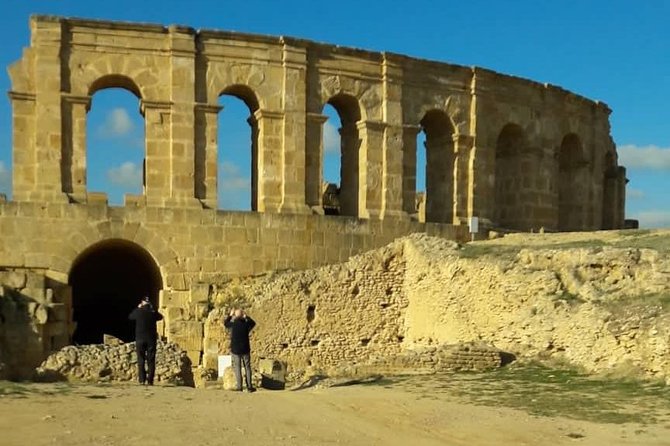
- El Jem amphitheater with a true scale moment: about 30,000 spectators and UNESCO status.
- Museum in a Roman villa setting, good for slowing down after the amphitheater.
- Some stops are free (Sidi Sahbi and the Medina areas), which helps your budget.
- Private transportation + bottled water, so you’re not “tour-bus tired” all day.
Why Kairouan, El Jem, and Monastir Works So Well
This day trip has a simple logic: start with Kairouan’s sacred feel, switch gears to El Jem’s Roman spectacle, then end with Monastir’s seaside monuments and modern history. If you like variety, this is the kind of itinerary that keeps your brain awake—spiritual architecture, ancient engineering, then stone-seat drama.
I also like the pacing choices built into the stop durations. You get enough time to walk and orient yourself in Kairouan, then you commit to El Jem for longer, because that’s where you’ll want space to take photos, understand the layout, and actually absorb what you’re seeing. Finally, Monastir gives you a mix of guided context (Bourguiba’s story) and then free time to choose how you want to spend it.
The other quiet win is practical comfort. You’re in an air-conditioned vehicle, picked up from Hammamet and covered by insurance, with bottled water included. That matters on a 10-hour day where heat and long drives can otherwise turn “great plan” into “good effort.”
You can also read our reviews of more tours and experiences in Hammamet.
Bassins Aghlabites: 9th-Century Water Engineering Outside the Walls
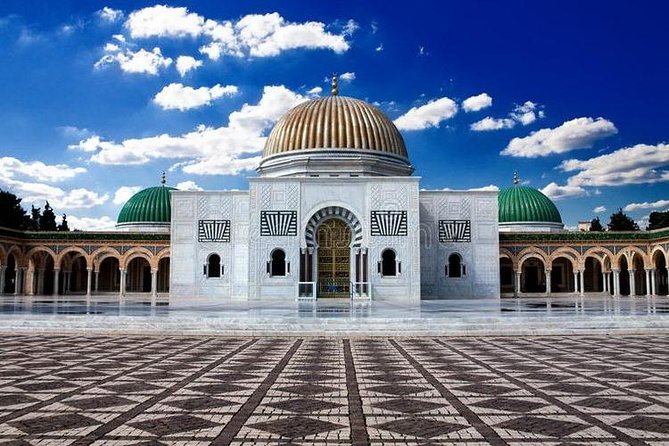
You’ll start with Bassins Aghlabites, a major hydraulic work dating from the early part of the late 9th century. It’s located outside Kairouan’s medina ramparts, so it gives you a change of scenery right away—less crowd, more open-feeling ruins and channels.
Why it’s worth your time: this stop shows that Kairouan wasn’t only about mosques and faith. It was also about systems—how to manage water, support a city, and turn desert-edge living into something stable. For many visitors, that’s the first moment where the day stops feeling like a checklist and starts feeling like a story.
The catch: the admission ticket for this stop is not included. So you’ll want a little cash or a clear plan for payment on-site. Also, it’s listed at about 30 minutes, so come ready to look fast and capture the big shapes, then move on.
Mosque Sidi Sahbi (Mosque of the Barber): A Free Sacred Stop
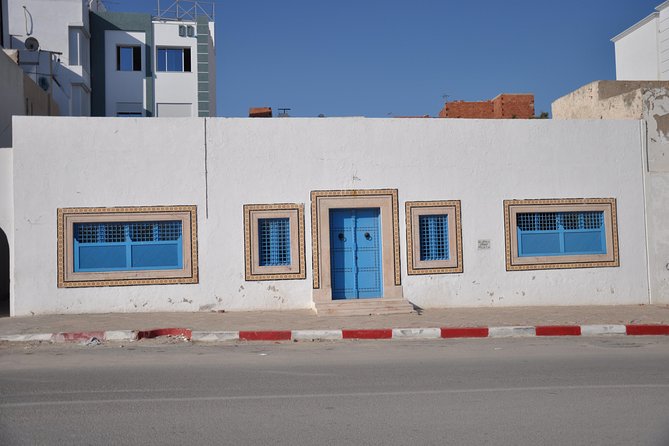
Next is the Mosque Sidi Sahbi, often called the Mosque of the Barber. It’s known as the mausoleum of Sidi Sahbi and sits outside the walls of the medina, which helps keep the stop from feeling like a full-on maze session.
What I like about this stop is its “gateway” role. It prepares you for the medina visit by giving you a clearer sense of religious character and local reverence before you dive into the city’s older lanes. It’s also listed at about 1 hour, which is long enough for a calm look, not just a photo sprint.
The big plus: admission here is free. So you get a meaningful experience without adding cost. Do note that your day is self-guided overall—so you’ll rely on your own reading of signage and the space around you rather than a dedicated pro guide walking you through every symbol.
Medina of Kairouan: UNESCO Streets and Markets With Three Gates
After the mosque, you step into the Medina of Kairouan, a UNESCO World Heritage site. The key detail here is that you’re not just passing through—you’re exploring the medina’s narrow streets and markets, and you’ll visit the area featuring mosques with three gates.
This is the part that turns your day from “driving between places” into “actually in the city.” Even if you don’t do a deep shopping spree, medina lanes give you sensory texture: small storefronts, street rhythm, and the way locals move through tight spaces.
Why it’s valuable: Kairouan’s UNESCO status isn’t only about one building. It’s about the intact urban fabric—how the city functions in old form. When you walk the lanes yourself, that becomes obvious.
Practical note: the medina stop is about 1 hour and the relevant admission is free per the plan. That’s enough time to get your bearings, but not enough time to wander for hours—so if you like slow wandering, keep some energy for the end of your medina hour.
El Jem Amphitheatre: The 30,000-Seat Moment
Then comes the main event: the Amphitheatre D’el Jem. This is a Roman monument founded in the third century AD and classified as World Heritage since 1972. It could accommodate around 30,000 spectators, which puts you in a different mental category than smaller ruins.
I like this amphitheater because it’s easy to picture how loud and packed it must have been. The stone geometry gives you immediate understanding: seating tiers, entry flow, and the sense of a stage built for mass attention. If you’ve ever seen photos and wondered how big it feels in real life, this stop answers that question quickly.
It’s listed at about 2 hours, which is perfect for not just walking the perimeter but also taking time inside to understand the layout. The one drawback: the amphitheater admission ticket is not included. Budget for it, because it’s likely a major part of your paid-entry costs for the day.
Also remember: El Jem is mostly stone. That’s great for photos, but it can still be hot and sunny depending on the season—bring sun protection and plan a slow pace during the middle of the day.
Archaeological Museum of El-Djem: Mosaics and Small Finds
After the amphitheater, you’ll visit the Archaeological Museum of El-Djem. This museum is set in a reconstructed Roman villa, which is a nice twist—your artifacts feel more connected to everyday Roman life rather than floating in a display case.
What you’re looking at includes Roman mosaics, plus statues, terracotta statuettes, perfume vials, and glassworks. The plan says the mosaics cover a period going from the 11th century to the 5th century, so you’re basically looking at how styles and materials carry across long spans of time. Even if the wording seems a bit odd, the takeaway is clear: it’s not just one era.
Time-wise, you get about 1 hour. That’s enough to get a solid overview without turning museum time into a second full attraction. Like the amphitheater, museum admission is not included, so factor it into your budget.
I think this museum is the ideal balance after the amphitheater. You go from spectacle to detail—then you leave with a better sense of Roman aesthetics beyond architecture.
Monastir Marina, Bourguiba Mausoleum, and Free Time by the Water
The last stretch brings you to Monastir, ancient roots plus modern identity. You’ll pass in front of the birthplace of Habib Bourguiba, Tunisia’s first president of the Tunisian Republic, then you’ll visit the mausoleum of Bourguiba.
This portion is listed at about 1 hour total, with free time to visit the ribat and the marina. That’s your choice slot at the end of the day: you can stay near the water, look around the ribat area, or simply enjoy the slower pace after so much stone and history earlier.
Why it’s a good finish: Kairouan and El Jem are intense. Monastir is where the day gets to exhale. You’re still seeing important sites, but the seaside atmosphere changes the mood fast.
Keep in mind one real-world consideration. Entrance fees for Monastir’s attractions are not clearly stated as included, and the plan indicates the museum/amphitheater tickets are not included. So if you want to do everything at the marina and ribat, you might still pay some things on-site depending on what you choose to enter.
Price and Value for a Private Group Up to 3
The price is listed at $303.51 per group (up to 3 people), for about 10 hours. For a private excursion, that can be a strong value—especially when you compare it to booking separate transport and piecing together multiple day tours.
Here’s where the value comes from:
- You get pickup offered and private transportation in an air-conditioned vehicle.
- Bottled water is included, and all fees and taxes are included in the package.
- You’re covered by insurance, which is a practical comfort on a long road day.
Where you need to budget separately:
- Lunch isn’t included.
- Entrance fees to museums and exhibitions aren’t included, and multiple key stops explicitly note admission not included (Bassins Aghlabites, El Jem amphitheater, and the El-Djem museum).
So the real question for you is simple: if you’re comfortable paying on-site entrance tickets, the package feels efficient. If you want everything fully priced in advance, this one may require a bit more planning.
Timing, Driving, and How to Make the Day Feel Relaxed
This tour runs for about 10 hours and starts at 8:30 am. With a schedule like Kairouan → El Jem → Monastir, your success depends on staying flexible. The stop durations are set, and you’ll feel it if you linger too long in one place.
I’d also plan your day around the idea that it’s self-guided. There’s no professional guide included, so you’re the one steering the exact pace inside each site. That’s freeing if you like independence. It can feel short if you want heavy narration everywhere.
One more practical note based on what can happen on day trips like this: optional local guides can sometimes be offered for extra cost. If you want that, great. If not, you can simply politely decline and keep going. The itinerary is designed so you can do the key sights on your own.
And since you’ll spend most of the day in a vehicle, it’s worth paying attention to comfort needs early. If you know you get car-sick, bring what helps you. If you’re sensitive to driving style, set the tone gently with your driver at the start—ask for calm driving and clear stops.
Who This Trip Best Fits
This excursion works best if you want a big-history day without the stress of coordinating transport across multiple cities. It’s a good fit for couples, small groups, and anyone who likes structured freedom: you get a roadmap of stops, then you explore at your own speed inside them.
It’s especially suited to history lovers who enjoy contrast. You’ll go from Islamic heritage in Kairouan to Roman monumentality in El Jem, then land in Monastir with a mix of mausoleum visits and seaside downtime.
If you want a fully guided experience with someone explaining every detail inside every site, you may feel the missing narration. Since this is self-guided, you’ll do better if you’re comfortable using your phone for reading, or if you like learning from the setting itself.
Should You Book This Kairouan, El Jem, and Monastir Excursion?
Book it if you want one efficient day that covers three distinct parts of Tunisia and you’re okay paying some entrance fees on-site. I’d also book it if private transport matters to you, because the air-conditioned ride and small group size help you enjoy the day instead of surviving it.
I’d think twice if you strongly prefer fully guided tours with included museum entry, or if you’re the type who needs a lot of time per monument. With only about 1 hour in Kairouan medina and 2 hours at El Jem amphitheater, you’re choosing pace over depth.
Overall, this is a strong option for a first-time Tunisian history day trip from Hammamet. If you show up ready for walking and you budget for entrance tickets, you’ll come away with the kind of images and understanding that usually takes multiple separate outings.
FAQ
How long is the Kairouan, El Djem, Monastir excursion?
It runs for approximately 10 hours.
What time does the excursion start from Hammamet?
The start time is 8:30 am.
Is pickup included, and is the transportation private?
Pickup is offered, and the tour includes private transportation in an air-conditioned vehicle.
Are museum and amphitheater entrance fees included in the price?
No. Entrance fees to museums or exhibitions are not included, and several key stops specifically note that admission tickets are not included.
What’s included in the tour besides transport?
Included items are bottled water, air-conditioned vehicle, private transportation, all fees and taxes, and insurance.
Can I cancel for a full refund?
Yes. You can cancel up to 24 hours in advance for a full refund.