REVIEW · BELMONTE SPAIN
Belmonte Castle Entry Ticket with Audio Guide
Book on GetYourGuide →Operated by Spain Heritage Tours, S.L. · Bookable on GetYourGuide
Belmonte Castle feels like Spain turned the clock back, then handed you the keys. Belmonte Castle is all about walking through real defensive spaces, from the drawbridge entry to the towers, and the free audio guide makes it easy to connect the dots. I love the self-guided flow through the walled enclosure, parade ground, rooms, and ramparts, and I also love the detailed stop-by-stop storytelling that helps you understand how the castle worked across eras. The only drawback I’d flag is that the visit is built around stairs and historic infrastructure, so planning matters if you have limited mobility.
If you like castles that are more than photo backdrops, you’ll have a great time here. You’ll cross the battlefield areas, see neo-Gothic restoration work in the parade ground, explore the underground dungeons, then finish with wide views from the ramparts and its six towers.
In This Review
- Key highlights at a glance
- Entering Belmonte Castle’s walls: drawbridge, battlefield, and the parade ground
- The reception hall film and the armoury level with dungeons below
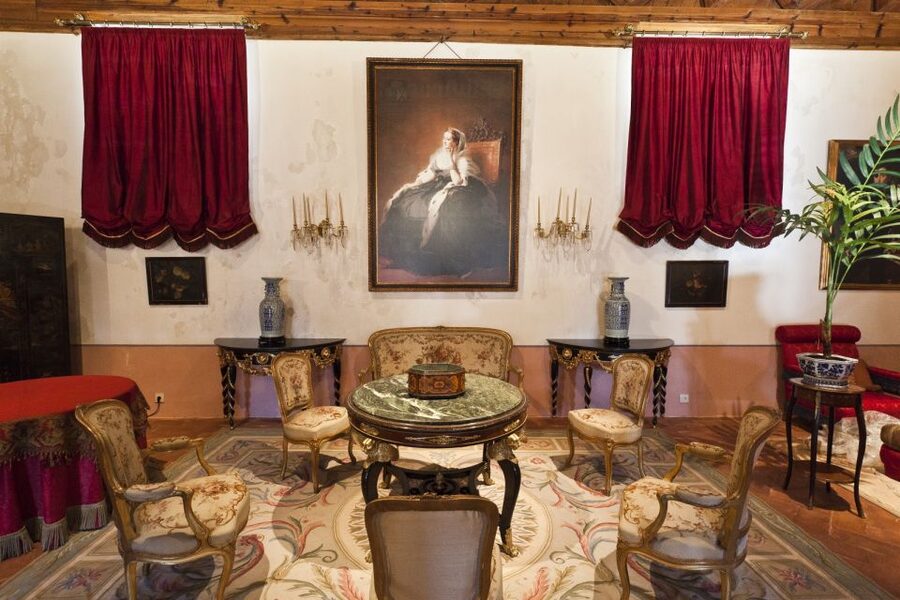
- Medieval palace rooms and Empress Eugenia de Montijo’s residence
- Gothic Mudejar coffered ceilings and the bestiary detail you don’t want to miss
- Ramparts, battlements, and tower views: why the castle looks good and why it mattered
- Audio guide reality check: how to make the free guide work for you
- Who this ticket is best for (and who should think twice)
- Practical value: what you get for a 1-day visit
- Should you book Belmonte Castle with an audio guide?
- FAQ
- What does the Belmonte Castle ticket include?
- How long is the visit?
- Is a live guide included?
- What parts of the castle can I visit with this ticket?
- Is the site accessible for people with reduced mobility?
- Are dogs allowed?
Key highlights at a glance
- Drawbridge to parade ground route: Walk from the entry field gate across the battle ground to the pentagonal parade ground.
- Reception hall + 12-minute intro film: Get your bearings fast with a big-screen film before you move into the rooms.
- 15th-century armour replicas and dungeons: The armoury level and underground spaces bring the castle’s martial side to life.
- Empress Eugenia de Montijo’s residence: You’ll access palace rooms tied to her time in residence.
- Gothic Mudejar details: Look for Gothic Mudejar coffered ceilings and a Mudejar-focused Ambassador Hall.
- Ramparts and 6 towers: Battlements and towers give you the best sense of why this place was defensible.
Entering Belmonte Castle’s walls: drawbridge, battlefield, and the parade ground
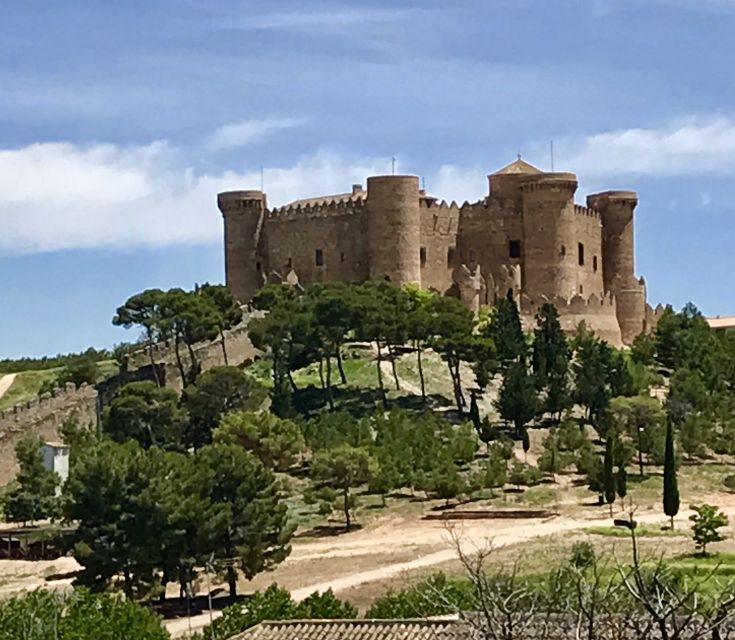
Belmonte Castle is structured like a story told in physical stages. Your visit starts with the drawbridge crossing—an instant mood-setter—then you move into the field gate area, and from there you step onto the route that was meant to control movement. It’s one thing to read about fortifications; it’s another thing to walk through the same kind of sequence.
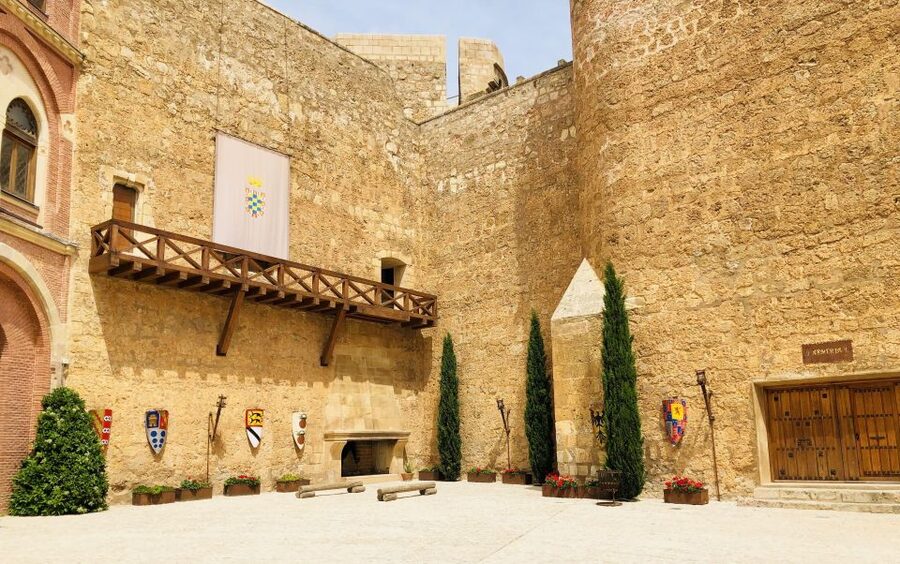
Right after the entry, you pass over the battle ground area. Think of this as the “pressure zone” in the castle logic. It helps you picture how defenders could challenge anyone trying to approach. Then the walk opens up into the parade ground, a pentagonal space that gives you a clear sense of scale.
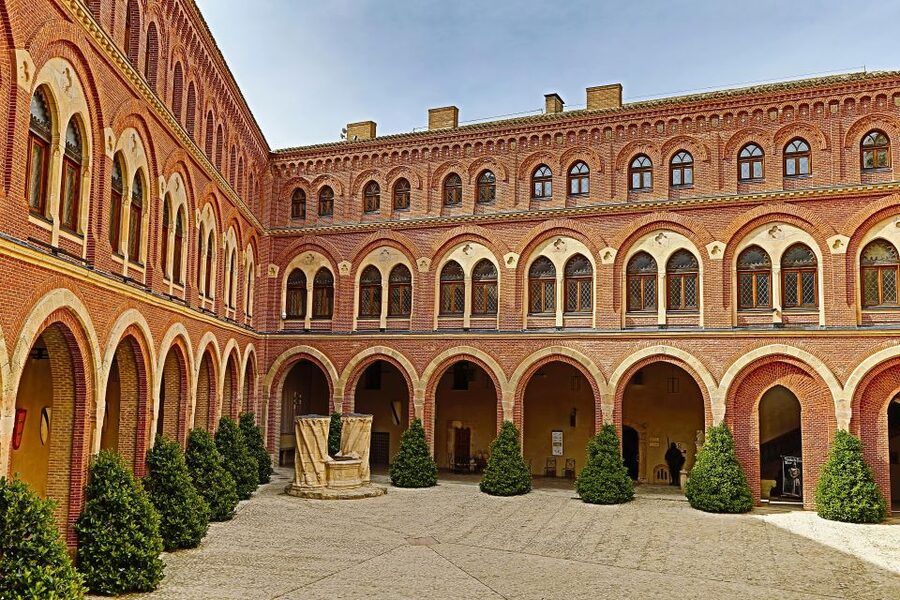
What I like most here is that the parade ground isn’t just ruins. You can see neo-Gothic restoration work in the two pavilions, plus the water well included within the area you can visit. That mix—defensive planning plus later restoration—lets you understand the castle as a living site, not a frozen postcard. If you enjoy atmosphere, this part of the circuit hits quickly and keeps you moving.
Practical tip: take a minute at the parade ground to look up and around before rushing into rooms. The geometry is part of the experience, and once you start going indoors, it’s easy to lose the overall map in your head.
The reception hall film and the armoury level with dungeons below
Before the rooms, there’s a reception hall with a large-screen tour introduction film that runs about 12 minutes. For a self-guided visit, this is a smart move. The castle has lots of rooms and names, and the film gives you the mental framework so the audio guide doesn’t feel like you’re playing trivia. After the film, you transition naturally into the armoury area.
From there, the standout stop is the armoury with replicas of 15th-century armour. Even as replicas, they do a job: they help you visualize what warriors wore and how the castle functioned as a fortress, not just a noble residence. It’s the kind of stop that’s great even if you’re not a medieval weapons person—because the goal is context, not collection bragging.
Then comes the part that adds drama: the underground dungeons below ground. You don’t just walk past medieval structures—you get to experience the lower spaces that reinforce how serious confinement and defense were. The contrast between the parade ground brightness and the dungeon areas makes the castle feel layered, like it has multiple tempos.
If you’re the type who likes to “get it” quickly, start with the film, then listen to the audio guide in order as you move through these spaces. The castle’s story flows better that way, and it reduces the chance you’ll accidentally skip a section that ties rooms together.
Medieval palace rooms and Empress Eugenia de Montijo’s residence
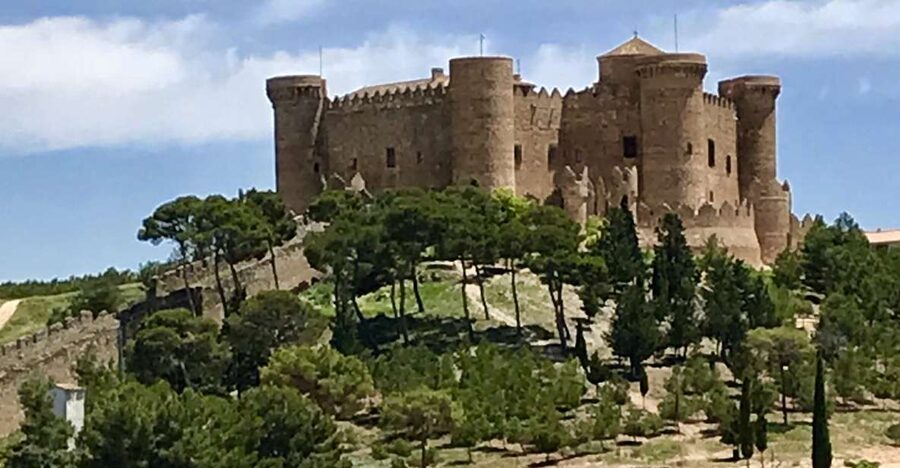
Belmonte Castle’s rooms are where the fortress side meets the power side. After you’ve walked the defensive spaces and explored the underground areas, the visit opens into the medieval palace sections—then into the more specific residence connected with Empress Eugenia de Montijo.
Having access to the palace and to the residence of the Empress is a major reason this ticket feels “full.” Many castle visits focus only on walls, stairs, and views. Here, you get interior context that helps you understand how elite life functioned inside defensive architecture.
One highlight I’d prioritize is the Ambassador Hall of Mudejar fabric. Even if you don’t know Mudejar terms, you’ll get a feel for the style through how the room communicates craft and symbolism. This is also where the castle shows its identity as more than military stone.
Then there are additional room elements you can access, including a latrine and a balcony facing the parade ground. Yes, a latrine. That’s the kind of detail that makes historic spaces feel real, not staged. The balcony facing the parade ground is the perfect counterpoint: you move from daily-life practicality to the vantage point of watching activity below.
If you’re traveling with kids, this kind of stop is often where questions kick off—especially when you can point to how people lived while also talking about the castle’s defensive purpose.
Gothic Mudejar coffered ceilings and the bestiary detail you don’t want to miss
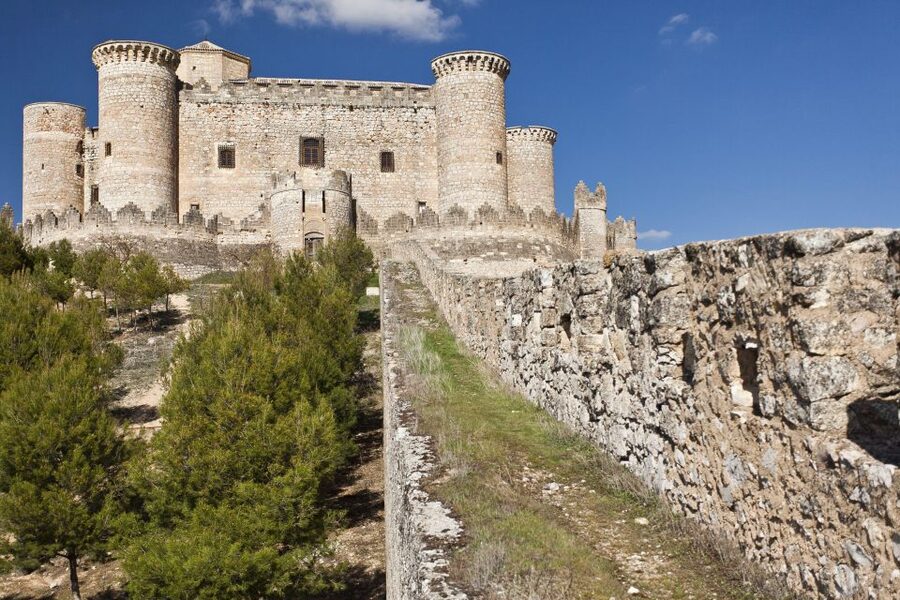
In the palace interior areas, look closely at the Gothic Mudejar coffered ceilings. This is the type of feature that can be easy to overlook if you’re moving quickly or listening on autopilot. I recommend slowing down here, pausing your pace, and letting the audio guide cues do their job. The ceilings aren’t just decorative; they help you see what mattered to the people inside these walls.
Another interior detail that adds personality: the medieval bestiary. It sounds niche, but it changes the mood of the visit. A bestiary puts animals, symbolism, and storytelling into the mix, which is exactly what helps a castle feel like a culture site, not only a defense site.
What ties it all together is that these details appear in rooms you can access as part of the route. You’re not stuck outside wondering what’s inside. You get the mix: decorative art, practical daily elements, and the religious-symbolic vibe you often see in medieval settings.
My advice: pick one moment to do “slow looking.” For many people, that moment becomes either the Mudejar ceiling or the bestiary. If you choose in advance, you won’t spend your whole visit sprinting to the next photo spot, and you’ll remember more.
Ramparts, battlements, and tower views: why the castle looks good and why it mattered
After the interior circuit, the ramparts are the payoff. You explore the ramparts amid battlements—walkways that were built for movement and defense, not leisure. But as a visitor, you get both: the built-in logic of the space and the dramatic views that come with being up high.
The castle has six towers you can access as part of the experience, and that number matters. With multiple towers, you don’t just get one angle. You get a set of viewpoints, which makes it easier to understand the castle’s defensive strategy. In a place like this, the ability to see and communicate across distances is a big part of why walls work.
These views also help you understand the earlier sections. Standing on the ramparts makes the drawbridge and parade ground feel more “connected,” like you can mentally trace the route you walked. It’s one of the best ways to turn a self-guided visit into something coherent.
If you’re short on time, prioritize towers first, then battlements. Towers typically deliver the biggest view payoff. If you have time to spare, do both in sequence so you can compare the way sightlines change.
Audio guide reality check: how to make the free guide work for you
The ticket includes a free audio guide you download to your mobile phone. It’s available in four languages: Spanish, English, French, and Italian. Because it’s self-guided and there’s no live guide included, your best bet is to treat the audio guide like your personal museum companion.
I’d strongly suggest you download the audio content before you arrive and test it quickly. One practical issue can be phone behavior inside historic sites—signal can be inconsistent, and you’ll want everything to play smoothly without stress. If you already know the audio guide’s track system is organized by areas and rooms, that’s helpful: it means you’re not guessing what you’re looking at.
Also, since you can visit all spaces that are open to visitors within the castle, the audio guide is the tool that keeps you from wandering randomly. Follow the audio cues and match them to what you’re seeing: the drawbridge and entry field gate, the battle ground and parade ground, then the reception hall intro film and armoury level, and so on.
Quick strategy: don’t listen at full volume the whole time. Use it for transitions and for the stops that need explanation. That keeps the visit more enjoyable and less like you’re wearing a podcast.
Who this ticket is best for (and who should think twice)
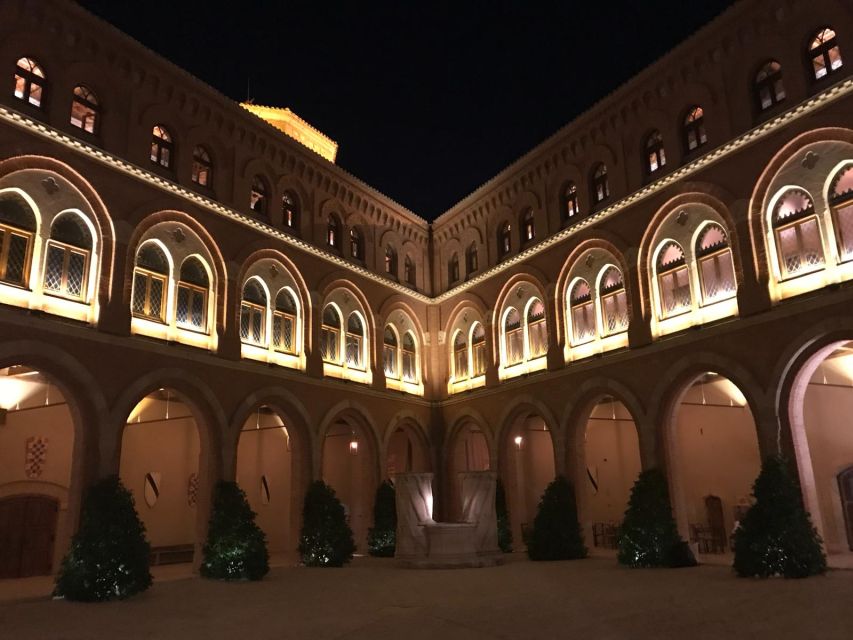
This experience fits best if you want a castle that’s heavy on real spaces: walls, parade ground, indoor rooms, underground dungeons, and ramparts. If you like to move at your own pace—pause for views, linger for details, and come back to rooms when you’re ready—self-guided with a strong audio guide is a good match.
It’s also a strong choice for people who like architecture and design. The Mudejar elements, Gothic coffered ceilings, and the way restoration work appears in the parade ground give it a more arts-and-details feel, not only military history.
The main “think twice” factor is physical access. The castle is accessible only on the ground and first floors for people with reduced mobility. The infrastructure of the monument creates limited accessibility overall, and it’s a historic site, so plan accordingly. If stairs and longer walking routes are hard for you, you’ll want to plan your expectations before buying.
One more small note: if you travel with a dog, dogs are only allowed in a carrier and not out of it at any time.
Practical value: what you get for a 1-day visit
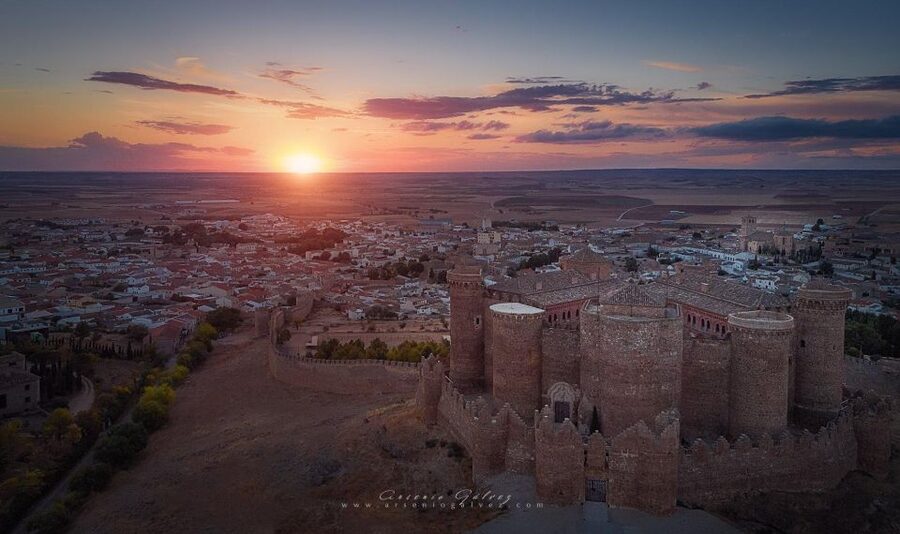
This is a “one-day circuit” ticket, and that’s part of the value. You’re not buying an entry pass that only scratches the surface. You can access the walled enclosure and parade ground, visit the reception hall and armoury, explore medieval palace rooms and the Empress’s residence, and finish on ramparts and towers.
What makes it feel worth your time is the pairing of spaces and explanation. You cross the drawbridge and walk the parade ground first, then you get context in the reception hall film and the armoury/dungeon areas. After that, you move into rooms where you can see how life and power worked inside a defensive structure. The ramparts tie everything together with views that make the earlier route “click.”
And because the audio guide comes with multiple languages and no live guide is required, you don’t have to coordinate timing with a group. You can start at your selected time and proceed in your own rhythm.
Should you book Belmonte Castle with an audio guide?
Book it if you want a complete castle visit that covers defensive architecture, indoor rooms (including the Empress Eugenia de Montijo residence), and ramparts with tower views—and you’re happy to guide yourself with an audio program in your preferred language.
Skip it or consider alternatives if you’re looking for a fully accessible, low-stairs experience, or if you need a live guide to interpret everything for you. Since this ticket doesn’t include a live guide, the audio guide is your main explanatory layer—so download it ahead of time and plan to take short pauses.
If you like castles that feel like places people lived and defended, not just monuments to pose beside, you’ll likely have a very satisfying day here.
FAQ
What does the Belmonte Castle ticket include?
It includes entry to Belmonte Castle plus a free audio guide (download to your mobile phone) in Spanish, English, French, and Italian.
How long is the visit?
The ticket is valid for 1 day. Starting times depend on availability.
Is a live guide included?
No, this experience includes an audio guide but not a live guide.
What parts of the castle can I visit with this ticket?
You can access the walled enclosure and parade ground (including the water well area), the reception hall with the 12-minute introduction film, the armoury with 15th-century armour replicas and underground dungeons, the palace and Empress Eugenia de Montijo’s residence, and the ramparts with battlements and six towers.
Is the site accessible for people with reduced mobility?
Accessibility is limited. People with reduced mobility can access only the ground and first floors. The monument’s infrastructure limits access overall.
Are dogs allowed?
Yes, but only if your dog is in a carrier. Dogs are not allowed out of the carrier at any time.