REVIEW · DORTMUND
Münster Scavenger Hunt and Sights Self-Guided Tour
Book on Viator →Operated by Explorial · Bookable on Viator
Münster turns into a puzzle trail. This self-guided phone game makes sightseeing feel like a mission, using clues to move you between major landmarks and smaller finds, and it’s fun to learn as you go. I love how the questions often point you to answers on signs, pictures, and nearby details, so the city teaches you without lectures. I also like the photo tasks, which push you to look around more carefully than a typical walk. One possible drawback: you need a working smartphone (and willingness to walk), since the whole experience runs through the app.
You start at Salzstraße (48143 Münster) and finish back there. You’ll receive an access code after booking, then you use the app’s map to get to each next stop. The tour is designed for about 1–2 hours on average, and it’s not locked into a strict time window—you can take breaks and keep going at your pace, as long as you’re within the opening window of the app experience (shown as open daily from 12:00 AM to 11:30 PM).
In This Review
- Key things I’d plan around
- How This Münster Scavenger Hunt Works on Your Phone
- Starting at Salzstraße: Getting the Game Running Fast
- Finding the Big Sights and Smaller Stops by Clue
- Dominikanerkirche, Prinzipalmarkt, and St. Paulus Dom: What You’ll Do at Each Stop
- Photo Tasks and Team Challenges: Turning Walks into Something You Remember
- Timing, Walking Pace, and When to Go in Münster
- English and German Questions: How the City Teaches Without a Guide
- Price and Value for a 2-Hour Self-Guided Adventure
- Is This Münster Scavenger Hunt Worth Booking?
- FAQ
- How long does the Münster scavenger hunt take?
- Is the tour self-guided or do I meet a guide?
- Where does the tour start and end?
- What languages are available?
- How do I get access to the app?
- What is the cancellation policy?
Key things I’d plan around
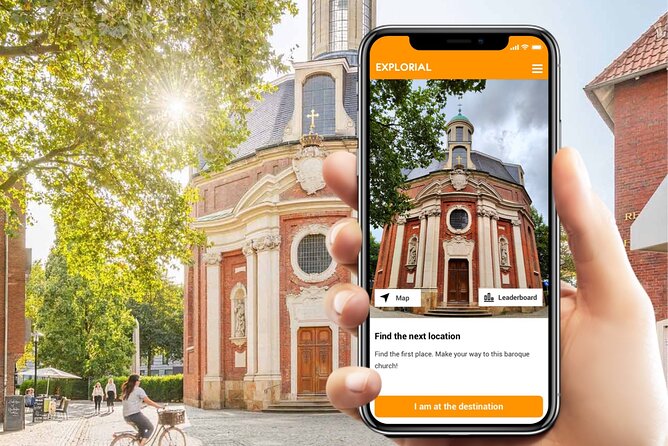
- Smartphone-led navigation: the app includes a map function to help you move between stops.
- Riddle solving at real sights: you earn points by finding locations and answering questions there.
- Photo challenges for extra points: expect creative snapshot tasks that change the way you look at streets and squares.
- A flexible route length: average time is about 1–2 hours, but you can slow down or pause.
- English or German questions: you can do the experience in either language, depending on the setup in the app.
How This Münster Scavenger Hunt Works on Your Phone
Think of this as a walking sightseeing route turned into an interactive game. After you buy the ticket, you get an access code for the app. From there, you follow hints that guide you to a sequence of stops around Münster, and each time you reach a target place, you complete tasks to earn points.
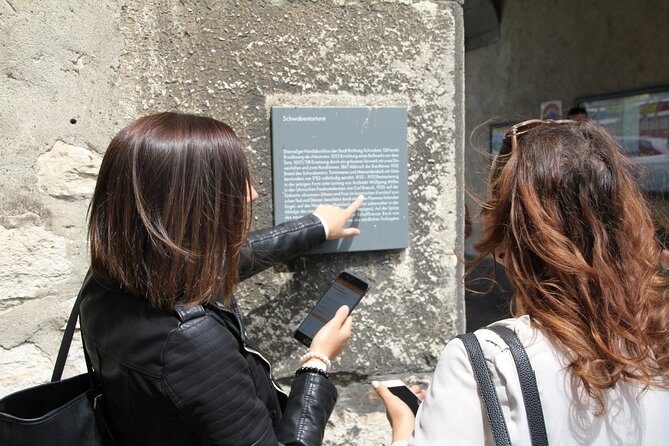
The format is simple, which is exactly why it works. First comes the hunt: use the app map and the hints to find where you’re supposed to go. Then comes the learning part: at each sight, you answer questions where the information is usually visible in the environment—on signs, pictures, or other nearby displays. There are also photo tasks that reward your creativity. That combination matters because it keeps the walk from becoming passive. You’re not just looking—you’re checking details, reading what’s there, and thinking for a minute before moving on.
You can do the experience as a group too. The tasks include things that feel collaborative (team tasks show up in the spirit of the experience), so it’s a good fit for couples and friends who like light interaction without turning it into a competitive event.
You can also read our reviews of more tours and experiences in Dortmund.

Starting at Salzstraße: Getting the Game Running Fast
Your starting point is Salzstraße, 48143 Münster, and the route ends back at the same meeting spot. That matters for planning. You don’t need a complicated transport plan to “get out” at the end—your trip can loop neatly back to where you began.
Here’s how I’d set yourself up for an easy start:
- Download the app before you go, and have your access code ready.
- Start with location services on, since the app map is your main navigation tool.
- Give yourself a few minutes at the beginning to confirm you’re seeing the correct starting area and the next clue.
Because the experience is private (only your group participates), you won’t be squeezed into a large mixed crowd. It’s also near public transportation, which helps if you want to arrive early, then start the hunt when you’re ready.
One more practical note: the tour operates in English and German. If you’re choosing between the two, pick the language that makes the questions easiest—solving riddles is more fun when you’re not also translating the world in your head.
Finding the Big Sights and Smaller Stops by Clue
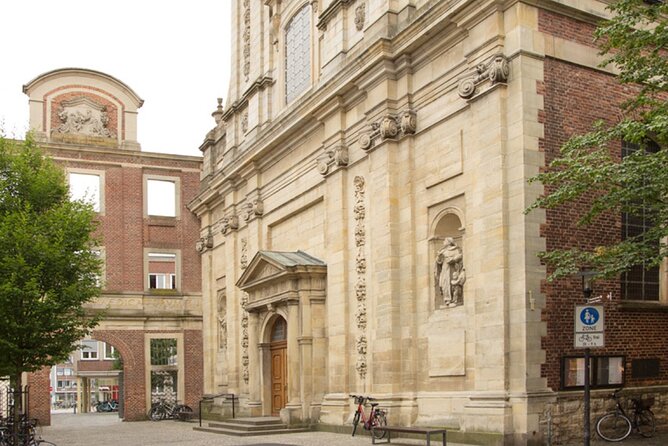
Münster sightseeing can be easy to “see” and hard to “understand.” This format tackles that by making your attention part of the game. The hints lead you to city highlights, and the questions at each location encourage you to notice what’s actually in front of you.
What I like about this approach is the balance. You’re not trying to memorize facts from a guidebook. Instead, the city’s own signage and displays do the heavy lifting. When you reach a stop, you’re asked something that pushes you to look again—at a detail, a description, or an image near the spot. That’s how the walk becomes more memorable.
You’ll also get the sense that the route is designed to cover a good sweep of central sights rather than scattering you across the whole city. The information you’re seeking tends to be local and immediate, which makes the route feel efficient for a 1–2 hour outing.
A small consideration: because it’s clue-driven, you might move a bit slower than you would on a normal stroll. That’s not a problem if you’re okay with walking at a thinking pace. If you only want a quick “see and go” tour, this might feel a touch gamified. But if you enjoy puzzles and learning while you walk, that slower pace is the whole point.
Dominikanerkirche, Prinzipalmarkt, and St. Paulus Dom: What You’ll Do at Each Stop
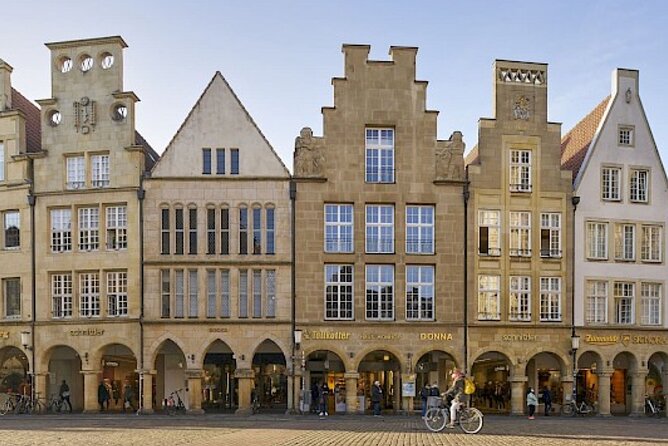
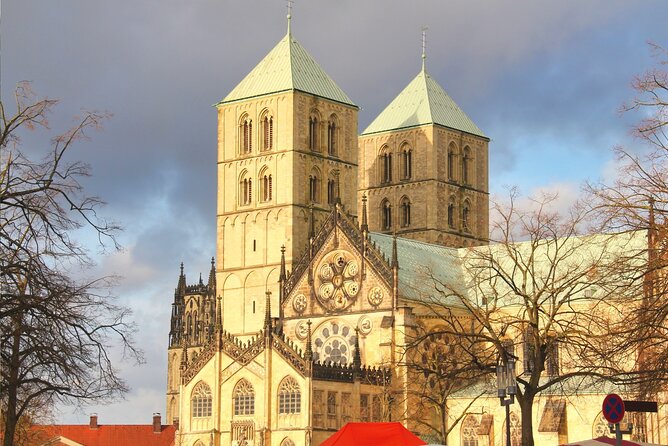
You can expect to reach several notable Münster sights as part of the hunt, including Dominikanerkirche, Prinzipalmarkt, and St. Paulus Dom, plus additional places along the way. The key is that each time you arrive, your experience shifts from navigation into task mode.
Here’s the pattern you’ll repeat:
- The app gives you a hint and you follow it to a specific sight.
- You complete a set of questions connected to what’s near you.
- In some segments, you’ll also face a photo task to earn extra points.
What makes this more than just a route checklist is how the tasks are tied to the physical setting. Many answers are hidden in plain view—think signs, pictures, and other on-site information. So you’re not just standing at a famous name long enough to take a postcard photo. You’re scanning, reading, and matching what you see to the question prompt.
At places like Dominikanerkirche, Prinzipalmarkt, and St. Paulus Dom, you’ll likely get multiple chances to slow down and focus. Those locations are natural pause points because they’re prominent in the city, and the game style fits well with places where you can actually look around and find visible context.
The drawback to keep in mind: if you prefer a hands-off sightseeing style where you can spend time admiring without answering anything, the constant question format might feel demanding. You can still take breaks, but the game structure means you’ll be interacting at each stop to keep earning points.
Photo Tasks and Team Challenges: Turning Walks into Something You Remember
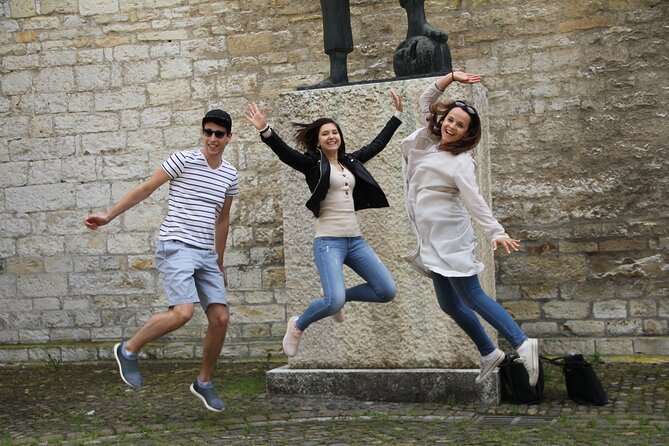
One of the highest-rated parts of this type of game is the way it changes the mood of a city walk. The experience includes creative photo tasks, which means you’re encouraged to take a closer look instead of just passing by.
I like photo tasks because they solve a common travel problem: you can visit a place, take photos, and still feel like you didn’t truly see it. Photo prompts force you to frame scenes, notice small visual cues, and make choices. Even if your photos are not award-winning, the act of trying makes the walk stick in your memory.
The experience also leans into team energy. The tasks can include team components, which is especially good for groups who want to talk to each other rather than split up into separate devices and separate plans. You can coordinate roles too—one person focuses on navigation cues from the app while the other person reads the prompt and hunts for the answer on signs or displays.
If you’re traveling solo, you can still do this. The format is designed for independent pacing. But you might find it more rewarding if you’re comfortable working through riddles on your own or with a travel companion.
Timing, Walking Pace, and When to Go in Münster
This is billed as a short outing. The typical duration is around 2 hours, and the average time is about 1–2 hours. That’s a sweet spot for a city afternoon when you want something active but not exhausting.
You’re also not limited by a strict finish-time. You can explore at your own pace, take breaks, and keep going. That flexibility is great if:
- you like to stop for coffee or a snack,
- you want time for photo moments,
- you’re traveling with someone who enjoys walking but at a slower rhythm.
The experience is available during the hours shown in the booking information, which is daily from 12:00 AM to 11:30 PM. Even though the app is open late, I’d still choose timing based on your personal comfort. For example, if you want the best experience with the least stress, start when you can browse and read signs comfortably.
Also remember: it’s a walking tour. Even with a flexible game pace, you should plan for the kind of movement you’d expect from an easy city loop.
English and German Questions: How the City Teaches Without a Guide
A normal guided tour works well if you want someone to explain everything. A self-guided hunt works well if you want to discover at your own speed. This one does both in a lighter way: it asks you questions, then expects you to find the answers from what’s around you.
That approach is surprisingly effective for learning because you’re not just hearing information—you’re hunting for it. The questions are often based on signs, pictures, and visible context. So you remember because you had to work it out, not because you were told.
Language options matter here. The experience is available in English and German. If you’re comfortable in either, choose the one that lets you understand the question instantly. When you’re stuck, the game slows down. When you get it right, you keep momentum.
If you’re traveling with kids or friends who like puzzles, this is a strong format too because the questions feel like challenges rather than quizzes. It also gives you a reason to look closely at public details you might otherwise skip.
Price and Value for a 2-Hour Self-Guided Adventure
At $6.43 per person, this is priced more like an activity than a traditional tour. That low cost changes who it’s best for. You don’t have to be “all in” to try it. It’s a good option if you want a fun, structured way to see Münster without paying for a full guided outing.
Value-wise, you’re getting:
- a phone-based game with navigation support (map function),
- a route that targets major sights and additional stops,
- learning through on-site questions,
- points for tasks, including photo challenges.
The time commitment is small. About 1–2 hours is enough to feel like you accomplished something, especially if you’re already planning to walk around the city anyway. In that sense, the game acts like a guide with no fixed pace, plus a bit of entertainment.
One balanced way to judge it: if you’re the type who loves puzzles, the value feels high. If you dislike interactive tasks and just want to stroll, the value might feel less exciting. But for most people who enjoy city walking and a light challenge, it’s easy to justify at this price.
Is This Münster Scavenger Hunt Worth Booking?
I’d book it if you want a structured way to explore Münster that doesn’t force you into a rigid schedule. It’s especially good for couples and friends who enjoy teamwork, and it’s a smart choice when you want to see well-known places like Dominikanerkirche, Prinzipalmarkt, and St. Paulus Dom without turning the day into a checklist.
I’d skip it (or choose a different style) if you strongly prefer a passive sightseeing experience. The app questions and clue format mean you’ll be interacting at each stop. Also, since the tour relies on smartphone use, have a plan if your phone battery tends to drain quickly while walking with maps.
Final thought: for $6.43 and about 1–2 hours, this is one of the more affordable ways to turn a city walk into an actual activity. If puzzles and photo prompts sound fun to you, you’ll likely have a good time.
FAQ
How long does the Münster scavenger hunt take?
The tour lasts about 2 hours on average. The experience is designed for roughly 1–2 hours for most people, and you can take breaks since it’s not limited in time.
Is the tour self-guided or do I meet a guide?
It’s self-guided. You download the app, enter your access code, and follow the hints and questions on your own.
Where does the tour start and end?
You start at Salzstraße, 48143 Münster, Germany, and the experience ends back at the same meeting point.
What languages are available?
The tour is available in English and German.
How do I get access to the app?
After you purchase the ticket, you receive an access code that you use in the app.
What is the cancellation policy?
You can cancel for a full refund if you cancel at least 24 hours before the experience start time. If you cancel less than 24 hours in advance, you won’t receive a refund.