REVIEW · MINNEAPOLIS SAINT PAUL
Minnesota’s Storied City: A Self-Guided Tour of Downtown St. Paul
Book on Viator →Operated by VoiceMap Audio Tours · Bookable on Viator
Golden chariots beat a treadmill. This self-guided GPS audio tour turns downtown St. Paul into a story you can follow at your pace, with major sights like the Landmark Center, the State Capitol, and the golden Quadriga. I love how the route is tight and walkable for about 1 hour 15 minutes to 1 hour 30 minutes, and I especially like the offline access for audio, maps, and geodata. One possible drawback: the itinerary leans hard on F. Scott Fitzgerald, so if you want more variety beyond one famous name, you may feel the Fitzgerald focus a bit much.
You get it for a very reasonable $9.99 per person, and you can use it anytime around your booking date thanks to lifetime access. It’s private (just your group), and there’s also virtual playback if you want to listen like an audiobook. Just note: you’ll need your own smartphone and headphones—those are not included.
In This Review
- Key highlights
- Walking Downtown St. Paul Like You Mean It
- Landmark Center: St Paul’s Castle and Prohibition-Era Courts
- Rice Park: A Downtown Reset With Fitzgerald in the Background
- Union Depot: From Beaux Arts Gateway to Modern Transit
- Lowertown’s Mears Park: Industry Memory in a Green Pause
- Fitzgerald Theater and the Oldest Stage in Town
- Minnesota State Capitol: Cass Gilbert’s Win and the Quadriga’s Details
- Herb Brooks, CHS Field, and St. Paul’s Hockey Pride
- Farmers Market, Fitzgerald Again, and the WWII Memorial Quiet
- How the VoiceMap Audio Works (and What You Must Bring)
- Price and Timing: Getting Your Money’s Worth
- Should You Book This Downtown St. Paul Audio Walk?
- FAQ
- How long is the self-guided tour?
- Where does the tour start and end?
- What does the tour cost?
- What do I need to bring?
- Can I download it for offline use?
- Is the tour available on demand during the listed dates?
Key highlights
- Offline audio, maps, and geodata mean fewer dead zones and less battery stress.
- A simple route that links downtown landmarks to the Minnesota State Capitol finish.
- Historic reads on modern places, from Union Depot to CHS Field.
- Cass Gilbert and the Quadriga: design details you can spot as you walk.
- Sports and civic pride with the Herb Brooks statue and the Saints’ ballpark.
- A WWII stop at the end that slows you down at exactly the right moment.
Walking Downtown St. Paul Like You Mean It
This tour is built for an easy downtown loop. You start at 109 W 4th St, St Paul, MN 55102, then you finish on the Upper Mall at the Minnesota State Capitol. The walking time you’ll spend passing the sights is about 1 hour 15 minutes to 1 hour 30 minutes. That’s a real sweet spot if you want history without eating your whole day.
You’re not herded into a group. It’s listed as a private activity, so your group does the listening and walking on your own schedule. And because it’s GPS-based, the audio lines up with where you are—so you’re not hunting for directions every few minutes.
Price-wise, $9.99 is low enough that you can treat it like a ticket to a guided walk, but you still move at your own speed. That matters here, because downtown St. Paul rewards slow looking—especially around big stone buildings and statues.
Small practical note: the tour is offered in English, and service animals are allowed. It’s also near public transportation, which is helpful if you’re coming in from outside downtown. If you rely on transit, open Google Maps and confirm the closest rail or bus option for your exact day.
You can also read our reviews of more tours and experiences in Minneapolis Saint Paul.

Landmark Center: St Paul’s Castle and Prohibition-Era Courts
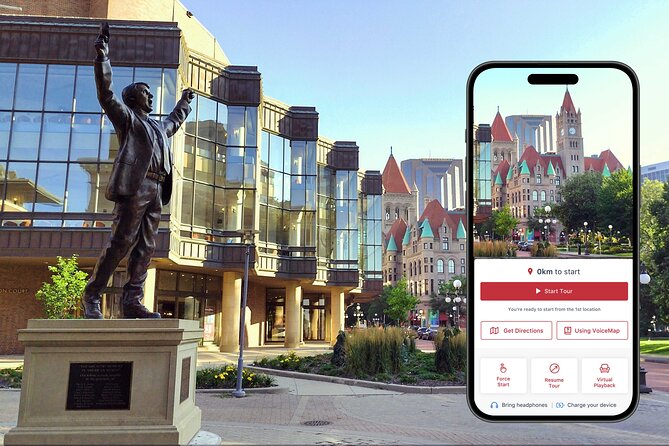
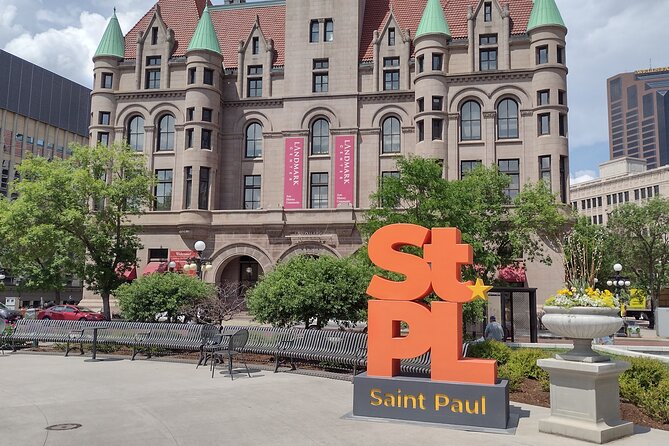
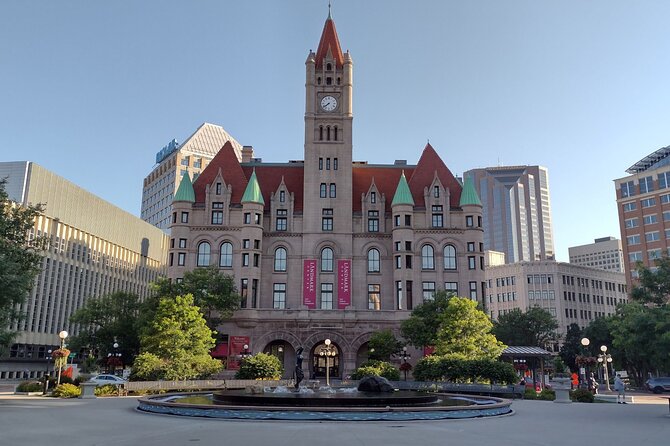
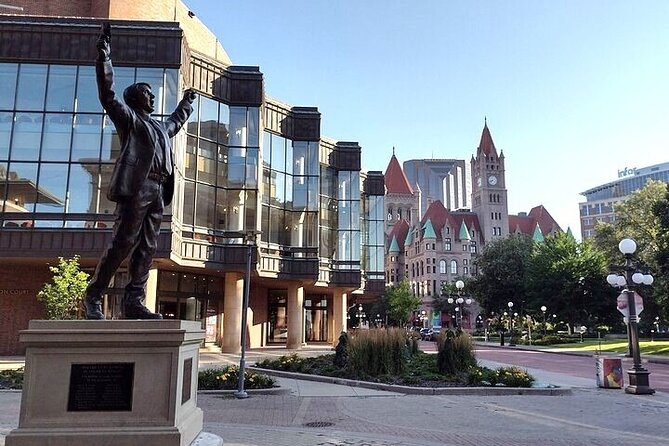
Your first big stop is the Landmark Center, often described as St. Paul’s very own castle. The key thing to notice is not just the looks—it’s the purpose change over time. The building once held federal courts, including trials connected to notorious Prohibition-era gangster cases. Now it’s a cultural hub, and the Romanesque architecture gives it that heavy, watchful feeling you only get from older government buildings.
As you pass it, listen for how the audio ties architecture to everyday power: courtrooms, public business, and the drama of an era when bootlegging was practically a second economy. The message is clear: you’re walking through downtown that used to run the show at a national level.
A practical tip: stand on the safer sidewalk side and give yourself a moment to take in the façade before moving on. This is one of those stops where rushing makes you miss the building’s “castle” vibe.
Rice Park: A Downtown Reset With Fitzgerald in the Background
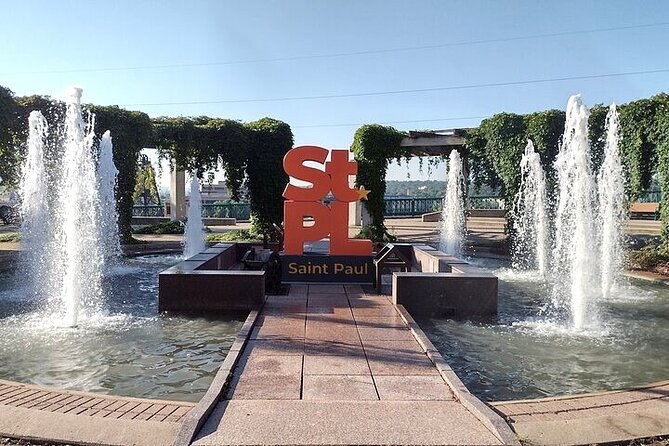
Next up is Rice Park, one of those places that feels calm even when you’re in the center of the action. It’s surrounded by historic landmarks and statues, including a statue tied to F. Scott Fitzgerald. The park has been a gathering place for over a century, which helps explain why it feels like it belongs to the city’s daily rhythm rather than just being a pretty square.
I like Rice Park because it gives you an emotional breather in the middle of the walk. You’re not just hearing facts; you’re stepping into a space that’s designed for people to pause.
If you’re traveling with kids, this is a decent spot to stretch or grab a snack before you continue. And if you’re traveling as a couple or solo, it’s a great place to slow down long enough to take photos that don’t look like a blur of rushing pedestrians.
Union Depot: From Beaux Arts Gateway to Modern Transit
As you pass Union Depot, picture how it once worked as the city’s gateway. The station is described as Beaux Arts-style, and the audio nudges you to imagine the daily rush: trains arriving, travelers flowing, and downtown functioning like a landing strip for the region.
Today, it’s restored and still useful—now a modern transit hub with the “you can see the past” power that only old stations have. This is a stop where you’ll probably notice details more than you did before: the grand styling, the scale, and how the building’s dignity fits with the fact that people still use it.
Value note: even if you don’t take transit at Union Depot, you’ll get more out of the stop if you treat it as a time machine. The audio gives you the context; your eyes do the rest.
Lowertown’s Mears Park: Industry Memory in a Green Pause
Then you move into Lowertown and pass Mears Park, described as a green oasis. What makes it interesting is the contrast. The park is set among modern architecture and art installations now, but it also carries the idea that it used to be tied to industry and production days in St. Paul’s past.
I like the way this spot balances mood. You’re walking through downtown concrete, then suddenly there’s a breath of greenery. Even if you don’t stop for long, the audio helps you understand what you’re seeing: a place reshaped by time, but not erased.
One consideration: the walking tour time is mostly about passing sights, not lingering. If you want more time to sit, this is a good place to slow down for a few minutes—just plan it into your schedule.
Fitzgerald Theater and the Oldest Stage in Town
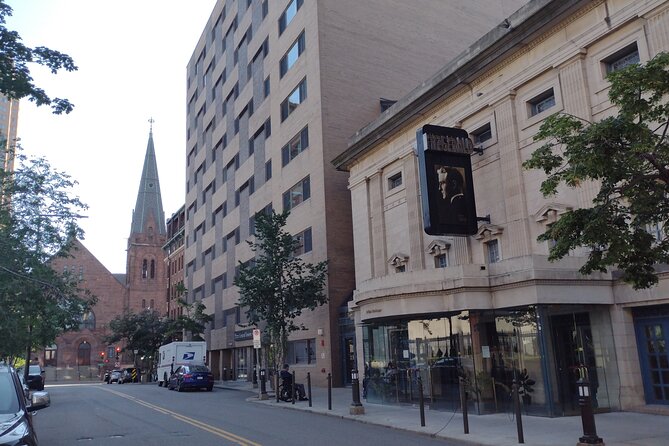
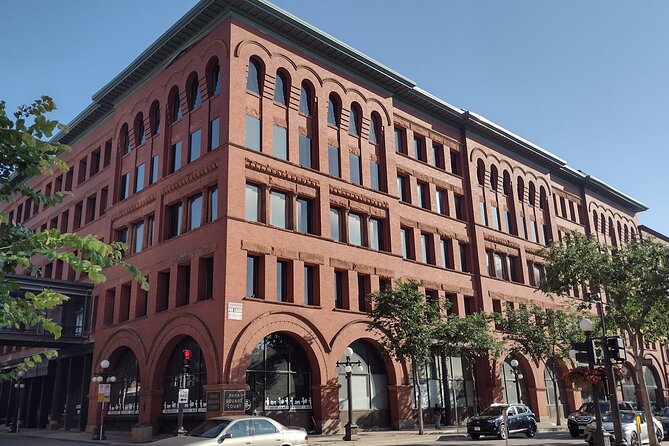
As you pass the Fitzgerald Theater, the audio points out it’s the oldest theater in St. Paul. It also notes the building was originally known as the Sam S. Shubert Theater. That’s a fun detail because it shows you how names change while the place keeps doing the same job: bringing people together around performance.
And yes, the Fitzgerald thread continues. If you’re a Fitzgerald fan, this section feels satisfying. If you’re not, you might feel the route spends more time than you expected on one literary figure.
My practical advice: if Fitzgerald is not your focus, use this part like a palate cleanser. Let the facts be a quick stop, then look for something else in the street scene around the theater—big-city energy works better when you let your eyes wander a bit too.
Minnesota State Capitol: Cass Gilbert’s Win and the Quadriga’s Details
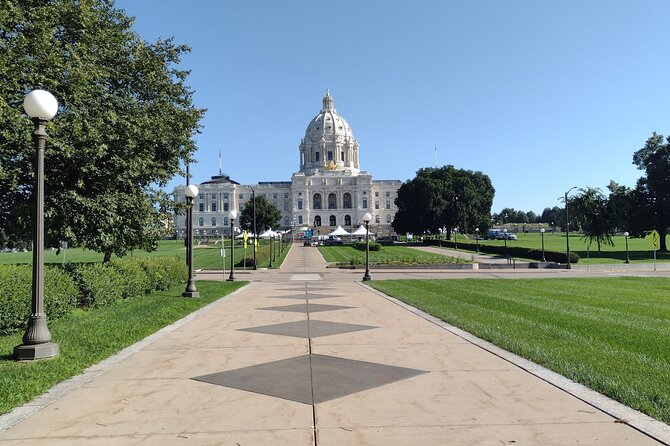
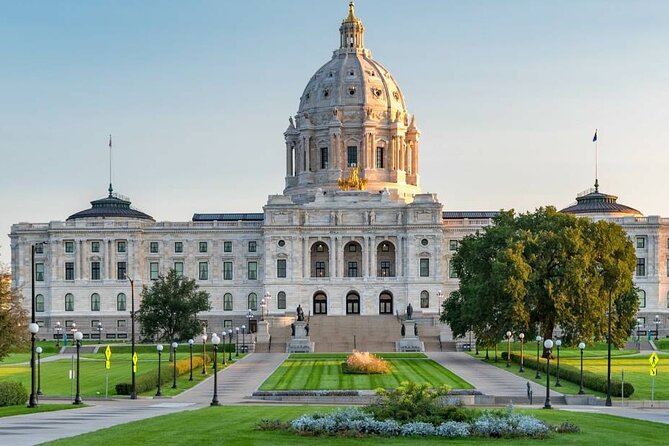
Now you hit the big one: the Minnesota State Capitol. The audio is all about design and competition—how Cass Gilbert was the young architect who won the job. This is where your walk feels like it’s leveling up, because the building is impossible to treat as just background. It’s a symbol, and you can feel that as soon as you’re near it.
The story doesn’t stop at the exterior. The tour calls out the gilded Quadriga, the golden chariot statue atop the Capitol. And it gets specific: the pineapple hubcaps are part of the intricate details, representing wealth and hospitality.
This is the best moment to slow down. You’ll get more if you stand still and match what you hear to what you see. Look up. Then look around. The Capitol is one of those places where the “facts” mean more when you spend a little time absorbing the proportions.
If you’re up for an add-on, the end point is set up for you: the tour finishes on the Capitol’s Upper Mall, which is a convenient launchpad for public Capitol tours on many days. In practice, Capitol tours often run starting on the hour, roughly 9am to 4pm, so it can work well if your timing lines up.
Herb Brooks, CHS Field, and St. Paul’s Hockey Pride
After the Capitol area, the audio brings in a different kind of local legend: the Herb Brooks Statue. This honors the legendary coach who led the U.S. hockey team to victory in the 1980 Olympics. St. Paul’s connection to hockey is a source of pride, and this stop makes that feel personal instead of generic.
I like when an audio tour switches gears like this. It reminds you that a city’s identity is not only about government buildings and literary figures. Sports heroes belong in the same memory banks as famous architects.
Then you pass CHS Field, a modern ballpark home to the St. Paul Saints baseball team. The audio links the stadium’s location in Lowertown to the neighborhood’s shift from industrial roots into a more active community space. Even if you don’t catch a game, it helps you understand why Lowertown feels different than it might have a generation ago.
Farmers Market, Fitzgerald Again, and the WWII Memorial Quiet
As you continue through the Capitol-downtown area, you pass by the St. Paul Farmers’ Market. The tour frames it as a long-running gathering place for Minnesota farmers and vendors. It’s a reminder that downtown isn’t only for big architecture—it’s also for local routines, food, and community.
You’ll also pass by a statue of F. Scott Fitzgerald, tied to the idea that he was born and raised in St. Paul. Again, this reinforces the Fitzgerald focus that repeats across the route. If you love that, it lands as a theme you can follow. If you don’t, it helps to know what you’re getting.
Finally, you reach the Minnesota World War II Memorial. The tone changes here. The audio encourages you to reflect on the sacrifices made by Minnesotans during the war, and the memorial comes across as serene and respectful rather than loud. Ending here feels right because you’ve just walked through civic pride and local fame—then you slow down for something heavier and quieter.
How the VoiceMap Audio Works (and What You Must Bring)
This is a self-guided VoiceMap experience with audio and written guide elements. The biggest practical advantage is offline use: you get offline access to audio, maps, and geodata. That’s exactly what you want in a city center where signal can be spotty between buildings.
There’s also a virtual playback option, so you can listen like an audiobook from anywhere. That’s useful if you want to preview the route or if you’re planning your walk and want to get familiar first.
What you should bring:
- your smartphone
- headphones
Also, the tour includes directions to the starting point so you know when you’re in the right place before you press play.
One caution from a past experience: sometimes signage or small “spot markers” change over time in busy downtown areas. So if you think you see a spot that should have a sign but it’s gone, don’t panic—use your phone map view to confirm you’re on the right street and keep going.
Price and Timing: Getting Your Money’s Worth
At $9.99, you’re paying for a structured walk with built-in context. For me, the value comes from two things:
(1) You get meaning, not just sights.
(2) You keep control over your pace.
The duration is realistic. At 1h15 to 1h30 of walking time (passing the listed stops), you’re not committing to half a day. That matters because the Capitol and downtown landmarks make good photo stops, and you might want a couple extra minutes to look up at the Quadriga or regroup at Rice Park.
If you want to add the Capitol tour, you’ll need to match your arrival time to what’s running that day. I find audio tours like this work best when you treat the finish as your handoff: walk now, then decide later if you want the guided interior.
For families: if you’re bringing kids, plan for breaks. The tour is a good downtown introduction, but kids will notice museums and distractions nearby. If your group gets restless, consider building in time to stop at the Science Museum or Children’s Museum as a decompression option.
Should You Book This Downtown St. Paul Audio Walk?
Book it if you want an easy, low-cost way to learn what you’re looking at while walking downtown. The route is strong because it links iconic landmarks—the Landmark Center, Rice Park, Union Depot, the State Capitol, and the Quadriga—into one coherent stroll that ends where you can keep exploring.
Skip or pair it if you’re not into Fitzgerald-heavy storytelling. The itinerary includes Fitzgerald multiple times through statues and the theater, so it’s a clear theme. If you want a broader slice of St. Paul beyond one famous author, plan an extra stop or two around other local themes.
My bottom line: this is a smart buy for a first-time visitor who likes walking, reading details, and ending with a serious memorial moment at the Capitol’s doorstep.
FAQ
How long is the self-guided tour?
The walking time is about 1 hour 15 minutes to 1 hour 30 minutes. Optional time spent inside any attractions is not included.
Where does the tour start and end?
It starts at 109 W 4th St, St Paul, MN 55102 and ends on the Upper Mall Minnesota State Capitol at 13 Rev Dr Martin Luther King Jr Boulevard, St Paul, MN 55155.
What does the tour cost?
It costs $9.99 per person.
What do I need to bring?
You’ll need your own smartphone and headphones. Those are not included.
Can I download it for offline use?
Yes. You get offline access to audio, maps, and geodata.
Is the tour available on demand during the listed dates?
The tour is listed as open Monday through Sunday, 12:00 AM to 11:59 PM during the provided date range. You’ll also receive confirmation at booking time.